
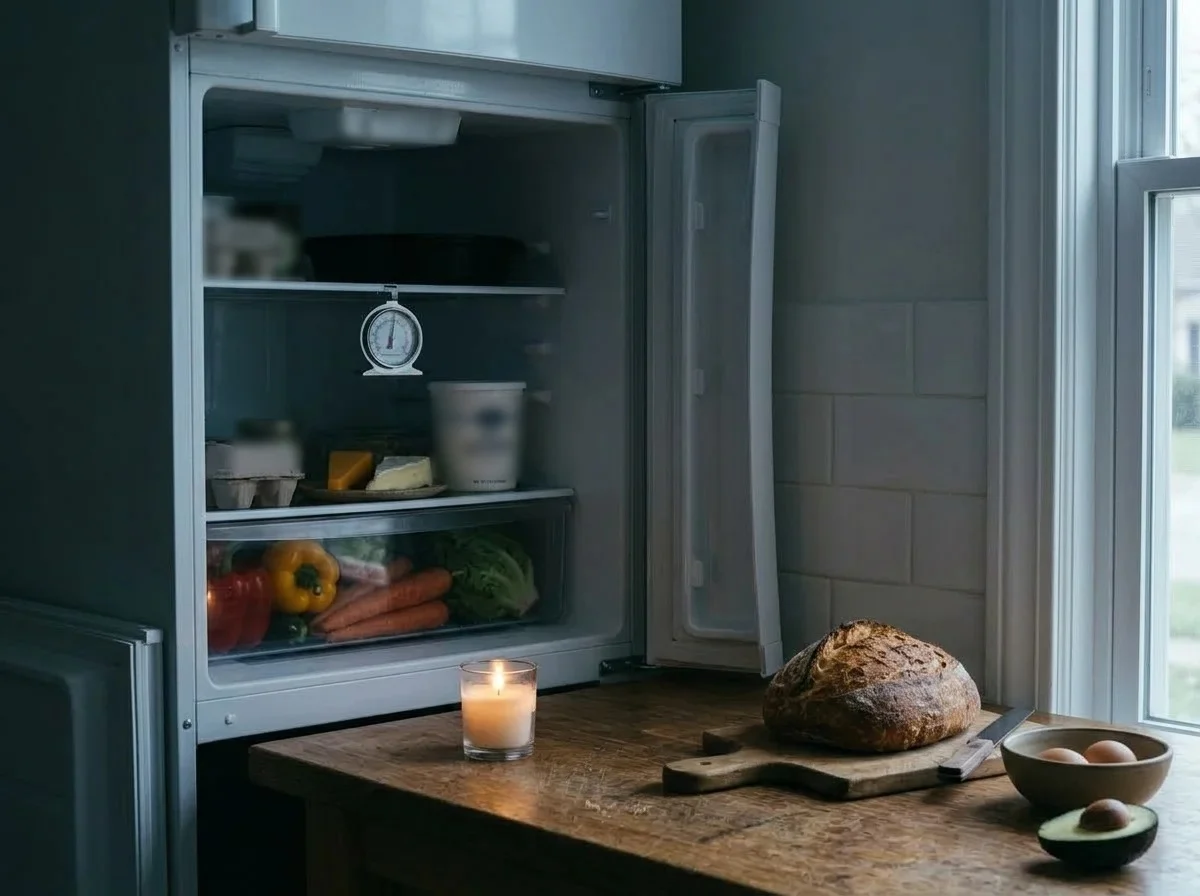
4 hours
Then perishable food is at risk
48 hours
About 24 hours if it is half full
Ice crystals
Or still at 40°F or below
The short version: keep the doors shut. A closed fridge keeps food safe for about 4 hours and a full freezer for about 48, so after that, go food by food: perishables that sat at 40°F or above for more than 2 hours go, while bread, whole produce, hard cheese and butter can stay.
Guidance from FoodSafety.gov, which draws on the USDA's emergency food safety advice.
On this page
How long food lasts in a power outage
According to FoodSafety.gov, which draws on the USDA's emergency guidance, a closed fridge keeps food safe for up to 4 hours. Meanwhile, a full freezer holds a safe temperature for about 48 hours, or 24 hours if it is half full and the door stays shut. So the most useful thing you can do during the outage is keep both doors closed.
After that, go food by food. The rule behind the lists below is simple: perishable food that sat at 40°F or above for more than 2 hours goes. Also, never taste food to check it, because FoodSafety.gov warns that taste cannot tell you whether it is safe.
Fridge food after a power outage: keep or toss
In general, these verdicts are for food that has been at 40°F or above for more than 2 hours. Also, each food links to its full guide where we have one.
Food
Keep or toss?
Why
Eggs: raw, hard-cooked and egg dishes
Throw them out
Eggs are on the discard list, even when they look fine. See the egg guide.
Hard cheese: cheddar, Swiss, Parmesan
Keep
Because hard cheese holds up, it is listed as safe to keep, as is processed cheese. See the cheese guide.
Soft cheese: brie, mozzarella, cottage cheese
Throw it out
Soft cheeses are on the discard list, and so are low-fat cheeses.
Shredded cheese
Throw it out
Unlike a block, shredded cheese is on the discard list.
Cream cheese
Throw it out
Since it counts as a soft cheese, it goes too. See the cream cheese guide.
Milk, yogurt and sour cream
Throw them out
All of them are on the discard list.
Butter
Keep
Butter is listed as safe to keep, as is margarine.
Bread, bagels and tortillas
Keep
Because they are fine at room temperature anyway, they stay. See the bread guide.
Whole fruit, whole vegetables and fresh mushrooms
Keep
As long as they are uncut, they are safe to keep. See the mushroom guide.
Cut fruit and cut vegetables
Throw them out
However, once produce is cut, it is on the discard list.
Bagged, pre-washed salad greens
Throw them out
They are pre-cut, so they count as cut produce. See the spinach guide.
Cooked rice, pasta and potatoes
Throw them out
Cooked starches are perishable, so they go.
Leftovers, soups, casseroles and pizza
Throw them out
All of them are on the discard list.
Opened jam, mustard, ketchup, pickles and soy sauce
Keep
Because they are high in acid, sugar or salt, they are listed as safe to keep.
Opened mayonnaise and creamy dressings
Throw them out if warm
Mayonnaise goes if it was above 50°F for more than 8 hours, and creamy dressings go too.
Specifically, every verdict above comes from the refrigerated food chart on FoodSafety.gov.
Freezer food after a power outage: refreeze or toss
Food that still has ice crystals, or is still at 40°F or below, can go back in the freezer, although FoodSafety.gov notes that its quality may suffer. However, some foods can be refrozen even after warming up, while others cannot, as the list below shows.
Food
Still has ice crystals
Above 40°F for more than 2 hours
Meat, poultry, seafood and soups
Refreeze
Throw them out
Eggs out of the shell
Refreeze
Throw them out
Ice cream and frozen yogurt
Throw them out
Throw them out
Hard cheese
Refreeze
Refreeze
Soft and shredded cheese
Refreeze, with some loss of texture
Throw it out
Bread, bagels and muffins
Refreeze
Refreeze
Frozen fruit
Refreeze, although texture and flavor change
Refreeze, unless mold, a yeasty smell or slime develops
Frozen vegetables
Refreeze, although they may lose texture
Throw them out after 6 hours above 40°F
Frozen meals and pizza
Refreeze
Throw them out
Common questions about food after a power outage
Can you keep eggs after a power outage?
Only if the fridge stayed at 40°F or below. FoodSafety.gov puts fresh eggs, hard-cooked eggs and egg dishes on its discard list once they have been at 40°F or above for more than 2 hours, and a closed fridge only holds for about 4 hours. So if the power was out longer, or you do not know how warm it got, throw the eggs out.
Is cheese safe after a power outage?
It depends on the cheese. Hard cheeses such as cheddar, Swiss and Parmesan are safe to keep, as are processed cheese and grated Parmesan in a jar. However, soft, shredded and low-fat cheeses go, and that includes cream cheese and mozzarella.
Can you refreeze food after a power outage?
Yes, as long as it still has ice crystals or is at 40°F or below, although its quality may suffer. Bread, bagels, hard cheese and flour can even be refrozen after warming up, whereas meat, soups and frozen meals cannot.
Why can't you taste food to check it after a power outage?
Because the bacteria that cause food poisoning do not usually change how food tastes or smells. In fact, Nebraska Extension notes that with staph, the only way you will usually know is when someone gets sick. For food left on the counter rather than in a warm fridge, see food left out overnight.
Sources
Food Safety During Power Outage, FoodSafety.gov, reviewed August 2024, on fridge and freezer times and which refrigerated and frozen foods to keep, refreeze or throw out.
Will Reheating Food Make It Safe If You Forget to Refrigerate It?, Nebraska Extension, on why food poisoning bacteria cannot be judged by taste.
Storage times and safety advice on this page come from the sources above. Food safety depends on conditions I cannot see, so read the Disclaimer, and if in doubt, throw it out.
Other ingredient guides
Browse all guides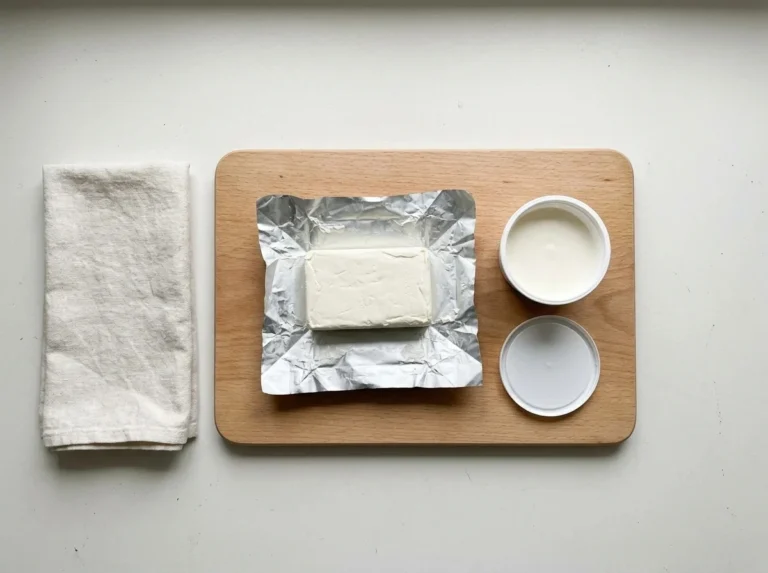
Share this guide
Never miss a guide
New ingredient guides when they go up, plus one storage tip worth knowing. Anything sponsored is labelled.

Emilly White