
Up to 6 months
Oil-based sticks and tubs, covered tightly (USDA FoodKeeper and NDSU margarine figures)
6 to 12 months
NDSU gives margarine 6 to 9 months, FoodKeeper 12 (NDSU, USDA FoodKeeper)
By the date
Perishable, so keep refrigerated or frozen (FDA enforcement report)
The short version: keep plant-based butter covered in the fridge. Oil-based sticks and tubs keep about 6 months there, the figure the USDA's FoodKeeper data and NDSU Extension give for margarine. Cultured plant butters are perishable, so use them by the date on the pack. Then freeze anything you won't use in time. Finally, check your fridge for Miyoko's Creamery European Style Salted Plant Milk Butter, lot 07871, best by 11/5/26, which the FDA lists as recalled.
Storage times here come from the USDA's FoodKeeper data and NDSU Extension, with freezing advice from Country Crock. Recall details come from the FDA enforcement report, and the spoilage guidance from NDSU, Colorado State University Extension, Clemson Cooperative Extension and the USDA.
On this page
What to check before you store plant-based butter
Plant-based butter keeps best when you know what kind you have, because an oil-based tub and a cultured block follow different clocks. So check a few things before it goes into the fridge.
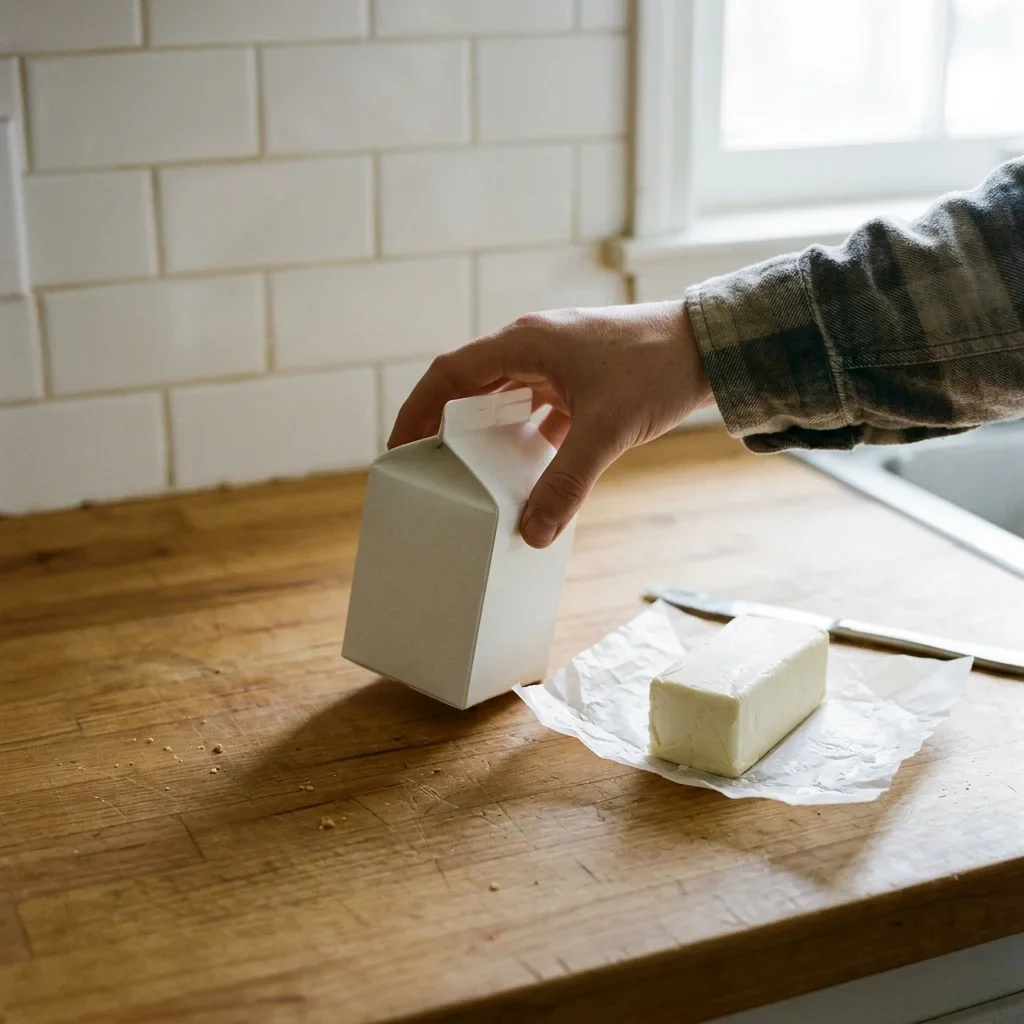
Glass, a lid that seals, and a spoon that is properly dry.
First, read the date on the pack. The USDA Food Safety and Inspection Service explains that most dates are about quality rather than safety. Even so, a perishable cultured butter is one to use by that date.
Next, check it against the recall. The FDA enforcement report lists Miyoko's Creamery European Style Salted Plant Milk Butter, 8 oz, UPC 857554005773, lot 07871, best by 11/5/26. So if your carton matches, do not eat it.
Then look at what it is made from. Country Crock, for example, says its plant butter uses oils from avocados, olives and palm fruit. Cultured kinds, by contrast, are labeled as cultured and often say keep refrigerated. In short, that label tells you which clock applies.
Finally, buy only what you will use. After all, plant oils go stale over months, much as vegetable shortening and almond butter do. So a smaller pack, or a stash in the freezer, saves waste.
How to store plant-based butter
To store plant-based butter, keep it covered, cold and away from strong smells. That way the oils stay fresh for longer, and a cultured butter stays out of the warm temperatures that let yeast and mold grow.
Where should you store plant-based butter?
Plant-based butter belongs in the fridge, wrapped or covered tightly, as NDSU Extension advises for margarine. Also, NDSU's rancidity advice explains why: light, warm temperatures and oxygen speed up the spoilage of fats. So keep it on a shelf with the lid on, rather than in a warm door.
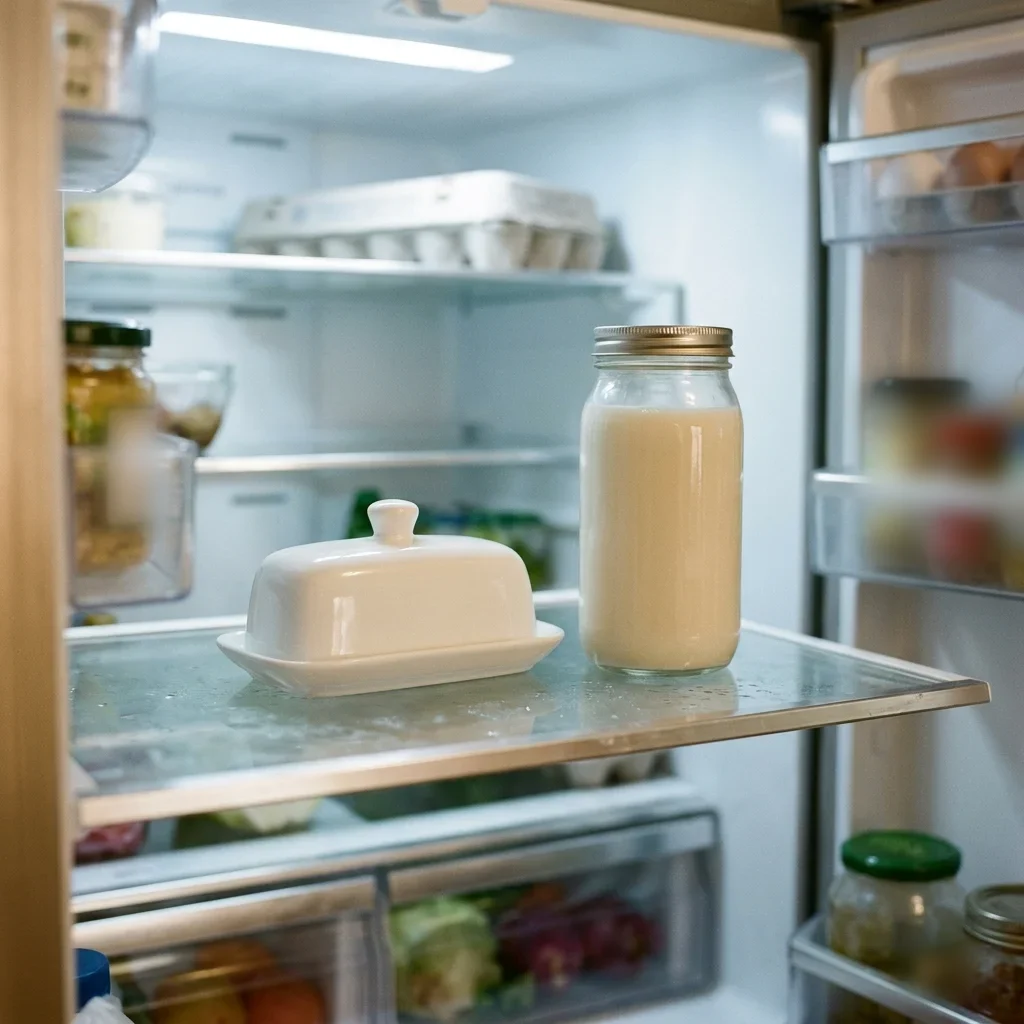
Sealed, cool and dark, and nowhere near the cooker.
How long does plant-based butter last in the fridge?
Oil-based plant butter lasts about 6 months in the fridge, the figure both the USDA's FoodKeeper data and NDSU Extension give for margarine. However, neither lists plant butter by name, so treat that as a guide rather than a promise.
Cultured plant butters are different, however. The FDA's record for the recalled Miyoko's butter describes it as perishable and stored refrigerated or frozen. So for a cultured block, the best-by date on the pack is the clock to follow.
Can plant-based butter be left out?
No source we opened gives plant-based butter a counter time. Country Crock's own FAQ asks whether it needs refrigerating, but the page gives no answer. Meanwhile, the USDA's FoodKeeper data allows dairy butter 1 to 2 days at room temperature, yet that figure is for butter. So keep plant butter in the fridge, and take out only what you need.
Is plant-based butter the same as margarine?
Plant-based butter is close to margarine, because both are made from plant oils rather than cream. Country Crock, for instance, lists oils from avocados, olives and palm fruit. Likewise, NDSU Extension files margarine under dairy products, real and substitutes. So until a storage chart lists plant butter by name, margarine's numbers are the closest guide.
Does plant-based butter go rancid?
Plant-based butter can go rancid, because NDSU Extension describes rancidity as the natural spoilage of fats and oils. In addition, light, warmth and oxygen all speed it up. So a tub left uncovered, or kept near the stove, turns stale first.
Can you freeze plant-based butter?
Yes. Country Crock says its plant butter products can be frozen, and suggests buying a little extra to keep in the freezer. Similarly, the USDA's FoodKeeper data gives margarine 12 months frozen, while NDSU Extension gives it 6 to 9 months. So the freezer buys you far more time than the fridge.
How do you freeze plant-based butter?
Freeze it in its own wrapper, then overwrap it, because NDSU Extension tells you to wrap or cover margarine tightly in both the fridge and the freezer. That way, a freezer bag around the carton keeps out air and smells. Then thaw it in the fridge, as the butter guide explains for dairy butter.
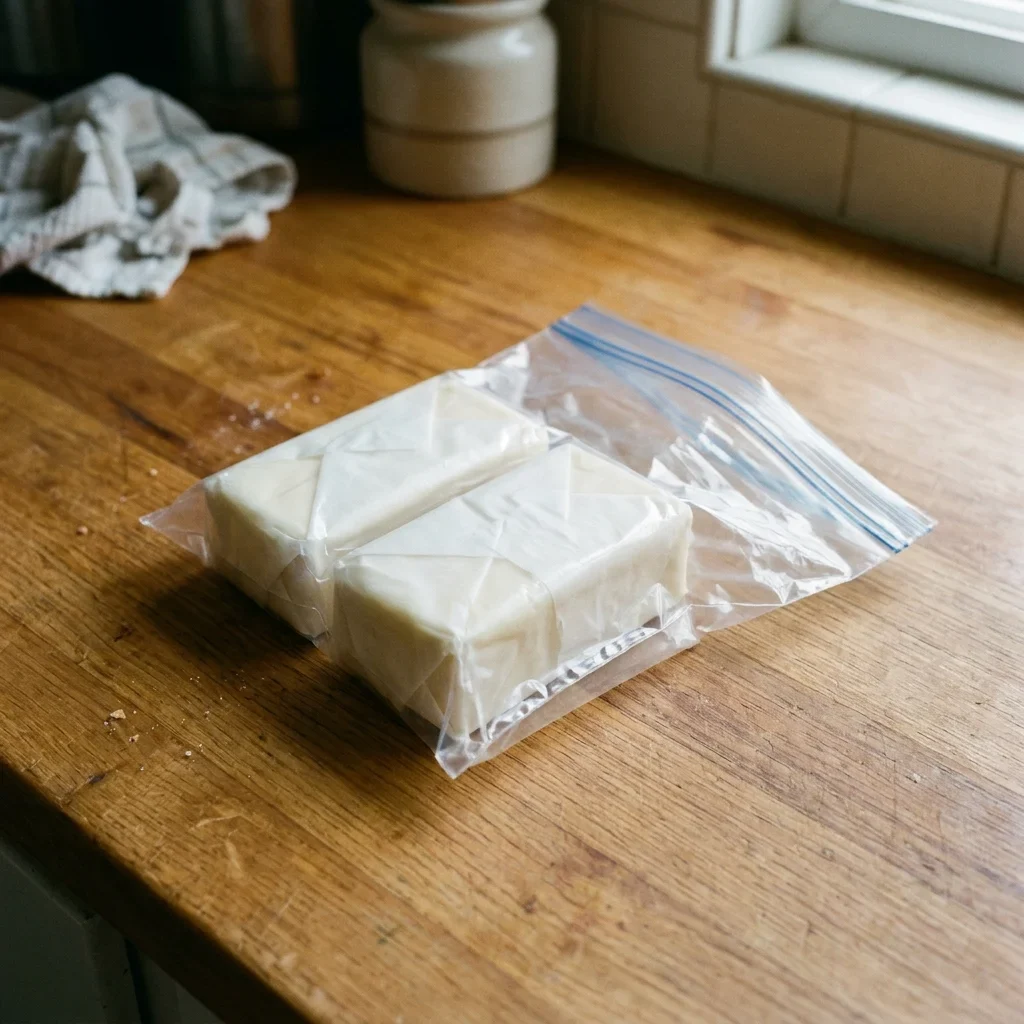
Below 41 degrees it keeps for years, but it barely pours.
Does freezing make plant-based butter safe?
No. The USDA Food Safety and Inspection Service explains that freezing to 0°F inactivates bacteria, yeasts and molds. Once the food thaws, however, they can become active again. So freezing protects a good pack, but it cannot rescue a contaminated one.
What if a recalled tub is in your freezer?
Check the freezer as well as the fridge, because the FDA's record says the recalled Miyoko's butter was stored refrigerated or frozen. Then, if the lot and date match, do not eat it, and do not cook with it either. Instead, return it to the store for a refund or throw it away.
Does plant-based butter go bad?
Plant-based butter does go bad, in two different ways. First, the oils in it slowly go rancid, which is a quality problem. Second, cultured kinds can also grow yeast and mold, and those are among the reasons the FDA listed for the 2026 recall. So here is what each stage means.

Verdict: use it
Fresh plant-based butter
Smooth and even in color, with a clean, mild smell and no beads of liquid on top. In other words, this is a pack inside its date, kept covered in the fridge. So spread it, bake with it, and close the lid straight after.
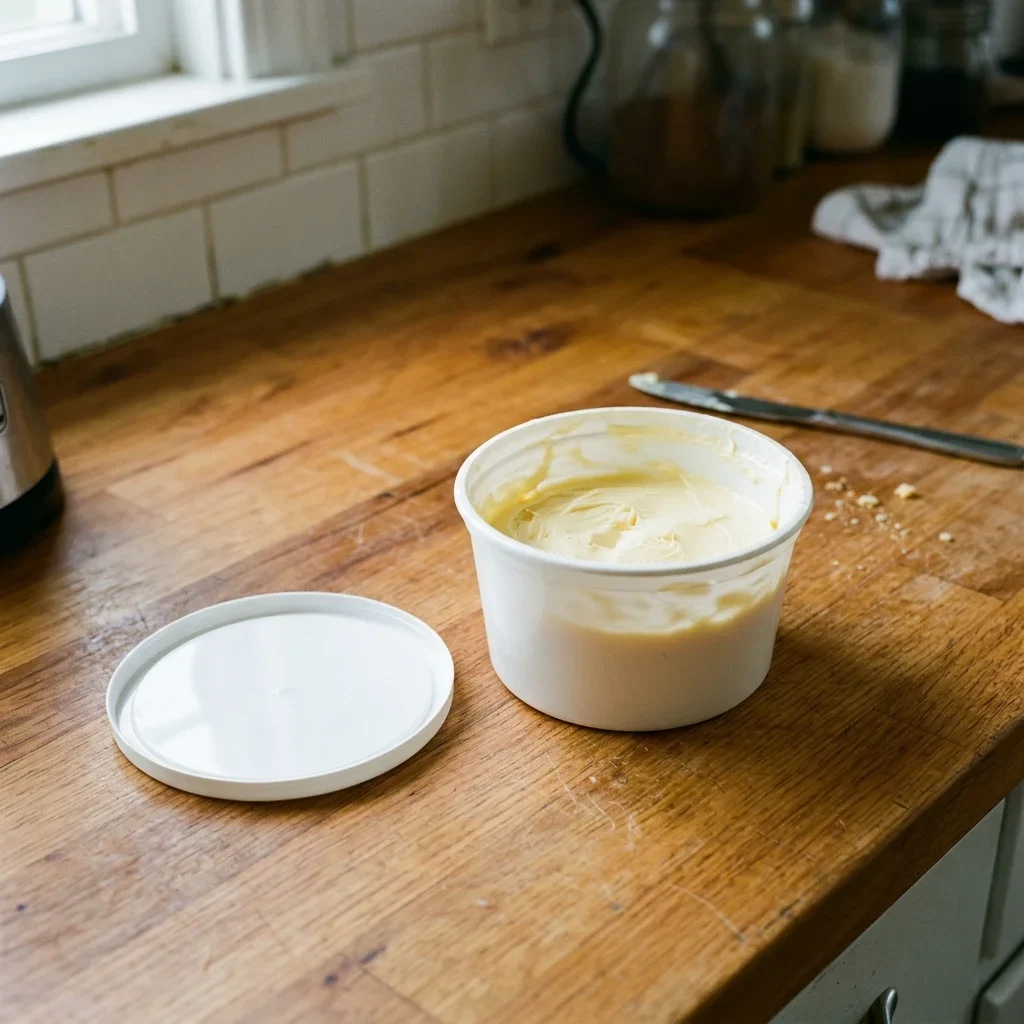
Verdict: smell it, then use it
Plant-based butter past its best-by date
A tub a little past its date that still looks and smells normal. The USDA Food Safety and Inspection Service says dates mark best quality, and that perishable foods should still be safe if handled properly. So if it smells clean, use it. With a cultured block, however, check closely for sour smells or spots first.

Verdict: throw it out
Rancid plant-based butter
A stale, sharp or paint-like smell, a bitter taste, and sometimes a darker, waxy surface. Colorado State University Extension says unsaturated fats that go rancid give a paint-like smell and a bad taste. Besides, it will spoil anything you bake, so bin it.

Verdict: throw it out
Sour or yeasty plant-based butter
A sharp, sour or beery smell, or a fizzy, bubbly texture under the lid. In fact, yeast is one of the three reasons the FDA gave for the 2026 recall, and Clemson Cooperative Extension says to discard a stored food with an off odor. So do not taste it. Throw it out.

Verdict: throw it out
Moldy plant-based butter
Fuzzy spots, or green, grey, pink or black patches on the surface or the wrapper. The USDA Food Safety and Inspection Service says to discard food covered with mold and not to sniff it. So throw out the whole pack, then wipe the shelf it sat on.
What happened with the Miyoko's plant butter recall?
Prosperity Organic Foods of Boise, Idaho, began a voluntary recall of Miyoko's Creamery European Style Salted Plant Milk Butter on September 11, 2026. The FDA enforcement report gives the reason as yeast, mold and E. coli. In total, it covers 1,304 cases of the 8 oz pack, UPC 857554005773, lot 07871, best by 11/5/26, sold in CT, FL, GA, IA, IL, IN, MD, NJ, NH and WI. Later, the FDA rated it Class II on October 23, meaning it may cause temporary or medically reversible health effects. If you ate it and feel unwell, the CDC lists diarrhea and stomach cramps as the main signs of E. coli infection.
How long plant-based butter keeps, by type
The clock depends on what the butter is made from and where you keep it. So here is each case.
Substitute
Works best in
What changes
Oil-based sticks or tub, fridge
About 6 months
Margarine's figure (USDA FoodKeeper, NDSU).
Oil-based, frozen
6 to 12 months
Wrap tightly (NDSU, USDA FoodKeeper).
Cultured block or tub
By the date
Perishable; keep refrigerated or frozen (FDA).
On the counter
No figure
No source gives one, so keep it cold.
Mistakes people make when they store plant-based butter
These are the ways people store plant-based butter that cost them the most, and each one is easy to fix.
Treating a cultured block like a tub spread. The FDA calls the cultured kind perishable, so use it by its date.
Leaving the lid off. NDSU says to cover margarine tightly, since air speeds rancidity.
Keeping it in the fridge door. A warm spot speeds the spoilage of fats, so use a shelf.
Forgetting the freezer. FoodKeeper gives margarine 12 months frozen against 6 in the fridge.
Sniffing a moldy pack to check it. The USDA advises against it; just throw it away.
Cooking with a recalled pack. Heat does not make a recalled product one to keep, so return it or bin it.
Assuming freezing kills germs. The USDA says freezing only inactivates bacteria, yeasts and molds, which wake up again on thawing.
Sources
Enforcement Report, Event 99871, recall H-0178-2027, U.S. Food and Drug Administration, on Prosperity Organic Foods' voluntary recall of Miyoko's Creamery European Style Salted Plant Milk Butter, 8 oz, UPC 857554005773, lot 07871 / 1007871, best by 11/5/26, 1,304 cases, distributed in CT, FL, GA, IA, IL, IN, MD, NJ, NH and WI, initiated September 11, 2026 and classified Class II on October 23, 2026, recalled due to yeast, mold and E. coli, and described as perishable and stored refrigerated or frozen.
Recalls Background and Definitions, U.S. Food and Drug Administration, on what a Class II recall means.
FoodKeeper App, Food Safety and Inspection Service, U.S. Department of Agriculture, whose published FoodKeeper data lists margarine at 6 months refrigerated and 12 months frozen, and dairy butter at 1 to 2 days at room temperature.
Food Storage Guide, NDSU Extension publication FN579, on margarine at 6 months in the refrigerator and 6 to 9 months in the freezer, wrapped or covered tightly, listed under dairy products, real and substitutes.
Prairie Fare: Is It Time for an Oil Change in Your Kitchen?, Julie Garden-Robinson, NDSU Extension, April 2017, on rancidity as the natural spoilage of fats and oils, and light, warm temperatures and oxygen promoting it.
Plant Butter, Country Crock, on plant butter made with oils from avocados, olives and palm fruit, and its plant butter products being suitable for freezing.
Freezing and Food Safety, Food Safety and Inspection Service, U.S. Department of Agriculture, on freezing to 0°F inactivating bacteria, yeasts and molds, which can become active again once thawed.
Food Product Dating, Food Safety and Inspection Service, U.S. Department of Agriculture, on dates showing best quality rather than safety, and perishable foods staying safe past the date if handled properly.
Nuts and Seeds, Food Smart Colorado, Colorado State University Extension, on unsaturated fats turning rancid and giving a paint-like smell and bad taste.
Safety of Stored Foods, Clemson Cooperative Extension Home & Garden Information Center fact sheet HGIC 3520, revised April 2020, on discarding stored food with an off odor.
Molds on Food: Are They Dangerous?, Food Safety and Inspection Service, U.S. Department of Agriculture, on discarding food covered with mold and not sniffing it.
Symptoms of E. coli Infection, Centers for Disease Control and Prevention, on diarrhea and stomach cramps as the main symptoms and when to see a doctor.
Storage times and safety advice on this page come from the sources above. Food safety depends on conditions I cannot see, so read the Disclaimer, and if in doubt, throw it out.
Other ingredient guides
Browse all guides


Share this guide
Never miss a guide
New ingredient guides when they go up, plus one storage tip worth knowing. Anything sponsored is labelled.

Emilly White