

1 to 3 months
Cured and dry at 65 to 70°F or below; onion figure (Clemson)
6 months or longer
Cured, mesh bag, 32 to 40°F at 60 to 70% humidity (Iowa State)
A few months
Peeled and diced, no blanching; onion guidance (NCHFP)
The short version: to store shallots well, keep them cured, dry and airy, in a mesh bag rather than plastic. A cold, dry store at 32 to 40°F buys you 6 months or more. A kitchen cupboard is warmer, so expect 1 to 3 months instead. Then use any thick-necked bulb first, because those never keep.
Storage temperatures and shelf lives here come from Iowa State University Extension and Clemson Cooperative Extension. The spoilage signs also come from the Pacific Northwest Plant Disease Management Handbook and Arkansas Cooperative Extension.
On this page
What should you look for when you buy shallots?
Pick shallots that are firm, dry and tight at the neck. Iowa State Extension treats a cured bulb as one whose tops and necks are thoroughly dry. The outer scales should also rustle when you handle them. Then squeeze the neck, because a thick or soft one marks a bulb that will not keep.
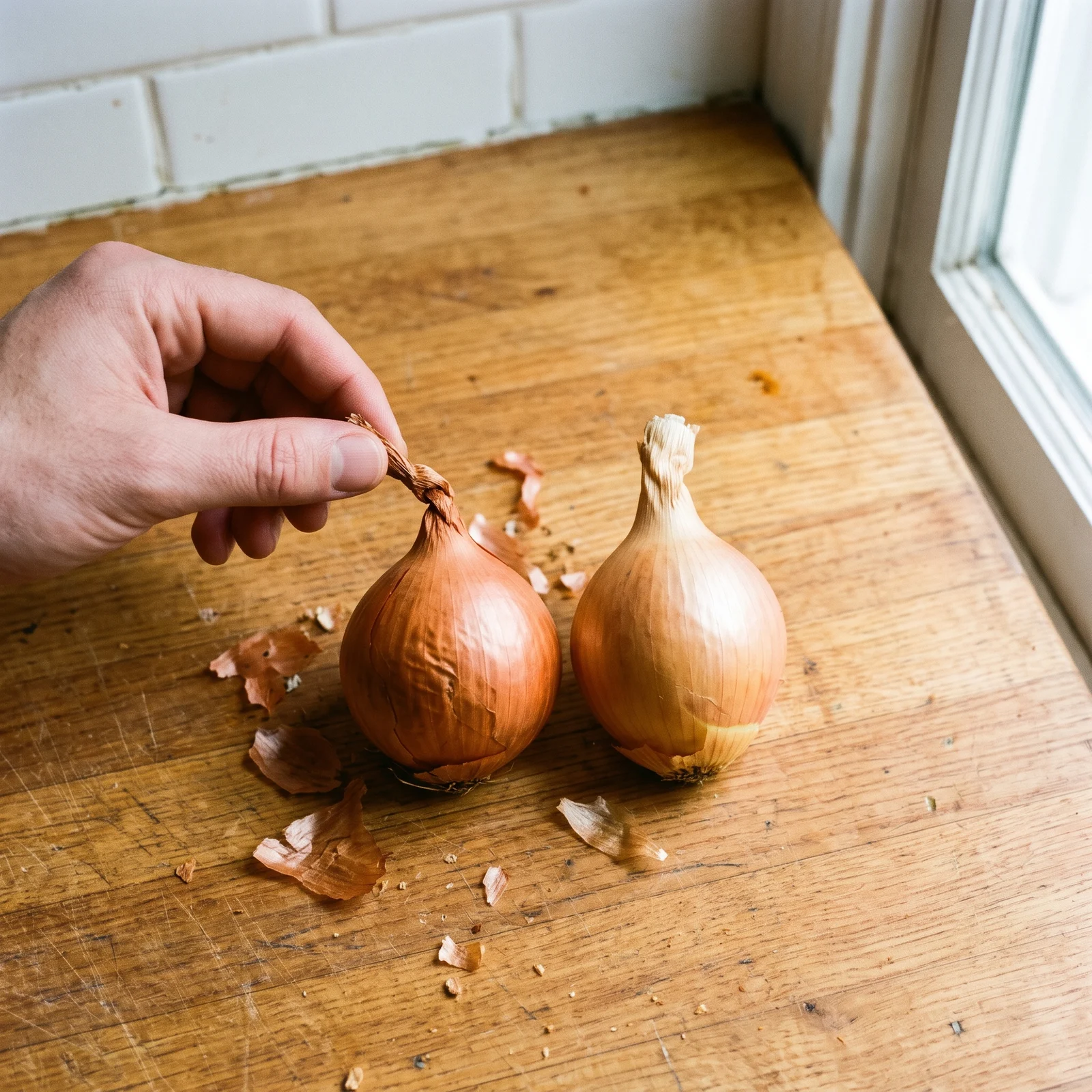
Firm, dry, and tight at the neck.
Firm, dry, and tight at the neck.
Firm bulbs rather than soft ones. Iowa State Extension cures onions until the tops and necks are thoroughly dry. So a bulb that still gives at the neck has not finished.
Papery outer scales that rustle. The same page also cures onions until the outer bulb scales rustle. So dry, flaking skins are a good sign rather than a bad one.
A thin, tight neck. Iowa State Extension says thick-necked bulbs do not store well, so it uses those first. Pick the tight-necked ones instead if you plan to keep them.
No black streaks under the papery skin. Arkansas Cooperative Extension describes black mold as shallow black lesions on the outer scales, since it starts at the neck. It also says some bulbs look fine outside, so check the neck end closely.
How to store shallots so they last
To store shallots so they last, keep them cured, cold and dry, with air moving around them. Cold alone is not enough, because damp is what finishes a bulb. So the container matters as much as the shelf.
Where should you store shallots?
Shallots keep best somewhere cold, dry and well ventilated. Iowa State Extension gives 32 to 40°F at 60 to 70 percent relative humidity. It also insists the container let air circulate through the bulbs. Mesh bags, old nylon stockings, wire baskets and crates all qualify. UF/IFAS Extension is less precise but agrees on the principle. It simply stores dry shallot bulbs in a cool, dry area. So an unheated pantry, a cold cupboard or a garage shelf all work. The onions guide asks for the same arrangement. Just move them before the temperature drops below freezing, as Iowa State Extension advises for onions.
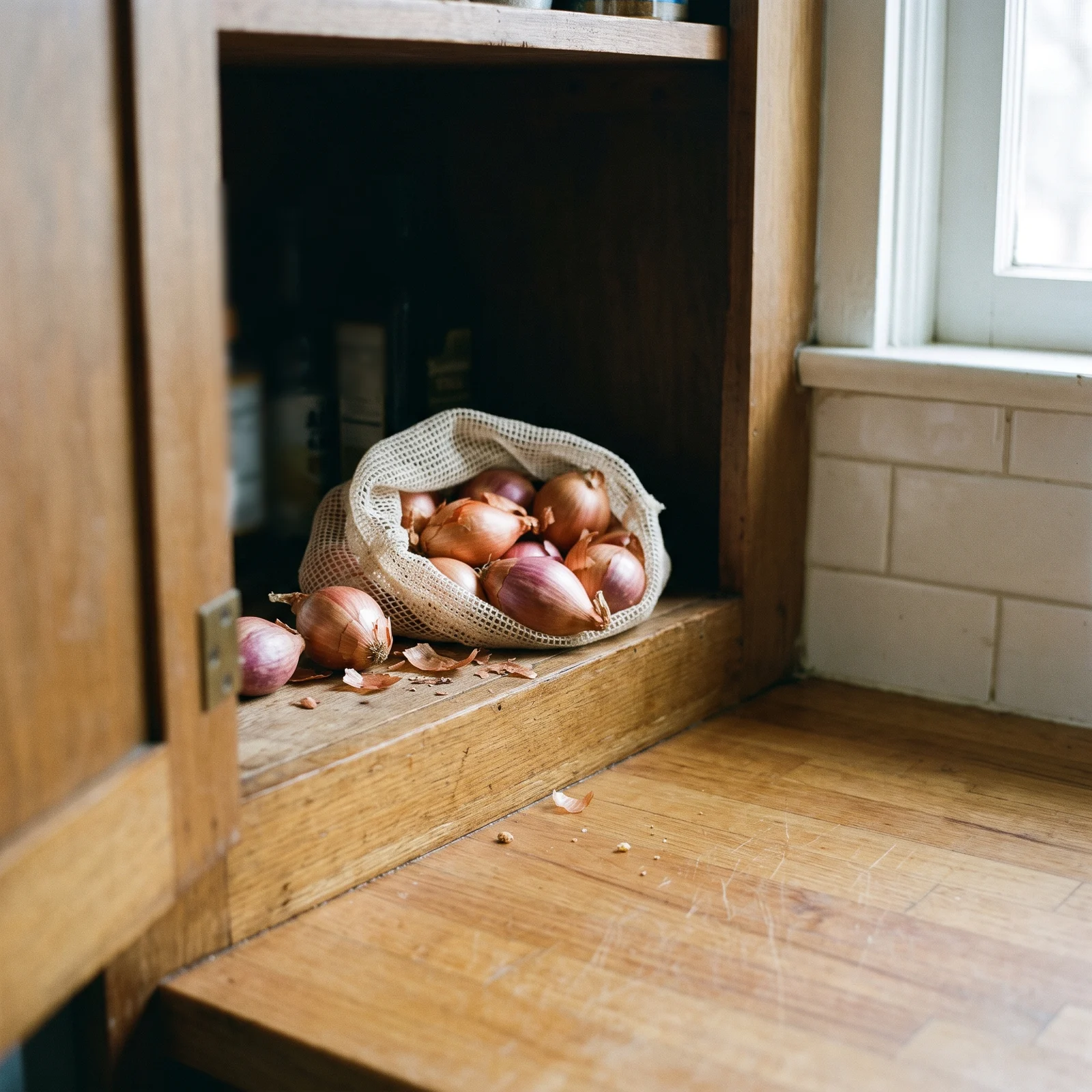
A mesh bag on a cold, dry shelf, never sealed plastic.
A mesh bag on a cold, dry shelf, never sealed plastic.
How long do shallots last?
Properly cured shallots last 6 months or longer, according to Iowa State Extension. That figure assumes its cold, dry conditions, though. In a kitchen cupboard, however, the clock runs faster. Clemson Cooperative Extension gives onions 1 to 3 months at room temperature or below. Variety matters too, since Iowa State Extension says good keeping onions hold for several months. Poor keepers manage only a few weeks. So treat 6 months as the ceiling and 1 to 3 months as the kitchen figure.
So the room decides the answer rather than the bulb. Also check them now and then, because one bad shallot sits next to five good ones.
Should you store shallots in the fridge?
The cold is right, but the damp is not. Iowa State Extension's own figure for shallots is 32 to 40°F, which is fridge temperature. However, it pairs that cold with 60 to 70 percent relative humidity and a mesh bag. A crisper drawer is built to hold moisture in, so it works against the bulb. The Pacific Northwest Plant Disease Management Handbook makes the same pairing. It controls onion black mold with low temperatures and low humidity together, not cold alone. So a cold, dry shelf beats a fridge drawer. If the fridge is all you have, keep them loose and dry rather than bagged, and check them often.
Do shallots need curing?
Home-grown ones do, and shop-bought ones already have been. Iowa State Extension cures shallots in a warm, dry place for 1 to 2 weeks after harvest. Then it cuts off the dried foliage and puts the bulbs in a mesh bag. UF/IFAS Extension cures onions for a couple of weeks instead. It wants a cool, dark, dry and well-ventilated spot, to prevent mold. So the two differ on warm against cool, but they agree on dry and ventilated. A shallot from the shop needs none of this, since it was cured before it reached the shelf.
How do you store peeled or chopped shallots?
Cold, covered, and used quickly, because a cut bulb has no skin left to protect it. None of the extension sources we opened gives a figure for chopped shallots. So we will not invent one. What they do say is where chopped alliums belong. The National Center for Home Food Preservation sends diced onion to the freezer rather than the fridge. Food left out overnight is never worth the risk either, whatever the ingredient. So chop what you need, and freeze the rest the same day.
Can you freeze shallots?
Yes, chopped and raw, with no blanching. No extension source we opened covers freezing shallots by name. So this is onion guidance, applied to the same species. The National Center for Home Food Preservation dices onions to about a quarter of an inch, then freezes them without blanching. It treats green onions the same way, although those come out less crisp. So a shallot gets the same treatment.
How do you freeze shallots?
Peel, trim and dice the shallots to about a quarter of an inch, then pack them dry. The National Center for Home Food Preservation needs no blanching and leaves half an inch of headspace in bags or containers. Nebraska Extension gives the same quarter to half-inch pieces and offers two routes. Its dry pack pours the pieces straight into freezer bags, presses the air out and freezes them flat. Its tray pack freezes them in a single layer on a baking sheet first, then bags them loose. That second route is worth the extra step, because the pieces stay separate afterwards.

Diced, dry and loose, with no blanching needed.
Diced, dry and loose, with no blanching needed.
Can you freeze whole shallots?
Better not, and the National Center for Home Food Preservation says so plainly. It says freezing is usually not recommended for whole onions. If you insist, it water blanches whole bulbs for 3 to 7 minutes, until the centre is completely heated. Those are fit only for cooking afterwards, though. So dicing first is the better plan.
How long do frozen shallots last?
A few months, and the sources split on how many. The National Center for Home Food Preservation says onions frozen this way are best used within a few months. Nebraska Extension is more generous, since it gives frozen vegetables about 8 months for best quality. So treat a few months as the target and 8 as the outside edge. Flavor is what fades rather than safety. Frozen shallots also soften, though, so they suit cooked dishes rather than a raw garnish.
How to tell if shallots have gone bad
Knowing how to store shallots is only half of it. A shallot rarely goes fuzzy on the outside, unlike soft fruit. It fails at the neck instead, because that is where the fungus gets in. The useful signs are a soft neck and black dust under the skin. Then there is the dark tissue you only see once you cut one open. Here is what each stage means.
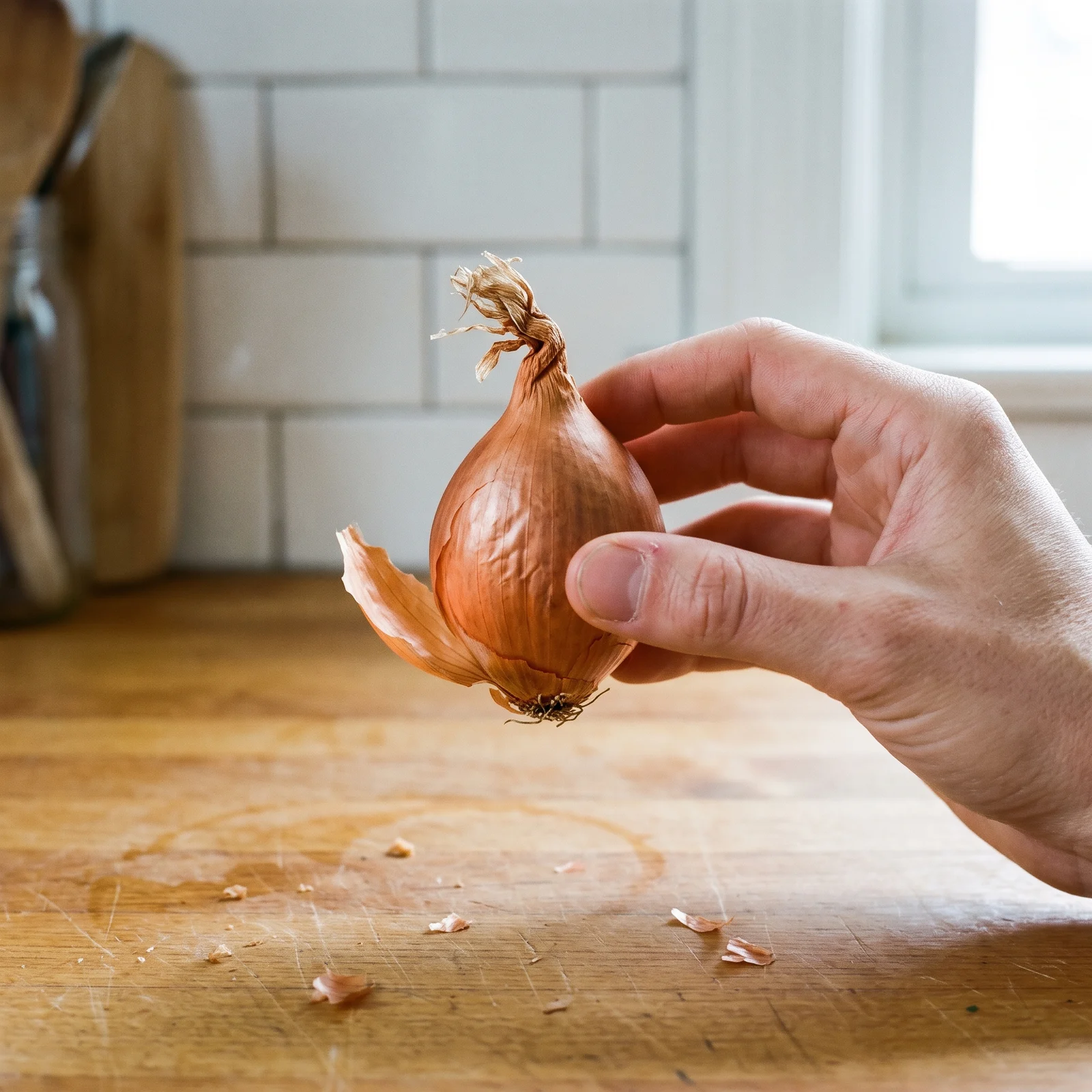
Verdict: use it
Firm shallots with papery skins
Tight at the neck, with dry outer scales that rustle when you handle them. Iowa State Extension treats that as a properly cured bulb, so these shallots are the ones that keep for months.

Verdict: use these first
Thick-necked shallots
A neck that stays thick and fleshy rather than drying tight. Iowa State Extension says thick-necked bulbs do not store well and should be used first. They are fine to eat, so cook these shallots this week and keep the tight-necked ones back.
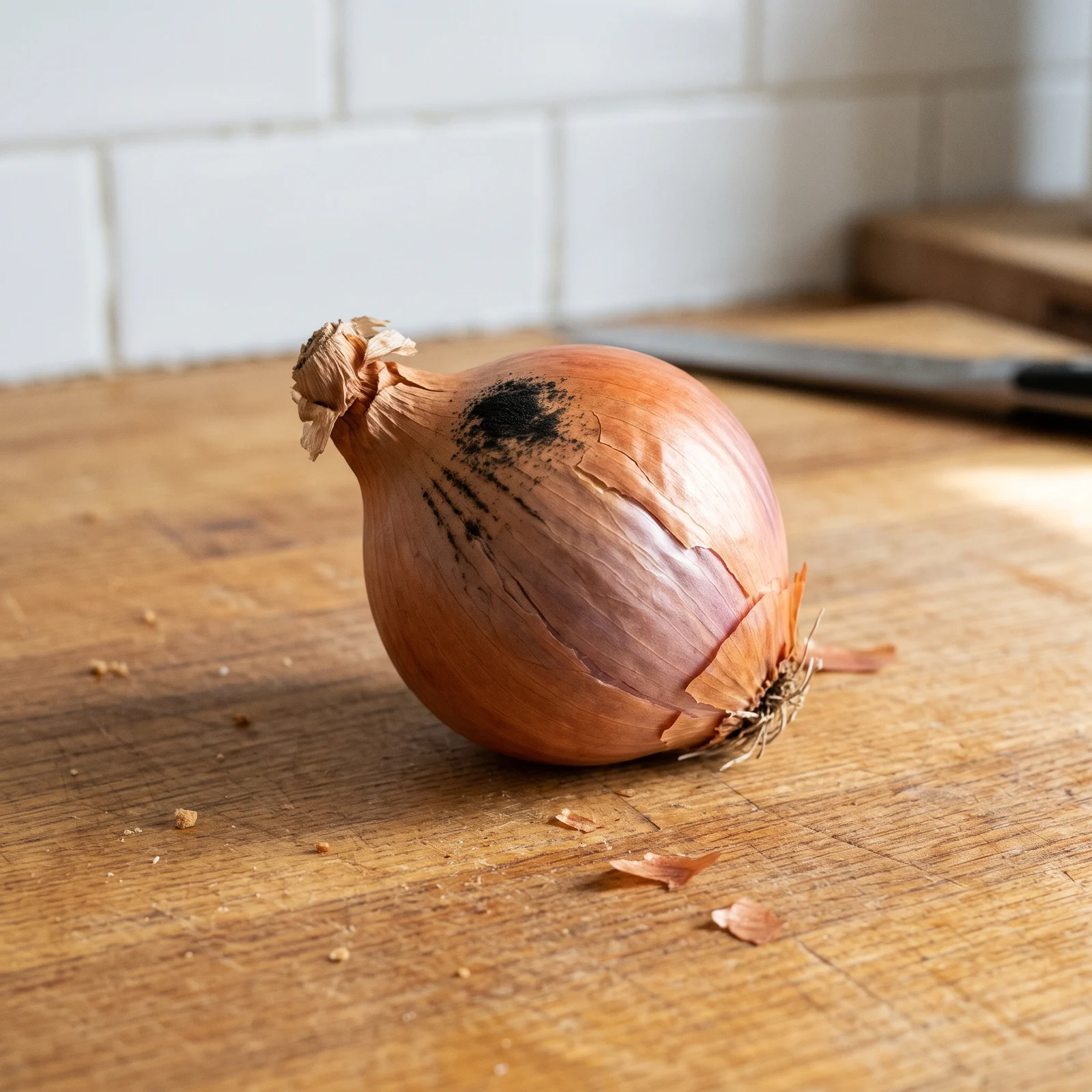
Verdict: throw it out
Black dust at a shallot's neck
Sooty black powder around the neck, with the outer scales shriveled. The Pacific Northwest Plant Disease Management Handbook describes onion black mold exactly that way, since the fungus starts at the neck. It also notes the spores run in streaks along the veins between the dry outer scales. Arkansas Cooperative Extension adds shallow black lesions on those scales, so the whole bulb goes.

Verdict: throw it out
A shallot that is dark inside
Sometimes the outside looks perfectly clean. Arkansas Cooperative Extension says some bulbs show no outside signs at all, and only a cut reveals black or gray tissue. It also says that discoloration runs from the neck toward the center. So halve a suspect shallot before you chop the rest.

Verdict: throw it out
Soft, leaking shallots
A bulb that squashes under light pressure, or weeps where it has gone soft. Arkansas Cooperative Extension says opportunistic bacteria follow the mold and cause a soft rot. Iowa State Extension also discards any bulb showing decay. Then check the ones that were touching it, since the mesh bag holds them together.
Why do shallots go bad at the neck?
Because that is the wound. Arkansas Cooperative Extension says black mold infection usually begins at the neck. It enters through wounds from broken or cut tops. That is also why Iowa State Extension cuts the tops about 1 inch above the bulb. Trimming flush with the bulb opens that wound instead. So handle them gently, because Arkansas Extension says avoiding bruises greatly reduces infection.
Shallot substitutes
Out of shallots, or did the last one go soft at the neck? Then one of these will stand in.
Substitute
Works best in
What changes
Leeks
Slow-cooked dishes
Sweeter and softer, so give them longer.
Mistakes people make when they store shallots
These are the ways people store shallots that cost them the most, so each one has an easy fix.
Sealing them in a plastic bag. Iowa State Extension wants a container that lets air circulate through the bulbs, such as a mesh bag or a wire basket.
Storing them before they are dry. Iowa State Extension cures shallots in a warm, dry place for 1 to 2 weeks first.
Keeping them somewhere damp. UF/IFAS Extension cures onions in a cool, dark, dry and well-ventilated spot precisely to prevent mold.
Trimming the tops flush with the bulb. Iowa State Extension leaves about 1 inch of top, since Arkansas Extension says the fungus enters through cut tops.
Keeping a thick-necked one for later. Iowa State Extension says thick-necked bulbs do not store well, so use those first.
Throwing one out for its papery skins. Iowa State Extension treats dry, rustling outer scales as the sign of a properly cured bulb.
Freezing them whole. The National Center for Home Food Preservation says freezing is usually not recommended for whole onions, and blanched whole bulbs suit cooking only.
Sources
How do I harvest, dry, and store shallots?, Richard Jauron, Iowa State University Extension and Outreach Yard and Garden, last updated March 2024, on curing shallots for 1 to 2 weeks, mesh bags, storage at 32 to 40°F and 60 to 70 percent humidity, and 6 months or longer.
How do you harvest, dry, and store onions?, Iowa State University Extension and Outreach Yard and Garden, last updated August 2025, on curing until the outer scales rustle, cutting tops 1 inch above the bulb, air circulation, and thick-necked bulbs keeping poorly.
Onions and Shallots, UF/IFAS Extension Gardening Solutions, University of Florida, on curing in a cool, dark, well-ventilated place to prevent mold and storing dry shallot bulbs in a cool, dry area.
Food Storage: Pantry, Pamela Schmutz and E.H. Hoyle, Clemson Cooperative Extension Home and Garden Information Center factsheet HGIC 3525, revised March 2020, on onions keeping 1 to 3 months at room temperature or below.
Freezing Onions, National Center for Home Food Preservation, University of Georgia, on dicing to a quarter inch without blanching, half-inch headspace, a few months for best quality, and whole onions being unsuitable.
How to Freeze Onions, Kayla Colgrove and Anna Stultz, Nebraska Extension UNL Food, 2026, on quarter to half-inch pieces, the dry pack and tray pack methods, and about 8 months for best quality.
Onion (Allium cepa) Black Mold, C. M. Ocamb and D. H. Gent, Pacific Northwest Plant Disease Management Handbook, Oregon State University, Washington State University and the University of Idaho, on black discoloration at the neck, shriveled scales, powdery spores in streaks, and low temperature with low humidity as the control.
Onion Black Mold, Sherrie Smith and Jason Pavel, University of Arkansas Cooperative Extension Service Plant Health Clinic disease note issue 14, on infection entering wounds at the neck, bulbs that look clean but are black or gray inside, soft rot from following bacteria, and avoiding bruising.
Storage times and safety advice on this page come from the sources above. Food safety depends on conditions I cannot see, so read the Disclaimer, and if in doubt, throw it out.
Other ingredient guides
Browse all guides





Share this guide
Never miss a guide
New ingredient guides when they go up, plus one storage tip worth knowing. Anything sponsored is labelled.

Emilly White