

Indefinitely
Plain salt, airtight, dry and away from heat (Clemson, Utah State)
Not needed
No benefit, since moisture rather than warmth is the risk (Utah State)
Not needed
Salt freezes without harm, but it gains nothing (Utah State)
The short version: how to store salt comes down to keeping water out. So decant it into an airtight container. Then keep it somewhere cool, dry and dark, well away from the cooker and the soap. Also use iodized salt within about five years, because Morton says the iodine dissipates even though the salt does not.
Storage guidance here comes from Utah State University Extension, Clemson Cooperative Extension and Morton, with the pickling rules from the National Center for Home Food Preservation.
On this page
Which salt keeps longest?
Plain table salt and kosher salt keep longest, because Morton gives them five years against three for its additive-free salts. However, the salt itself is identical in each. In fact, UC Master Food Preservers put it bluntly: salt is composed of sodium chloride, and that is it. So what differs is the additives, and that is what the dates track.

The salt is identical in each; the additives carry the dates.
Glass, a lid that seals, and a spoon that is properly dry.
Plain table, sea, grinder and kosher salt: five years. Morton notes these contain anti-caking additives, so clumping may occur as that ingredient loses effectiveness over time.
Iodized salt: five years. Morton gives the same window, but for a different reason, since iodine can dissipate over time.
Canning and pickling salt, Himalayan pink and natural sea salt: three years. These carry no anti-caking agent, so Morton expects them to cake.
Seasoned salt and salt substitute: two to three years. Morton gives Season-All two years for best color and flavor, because spices, colors and flavors deteriorate over time.
How to store salt so it lasts
The whole of how to store salt is a fight against water. Heat matters far less, and air matters hardly at all. So the container does more for you than the cupboard does.
Where should you store salt?
Keep salt in an airtight container somewhere cool, dry and dark, which is what Clemson Cooperative Extension asks for. Clemson also names the spots to avoid. Those are near oven ranges, hot water pipes or heating ducts, because heat and moisture cost quality faster. Also, high temperature or humidity may reduce storage time considerably, it adds. Morton agrees, and says to keep salt away from your cooking area. When that is not possible, Morton asks for an airtight container instead. For a long-term stash, Utah State University Extension leaves salt in its original container inside stronger outer packaging. So the shelf above the hob is the one spot to rule out, and that is most of how to store salt.

Airtight, cool, dark, and nowhere near the hob.
Sealed, cool and dark, and nowhere near the cooker.
How long does salt last?
Plain salt lasts indefinitely, according to Clemson Cooperative Extension, which lists it under dried foods as keeping indefinitely. That assumes a tightly sealed container. Utah State University Extension agrees, with one condition attached: an indefinite shelf life when kept free of moisture and contamination. In fact, Morton goes further and says salt itself has no expiration date. So nothing on the box is a safety date.
So the dates you do see are about the extras. Morton gives five years for iodized and anti-caking salts. It gives three years for the ones with no anti-caking agent. Utah State adds that opened salt still remains acceptable for several years. In other words, how to store salt decides the quality, whereas the calendar barely matters.
Why does salt go hard in the shaker?
Moisture, almost always, because Utah State University Extension says salt will cake and that moisture rapidly deteriorates cooking essentials. There is a second reason, though. Morton says its salts contain anti-caking additives, and that clumping may occur as that ingredient loses effectiveness. So an old box clumps even in a dry cupboard. The fix is not a new box either, since Morton says to simply tap or shake the package. In other words, caked salt is still salt.
Does iodized salt lose its iodine?
Yes, slowly, and that is why Morton puts a five-year used-by date on iodized salt: iodine can dissipate over time. However, the salt underneath is untouched. A three-month study of five iodized brands in the Journal of Health Reports and Technology then measured where it goes fastest. Salt held in light and damp showed the largest mean iodine reduction, at 13.96. But salt held dark and dry at room temperature showed the smallest, at 5.41. Its authors concluded that ambient temperature, darkness and no humidity were the best conditions. So a closed box in a dark cupboard is doing real work. Even so, old iodized salt still seasons food perfectly well.
Can you use table salt instead of canning salt?
For pickles, yes, and safely: the National Center for Home Food Preservation says fermented and non-fermented pickles may be safely made using either iodized or non-iodized table salt. However, looks are the catch. The National Center warns that non-caking materials added to table salts may make the brine cloudy. UC Master Food Preservers add that iodine may turn vegetables dark. Neither is a safety issue, though. Two salts do get a firm no. Flake salt varies in density and is not recommended, while reduced-sodium salt is cautioned against in fermented recipes.
Can you freeze salt?
You can, and Utah State University Extension confirms these food items can freeze without harm. However, there is simply no reason to. Salt has nothing in it that cold protects, so how to store salt never involves the freezer or the fridge. Keeping it dry is the whole job.
How do you store salt long term?
Utah State University Extension keeps salt in its original container placed inside another stronger package, naming Mylar-type bags. Alternatively, it says salt can be poured into a canning jar and sealed with oxygen absorbers. So both choices are about sealing water out rather than air. Date the outside, then put the jar somewhere dark. That is because the iodine study found light and damp together caused the biggest loss. Also keep it off a concrete floor and away from the water heater, since Clemson Cooperative Extension warns about hot water pipes. In other words, long-term storage is just how to store salt with a better seal.
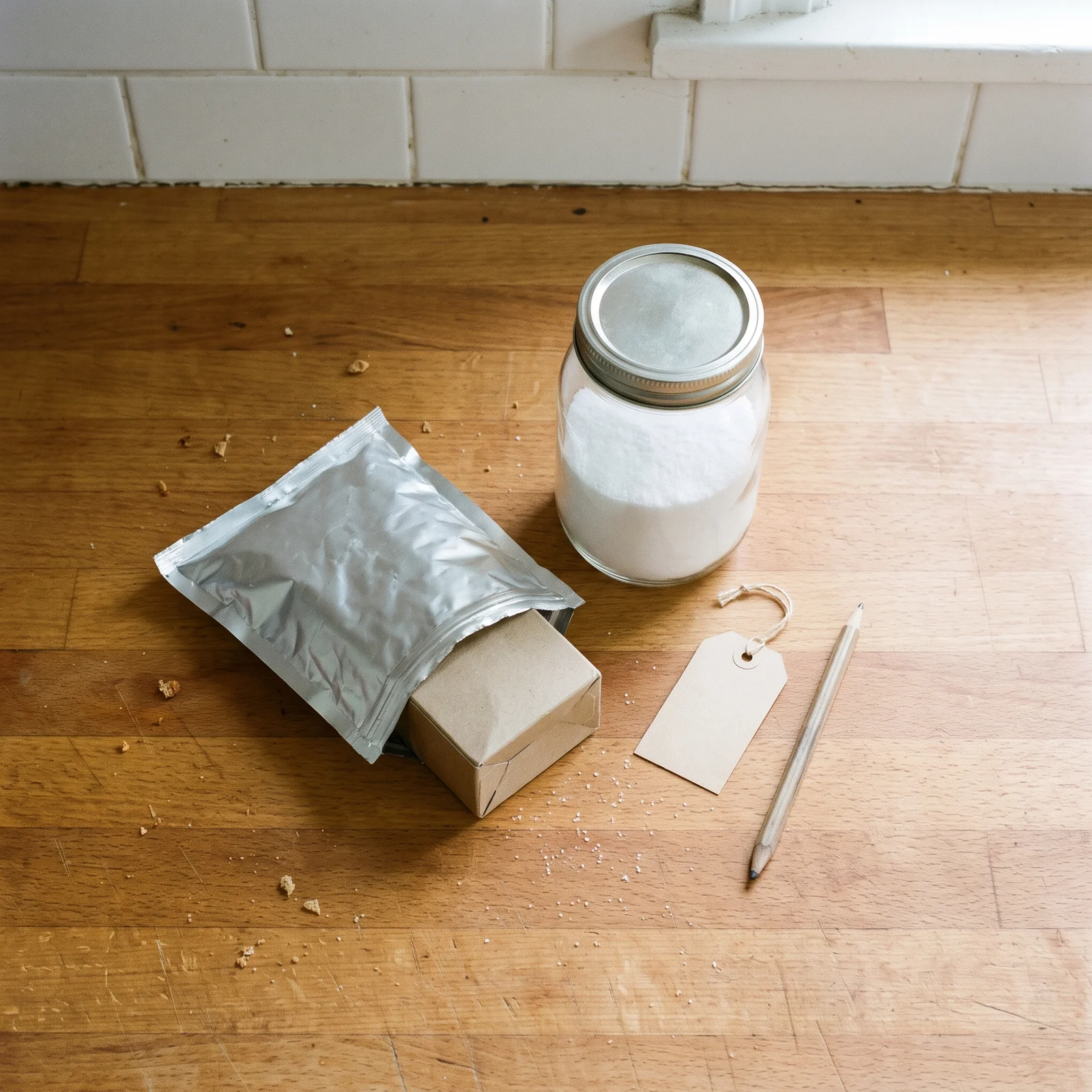
Original carton inside a stronger seal, dated on the outside.
Below 41 degrees it keeps for years, but it barely pours.
Does freezing hurt salt?
No, Utah State University Extension says these items can freeze without harm, so a frozen box is not ruined. Heat is the direction that does damage, since the same page warns that excessive heat may lead to deterioration. Let a frozen container come back to room temperature before you open it, though. Otherwise condensation forms on cold salt, and damp is the one thing that genuinely wrecks it.
Should you keep salt in the fridge?
No, and a fridge is a poor choice twice over. Utah State University Extension pins the risk on moisture rather than warmth, and a fridge is humid. The iodine study also saw more loss from refrigerated samples with humidity, at 9.69. Samples kept dark and dry at room temperature lost the least, at 5.41. So the cupboard wins, next to the self-rising flour that already has salt milled into it.
Does salt ever go bad?
Salt does not spoil, so nothing here will make you ill on its own. Instead, what changes is quality: it clumps, the iodine fades, and it picks up the smell of whatever it sits beside. Only one stage below is a throw-out. That stage is about what got into the box rather than the salt, and it is the one place how to store salt becomes a safety question.

Verdict: use it
Free-flowing salt
Dry, loose grains that pour cleanly and taste of nothing but salt. In fact, that is salt kept exactly the way Clemson Cooperative Extension wants it, airtight and away from heat. So use it for anything, canning and ferments included.

Verdict: use it
Clumped or caked salt
Lumps that break under a spoon, or a box gone solid at the bottom. Utah State University Extension says moisture makes salt cake, while Morton adds that the anti-caking agent itself loses effectiveness with age. However, neither makes it unsafe. So tap or shake the package to break the clumps, as Morton advises, then move it somewhere drier. The honey guide covers another pantry jar that changes texture without spoiling.

Verdict: use it, and check your seasoning
Salt past its date on the box
An iodized or seasoned box well past the printed date, still dry and clean. Morton's dates are about the additives, since iodine can dissipate and spices, colors and flavors deteriorate over time. However, the salt still salts. So keep cooking with it, but taste as you go with a seasoned blend. Then do not count on it for iodine.
Verdict: cook with it, not at the table
Salt that smells of the cupboard
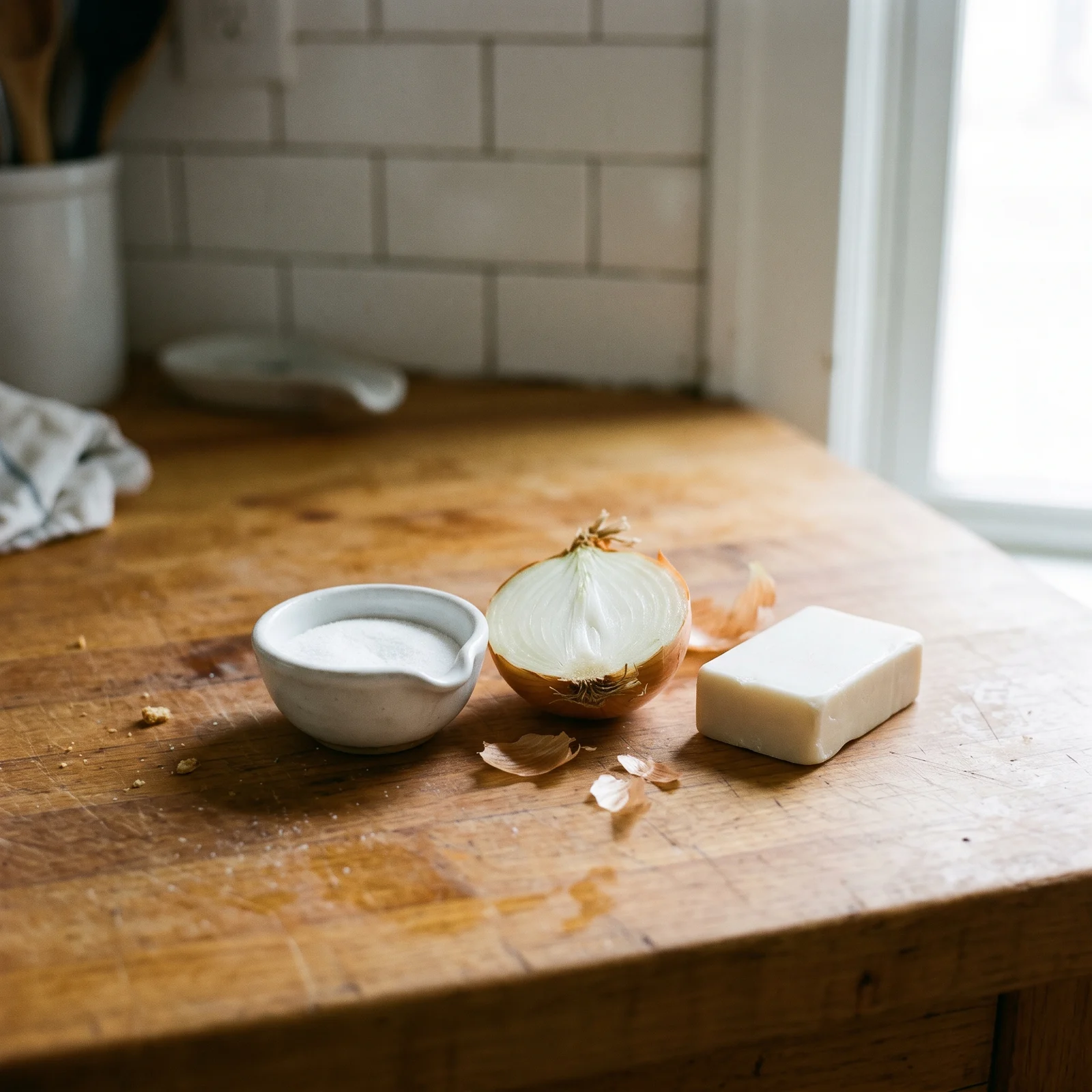
A faint whiff of soap, onion or coffee off the salt itself. Utah State University Extension explains it plainly, because salt and baking soda can absorb odors from the storage area, even through the packaging. It is not spoiled, though. So put it in a pot of pasta water, where the smell will not carry. Then move the new box away from whatever it stood next to, as the allspice guide does for aroma.

Verdict: throw it out
Wet or dirty salt
Standing water in the box, a sour or chemical smell, or anything in the salt that is not salt. This is the one case the sources draw a line at. That is because Utah State University Extension makes its indefinite shelf life conditional. Salt has to be kept free of moisture and contamination, and contamination is the word that matters. So bin it, then wash and dry the container before it is refilled.
Why does a box of salt have a best-by date?
Because of what was added to it, rather than the salt. Morton states that salt itself has no expiration date. Then it gives dates anyway, for the products carrying iodine, anti-caking agents or seasoning. Iodine can dissipate, the anti-caking agent can lose effectiveness, and spices, colors and flavors deteriorate. So Morton calls these a Recommended Used By Date for an optimal experience, which is quality language rather than safety language. You can also date an old box yourself. Morton says the manufacture code sits in the middle five digits of the ten-character code. In that code, the first two digits are the year and the next three are the day of the year.
Salt substitutes
Out of salt, or holding a box you would rather not put on the table? Then one of these will stand in.
Substitute
Works best in
What changes
Canning and pickling salt
Pickles and ferments
Pure salt with no additives, so the brine stays clear (NCHFP).
Kosher salt
Seasoning by hand
Coarser, so a teaspoon weighs less than table salt (UC Master Food Preservers).
Salt substitute
Low-sodium cooking
Fine for quick pickles, but NCHFP warns against it in ferments.
Seasoned salt
Rubs and popcorn
Morton gives Season-All two years for best color and flavor.
Mistakes people make when they store salt
These are the ways people get how to store salt wrong, and each one has an easy fix.
Keeping the box next to the cooker. Clemson warns against storage near oven ranges, hot water pipes or heating ducts, since heat and moisture cost quality faster.
Leaving it open in a damp cupboard. Utah State Extension says moisture can rapidly deteriorate cooking essentials, and that salt will cake.
Binning a caked box. Morton says to simply tap or shake the package to break the clumps.
Expecting the iodine to last. Morton gives iodized salt five years, because iodine can dissipate over time.
Storing it in the light. The iodine study found its largest mean loss in salt kept in light and damp, and its smallest in a dark, dry cupboard.
Standing it beside the soap or the onions. Utah State Extension says salt absorbs odors from the storage area, even through the packaging.
Using table salt in a ferment. NCHFP says non-caking materials may cloud the brine, and cautions against reduced-sodium salt in fermented recipes.
Sources
Cooking Food Storage, Utah State University Extension, Preserve the Harvest, on iodized salt having an indefinite shelf life when kept free of moisture and contamination, moisture rapidly deteriorating cooking essentials, salt caking with moisture, temperature extremes mattering less than moisture, excessive heat causing deterioration, salt freezing without harm, storing it in its original container inside stronger packaging or in a canning jar with oxygen absorbers, salt absorbing odors from the storage area even through the packaging, and opened salt remaining acceptable for several years.
Morton Salt Expiration Guide, Morton Salt, on salt itself having no expiration date, a five-year recommended used-by date for plain table, sea, grinder and kosher salts and for iodized products and salt substitute, three years for Natural All Purpose Sea Salt, Canning & Pickling Salt and Himalayan Pink Salt because they carry no anti-caking agent, two years for Season-All for optimal color and flavor, iodine dissipating over time, anti-caking additives losing effectiveness so clumping may occur, tapping or shaking the package to break clumps, storing salt in a cool dry place away from the cooking area, and reading the manufacture code from the middle five digits of the ten-character code.
Food Storage: Pantry, Pamela Schmutz and E.H. Hoyle, revised by Faith C Isreal, Clemson Cooperative Extension fact sheet HGIC 3525, revised March 2020, on salt keeping indefinitely in tightly sealed or airtight containers, avoiding storage areas near oven ranges, hot water pipes or heating ducts because heat and moisture cause food to lose quality more rapidly, and high temperature or humidity reducing storage time considerably.
Salts Used in Pickling, National Center for Home Food Preservation, University of Georgia, adapted from USDA Agriculture Information Bulletin No. 539, Complete Guide to Home Canning, revised 2015, on canning or pickling salt being recommended, fermented and non-fermented pickles being safely made with either iodized or non-iodized table salt, non-caking materials making the brine cloudy, flake salt varying in density and not being recommended, and reduced-sodium salt not being recommended in fermented pickle recipes.
Preserve it! Series: All Salt is Not the Same, UC Master Food Preservers of Central Sierra, University of California Agriculture and Natural Resources, April 2026, on salt being composed of sodium chloride and nothing else, grain size, shape and density changing taste perception, a teaspoon of fine table salt weighing more than a teaspoon of coarse kosher salt, some brands adding anti-caking agents or iodine, canning and pickling salt being pure salt with no additives, and anti-caking agents causing cloudy brine while iodine may turn vegetables dark without being a safety issue.
Stability of Iodine in Iodized Salt Against Heat, Light and Humidity, Seyedeh Hoorieh Fallah, Asieh Khalilpour, Abdoliman Amouei, Mojgan Rezapour and Hajar Tabarinia, Journal of Health Reports and Technology volume 6 issue 1, January 2020, on five iodized salt brands stored three months under combinations of heat, light and humidity with iodine measured every 15 days, a largest mean iodine reduction of 13.96 under ambient temperature with light and humidity against a smallest of 5.41 in ambient temperature darkness without humidity and 9.69 refrigerated with humidity, and the conclusion that ambient temperature, darkness and no humidity are the best conditions for keeping iodized salt.
Storage times and safety advice on this page come from the sources above. Food safety depends on conditions I cannot see, so read the Disclaimer, and if in doubt, throw it out.
Other ingredient guides
Browse all guides





Share this guide
Never miss a guide
New ingredient guides when they go up, plus one storage tip worth knowing. Anything sponsored is labelled.

Emilly White