
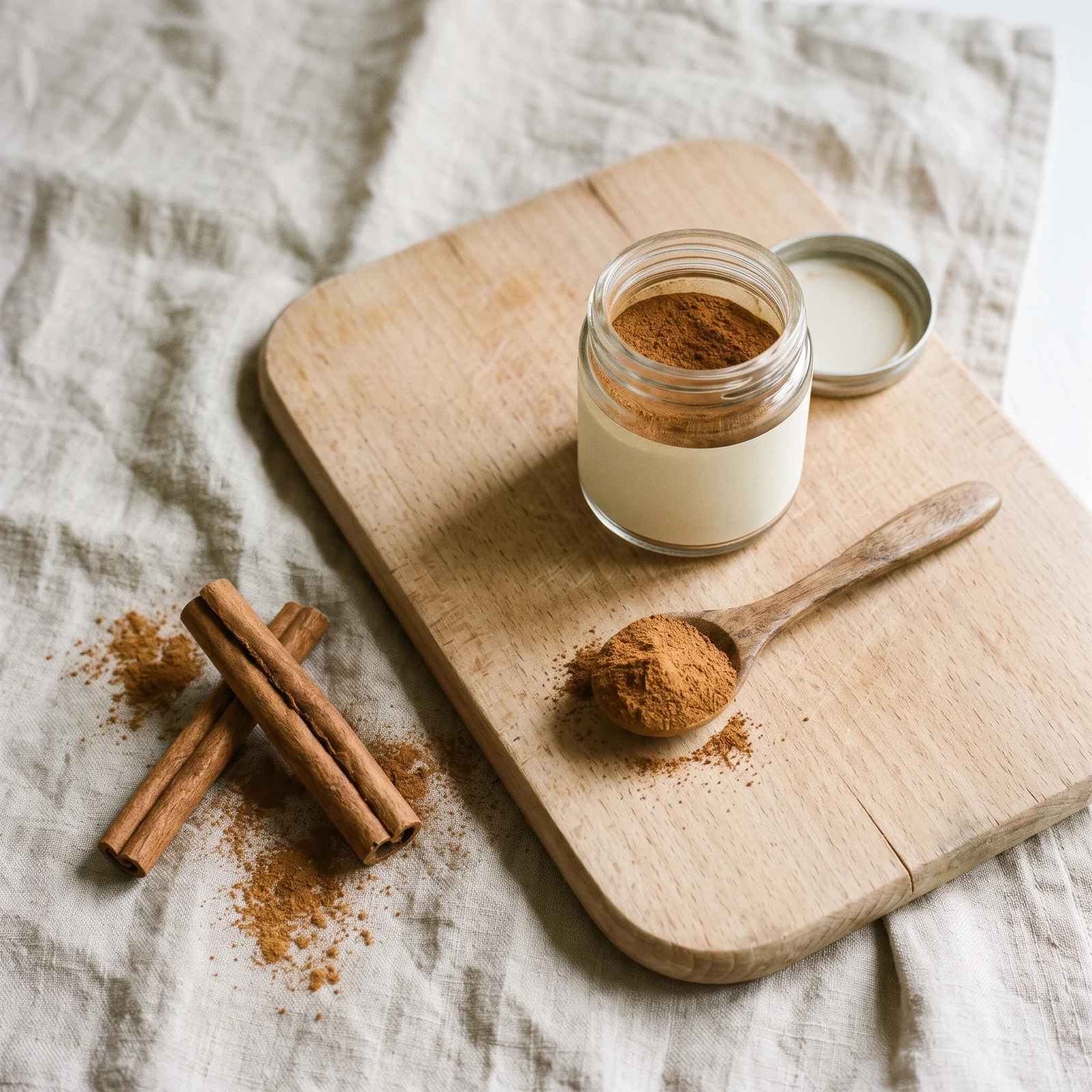
2 to 3 years
Airtight and dry at 65 to 70°F, away from the stove
No gain
The charts give ground spices a cupboard figure only
Sticks only
Whole cinnamon sticks, left to warm before opening
Has your ground cinnamon gone bad?
See all 5 stages ↓ Use itFresh, fragrant ground cinnamon
 Use more of itPale, faded ground cinnamon
 Throw it outGround cinnamon with pantry pests
How to store ground cinnamon comes down to one thing: an airtight jar in a cool, dark cupboard, away from the stove. Kept that way it holds its quality for 2 to 3 years, although the charts disagree and one says to check the aroma at 6 months. It fades rather than spoils.
What should you look for when you buy ground cinnamon?
Buy a small jar you will finish inside a year, and check that it seals properly. A ground spice runs on a much shorter clock than the stick it came from, because grinding opens the bark up to the air, and the essential oils that carry the flavor degrade as the powder ages. So the container matters nearly as much as the cinnamon, since a paper packet keeps out neither air nor insects.
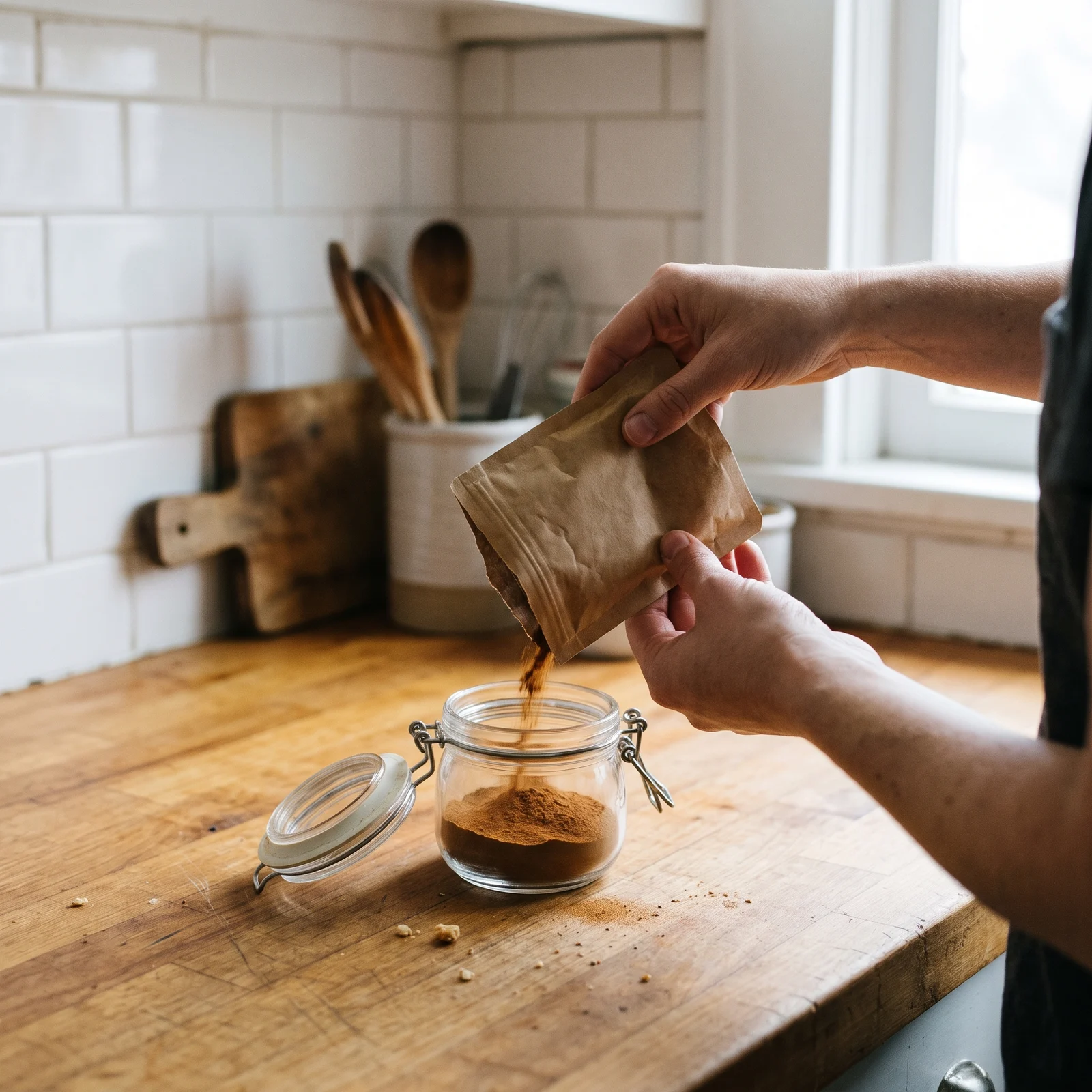
A small jar that seals, finished inside a year.
A jar you will finish in a year. Ground cinnamon is given 2 to 3 years on the charts, but the aroma is worth checking well before that.
A container that seals tightly. Airtight glass or metal keeps the aroma in and, just as usefully, keeps pantry insects out.
Sticks as well as ground. Whole cinnamon sticks maintain their quality beyond two years, so a jar of sticks is the better buy for anything you can grate.
An undamaged packet or jar. Damaged packaging is worth avoiding on the shelf, because an inadequate factory seal is one way an infestation starts at the store.
How to store ground cinnamon so it lasts
To store ground cinnamon so it lasts, decant it into an airtight jar and keep it somewhere cool, dry and dark. Air, light, moisture and heat are the four things that speed flavor and color loss, so the cupboard you pick does most of the work for you.
Where should you store ground cinnamon?
Store ground cinnamon in an airtight container in a cool, dry, dark cupboard at 65 to 70°F. Keep it away from the stove, the dishwasher, the microwave, the sink, a heating vent, hot water pipes and the top of the fridge, since every one of those spots is either warm or damp. So the rack directly above the stove, convenient as it is, quickly reduces the quality of everything sitting on it.
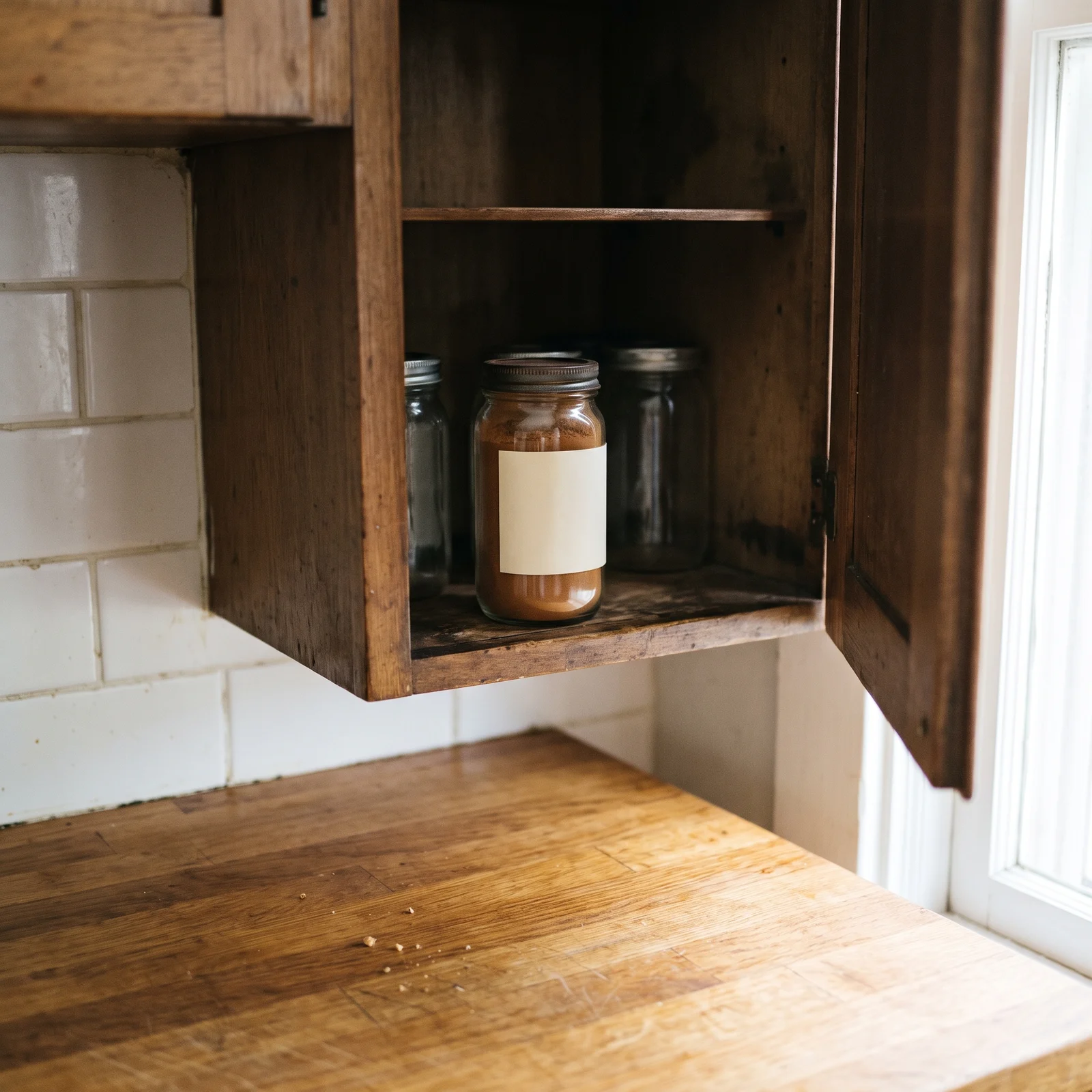
Cool, dry and dark, and never above the stove.
How long does ground cinnamon last?
Ground cinnamon is given 2 to 3 years for quality, while whole cinnamon sticks hold on beyond two years and whole spices run as high as 4 to 5. The charts do not agree on the ground figure, though: two of them give ground spices 2 to 3 years, a third says to evaluate freshness after six months, and a fourth gives ground spices good flavor up to one year. Treat 6 months as the point to open the jar and smell it rather than the point to bin it, since that is the shorter and safer reading.
The reason ground cinnamon fades faster than a stick is surface area. Grinding breaks the bark open, and as a spice ages its essential oils and other compounds degrade, so a powder loses what a sealed stick keeps. The allspice guide covers the same split between whole and ground.
Does ground cinnamon go bad?
Ground cinnamon does not really go bad, it fades. Spices do not become unsafe with age, they lose their flavor, and the practical test is the aroma: rub a pinch between your fingers and smell it, and if the scent is immediate, strong and spicy it will still flavor your food. Look at the color too, because a dull, pale powder usually tastes as dull as it looks. Mold, damp and insects are a different matter, and each of those genuinely ends a jar. The same aroma test settles an old bag of ground coffee.
Has ground cinnamon been recalled for lead?
Yes, and the list is still being added to. A public health alert first issued in July 2024 names ground cinnamon products found to contain elevated levels of lead, starting at about 2 parts per million, and the advice for everything on that list is to throw it away rather than use it up. More products have been added since, most recently in November 2026, so it is worth checking the current alert against the jar in your cupboard. This one is about which cinnamon you bought rather than how you stored it, but it is the real safety question for ground cinnamon, and age is not.
Can ground cinnamon sit out overnight?
Yes, ground cinnamon can sit out overnight safely, because a dry powder has nothing in it for bacteria to grow in. Leaving the jar open is still a poor idea, since an open jar collects exactly the damp and steam that cause clumping and flavor loss. So put the lid back on rather than worrying about safety, and see the food left out overnight guide for the foods where the answer is no.
Can you freeze ground cinnamon?
The freezer advice is for cinnamon sticks rather than for the ground spice. Whole cloves, nutmeg and cinnamon sticks are the ones named as keeping their quality beyond two years and as suiting the freezer to extend shelf life, while no chart gives ground cinnamon a freezer figure at all. One source also warns against freezing spices, because it can introduce moisture into the container, so the two pieces of advice pull in opposite directions. Given that a jar of ground cinnamon is good for a year or more in the cupboard anyway, the freezer buys you very little.
How should you freeze cinnamon sticks?
Seal them airtight first, then freeze them, and let the jar come back to room temperature before you open it. That last step is what settles the disagreement, because the moisture problem is condensation forming on a cold spice in a warm kitchen. Then grate what you need from a stick as you go, which gets you the long storage life of whole cinnamon together with the flavor of freshly ground.

Airtight in, room temperature before opening.
Why does ground cinnamon clump?
Clumping is damp getting in, and there are two usual routes. Shaking the jar over a steaming pan is the first, which is exactly why the advice is never to sprinkle a spice straight from its container into a steaming pot. A wet measuring spoon is the second, so keep your spoons dry and tip the cinnamon into your hand or a dry bowl instead. Salt sets hard in the same way and for the same reason.
Can you get bugs in ground cinnamon?
Yes, spices and herbs are on the list of foods pantry insects infest, and a paper packet is no barrier to them. Beetles and Indian meal moths are the usual culprits, and an infestation often arrives from the store inside a packet whose factory seal was not adequate. So decant into airtight glass or metal, buy no more than a couple of months' supply at a time, and keep the shelf itself clean, because spilled powder in the corners is what keeps an infestation going.
How to tell if ground cinnamon has gone bad
A jar of ground cinnamon almost always gets thrown out for being weak rather than for being spoiled. The powder is dry, so bacteria have nothing to grow in, and the first three stages below are flavor calls you can make with your nose. Damp and insects are the two things that genuinely end a jar, and mold belongs with the damp. Here is what each stage means.
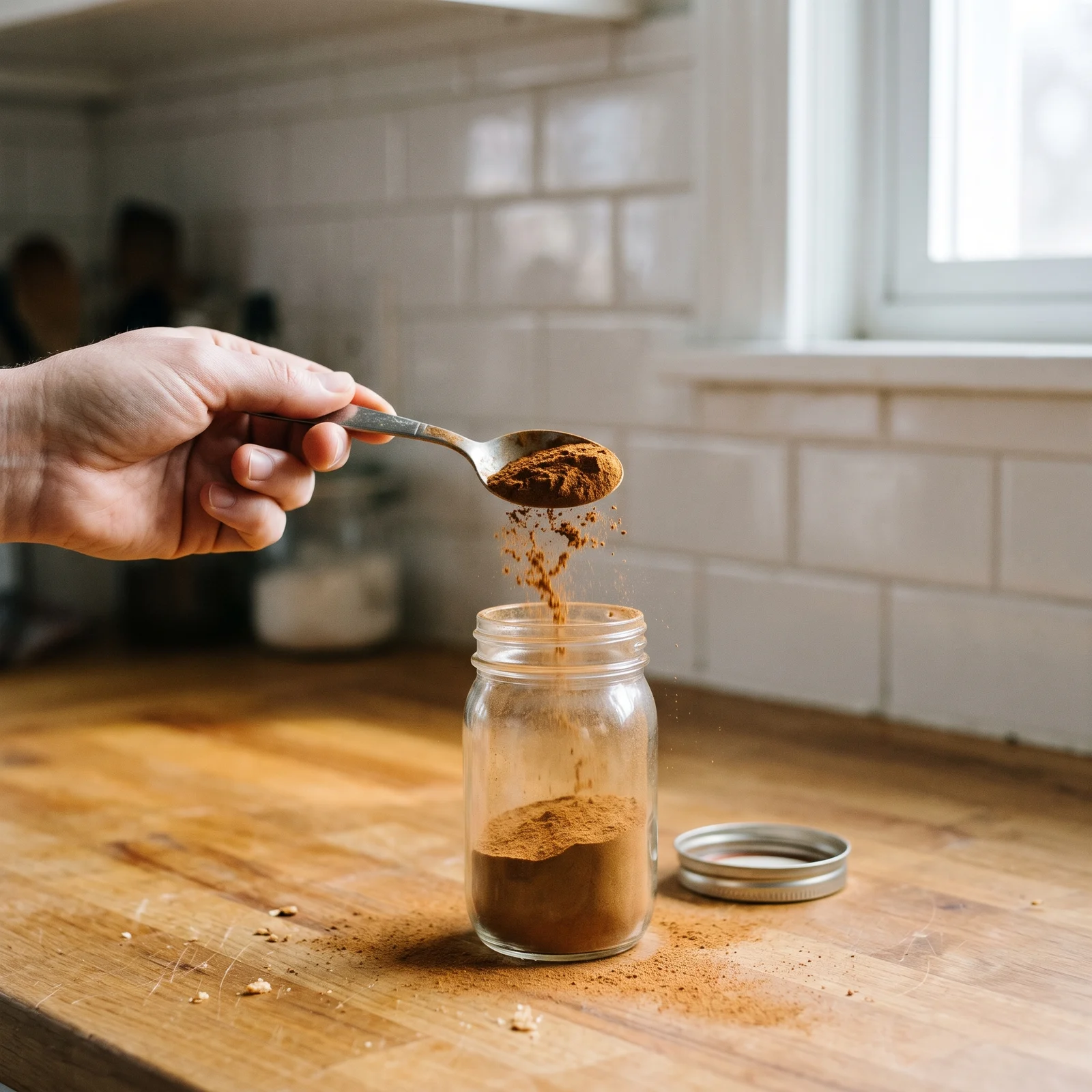
Verdict: use it
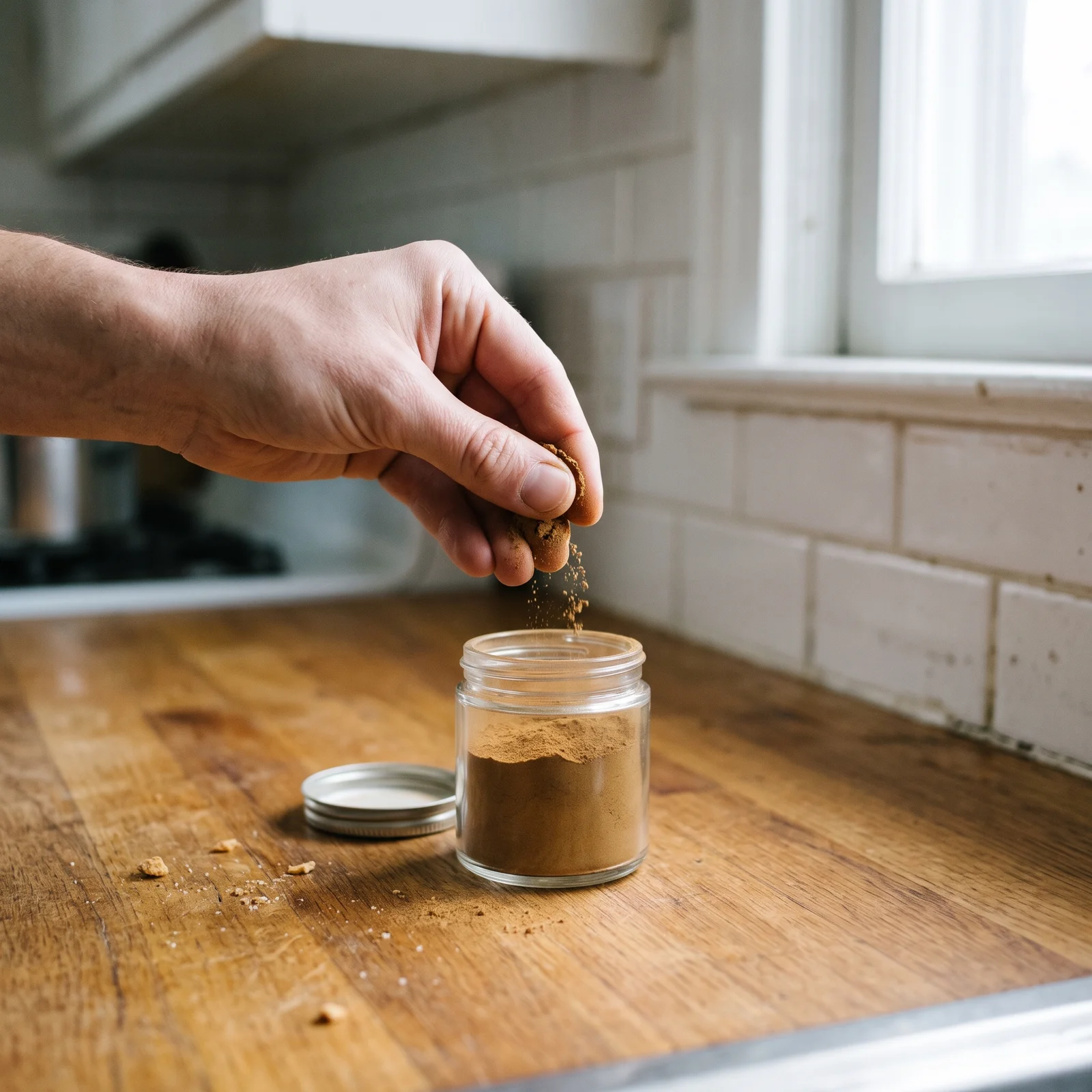
Fresh, fragrant ground cinnamon
Warm reddish brown, loose in the jar, and sweetly, sharply spicy the moment the lid comes off. The aroma is immediate rather than something you have to hunt for, so this ground cinnamon will still flavor whatever you stir it into.
Verdict: use more of it
Pale, faded ground cinnamon
A duller, tan-brown powder that smells of very little until you crush a pinch of it firmly. Air, light, moisture and heat take the color and the flavor together, which is why a faded powder is such a reliable sign of a faded spice. Even so, it is not unsafe, so finish the jar by using half as much again, then buy a smaller one next time.
Verdict: break it up and use it
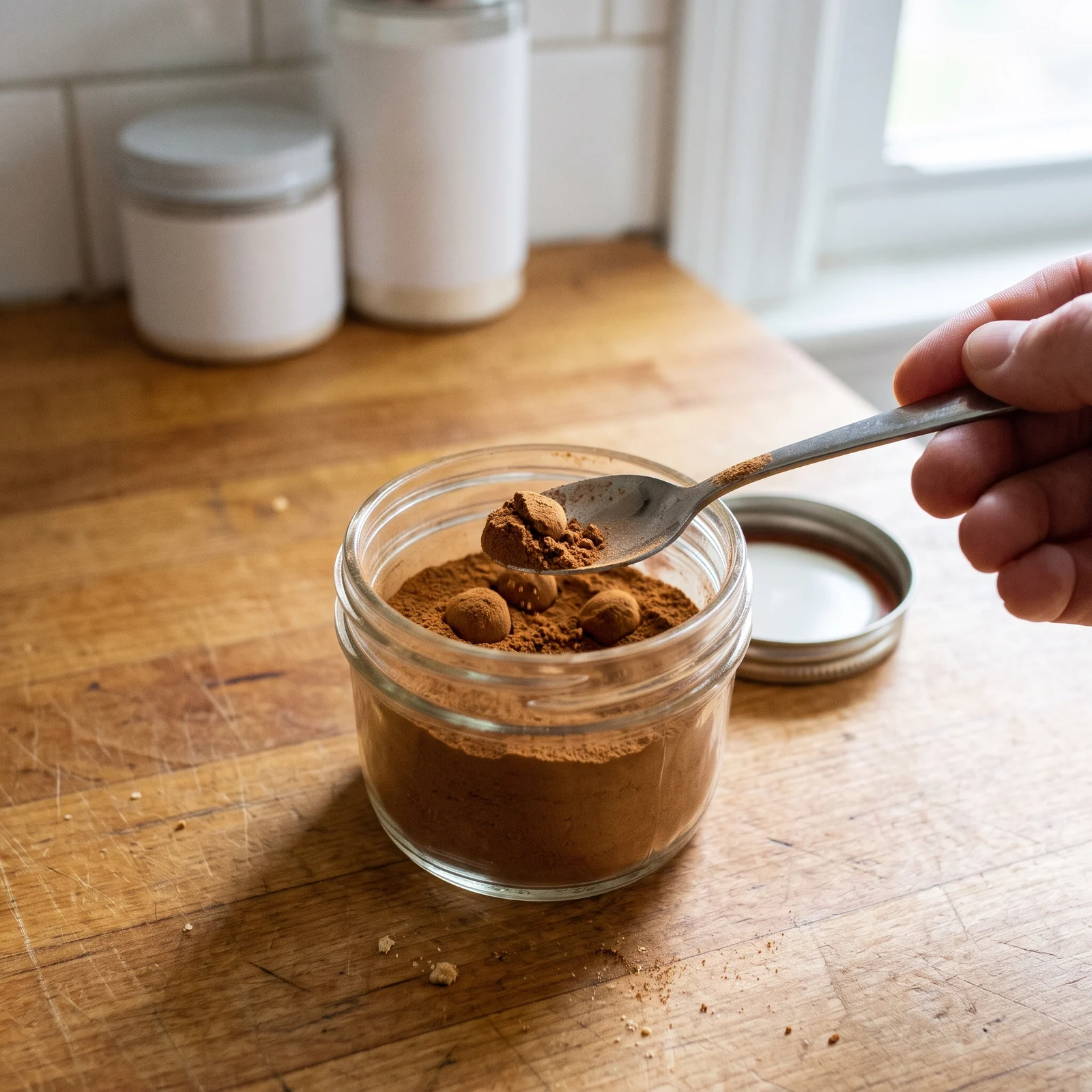
Clumped ground cinnamon
Soft lumps that break apart under a spoon, in a jar that is otherwise dry and smells right. Damp from steam or a wet spoon has got in, although the cinnamon itself is fine. Crush the lumps, use the jar up sooner than you planned, and keep it away from the pan next time.
Verdict: throw it out
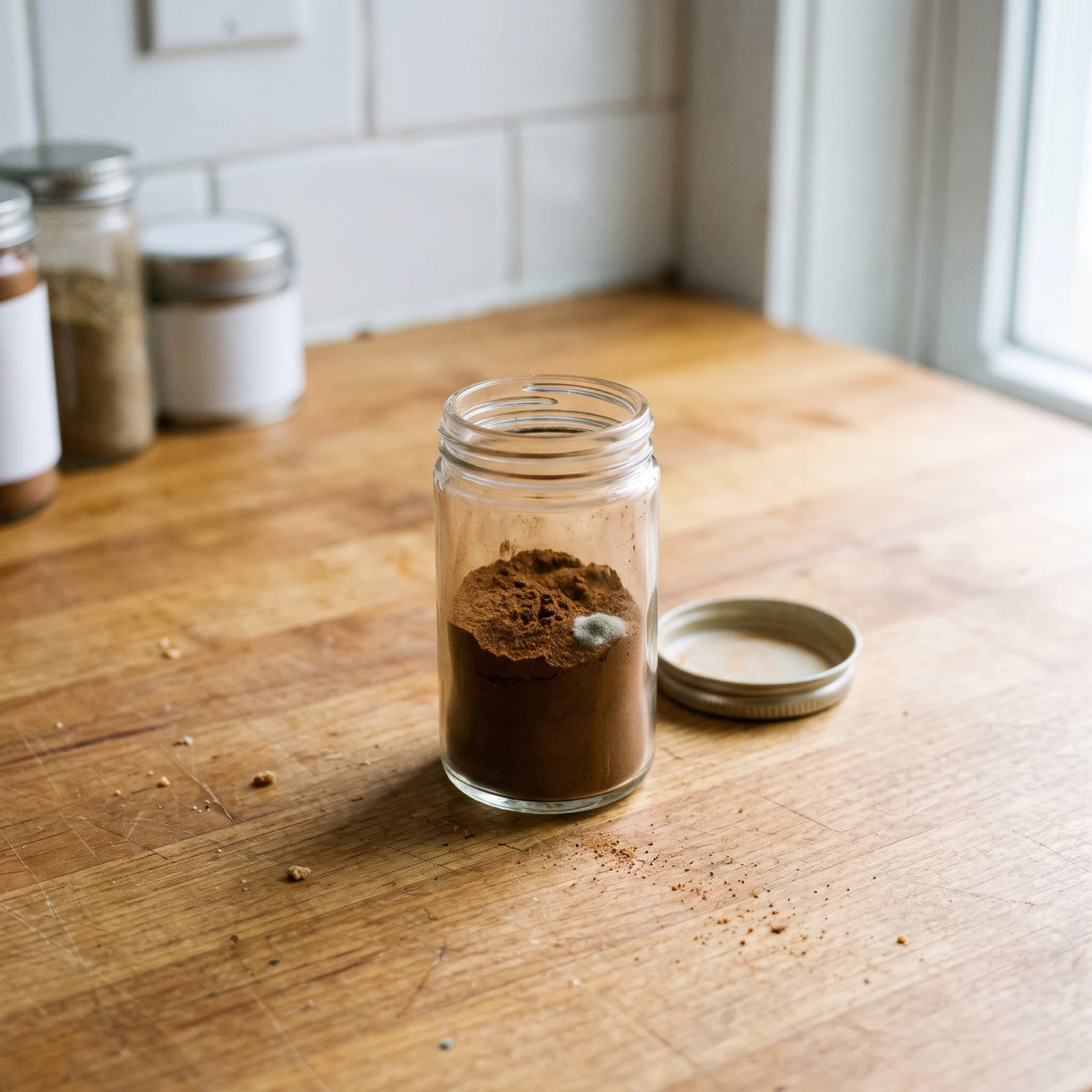
Damp or moldy ground cinnamon
A solid cake that will not break up, powder that looks wet, or any trace of mold across the surface. Moisture has been sitting in there long enough to change the spice rather than merely clump it, and mold growth is a sign to discard a product rather than to rescue it. So bin this jar instead of trying to dry it out.
Verdict: throw it out
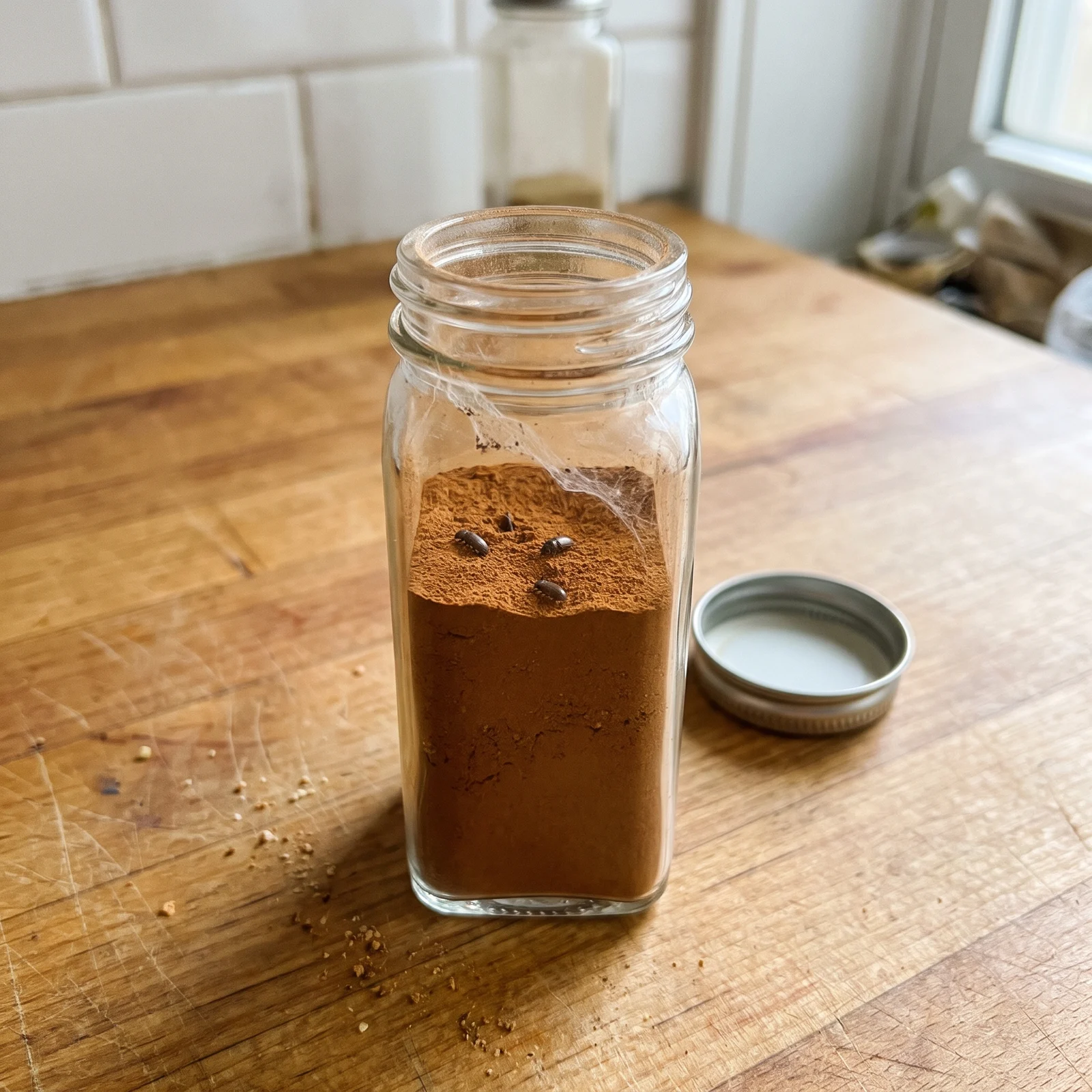
Ground cinnamon with pantry pests
Small beetles in the powder or on the shelf, fine silken webbing, or shed skins and pupal cases in the jar. The first step with an infestation is to find and discard all of the infested material, so bag this jar and put it in an outdoor bin with a tight lid. Then wash the container, check every other jar on the shelf, and vacuum the corners and cracks where spilled powder collects.
Is old ground cinnamon safe to eat?
Generally yes, as long as it is dry, insect-free and still smells of cinnamon. Age takes the flavor out of a spice rather than making it dangerous, which is why the guidance is to check the aroma and replace the jar once it has faded rather than to read the date as a safety line. Write the day you opened it on the jar, since that is the only way those figures mean anything a year later. The flour guide covers another pantry staple where insects, rather than age, are the real reason a bag gets thrown out.
Ground cinnamon substitutes
Out of ground cinnamon, or did the jar finally lose its smell? Then one of these will stand in.
Substitute
Works best in
What changes
Cinnamon sticks, grated
Baking and oatmeal
They keep their quality beyond two years, so they outlast the powder.
Nutmeg
Custards and milky puddings
Warmer and sweeter, so start with half as much.
Allspice
Pies and braises
Close to cinnamon, with clove sitting behind it.
Pumpkin pie spice
Pies and pancakes
A blend, so it fades on a six-month clock.
Mistakes people make when they store ground cinnamon
These are the ways people store ground cinnamon that cost them the most, so each one has an easy fix.
Keeping the jar on the rack above the stove, where heat and steam drain the flavor fastest.
Shaking it straight over a steaming pan, which lets damp in and sets the powder into lumps.
Dipping a wet measuring spoon into the jar, when a dry spoon keeps the whole jar loose.
Leaving it in the paper packet, rather than an airtight jar that also keeps insects out.
Standing the jar on a sunny windowsill, because light takes the color and the flavor together.
Reading the date on the jar as a safety line, when faded cinnamon is weak rather than unsafe.
Buying ground when sticks would do, since whole cinnamon keeps its quality for years longer.
Sources
Food Storage Guide FN579, Julie Garden-Robinson, NDSU Extension, reviewed January 2023, on ground spices keeping 2 to 3 years and whole spices 3 to 4, on herb and spice blends keeping 6 months, on airtight containers in dry places away from sunlight and heat, on checking the aroma and replacing a faded spice, and on whole cloves, nutmeg and cinnamon sticks maintaining quality beyond two years and suiting the freezer.
Storing Staple Ingredients in the Kitchen, Martha Zepp, Penn State Extension, updated August 2024, on evaluating the freshness of ground spices and all herbs after six months, on whole spices keeping their quality longer than ground, on cinnamon sticks lasting beyond two years, on airtight containers away from sunlight and heat, on a spice rack above the stove quickly reducing quality, and on letting frozen spices reach room temperature before opening to avoid condensation.
Check your cooking staples, Elizabeth L. Andress, University of Georgia CAES Field Report, February 2010, on herbs and ground spices keeping good flavor up to one year in cool, dry cupboards, on whole spices keeping quality up to two years, on air, light, moisture and heat speeding flavor and color loss, on avoiding storage above or near the stove, dishwasher, microwave, refrigerator, sink or heating vent, on using a dry spoon and not sprinkling a spice into a steaming pot, and on the aroma of a good ground spice being immediate, strong and spicy.
Food Storage for Safety and Quality, Elizabeth L. Andress and Judy A. Harrison, University of Georgia Cooperative Extension publication FDNS-E-119, June 2011, on ground spices keeping 2 to 3 years and whole spices 2 to 4 in a 50 to 70°F cupboard, on herb and spice blends keeping 6 months, and on avoiding products with signs of spoilage such as mold growth or insect damage.
Prairie Fare: Add some spice to your menus, Julie Garden-Robinson, NDSU Extension, December 2024, on storing spices in a cool, dry and dark place, on using them within two to three years, on labelling each container with the date it was opened, on whole spices lasting longer than ground, on essential oils and other compounds degrading as spices age, on spices losing flavor without becoming unsafe, and on replacing a spice you cannot smell and buying a smaller amount next time.
Food Storage: Pantry, Pamela Schmutz and E.H. Hoyle, revised by Faith C Isreal, Clemson Cooperative Extension factsheet HGIC 3525, revised March 2020, on a cool dry pantry at 65 to 70°F, on ground spices and herbs listed at 2 to 3 years and whole spices at 4 to 5, on not using storage areas near oven ranges, hot water pipes or heating ducts, on tightly sealed glass, metal or rigid plastic containers reducing insect infestation, and on writing purchase dates on packages.
Pantry Pests, Kevin Hathorne, Patricia A. Zungoli and Eric P. Benson, Clemson Cooperative Extension factsheet HGIC 2439, December 1998, on spices and herbs being among infested products, on beetles and Indian meal moths, on inadequate factory seals starting an infestation, on discarding all infested material in a tightly lidded outdoor bin, on airtight insect-proof containers, on buying no more than a two-month supply, and on cleaning spills from corners, cracks and crevices.
More Ground Cinnamon Products Added to FDA Public Health Alert Due to Presence of Elevated Levels of Lead, U.S. Food and Drug Administration, alert first issued July 2024 and last updated November 2026, on ground cinnamon products found to contain elevated levels of lead from about 2 parts per million upwards, and on the advice to throw those products away and not to buy them.
Every storage time, temperature and verdict on this page comes from the sources listed above, and none of it is made up. Food safety still depends on conditions we cannot see, so read the Disclaimer, and if in doubt, throw it out.
Other ingredient guides
Browse all guides




Share this guide
Never miss a guide
New ingredient guides when they go up, plus one storage tip worth knowing. Anything sponsored is labelled.

Emilly White