
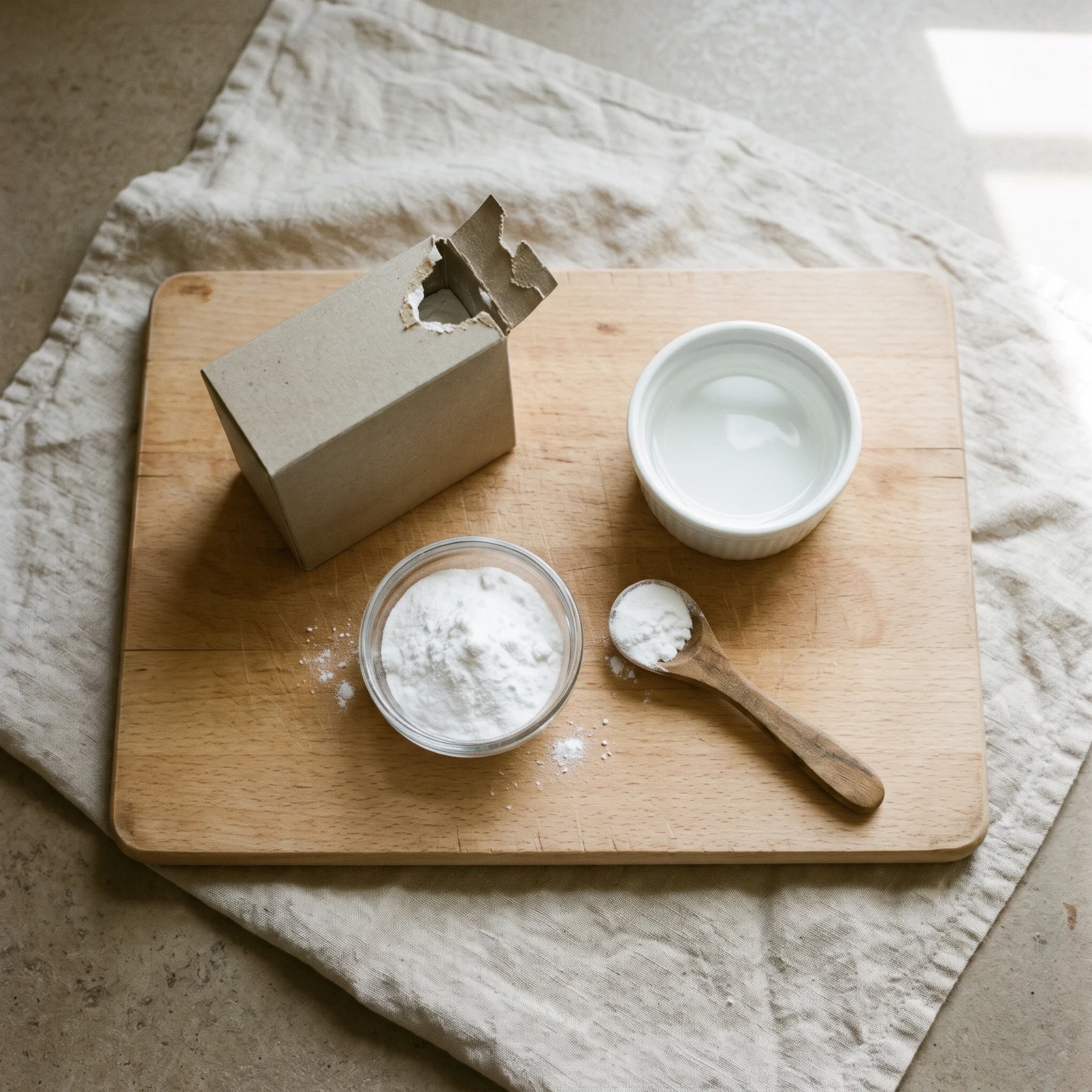
2 to 3 years
Dry and covered, in a cool, dark cupboard
3 to 6 months
Dry and covered, for anything that has to rise
Not needed
No storage chart gives it a freezer time
Has your baking soda gone bad?
See all 5 stages ↓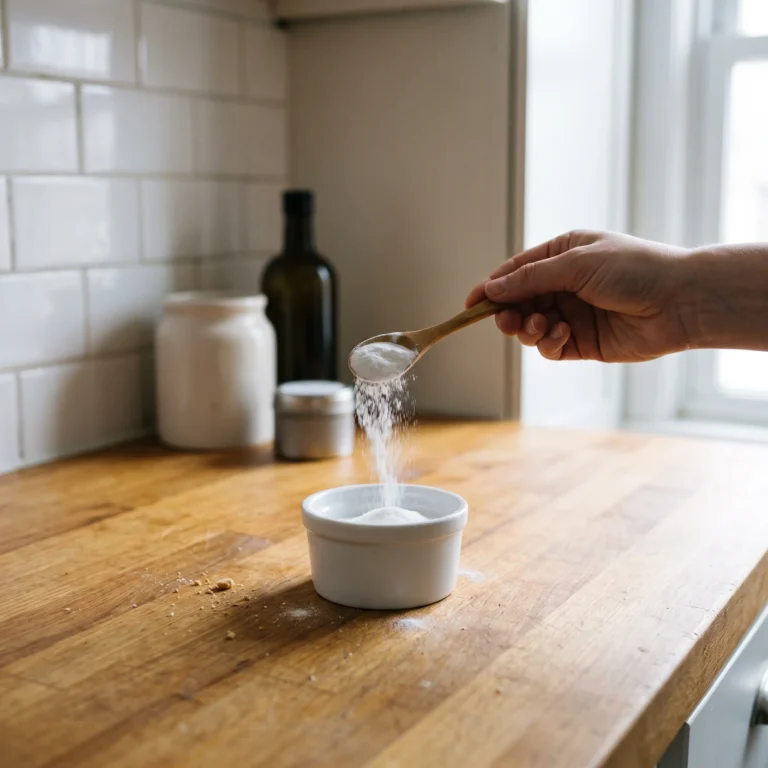 Use itLoose, fresh baking soda
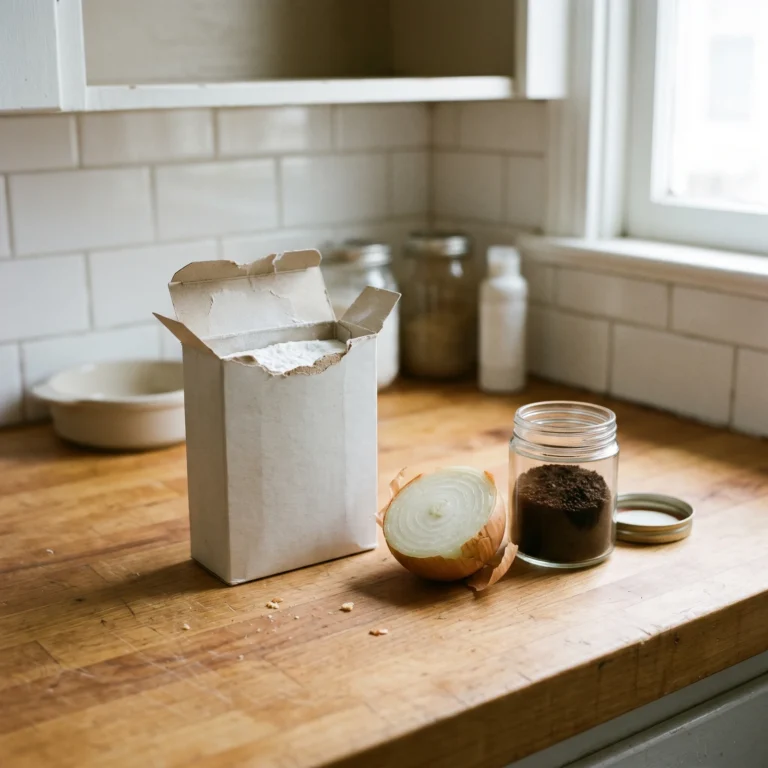 Use it for cleaningBaking soda that smells of the fridge
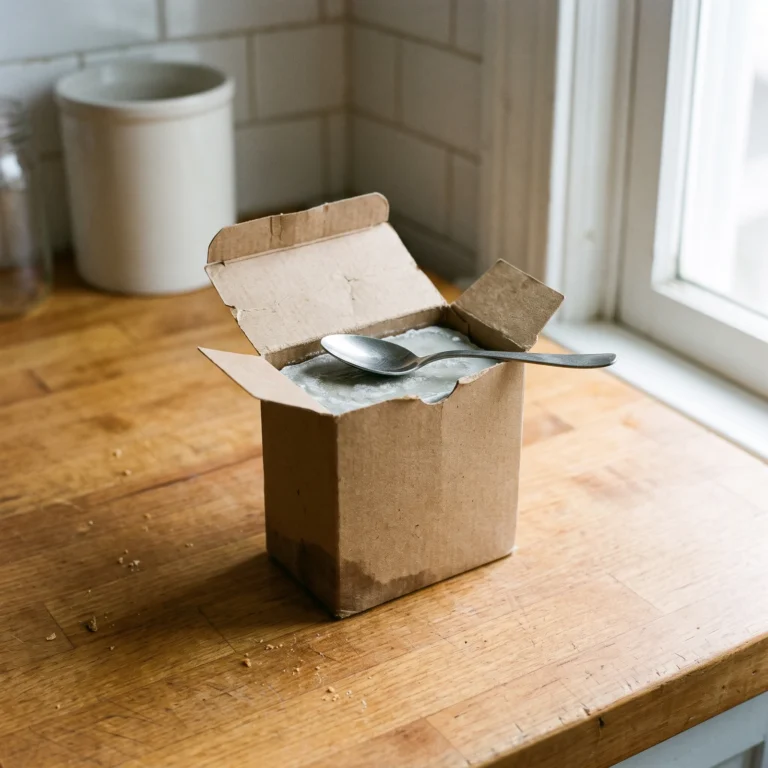 Throw it outWet or solid baking soda
Baking soda does not spoil, but it loses the lift that makes a cake rise. An unopened box keeps 2 to 3 years in a dry cupboard, while an opened one is worth 3 to 6 months for baking. The short answer to how to store baking soda is dry, covered and away from heat.
Is it baking soda or baking powder?
Baking soda is pure sodium bicarbonate, so it needs an acid in the recipe before it will do anything at all. Baking powder already holds that acid in the tin, along with a drying agent that keeps the two apart until they are wanted. That difference sets the shelf life as well, because a tin carrying its own acid runs on a shorter clock than plain bicarbonate does.
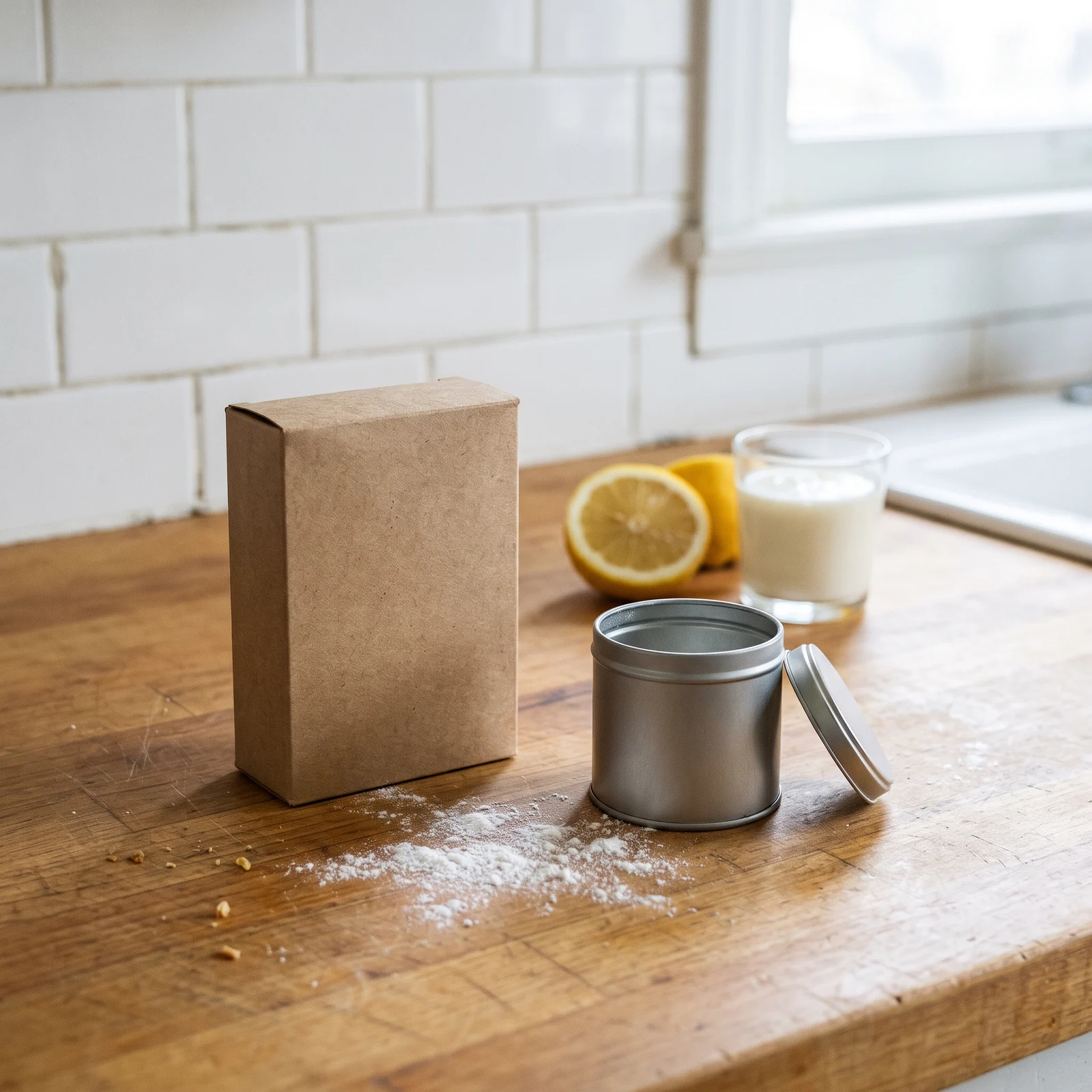
One needs an acid from the recipe, while the other brings its own.
Baking soda is sodium bicarbonate and nothing else, which is why a recipe built on it also carries buttermilk, yogurt, lemon or vinegar.
Baking powder holds sodium bicarbonate, an acid and a drying agent together in one tin, so it can raise a batter on its own.
Double-acting powder is the one to reach for in a batter you mean to freeze, since part of its rise waits for the oven.
The box carries the date that matters, printed on the bottom of the box and the pouch, and the cupboard charts point straight at it.
How to store baking soda so it lasts
To store baking soda so it lasts, keep it dry, covered and out of the heat, because damp is the one thing in an ordinary kitchen that can touch it. Cold does nothing for it either, and nor does an airtight jar if the spoon going into it is wet.
Where should you store baking soda?
Keep baking soda covered in a cool, dry, dark cupboard, away from the stove and any other appliance that gives off heat. That is almost the whole of how to store baking soda, since the powder itself is stable at room temperature and only damp undoes it. Keep it clear of cleaning products as well, which the cupboard charts warn about. Then check that the spoon you dip in is dry, because a wet one carries the damage straight into the box.
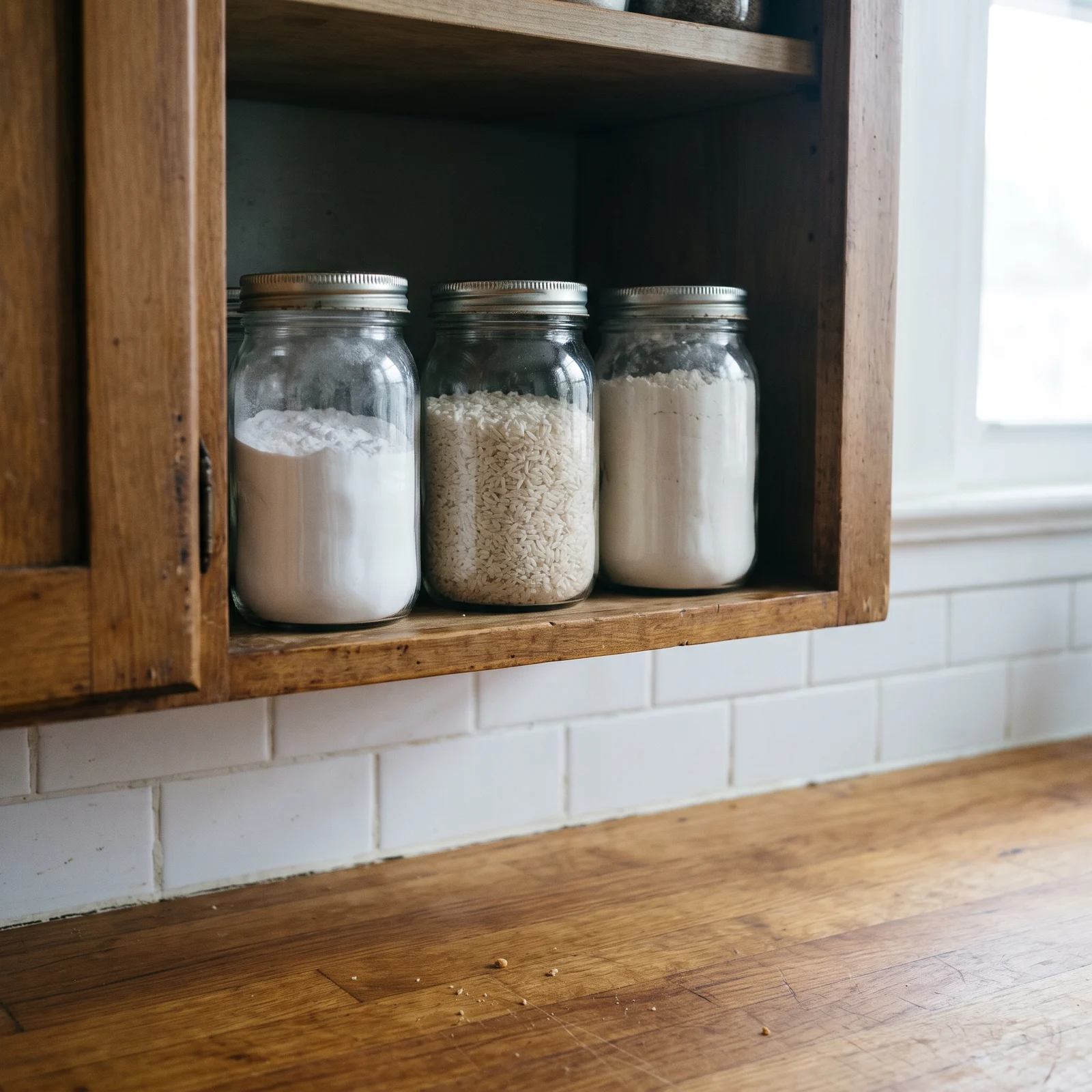
A covered jar in a cool cupboard, because damp is the thing that ruins it.
How long does baking soda last?
An unopened box of baking soda lasts 2 to 3 years, and an opened one gets 3 to 6 months for anything that has to rise. The charts do not agree, however. One pantry guide gives it 18 months unopened and 6 months once open, another gives a flat 2 years, and the manufacturer's own figure is 3 years with the date on the bottom of the box. So treat 2 to 3 years as the outer edge, and treat the opened box as the one on a real clock.
In other words, the printed date describes the sealed box. Once it is open, what counts is how dry the cupboard is and how long ago you broke the seal.
Does baking soda need to be refrigerated?
No, baking soda does not need the fridge, and the box people keep in there is doing a different job. An open box in the fridge or the freezer absorbs odors, and it wants swapping about once a month to keep that working. After roughly 30 days it has taken up a good share of whatever the fridge smelled of, which is exactly why that box should not go back into a cake.
Why is my baking soda hard and clumpy?
Lumps mean the box met damp air, and they do not mean the baking soda has stopped working. Finer grades tend to cake or lump during storage with no effect on their purity or their function, so press the lumps out with the back of a spoon and carry on. Shaker packs are ground differently for that very reason, which is why they keep flowing in a humid kitchen. A box that has set hard right through is another matter, though, because that one has taken on real water.
Can baking soda sit out overnight?
Baking soda can sit out overnight with no risk at all, since it is a dry mineral powder rather than a food that spoils. A night on the counter with the lid off is not free, however, because the open box takes up kitchen moisture and smells while it stands there. So put the lid back on and return it to the cupboard. The food left out overnight guide covers the things on the counter that really do matter.
Can you freeze baking soda?
You can keep baking soda in the freezer, although not for the reason most people assume. No storage chart we opened gives it a freezer time at all, and an unopened box already keeps 2 to 3 years in the cupboard, so the cold has nothing to add. The box in the freezer is there to absorb odors instead.
Does the box from the fridge or freezer still work for baking?
No, keep that box for odors and open a fresh one when you bake. A month in there and it has absorbed a good share of what the fridge and the freezer smelled of, and those smells come back out in whatever you bake with it. The swap runs the other way as well, because a box that fails the fizz test for baking is exactly what the fridge wants next.
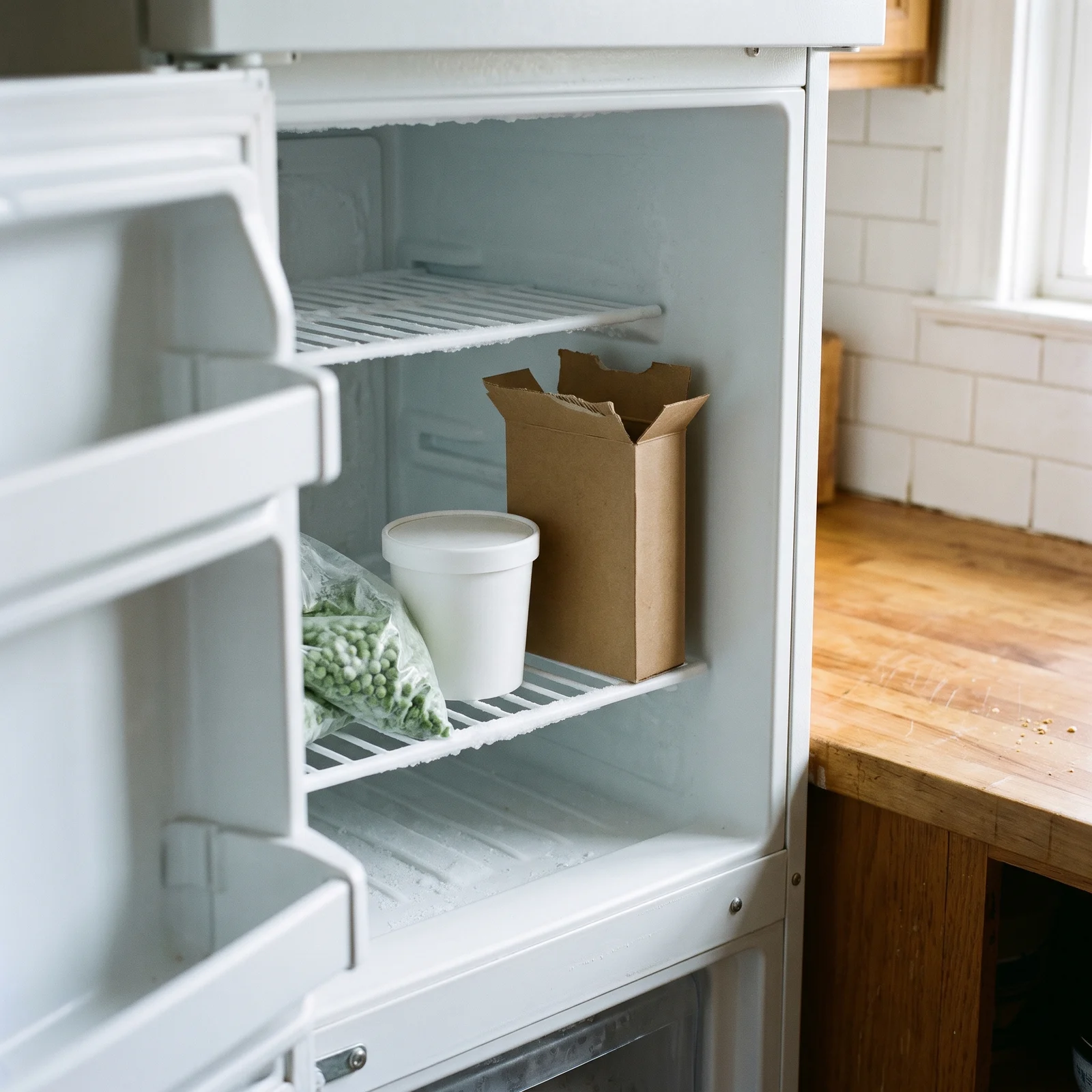
The freezer box is a deodorizer, so keep a separate box for baking.
Does cold hurt baking soda?
Cold does not hurt baking soda, and it does not help it either. Rolling stability studies run at 25°C and 60 percent relative humidity confirm the powder is chemically stable, and that is an ordinary warm cupboard rather than a fridge shelf. Damp is the variable that moves the needle, so dry and covered remains the only real rule.
How do you test baking soda for freshness?
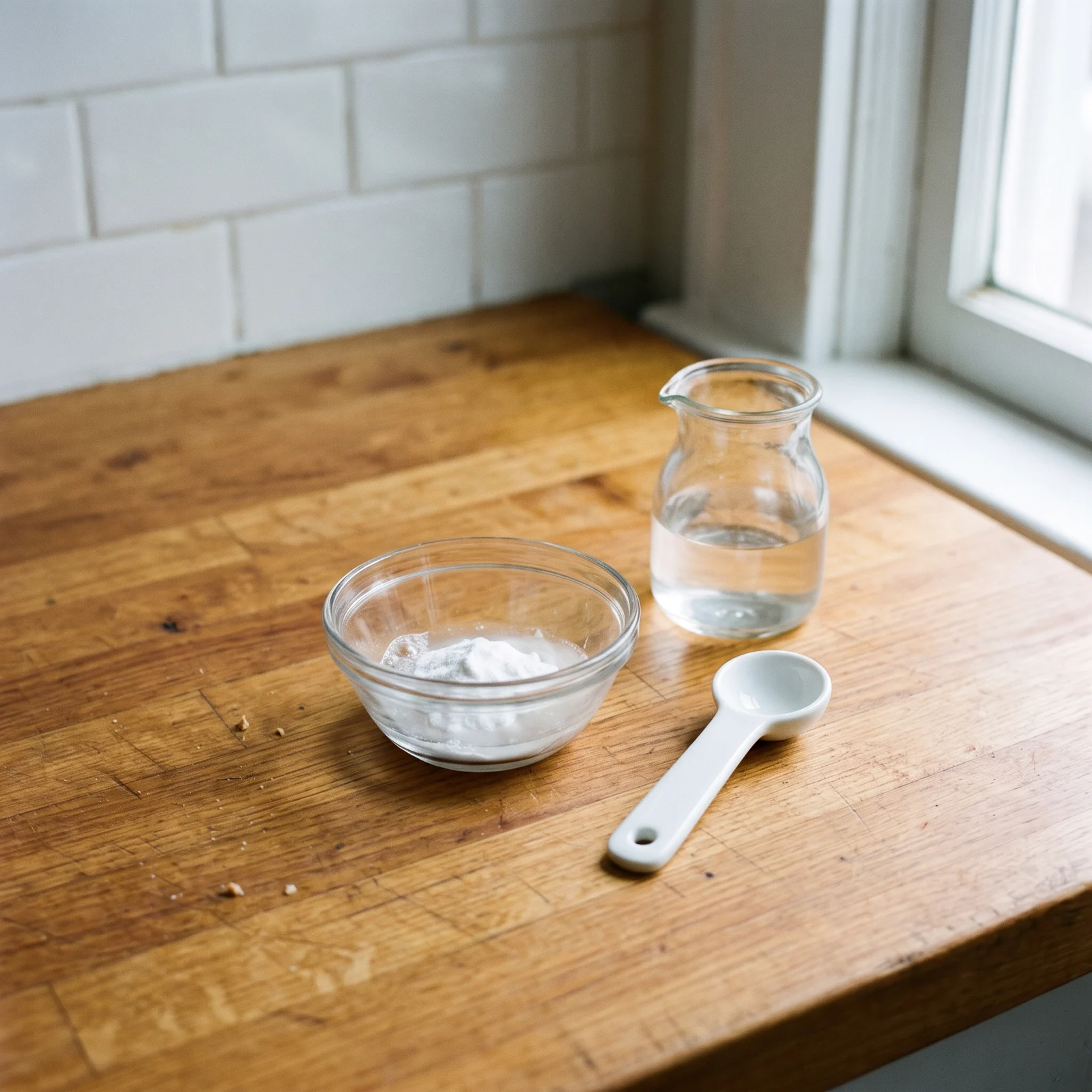
Put 1½ teaspoons of baking soda in a small bowl, add 1 tablespoon of vinegar, then watch what happens. Fizzing means it still works as a leavener, while a weak reaction or none at all means the lift has gone. Nothing is wasted either way, because soda that fails the test still works as a refrigerator odor absorber.
Does baking soda go bad?
Baking soda fails in one direction above all, and that is a quiet loss of lift rather than anything anyone would call spoilage. Mold never comes into it, so four of the five stages below are still useful in some form and only a soaked box has to go. Here is what each stage means.
Verdict: use it
Loose, fresh baking soda
The powder pours freely, breaks up under a spoon and fizzes hard the moment vinegar reaches it. A box like that is good for anything that has to rise, whether you opened it last week or last month. So keep it covered, and use it within 3 to 6 months of opening.
Verdict: use it
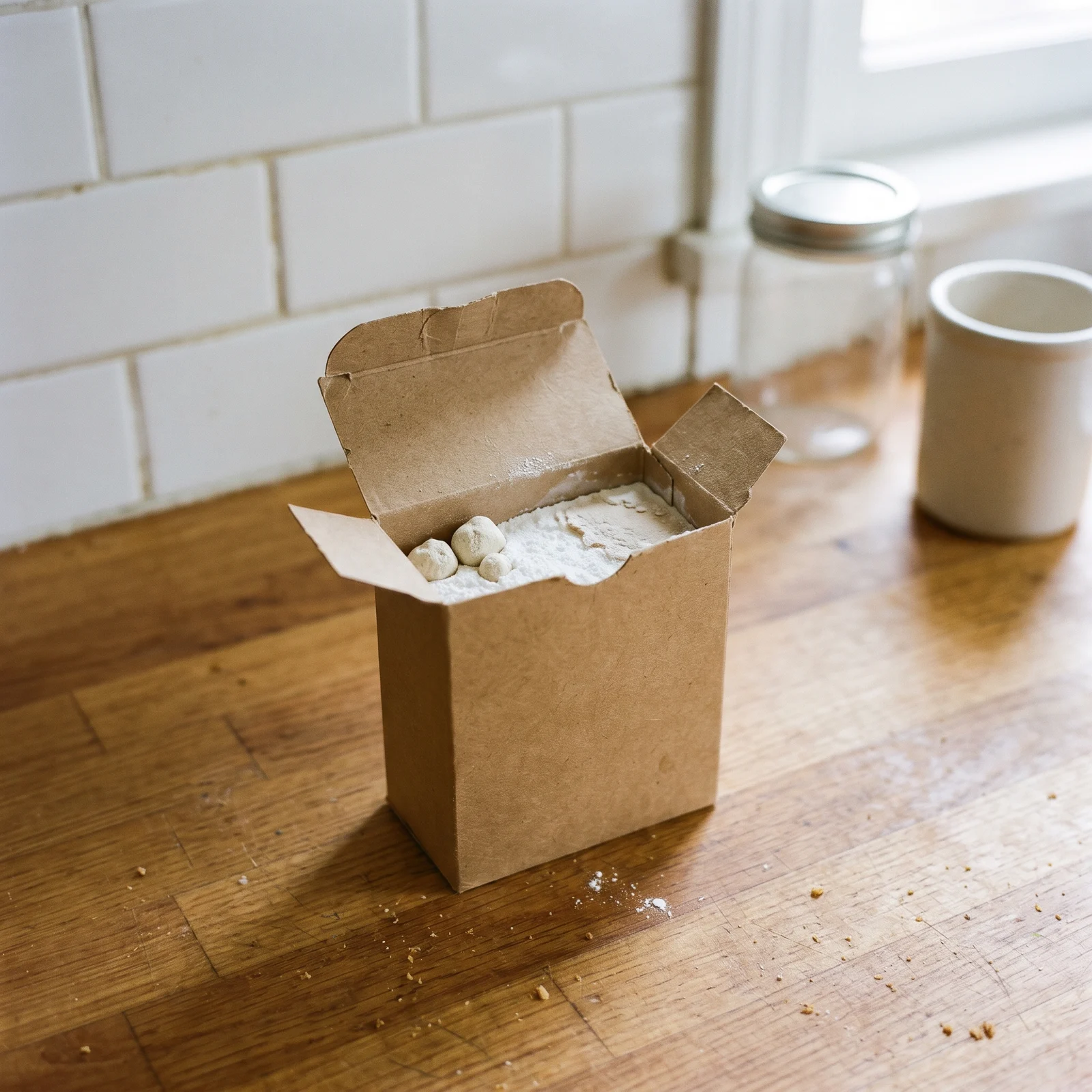
Caked or lumpy baking soda
The soda has set into lumps, or a crust has formed across the top of the box. That is damp air rather than age, and caking has no effect on the purity or the function of the powder. So press the lumps out, then test a spoonful with vinegar before you bake with it.
Verdict: use it for cleaning
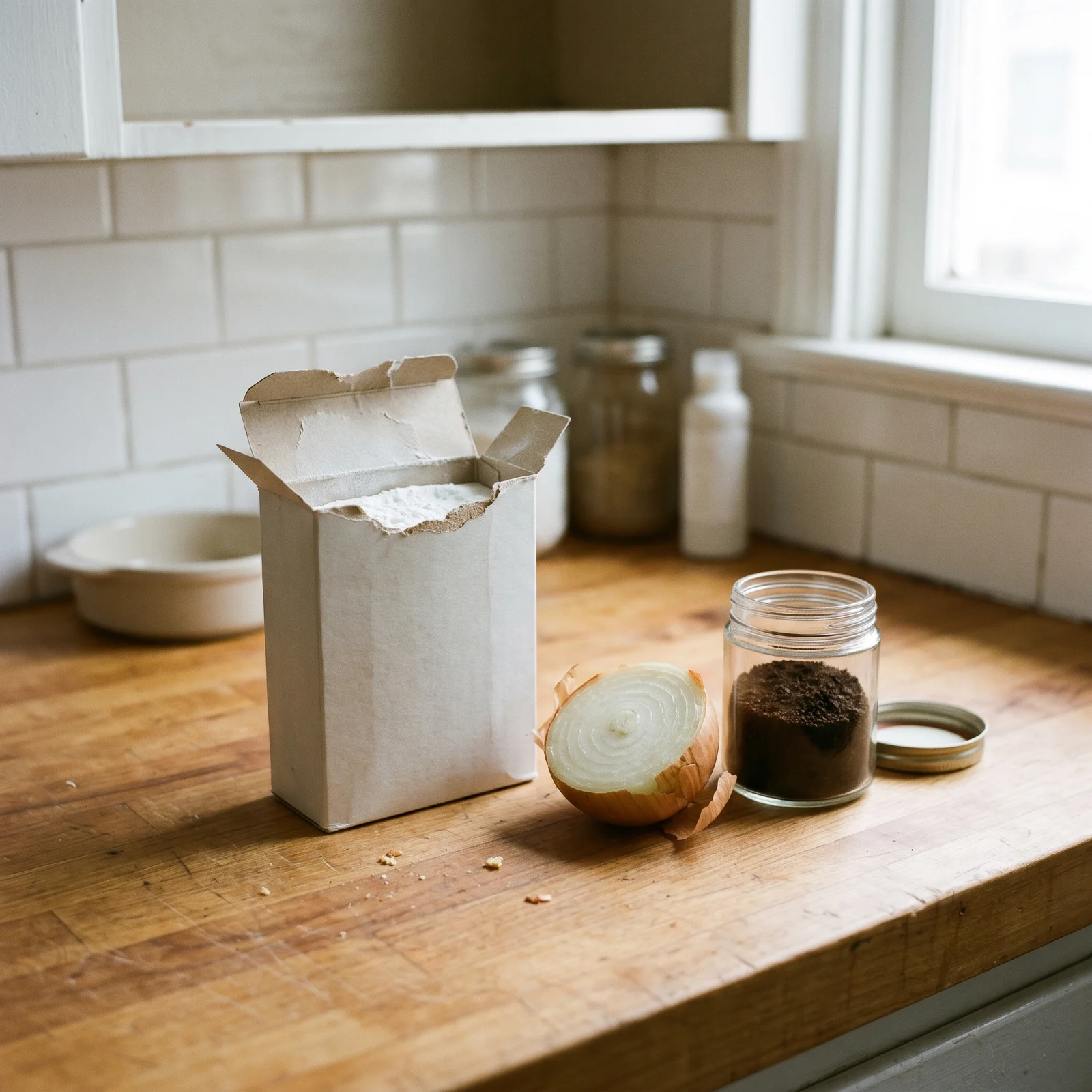
Baking soda that smells of the fridge
The powder carries a faint smell of onion, coffee or last week's leftovers. An open box takes up a good share of the odors around it within about a month, and those smells travel into whatever you bake. So move that box over to scrubbing and deodorizing, and open a fresh one for baking.
Verdict: use it for cleaning
Baking soda that will not fizz
A spoonful meets a tablespoon of vinegar and barely moves. The lift has gone, although the powder is not harmful and has not spoiled in any ordinary sense. So let it finish its life as a refrigerator odor absorber rather than in a cake.
Verdict: throw it out
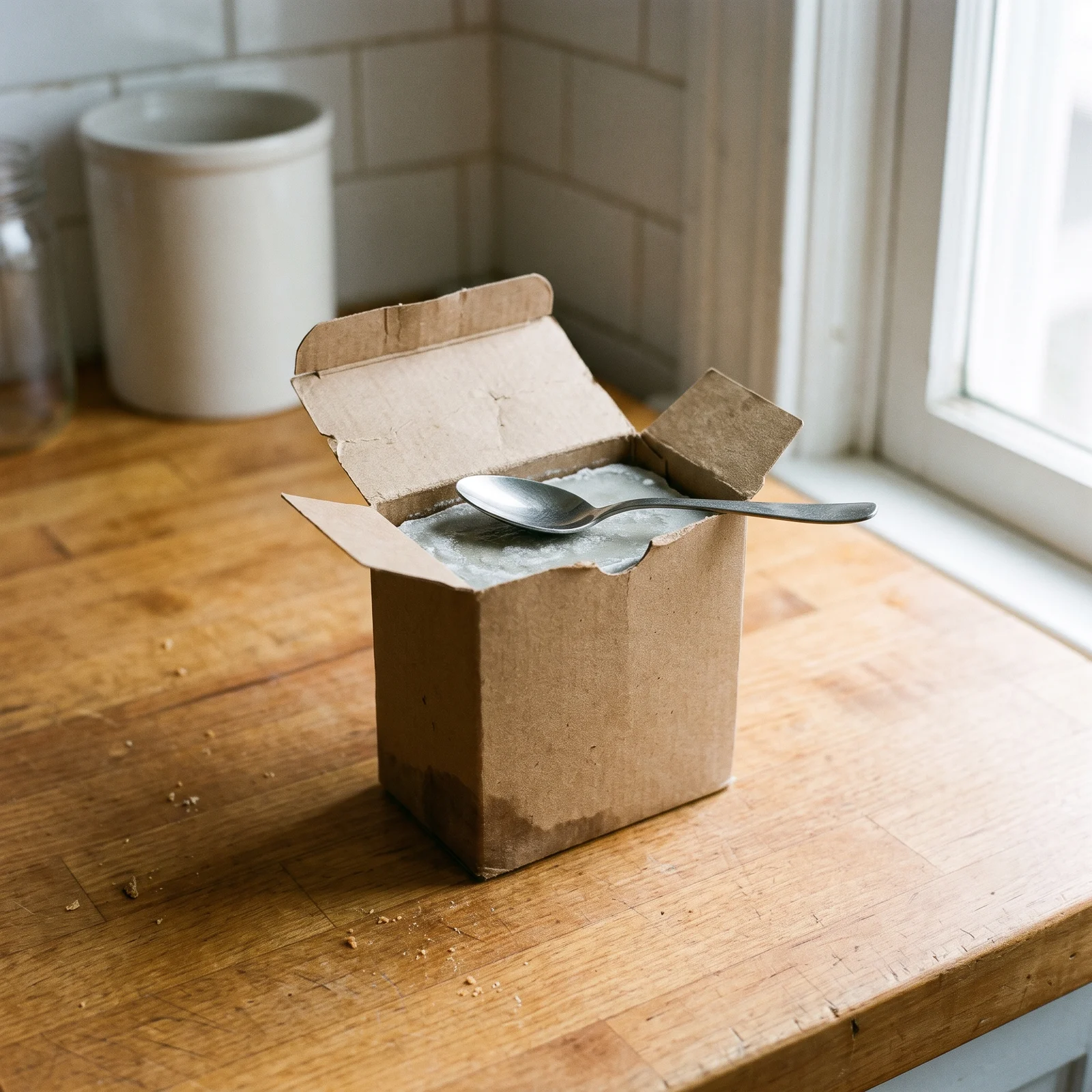
Wet or solid baking soda
Water has reached the box, and the soda has set into a solid block or turned to paste. Every cupboard chart keeps this powder dry and covered, so a box that got wet has already had the one thing it cannot take. Measuring it is guesswork now, and the charts fall back on the old rule: when in doubt, throw it out.
Does unopened baking soda go bad?
An unopened box keeps 2 to 3 years, and the manufacturer's own figure is 3 years with the date printed on the bottom of the box and the pouch. One pantry chart is stricter at 18 months, so the shorter figure is the safer one to plan around. Nobody re-tests or extends that shelf life once it has run out, which is why an old box deserves a vinegar test rather than a guess.
Baking soda substitutes
Out of baking soda, or did the only box turn out to be the one from the fridge? Then one of these will stand in.
Substitute
Works best in
What changes
Baking powder
Biscuits, muffins and quick breads
It carries its own acid, so it raises a batter without one in the recipe.
Self-rising flour
Biscuits and pancakes
Flour with the leavening already in it, and the self-rising flour guide covers it.
A fresh box
Cakes and cookies
The cheapest fix of the four, since an unopened box keeps 2 to 3 years.
Mistakes people make when they store baking soda
These are the ways people store baking soda that cost them the most, so each one has an easy fix.
Keeping the opened box for years, when the charts give opened baking soda 3 to 6 months for anything that has to rise.
Dipping a damp spoon into the box, since damp is the one thing that undoes a dry powder.
Baking with the box from the fridge, which has spent a month taking up the smell of everything around it.
Standing it next to the stove, when the charts keep staples away from appliances that give off heat.
Throwing out a lumpy box, although caking has no effect on how the soda performs.
Guessing from the look of the powder, when a spoonful and a splash of vinegar settle it in seconds.
Shelving it beside the cleaning products, which the cupboard charts warn against for every food.
Sources
Food Storage Guide, Julie Garden-Robinson, NDSU Extension publication FN579, reviewed January 2023, on baking soda keeping 2 to 3 years unopened and 3 to 6 months opened, baking powder keeping 6 to 18 months unopened and 3 to 6 months opened, keeping both dry and covered, and using double-action baking powder in a batter that is frozen.
Safe Food Storage: The Cupboard, Karen Blakeslee, Kansas State University Research and Extension publication MF3131, revised June 2026, on baking soda keeping 2 years at 70°F and baking powder keeping 18 months or until the date on the can, keeping both dry and covered, storing foods in a cool, dry, dark place away from heat sources and away from chemicals, and throwing food out when in doubt.
Food Storage for Safety and Quality, Elizabeth L. Andress and Judy A. Harrison, University of Georgia Cooperative Extension publication FDNS-E-119, June 2011, on baking soda keeping 18 months unopened and 6 months opened, and baking powder keeping 6 months unopened and 3 months opened.
Storing Staple Ingredients in the Kitchen, Martha Zepp, Penn State Extension, updated August 2024, on testing baking soda with 1½ teaspoons and 1 tablespoon of vinegar and looking for fizzing, using soda that does not fizz as a refrigerator odor absorber, testing baking powder with 1 teaspoon in a third of a cup of hot water, checking the expiration date on the container, and making sure measuring spoons are dry before dipping them in.
Frequently Asked Questions, Arm & Hammer, Church & Dwight Co., Inc., on baking soda having a shelf life of three years with the expiration date on the bottom of the box and pouch, replacing a refrigerator or freezer box once a month because it has absorbed many of the odors after about 30 days, and the shaker granulation flowing more freely and resisting caking and lumping in humid conditions.
Arm & Hammer Sodium Bicarbonate and Sodium Bicarbonate Blends Shelf Stability, Michelle Maddox, Technical Service Manager, Arm & Hammer Performance Products, Church & Dwight Co., Inc., January 2026, on a shelf life of at least 3 years when properly stored, rolling stability studies at 25 ± 2°C and 60 ± 5% relative humidity confirming chemical stability, finer grades tending to cake or lump during storage with no effect on purity or functionality, and the company not re-testing or extending shelf life.
Every storage time, temperature and verdict on this page comes from the sources listed above, and none of it is made up. Food safety still depends on conditions we cannot see, so read the Disclaimer, and if in doubt, throw it out.
Other ingredient guides
Browse all guides


Share this guide
Never miss a guide
New ingredient guides when they go up, plus one storage tip worth knowing. Anything sponsored is labelled.

Emilly White