
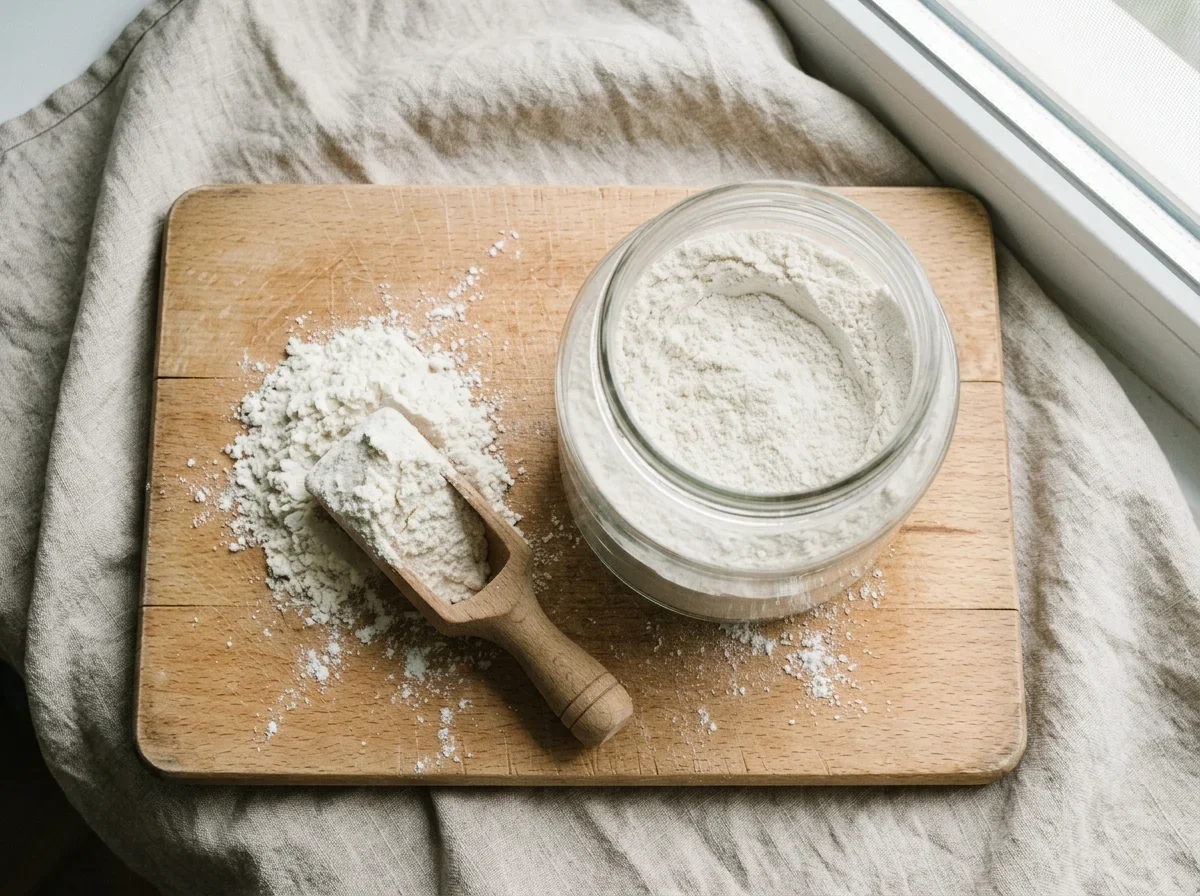
6 to 15 months
Sealed, cool, dry and dark. Sources disagree, so take the shorter figure
Up to 2 years
Airtight. The only place Penn State Extension puts whole wheat flour
Years
Airtight and moisture-proof at 0°F. Let it warm up before baking
The short version: to store flour well, seal it and keep it cool, dry and dark. Then refrigerate or freeze anything whole grain, since its oils turn rancid.
Storage times from MU Extension, Clemson Cooperative Extension and Penn State Extension.
On this page
How to choose flour that will store well
Buying decides most of it, because a torn bag or a warm shelf starts the clock early. Also, buy the amount you will actually bake through.
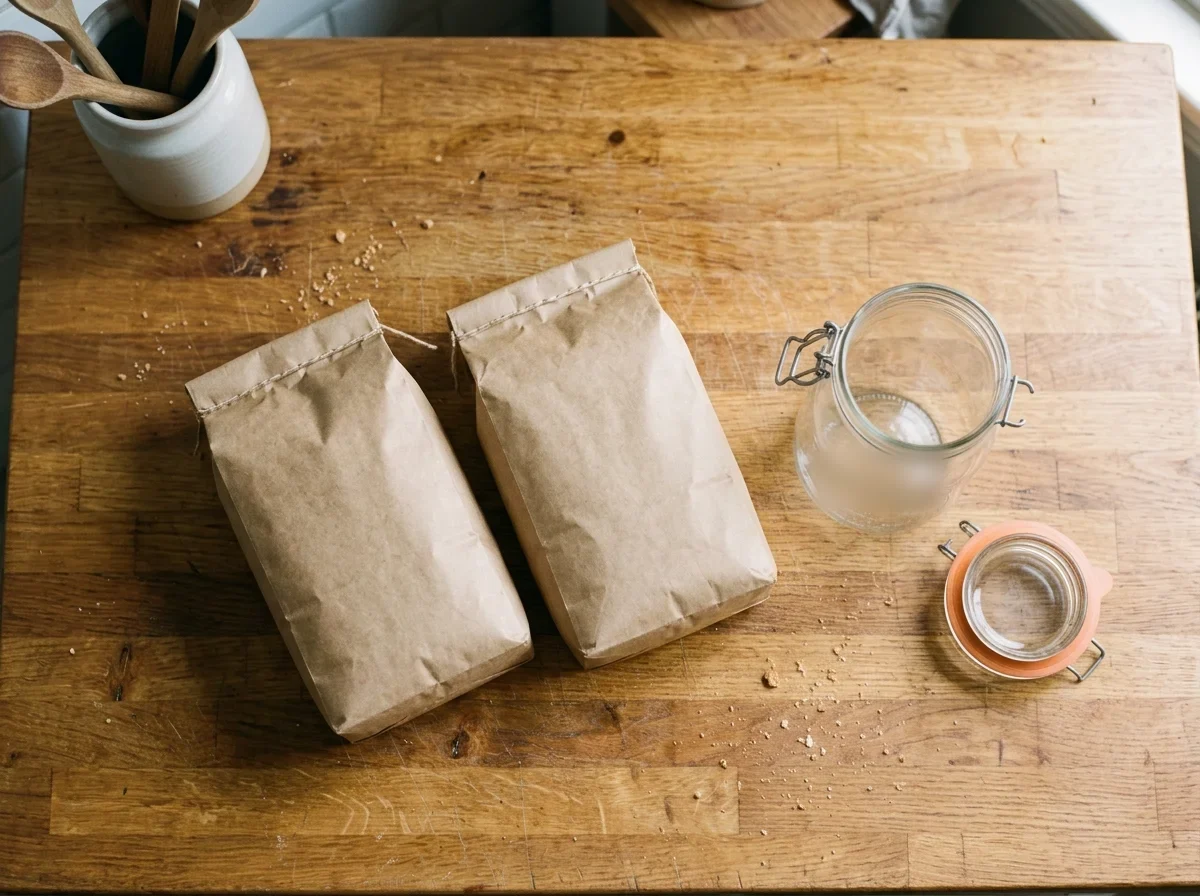
A sealed, undamaged bag, and a jar with a tight lid to tip it into.
A sealed, undamaged bag. Texas A&M AgriLife Extension says to check the seal before buying, since pests get through plastic, waxed paper and cardboard.
White flour for the shelf. Penn State Extension says all-purpose and bread flour hold up at room temperature better than whole wheat.
A small bag of whole wheat. Its oils turn rancid, so buy only what you will bake soon.
The latest date on the bag. Dates cover quality rather than safety, though a later one still gives you more room.
How to store flour so it lasts
To store flour so it lasts, keep it sealed, cool, dry and dark. Those four cover everything that ruins flour, because air, heat, damp and insects do all the damage. Also, flour picks up smells, so keep it away from soap, onions and anything strong.
How to store flour in the pantry
Tip the bag into an airtight container, or put the whole bag inside one. MU Extension keeps flour in a cool, dry, dark place, off the floor where possible. Warm, damp conditions cake flour and draw insects, so heat is the thing to avoid. Clemson Cooperative Extension gives a number: a cool, dry pantry at 65 to 70°F, away from ovens and heating ducts. Also, MU Extension warns that flour takes up odors, so it needs vapor-proof packaging rather than a paper bag. A tight lid on glass, metal or rigid plastic does two jobs, since Clemson says it also cuts the chance of insects. Spices are on that same Clemson list, which is why the nutmeg guide asks for the same tight lid.
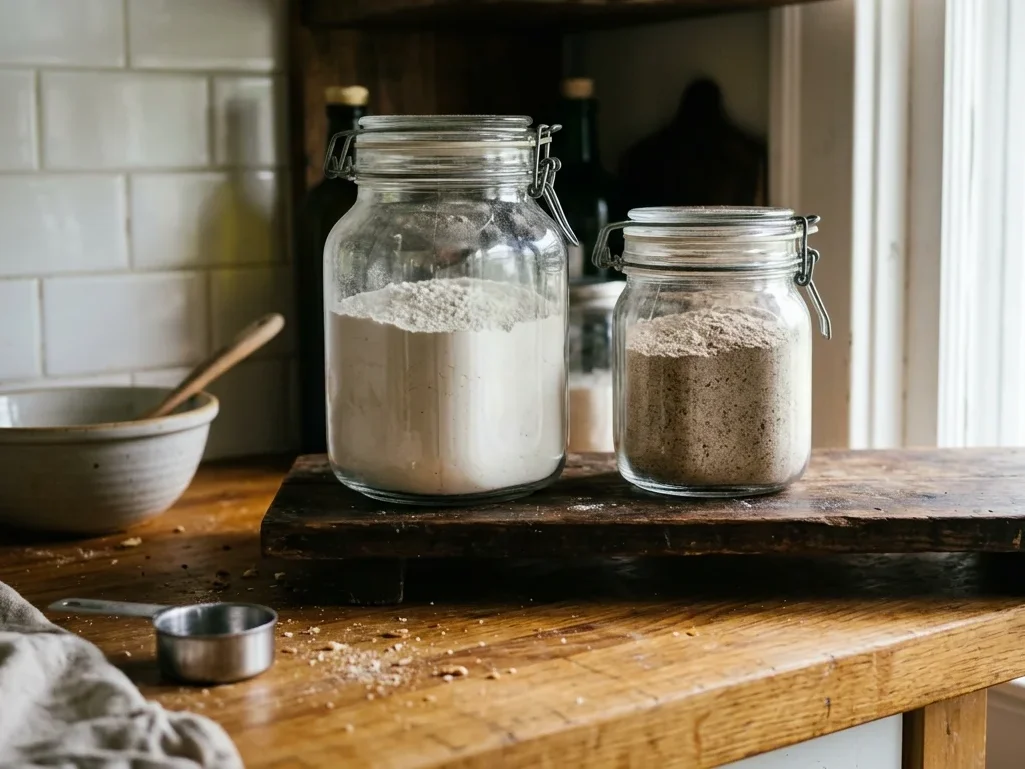
Airtight, cool, dry and dark, well away from the oven.
How long can you store flour?
The sources disagree, so take the shortest figure and judge the bag by its smell. MU Extension gives properly stored flour six to eight months. Clemson Cooperative Extension gives all-purpose flour 10 to 15 months, while whole wheat gets three. Penn State Extension goes further still: up to two years at 40°F in the fridge, and indefinitely in the freezer. In other words, cool storage buys the time, whereas a warm cupboard spends it.
None of those numbers is a safety limit, though. Cornell Cooperative Extension explains that best if used by covers flavor and quality, not safety. So a bag can be good after its date, while a badly stored bag can be stale before it.
Should you store flour in the fridge?
For whole wheat, yes, and year-round. Penn State Extension says whole wheat flour has natural oils that turn rancid quickly at room temperature. So the fridge is where it belongs. Clemson Cooperative Extension agrees, giving whole wheat three months and marking it best in the fridge or freezer. White flour is different: MU Extension reaches for the fridge only in warm climates, and then in an airtight container. Also, let refrigerated flour warm to room temperature before you bake, since Penn State says cold flour holds back the leavening. Nut butters have the same problem, as the almond butter guide explains.
How to store flour once the bag is open
Move it out of the paper bag. An opened paper bag lets in damp, smells and insects, so a sealed container does the work from there. Texas A&M AgriLife Extension goes further, because using dried food within two to four months prevents most pest problems. Anything you keep longer than that belongs in an airtight container. University of Maryland Extension prefers sealed glass jars or metal containers with tight lids over plastic bags and cardboard. The rice guide makes the same point, since the lid matters more than the label.
How to store flour that is whole wheat
Cold, sealed and in small amounts. Whole wheat flour keeps the bran and germ, so it keeps their oils too. That is why Penn State Extension refrigerates it all year, while Clemson gives it three months. For anything longer, use the freezer. The bread guide runs into the same thing, since whole wheat loaves keep less well.
Can you freeze flour?
Yes, and it is the longest storage there is. MU Extension says flour held in airtight, moisture-proof containers at 0°F keeps well for several years. Penn State Extension goes further and calls freezer storage indefinite for all-purpose and bread flour. So the freezer is the answer for flour you will not bake through soon.
How to store flour in the freezer
Pack it airtight and moisture-proof, then label it with the date. MU Extension sets the freezer at 0°F, which is where a home freezer already sits. Squeeze the air out of a bag, or use a rigid container with a tight lid instead. Freezing does a second job too, since Texas A&M AgriLife Extension clears pantry pests in seven to fourteen days. Then let the flour come back to room temperature before you bake with it.
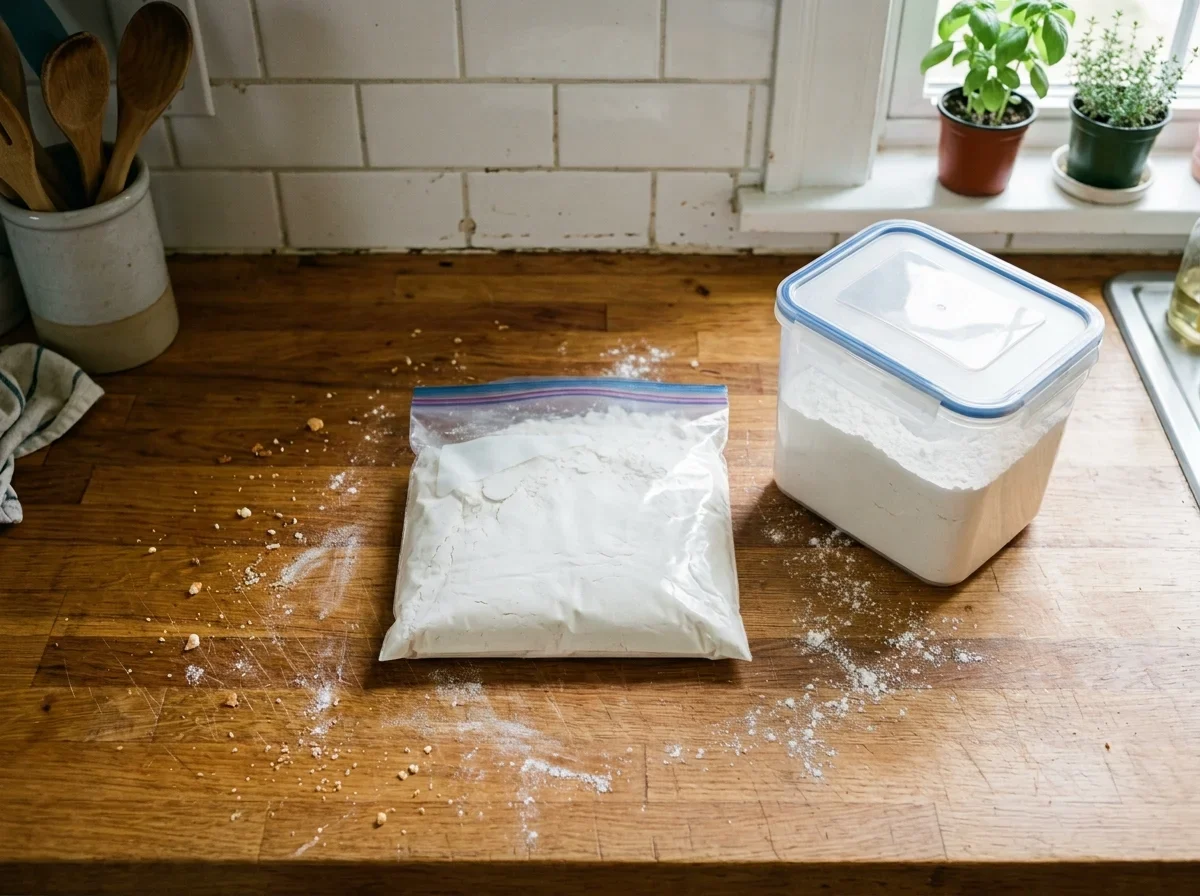
Airtight and moisture-proof at 0u00b0F, then warmed up before baking.
How long can you store flour in the freezer?
Several years, according to MU Extension, if the container stays airtight and moisture-proof at 0°F. Penn State Extension does not set a limit for all-purpose and bread flour. Even so, quality is not the same as forever, so date the container and work through it. Whole wheat still benefits most, because the cold is what holds its oils.
What happens to flour you store in the freezer
Very little, so long as the container keeps water out. Flour takes on moisture easily, and moisture is what cakes it. That is why Penn State Extension wants airtight containers, since moisture swings change how a bake turns out. Also, let it warm up first, because Penn State says cold flour blunts the leavening.
How to tell if flour has gone bad
However you store flour, the bag tells you more than the date does. Smell and sight do the work here, while the date is only a quality guide. Here is what each stage means.
Verdict: use it
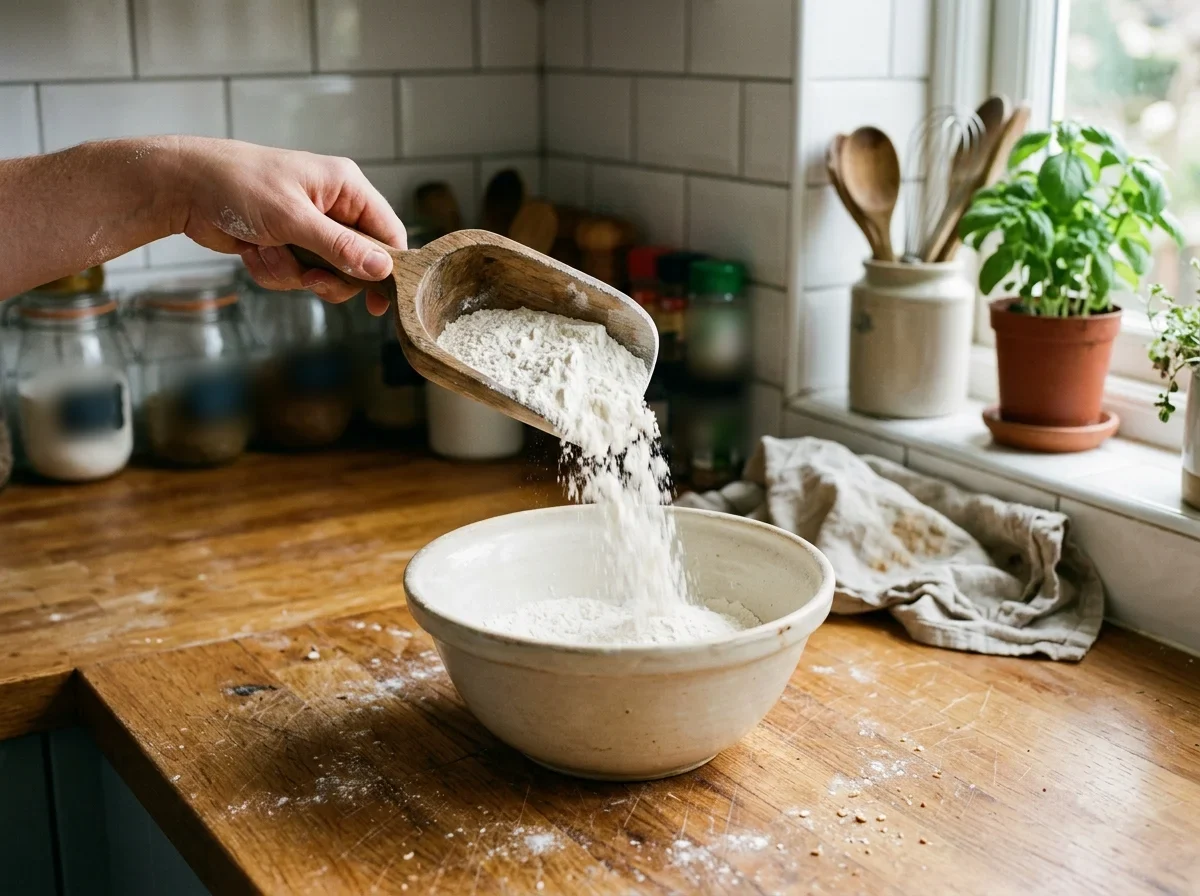
Fresh flour
Loose, dry powder that pours freely, with the plain smell of flour. That is the baseline, so keep it in mind when you check an older bag.

Verdict: use it
Flour past the best-by date
A date passing is not the same as flour going off. Cornell Cooperative Extension calls best if used by a quality date rather than a safety one. It adds that properly kept food should still be safe and wholesome after the date. So smell it, then bake with it.
Verdict: throw it out
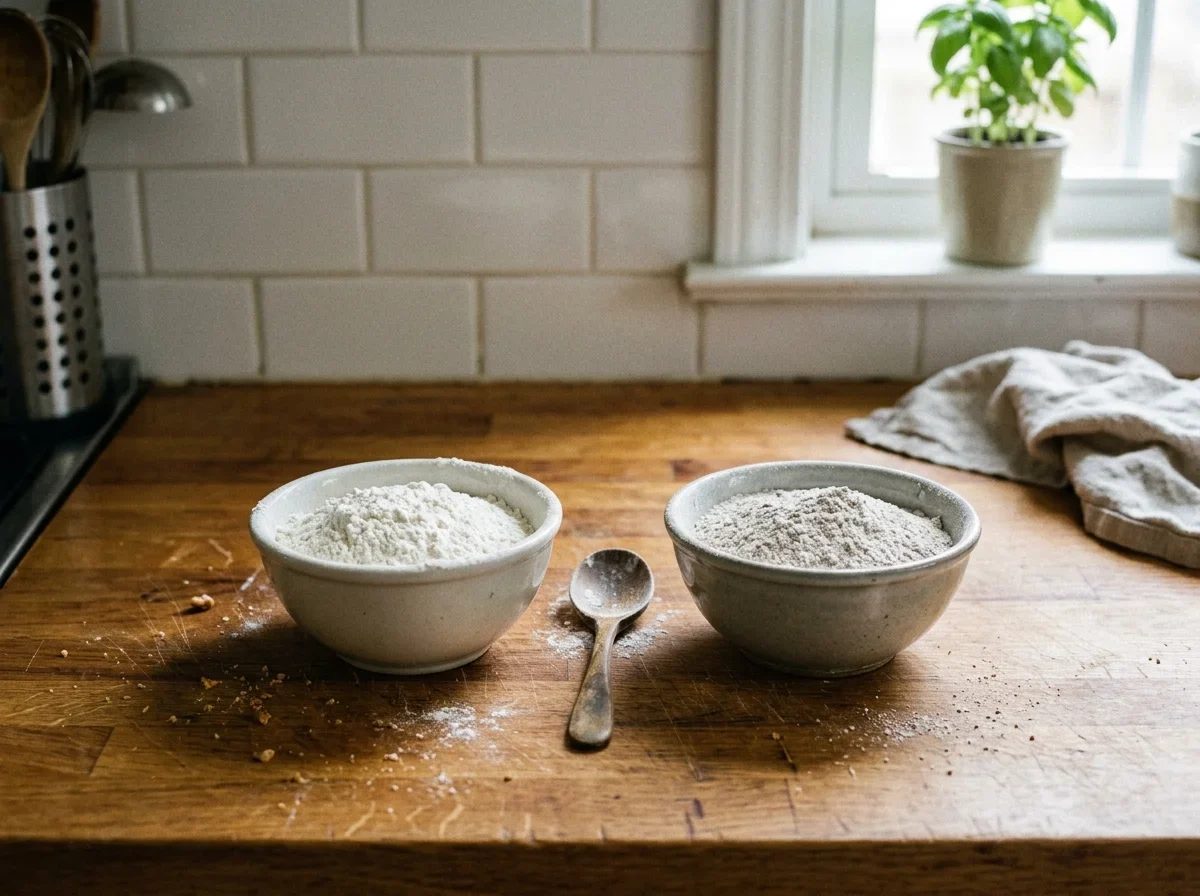
Flour that does not smell like flour
Penn State Extension says whole wheat flour has natural oils that turn rancid quickly at room temperature. None of the extension pages opened for this guide describes what rancid flour smells like, though. So this guide will not invent a description. Compare it with a fresh bag instead, and throw out anything that smells sharp, oily or stale. Rancid flour will not improve, since the oils have already changed.
Verdict: throw it out
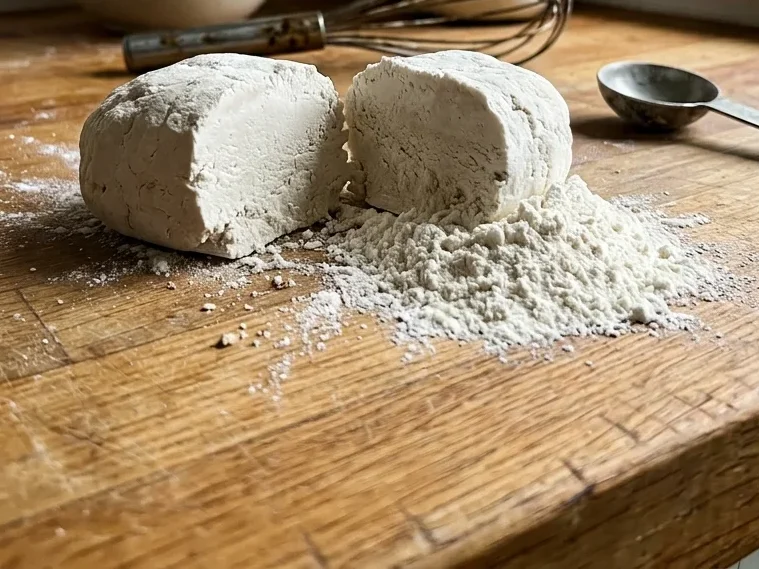
Damp or caked flour
Dry flour pours. MU Extension warns that warm, damp storage cakes flour and draws insects. So a solid lump means water has got in, and water is what mold needs. UConn Extension discards bread and baked goods at the first visible mold. Also, do not sniff a bag you suspect is moldy, since the bread guide explains why. Throw the flour out, then wash the container before you refill it.
Verdict: throw it out
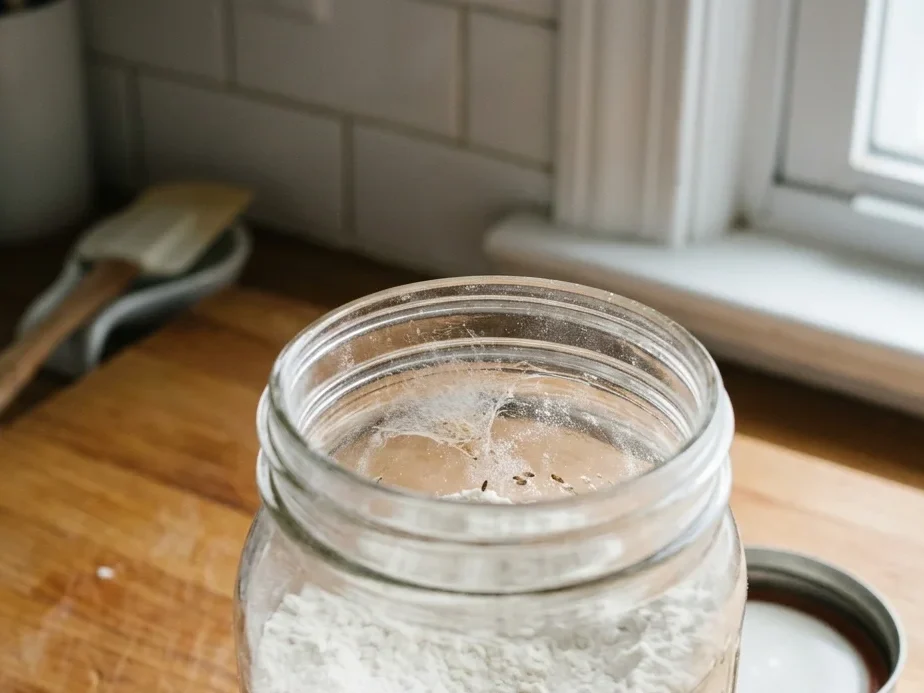
Flour with bugs or webbing
Look for small beetles, pale caterpillars, fine webbing and sawdust-like specks. University of Maryland Extension calls webbing, larvae and frass the signs of an Indian meal moth infestation. Texas A&M AgriLife Extension names flour beetles too, which feed on milled products rather than whole grains. Both say the fix is the same: remove and discard the infested package. Then vacuum the shelf, wipe it, and check every other bag nearby. Boxes of pasta belong in that same check, since University of Maryland Extension lists pasta among the dry packaged foods these moths infest. Texas A&M also clears pests with seven to fourteen days in the freezer, or an hour at 130°F. That treatment is for insects, though, and it does not make flour safe to eat raw.
Is it safe to taste raw flour?
No. The FDA calls flour a raw food that may carry Salmonella and E. coli, since milling does not kill them. It says never to eat or taste raw flour, dough or batter. Home heat treatment does not make flour safe to eat raw, so that is not a workaround. The CDC investigated flour contamination in 2016, 2019, 2021 and 2023, so the risk is real. Also, wash your hands, bowls, utensils and counters after you handle flour. Then bake it before anyone eats it.
Flour substitutes
Out of flour, or had to throw a bag away? Then these will cover most baking.
Substitute
Works best in
What changes
Bread flour
Yeast breads and pizza
More protein, so the crumb comes out chewier.
Whole wheat flour
Half the white flour in a recipe
Heavier and nuttier, and it needs the fridge.
Self-rising flour
Biscuits and pancakes
It already holds leavening and salt, so adjust the recipe.
Ground rolled oats
Cookies and crumbles
No gluten, though, so it will not hold a loaf.
Mistakes people make when they store flour
These are the ways people store flour that cost them the most, and each one has an easy fix.
Leaving it in the paper bag. Damp, smells and insects all get in, so tip it into a sealed container.
Keeping it above the oven. Heat and damp cake flour and draw insects, so choose a cool cupboard instead.
Buying whole wheat in bulk. Its oils turn rancid at room temperature, so buy small and refrigerate it.
Trusting the date over your nose. Dates cover quality rather than safety, so smell the flour before you bake.
Sifting bugs out and baking anyway. An infested bag goes in the bin, since webbing and frass come with it.
Baking straight from the fridge. Cold flour blunts the leavening, so let it warm up first.
Tasting the batter. Raw flour can carry Salmonella and E. coli, so bake it first.
Sources
Using and Storing All-Purpose Flour, Barbara J. Willenberg and Karla Vollmar Hughes, MU Extension, University of Missouri, reviewed January 2023, on six to eight months properly stored, several years at 0°F, and vapor-proof packaging.
Food Storage: Pantry, Pamela Schmutz and E.H. Hoyle, Clemson Cooperative Extension Home & Garden Information Center, revised March 2020, on 10 to 15 months for all-purpose flour, three months for whole wheat, and a 65 to 70°F pantry.
Storing Staple Ingredients in the Kitchen, Martha Zepp, Penn State Extension, updated August 2024, on two years at 40°F, refrigerating whole wheat flour year-round, and letting flour warm before baking.
Handling Flour Safely: What You Need to Know, U.S. Food and Drug Administration, March 2024, on raw flour, Salmonella and E. coli, and why home heat treatment is not a fix.
Raw Flour and Dough, Centers for Disease Control and Prevention, November 2025, on flour contamination investigated in 2016, 2019, 2021 and 2023 and on cleaning up afterwards.
Pantry and Fabric Pests in the Home, Tommy Doederlein, Michael Merchant, Wizzie Brown and Grady Glenn, Texas A&M AgriLife Extension, September 2018, on flour beetles, sealed bags, dried food within two to four months, and 130°F for an hour or 7 to 14 days in the freezer.
Indian Meal Moth, University of Maryland Extension, October 2024, on webbing, larvae and frass, and on glass or metal containers with tight lids.
Handling Food with Mold, UConn Extension, April 2024, on discarding bread and baked goods at the first visible mold.
Food Dating, Cornell Cooperative Extension of Warren County, updated January 2025, on best if used by as a quality date and on food staying safe after the date.
Storage times and safety advice on this page come from the sources above. Food safety depends on conditions I cannot see, so read the Disclaimer, and if in doubt, throw it out.
Other ingredient guides
Browse all guides



Share this guide
Never miss a guide
New ingredient guides when they go up, plus one storage tip worth knowing. Anything sponsored is labelled.

Emilly White