
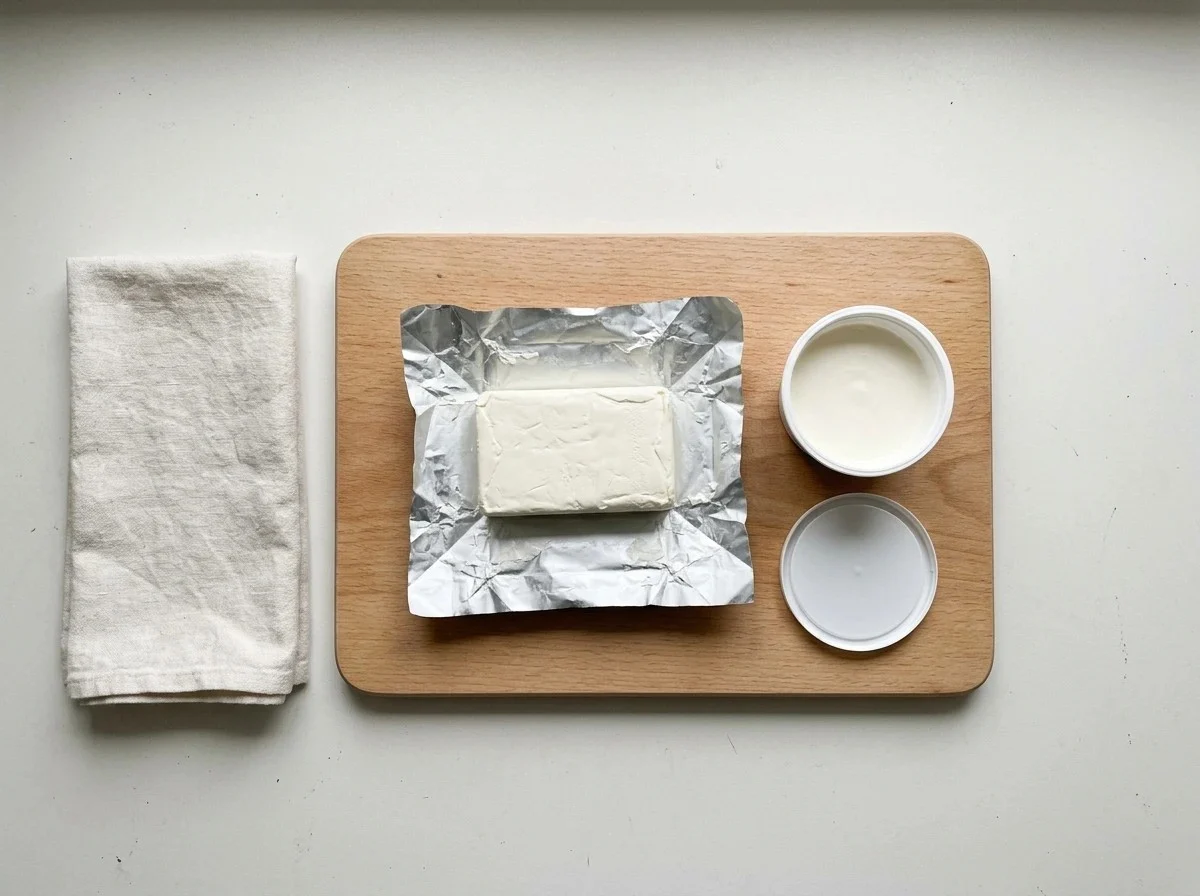
2 hours at most
1 hour if the room is above 90°F
About 2 weeks
Sealed, on an inside shelf. Unopened: go by the package date
For cooking only
It thaws crumbly. Use it in cooked dishes, dips or icing
The short version: to store cream cheese well, keep it sealed in the fridge, finish an open package within about two weeks, and also throw the whole thing out at the first sign of mold.
Storage times from the USDA FoodKeeper data, Clemson Extension and U.S. Dairy.
On this page
How to choose cream cheese that will store well
Cream cheese is a soft, fresh cheese, so it starts with far less time on the clock than a block of cheddar. So a few checks at the store make sure you get all of it.
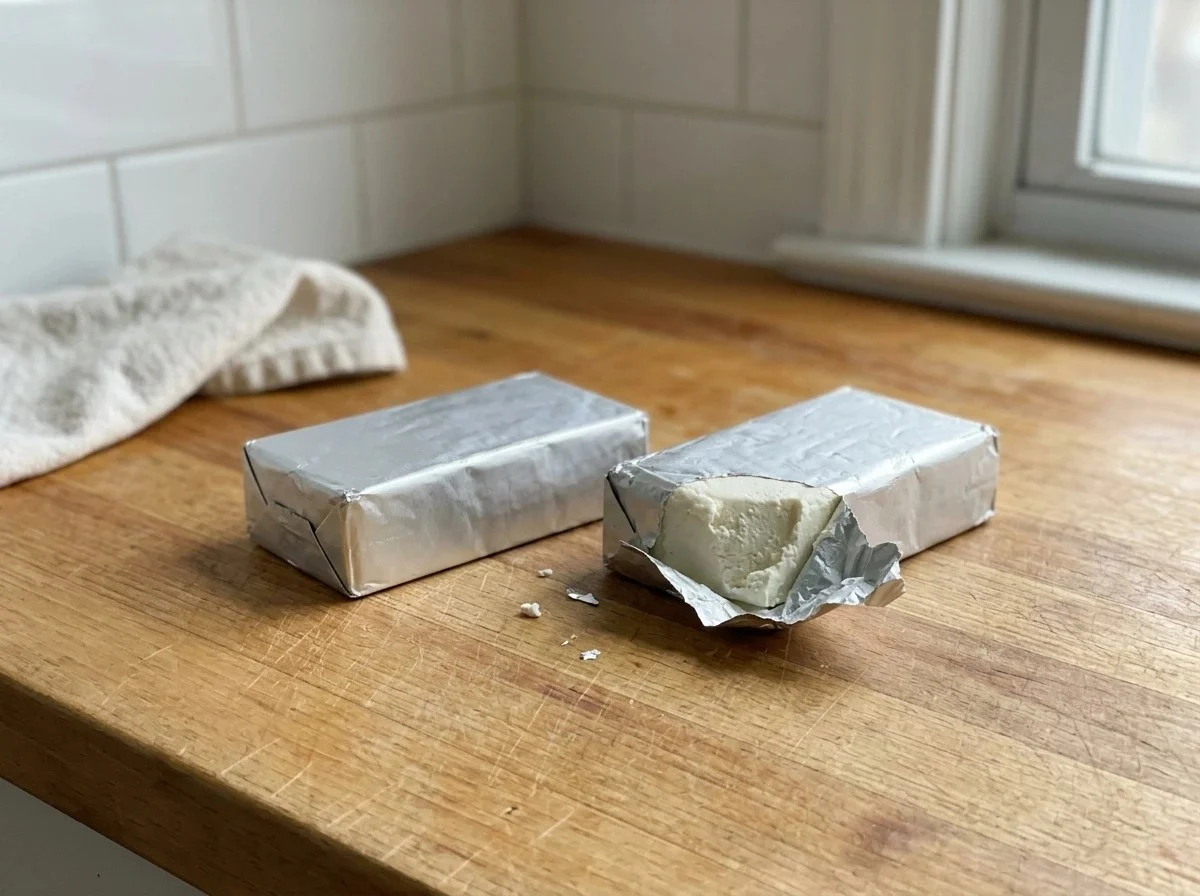
Two blocks of cream cheese in foil: one sealed, one with a torn corner. Leave the torn one on the shelf rather than taking it home.
Sold cold. Buy it from the refrigerated case and get it back into your fridge quickly. The two-hour limit starts when it leaves the cold.
A sealed, undamaged package. In other words, skip foil blocks that are torn and tubs with a split or lifted seal.
The latest date on the shelf. Check the package date and look toward the back for a later one.
The size you will finish. Once it is open you have about two weeks, so a small tub you finish beats a big block you throw half of.
How to store cream cheese so it lasts
To store cream cheese so it lasts, keep it cold, sealed and clean. That is because air dries the surface, other food lends it smells, and a knife that has been on the toast brings in the mold that ends most packages early. If it is going on bagels, take out only what you need and put the rest back.
How to store cream cheese in the fridge
Keep it between 35 and 40°F in its original wrapping until you open it, as Clemson Extension advises. Once it is open, Clemson says to wrap cheese tightly with plastic wrap or foil so no air is trapped, or double-wrap it and keep it in a sealed container. For a foil block, fold the foil back over and put the block in a lidded container. For a tub, press the lid down all the way. Keep it on an inside shelf rather than in the door, and use a clean knife or spoon every time.
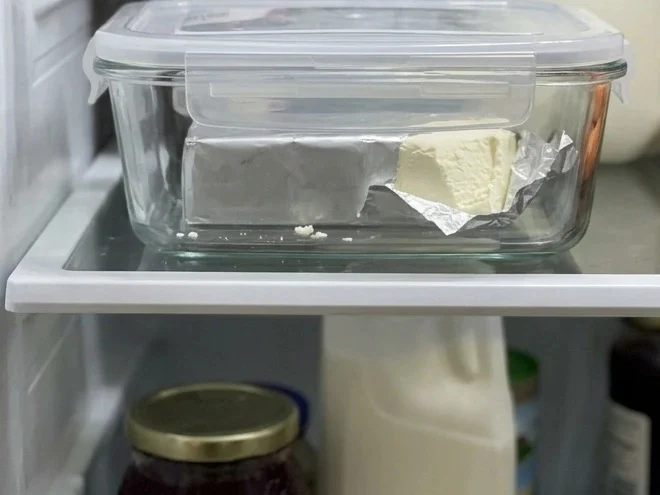
A partly used block with its foil folded back over it, inside a lidded glass container on a fridge shelf, so that air stays out.
How long can you store cream cheese in the fridge?
About two weeks, according to the USDA FoodKeeper data. However, the other sources do not agree exactly. For example, Clemson Extension gives soft cheeses one to three weeks after opening, and Kraft Heinz, which makes Philadelphia, says in its cream cheese FAQ to use an opened package within 10 days, or by the date on the package if that comes first. So go by the shorter end: 10 days to two weeks once it is open.
An unopened package is a different case. It is still sealed, so go by the date on it, as Kraft Heinz advises for Philadelphia, and keep it cold the whole time. Once you open it, the 10-day to two-week clock starts, and the package date still applies if it comes first.
How long can cream cheese sit out?
Two hours, and one hour if the room is above 90°F. That is the limit U.S. Dairy gives for cheese at room temperature, and it calls soft cheeses more perishable because they hold more moisture. In contrast, Clemson Extension's older fact sheet allows four hours for soft cheese. Go by the shorter one, and remember that softening a block on the counter for baking also counts toward those two hours. Chilled eggs, for example, get the same two-hour limit. For more, see food left out overnight and food after a power outage.
What if cream cheese was left out overnight?
Throw it out. After all, overnight is far past two hours, and U.S. Dairy says soft cheeses left out overnight should be discarded. Cream cheese that has sat out for hours can still look and smell normal, so do not use the look as your test.
How to store cheesecake and cream cheese frosting
Keep anything made with cream cheese in the fridge. For example, the USDA FoodKeeper data gives cheesecake 5 to 7 days in the fridge once it is cut, and 3 to 6 months in the freezer. Frosting made with cream cheese also follows the same two-hour rule as the cheese itself.
Can you freeze cream cheese?
Yes, if you are going to cook with it, and this is where the popular guides and the food-safety sources part ways. Popular guides say it keeps about two months in the freezer. However, the USDA FoodKeeper data does not recommend freezing cream cheese, the National Center for Home Food Preservation says it does not freeze well, and Kraft Heinz tells buyers of Philadelphia not to freeze it, "not because it is a health or safety hazard, but because freezing can affect the quality." That is the key: food kept frozen at 0°F stays safe, as the USDA explains, so the problem with frozen cream cheese is texture, not safety.
How to store cream cheese in the freezer for cooking
NDSU Extension says cream cheese can be frozen for later use in cooking, in dips or as icing. Freeze an unopened block in its package. Wrap an opened one tightly, put it in a freezer bag with the air pressed out, then write the date on it. To thaw it, NDSU says to put it in the fridge, then use it as you would fresh.
How to store cream cheese in the freezer as dip
The National Center for Home Food Preservation gives one way around the texture problem: cream cheese combined with heavy cream can be frozen for later use in dips, or as icing on frozen sandwich loaves. If you have half a block and a dip in mind, mix it first and freeze the dip.
What happens to cream cheese you store in the freezer
Thawed cream cheese comes back crumbly and a little grainy instead of smooth, which is why UNL Extension and the National Center for Home Food Preservation both say it does not freeze well. The USDA explains why: slow home freezing forms large ice crystals that break emulsions, and dairy emulsions such as cream separate and look curdled once thawed. However, beaten into a batter, a sauce or a dip, the difference mostly disappears. Spread on a bagel or used in a cheesecake that needs to be silky, it does not.
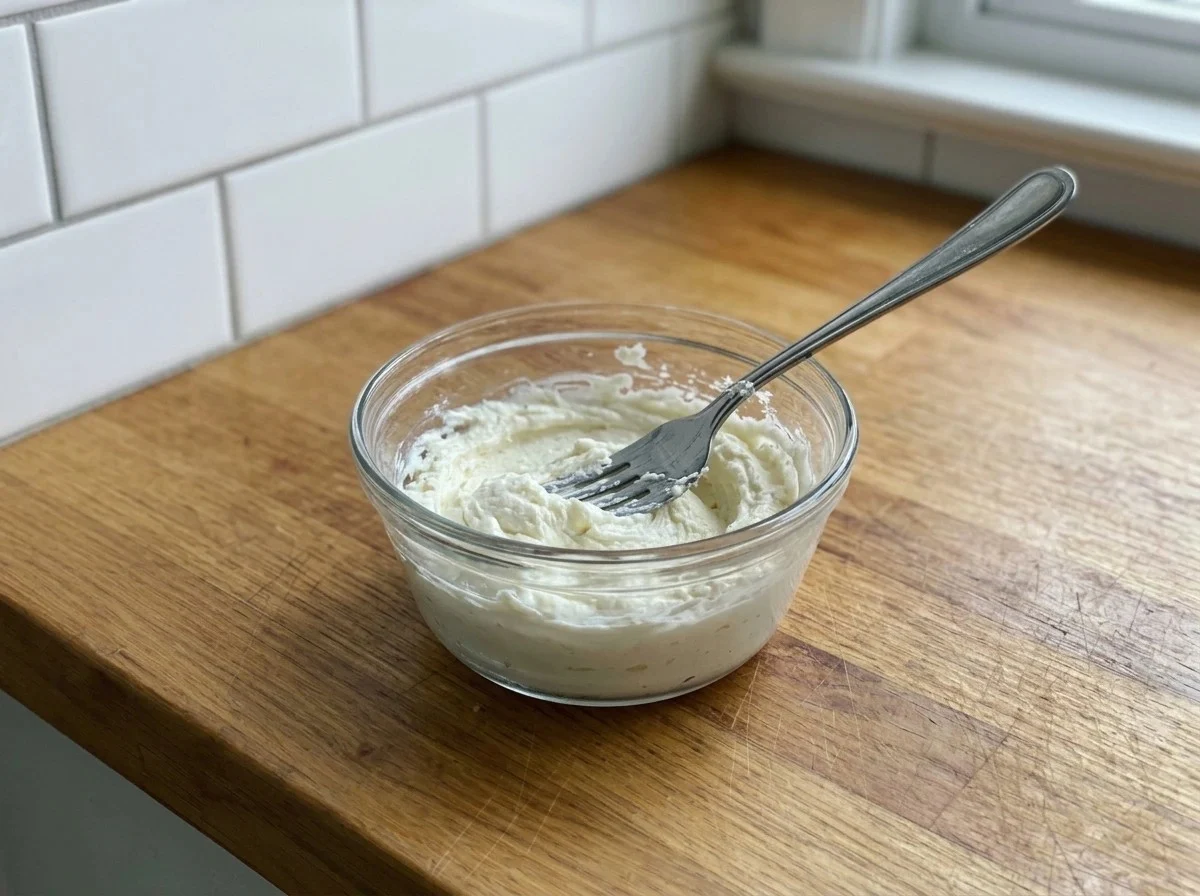
Thawed cream cheese beaten with a fork: creamy again, but still slightly lumpy. Fine in a sauce, less so on a bagel.
How to tell if cream cheese has gone bad
However you store cream cheese, it gets fewer second chances than a hard cheese. There is no cutting around mold, and time out of the fridge counts even when nothing looks wrong. Here is how to read each sign.
Verdict: use it
Fresh
White to pale cream, smooth and mildly tangy, and kept sealed and cold since you bought it.
Verdict: use it up, or throw it out
Open for about two weeks
Kraft Heinz says to use an opened Philadelphia package within 10 days, and the USDA FoodKeeper data gives cream cheese about two weeks. So near the end of that window, check it closely and use it up. Past two weeks, throw it out even if it looks fine.
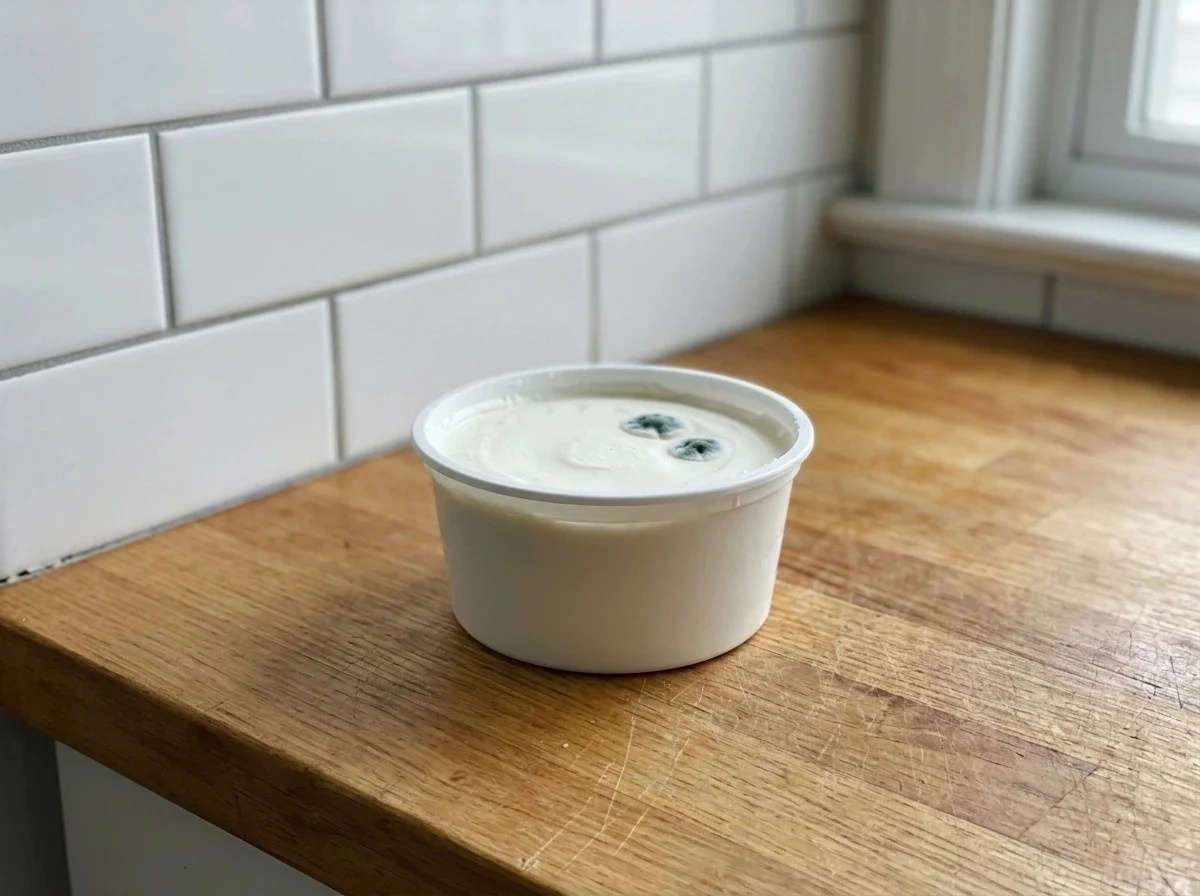
Verdict: throw it all out
Mold on cream cheese
Throw out the whole package, however small the spot. The USDA lists cream cheese among the soft cheeses to discard when moldy, because high-moisture food can be contaminated below the surface and bacteria can grow along with the mold. Mayo Clinic names listeria, brucella, salmonella and E. coli among them.
Verdict: throw it out
Left out more than 2 hours
Time out of the fridge does not show. After 2 hours at room temperature, or 1 hour above 90°F, throw it out however it looks, as U.S. Dairy advises for soft cheese.
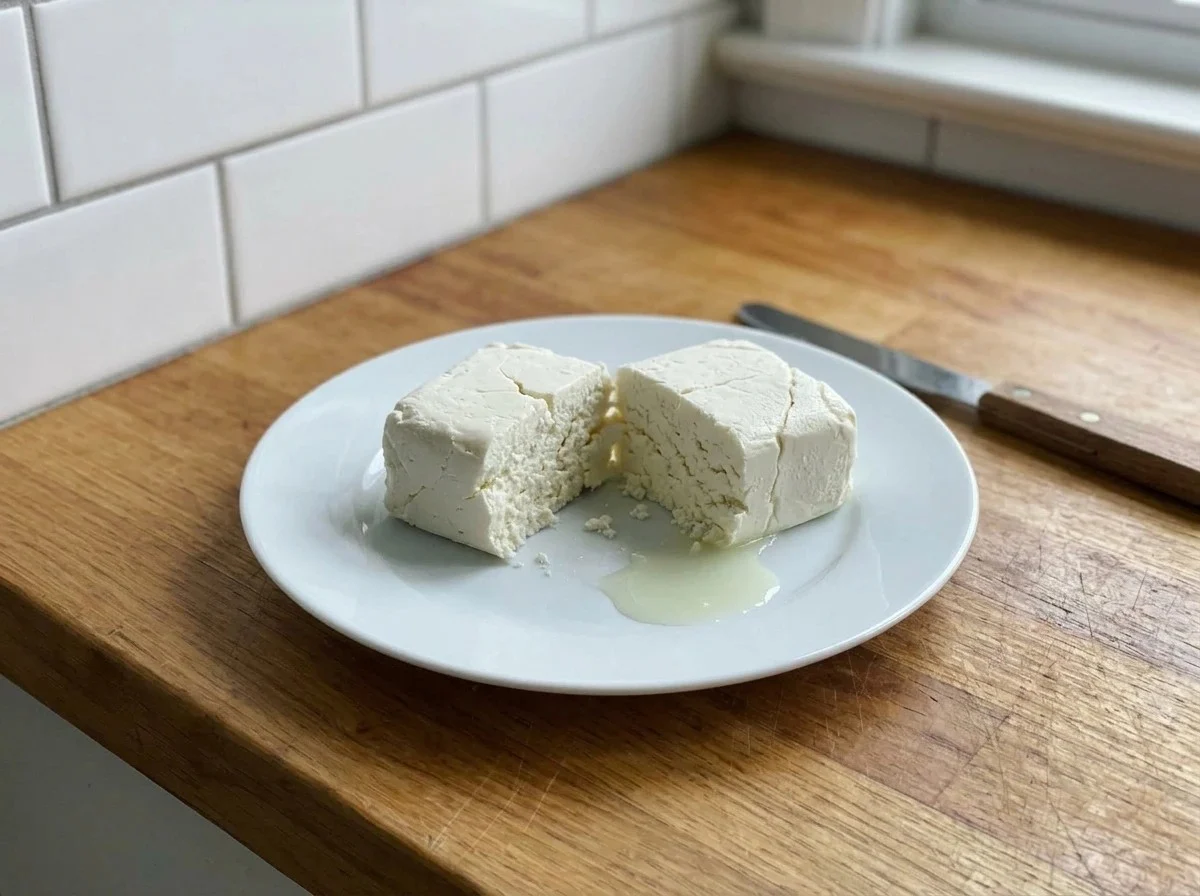
Verdict: cook with it
Grainy after freezing
Crumbly, grainy cream cheese that was frozen and then thawed in the fridge has a texture problem, not a safety one. Beat it into a sauce, a dip or a bake, where the texture matters least.
Can you scrape mold off cream cheese?
No. Cutting works on hard cheese, where UConn Extension says to cut at least 1 inch around and below the mold. Cream cheese is too soft and moist for that. UConn says soft cheeses such as cottage cheese and cream cheese should be thrown out entirely if any part is moldy.
Cream cheese substitutes
Out of cream cheese, or had to throw a tub out? Then these will stand in.
Substitute
Works best in
What changes
Neufchâtel
Spreads, dips and frosting
Lower in fat and a little softer.
Mascarpone
Cheesecake and desserts
Richer and milder, without the tang.
Strained Greek yogurt
Dips and spreads
Tangier and looser. Strain it longer for more body.
Ricotta, blended smooth
Baking and pasta fillings
Lighter and grainier. Blend it well.
Mistakes people make when they store cream cheese
These are the ways people store cream cheese that cost them the most, and each one has an easy fix.
Scraping mold off the top. That works on cheddar but not cream cheese, so the whole package goes.
Using the toast knife. Crumbs and butter carry mold into the tub, so use a clean knife every time.
Leaving the foil open. Air dries the surface and the fridge lends it smells, so wrap it and put it in a container.
Softening it on the counter all afternoon. Softening also counts toward the two-hour limit.
Freezing it for bagels. Since thawed cream cheese is crumbly, freeze it only for cooking.
Trusting the date after opening. Once it is open, use it within 10 days to two weeks, or by the package date if that comes first.
Buying a big block for one recipe. Buy the size you will finish, or plan a second use before you open it.
Sources
FoodKeeper, Food Safety and Inspection Service, U.S. Department of Agriculture. Fridge and freezer times for cream cheese and cheesecake.
Molds on Food: Are They Dangerous?, Food Safety and Inspection Service, U.S. Department of Agriculture. Why moldy soft cheese is discarded.
Freezing and Food Safety, Food Safety and Inspection Service, U.S. Department of Agriculture. Frozen food safety, ice crystals and separating emulsions.
Handling of Cheese for Safety & Quality, Home & Garden Information Center, Clemson Extension, revised June 2008. Fridge temperature, wrapping and soft cheese storage times.
How Long Can Cheese Sit Out?, U.S. Dairy, April 2026. The two-hour rule and soft cheese left out overnight.
Freezing Cheese, National Center for Home Food Preservation, University of Georgia. Cream cheese and freezing with heavy cream.
Food Freezing Basics: Freezing Dairy Products, Eggs and Other Foods, NDSU Extension. Freezing cream cheese for cooking and thawing it.
Freezing Milk and Cheese, Nebraska Extension. Which cheeses do not freeze well.
Handling Food with Mold, UConn Extension, April 2024. Hard versus soft cheese with mold.
Moldy cheese: Is it OK to eat?, Mayo Clinic, October 2025. Bacteria that grow with mold on soft cheese.
Philadelphia FAQ, Kraft Heinz. Opened and unopened storage, and why the maker does not recommend freezing.
Storage times and safety advice on this page come from the sources above. Food safety depends on conditions I cannot see, so read the Disclaimer, and if in doubt, throw it out.
Other ingredient guides
Browse all guides




Share this guide
Never miss a guide
New ingredient guides when they go up, plus one storage tip worth knowing. Anything sponsored is labelled.

Emilly White