
2 to 4 weeks
Somewhere cool and dry, not next to the stove
4 to 6 weeks
In the crisper, away from strong-smelling food
8 to 12 months
Sliced and treated, for cooking only
The short version: to store apples well, keep them cold in the crisper, apart from bananas, avocados and onions, and check them every week for any that are starting to rot.
Storage times from Purdue Extension, Ohio State University Extension and Colorado State University Extension.
On this page
How to choose apples that store well
A month in the fridge only works for apples that start out sound. That is why a quick look at each one before it goes in the bag matters more than the variety you pick.
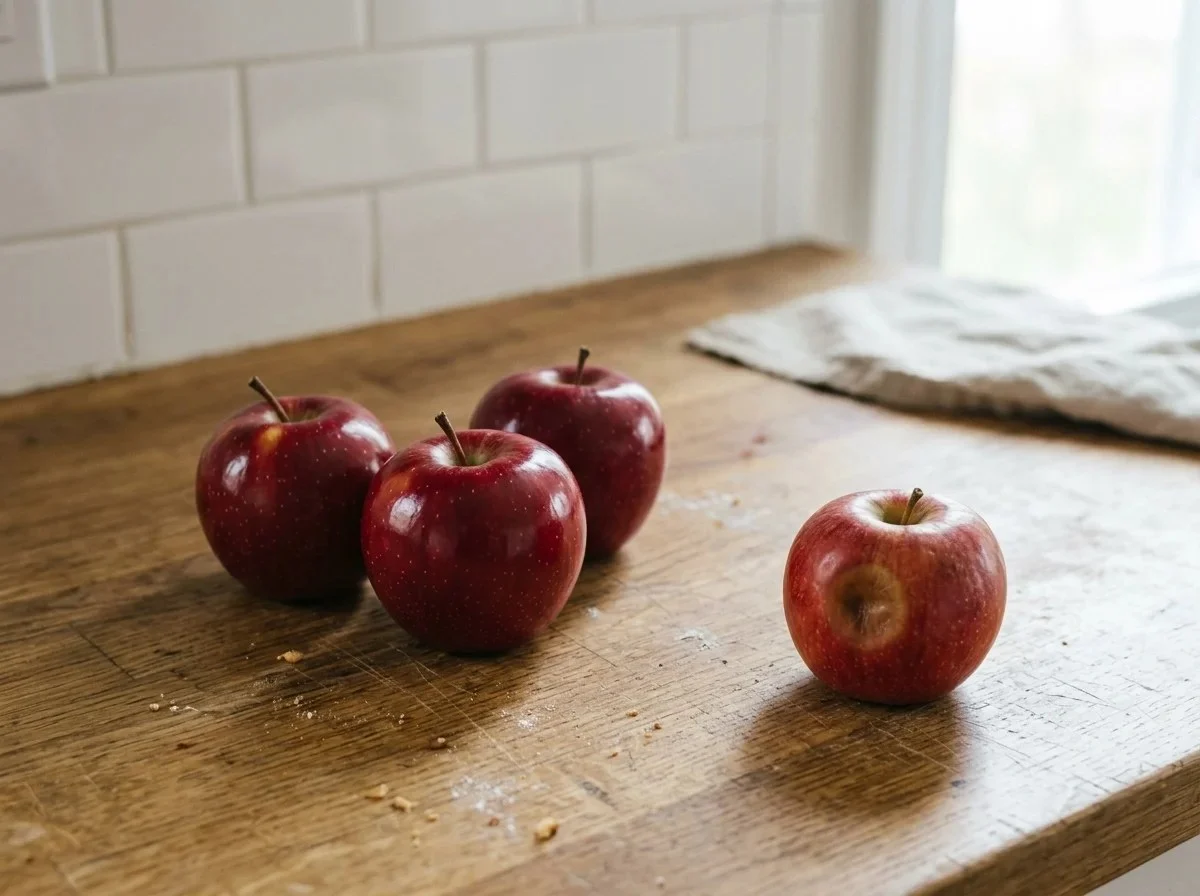
Three firm, shiny apples, while the bruised one sits apart. Leave that one at the store, or eat it first.
Firm and smooth. Clemson Extension says apples should feel firm, with smooth skin, a fresh smell and the stem still on.
No bruises or soft spots. Ohio State University Extension also looks for apples free of bruises, pitting, decay and insect damage, and without any mealiness.
Not the biggest in the pile. Clemson notes that larger apples tend to be riper, so they will not keep as long.
Thick skin for long storage, if you care. According to Virginia Cooperative Extension, firm, thick-skinned varieties are traditionally the better keepers, although thin-skinned ones store fine when you eat them regularly and check them.
How to store apples so they last
To store apples so they last, keep them cold and apart from other produce, and check them often. Because apples soften quickly at room temperature, Washington State University Extension says the fridge is the best place for them.
How to store apples in the fridge
Put them in the crisper drawer, away from foods with strong smells, since apples pick up those flavors. The sources differ on the bag, though. Clemson Extension and Ohio State University Extension use a plastic bag with a few holes, which holds in humidity without trapping water, while Virginia Cooperative Extension keeps them loose in the drawer instead. Either way, do not wash them first: Virginia Cooperative Extension says to rinse apples under running water just before you eat them.
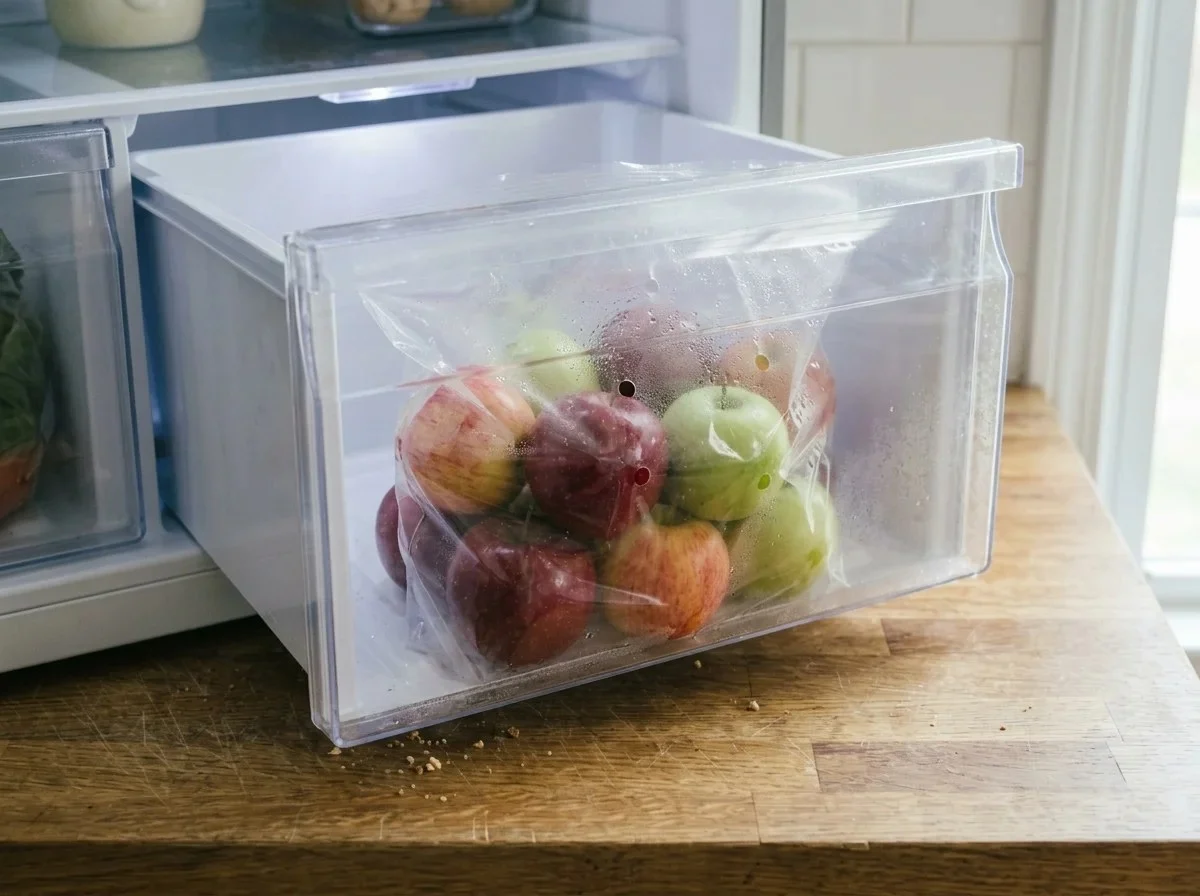
Apples in a bag with a few holes in the crisper drawer, so humidity stays in while extra water gets out.
How long can you store apples in the fridge?
Purdue Extension gives up to a month in a plastic bag, and Ohio State University Extension 4 to 6 weeks. Meanwhile, Virginia Cooperative Extension says that with the right storage and weekly checks, apples can last through the winter.
Those are quality windows, not safety limits. In other words, an apple past them is usually just softer and less sweet, so check it before you decide.
Can you store apples at room temperature?
Yes, for a while. Purdue Extension says fresh apples last about 2 to 4 weeks on the counter or in the pantry, and Clemson Extension keeps them in a cool, dry place for about a month. However, Washington State University Extension warns that at room temperature they can soften or start to spoil quickly, so keep only what you will eat this week in the fruit bowl.
How to store apples away from other produce
Virginia Cooperative Extension says to store apples by themselves, away from aromatic vegetables such as onions and from fruit such as bananas or avocados, which speed up ripening. Apples also give off ethylene themselves, which is why the spinach guide keeps greens away from them.
How to store apples over winter
Keep them cold and humid: Iowa State University Extension gives 32 to 40°F with 90 to 95 percent humidity as ideal, and says varieties such as Red Delicious can keep 3 to 5 months that way. For a small batch, use perforated plastic bags in the fridge. For more, use plastic-lined boxes in a second fridge, a cellar, an unheated outbuilding or a garage, as long as it stays above freezing, because apples freeze below about 30°F. Also sort out bruised or damaged apples first, since injured fruit gives off ethylene that ripens the rest.
How to store cut apples
Cut, peeled or cooked apples go in the fridge within two hours, as Virginia Cooperative Extension advises. To keep slices from browning, Clemson Extension dips them in lemon juice and water, 1 tablespoon per cup, or keeps peeled apples in a bowl of cold water while you work.
Can you freeze apples?
Yes, as slices for cooking, but not whole for eating. Virginia Cooperative Extension says not to freeze apples you want to eat fresh. Frozen slices, on the other hand, are ready for pies, crisps and sauces. Colorado State University Extension says most frozen fruit keeps its best quality for 8 to 12 months at 0°F or below.
How to store apples in the freezer
First, wash, peel and core the apples, then slice a medium apple into twelfths, as Colorado State University Extension suggests. Next, stop the slices from darkening: the National Center for Home Food Preservation dissolves 1/2 teaspoon of ascorbic acid in 3 tablespoons of water and sprinkles it over the fruit. After that, freeze the slices on a tray and pack them into containers once they are frozen, leaving headspace.
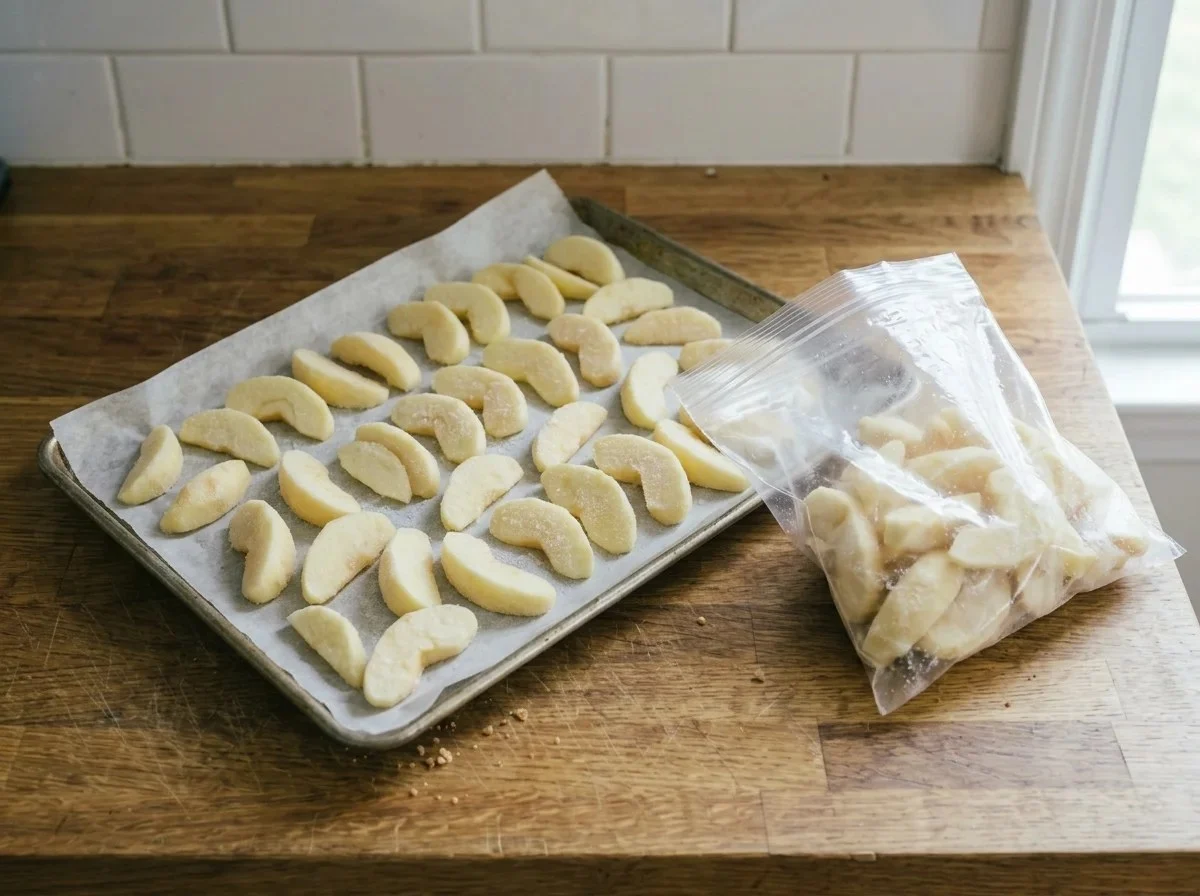
Treated apple slices frozen on a lined tray, then packed into a freezer bag for pies and crisps.
How to freeze apples for pie
For pie, the National Center for Home Food Preservation uses a sugar pack: after treating the slices, it mixes 1/2 cup of sugar into each quart of fruit, then packs and freezes them. For uncooked desserts, it prefers slicing the apples straight into a cold syrup with ascorbic acid added.
How to freeze apples for smoothies
For smoothies, the National Center for Home Food Preservation peels and cores the fruit, cuts it into chunks about the size of ice cubes and adds a little lemon juice or ascorbic acid against browning. Then it freezes the pieces on a tray before bagging them, so they stay loose and go straight into the blender.
What happens to apples you store in the freezer
Freezing softens apple slices, which is why they suit cooking rather than a lunch box. Colorado State University Extension also notes that unsweetened, dry-packed apples lose quality faster than those packed in sugar or syrup, so use those first.
How to tell if an apple has gone bad
However you store apples, most of them age slowly, and a soft apple is usually a baking apple rather than a bad one. Mold and rot, on the other hand, mean the apple goes. Here is what each stage means.
Verdict: use it
Fresh apples
Firm, smooth and shiny, with a fresh smell and the stem still on. That is what Purdue Extension tells you to look for.
Verdict: use it
Apples brown after cutting
A cut apple turns brown where air reaches the flesh. That is why Clemson Extension dips slices in lemon water, and a slice that has browned a little is still fine to eat.
Verdict: use it first
Bruised apples
Take bruised apples out of the bag and eat them soon. According to Virginia Cooperative Extension, fruit with bruises, holes or damage should come out before storage, because one apple going bad makes the ones near it spoil.
Verdict: cut it away, or throw it out
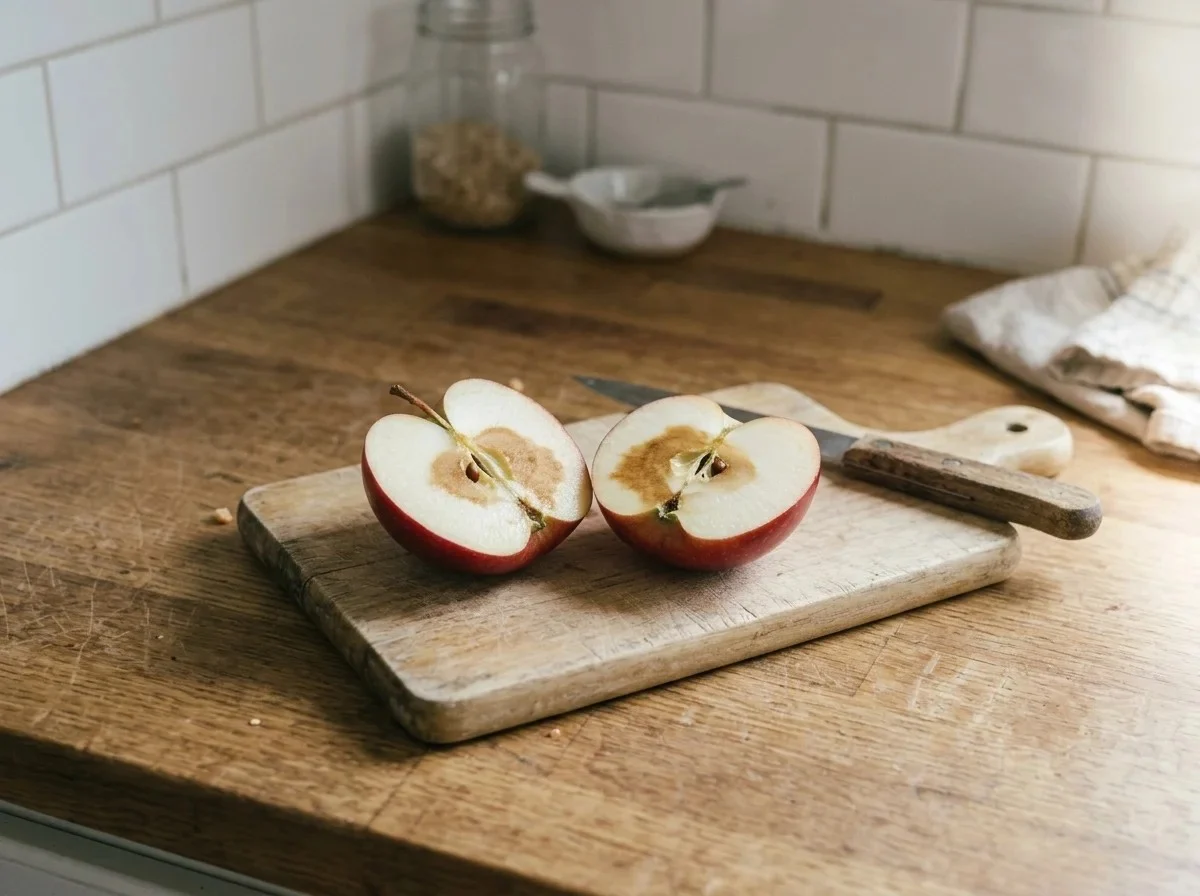
Apples brown inside
An apple that looks perfect outside but is brown around the core usually has internal browning, a storage disorder linked to late harvest and the air in commercial storage, which UF/IFAS Extension says is not caused by a fungus, virus or bacteria. So if the brown flesh is firm and there is no mold, cut it away and use the rest. However, if the core is moldy or the flesh is soft and rotten, throw the apple out, because Ohio State University Extension links core rot to patulin, a mold toxin.
Verdict: cook it right away
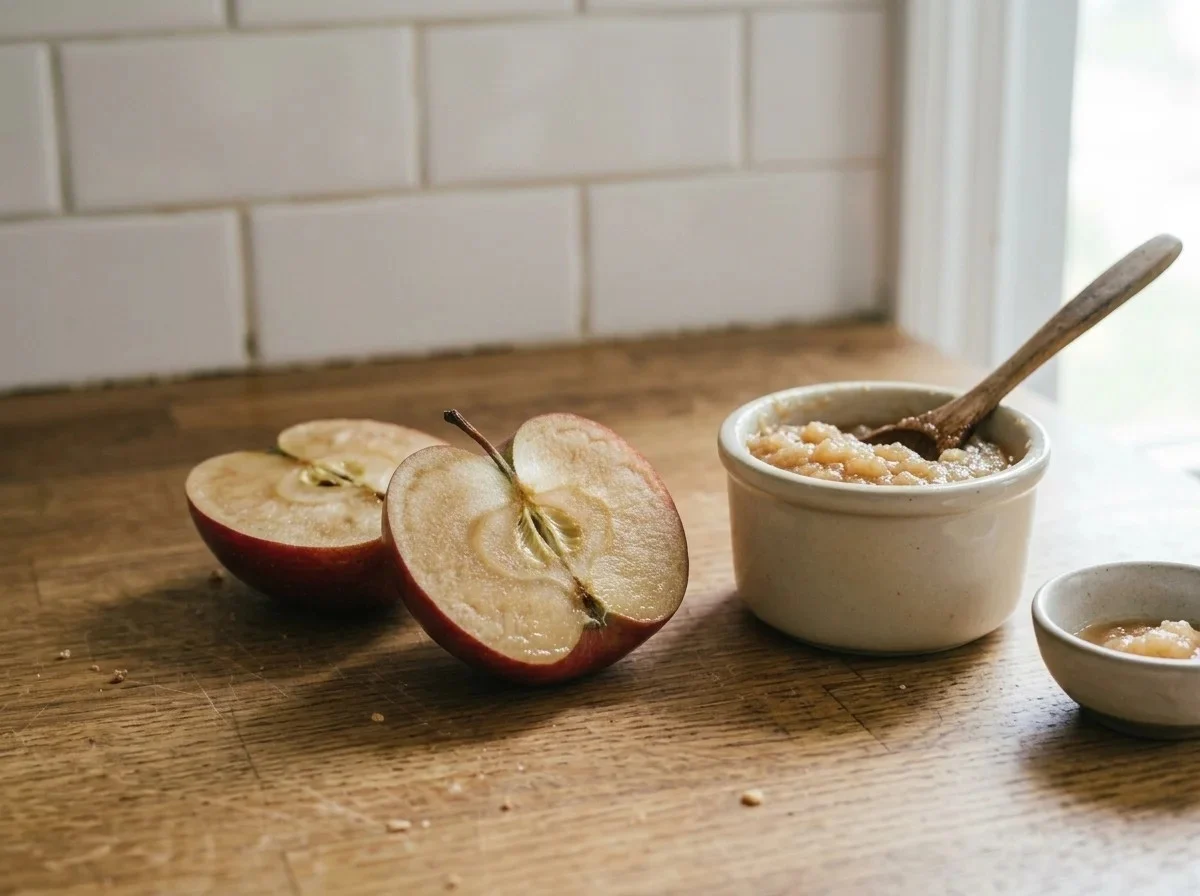
Apples that froze
Apples begin to freeze at about 28°F, according to Penn State Extension, and once thawed they can turn brown inside within a day and soften fast. Even when they look fine, they will not keep, so turn them into sauce or juice right away. If the flesh is brown and mushy, however, throw them out.
Verdict: cook with it
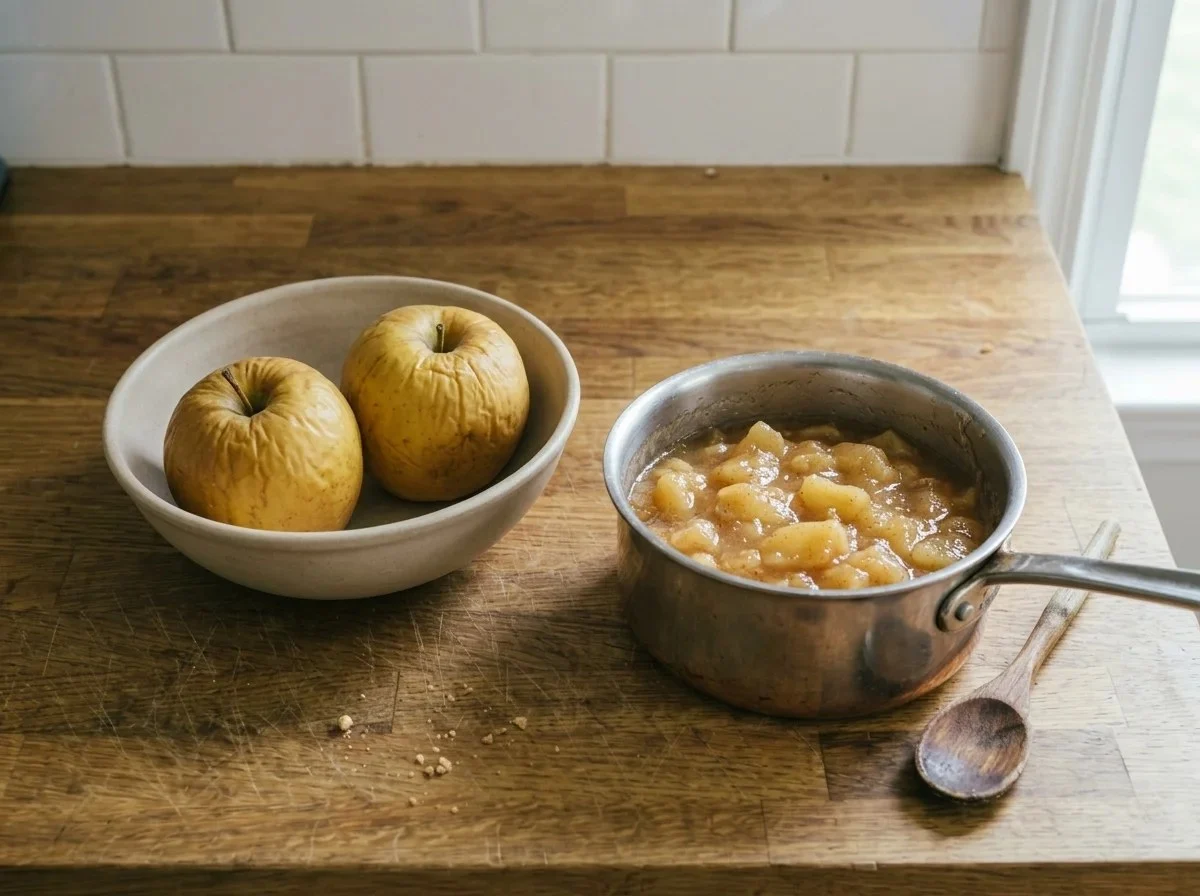
Soft, wrinkled or mealy apples
An apple that has gone soft or mealy has lost its crunch, which Ohio State University Extension treats as a sign of lower quality. So if there is no mold and no rot, turn it into applesauce, a crisp or a bake, where texture matters least.
Verdict: throw it out
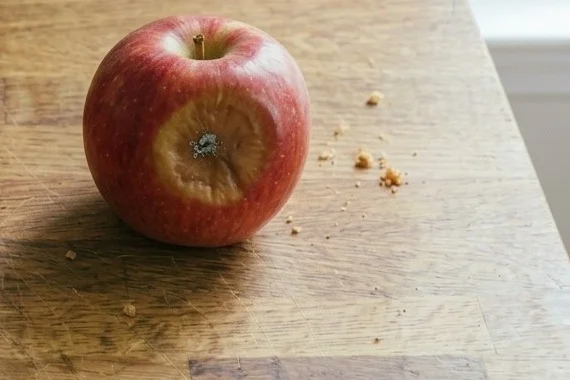
Moldy or rotten apples
Throw out an apple with mold or a rotten patch. Ohio State University Extension says spoiled apples should be discarded, because apples with core rot or blue-green mold are linked to patulin, a mold toxin that cooking does not remove. Then check the apples that were touching it, since rot spreads to its neighbors.
Does one bad apple spoil the rest?
Yes, according to Virginia Cooperative Extension, whose agent explains that if one apple goes bad, it will cause the rest of the apples nearby to spoil. So inspect your apples before you put them away, and then check them once a week, as Clemson Extension also advises.
Apple substitutes
Out of apples for a recipe, or had to throw the last one out? Then these will stand in.
Substitute
Works best in
What changes
Pears
Pies, crisps and salads
Softer and juicier, so bake a little less.
Frozen apple slices
Pies and crisps
Softer, but the flavor holds up once baked.
Unsweetened applesauce
Muffins and quick breads
Adds moisture rather than chunks of fruit.
Dried apples
Oatmeal and snacks
Chewy and sweeter, with a long shelf life.
Mistakes people make when they store apples
These are the ways people store apples that cost them the most, and each one has an easy fix.
Leaving them all in the fruit bowl. Apples soften quickly at room temperature, so keep only a few out and the rest in the fridge.
Storing them with bananas, avocados or onions. Since they speed each other up or trade smells, give apples their own drawer.
Washing them before storing. Rinse apples just before you eat them instead.
Skipping the weekly check. One rotting apple spoils its neighbors, so look through them every week.
Freezing them whole. Frozen apples are for cooking, so slice and treat them first.
Trimming mold off an apple. Spoiled apples can carry patulin, so throw them out rather than cutting around the spot.
Leaving cut apples out. Cut, peeled or cooked apples go in the fridge within two hours.
Sources
Using & Storing Apples, Clemson Cooperative Extension, revised August 2020, on choosing apples, the crisper, strong odors and keeping slices from browning.
Selecting, Storing, and Serving Ohio Apples, Treva Williams, Ohio State University Extension, revised 2021, on selection and 4 to 6 weeks in a perforated bag.
Mold Has Grown on Your Food: What Should You Do?, Abby Snyder, Ohio State University Extension, June 2018, on discarding spoiled apples because of patulin.
Have a bounty of Virginia apples? Here's how to keep them fresh longer, Devon Johnson, Virginia Tech, November 2024, on the crisper, storing apples alone, weekly checks and not freezing them whole.
Apple, Purdue Extension FoodLink, on counter and fridge times and choosing apples.
Got Apples?, Washington State University Extension, February 2019, on why the fridge beats room temperature.
Freezing Apples, National Center for Home Food Preservation, University of Georgia, on syrup, sugar and dry packs with ascorbic acid.
Freezing Apples, Preserve Smart, Colorado State University Extension, on slicing, packs and 8 to 12 months at 0°F.
How to Harvest and Store Apples, Iowa State University Extension, reviewed September 2025, on winter storage temperature, humidity and apples freezing below 30°F.
Fruit Harvest: Handling of Frozen Apples, James Schupp, Penn State Extension, updated January 2024, on when apples freeze and what thawing does.
Why was my apple brown and mushy around the core?, UF/IFAS Extension Nassau County, 2017, on internal browning.
Freezing Fruits for Summer Smoothies, National Center for Home Food Preservation, 2013, on freezing fruit chunks for smoothies.
Storage times and safety advice on this page come from the sources above. Food safety depends on conditions I cannot see, so read the Disclaimer, and if in doubt, throw it out.
Other ingredient guides
Browse all guides
Share this guide
Never miss a guide
New ingredient guides when they go up, plus one storage tip worth knowing. Anything sponsored is labelled.

Emilly White