
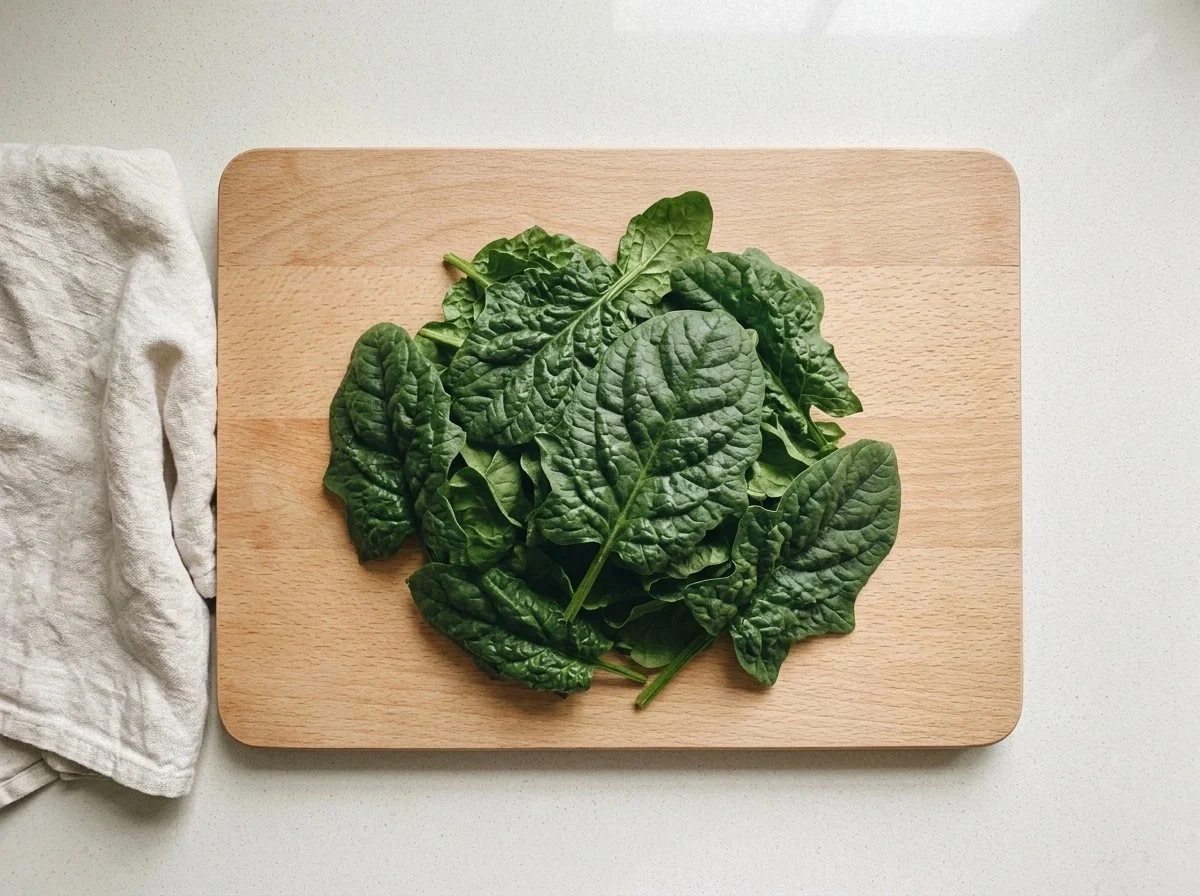
Not for storage
Perishable. Refrigerate it as soon as you get home
3 to 7 days
Loose leaves, unwashed. An opened bag: about 2 days
10 to 12 months
Blanched for 2 minutes first. For cooking only
The short version: to store spinach well, keep it dry, unwashed and uncrushed in the crisper, away from apples and tomatoes, then use an opened bag within a couple of days.
Storage times from the USDA FoodKeeper data, Utah State University Extension and Purdue Extension.
On this page
How to choose spinach that will store well
Spinach does not wait. It is one of the most perishable things in the produce aisle, so the few seconds you spend choosing decide how many days you get.
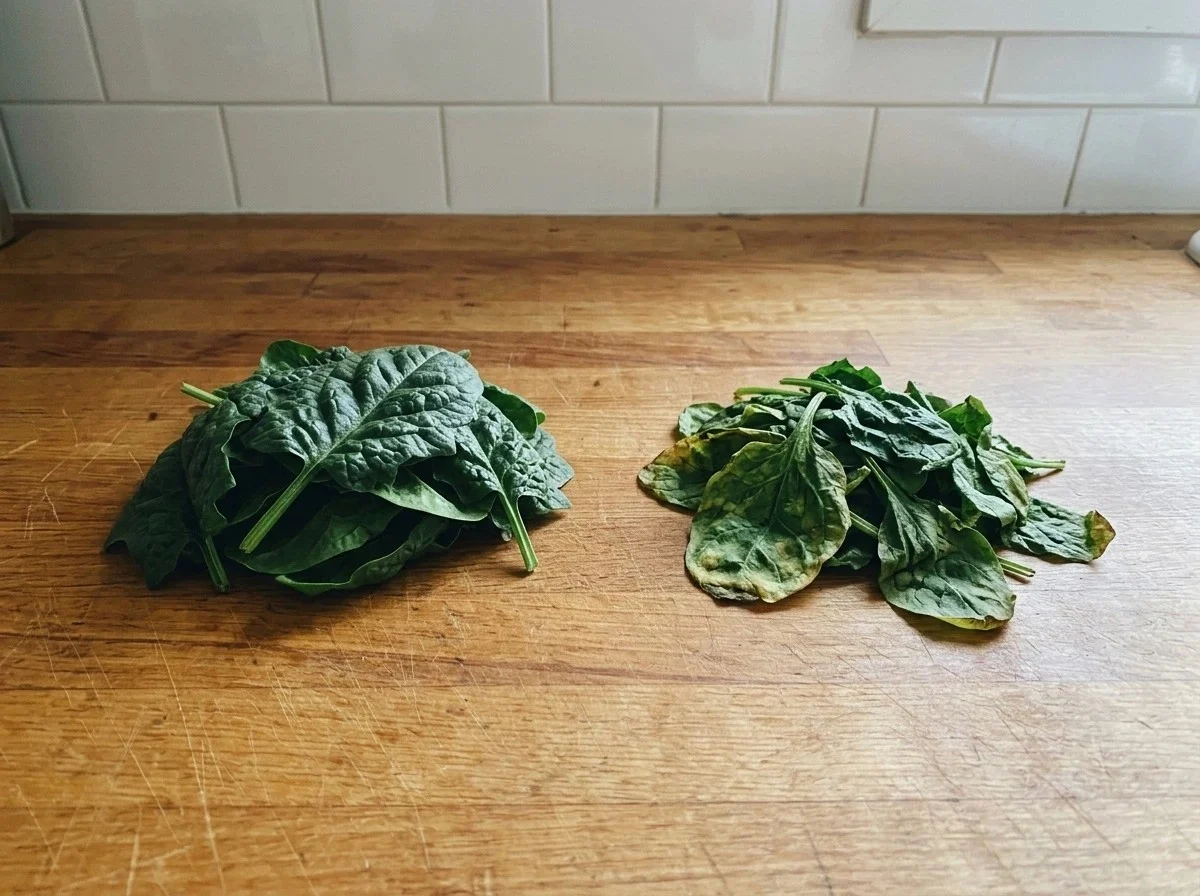
Crisp, dark green spinach next to a limp pile with a few yellowing leaves. The wilted one is still worth cooking today.
Dark green, perky leaves. In particular, Purdue Extension says to look for fresh, dark green leaves and to avoid wilted ones.
No yellow or limp leaves. In fact, Utah State University Extension lists both as reasons to pass.
A dry bag with no dark, wet corners. Turn the bag over before you buy it. That is because wet, darkened leaves at the bottom are where spoilage starts.
The latest date on bagged spinach. The date sets the clock for the whole bag, so reach for the freshest one.
How to store spinach so it lasts
To store spinach so it lasts, keep it cold, dry and uncrushed. After all, water on the leaves and weight on top of them are what turn a bag of spinach slimy.
How to store spinach in the fridge
Keep loose spinach unwashed, loosely in an open bag in the crisper drawer, as Utah State University Extension advises, and wash it just before you use it. Purdue Extension stores the leaves in a plastic bag with a damp paper towel instead. Both methods avoid the two things that ruin spinach: leaves drying out, and leaves sitting in water. Whole peppers belong in the crisper unwashed too, for the same reason.
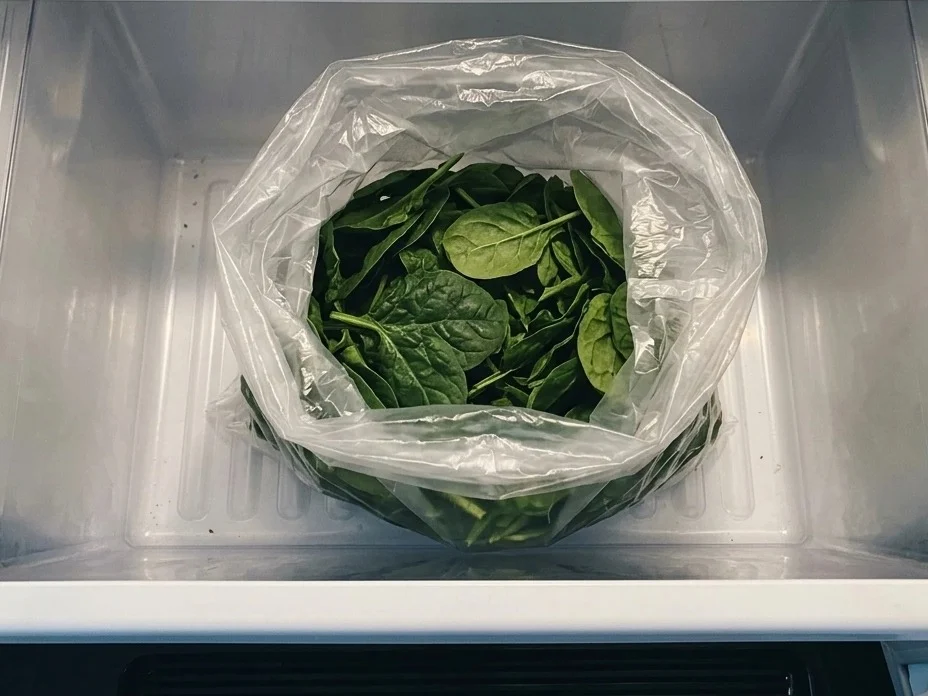
Loose leaves in a bag left open in the crisper drawer, with room around them rather than packed tight.
How long can you store spinach in the fridge?
Three to seven days for fresh leaves, according to the USDA FoodKeeper data. Utah State University Extension gives 3 to 5 days, and Purdue 4 to 5. The UC Davis Postharvest Center explains why the range is so short: spinach is highly perishable, and even at 32°F it will not keep good quality for more than two weeks. A home fridge runs warmer than that, so plan on the short end.
Waiting also costs nutrients. In a Penn State study, spinach kept at 39°F had lost nearly half its folate after 8 days, and it lost it faster at warmer temperatures. The lead researcher noted that frozen spinach can hold more nutrients than fresh spinach that has sat in the fridge for several days.
How to store bagged spinach
Keep the bag sealed and cold until you open it. The USDA FoodKeeper data gives an unopened bag of greens 3 to 5 days past the date on the bag, and only about 2 days once it is open. Utah State gives bagged spinach 7 to 10 days, or until the date on the bag. Go by the date, and once the bag is open, finish it within a couple of days.
Should you wash bagged spinach?
Not if the bag says washed, triple washed or ready to eat. The FDA says that produce does not need washing again, and Clemson Extension agrees unless the label says otherwise. If you rewash it anyway, the FDA warns you to keep it away from unclean surfaces, because the sink can add bacteria. Loose spinach is different: Clemson says to swish unpackaged leafy greens in a bowl of lukewarm water for 30 seconds, drain, and repeat until no grit is left.
Where to store spinach in the fridge
In the crisper, away from apples, melons and tomatoes, and not pressed against the back wall. The UC Davis Postharvest Center says spinach is highly sensitive to ethylene, the gas those fruits give off, which turns it yellow faster. It also notes that spinach starts to suffer freezing injury at 31.5°F: frozen leaves turn water-soaked and then rot quickly, which is what happens to a bag left against the coldest part of the fridge.
Can you freeze spinach?
Yes, but blanch it first, and plan to cook with it. The USDA FoodKeeper data does not recommend freezing spinach as fresh salad leaves, but gives greens 10 to 12 months in the freezer, and Utah State University Extension gives frozen spinach the same. Purdue Extension is more cautious, at up to 5 months. Frozen spinach loses its crunch, so it is for soups, sauces, smoothies and baking, not salad.
How to store spinach in the freezer
The National Center for Home Food Preservation starts with young, tender leaves. Wash them thoroughly and cut off any woody stems, then water-blanch spinach for 2 minutes. Cool it, drain it and pack it, leaving 1/2 inch of headspace, then seal and freeze.
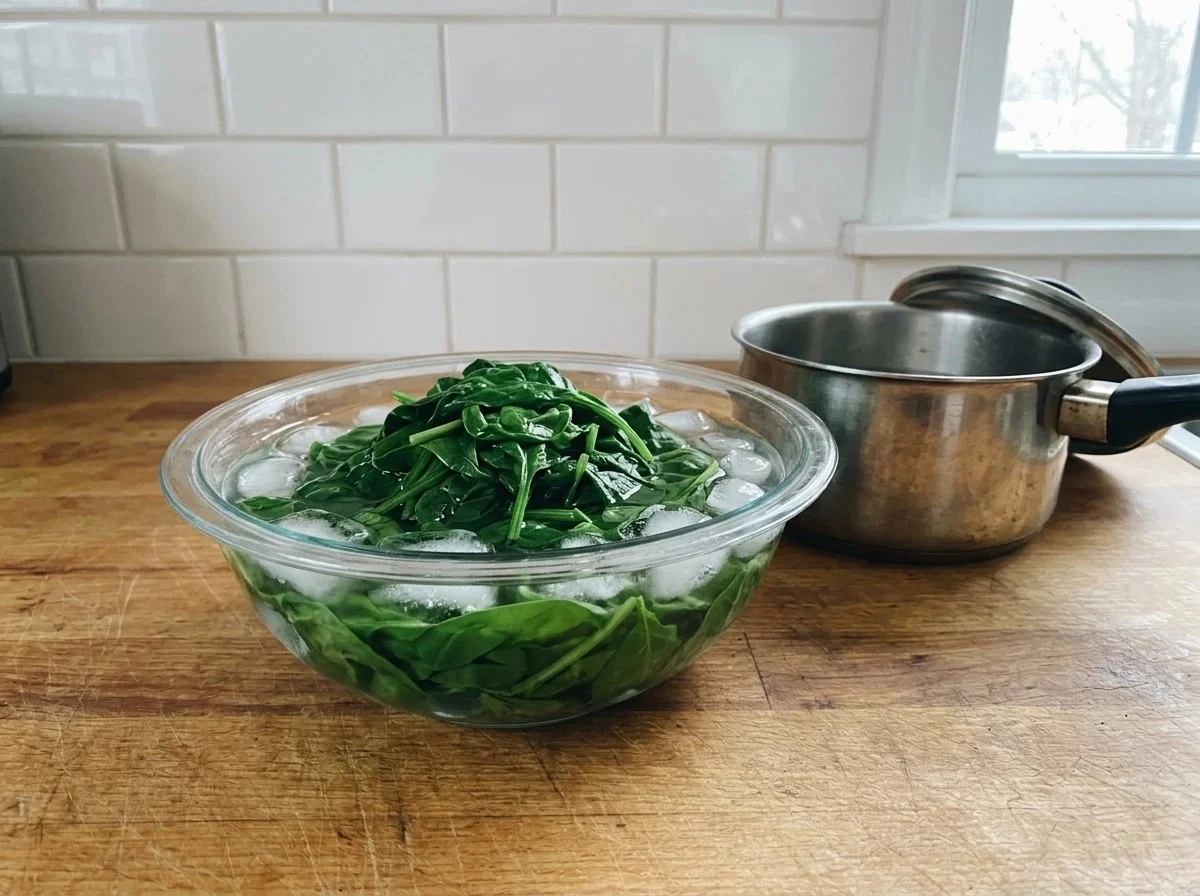
Blanched spinach cooling in ice water. Cool it for as long as you blanched it, then drain it well.
Why blanch spinach before you store it in the freezer?
Blanching stops the enzymes that would otherwise keep working in the freezer and cost you flavor, color and texture, the National Center for Home Food Preservation explains. It also warns that underblanching is worse than not blanching at all, so give it the full 2 minutes, then cool the spinach in cold water for the same amount of time.
What happens to spinach you store in the freezer
Frozen spinach collapses when it thaws and gives off a lot of water. Squeeze it dry before it goes into a dip, a quiche or a pasta filling, or it will make the dish watery. Straight from frozen, it can go into soups and smoothies.
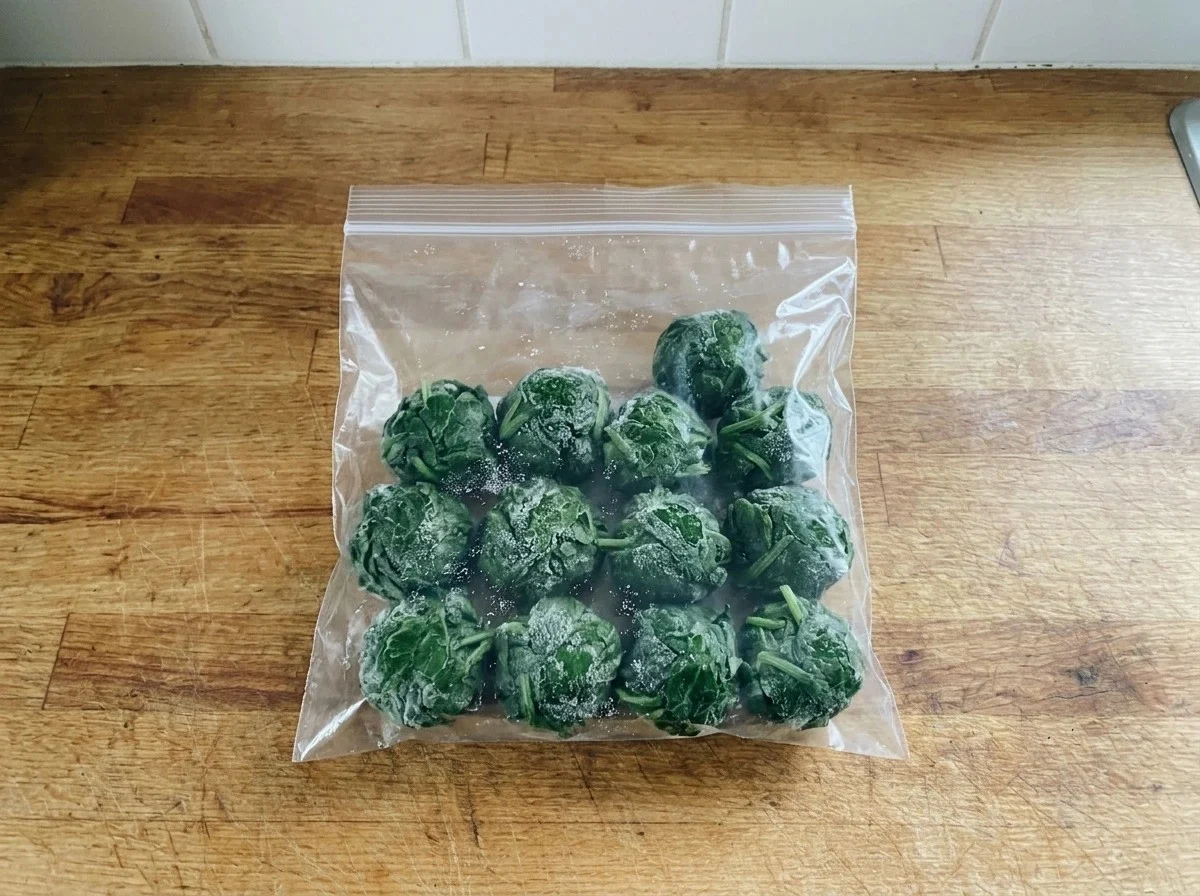
Squeezed portions of cooked spinach, frozen flat in a bag so you can take out one at a time.
How to tell if spinach has gone bad
However you store spinach, it goes downhill in stages, and the early ones are easy to rescue. A few tired leaves are not a lost bag. A slimy, sour-smelling bag, however, is. Here is how to tell which one you have.
Verdict: use it
Fresh
Dark green, perky and dry, with no yellow or slimy leaves. That is also what Purdue and Utah State tell you to buy.
Verdict: cook it today
Wilted but still green
Limp leaves have lost water. If they are still green, with no slime and no off smell, cook them today. After all, in a pan, wilted spinach and crisp spinach end up the same.
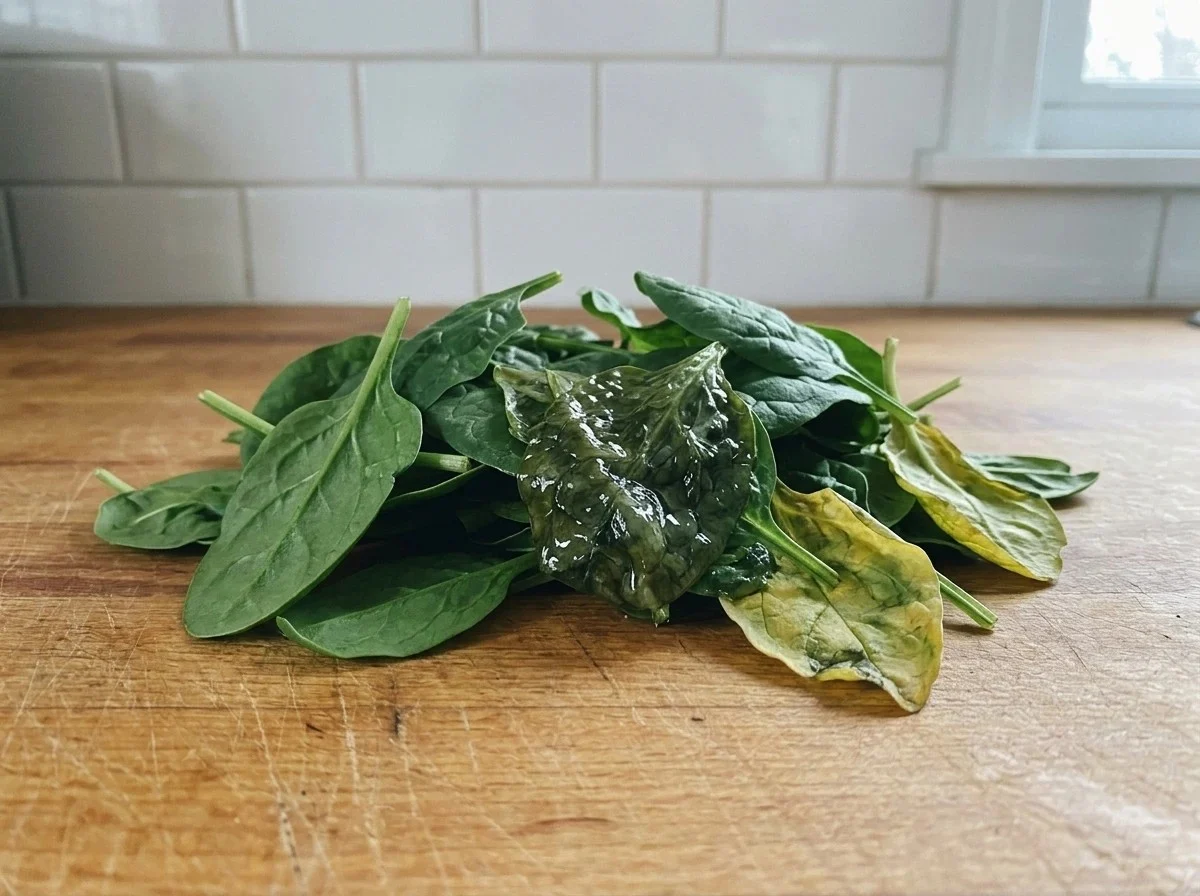
Verdict: pick out the bad leaves
A few slimy or yellow leaves
Slime is bacterial soft rot, which the UC Davis Postharvest Center says usually starts on damaged leaves and stems. The FDA also says to remove damaged or bruised parts of produce and throw out anything that looks rotten. So pull out the slimy and yellow leaves and the ones touching them, then use the rest today.
Verdict: throw it out
Slimy all through, or a sour smell
When the slime has spread through the bag, or it smells sour or rotten, throw the whole bag out. The FDA says to discard produce that looks rotten, and a bag this far gone is not worth picking through.
Verdict: throw it out
Mold on spinach
Fuzzy white, gray or black spots are mold. UConn Extension says to throw out soft fruits and vegetables with mold rather than cutting it away, and spinach leaves are about as soft as produce gets. That is also the same call you would make with moldy strawberries.
Is slimy spinach safe to eat?
Not the slimy leaves. Some food sites say the rest of the bag is fine as long as less than half of it is slimy. However, no university or government source gives a percentage like that. The guidance that does exist is simpler: remove damaged parts, throw out produce that looks rotten, and when in doubt, throw it out. A few bad leaves, picked out early, are fine to remove. A bag where the slime has spread, on the other hand, is not.
Spinach substitutes
Spinach gone before you got to it? These will stand in.
Substitute
Works best in
What changes
Frozen spinach
Soups, dips, pasta and quiche
Softer. Squeeze it dry first.
Baby kale
Salads and sautés
Firmer and a little more bitter.
Swiss chard
Sautés, soups and gratins
Thicker stems. Cook them a few minutes longer.
Arugula
Salads and pizza
Peppery. Use less in a delicate dish.
Mistakes people make when they store spinach
These are the ways people store spinach that cost them the most, and each one has an easy fix.
Washing it before storing. Wet leaves turn slimy. Wash loose spinach just before you use it. The same goes for mushrooms, which soak up water.
Rewashing ready-to-eat spinach. The FDA says it does not need it, and in fact the sink can add bacteria.
Packing it tight. Since crushed leaves are where rot starts, give the bag some room.
Storing it next to apples or tomatoes. Keep them apart, because their ethylene turns spinach yellow.
Pushing it against the back of the fridge. Spinach freezes at 31.5°F and then rots. Use the crisper.
Throwing out a whole bag for a few bad leaves. Instead, pick them out early and use the rest the same day.
Freezing it raw. Blanch it for 2 minutes before freezing, and plan to cook with it.
Sources
FoodKeeper, Food Safety and Inspection Service, U.S. Department of Agriculture. Fridge and freezer times for spinach, greens and bagged greens.
Fruit and Vegetable Guide Series: Spinach, Utah State University Extension, May 2023. Choosing, storing loose and bagged spinach, and frozen storage.
Spinach, FoodLink, Purdue Extension. Choosing, fridge storage, washing and freezing.
Spinach, Postharvest Research and Extension Center, UC Davis. Storage temperature, ethylene, freezing injury and soft rot.
Storage time and temperature effects nutrients in spinach, Penn State, on research by Luke LaBorde and Srilatha Pandrangi published in the Journal of Food Science, March 2005. Folate and carotenoid loss in storage.
Freezing Greens (Including Spinach), National Center for Home Food Preservation, University of Georgia. Blanching and packing spinach.
Blanching Vegetables, National Center for Home Food Preservation, University of Georgia. Why blanching matters before freezing.
Selecting and Serving Produce Safely, U.S. Food and Drug Administration. Fridge temperature, pre-washed produce and damaged or rotten produce.
Safe Handling of Lettuce & Leafy Green Salads, Home & Garden Information Center, Clemson Extension, revised July 2021. Washing loose and bagged greens.
Handling Food with Mold, UConn Extension, April 2024. Soft produce with mold.
Storage times and safety advice on this page come from the sources above. Food safety depends on conditions I cannot see, so read the Disclaimer, and if in doubt, throw it out.
Other ingredient guides
Browse all guides
Share this guide
Never miss a guide
New ingredient guides when they go up, plus one storage tip worth knowing. Anything sponsored is labelled.

Emilly White