
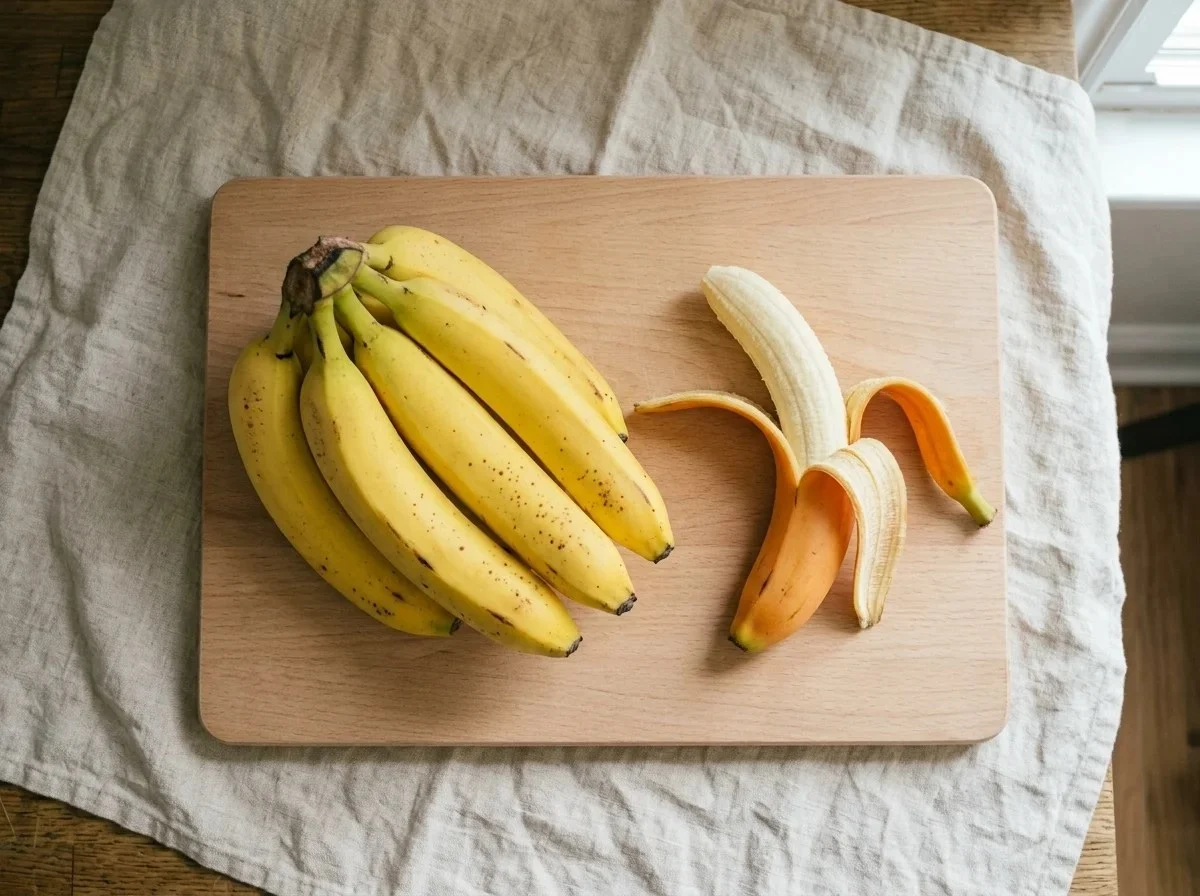
Up to a week
Until the skin turns dark brown
5 to 7 days
Once ripe. The peel darkens, the fruit does not
2 to 6 months
Peeled, in pieces or mashed
The short version: to store bananas well, keep them on the counter out of the plastic bag until they are ripe, then move them to the fridge or the freezer so they last longer.
Storage times from Colorado State University Extension, Illinois Extension and Utah State University Extension.
On this page
How to choose bananas that store well
How long bananas last starts at the store, because you are buying them at a stage of ripeness. So think about when you will eat them before you pick a bunch.
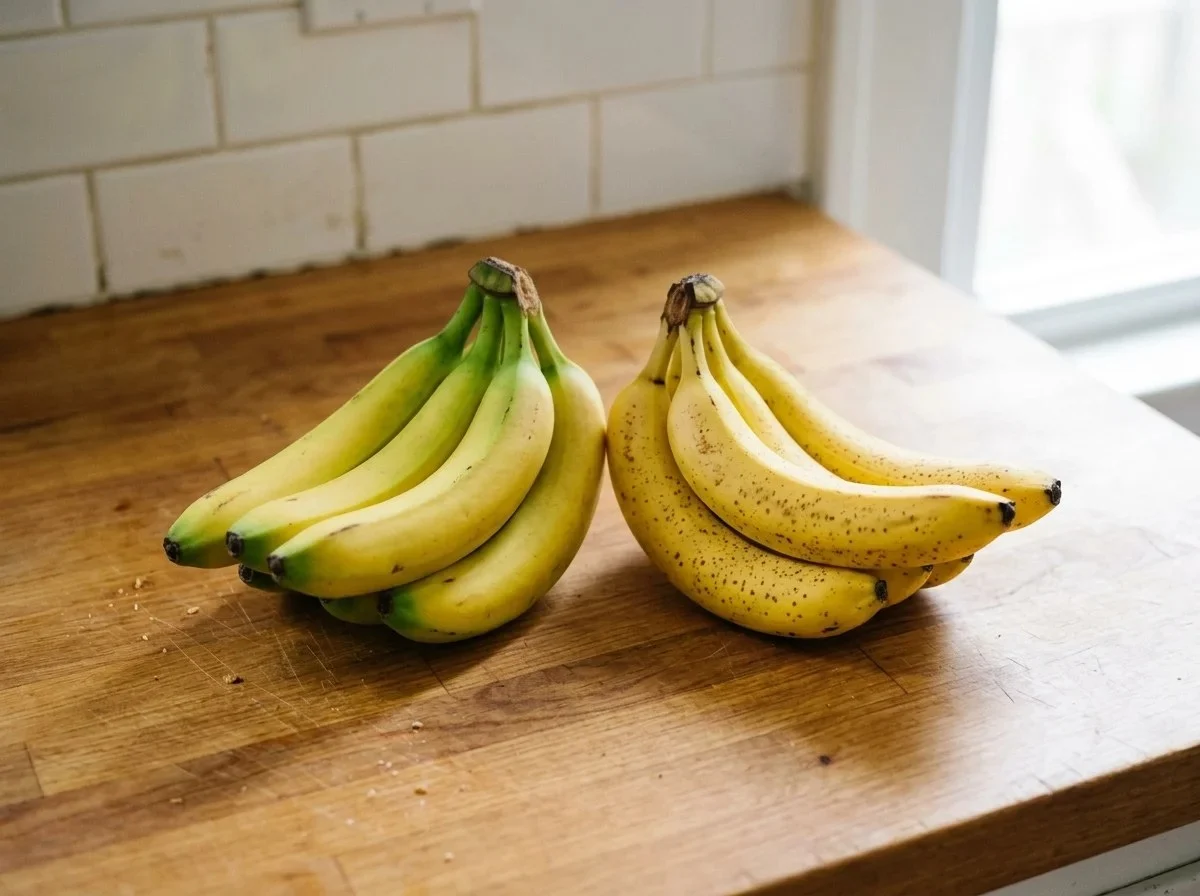
A yellow-green bunch compared to a ripe, freckled one. Buy the green one for later in the week, and the ripe one for today.
Slightly green for later. Illinois Extension suggests slightly green bananas if you will not eat them right away, since they keep ripening at room temperature at home.
Yellow for this week. Ripe bananas are the ones to buy for baking and smoothies, as Colorado State University Extension notes.
No soft spots or large brown patches. Colorado State also advises skipping bananas with handling damage, such as a soft spot or a large brown area.
Only as many as you will use. Since bananas ripen quickly at room temperature, buy what you will eat within the week, or plan to freeze the rest.
How to store bananas so they last
To store bananas so they last, ripen them at room temperature, then move them to the fridge once they are as ripe as you like. That is because cold stops a green banana from ripening properly, while it slows a ripe one down.
How to store bananas on the counter
Take them out of the plastic produce bag first, because Colorado State University Extension says the bag speeds ripening, and Nebraska Extension adds that it traps moisture and ethylene gas. Then keep the bunch somewhere cool and dark. Nebraska Extension gives about 54°F as the ideal, and it also suggests wrapping the stems in plastic wrap or foil so that ethylene does not speed up ripening.
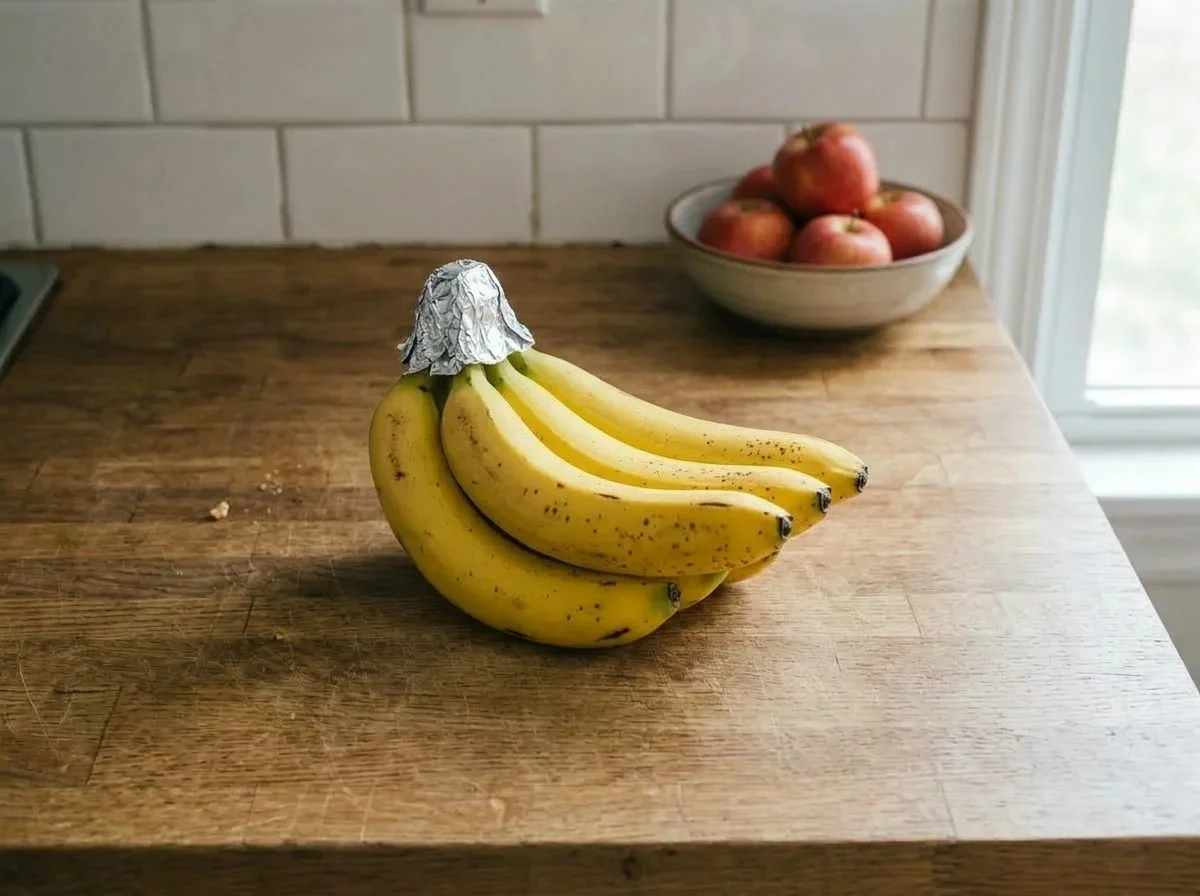
A ripe bunch on the counter with its stems wrapped in foil, while the apples stay in their own bowl.
How long can you store bananas on the counter?
Up to a week, or until the skin turns dark brown, according to Colorado State University Extension. However, a warm kitchen shortens that. For comparison, the UC Davis Postharvest Center ripens bananas at 59 to 68°F, while it holds them at 56 to 58°F to keep them from ripening.
Those are quality windows rather than safety limits. In other words, a banana with a dark peel is usually just ripe, and it is often the best one for baking.
Should you store bananas in the fridge?
Only once they are ripe. Utah State University Extension says bananas will not ripen properly if they go into the fridge green, but ripe ones keep a few more days there. The peel turns brown in the cold, although the fruit inside stays fresh. Illinois Extension gives fully ripe bananas 5 to 7 days in the fridge, while Nebraska Extension says a couple of days longer, so check them after the first few days.
How to store bananas apart from other fruit
Bananas give off ethylene gas, which makes other fruit ripen faster, so Nebraska Extension advises keeping them apart from other ethylene producers such as apples and avocados. On the other hand, that same gas helps when you want a hard avocado to ripen: close it in a paper bag with a banana.
How to store cut bananas
Cut bananas brown quickly once they are opened, so Utah State University Extension suggests peeling and slicing them close to serving time. If you have half a banana left over, mash it and freeze it for baking instead.
Can you freeze bananas?
Yes, and it is the best way to store bananas that are ripening faster than you can eat them. The sources differ on how long they keep, though: Illinois Extension says 2 to 3 months, while Colorado State University Extension says up to 6 months. So aim to use them within 3 months, and use the oldest bag first.
How to store bananas in the freezer
First of all, peel the bananas. Next, cut them into 1 to 2 inch chunks for smoothies, or leave them whole or in larger pieces for baking, as Colorado State University Extension suggests. Then spread the pieces on parchment or waxed paper on a baking sheet and freeze them for about two hours, until solid. After that, move them into freezer bags or containers, so the pieces stay loose.
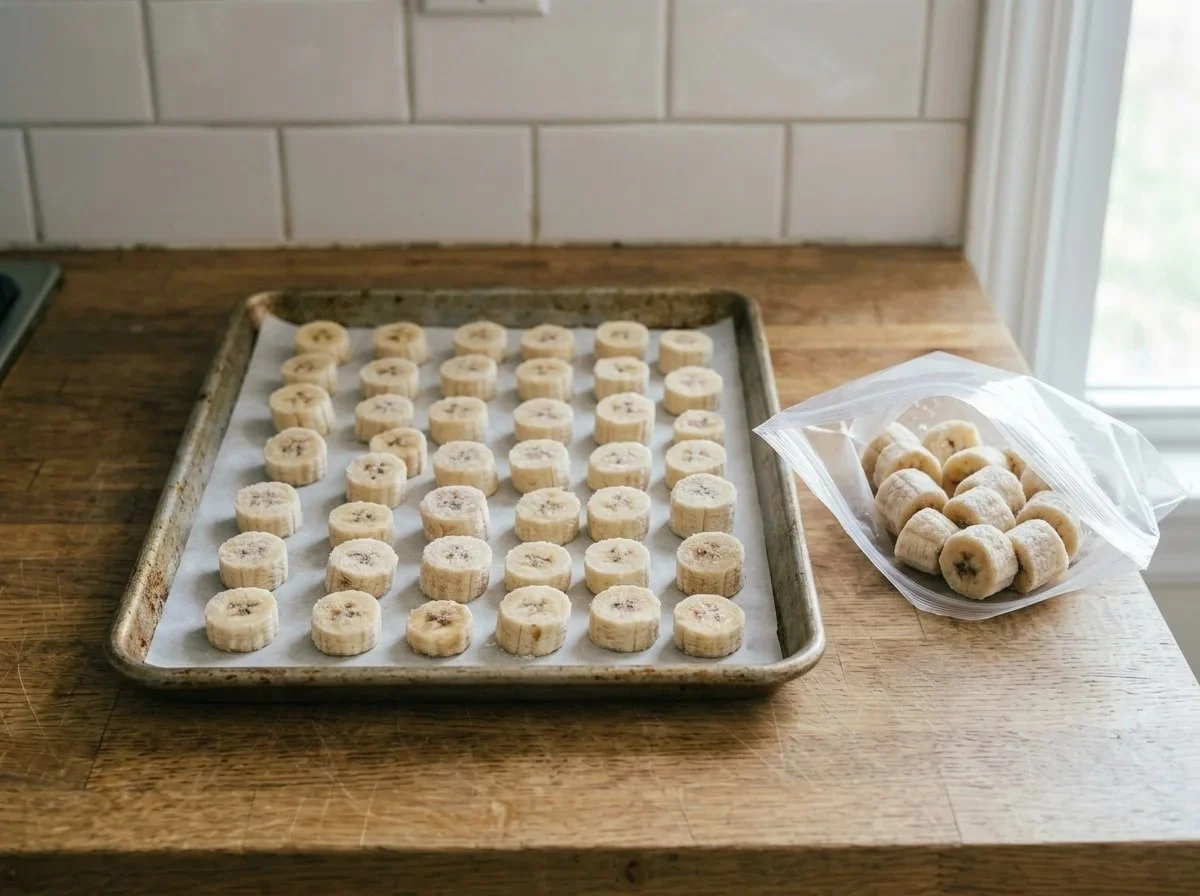
Banana slices frozen on a lined tray, then moved into a freezer bag so they stay loose.
How to store mashed bananas for baking
For banana bread, freeze them already mashed. The National Center for Home Food Preservation mashes firm ripe bananas thoroughly, adds 1/2 teaspoon of ascorbic acid per cup, and then packs the mash into a sealed, moisture-proof freezer container. As a result, it is ready to thaw and stir into a batter.
What happens to bananas you store in the freezer
If you freeze a whole banana in its peel, the peel darkens, although Illinois Extension notes that the fruit inside is unharmed. Frozen chunks, meanwhile, go straight into a blender, while thawed mash goes into muffins, pancakes and quick breads.
How to tell if a banana has gone bad
However you store bananas, a dark peel is usually a sign of ripeness rather than spoilage. Mold and soft, water-soaked flesh, on the other hand, are the signs that matter. Here is what each stage means.
Verdict: wait
Green or yellow-green
The banana is still ripening. Leave it on the counter rather than in the fridge, because cold stops it ripening properly.
Verdict: eat it
Yellow with brown specks
As bananas ripen, the peel goes from green to yellow with brown specks, and Illinois Extension notes that they get sweeter at the same time. This is the stage to eat them, or to move them to the fridge.
Verdict: use it
Black peel from the fridge
A ripe banana that turns black in the fridge is fine inside. Both Utah State University Extension and Nebraska Extension say the peel browns in the cold while the fruit stays light and fresh.
Verdict: bake with it
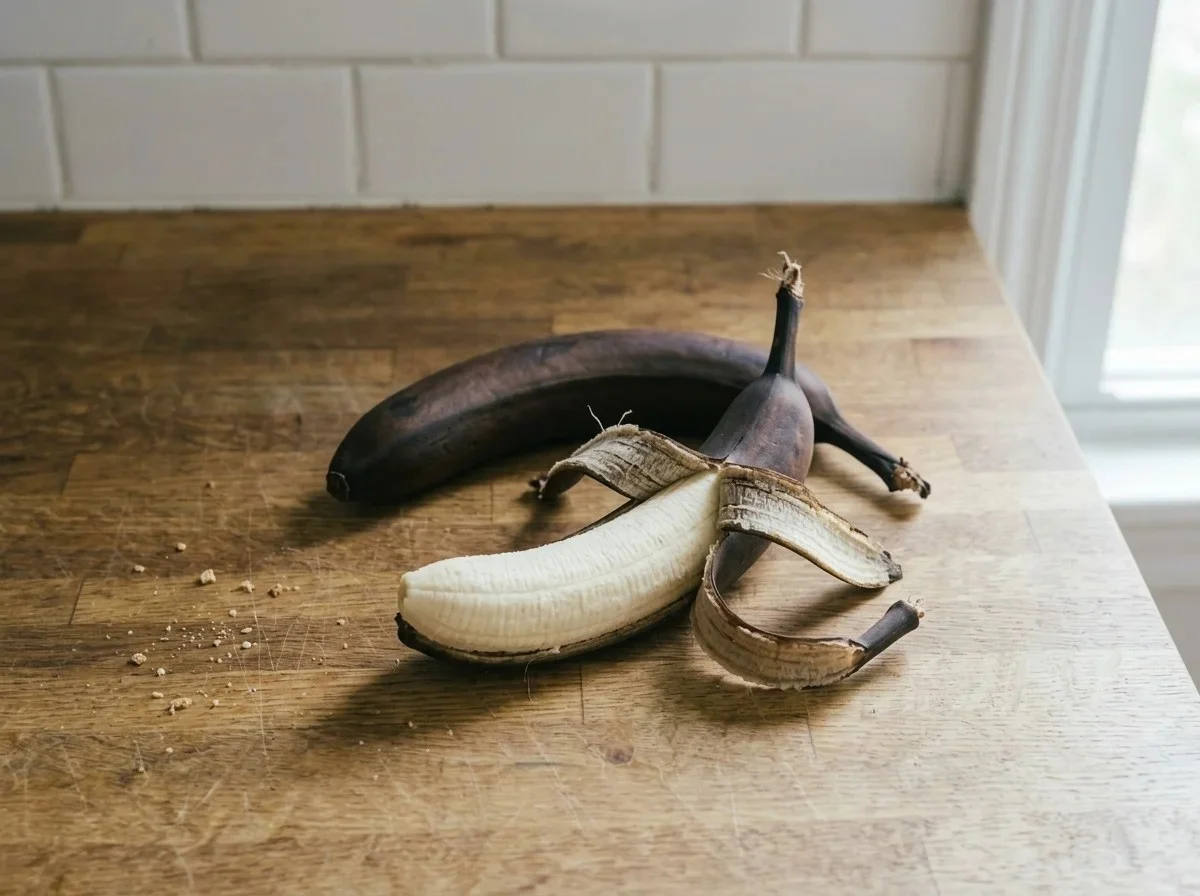
Brown all over and very soft
Colorado State University Extension keeps bananas on the counter until the skin turns dark brown, which is the point to use them up. So if there is no mold and no leaking, use them in quick breads, muffins, pancakes or smoothies, as Illinois Extension suggests, or freeze them for later.
Verdict: throw it out
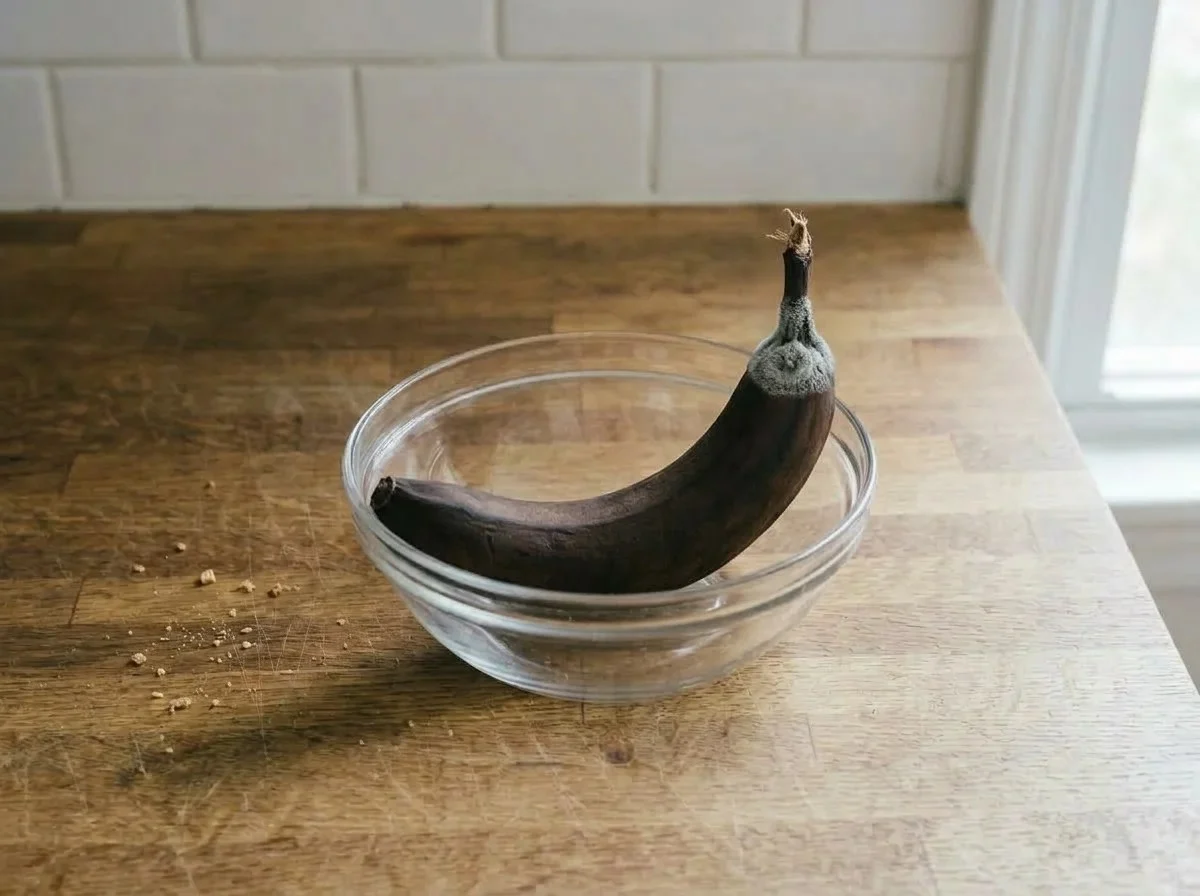
Mold or water-soaked flesh
Throw out a banana with mold on it, because UConn Extension advises discarding soft produce with mold rather than cutting it away. The UC Davis Postharvest Center adds that you only need to throw out the moldy fruit, then rinse and dry the rest. Likewise, flesh that has turned soft and water-soaked from the stem end is a rot, according to UC Davis, so that banana goes too. Moldy strawberries get the same verdict.
Is a black banana safe to eat?
Usually, yes. A peel that blackens in the fridge is chilling injury, which the UC Davis Postharvest Center links to temperatures below 56°F, while the fruit inside stays fine. Similarly, a peel that has gone dark brown on the counter just means the banana is very ripe. However, if the banana has mold, or the flesh has gone water-soaked, throw it out.
Banana substitutes
Out of bananas for a recipe, or had to throw the bunch out? Then these will stand in.
Substitute
Works best in
What changes
Frozen banana chunks
Smoothies and oatmeal
Colder and thicker, so skip the ice.
Unsweetened applesauce
Muffins and quick breads
Just as moist, with a milder flavor.
Canned pumpkin purée
Muffins and pancakes
Denser, with an earthy taste.
Plain Greek yogurt
Smoothies
Tangier and creamier.
Mistakes people make when they store bananas
These are the ways people store bananas that cost them the most, and each one has an easy fix.
Refrigerating them green. Cold stops them ripening properly, so wait until they are ripe.
Leaving them in the plastic bag. The bag traps moisture and ethylene, so take them out as soon as you get home.
Storing them next to apples or avocados. Since each one speeds up the others, keep them apart unless you want something to ripen.
Throwing out black bananas. A dark peel usually means ripe rather than bad, so check for mold first, then bake with them.
Freezing them in one lump. Freeze the pieces on a tray first, then bag them, so you can take out what you need.
Slicing them too early. Cut bananas brown quickly, so slice them close to serving time.
Keeping them somewhere warm. Warmth speeds up ripening, so choose a cool, dark spot instead.
Sources
Banana (Cavendish), Adel A. Kader, UC Davis Postharvest Research and Extension Center, November 1996, on ripening and storage temperatures, chilling injury and stem-end rot.
If a fruit is getting moldy, should I toss the entire bag?, UC Davis Postharvest Research and Extension Center, on removing moldy fruit and rinsing the rest.
Prolonging the Life of Bananas, Alice Henneman, updated by Cindy Brison in 2025, Nebraska Extension, on the 54°F ideal, the fridge, wrapped stems and ethylene.
Fruit and Vegetable Guide Series: Bananas, Marie Stosich, Utah State University Extension, on ripening before refrigerating, freezing mashed banana and browning once cut.
Bananas, Food Smart Colorado, Colorado State University Extension, on counter storage, plastic bags and freezing pieces for up to 6 months.
Going Bananas for Bananas!, Jenna Smith, Illinois Extension, February 2019, on choosing, refrigerating and freezing bananas and baking with very ripe ones.
Freezing Bananas, National Center for Home Food Preservation, University of Georgia, on freezing mashed banana with ascorbic acid.
Handling Food with Mold, UConn Extension, April 2024, on throwing out soft produce with mold.
Storage times and safety advice on this page come from the sources above. Food safety depends on conditions I cannot see, so read the Disclaimer, and if in doubt, throw it out.
Other ingredient guides
Browse all guides
Share this guide
Never miss a guide
New ingredient guides when they go up, plus one storage tip worth knowing. Anything sponsored is labelled.

Emilly White