
1 to 3 days
They dry out fast, so the fridge is better
3 to 7 days
In a paper bag on a shelf, not the crisper
Several months
Blanched or sautéed first, never raw
The short version: to store mushrooms well, keep them in a paper bag on a fridge shelf rather than in the crisper, leave them unwashed, and clean them only when you cook.
Storage times from Utah State University Extension, Penn State Extension and UNH Extension.
On this page
How to choose mushrooms that store well
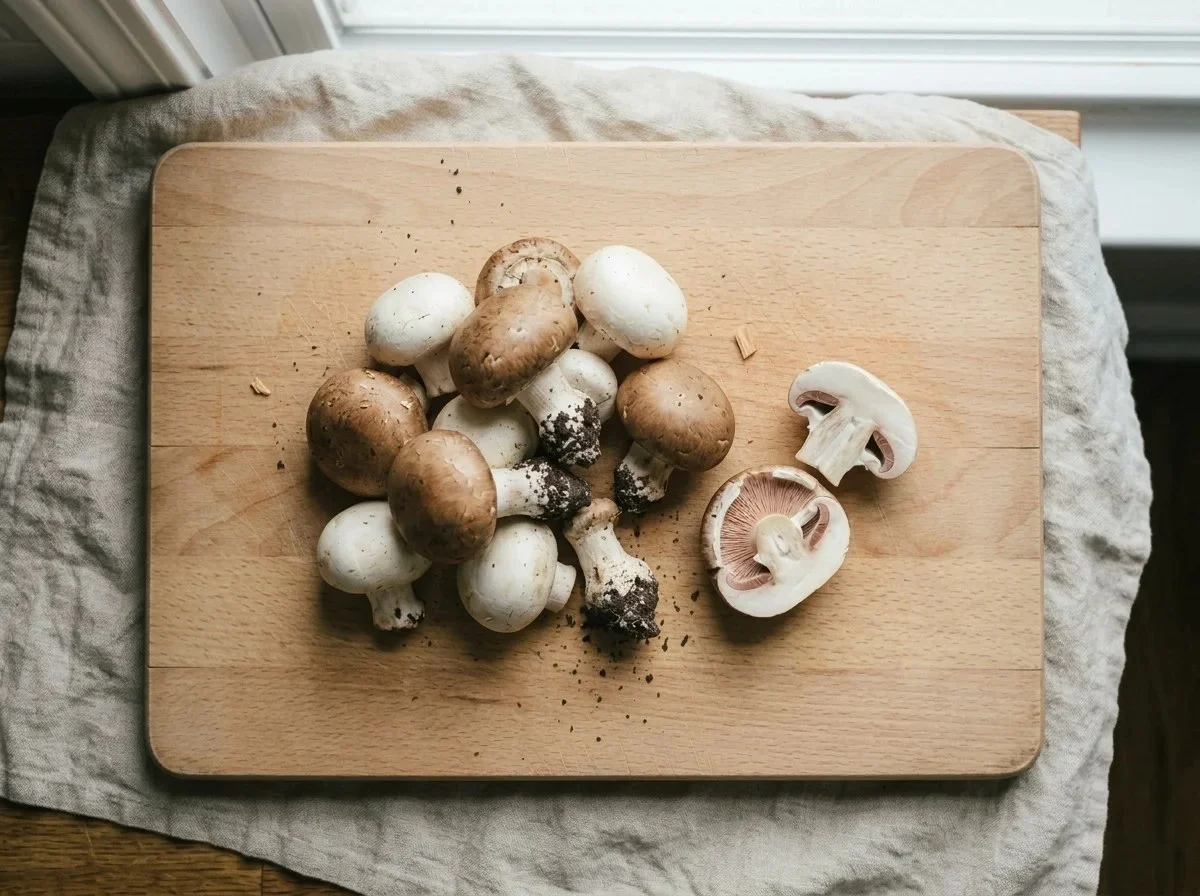
Mushrooms are picked days before you see them, so the ones you buy are already partway through their life. That is why the firm, dry ones in the box are worth picking out.
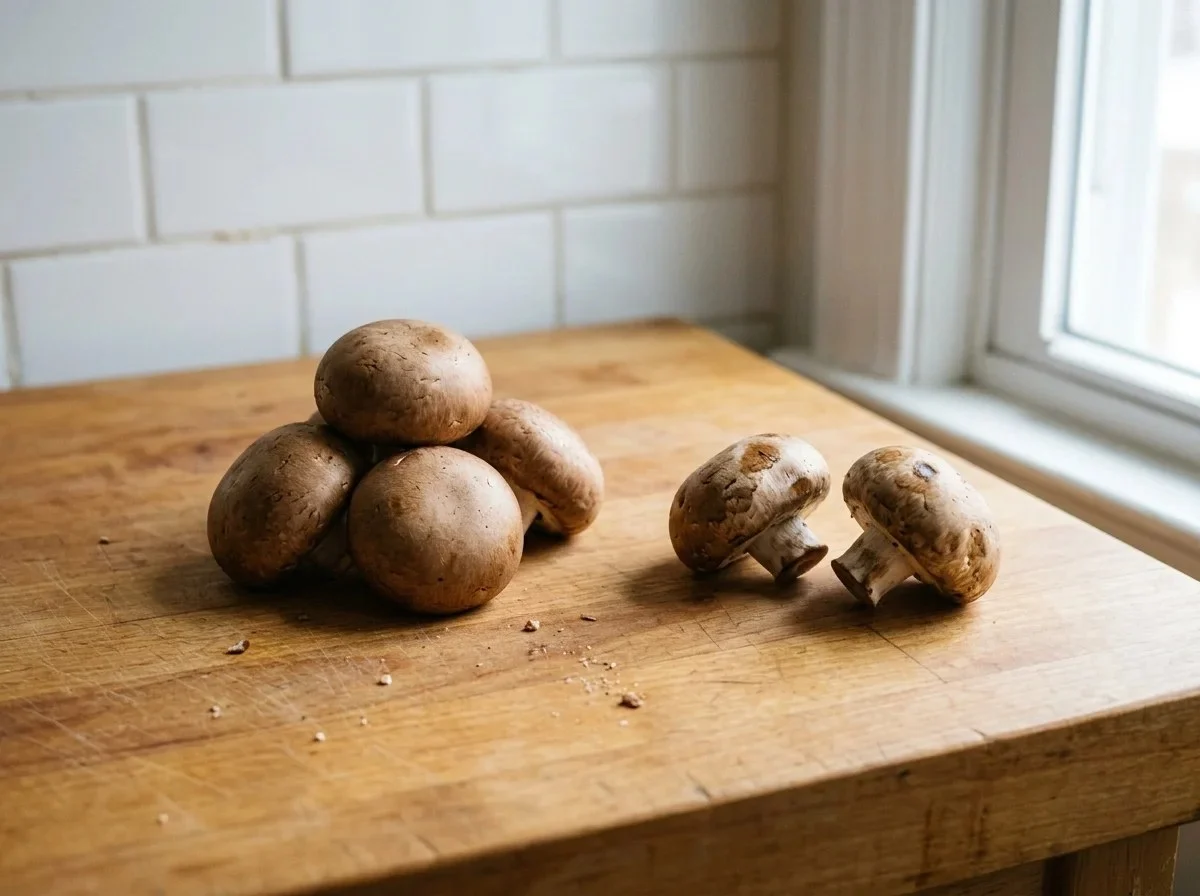
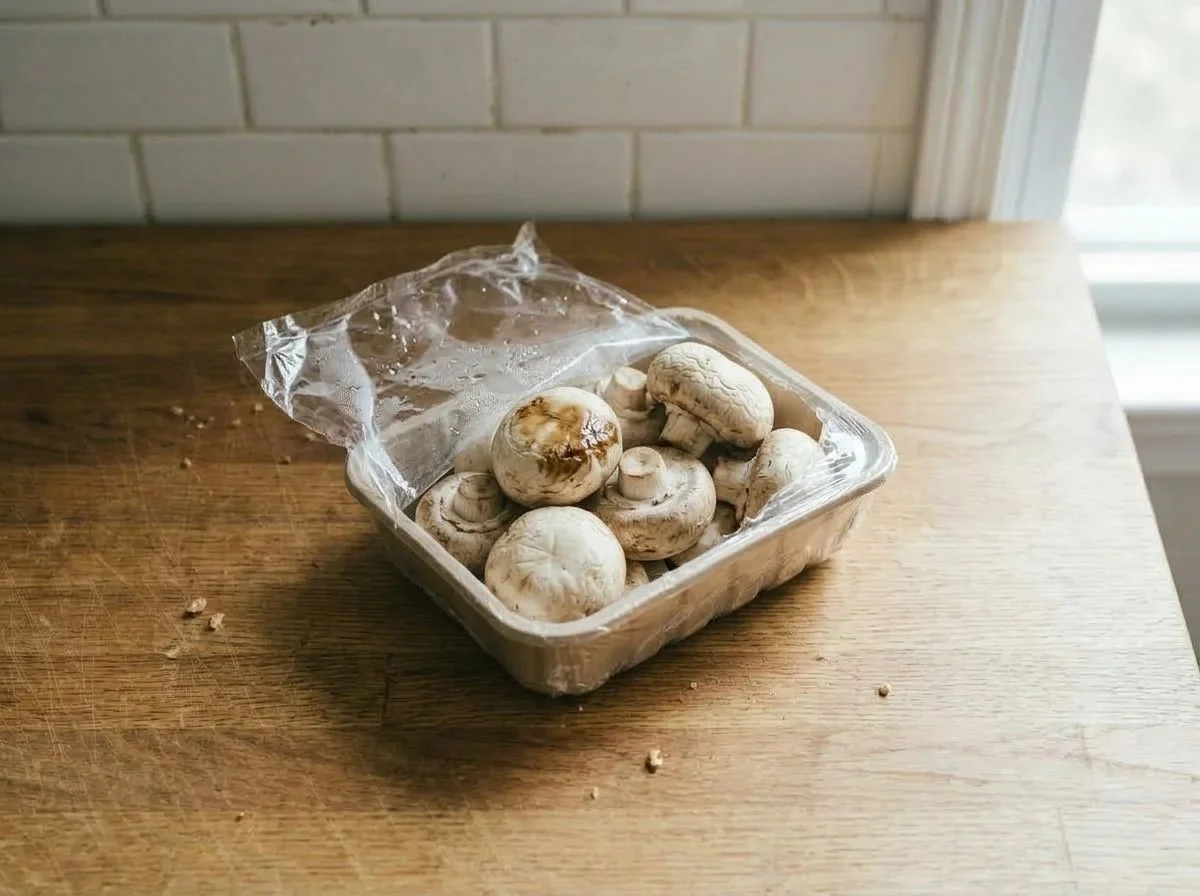
Firm, smooth mushrooms compared to two older ones with dark spots. Pick the firm ones, and cook any spotted ones first.
Firm and dry, but not shriveled. Utah State University Extension looks for mushrooms that are firm and moisture-free, with unblemished caps and no mold.
No slimy patches. Brown, slimy spots on the surface are the clearest sign that a box has been stored warm or sealed too tightly.
Few bruises. According to UNH Extension, rough handling bruises mushrooms, and the bruised tissue then turns brown.
Loose rather than packed, when you can. In a Serious Eats storage test, the writer found that sealed packs can hide spoiled mushrooms at the bottom, whereas loose ones let you check each one.
How to store mushrooms so they last
To store mushrooms so they last, keep them cold, dry and able to breathe. Because they give off a lot of moisture, anything airtight turns that moisture into slime.
How to store mushrooms in the fridge
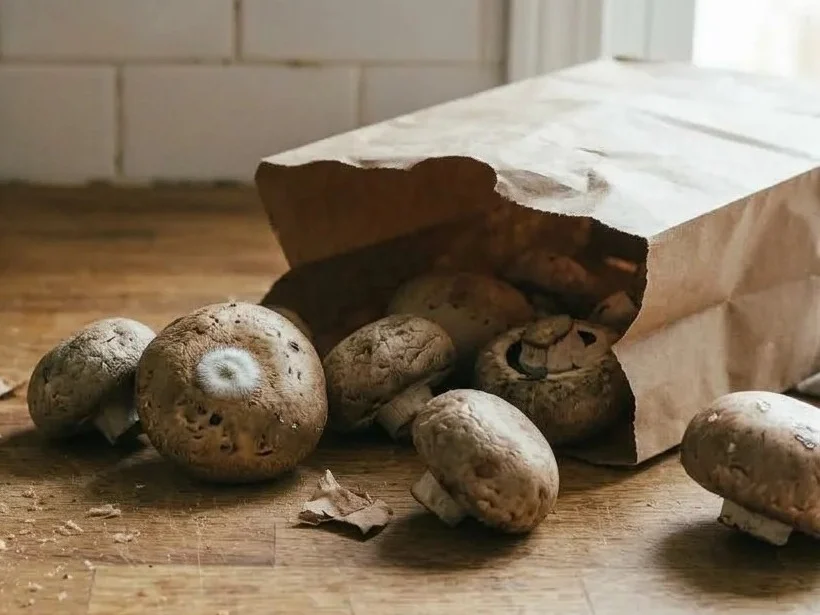
Put loose mushrooms in a paper bag, fold the top over loosely and keep the bag on a fridge shelf. Utah State University Extension recommends the paper bag, since airtight plastic holds in moisture and speeds up spoiling, and UNH Extension also warns against sealing mushrooms in an airtight container. In a 12-day test by Serious Eats, white mushrooms in a paper bag on a shelf lasted longest, while the same bag in the humid crisper drawer left them soft and slimy. If you will cook them within about 2 days, however, the original package is fine: Penn State Extension allows it, although in the same test mold grew between the mushrooms under the plastic film.
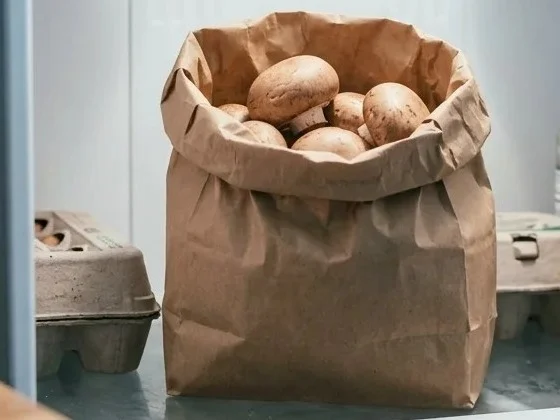
Mushrooms in a plain paper bag on a fridge shelf, where they can breathe, rather than in the humid crisper drawer.
How long can you store mushrooms in the fridge?
Penn State Extension gives 3 days, while Utah State University Extension says about 5 days in a paper bag, or up to a week in the original package. The difference is mostly the temperature: UNH Extension gives 7 to 9 days at 32 to 34°F with high humidity, although at 36°F that drops to 3 to 5 days.
Since a home fridge usually runs warmer than 34°F, plan on the shorter end. That is also why the Serious Eats test, where mushrooms still looked usable after nearly 2 weeks, is best read as a best case rather than a rule.
How long can you store shiitake and oyster mushrooms?
The times above are for white and cremini mushrooms. Other kinds differ: the grower Serious Eats interviewed says most mushrooms kept in a paper bag near the front of the fridge last 4 to 14 days, but delicate oyster mushrooms spoil sooner, while sturdier shiitake can last up to 2 weeks. So use oyster mushrooms first, and check shiitake by feel rather than by the calendar.
Should you wash mushrooms before storing them?
No. Utah State University Extension says to clean mushrooms only when you are ready to use them, because they soak up water and the extra moisture makes them break down faster. When you do cook them, rinse them under cold running water or wipe them with a damp cloth, a paper towel or a soft brush. The same rule keeps spinach out of the sink until the last minute.
How to store mushrooms on the counter
Only for a day or two. At room temperature mushrooms stay good for about 1 to 3 days, and they dry out and wrinkle quickly, so the fridge is the better place for them.
How to store cooked mushrooms
Cool them, then refrigerate them in a covered container and use them within a few days. Alternatively, freeze them: sautéed mushrooms freeze well, and Utah State University Extension packs cooked mushrooms in 1/2 cup or 1 cup containers.
How to store sliced mushrooms
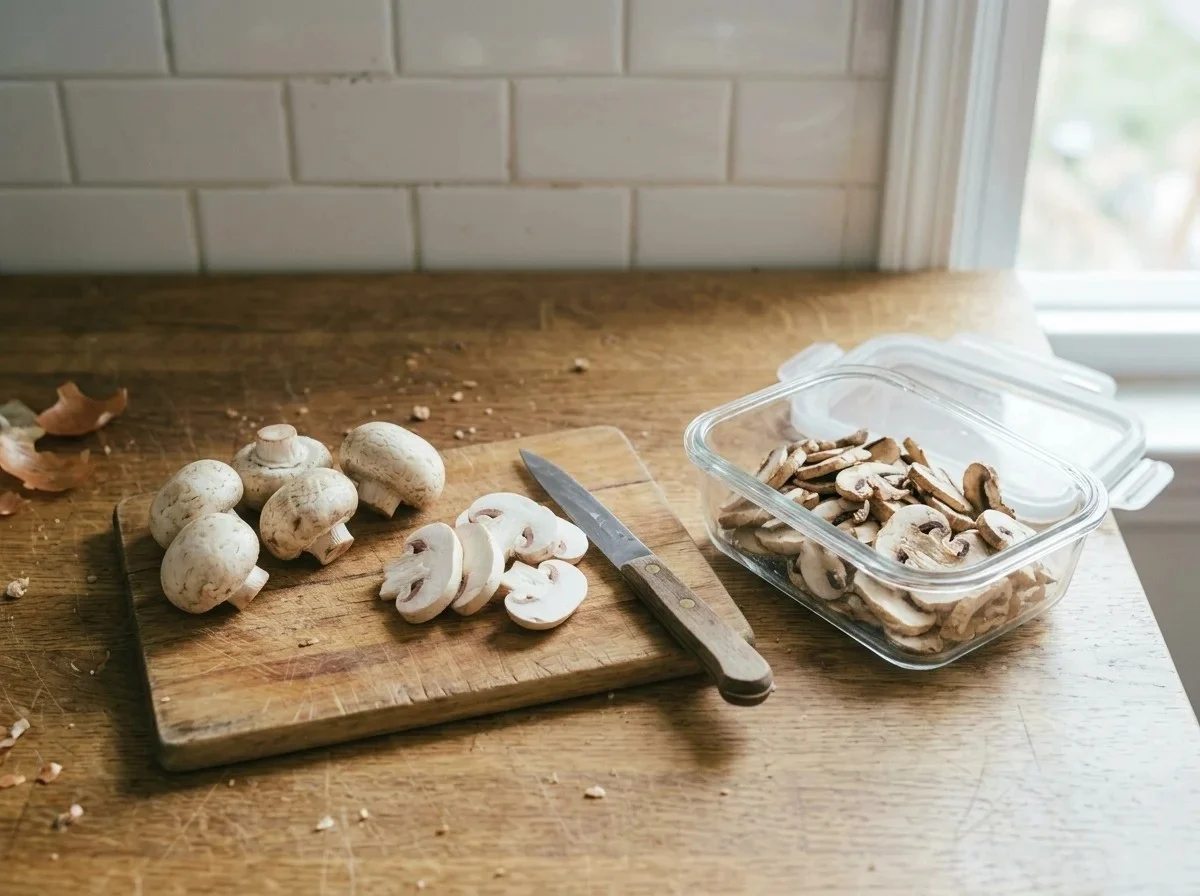
Sliced mushrooms go off much faster than whole ones, because every cut face loses moisture and lets bacteria in. StopWaste, a public agency in Alameda County, California, gives sliced mushrooms only 1 to 2 days in the fridge, compared with 4 to 7 days for whole ones. So buy whole mushrooms when you can, slice them just before cooking, and cook or freeze any leftover slices the next day.
Can you freeze mushrooms?
Yes, but not raw. Utah State University Extension says mushrooms must be cleaned and cooked before they go in the freezer, where they keep for several months. It also gives sautéed mushrooms about a month, so blanch them if you want the longer window.
How to store mushrooms in the freezer
The National Center for Home Food Preservation starts with mushrooms free from spots and decay. First, wash them thoroughly, trim the stem ends and slice or quarter anything bigger than 1 inch. Next, dip them for 5 minutes in a pint of water with 1 teaspoon of lemon juice, so they do not darken. Then steam them, whole for 5 minutes, quarters for 3 1/2 and slices for 3, cool them promptly, drain them and pack them with 1/2 inch of headspace.
How to store sautéed mushrooms in the freezer
Alternatively, cook them in butter or margarine in an open pan until they are almost done, as the National Center for Home Food Preservation describes. After that, cool them, pack them with 1/2 inch of headspace and freeze. Even so, steamed mushrooms keep longer in the freezer than ones cooked in fat.
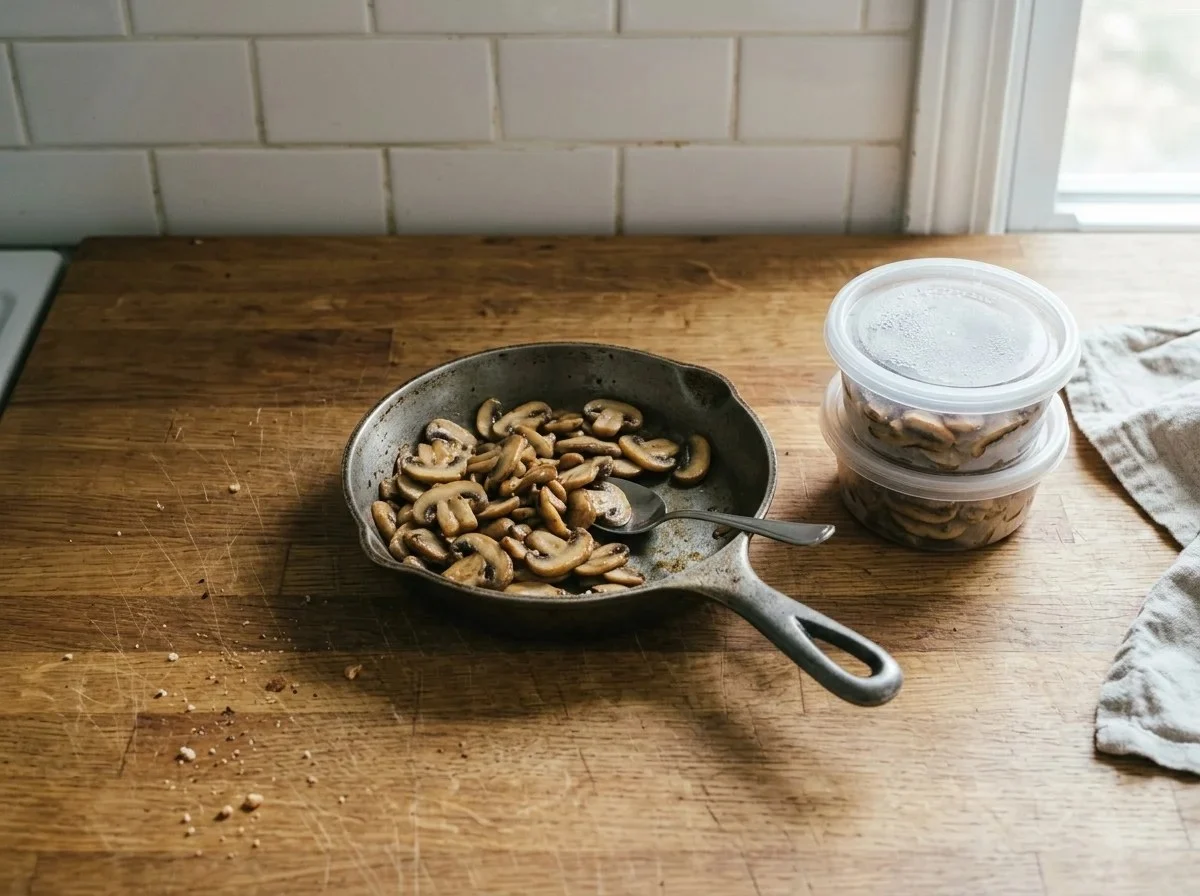
Sautéed mushrooms cooling before they go into freezer containers. Pack them with 1/2 inch of headspace.
What happens to mushrooms you store in the freezer
Freezing softens them, so frozen mushrooms belong in soups, sauces, stews and bakes rather than on a salad. Cook them straight from frozen, since thawing only makes them wetter.
How to tell if mushrooms have gone bad
However you store mushrooms, they fail in one of two directions. Drying out is a quality problem you can cook around, whereas slime and mold mean the box goes. Here is what each stage means.
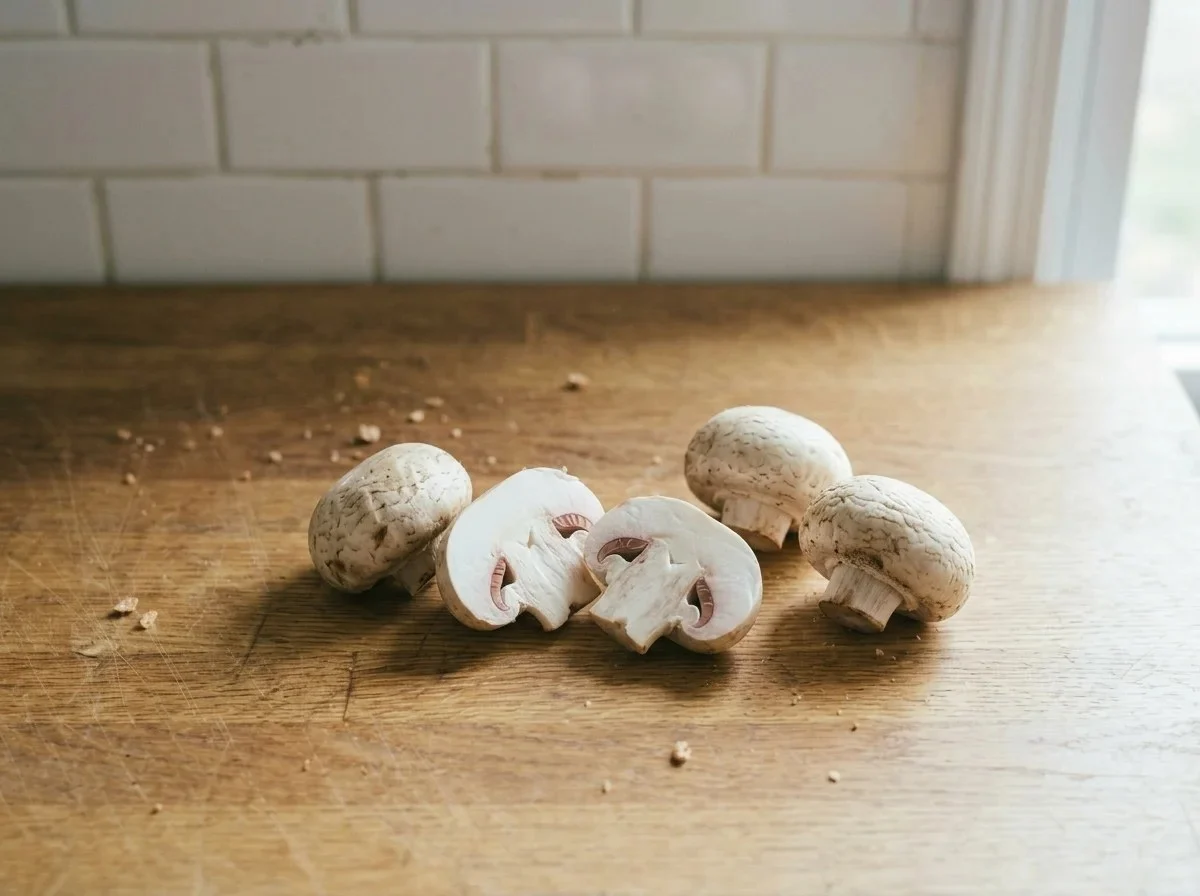
Verdict: use it
Fresh
Firm and dry to the touch, with a clean cap and no mold, which is what Utah State University Extension tells you to buy.
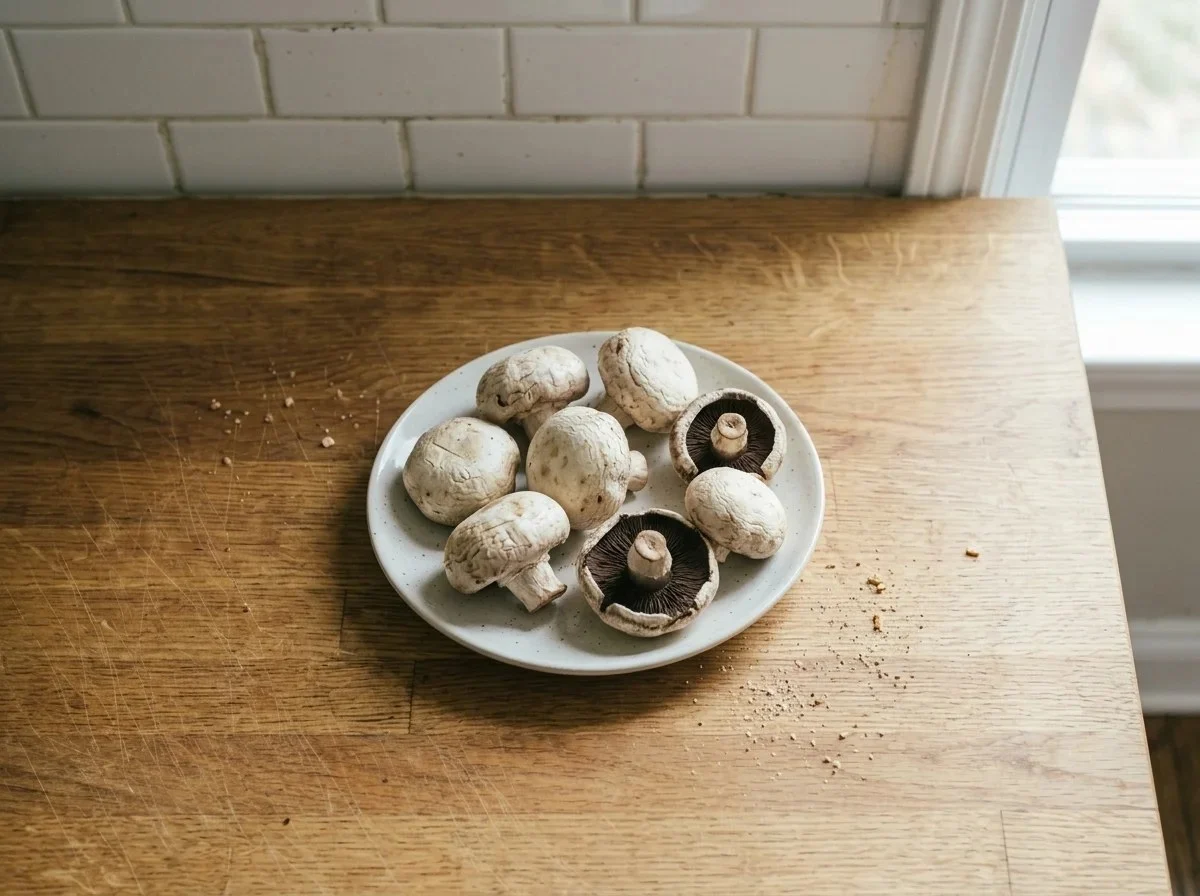
Verdict: cook it soon
Dry or slightly wrinkled
Mushrooms lose water in the fridge, so the caps wrinkle and the edges curl. Although they are past their best raw, they are still good in a pan, where they brown well.
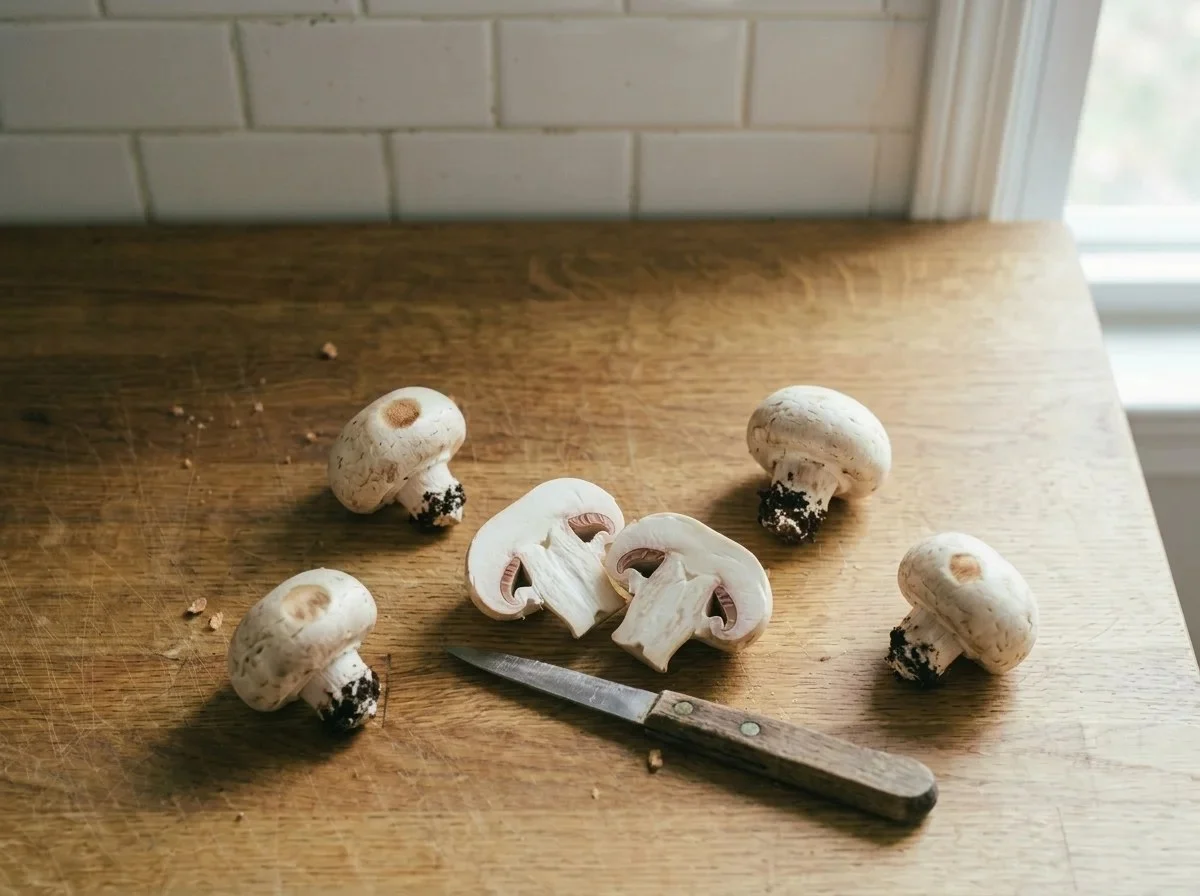
Verdict: use it first
Brown bruises
Brown, discolored patches usually come from handling rather than rot, as UNH Extension explains. So if the mushroom is still firm and dry, trim the worst of it and cook the rest soon. Dark brown spots that spread across the cap, however, are a different problem: they are usually bacterial blotch, which research on stored mushrooms describes as brown lesions that can grow to cover the whole surface. Cook those mushrooms today, and throw out any that are also slimy.
Verdict: throw it out
Slimy or wet and dark
A wet, slippery film is spoilage, not condensation. UNH Extension explains that without air flow mushrooms ferment, which leaves them slimy and unpleasant, and bacteria such as Pseudomonas take hold during long, warm storage. Throw out slimy mushrooms, and check the ones they were touching.
Verdict: throw it out
Mold
Fuzzy white, gray or green growth means the box goes. UConn Extension advises throwing out soft produce with mold rather than cutting it away, and mushrooms hold too much water to trim safely. Firm roots such as ginger are the ones you can cut around.
Is it safe to eat mushrooms that have gone slimy?
No. Slime is the visible part of bacteria breaking the mushroom down, and cooking is not a fix for food that has already spoiled. When only a few mushrooms in the box are slimy, throw those out, then use the firm, dry ones today. However, if the smell is sour or the whole box is wet, let all of it go.
Are mushrooms bad if they smell fishy?
Yes. Fresh mushrooms smell mild and earthy, so a fishy, sour or ammonia-like smell means they are breaking down. A scientific review of spoilage in fresh mushrooms explains that bacteria, mostly Pseudomonas, take over during storage and bring slime, discoloration, soft spots and unpleasant odors with them. Throw out mushrooms that smell off, even if they still look fine.
Mushroom substitutes
Out of mushrooms, or had to throw a slimy box out? Then these will stand in.
Substitute
Works best in
What changes
Dried mushrooms
Soups, sauces and risotto
Stronger flavor once soaked, and they keep for months.
Canned mushrooms
Pizza, pasta and casseroles
Softer, with a milder, brinier taste.
Eggplant
Bakes, stews and stir-fries
Meaty once browned, though it soaks up more oil.
Zucchini
Stir-fries and pasta
Lighter and wetter, so cook it hot and fast.
Mistakes people make when they store mushrooms
These are the ways people store mushrooms that cost them the most, and each one has an easy fix.
Sealing them in plastic or a tub. Mushrooms breathe, so use a paper bag or their original package instead.
Washing them when you get home. Since they soak up water, clean them only when you are about to cook.
Keeping them in the crisper drawer. The drawer is humid, and in Serious Eats' test mushrooms there turned slimy, so use a shelf instead.
Buying more than you will cook. Because they keep only a few days, buy a box at a time.
Freezing them raw. Blanch or sauté them first, then freeze.
Lining the bag with a paper towel. In Serious Eats' test the towel soaked up moisture and held it against the mushrooms, which molded, so leave it out.
Throwing out wrinkled mushrooms. If they are dry and firm, cook them rather than bin them.
Trimming mold off a mushroom. Mushrooms are too soft and wet for the 1-inch rule, so the moldy ones go.
Sources
Fruit and Vegetable Guide Series: Mushrooms, Susan Haws, Utah State University Extension, March 2023, on choosing, the paper bag, washing at the last minute and freezing cooked mushrooms.
Preparing and Preserving Mushrooms, Penn State Extension, 2016, on refrigerating mushrooms for up to 3 days in a paper bag or their original container.
Boosting the Quality and Safety of Specialty Mushrooms, Mary Saucier Choate, UNH Extension, updated March 2023, on 32 to 34°F storage, air flow, bruising and slime.
Freezing Mushrooms, National Center for Home Food Preservation, University of Georgia, on the lemon juice dip, steaming times and pan-heated mushrooms.
Handling Food with Mold, UConn Extension, April 2024, on throwing out soft produce with mold instead of cutting it away.
I Tested 6 Ways to Store Mushrooms, Irvin Lin, Serious Eats, January 2026, on a 12-day storage test and a grower's advice on other varieties.
Mushrooms, StopWaste, Alameda County, on storage times for whole and sliced mushrooms.
Microbial contamination and microbiome composition of fresh edible mushrooms: a critical review, on the bacteria behind slime, soft spots and off odors.
Storage times and safety advice on this page come from the sources above. Food safety depends on conditions I cannot see, so read the Disclaimer, and if in doubt, throw it out.
Other ingredient guides
Browse all guides
Share this guide
Never miss a guide
New ingredient guides when they go up, plus one storage tip worth knowing. Anything sponsored is labelled.

Emilly White