
2 to 3 months
Opened, lid screwed down, 50 to 70°F
6 to 9 months
Opened; natural jars need it, stabilized ones do not
No figure
No chart we opened gives peanut butter a freezer time
Has your peanut butter gone bad?
See all 5 stages ↓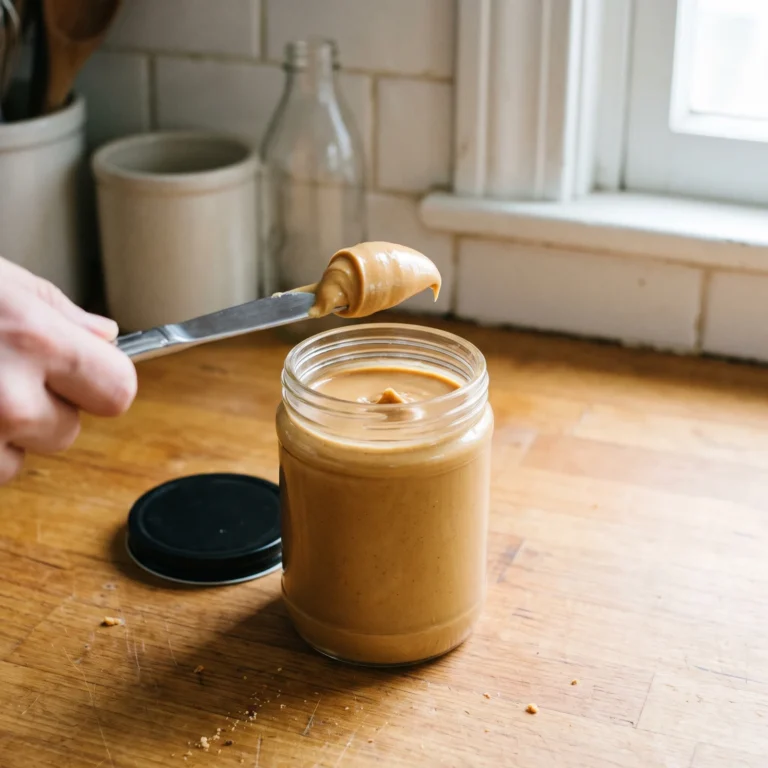 Use itSmooth, fresh-smelling peanut butter
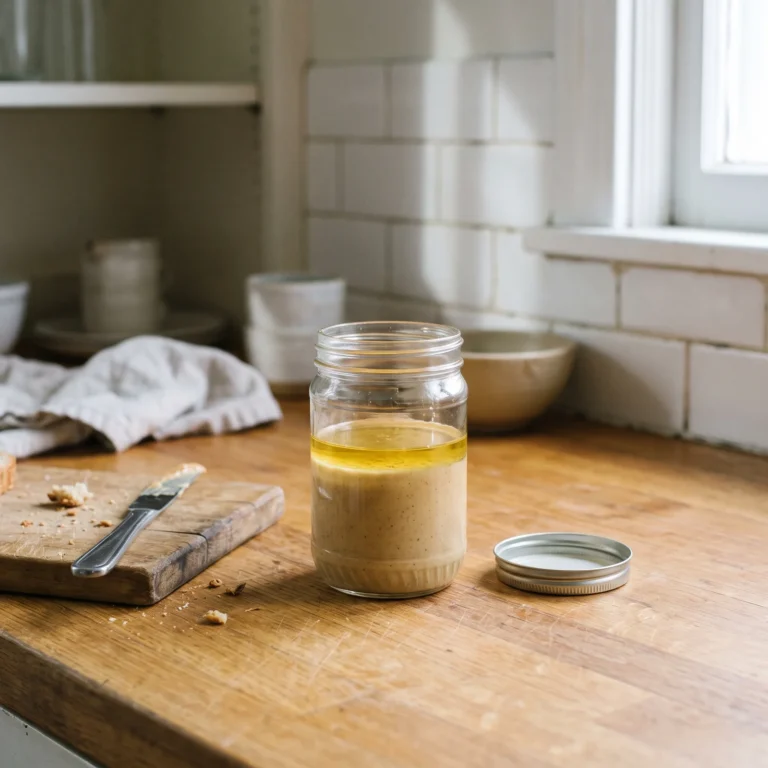 Stir it and use itPeanut butter with oil on top
 Throw it outRancid peanut butter
Peanut butter does not spoil so much as go rancid, because its fat is what fails first. An unopened jar keeps 6 to 24 months in the cupboard, and an opened one about 3 months there or up to 9 months in the fridge. Natural peanut butter, which has no stabilizer, belongs in the fridge once it is open.
Is your peanut butter natural or stabilized?
The ingredients list tells you: peanuts and salt alone means natural, while palm oil in the list means stabilized. That one line decides the fridge question, because a stabilized jar sits happily in the cupboard and a natural one does not. So read the label before you decide where the jar lives.

Two jars, two routines, and the short ingredients list is the one for the fridge.
Count the ingredients first. Jif's natural spread has five ingredients and palm oil in it to stop the oil separating. A jar of nothing but peanuts and salt, however, has no such help.
A natural jar has to go in the fridge once it is open, and a storage study puts numbers on why. Over 16 weeks, a stabilizer-free peanut butter separated up to 21 percent of its oil at 35°C but only 0.35 percent at 10°C, while the commercial jar stayed stable at every temperature. So cold is what holds a natural jar together.
A stabilized jar needs no fridge at all, although it keeps longer in one. Three months on the cupboard shelf is the figure for an opened jar, so the cold is a bonus rather than a requirement.
Low moisture is why any of this works. Peanut butter keeps safely at room temperature because there is so little water in it. That is why bacteria are not the problem here, while rancid fat is.
How to store peanut butter so it lasts
To store peanut butter so it lasts, screw the lid down and keep the jar cool and dark. Then move it to the fridge if it is a natural one. Heat and air are what turn the oil, so a cupboard away from the cooker beats the shelf beside it.
Where should you store peanut butter?
Keep peanut butter in a cool, dry, dark cupboard between 50 and 70°F, with the lid screwed down after every use. Avoid the shelf above the cooker or next to the dishwasher, since warm temperatures speed the fat up. A natural jar goes in the fridge instead once it is open, and the oil on top gets stirred back in first.
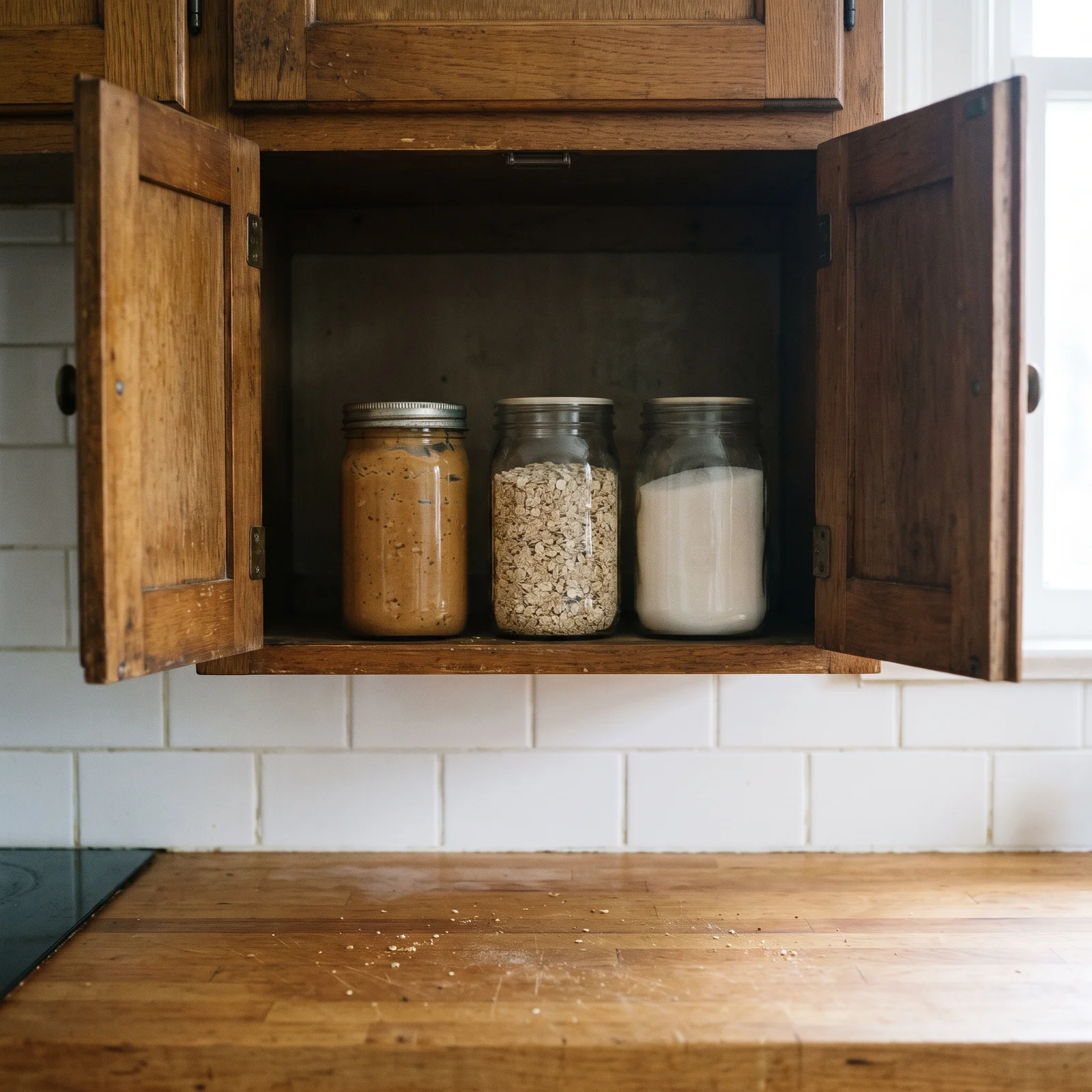
A cupboard away from the cooker suits a stabilized jar.
How long does peanut butter last?
An unopened jar of peanut butter lasts 6 to 24 months in the cupboard. The charts cluster at the shorter end, so 6 to 9 months is the figure that comes up most often. Once it is open, about 3 months in the cupboard is where most figures land, while the fridge stretches that to about 9 months. A natural jar gets about 6 months in the fridge, opened or unopened. Jif gives its own stabilized jars about three months on the shelf, and about two years unopened.
The fridge figures do disagree, though. One trade chart puts an opened jar at 6 to 9 months cold. Its own text, on the other hand, gives it only 3 to 4 months more than the cupboard. So plan on the shorter end, then judge the jar by its smell. A best by date is about quality rather than safety.
Does peanut butter need to be refrigerated?
A stabilized jar of peanut butter does not need refrigeration, while a natural one does once it is open. Refrigeration is not needed for ordinary peanut butter, although it does keep longer cold, whereas natural peanut butter must be refrigerated after opening. So the ingredients list settles it, and the cupboard is fine for everything else.
Why does peanut butter separate?
Peanut butter separates because a natural jar has nothing holding its oil in place, and that separation is completely natural and no health risk. It does matter in the long run, however, because oil separation leads to lipid peroxidation, which develops off-flavor and ends in rancidity. Stir the oil back in with a knife, or stand the jar upside down and let it travel back through.
Can peanut butter sit out overnight?
Yes, peanut butter can sit out overnight, because low-moisture foods such as peanut butter keep safely at room temperature. The two-hour rule is for moist, low-acid foods such as meat, poultry, eggs, dairy, cut fruit and cooked dishes, and a jar of peanut butter is none of those. Put the lid back on, so the air cannot get at the oil, and the food left out overnight guide covers the sandwich it went into.
Can you freeze peanut butter?
No chart we opened gives peanut butter a freezer time, so this guide will not invent one. The freezer charts that cover the same aisle give unsalted nuts 9 to 12 months at 0°F and salted ones 6 to 8 months. They leave peanut butter off the list altogether. Fats also turn rancid during freezer storage, which is why the freezing guides warn about fatty foods at all. So the fridge is the sourced way to buy more time.
How do you store natural peanut butter?
Natural peanut butter goes in the fridge from the day you open it, with the oil stirred back in and the lid screwed down. Cold is what keeps the jar together, because a stabilizer-free butter separated only 0.35 percent of its oil at 10°C over 16 weeks and up to 21 percent at 35°C. A natural jar also gets about 6 months in the fridge, opened or unopened, so the cold shelf is what buys it time as well.

Stir the oil back in, and then the jar goes in the fridge.
Does peanut butter go rancid?
Yes, peanut butter goes rancid, and rancid fat is how it fails rather than bacteria. Most nuts are full of unsaturated fat, which becomes rancid and gives them a paint-like smell and a bad taste. A jar of ground peanuts behaves the same way. Heat, light and air all speed that up, so a tight lid in a dark cupboard is the whole defense.
Is rancid peanut butter dangerous?
Rancid peanut butter is a quality problem, and nothing we opened calls it a hazard or calls it safe either. It smells of old paint and tastes bitter, which is reason enough to pour it away. Mold is the serious case, because the molds that grow on peanuts make aflatoxin, and once those toxins are present they carry through processing into the finished food.
Does peanut butter go bad?
Peanut butter goes bad slowly, and it does it by going rancid. The fat turns long before anything else happens, so the jars people throw out are usually stale rather than unsafe. Mold is rarer and much more serious, and here is what each stage means.
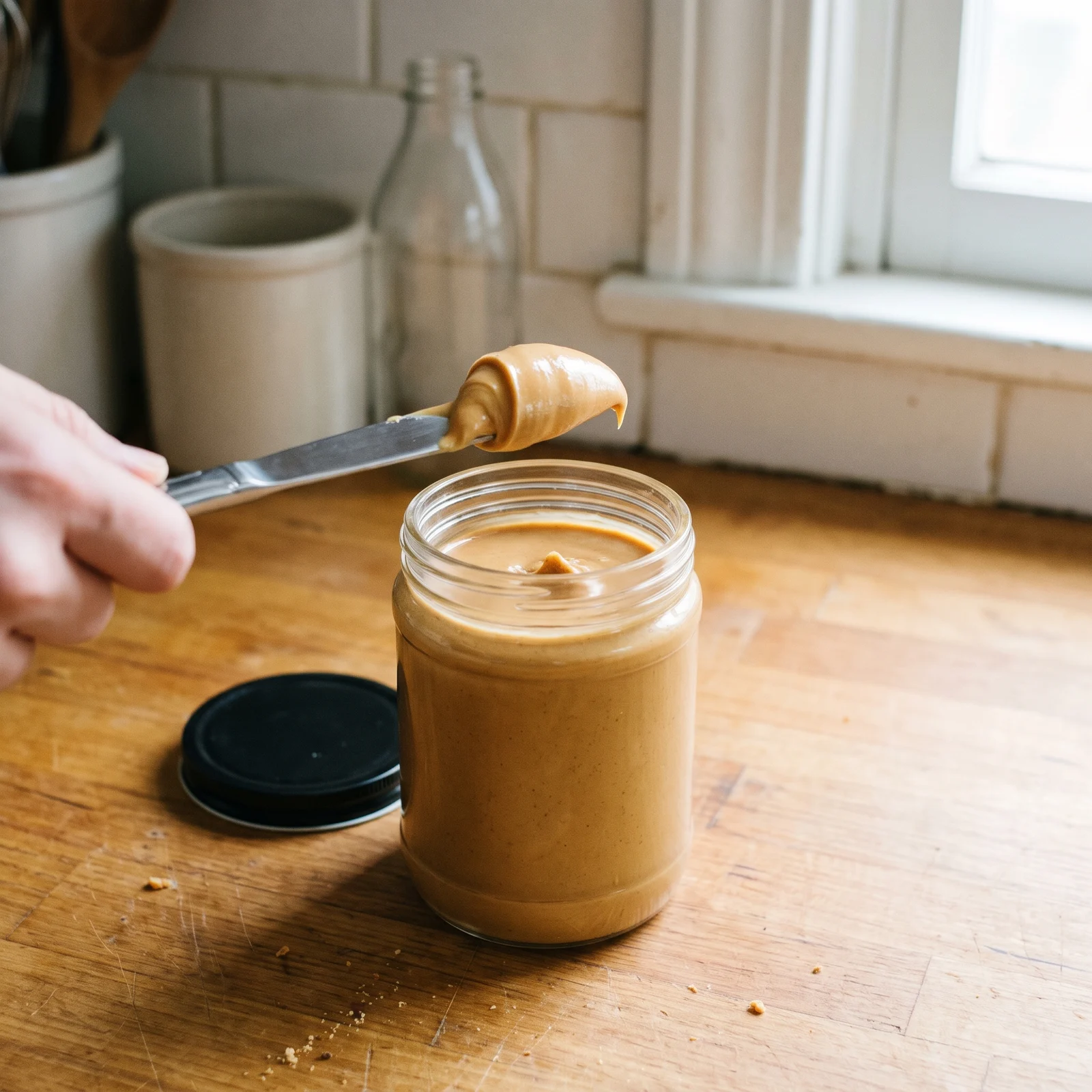
Verdict: use it
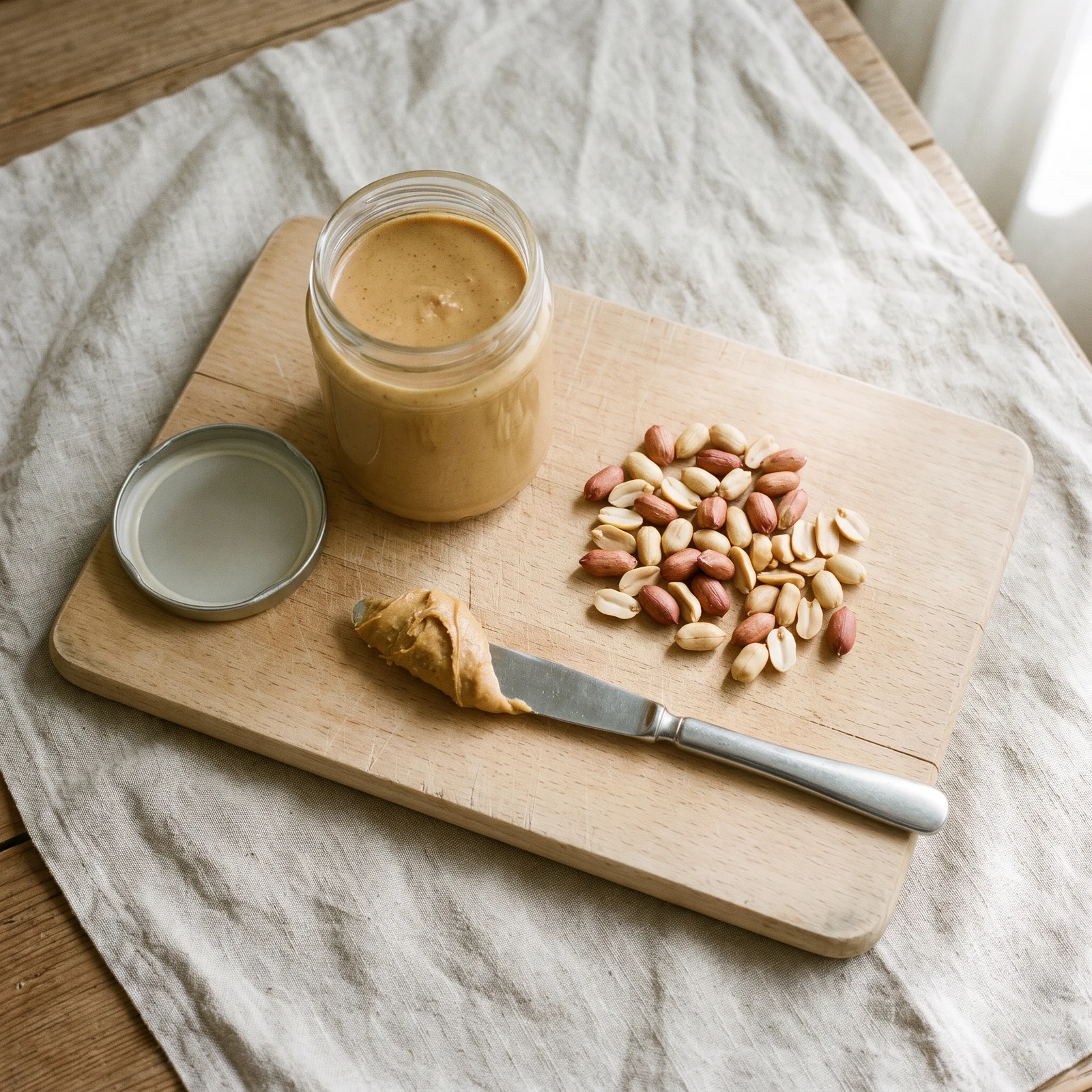
Smooth, fresh-smelling peanut butter
The butter is light tan, it spreads evenly, and it smells roasted and sweet. That is a jar inside its window, whether that window is 6 to 24 months unopened or 2 to 3 months since you opened it. So use it, and screw the lid back down afterwards.
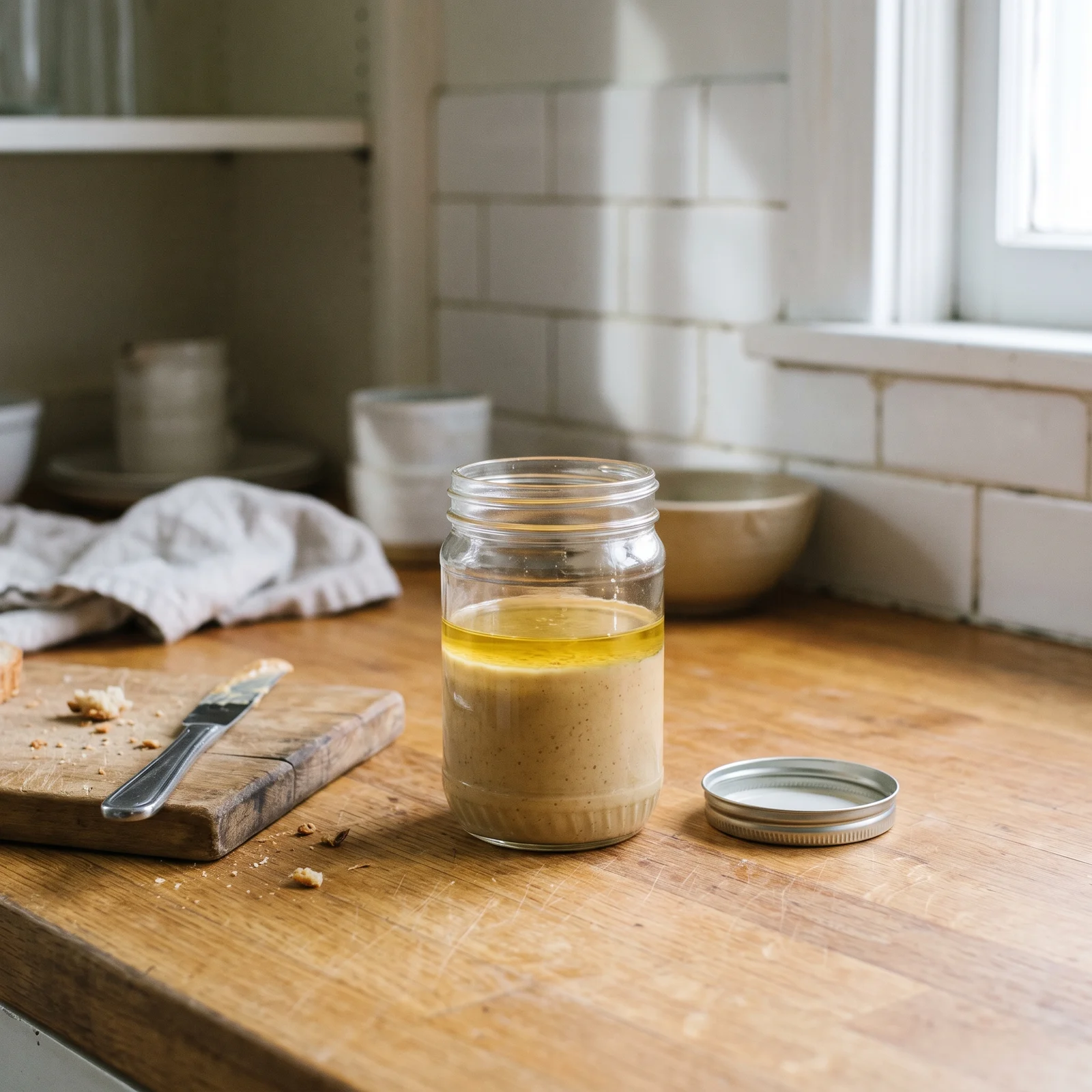
Verdict: stir it and use it
Peanut butter with oil on top
A layer of oil is sitting on the surface, and the butter underneath has gone stiff. Separation is completely natural in a jar without a stabilizer, and it is no health risk, although it is also the first step towards rancidity. So stir the oil back in, or stand the jar upside down for a while, then keep that jar in the fridge.

Verdict: smell it first
Peanut butter past its Best If Used By date
The date printed in white ink under the barcode has passed, although the jar looks and smells normal. A best by date refers to quality rather than to safety. So a jar given about two years unopened is worth a sniff before it is worth the bin. If it smells roasted rather than sharp, use it up.
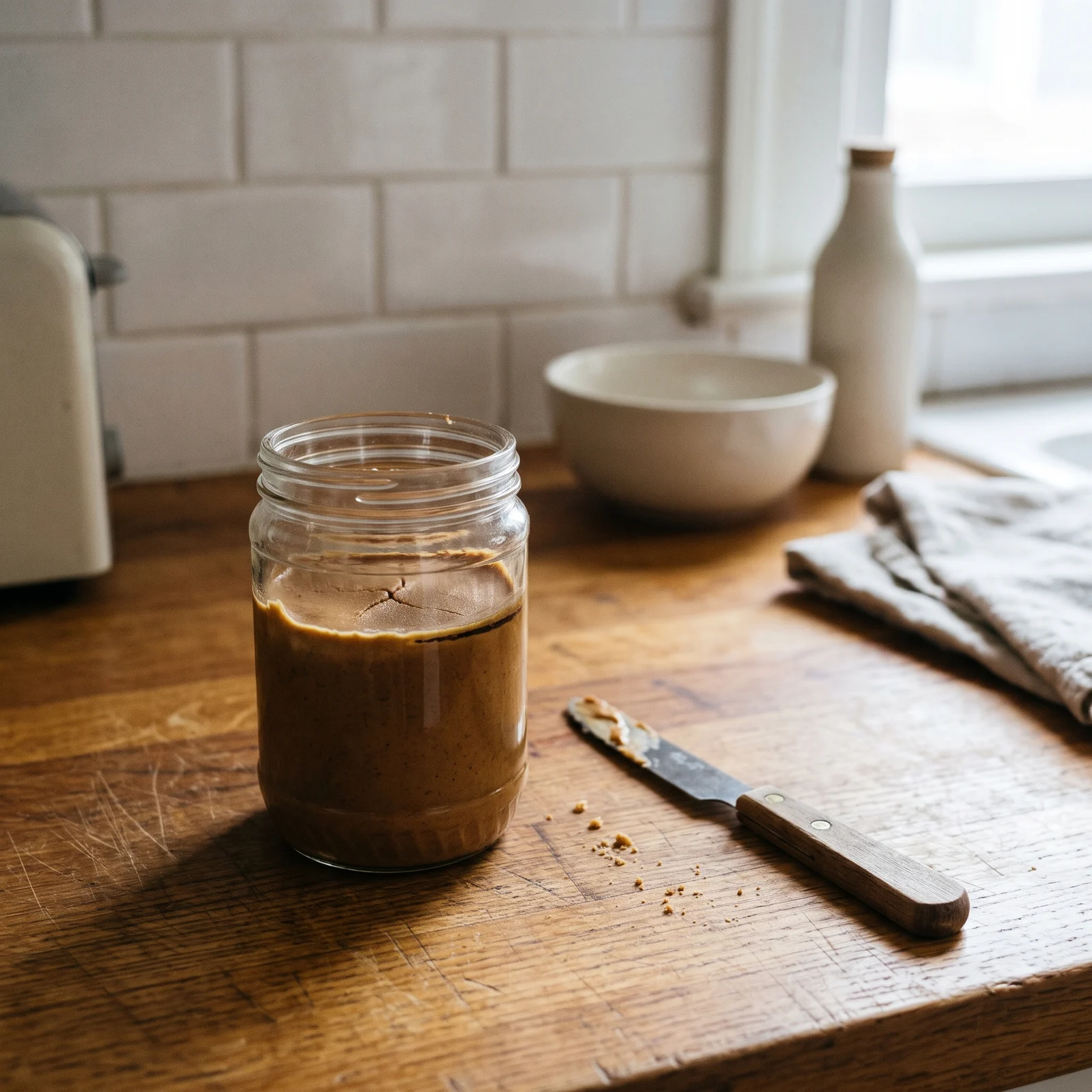
Verdict: throw it out
Rancid peanut butter
The jar smells like old paint or stale oil, and the taste has turned bitter instead of sweet. That is the unsaturated fat going rancid, which is what finishes peanut butter off, and no amount of stirring brings it back. Nothing we opened calls rancid fat unsafe, and nothing calls it good either, so the smell is the test and a bitter jar is not worth the bread.
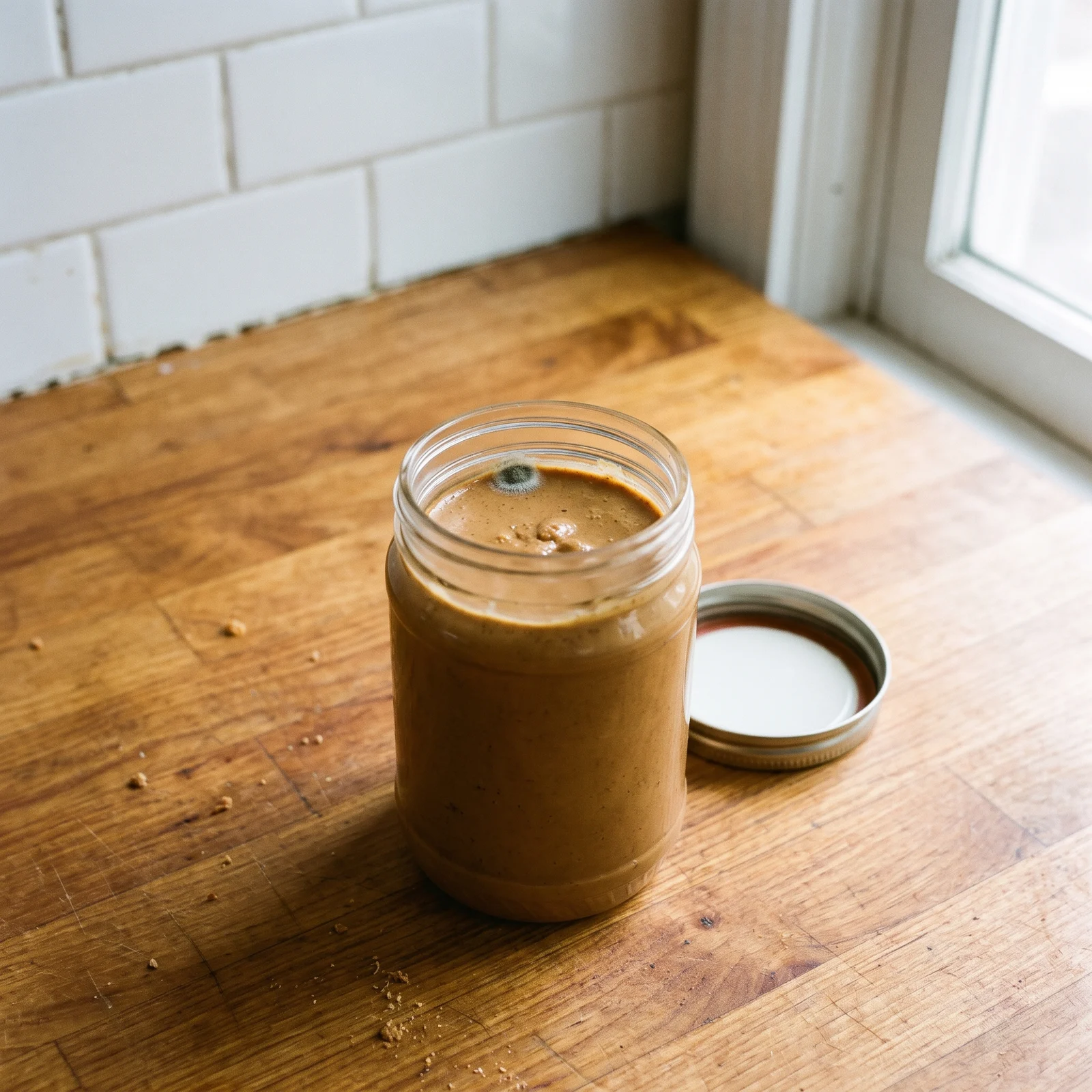
Verdict: throw it out
Moldy peanut butter
There is a fuzzy patch on the surface, or a crust of it around the rim under the lid. Nuts and seeds pick up molds during poor storage, and those toxins persist through processing into the final food. So a moldy jar goes whole. The molds on peanuts are the ones that produce aflatoxin, and only 20 parts per billion is allowed in food. That is why there is no trimming a spot off this one. The almond butter guide covers the same problem in the other nut jar.
Should you store peanut butter upside down?
Storing peanut butter upside down works, and it is the lazy way to deal with separation. Standing a natural jar on its lid forces the oil back through the butter on its own, so the next spoonful needs less stirring. Turn it the right way up once the oil has travelled, then repeat as it separates again. For a stabilized jar it makes no difference, since the palm oil is already holding everything in place.
Peanut butter substitutes
Out of peanut butter, or did the last jar smell of paint? Then one of these will stand in.
Substitute
Works best in
What changes
Almond butter
Toast and baking
It separates the same way, and the almond butter guide covers its fridge life.
Sunflower seed butter
School lunches
Nut free, although seeds carry the same unsaturated fat and turn too.
Powdered peanut butter
Smoothies and sauces
Pressed peanuts with much of the oil taken out, so there is less fat to turn.
Tahini
Dressings and dips
Sesame rather than peanut, so the flavor is savory instead of sweet.
Mistakes people make when they store peanut butter
These are the ways people store peanut butter that cost them the most, so each one has an easy fix.
Leaving a natural jar in the cupboard after opening it, when the charts ask for the fridge.
Pouring the separated oil down the sink, although stirring it back in is all the jar needs.
Keeping the jar on the shelf above the cooker, where the warmth speeds the fat up.
Leaving the lid off while you make the sandwich, since air is what turns the oil.
Refrigerating a stabilized jar for safety, when it only ever needed a cool cupboard.
Scraping the mold off the top and eating the rest, because a moldy jar goes whole.
Trusting the date on the jar instead of your nose, as rancid fat arrives without warning.
Sources
Food Storage Guide, Julie Garden-Robinson, NDSU Extension publication FN579, reviewed January 2023, on peanut butter at 6 to 24 months unopened and 2 to 3 months opened, refrigeration not being needed but making it keep longer, natural peanut butter having to be refrigerated after opening, and unsalted nuts keeping longer than salted.
Food Storage: Pantry, HGIC 3525, Pamela Schmutz and E.H. Hoyle, Clemson Cooperative Extension Home and Garden Information Center, revised March 2020, on peanut butter keeping 3 to 4 months and being best refrigerated, and on a pantry at 65 to 70°F away from ovens and hot pipes.
Food Storage for Safety and Quality, Elizabeth L. Andress and Judy A. Harrison, University of Georgia Cooperative Extension publication FDNS-E-119, June 2011, on foods with low moisture like peanut butter being safe to store at room temperature, a pantry kept at 50 to 70°F away from ovens and hot pipes, and the two-hour rule for meat, poultry, fish, eggs, cut fruits and vegetables, cooked foods and dairy.
Common FAQs, The J.M. Smucker Company, on Jif peanut butter not requiring refrigeration, keeping about three months on the pantry shelf after opening, lasting about two years unopened in a cool, dry area, the Best If Used By date printed in white ink under the UPC, and Jif Natural Peanut Butter Spread being stabilized with palm oil to prevent oil separation.
How Long Will That Peanut Butter Last?, National Peanut Board, June 2023, on an unopened jar keeping 6 to 9 months in the pantry with refrigeration not needed, an open jar staying fresh up to three months in the pantry, a table figure of 6 to 9 months in the refrigerator against a text figure of another 3 to 4 months, and oil separation occurring without refrigeration.
Separation of oil in natural peanut butter, Canadian Food Inspection Agency, modified July 2020, on natural peanut butter having no added stabilizers so the oils separate and rise, separation being completely natural and no health risk, stirring the oil back in, and storing the jar upside down to mix it back in on its own.
Colorado Cottage Foods: Nuts and Seeds, Colorado State University Extension, March 2017, on most nuts containing unsaturated fats which become rancid and give a paint-like smell and bad taste, on freezing extending shelf life, and on nuts and seeds being infected with molds during improper storage whose toxins persist through processing into the final food product.
Management of Aflatoxins in Peanut, LGP 1073, Tariq Alam, Daniel J. Anco and Sachin Rustgi, Land-Grant Press by Clemson Extension, June 2020, on aflatoxins being produced by Aspergillus flavus and Aspergillus parasiticus, on at most 20 parts per billion of total aflatoxins being permitted in food or feed, and on pod moisture above 8 percent with temperatures above 77°F allowing the mold to infect stored seed.
Freezer Storage, Illinois Extension, University of Illinois, on unsalted nuts keeping 9 to 12 months and salted nuts 6 to 8 months at 0°F, on peanut butter not appearing in the chart at all, and on sealing packaging to keep air out.
Freezing Basics, GH1501, Susan Mills-Gray and Barbara Willenberg, University of Missouri Extension, reviewed August 2026, on storing frozen foods at 0°F or lower and on fats becoming rancid during freezer storage.
Peanut butter shelf life, Pat Holmes, Ohio State University Extension, Ask Extension question 862369, March 2024, on a best by date referring to the quality of the peanut butter, an opened jar lasting about 3 months in the pantry or 9 months in the refrigerator, and natural peanut butter lasting about 6 months in the refrigerator whether opened or unopened.
Quality changes of stabilizer-free natural peanut butter during storage, N. H. Mohd Rozalli, N. L. Chin, Y. A. Yusof and N. Mahyudin, Journal of Food Science and Technology, 2015, on oil separation being least at 10°C with a highest value of 0.35 percent, reaching 21 percent at 35°C, commercial peanut butter staying stable throughout storage at all temperatures, and oil separation leading to lipid peroxidation which develops off-flavour and results in rancidity.
Every storage time, temperature and verdict on this page comes from the sources listed above, and none of it is made up. Food safety still depends on conditions we cannot see, so read the Disclaimer, and if in doubt, throw it out.
Other ingredient guides
Browse all guides


Share this guide
Never miss a guide
New ingredient guides when they go up, plus one storage tip worth knowing. Anything sponsored is labelled.

Emilly White