

3 to 5 days
Spiral-cut ham and leftovers from a ham you cooked (USDA FSIS)
1 to 2 months
Most cooked hams; best quality only, safe indefinitely (USDA FSIS)
7 days
Cooked ham, whole, store wrapped, in the fridge (USDA FSIS)
The short version: keep cooked ham in the fridge, wrapped, and get leftovers there within 2 hours. Spiral-cut ham and leftovers keep 3 to 5 days, according to the USDA. A whole store-wrapped cooked ham keeps about 7 days. For longer, freeze it for 1 to 2 months. Finally, reheat leftover spiral-cut ham to 165°F, or simply eat it cold.
Storage times here come from the USDA Food Safety and Inspection Service's Hams and Food Safety chart and the USDA's FoodKeeper data, with handling rules from FSIS's Leftovers and Food Safety page.
On this page
What to check before you store ham
How to store ham
Can you freeze ham?
How to tell if ham has gone bad
How long ham keeps, by type
Mistakes people make when they store ham
What to check before you store ham
Ham keeps best when you know exactly what you bought, because the USDA Food Safety and Inspection Service gives each type its own storage time. So read the label before it goes into the fridge.
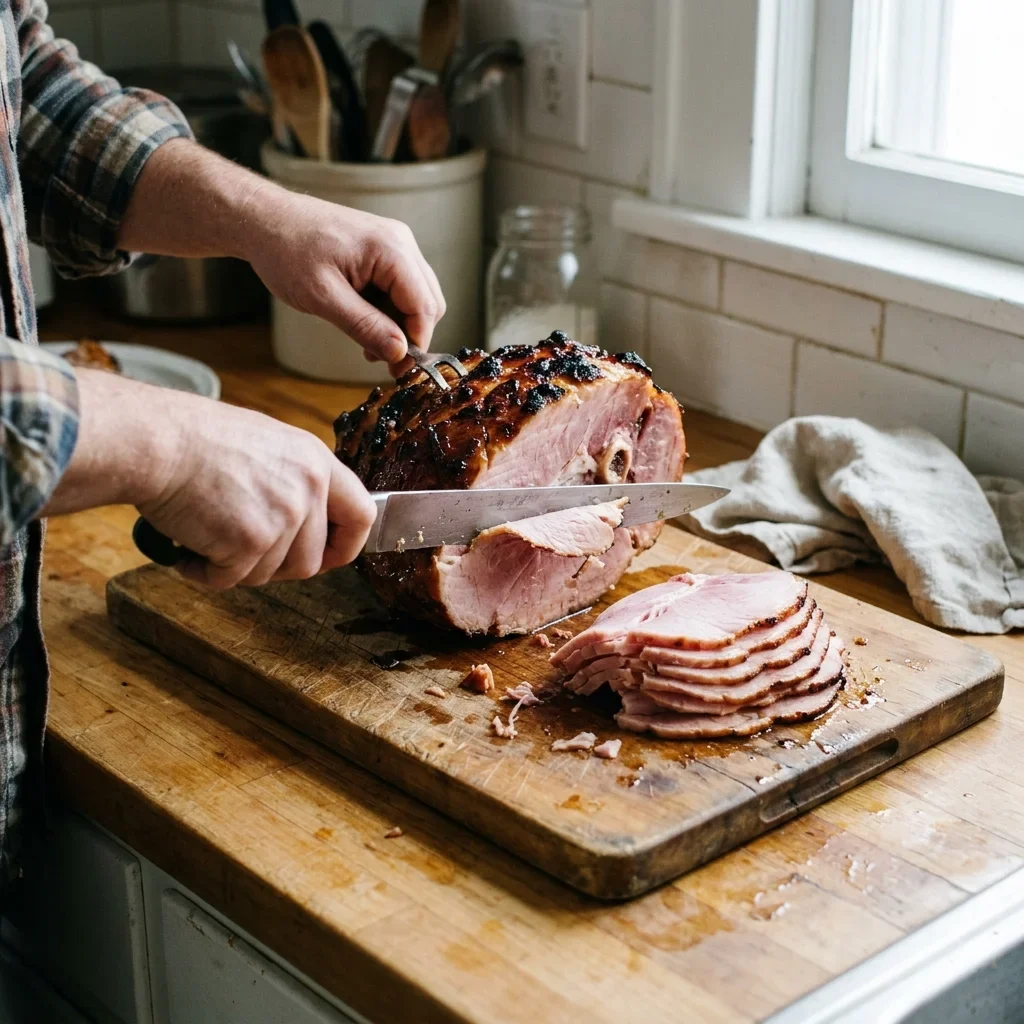
Read the label, because each kind of ham keeps differently.
Firstly, check whether it is cooked. For example, FSIS says cooked, vacuum-packed hams from inspected plants and canned hams can be eaten cold, straight from the pack. A ham labeled cook-before-eating, however, must be cooked first.
Secondly, look for a use-by date. FSIS notes that for uncooked cured ham, the company sets that date and stands by it, so treat it as firm. So follow it.
Then check for a canned ham's label. FSIS says a canned ham marked keep refrigerated lasts 6 to 9 months unopened, but should not be frozen. A shelf-stable canned ham, by contrast, can sit at room temperature for 2 years unopened.
Finally, plan the leftovers. Then slice what you will eat within 3 to 5 days, and freeze the rest early. The same planning helps with leftover turkey and bacon.
How to store ham
To store ham, keep it cold, wrapped and sliced into manageable pieces. After that, the clock depends on the type, so check the chart further down.
How long is ham good in the fridge?
Leftover ham is good for 3 to 5 days in the fridge, according to the USDA Food Safety and Inspection Service. In particular, that covers spiral-cut ham and leftovers from a ham you cooked yourself. Similarly, a whole store-wrapped cooked ham keeps 7 days, while a half ham keeps 3 to 5.
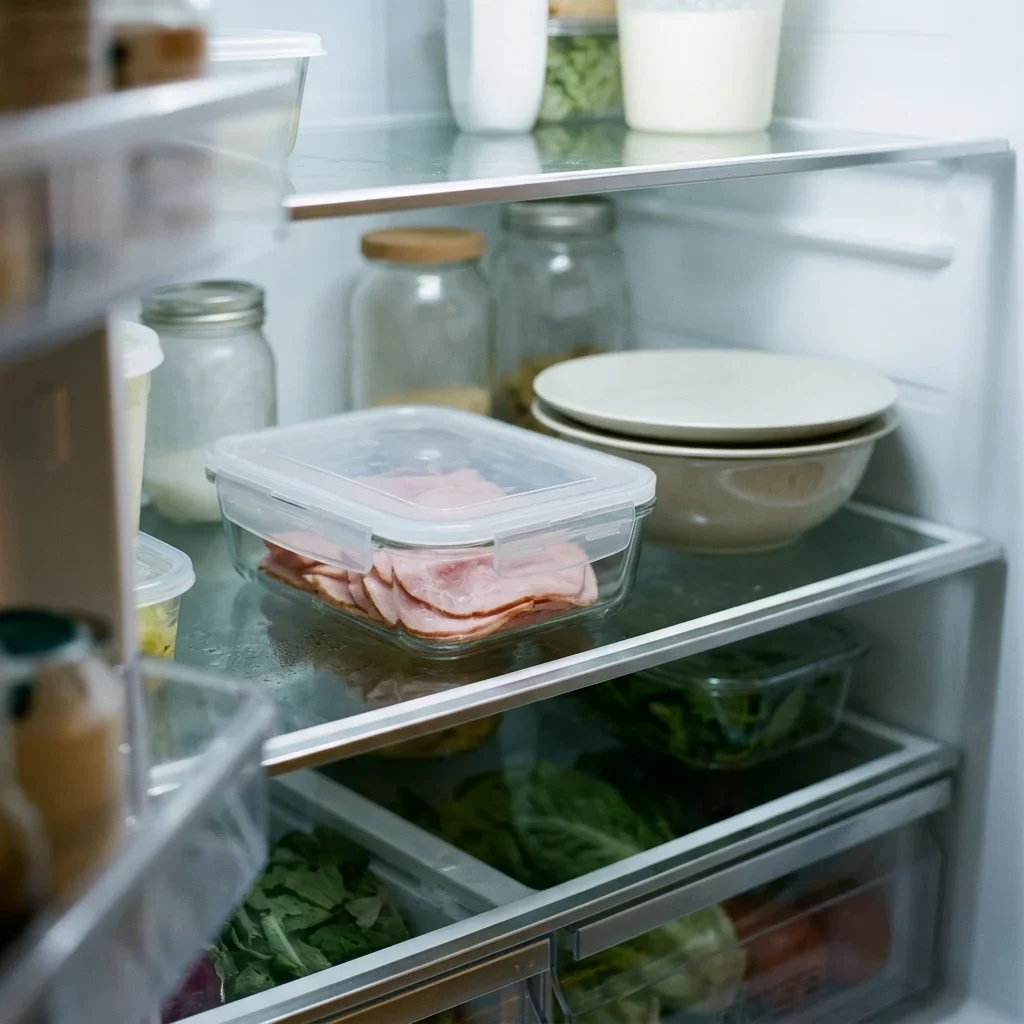
Wrapped and covered on a fridge shelf.
How should you wrap leftover ham?
Wrap leftover ham tightly, or seal it in a covered container. After all, FSIS explains that airtight wrapping keeps bacteria out, holds in moisture and stops the ham picking up other smells.
Also, cut a large ham into smaller pieces before chilling it. FSIS says to slice whole roasts or hams so they cool quickly. Then use shallow containers. Raw ground meat runs on a shorter clock, 1 to 2 days in the fridge, as the ground beef guide explains.
Can ham be left out?
Cooked ham should not be left out more than 2 hours, because the USDA Food Safety and Inspection Service says to throw away perishable food left at room temperature longer. Moreover, above 90°F the limit is 1 hour. However, FSIS says a whole, uncut country ham is different: it can be stored at room temperature for up to a year.
How do you reheat ham safely?
Reheat leftover spiral-cut ham to 165°F, as FSIS advises. By contrast, a cooked ham packaged in a USDA-inspected plant only needs 140°F, as long as it was not repackaged. In fact, FSIS says spiral-cut hams are best served cold, since heating dries the meat and melts the glaze. To reheat, cover the ham with foil and heat it at 325°F for about 10 minutes per pound.
How long does a country ham keep?
A whole, uncut country ham can be stored at room temperature for up to a year, according to FSIS. Once it is cut, however, it keeps 2 to 3 months in the fridge. Similarly, after cooking it keeps 7 days. That is because dry-cured ham contains so little water that bacteria cannot multiply in it.
Can you freeze ham?
Yes. The USDA Food Safety and Inspection Service gives most cooked hams 1 to 2 months in the freezer. That includes spiral-cut ham and leftovers as well as store-wrapped cooked ham. Also, FSIS notes that freezer times are for quality only, so frozen ham stays safe indefinitely.
How do you freeze ham?
Freeze ham in meal-sized portions, wrapped tightly. The USDA Food Safety and Inspection Service says airtight packaging keeps out bacteria and holds in moisture. So slice it, wrap it, then label each pack with the date.

Sliced into meal-sized portions and labelled.
Which hams should not be frozen?
Do not freeze an unopened canned ham labeled keep refrigerated, because FSIS lists it as do not freeze. Once opened, however, the same ham can be frozen for 1 to 2 months. A country ham, by contrast, keeps only about a month in the freezer.
How do you thaw frozen ham?
Thaw ham in the fridge, in cold water or in the microwave, the three safe ways FSIS lists for leftovers. Then, after thawing in the fridge, use it within 3 to 4 days. Alternatively, reheat it from frozen, which FSIS says is safe but slower.
How to tell if ham has gone bad
Ham can be unsafe before it looks bad. The USDA Food Safety and Inspection Service explains that the bacteria behind food poisoning do not generally change how food looks or smells. So the date matters most. Here is what each stage means.
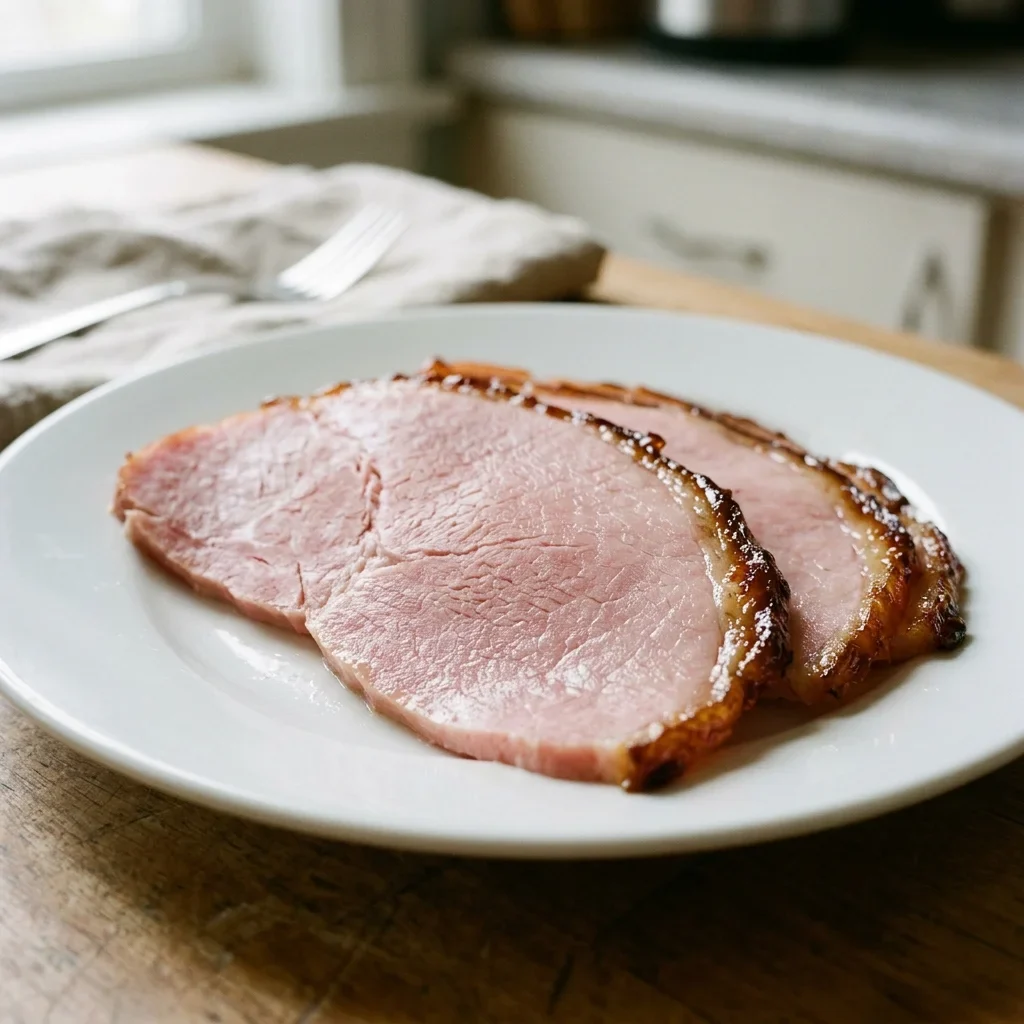
Verdict: eat it
Fresh ham
Pink, moist slices with a clean, smoky or sweet smell and a glossy glaze. In other words, this is ham inside its time on the chart, kept wrapped in the fridge. So eat it cold or reheat it.

Verdict: trim it and eat it within the window
Ham with dry or darkened edges
Slices that have dried out or darkened at the edges because the wrap came loose. This is a quality change. So if the ham is inside its 3 to 5 days, trim the dry edges and eat the rest. Then rewrap it tightly.
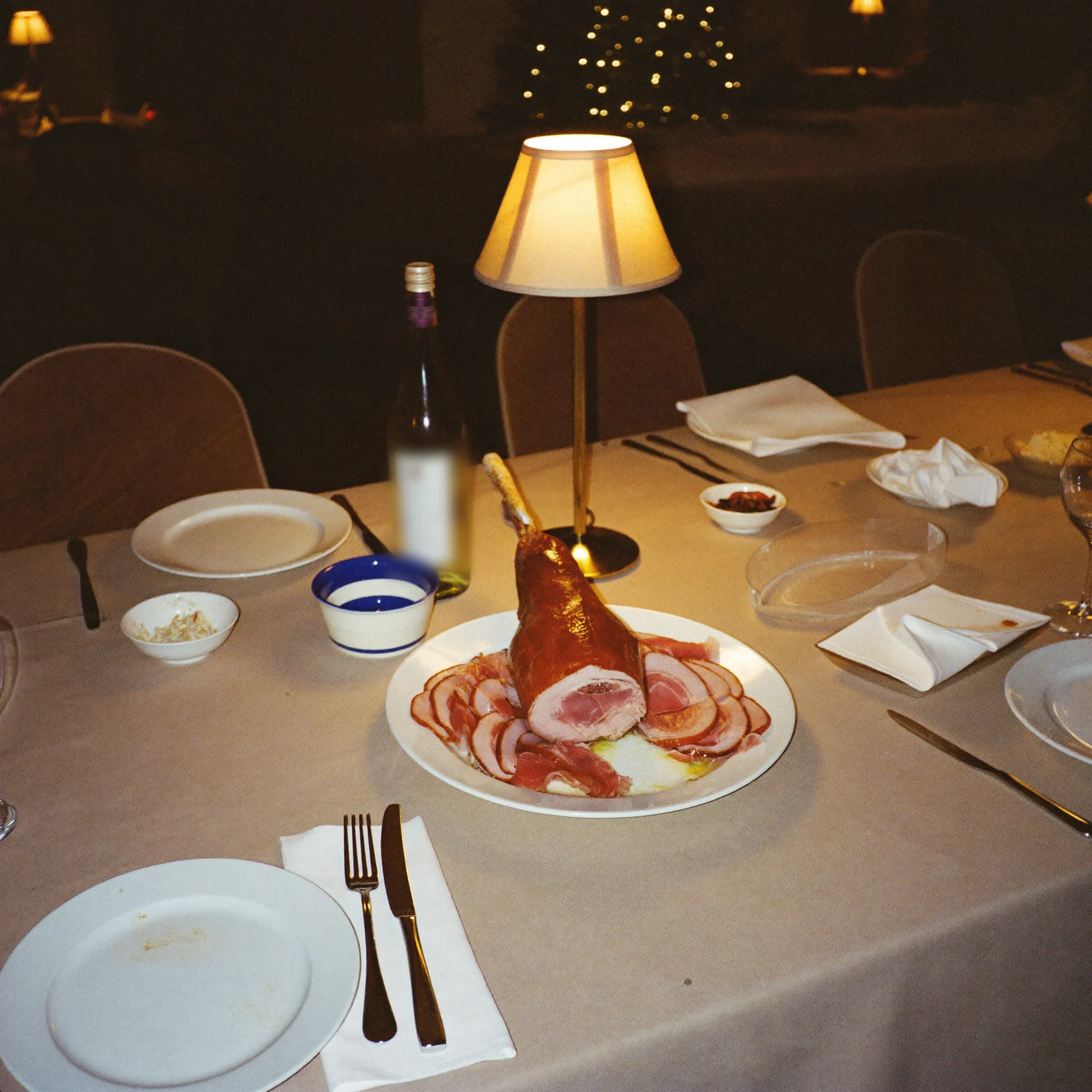
Verdict: throw it out
Ham left out more than 2 hours
A ham that stayed on the buffet or counter through the evening. FSIS says to throw away perishable food left out more than 2 hours, or 1 hour above 90°F. So throw it out, even if it looks fine. A whole uncut country ham is the exception.

Verdict: throw it out
Slimy or sour-smelling ham
A slick, sticky film on the slices, a sour or off smell, or a dull grey-green color. All of these are signs of spoilage, so stop there. In fact, Clemson Cooperative Extension says to discard stored food with an off odor. So do not taste it.

Verdict: throw it out, unless it is a country ham
Moldy ham
Fuzzy spots on cooked or sliced ham mean it goes in the bin. The USDA Food Safety and Inspection Service says to discard moldy luncheon meat and cooked leftover meat. However, it also says surface mold is normal on dry-cured country hams. So on those, scrub the mold off and use the ham.
Is ham still good after 7 days?
It depends on the type. A whole, store-wrapped cooked ham is good for 7 days, according to FSIS, and so is a cooked country ham. However, spiral-cut ham and leftovers from a ham you cooked are only good for 3 to 5 days. So by day 7, those should already be eaten or frozen.
How long ham keeps, by type
These are the fridge and freezer times the USDA gives for the hams people buy most. So find yours here.
Substitute
Works best in
What changes
Spiral-cut ham and leftovers
3 to 5 days
1 to 2 months frozen (USDA FSIS).
Cooked ham, whole, store wrapped
7 days
1 to 2 months frozen (USDA FSIS).
Canned ham, keep refrigerated, unopened
6 to 9 months
Do not freeze (USDA FSIS).
Country ham, uncooked, cut
2 to 3 months
1 month frozen; uncut, 1 year at room temperature.
Mistakes people make when they store ham
These are the ways ham goes wrong most often, and each one is easy to fix.
Treating every ham the same. Check the label, since FSIS gives each type its own time.
Leaving the ham on the buffet all evening. Two hours, then into the fridge.
Chilling a whole ham in one piece. Slice it first so it cools quickly.
Freezing a canned keep-refrigerated ham unopened. FSIS says not to.
Reheating spiral-cut leftovers only to warm. They need 165°F, or eat them cold.
Throwing out a moldy country ham. FSIS says surface mold on it is normal; scrub it off.
Keeping leftovers past 5 days. Freeze them by then instead.
Sources
Hams and Food Safety, Food Safety and Inspection Service, U.S. Department of Agriculture, on the ham storage chart by type, eating cooked and spiral-cut hams cold, reheating to 140°F or 165°F, reheating at 325°F for about 10 minutes per pound, country ham at room temperature for up to a year, and dry-cured ham containing too little water for bacteria to multiply.
FoodKeeper App, Food Safety and Inspection Service, U.S. Department of Agriculture, whose published FoodKeeper data lists fully cooked spiral-cut, sliced and half hams at 3 to 4 days refrigerated and whole cooked hams at 1 week.
Leftovers and Food Safety, Food Safety and Inspection Service, U.S. Department of Agriculture, on the 2-hour and 1-hour rules, slicing whole roasts and hams to cool, wrapping leftovers, and thawing and reheating.
Refrigeration and Food Safety, Food Safety and Inspection Service, U.S. Department of Agriculture, on pathogenic bacteria not generally affecting the taste, smell or appearance of food.
Molds on Food: Are They Dangerous?, Food Safety and Inspection Service, U.S. Department of Agriculture, on discarding moldy luncheon meat and cooked leftover meat, and scrubbing surface mold off dry-cured country hams.
Safety of Stored Foods, Clemson Cooperative Extension Home & Garden Information Center fact sheet HGIC 3520, revised April 2020, on discarding stored food with an off odor.
Storage times and safety advice on this page come from the sources above. Food safety depends on conditions I cannot see, so read the Disclaimer, and if in doubt, throw it out.
Other ingredient guides
Browse all guides





Share this guide
Never miss a guide
New ingredient guides when they go up, plus one storage tip worth knowing. Anything sponsored is labelled.

Emilly White