
Not at all
Raw bacon goes straight to the fridge (USDA)
7 days
Opened, wrapped, at 40°F or below (USDA, NDSU)
1 to 4 months
USDA pages disagree; safe indefinitely at 0°F
The short version: to store bacon, keep it wrapped in the coldest part of the fridge at 40°F or below. Use an opened pack within about 7 days, or freeze it. Frozen bacon stays safe indefinitely, but quality is best within 1 month by one USDA source and 4 months by another. Cooked bacon keeps 4 to 5 days. Throw it out if it smells sour, feels slimy or shows mold.
Storage times and handling here come from the USDA Food Safety and Inspection Service, NDSU Extension and the USDA's FoodKeeper data, with mold guidance from the USDA's mold page.
On this page
What to check before you store bacon
Three things decide how long bacon keeps: whether the pack is opened, whether the bacon is raw or cooked, and how cold your fridge runs. Each one changes the clock, so check them before you put it away.
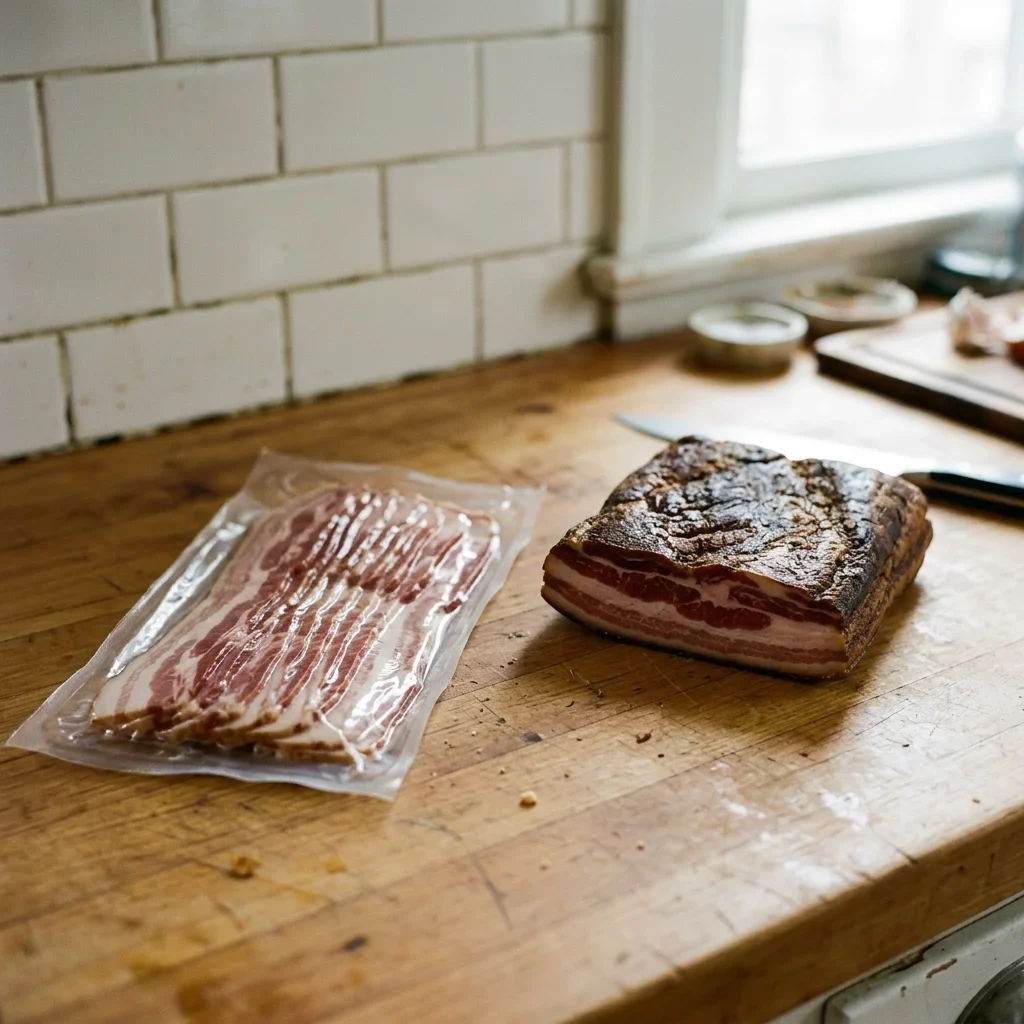
Glass, a lid that seals, and a spoon that is properly dry.
Start with the package. NDSU Extension says its 7-day figure is for opened packages, and that you should go by the processor's freshness date for unopened ones. So an unopened pack can last longer than a week, as long as the date allows it.
Then check the type. The USDA Food Safety and Inspection Service treats regular, dry-cured, nitrite-free and shelf-stable precooked bacon differently. Dry-cured slab bacon, for example, gets weeks, whereas regular bacon gets 7 days. So read the label before you go by any chart.
Next, check your fridge. FSIS asks for 40°F or below, and NDSU says to store bacon in the coldest part of the fridge or in a meat keeper. That is usually the back of a low shelf, rather than the door.
Finally, decide what you will not cook this week. Bacon freezes well, and a pack you split on day one is easier to use than a frozen brick. The bacon grease guide covers what is left in the pan afterwards.
How to store bacon so it lasts
To store bacon so it lasts, keep it wrapped, cold and dated. The fridge buys you about a week once it is open, while the freezer buys you months, so split the pack early if you will not finish it.
How do you store bacon in the fridge?
Bacon keeps best wrapped, in the coldest part of the fridge at 40°F or below, according to NDSU Extension and the USDA Food Safety and Inspection Service. NDSU says to keep it wrapped and to use a meat keeper if your fridge has one. Once opened, press the strips flat, then wrap the pack tightly in plastic wrap or slide it into a zip bag, so air cannot dry the edges.
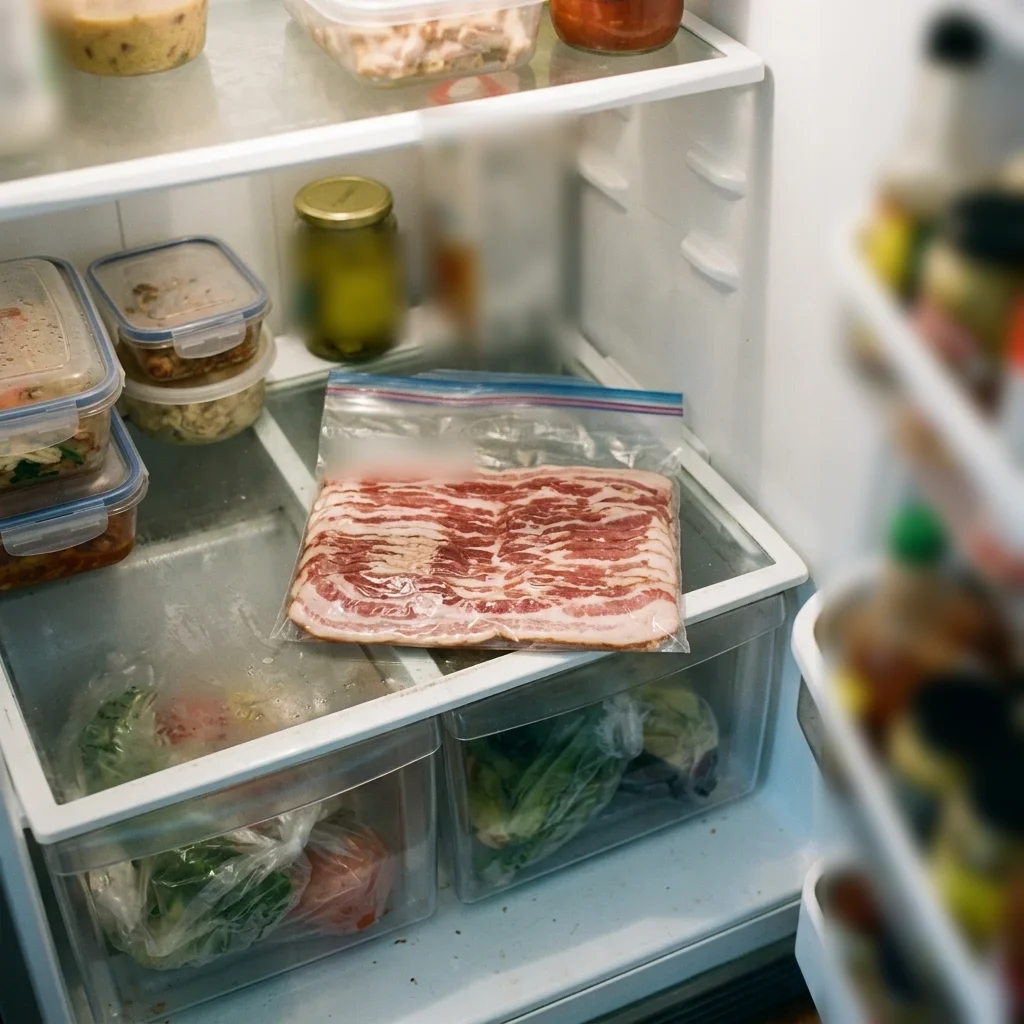
Sealed, cool and dark, and nowhere near the cooker.
How long does bacon last in the fridge?
Opened raw bacon lasts about 7 days in the fridge, according to the USDA Food Safety and Inspection Service, NDSU Extension and the USDA's FoodKeeper data. The USDA Food Safety and Inspection Service tells you to use raw bacon within 7 days or freeze it. Unopened packs, meanwhile, go by the processor's date, as NDSU Extension explains.
Some types run on a different clock, though. FSIS gives Canadian bacon only 3 to 4 days, whereas dry-cured sliced bacon gets 4 weeks in the fridge. So check the label, and use the 7 days for regular sliced bacon.
How long does cooked bacon last?
Cooked bacon lasts 4 to 5 days in the fridge and about 1 month in the freezer, according to the USDA Food Safety and Inspection Service, which gives those figures for bacon cooked at home. Store-bought precooked bacon is different, however. FSIS says shelf-stable precooked bacon should be refrigerated after opening and used within 5 to 14 days, so check its package.
Can you partly cook bacon and finish it later?
Bacon should never be partly cooked and refrigerated to finish later, because any bacteria present will not have been destroyed, according to the USDA Food Safety and Inspection Service. FSIS says to cook bacon completely before taking it off the heat. If you want bacon ready ahead of time, cook it fully, cool it, and then reheat it later.
Why is cooked bacon still pink?
Cooked bacon can stay pink because of its curing agents, even when it has reached a safe temperature, according to the USDA Food Safety and Inspection Service. FSIS also says bacon is too thin to check easily with a thermometer, but that bacon cooked crisp should have reached a safe temperature. So go by crispness rather than color.
Can you freeze bacon?
Bacon freezes well and stays safe indefinitely at 0°F, but the USDA's own sources disagree on how long it keeps its quality. The USDA Food Safety and Inspection Service bacon page gives 4 months. By contrast, the USDA's FoodKeeper data and NDSU Extension give only 1 month. So aim for 1 month for the best flavor, and treat 4 months as the outside limit.
How do you freeze bacon?
To freeze bacon, wrap it airtight and freeze it at 0°F within its 7-day fridge window, since the USDA Food Safety and Inspection Service says to use raw bacon within 7 days or freeze it. Split a large pack into meal-sized portions first, and lay each one flat in a freezer bag with the air pressed out. Then date the bag, so you know which portion to use first.

Below 41 degrees it keeps for years, but it barely pours.
How do you thaw frozen bacon?
Frozen bacon thaws safely in the fridge, in cold water or in the microwave, but never on the counter, according to the USDA Food Safety and Inspection Service. Bacon thawed in the fridge stays safe there for 7 days before cooking, and it can be refrozen without cooking. In cold water, a one-pound pack may thaw in an hour or less, but then it must be cooked straight away. FSIS adds that you can cook bacon straight from frozen.
Should you rinse bacon before cooking?
Bacon does not need rinsing before cooking, according to the USDA Food Safety and Inspection Service, which covers the question on its bacon page. Cooking destroys surface bacteria, and rinsing only spreads raw meat juice around the sink. So take the strips straight from the pack to the pan, then wash your hands.
How to tell if bacon has gone bad
Bacon is cured, so it holds its pink color well past its best. That makes color a weak test. The reliable signs are smell, feel and mold. USDA Food Safety and Inspection Service guidance notes that molds can grow on cured, salty meats like bacon. Here is what each stage means, then.
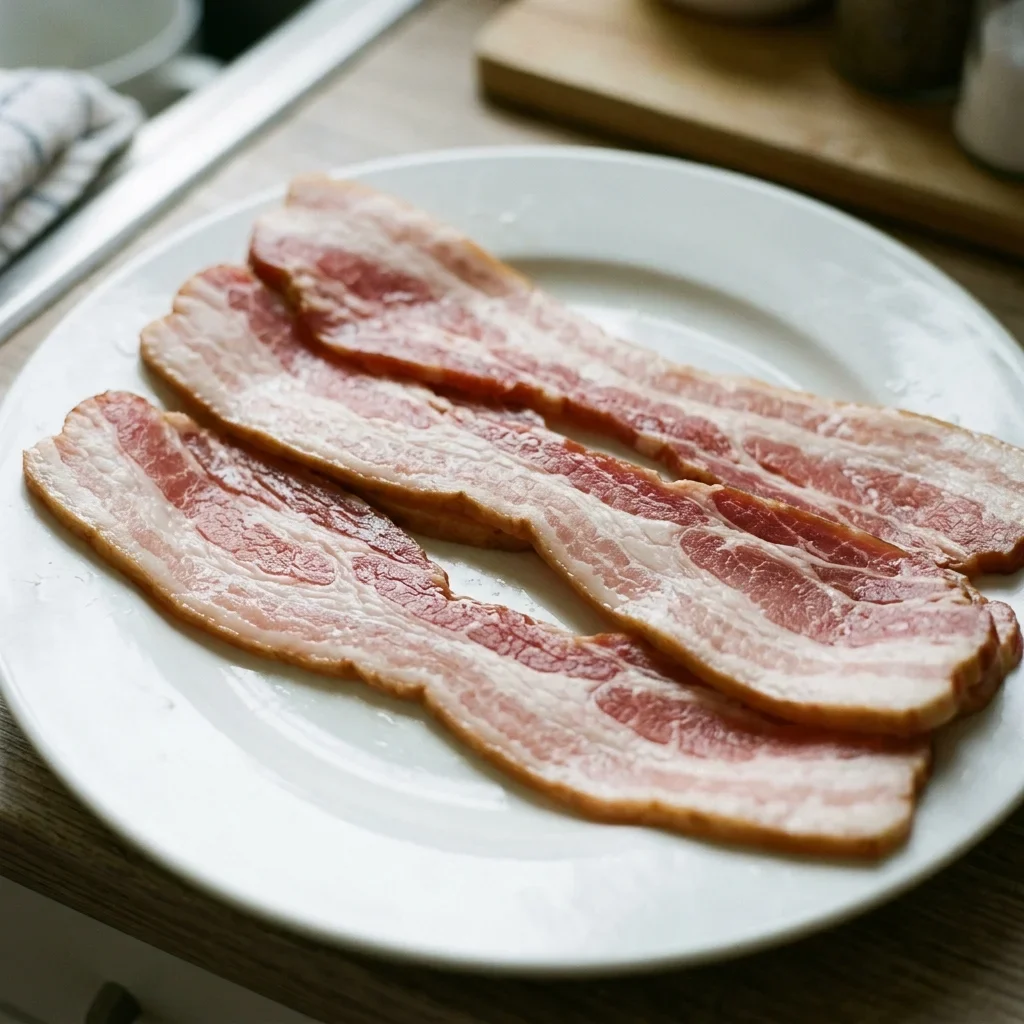
Verdict: use it
Fresh bacon
Pink meat, creamy white fat, and a clean, smoky smell. This is bacon inside its 7 days once opened, or before its date if sealed. So cook it until crisp, which is how FSIS says you can tell it is done.
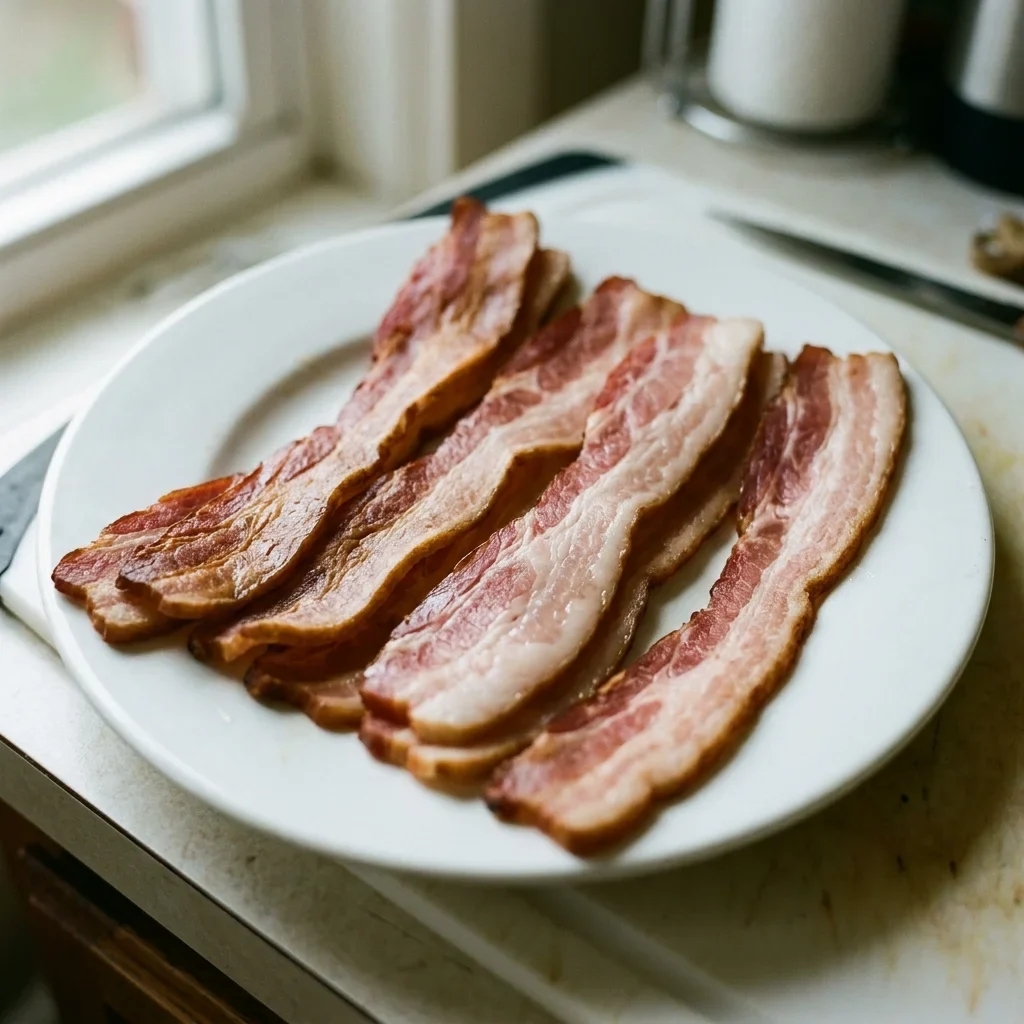
Verdict: cook it soon
Bacon with dry, darkened edges
The edges of the strips have dried and darkened where air reached them. That is the pack drying out rather than spoiling, and it is why NDSU says to keep bacon wrapped. So if it still smells clean, cook it today, and wrap the rest tightly.
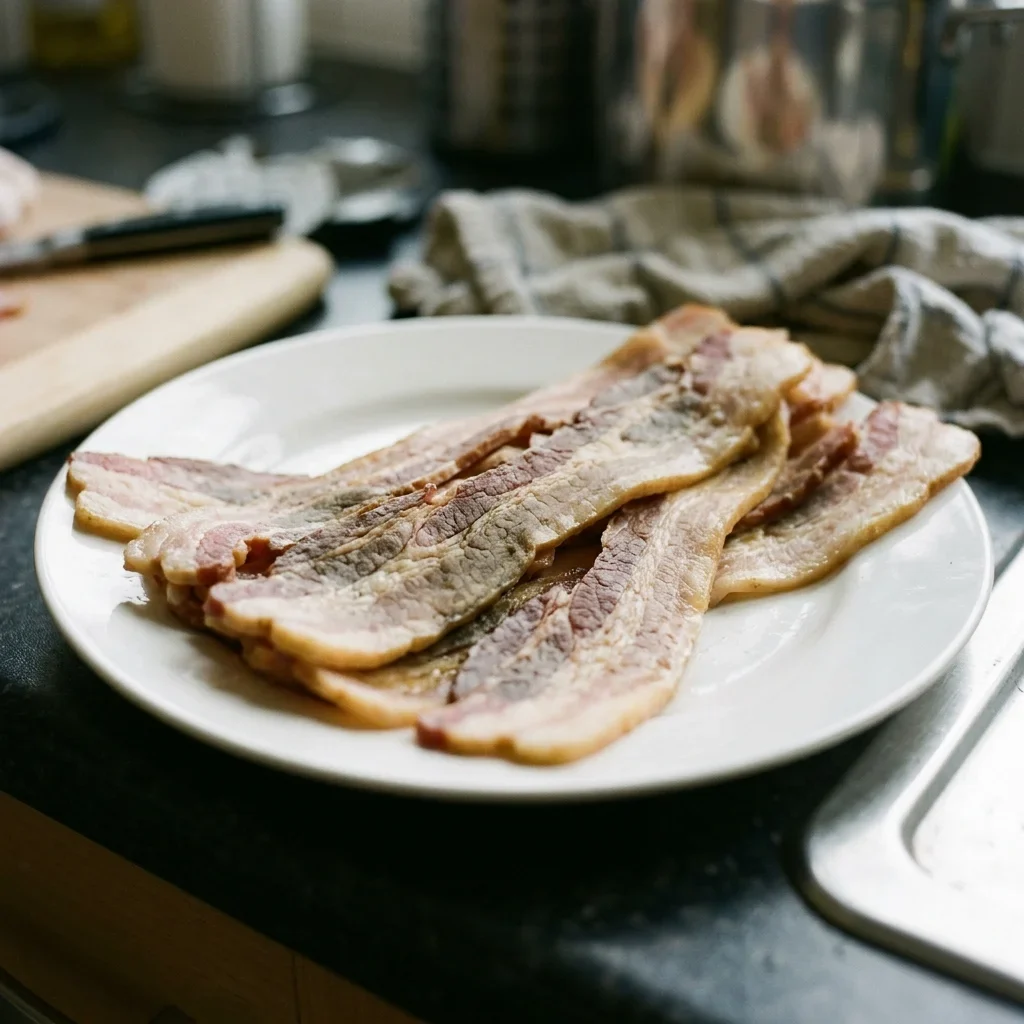
Verdict: smell it first
Bacon that is dull or greyish
The pink has faded to a dull grey or brown in patches, and the fat looks less white. Cured meat holds its color for a long time, so fading suggests the bacon is near the end. So check the date and the smell. If it is past 7 days open, or smells at all off, throw it out.
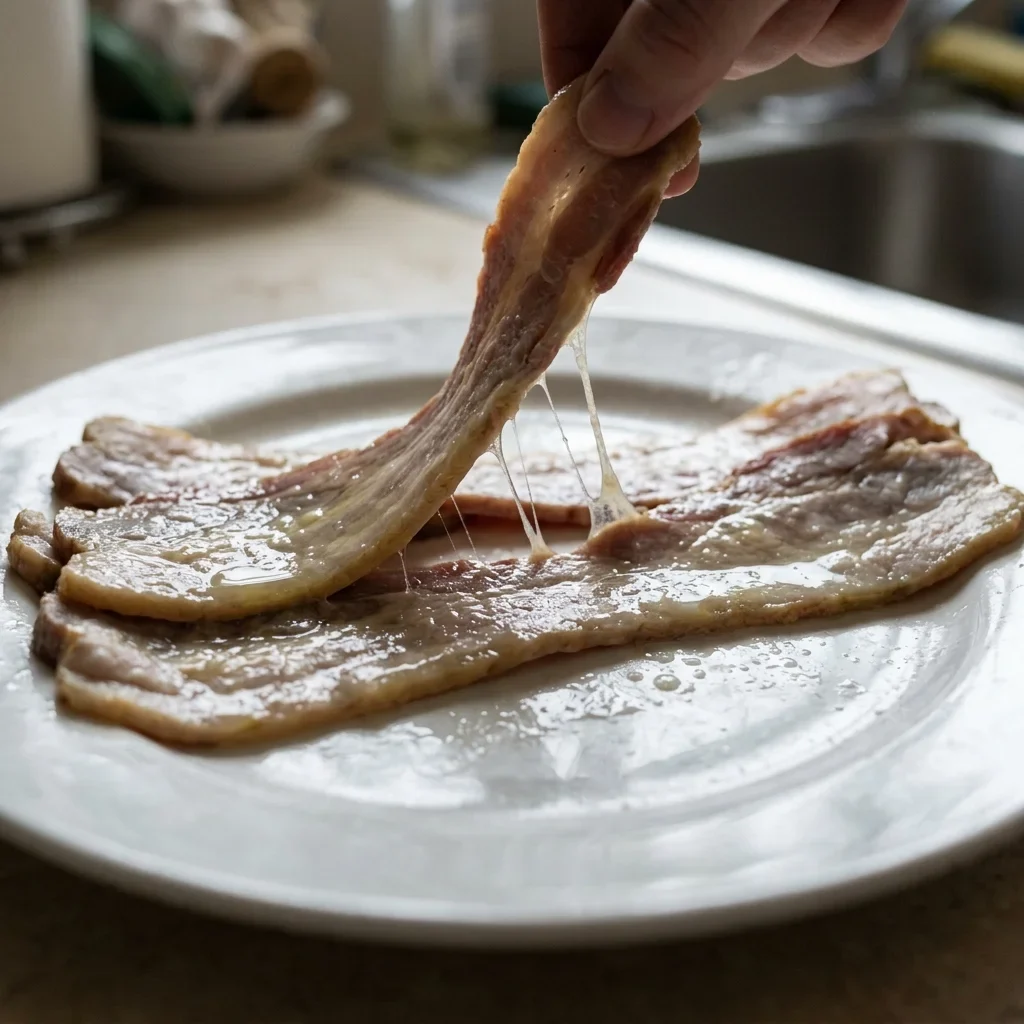
Verdict: throw it out
Slimy or sour-smelling bacon
A slick, sticky film on the strips, and a sour or off smell instead of smoke. Those are the signs of spoilage bacteria on meat, the same ones FSIS describes for beef. Cooking will not fix it. So bin the pack, and wash anything it touched.
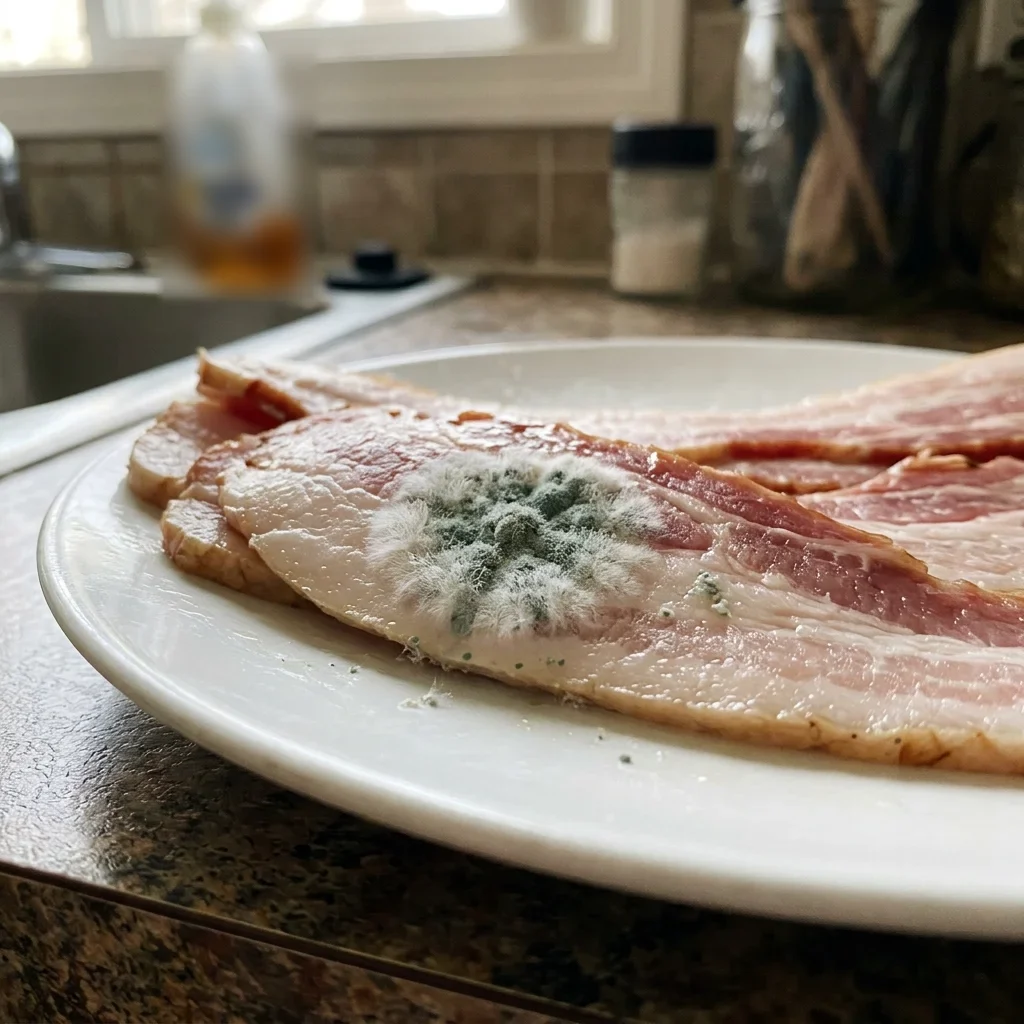
Verdict: throw it out
Moldy bacon
Fuzzy spots of white, green or blue on the meat or fat. The USDA Food Safety and Inspection Service notes that molds can grow on cured, salty meats such as bacon. Only hard salami and dry-cured country ham are on its list of meats you can scrub clean, so regular bacon is not. Throw it out, and do not sniff it, as FSIS also warns.
Can you leave cooked bacon out overnight?
Cooked bacon should not sit out overnight, because the USDA's Danger Zone rule gives perishable food 2 hours between 40 and 140°F. FSIS lists leftover cooked bacon with a fridge time of 4 to 5 days, which means it belongs in the fridge. The exception is shelf-stable precooked bacon, which FSIS allows in the pantry until opened. For the rest of the table, see the food left out overnight list.
Bacon substitutes
Out of bacon, or did the pack turn? Then one of these will stand in.
Substitute
Works best in
What changes
Pancetta
Pasta and soups
Same 7 days in the fridge, per FSIS.
Canadian bacon
Breakfast sandwiches
Leaner, but only 3 to 4 days once sliced.
Smoked paprika
Beans and stews
The smoke without the meat; see the allspice guide for storing spices.
Mistakes people make when they store bacon
These are the ways people store bacon that cost them the most, and each one is easy to fix.
Keeping an opened pack for weeks. FSIS and NDSU give opened bacon about 7 days, so freeze what you will not cook.
Leaving the pack open in the fridge. NDSU says to keep bacon wrapped, because air dries and darkens the edges.
Partly cooking it to finish later. FSIS says never to, because the bacteria have not been destroyed.
Thawing it on the counter. FSIS says to thaw bacon in the fridge, in cold water or in the microwave.
Trusting color alone. Cured bacon stays pink, so go by smell and feel instead.
Freezing it for half a year. Quality is best within 1 to 4 months, depending on which USDA source you follow.
Scraping mold off bacon. FSIS allows that only for hard salami and dry-cured country ham, so throw moldy bacon out.
Sources
Bacon and Food Safety, Food Safety and Inspection Service, U.S. Department of Agriculture, on refrigerating raw bacon at 40°F or below and using it within 7 days or freezing it, bacon at 4 months frozen, dry-cured, nitrite-free and Canadian bacon times, leftover cooked bacon at 4 to 5 days and 1 month frozen, shelf-stable precooked bacon at 5 to 14 days after opening, safe thawing, never partly cooking bacon, cured bacon staying pink, cooking bacon crisp, and freezing keeping food safe indefinitely.
Food Storage Guide, Julie Garden-Robinson, NDSU Extension publication FN579, reviewed January 2023, on bacon at 7 days in the refrigerator and 1 month frozen for opened packages, using the processor's date for unopened ones, keeping it wrapped, and storing it in the coldest part of the refrigerator or a meat keeper.
FoodKeeper App, Food Safety and Inspection Service, U.S. Department of Agriculture, whose published FoodKeeper data lists bacon at 1 week refrigerated and 1 month frozen.
Molds on Food: Are They Dangerous?, Food Safety and Inspection Service, U.S. Department of Agriculture, on molds growing on cured, salty meats such as bacon, scrubbing mold only from hard salami and dry-cured country hams, and not sniffing moldy food.
Danger Zone (40°F-140°F), Food Safety and Inspection Service, U.S. Department of Agriculture, on the 2-hour limit for perishable food between 40 and 140°F.
Storage times and safety advice on this page come from the sources above. Food safety depends on conditions I cannot see, so read the Disclaimer, and if in doubt, throw it out.
Other ingredient guides
Browse all guides



Share this guide
Never miss a guide
New ingredient guides when they go up, plus one storage tip worth knowing. Anything sponsored is labelled.

Emilly White