
6 to 12 months
Opened, airtight, in a dark cupboard (USDA FoodKeeper)
Not recommended
Moisture can degrade tea (Harvard Nutrition Source)
Matcha only
Sealed tight; FoodKeeper allows it, Harvard does not
The short version: to store matcha powder, keep it sealed in an airtight, opaque container in a cool, dark cupboard. The USDA's FoodKeeper data gives opened loose tea 6 to 12 months. Keep it away from the stove, sunlight and strong smells. Freezing is allowed for matcha, but only sealed tight. Throw it out if it turns brown, smells off or gets damp.
Storage times here come from the USDA's FoodKeeper data and the Harvard T.H. Chan School of Public Health, with matcha advice from University of Illinois Extension and color research published in Foods.
On this page
What to check before you store matcha powder
Matcha keeps best in an airtight container in a dark, cool place, according to University of Illinois Extension, because it does not like heat, light or too much oxygen. So check a few things before the tin goes away.
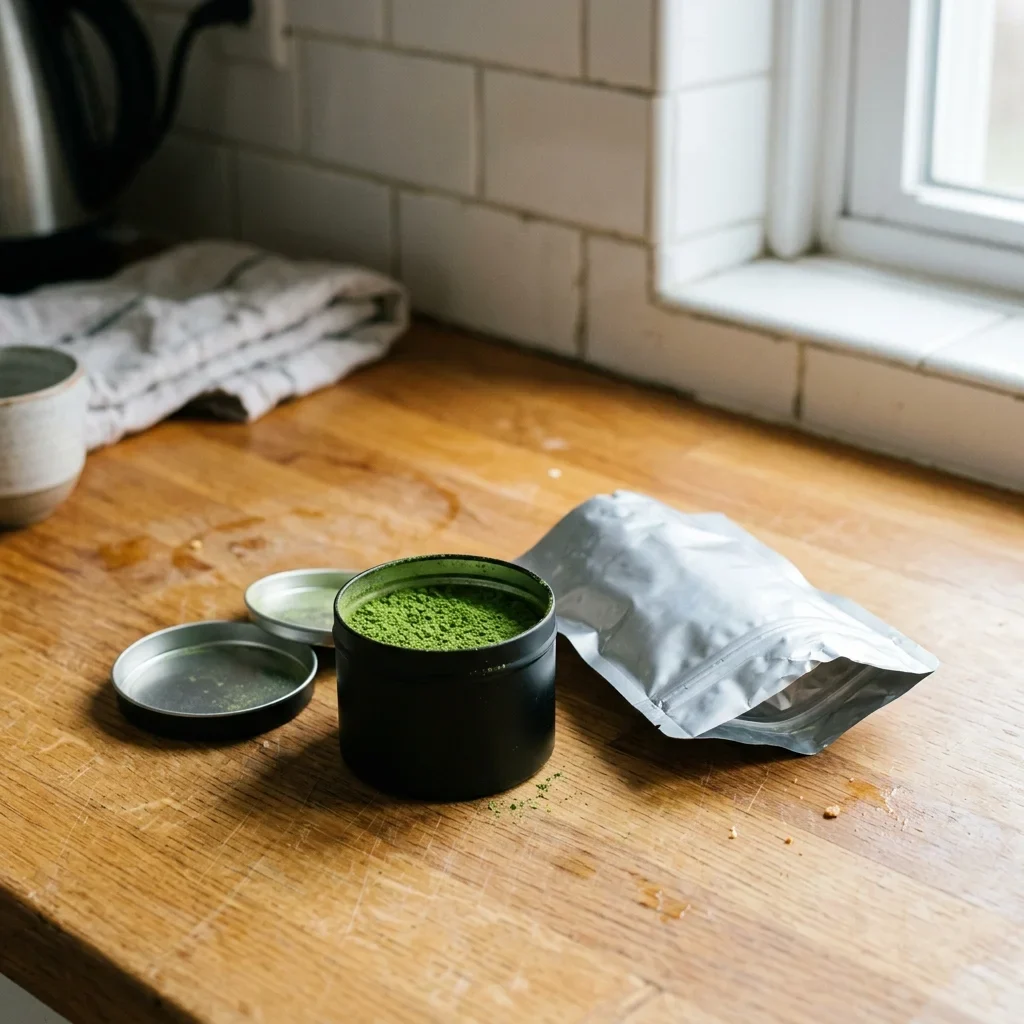
Glass, a lid that seals, and a spoon that is properly dry.
First, check the date. The USDA's FoodKeeper data gives unopened loose tea about 2 years in the pantry. Once you open it, however, the clock drops to 6 to 12 months.
Then check the color. Illinois Extension describes matcha as a bright green powder. So a vivid green tin is fresh, while a dull, olive one has already started to fade.
Next, check the packaging. A resealable, opaque pouch with the air pressed out works. Otherwise, move the powder into an airtight tin that blocks light.
Finally, think about how fast you use it. The Harvard Nutrition Source says delicate teas may last only 6 months. So buy a size you will finish in that time, as you would with ground spices such as allspice.
How to store matcha powder so it stays green
To store matcha powder so it stays green, keep out the five things the Harvard Nutrition Source lists: light, heat, moisture, odor and air. Each one dulls the color or the flavor, so a sealed tin in a dark cupboard deals with all five.
Where should you store matcha powder?
Matcha belongs in a dark cupboard at a steady room temperature, according to the Harvard Nutrition Source, which advises that for all teas. University of Illinois Extension adds that matcha needs a cool place. So choose a cupboard away from the stove, the kettle and any sunny window.
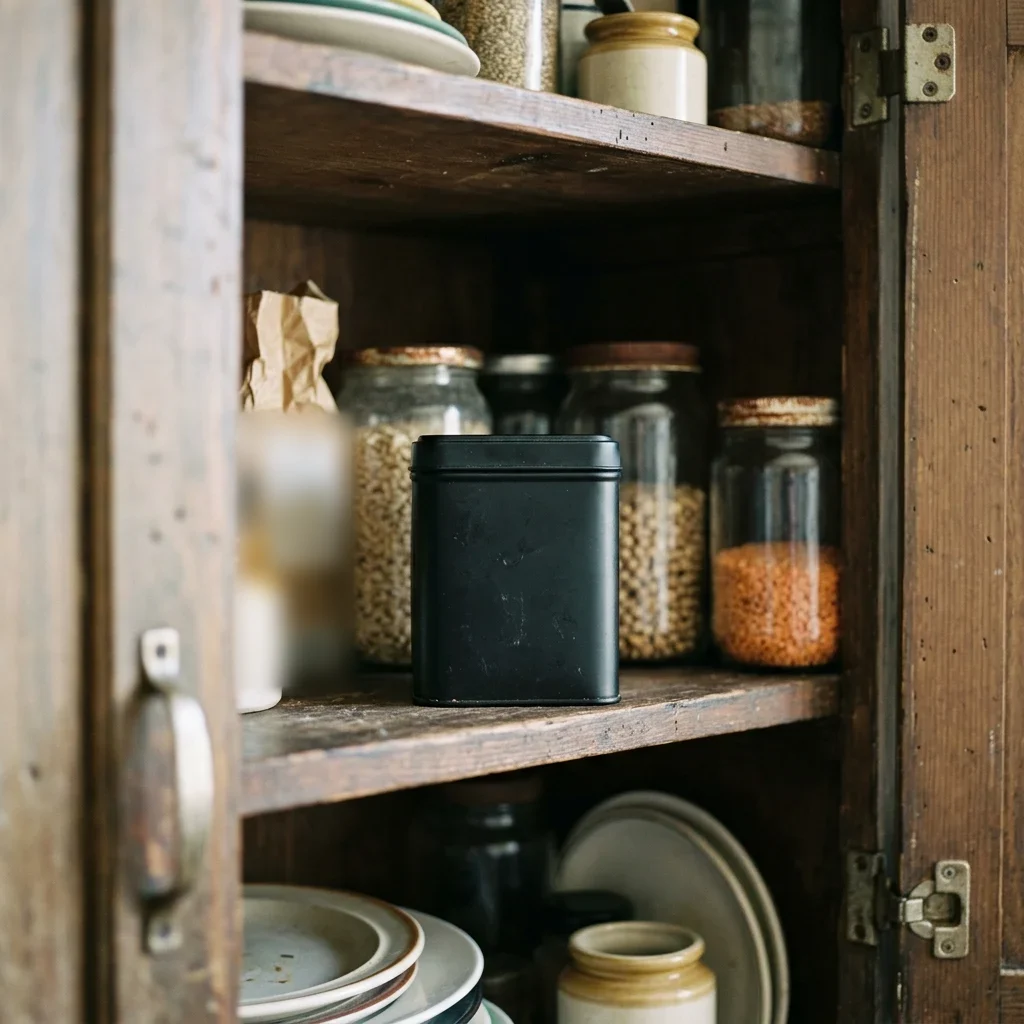
Sealed, cool and dark, and nowhere near the cooker.
How long does matcha powder last once opened?
Opened matcha lasts 6 to 12 months, according to the USDA's FoodKeeper data for loose tea. The Harvard Nutrition Source gives opened tea about a year, but adds that more delicate teas may last only 6 months.
So aim for the shorter end with matcha, since it is a delicate green tea ground to a powder. Harvard also says flavor is your best guide, so taste it once it passes the 6-month mark.
Why does matcha lose its color?
Matcha loses its bright green color mainly through oxygen and light, according to a 2026 review in Foods, which says they oxidize its chlorophyll during storage. The same review says heat speeds up that change and dulls the color. So limiting air and light is the main defense.
What container is best for matcha?
The best container for matcha is airtight and opaque, since University of Illinois Extension asks for an airtight container and light dulls the color. A small metal tin with a tight inner lid suits it well. Also, pick one the powder mostly fills, so less air sits above it.
Does matcha absorb smells?
Matcha can pick up smells, because the Harvard Nutrition Source says tea absorbs odors from food and even from other strongly scented teas. So keep the tin away from coffee, spices and scented teas. A truly airtight lid matters here as much as it does for freshness.
Can you freeze matcha?
Matcha can be frozen after opening, according to the USDA's FoodKeeper data, which calls it the only tea that can be frozen. By contrast, the Harvard Nutrition Source says freezing and refrigerating tea is not recommended, because the moisture introduced can degrade it. So freeze matcha only if you can keep it completely sealed.
How do you freeze matcha powder?
Matcha freezes most safely in small, airtight portions, which the USDA's FoodKeeper data allows for opened matcha. So divide a large bag into a few small, well-sealed containers. That way, the moisture Harvard warns about only reaches the portion you open, while the rest stays sealed.
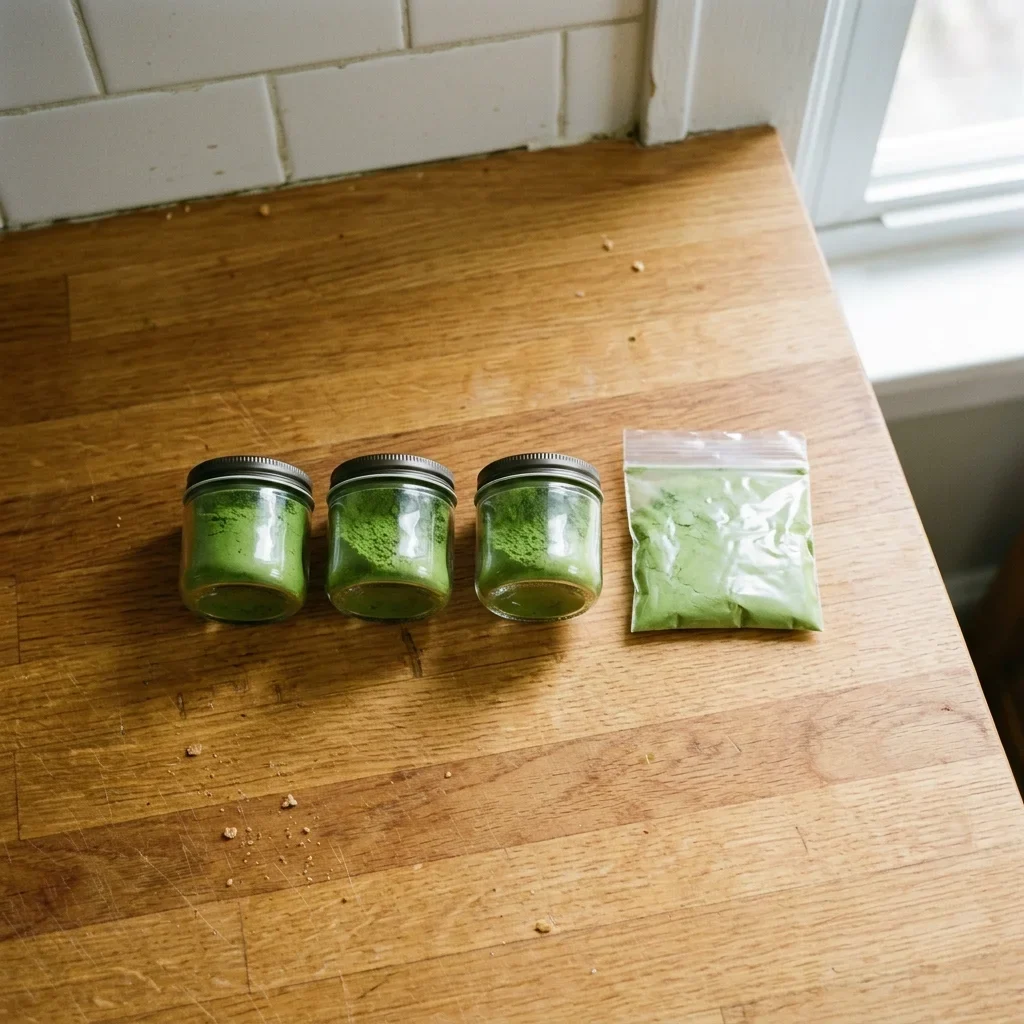
Below 41 degrees it keeps for years, but it barely pours.
Should you refrigerate matcha?
Matcha is better kept out of the fridge, because the Harvard Nutrition Source says refrigerating tea is not recommended. Moisture is the problem, and the tea also picks up fridge smells. So a cool, dark cupboard is the better everyday spot.
How do you use matcha from the freezer?
Frozen matcha should warm up while still sealed before you open it, since the Harvard Nutrition Source warns that moisture degrades tea. Opening a cold container lets damp air settle on the powder. So take out one portion, wait until it reaches room temperature, and then open it.
How to tell if matcha has gone bad
Old matcha mostly fades rather than spoils, so color and taste are the main checks. The Foods review says matcha loses its bright green color through oxidation, turning dull or brownish. Damp matcha is a different matter. Here is what each stage means, then.
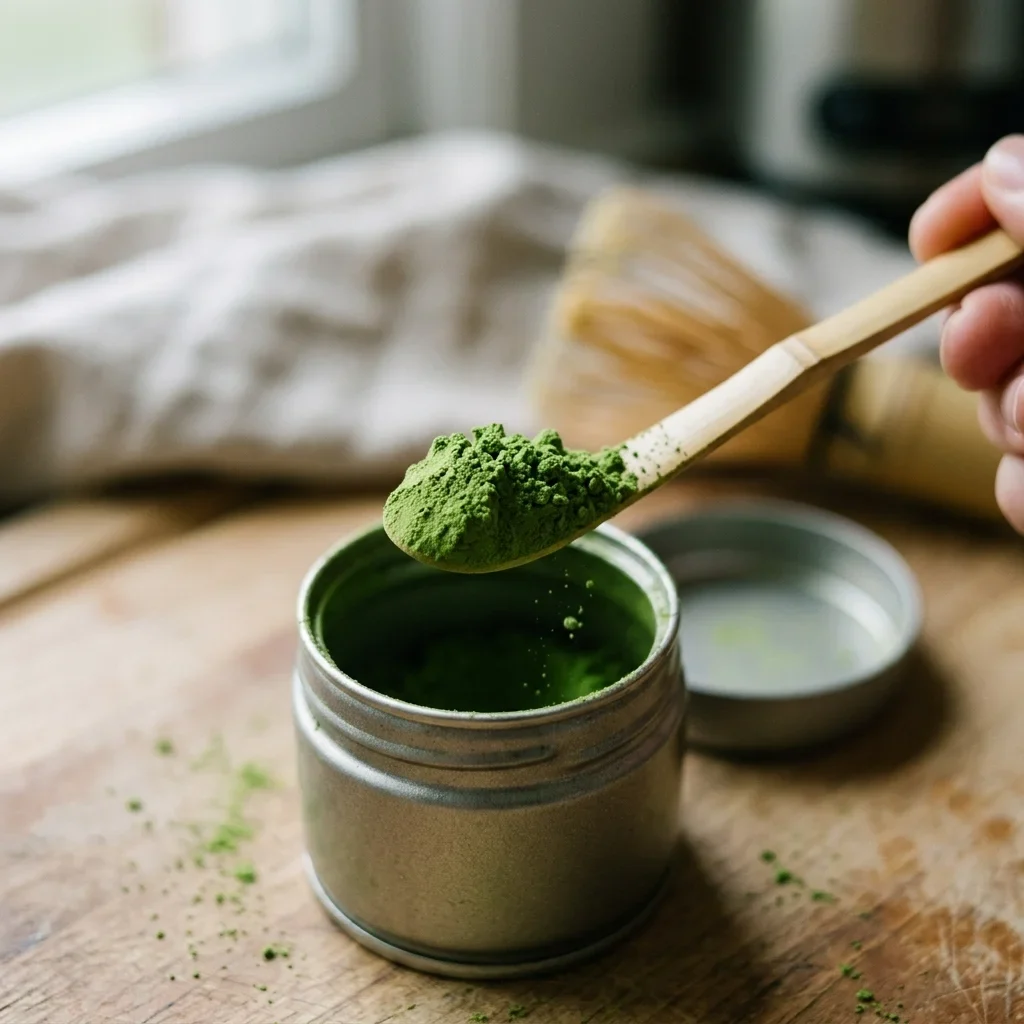
Verdict: use it
Fresh matcha
A vivid, bright green, very fine powder with a fresh, grassy smell. This is matcha inside its 6 to 12 months after opening. So whisk it as usual, and close the tin straight after.
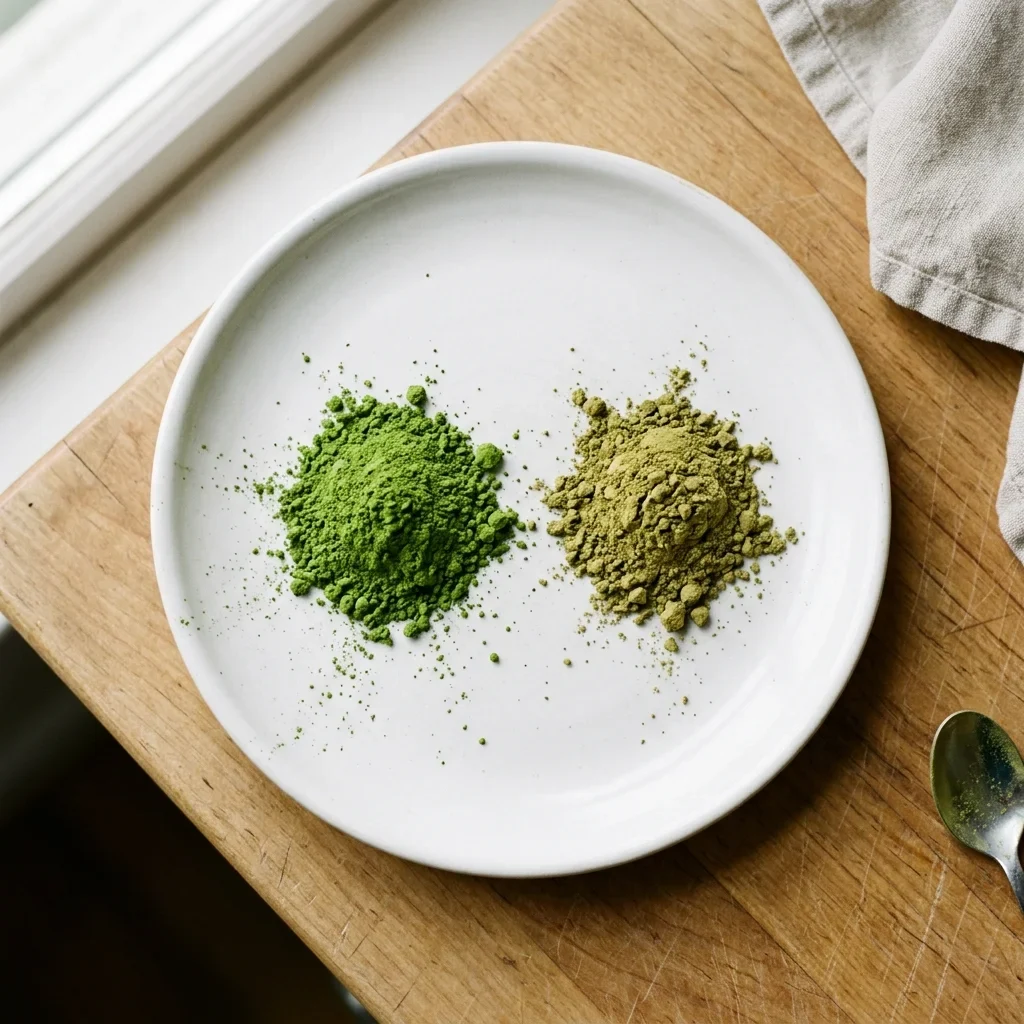
Verdict: use it in lattes and baking
Dull, olive-green matcha
A duller, olive green with a weaker smell. The Foods review says oxygen and light cause this loss of color during storage. So it is fine to use, but it suits lattes, smoothies and baking better than plain tea.
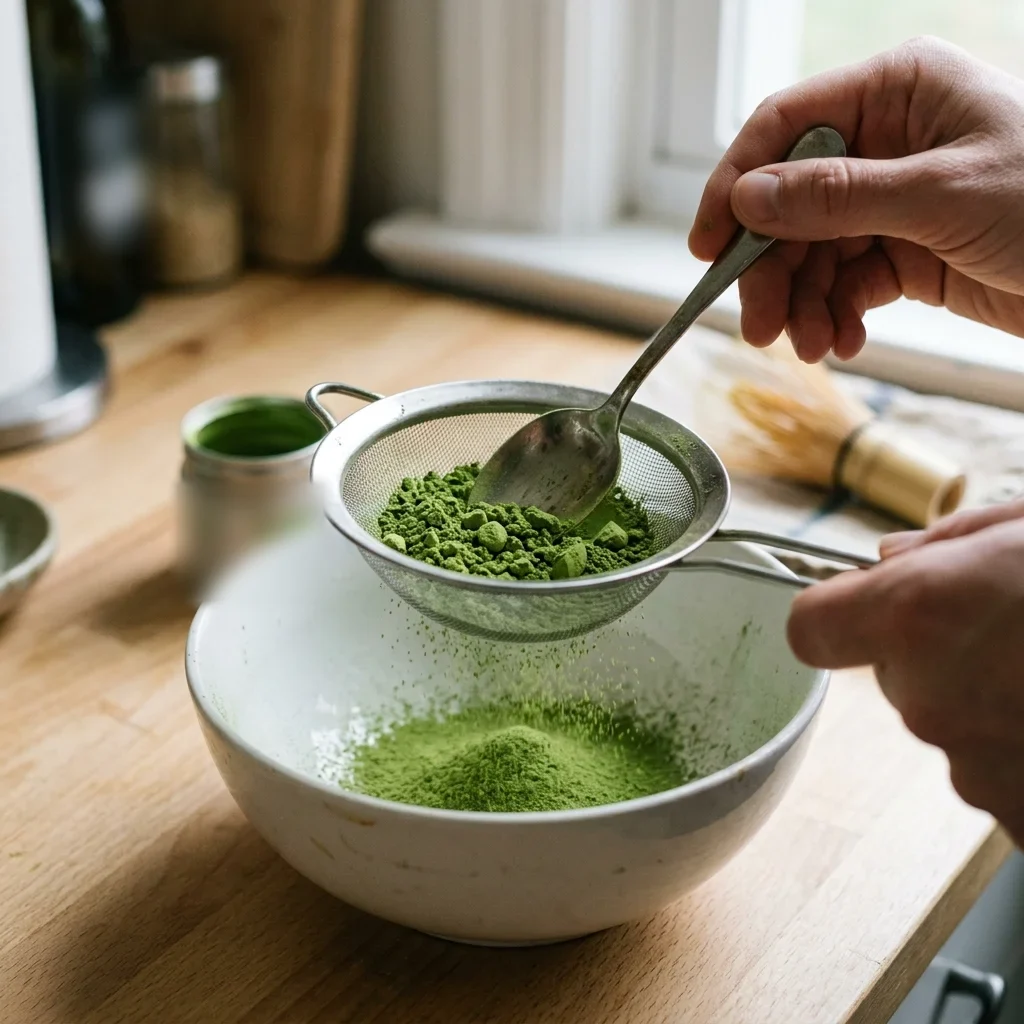
Verdict: sift it, unless it feels damp
Clumpy matcha
Small lumps in the powder. Dry lumps that crumble when pressed can simply be sifted through a small strainer. If the lumps feel damp or sticky, though, moisture has got in, and the powder should go.
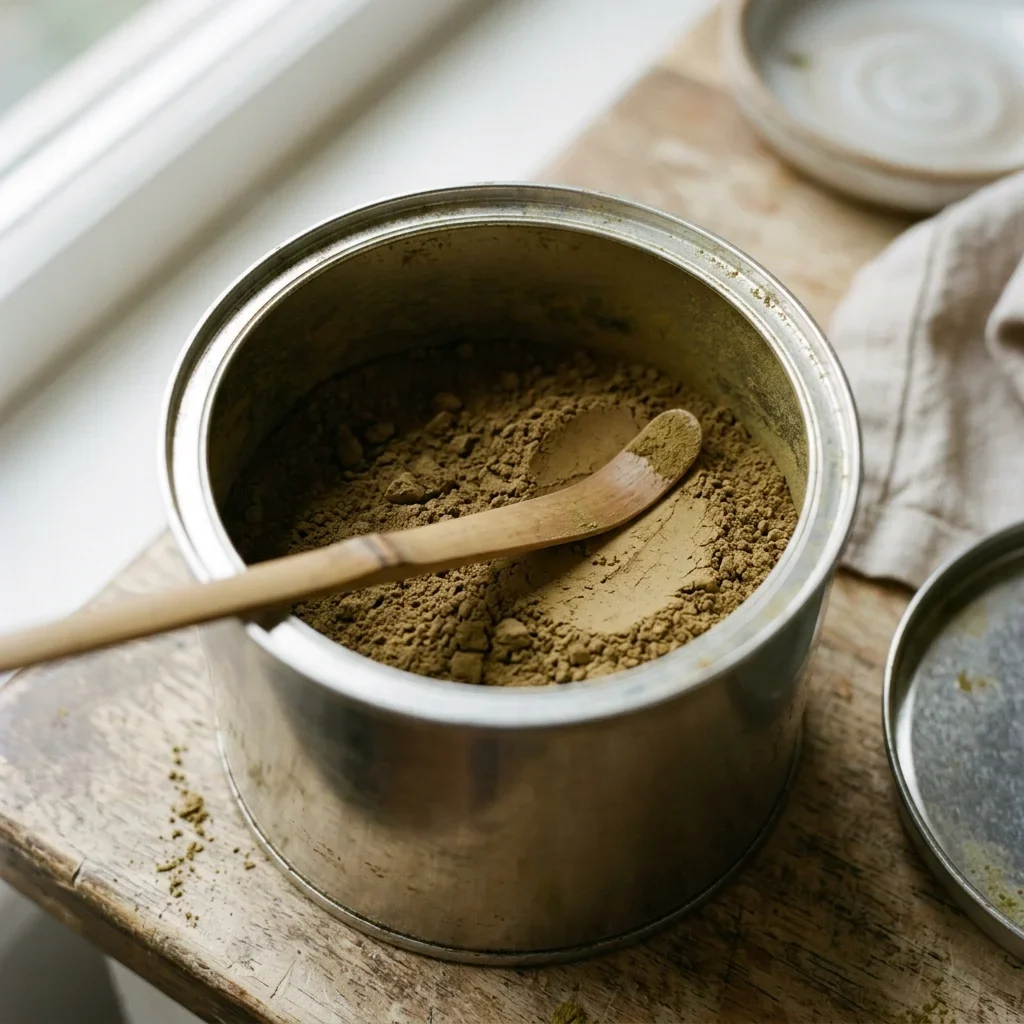
Verdict: throw it out
Brownish matcha that smells stale or off
A brownish or khaki color with a flat or musty smell. The Foods review describes degraded matcha as dull or brownish, and Harvard says flavor is your best guide. So bin it, since its flavor will have faded too.
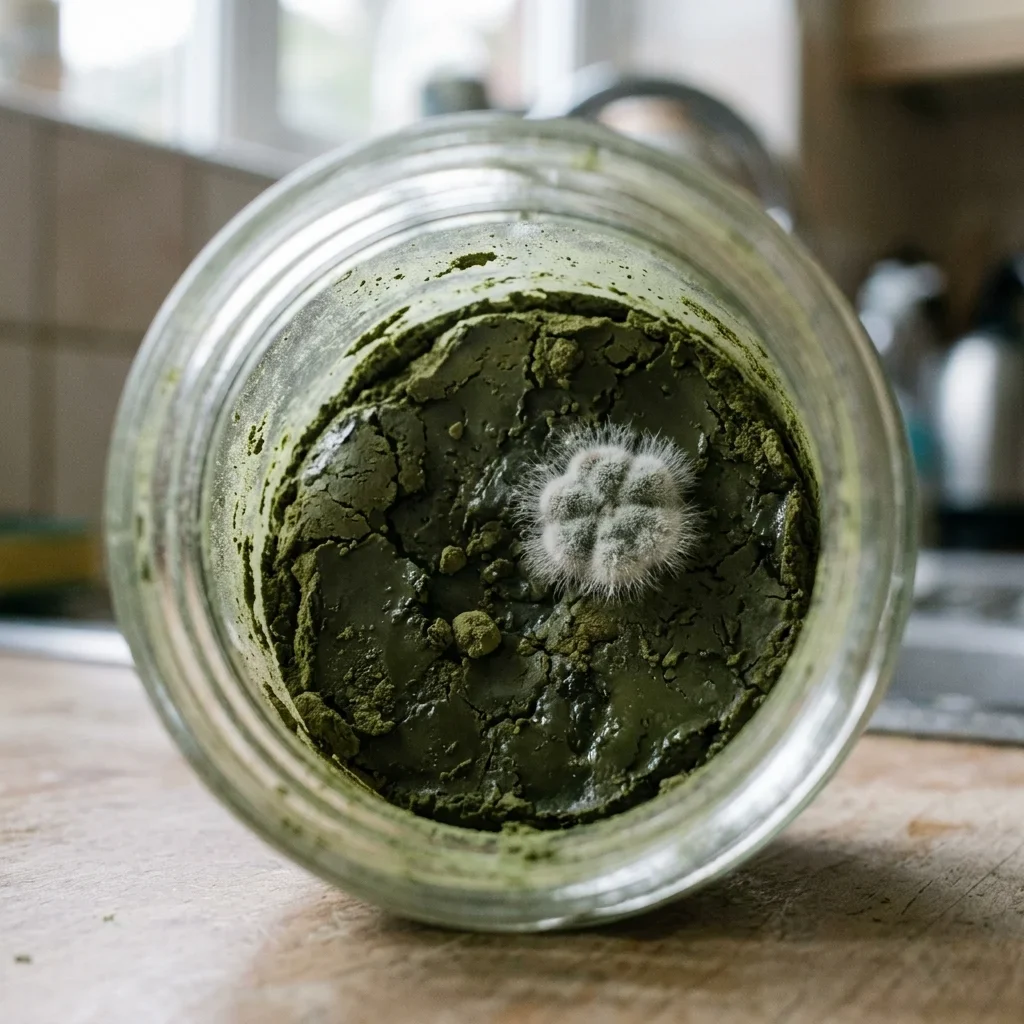
Verdict: throw it out
Damp or moldy matcha
Wet patches, a hard cake of powder, or fuzzy spots on the surface. The USDA says to discard food covered with mold and not to sniff it. So throw out the whole container, then clean the spot where it was stored.
Can you leave matcha out after opening it?
Matcha left open on the counter starts to fade, because University of Illinois Extension says it does not like heat, light or too much oxygen. A few minutes while you whisk will not hurt it. Still, close the tin as soon as you have measured out a spoonful.
What to store matcha in
The right container keeps out air, light and smells. Here is what each one suits.
Substitute
Works best in
What changes
Airtight metal tin
The cupboard, 6 to 12 months
Blocks light; an inner lid keeps air out.
Resealable opaque pouch
The cupboard, air pressed out
Fine if it seals fully every time.
Clear glass jar
A dark cupboard only
Light dulls the color, so keep it shut away.
Small sealed portions
The freezer, opened matcha
FoodKeeper allows it; open one portion at a time.
Mistakes people make when they store matcha
These are the ways people store matcha that cost them the most color and flavor, and each one is easy to fix.
Keeping it in a clear jar on the counter. Light dulls the color, so use an opaque tin.
Storing it beside the stove or kettle. Illinois Extension says matcha does not like heat.
Leaving the tin open while you whisk. Close it as soon as you have measured the powder.
Keeping it in the fridge. Harvard says moisture can degrade tea, and it picks up smells.
Opening frozen matcha while it is cold. Let it reach room temperature while still sealed.
Storing it next to coffee or spices. Harvard says tea absorbs odors from other foods.
Buying a large bag for occasional use. Harvard says delicate teas may last only 6 months.
Sources
FoodKeeper App, Food Safety and Inspection Service, U.S. Department of Agriculture, whose published FoodKeeper data lists loose tea at 2 years unopened and 6 to 12 months after opening, and notes that matcha is the only tea that can be frozen after opening.
Tea, The Nutrition Source, Harvard T.H. Chan School of Public Health, last reviewed April 2023, on light, heat, moisture, odor and air as the five things to avoid, storing loose tea airtight in a dark cupboard at a consistent room temperature, tea absorbing odors, not refrigerating or freezing tea because moisture can degrade it, opened tea lasting about a year and delicate teas as little as 6 months, and flavor as the best guide.
Experience the Benefits of Matcha Tea, Jenna Smith, University of Illinois Extension, January 18, 2019, on storing matcha in an airtight container in a dark, cool place, matcha not liking heat, light or too much oxygen, and matcha as a bright green powder.
Beyond Composition: Processing-Driven Transformations and Functional Trade-Offs of Matcha Tea in Foods, A. Onder, M. Warda, O. Yılmaz, J. Bae and A.M. Abd El-Aty, Foods 15(16):2782, 2026, on oxygen and light during storage oxidizing chlorophyll, heat speeding its conversion to pheophytins, and the resulting loss of matcha's bright green color to dull or brownish tones.
Molds on Food: Are They Dangerous?, Food Safety and Inspection Service, U.S. Department of Agriculture, on discarding food covered with mold, not sniffing it, and cleaning the spot where it was stored.
Storage times and safety advice on this page come from the sources above. Food safety depends on conditions I cannot see, so read the Disclaimer, and if in doubt, throw it out.
Other ingredient guides
Browse all guides

Share this guide
Never miss a guide
New ingredient guides when they go up, plus one storage tip worth knowing. Anything sponsored is labelled.

Emilly White