
3 to 7 days
Stems in a glass of water, 34 to 40 degrees F (Illinois Extension)
Up to 1 week
Rinsed and patted dry, in a damp towel inside a bag (NDSU)
Up to 1 year
Whole leaves, airtight, out of the light (Utah State)
The short version: to store mint well, rinse it and pat it dry first. Then stand the stems in a glass of water in the fridge. Or wrap the leaves in a damp towel inside a bag. Either way you get about a week. Dry or freeze whatever is left. Dried mint holds its scent for up to a year, so that is the longer route.
The fridge times for how to store mint come from NDSU Extension, Illinois Extension and Clemson Cooperative Extension. The drying rules then come from the National Center for Home Food Preservation and UMass Extension. Utah State University Extension also gives the dried shelf life.
On this page
How do you pick fresh mint?
Pick mint with vibrant green leaves and nothing brown or wilted in the bunch, says Purdue Extension FoodLink. That is almost the whole test, because color tracks how long ago the stems were cut. So everything that follows about how to store mint depends on what you bring home.
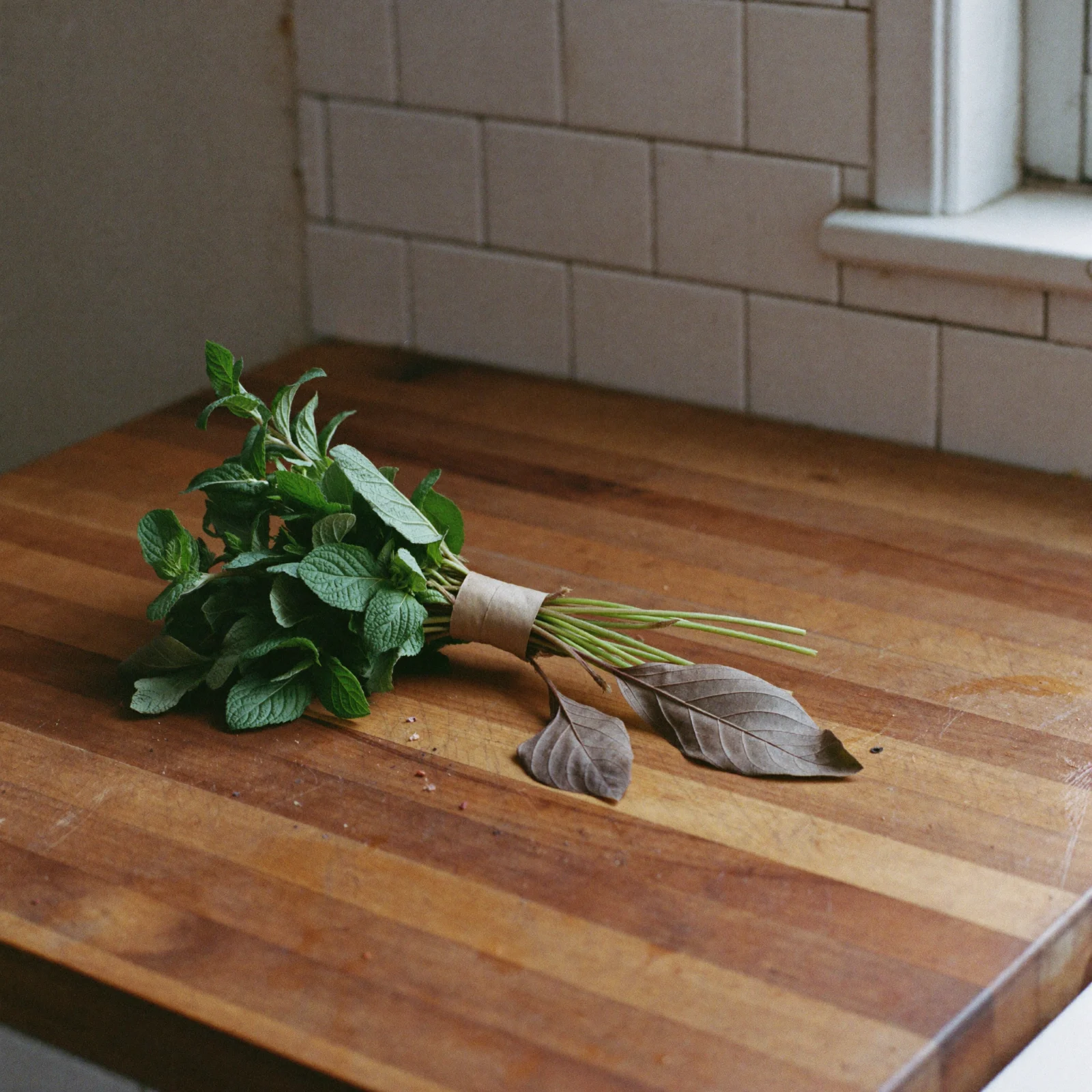
Vibrant green leaves, and nothing brown left in the bunch.
Vibrant green, with no brown edges. Purdue Extension FoodLink gives the rule in one line. It says to look for vibrant green leaves, and also to avoid brown or wilted ones. So the color is the first thing to check.
Small young leaves rather than large old ones. NDSU Extension says the youngest, smallest leaves are the most flavorful. Illinois Extension agrees, since it is the new growth that has the most flavorful leaves.
Buds rather than open flowers, if you are cutting your own. Illinois Extension picks leaves for drying just as the flowers begin to appear. The National Center for Home Food Preservation sets the peak slightly earlier, at the bursting bud stage. Both want the cut made in the morning, too. NDSU harvests late in the morning on dry, sunny days. The National Center, meanwhile, waits until the dew has evaporated.
Spearmint, most likely, whatever the label says. Purdue Extension FoodLink notes that mint sold in grocery stores is often spearmint. It calls spearmint sweet, while peppermint contains more menthol, so the flavor is more intense. Neither page we opened, however, says to store mint of one kind differently from the other.
How to store mint so it lasts
To store mint so it lasts, get it cold and keep it damp. Do not let it sit wet, though. The National Center for Home Food Preservation files mint with the tender-leaf herbs. It defines that group by its high moisture content. So moisture is both the point and the problem. Too little and the leaves wilt, whereas too much and they mold.
How do you keep mint fresh in the fridge?
Mint keeps 3 to 7 days standing in a glass of water in the fridge, says Illinois Extension. NDSU Extension gives the same method a slightly longer ceiling. It stores leaves or sprigs in water, or wrapped in plastic, for up to one week. Before any of that, rinse the stems thoroughly and pat them dry, as NDSU asks. Clemson Cooperative Extension then sets the shelf temperature at 34 to 40 degrees F. It also gives cilantro and parsley 2 to 3 weeks on that shelf. So you store mint for days, where those two give you weeks.

Stems in water, on a shelf running 34 to 40 degrees.
How long does mint last in the fridge?
Mint lasts about one week in the fridge, and the extension services are unusually close on it. NDSU Extension gives leaves or sprigs up to one week, in water or wrapped in plastic. Illinois Extension then splits the difference. It gives a bunch in a glass 3 to 7 days, while dry leaves in plastic get about one week. Utah State University Extension simply says about a week in water. Purdue Extension FoodLink is the vaguest, since mint in a moist paper towel keeps for several days.
NDSU's own food storage chart does not list mint at all. It also gives fresh parsley only 2 to 3 days in the fridge. So treat a week as the best case rather than the plan. In other words, store mint for the week you are in, not the week ahead. If the bunch will outlast that, dry it or freeze it now.
Should you wash mint before you store it?
Yes, wash mint before you store it, as long as you dry it afterwards. NDSU Extension is explicit about both halves. It rinses herbs and stems thoroughly, then pats them dry with paper towels. Purdue Extension FoodLink gives the same pair, since it rinses mint under cool running water. UMass Extension has a gentler version for herbs you mean to preserve. It washes quickly and gently, then shakes or pats dry. The National Center for Home Food Preservation also rinses in cool water and shakes off the excess. So washing is not the risk. Water left sitting on the leaves is, which is why all four pages end with drying.
Does mint keep better in water or wrapped?
Neither wins clearly, because the two services that give both methods give them the same week. NDSU Extension stores mint in a glass of water or wrapped in plastic for up to one week. It does not rank them. Illinois Extension gives water 3 to 7 days, against about one week for dry leaves in plastic. That leans very slightly toward wrapping, although the ranges overlap. Purdue Extension FoodLink offers only the wrapped version, in a moist paper towel inside a zip-top bag. So pick by shape instead. Long stems go in a glass, while loose leaves go in a towel. If you do use the glass, Clemson Cooperative Extension changes the water every 3 days for parsley. That is also the only maintenance instruction any of them gives.
How do you dry mint?
Hang mint in a paper bag, or dry it flat at a low temperature. Dried mint then keeps for up to 1 year, according to Utah State University Extension. So drying is how to store mint for a whole season rather than a week. The National Center for Home Food Preservation puts mint in the tender-leaf group. It hangs small bunches inside paper bags, with holes torn in the sides. It also warns that those herbs carry high moisture, and that they will mold if not dried quickly. UMass Extension gives the conditions: good ventilation, 75 to 110 degrees F and low humidity. Drying takes 3 to 8 days. NDSU Extension offers the oven route instead, at 100 degrees F until the leaves are brittle. For a dehydrator, the National Center sets 95 to 115 degrees F for about 1 to 4 hours.
Can you freeze mint?
Yes, you can freeze mint, and NDSU Extension gives two methods. Freezing is how to store mint past the week the fridge gives you. No source we opened says how long frozen mint keeps, though. It freezes mint leaves in airtight freezer bags. It also freezes chopped mint in water in an ice cube tray. Utah State University Extension adds a caveat to the first one. It says individual leaves do not freeze well, so it sends you to the tray. The cubes are the safer bet, while the loose leaves are the convenient one.
How do you freeze mint leaves?
Strip the mint leaves, freeze them flat for 30 minutes, then bag them. That is NDSU Extension's method. It spreads the leaves in a single layer on a cookie sheet, then moves them into labeled, dated freezer bags. UMass Extension keeps it simpler for small amounts. It washes leaves and short stems quickly, shakes or pats them dry, then seals them in small bags. It leaves the air in as a cushion. Frozen herbs keep better color and flavor the less they are cooked, it adds. So stir mint in at the end rather than at the start. Freezing is for whatever will not keep, much as it is in the basil guide.
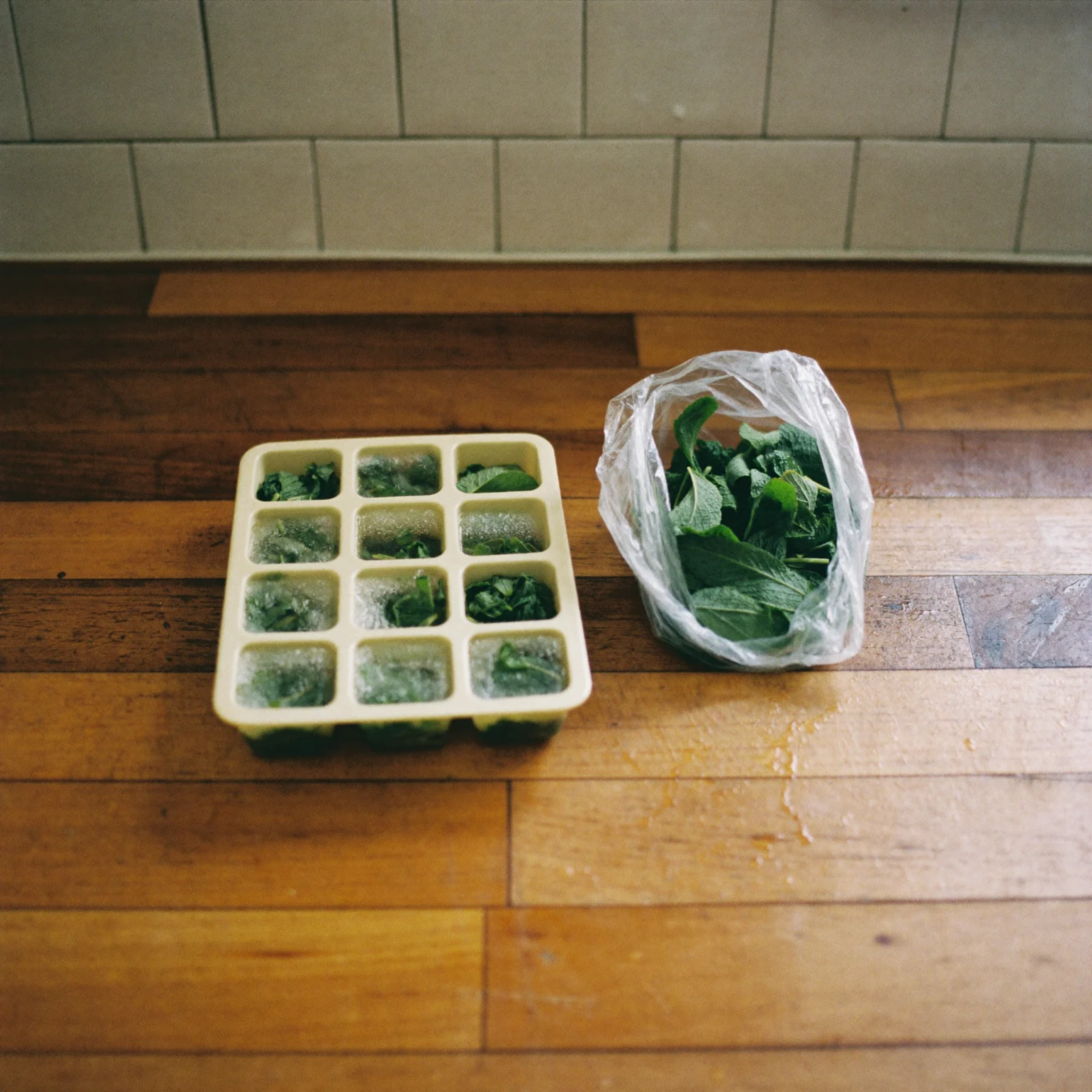
Chopped into cubes, or whole leaves frozen flat first.
Can you freeze mint in ice cubes?
Yes, and two extension services prefer mint ice cubes to loose leaves. NDSU Extension chops the herb, puts it in a tray, covers it with water and freezes it. It then transfers the cubes to labeled, dated freezer bags. Utah State University Extension also gives the same method, with the reason attached. It freezes chopped leaves with water to preserve flavor after thawing. So the tray is the answer for anything wet, for example tea, lemonade or a sauce.
Is frozen mint still good?
Frozen mint is good for cooking and drinks, rather than for a garnish. Both sources point the same way. Utah State University Extension says individual leaves do not freeze well. That is why it reaches for the ice cube tray. UMass Extension describes what comes out of the bag. Hitting it on the counter crushes the ice crystals, so you are left with chopped herbs. On the other hand, it also says frozen herbs keep better color the less they are cooked. So use frozen mint in the pot or the glass. Then keep a fresh sprig for the top.
How to tell if mint has gone bad
Most mint that gets thrown away is only wilted, and wilted mint is still mint. The sources we opened draw one hard line, and that is mold. UConn Extension discards soft produce whole, instead of trimming it. Everything short of that is a quality call. So here is what each stage looks like.
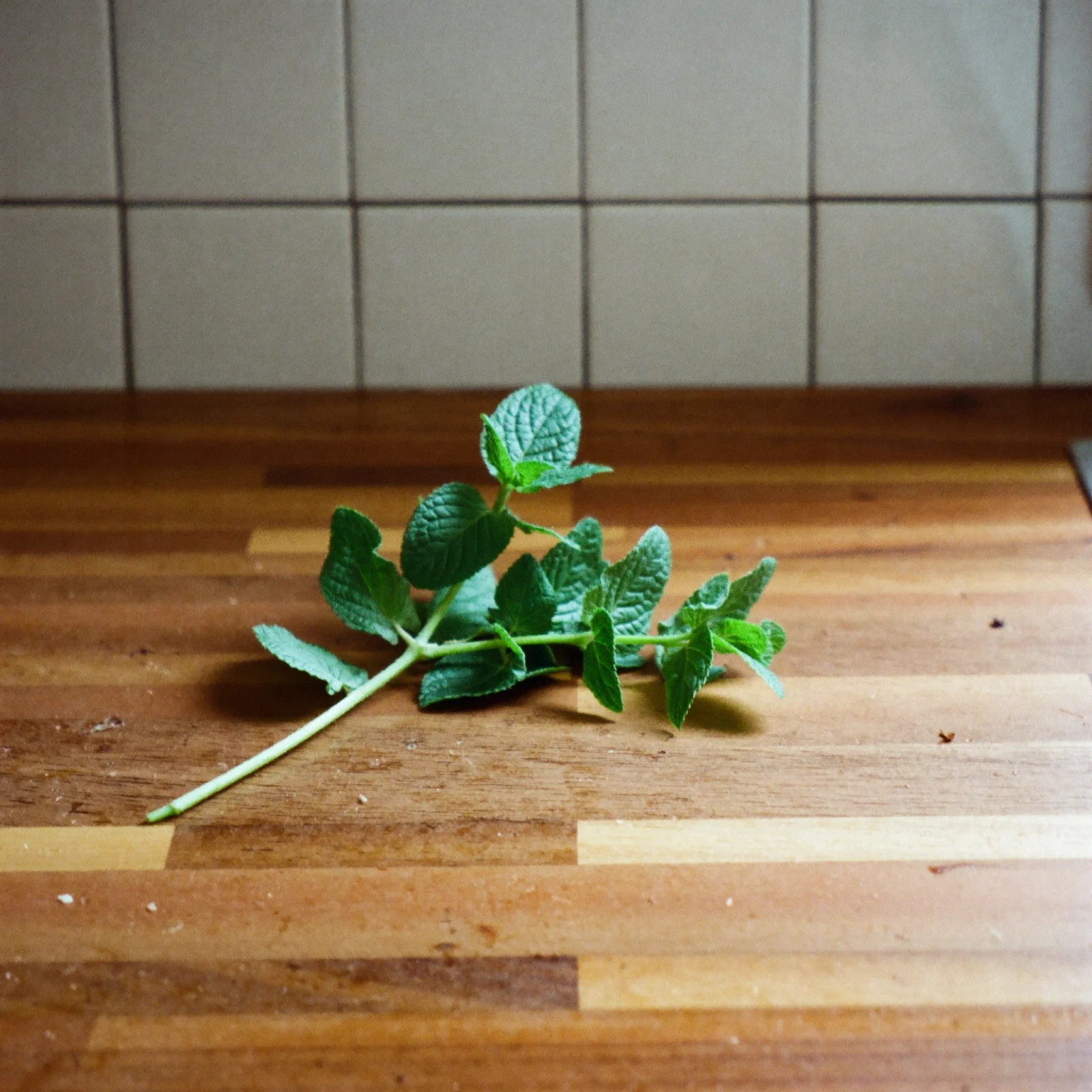
Verdict: use it
Bright green mint
Firm stems, vivid green leaves, and a strong smell when you brush a hand over them. That is the condition Purdue Extension FoodLink tells you to buy, since it asks for vibrant green leaves. So use it for anything, including the garnish you were saving it for.
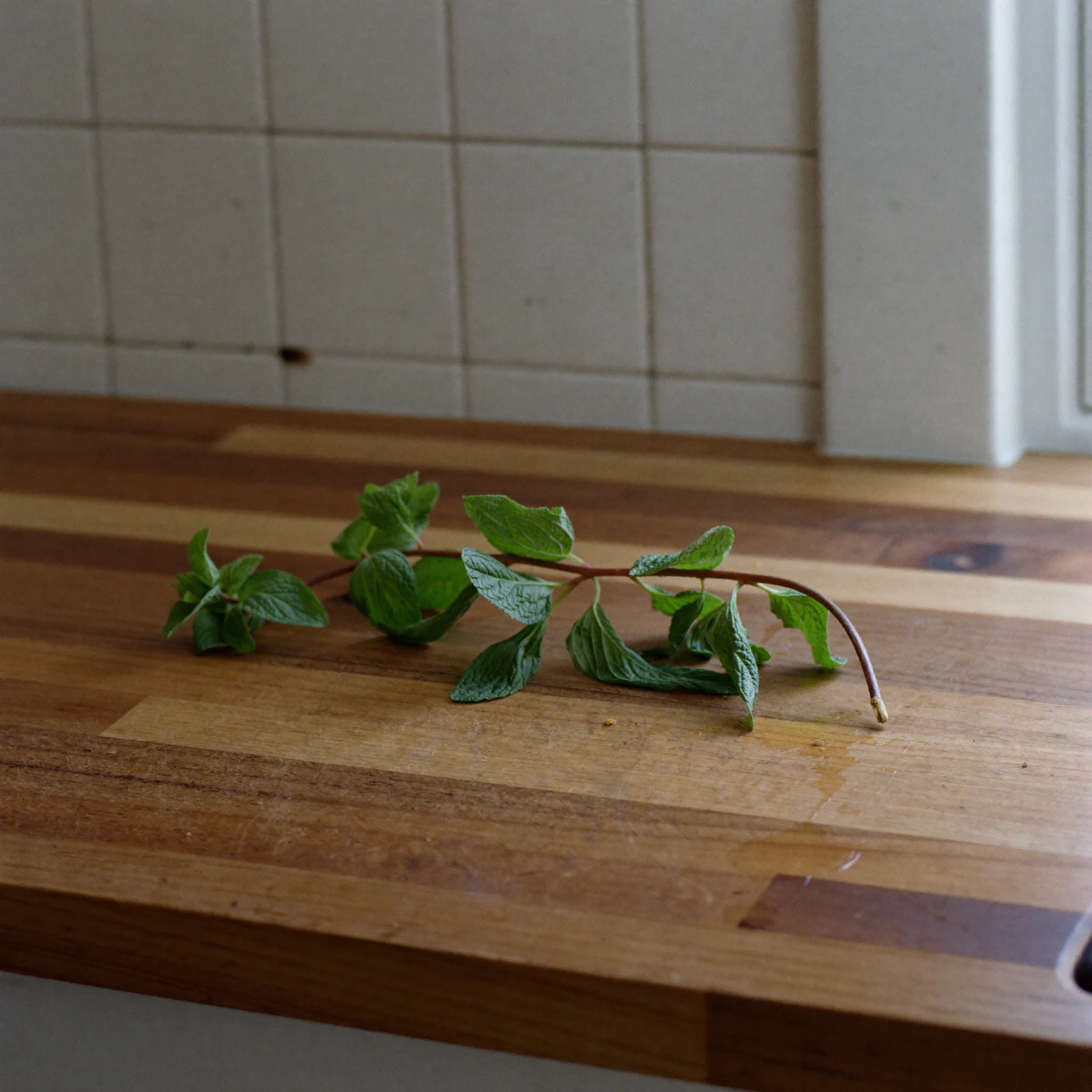
Verdict: use it today
Wilted mint
Soft, drooping leaves that are still green, with no slime and no smell. Wilting is water loss rather than spoilage. That is why NDSU Extension and Utah State University Extension stand mint in a glass of water. So put the stems in fresh water in the fridge. Purdue Extension FoodLink does tell you to avoid wilted leaves when buying, though. So cook with these rather than saving them.
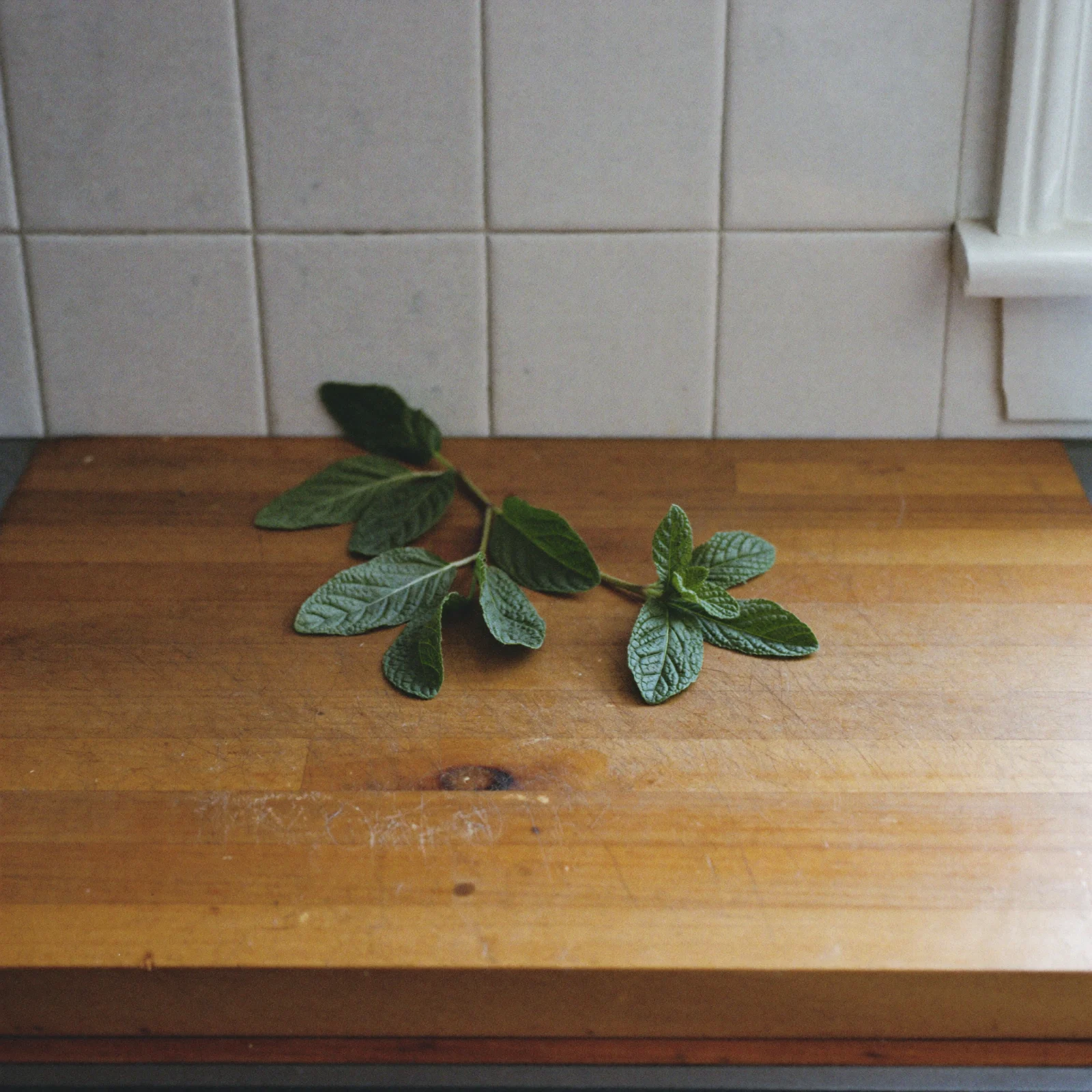
Verdict: steep it
Dull, scentless mint
Pale, flat-looking leaves that give you almost nothing when you crush one. Scent is also the thing every source protects. UMass Extension warns that sunlight, heat and excess handling will destroy herb oils. The National Center for Home Food Preservation stores dried herbs in a cool, dark area to protect fragrance. So the aroma is the test here. A bunch with none left is worth steeping in a pot of tea, rather than scattering over a plate.
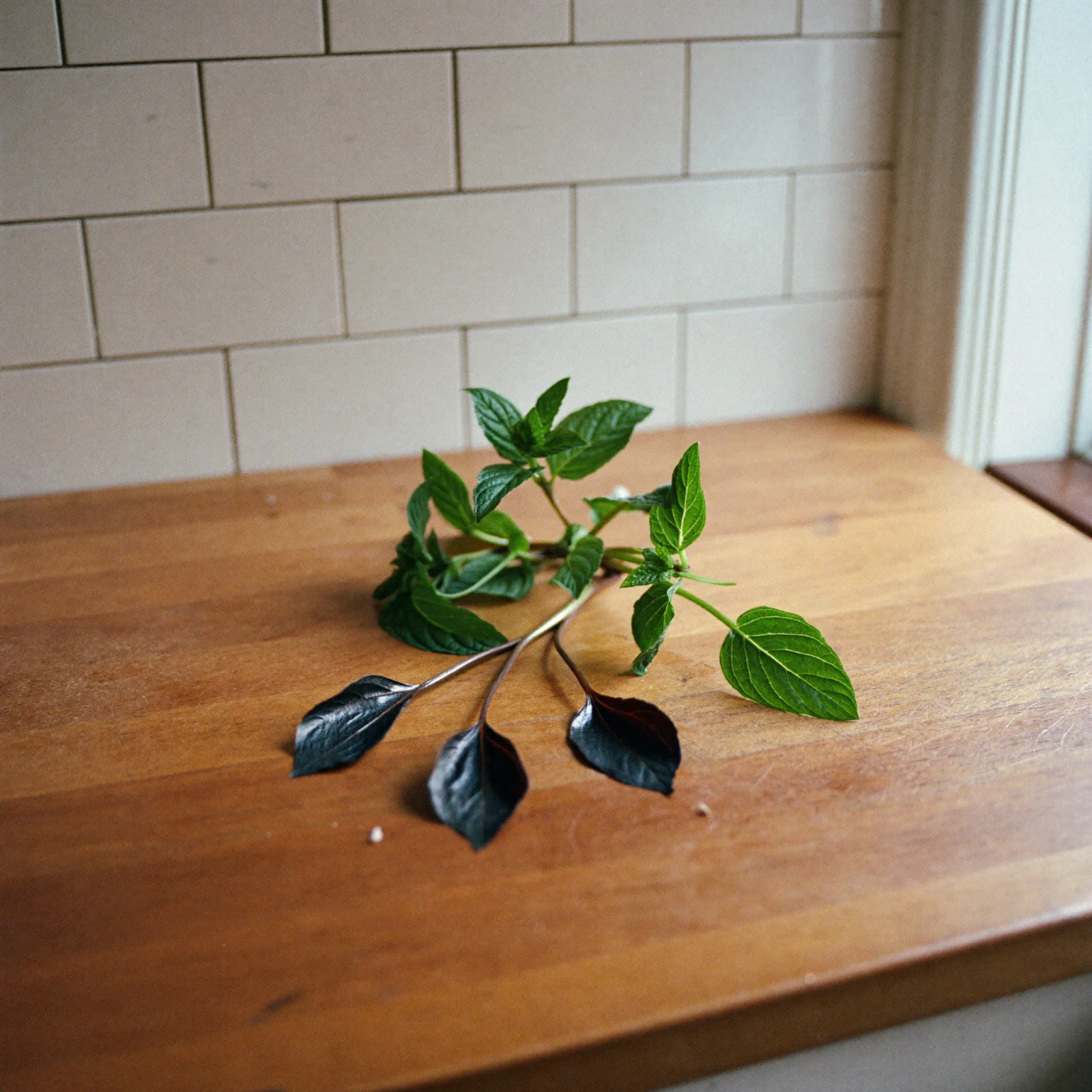
Verdict: pick out the bad leaves
Blackened mint leaves
A handful of leaves gone dark and limp, in a bunch that is otherwise green. No source we opened names blackened mint, so we are not going to explain the chemistry. What they do give is the instruction. The National Center for Home Food Preservation discards bruised, soiled or imperfect leaves before the rest goes into storage. So pull the dark ones out. Then use or dry the remainder sooner than you planned.
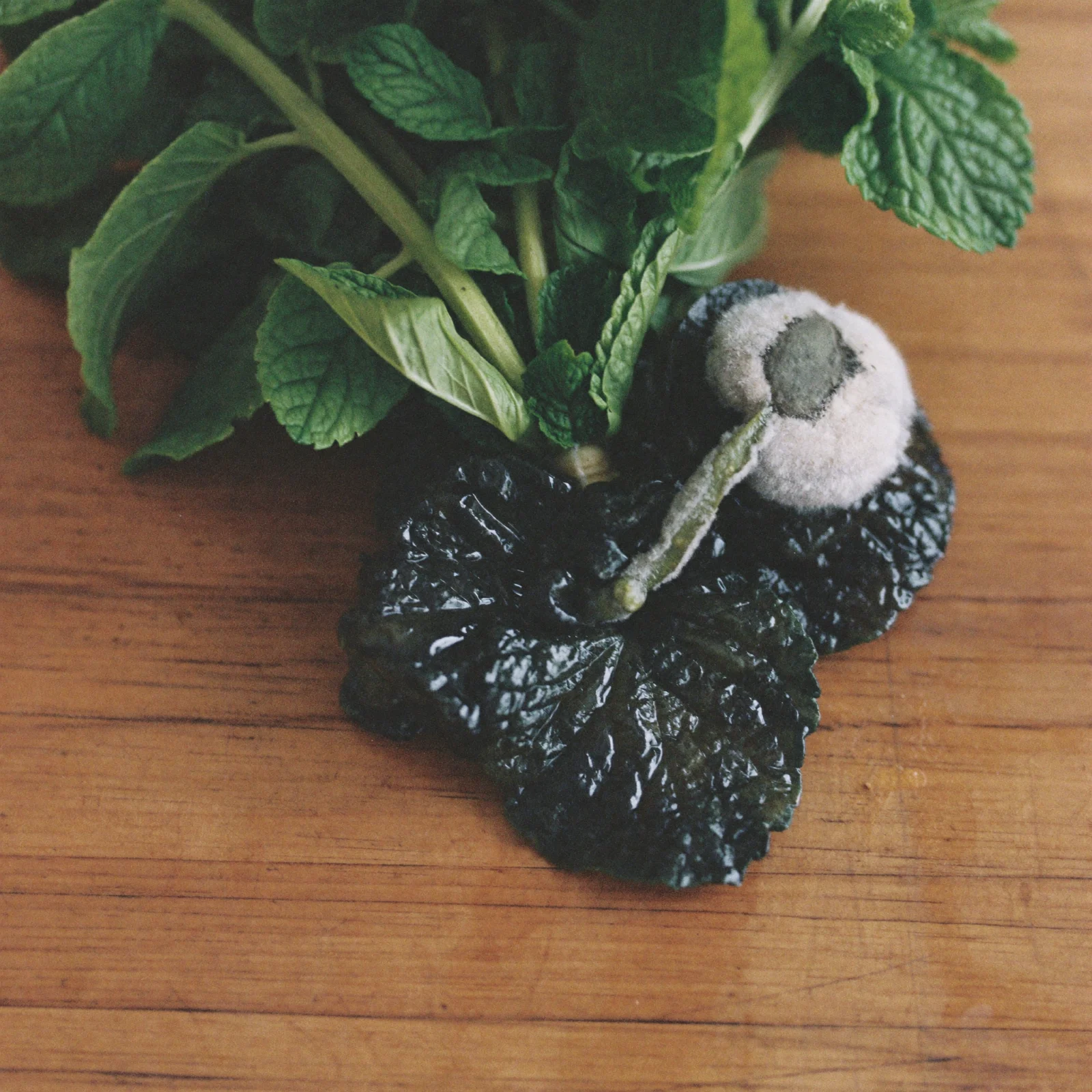
Verdict: throw it out
Slimy or moldy mint
Wet, stringy leaves that cling together, or anything fuzzy on the leaves or stems. UConn Extension puts soft produce in the discard-whole group, alongside strawberries and tomatoes. Firm produce is the group where you cut an inch around and below. It also warns that some molds produce toxins that can cause illness. If you cannot identify the mold, it says, err on the side of caution and discard the food. The National Center for Home Food Preservation explains how mint gets there, since tender-leaf herbs carry high moisture. So bin the bunch. Then do not cut the rest with the same knife.
Does dried mint go bad?
Dried mint fades rather than spoils. The published shelf lives run from 6 months to a year. Utah State University Extension gives it up to 1 year in an airtight container. UMass Extension agrees in rounder terms, since carefully stored herbs keep their fragrance for about a year. NDSU's food storage chart is stricter, because it gives dried herbs 6 months. The same chart gives ground spices 2 to 3 years, and whole spices 3 to 4 years. It also tells you how to settle it: check the aroma, and replace the jar if it has faded. Keep it airtight, dry and out of sunlight and heat, as NDSU asks. The nutmeg guide asks for the same, and for the same reason.
Mint substitutes
Out of fresh mint, or did the bunch turn slimy at the back of the fridge? Then one of these will stand in.
Substitute
Works best in
What changes
Dried mint
Tea, rubs and cooked dishes
Utah State gives it up to a year in an airtight jar.
Lemon balm
Tea and fruit
Another tender-leaf herb, so the National Center dries it the same way.
Basil
Salads and dressings
Also tender-leaf, so it wilts and molds on the same schedule.
Parsley
Garnish and grain salads
Clemson gives it 2 to 3 weeks in the fridge, far longer than mint.
Mistakes people make when they store mint
These are the ways people store mint that cost them the most. Each one has a quick fix, though.
Putting it away wet. NDSU Extension rinses the stems and then pats them dry with paper towels, because the drying is half the instruction.
Never changing the water in the glass. Clemson Cooperative Extension changes it every 3 days for parsley, so mint in a glass asks for the same.
Drying mint in the sun. The National Center for Home Food Preservation does not recommend sun drying, since herbs can lose flavor and color.
Drying it too hot. UMass Extension puts the ceiling at 110 degrees F, above which the essential oils are destroyed. NDSU's oven method sits at 100 degrees F.
Drying a thick bunch in a damp room. The National Center warns that tender-leaf herbs such as mint will mold if they are not dried quickly.
Picking the mold off and keeping the rest. UConn Extension discards soft produce whole, and it says not to cross contaminate with the knife.
Leaving the dried jar above the cooker. NDSU stores herbs in airtight containers in dry places away from sunlight and heat.
Sources
Field to Fork: Mint!, Julie Garden-Robinson and Tom Kalb, NDSU Extension FN1937, reviewed January 2025, on one week in water or plastic, rinsing and patting dry, freezing, and oven drying at 100 degrees F.
Mint, Purdue Extension FoodLink, on vibrant green leaves, avoiding brown or wilted ones, a moist paper towel in a zip-top bag for several days, and spearmint against peppermint.
Herbs, National Center for Home Food Preservation, University of Georgia, on mints being tender-leaf herbs that mold if not dried quickly, paper-bag drying, dehydrator temperatures of 95 to 115 degrees F, and discarding bruised leaves.
Mint, Illinois Extension, on bunches in a glass of water keeping 3 to 7 days, dry leaves wrapped in plastic keeping about one week, and new growth being the most flavorful.
Mint in the Garden, Kristie Buckland and Dan Drost, Utah State University Extension, May 2020, on about a week in water, individual leaves not freezing well, ice cube trays, and dried mint keeping up to 1 year.
Preserving Herbs, UMass Extension fact sheet FS15, on mint air drying well at 75 to 110 degrees F over 3 to 8 days, oils destroyed above 110 degrees F, and dried herbs keeping about a year.
Food Storage Guide, Julie Garden-Robinson, NDSU Extension FN579, reviewed January 2023, on fresh parsley keeping 2 to 3 days, dried herbs 6 months, and a refrigerator at 34 to 40 degrees F.
Food Storage: Refrigerator and Freezer, Clemson Cooperative Extension HGIC 3522, revised March 2020, on cilantro and parsley keeping 2 to 3 weeks, changing parsley water every 3 days, and 34 to 40 degrees F.
Handling Food with Mold, UConn Extension EXT063, April 2024, on discarding moldy soft produce whole, cutting an inch around and below mold on firm produce, and not cross contaminating with the knife.
Storage times and safety advice on this page come from the sources above. Food safety depends on conditions I cannot see, so read the Disclaimer, and if in doubt, throw it out.
Other ingredient guides
Browse all guides



Share this guide
Never miss a guide
New ingredient guides when they go up, plus one storage tip worth knowing. Anything sponsored is labelled.

Emilly White