
A few hours
Warmth browns the berries and costs vitamin C
1 to 3 days
Unwashed, in the coldest part of the fridge
8 to 12 months
Best quality, at 0°F
The short version: to store strawberries well, sort out any bad ones, keep the rest dry and unwashed in the fridge, and then wash only what you are about to eat.
Storage times from Purdue Extension, Illinois Extension and Iowa State University Extension.
On this page
How to choose strawberries that store well
Strawberries do not get better after picking, so the pack you choose is as good as they will ever be. Turn it over and look at the bottom before you buy.
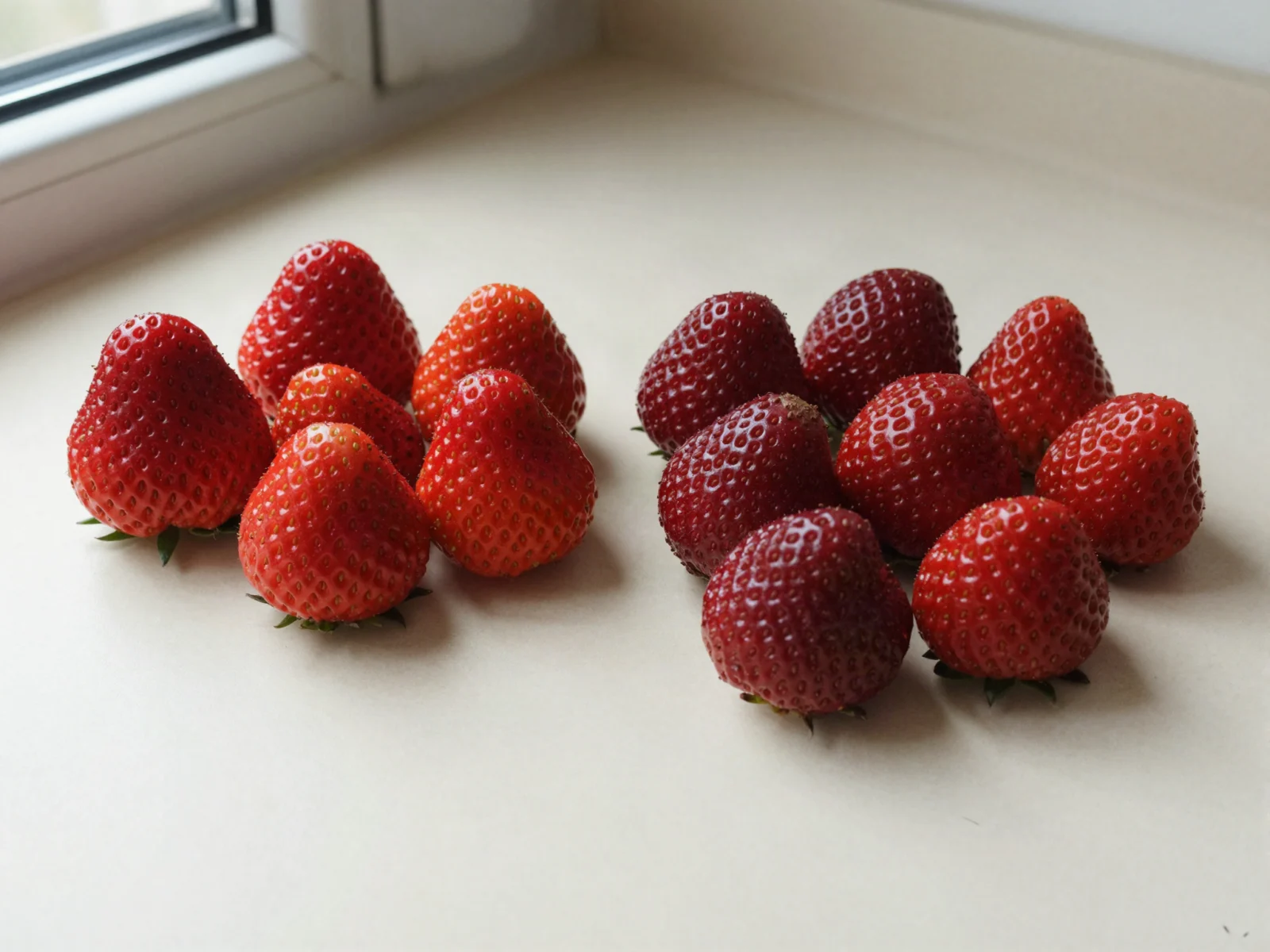
Bright red, firm strawberries compared to a group of darker, older strawberries.
Bright red and shiny. In particular, look for a glossy, even red color.
Firm, not soft. Also skip packs with soft or mushy berries.
Green caps attached. The caps should still be on the berries and still green.
No mold anywhere in the pack. That is because when one berry is moldy, the spores have already spread through the package.
How to store strawberries so they last
Strawberries belong in the fridge, dry and unwashed, but even there they do not keep for long. To store strawberries so they last, sort them as soon as you get home and eat them within a few days.
How to store strawberries in the fridge
First take out any crushed or spoiled berries, so mold does not spread. Then keep the rest unwashed in the crisper drawer, either in their clamshell or in a covered container lined with paper towels to soak up moisture. Iowa State University Extension suggests all of these.
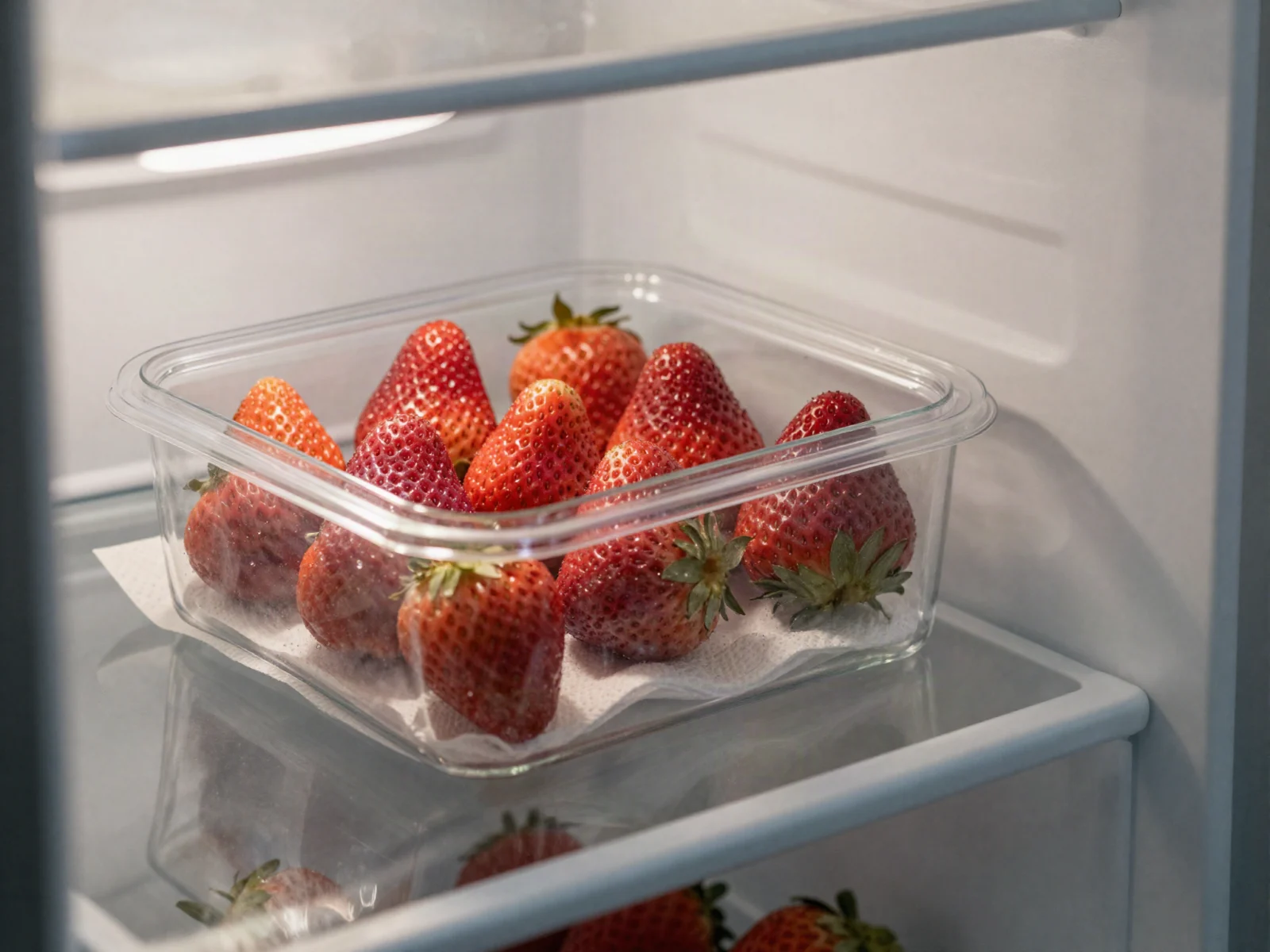
Unwashed strawberries inside a refrigerator, in a glass container lined with a paper towel so that it soaks up moisture.
What is the best way to store strawberries?
Two week-long kitchen tests agree on the basics. In The Kitchn's comparison of seven methods, berries that were simply sorted and put back in their carton lost about 15 percent to spoilage, rinsed berries on paper towels lost about 40 percent, and pre-hulled berries all spoiled. Similarly, in Taste of Home's test of five methods, unwashed berries in a closed Mason jar still looked fresh after seven days.
However, they disagree on the jar and on vinegar. The Kitchn's jar lost about 30 percent, and its best result, about 5 percent, came from berries soaked in 1 part vinegar to 3 parts water and dried in a salad spinner. In contrast, Taste of Home's vinegar-soaked berries turned dark and soft. The common thread is moisture: dry berries last, wet ones do not. So if you only do one thing, sort them and keep them dry.
How long can you store strawberries in the fridge?
Purdue Extension gives 1 to 3 days, and Illinois Extension two to three days at most. In ideal conditions, 32 to 36°F with 90 to 95 percent humidity, Iowa State University Extension says they can last about 7 days, depending on how ripe they were.
Can you store strawberries at room temperature?
Only briefly. Illinois Extension advises no more than a few hours, because warmth breaks down the red pigment, turning the berries brown, and they lose vitamin C. Left some out overnight? See food left out overnight.
Should you wash strawberries before you store them?
No. Wash them just before you eat them. Strawberries soak up water, and a University of Illinois food scientist notes they are especially prone to mold when wet. Rinse them in a colander under cold running water, then pat them dry.
Can you freeze strawberries?
Yes. In fact, freezing is the best way to store strawberries you will not eat in a few days. Frozen strawberries are at their best quality within 8 to 12 months at 0°F, according to Iowa State University Extension and UF/IFAS Extension.
How to store whole strawberries in the freezer
Choose ripe, firm, deep red berries and leave out any that are unripe or damaged, as the National Center for Home Food Preservation advises. Then wash them, remove the caps and drain them. Spread them in a single layer on a baking sheet and freeze for one to two hours, then move them to freezer bags and press out the air.
How to store strawberries in the freezer with sugar
Mix 3/4 cup sugar into 1 quart of strawberries, whole, sliced or crushed. Stir until most of the sugar dissolves, or let it stand for 15 minutes, then pack into containers with room at the top for expansion.
How to use frozen strawberries
Freezing softens strawberries, because the ice breaks their cell walls. Penn State Extension suggests eating them slightly thawed, with a few ice crystals left. Tray-frozen berries stay loose, so you can take out only what you need.
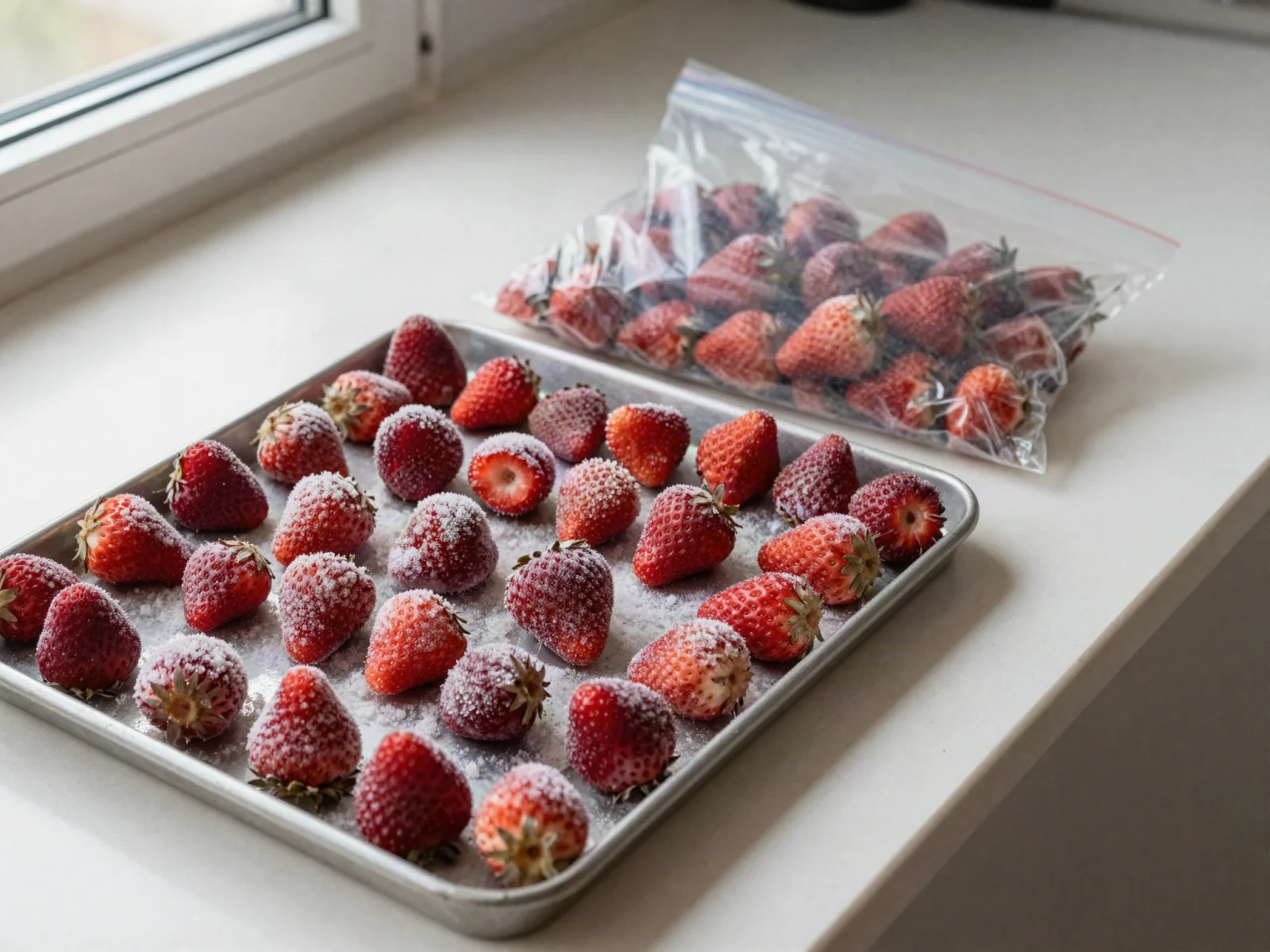
Frozen whole strawberries in a single layer on a baking sheet, as well as more in a freezer bag.
How to tell if strawberries have gone bad
However you store strawberries, they go from soft to moldy quickly. Soft, dull berries can still be eaten today. Moldy, leaking or fuzzy ones, however, cannot. Here is how to tell which ones you have.
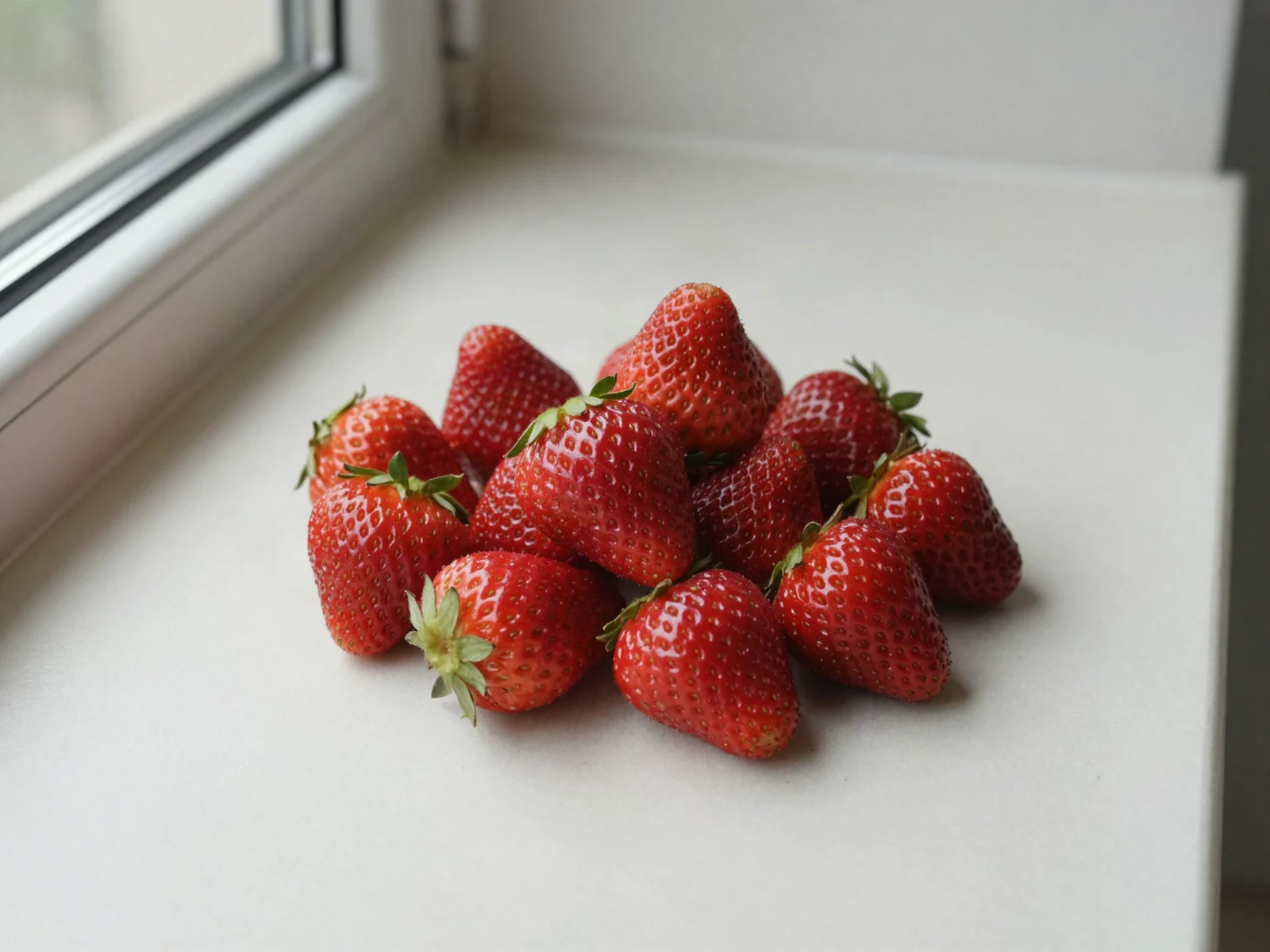
Verdict: use it
Fresh
Bright red, shiny and firm, with green caps still attached. That is also what Purdue Extension says to look for.
Verdict: use it today
Soft or dull strawberries
Berries that have lost their shine and started to soften are past their best, but soft is not the same as spoiled. Check each one for mold or leaking juice, then eat the sound ones today.
Verdict: take it out of the pack
Crushed or leaking
A crushed berry, or one leaking juice, will not keep. Iowa State University Extension advises removing crushed or spoiled berries before you refrigerate the rest, to keep mold from spreading.
Verdict: throw it out, check the rest
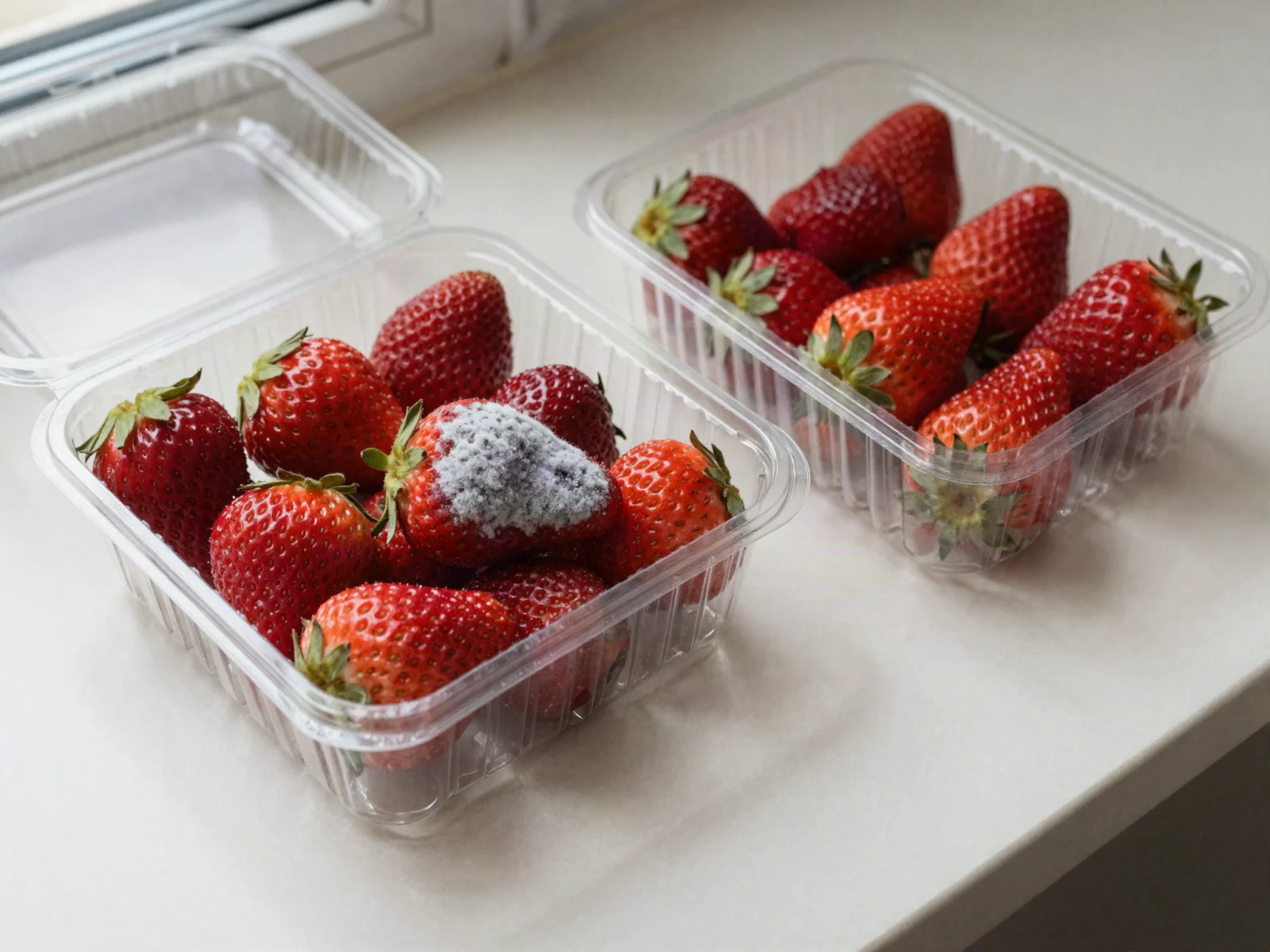
One moldy strawberry
Strawberries are soft fruit, and UConn Extension advises throwing out soft fruit with mold rather than cutting the mold away. The same rule covers spinach and other soft leaves, as well as soft fruit such as bananas. Illinois Extension warns that when one berry is moldy, the spores have already spread through the package, so check every other berry closely and throw out any that are soft, wet or marked. UConn names tomatoes in the same group.
Verdict: throw it all out
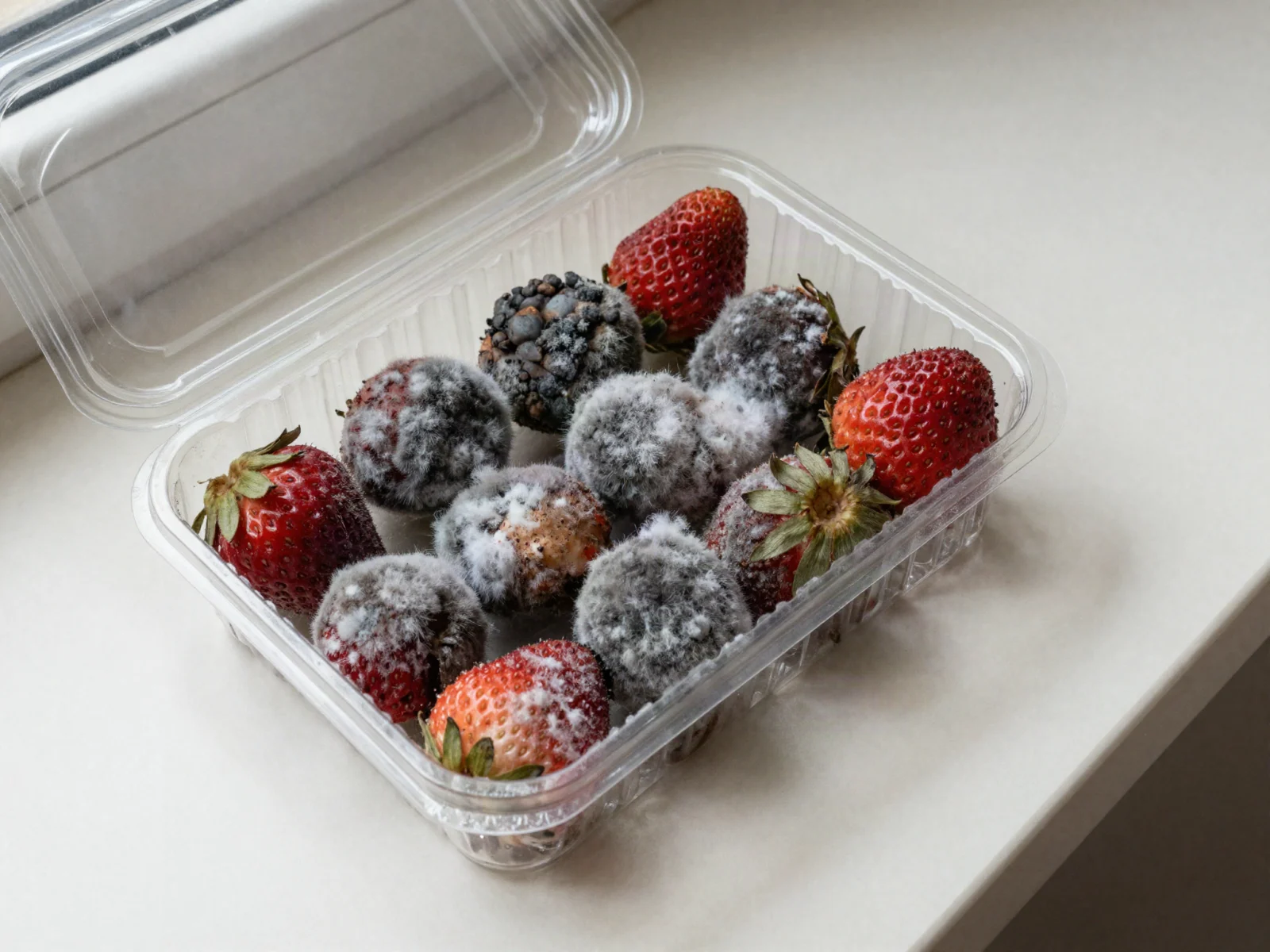
Gray fuzz spreading
Gray mold shows as a velvety gray growth, often starting near the stem end or where a berry touches a rotting one, and it can look cottony white when humidity is high, according to the UC Statewide IPM Program. Once fuzz has spread across several berries, throw out the pack.
Should you wash strawberries in vinegar before you store them?
You can, just before eating. University of Illinois food scientist Changmou Xu suggests soaking them briefly in about 1/2 cup distilled white vinegar to 1 cup water, then rinsing well under running water. Washing in vinegar before storing is where the kitchen tests split: The Kitchn's vinegar-soaked berries, dried in a salad spinner, lasted best, while Taste of Home's turned dark and soft. Iowa State University Extension notes that moisture is the main enemy of stored strawberries, so if you try it, dry the berries completely.
Strawberry substitutes
Strawberries gone before you got to them? These will fill in.
Substitute
Works best in
What changes
Frozen strawberries
Smoothies, sauces and baking
Soft once thawed. Not for fresh slices.
Raspberries or blueberries
Yogurt, cereal and fruit salads
Different flavor and texture.
Freeze-dried strawberries
Cereal, snacks and baking
Crunchy, with a concentrated flavor.
Strawberry jam
Yogurt, oatmeal and fillings
Much sweeter. Use less.
Mistakes people make when they store strawberries
These are the ways people store strawberries that cost them the most, and each one has an easy fix.
Washing them before you store them. Wet berries mold faster. Wash just before eating.
Leaving them on the counter. A few hours is the limit, so refrigerate them as soon as you can.
Leaving crushed berries in the pack. Take out crushed or spoiled berries before you refrigerate the rest.
Leaving them sitting in water. Berries left in water lose color and flavor, so rinse, drain and eat.
Freezing them in one lump. Freeze berries on a tray first so they stay loose.
Buying a pack with one moldy berry. Since the spores have already spread, check the whole pack before you buy.
Hulling them ahead of time. In The Kitchn's test, every pre-hulled berry spoiled within a week. Leave the caps on until you eat them.
Sources
Strawberry, FoodLink, Purdue Extension. Choosing strawberries, fridge storage and washing.
Handling and Care, Small Fruits for Home Gardens, Illinois Extension. Fridge storage, room temperature, washing and mold.
Containing Strawberry Freshness, AnswerLine, Iowa State University Extension and Outreach, June 2021. Containers, sorting and storage in ideal conditions.
How To Wash Strawberries To Remove Dirt and Pesticides, According to an Expert, Food Science and Human Nutrition, University of Illinois, November 2024. Washing and vinegar.
Freezing Strawberries, AnswerLine, Iowa State University Extension and Outreach, May 2019, updated May 2024. Freezer times and methods.
Freezing Strawberries, Penn State Extension, updated April 2026. Tray freezing and thawing.
Preserving Strawberries: A Guide to Freezing, UF/IFAS Extension, February 2024. Freezer times.
Freezing Strawberries, National Center for Home Food Preservation, University of Georgia. Selecting berries and freezing with sugar.
Handling Food with Mold, UConn Extension, April 2024. Mold on soft fruit.
Botrytis Rot (Gray Mold) on Strawberries, UC Statewide IPM Program. What gray mold looks like and where it starts.
I Tested 7 Methods of Storing Strawberries, Jesse Szewczyk, The Kitchn, updated May 2026. Week-long comparison of seven storage methods.
I Tested 5 Ways to Store Strawberries, Nancy Mock, Taste of Home, updated May 2026. Week-long comparison of jar, crisper tray, carton, vinegar and freezer.
Storage times and safety advice on this page come from the sources above. Food safety depends on conditions I cannot see, so read the Disclaimer, and if in doubt, throw it out.
Other ingredient guides
Browse all guides
Share this guide
Never miss a guide
New ingredient guides when they go up, plus one storage tip worth knowing. Anything sponsored is labelled.

Emilly White