

A day at most
Only while you pick through the box. Cold is what they want
1 to 2 weeks
Unwashed, in the punnet they came in, at 40°F or below
About a year
Dry and unwashed, frozen loose on a tray, then bagged
The short version: to store blueberries well, keep the punnet cold and unwashed. Then lift out anything that has collapsed. After that, rinse only the handful you are about to eat.
Storage guidance from NC State Extension, Alabama Extension and the National Center for Home Food Preservation.
On this page
How to choose blueberries that keep
Blueberries do not ripen any further once they are picked. So the punnet you choose is the best that punnet will ever be. Tip it gently and look at the bottom layer too, because one collapsed berry sets the clock for everything above it.

Firm, evenly blue and still dusty keeps. The dull creased ones set the clock.
Firm, but not hard. NC State Extension grades a ripe blueberry as firm but not hard, with even size and shape for its variety.
Blue all over, including the stem end. Mississippi State University Extension says a uniform blue colour means the berry is ready. Also look at the stem end, since it can still be green, white or rose while the rest looks blue.
Nothing bruised or split. Michigan State University Extension opens its blueberry guidance with one instruction: buy fruit that is not bruised or damaged. The FDA gives the same rule for all produce, so it is not a berry-specific worry.
Few stems and leaves in with the fruit. NC State Extension wants harvest containers relatively stem free. The National Center for Home Food Preservation also starts its freezer method by pulling out leaves, stems and bruised berries.
How to store blueberries so they last
To store blueberries so they last, get two things right: cold, and a dry skin. Cold slows everything down, while free water on the skin is what turns a firm berry into a soft one.
How to store blueberries in the fridge
Put the punnet in unwashed, and keep it cold. NC State Extension holds blueberries at 35 to 39°F with 90 to 95% relative humidity for up to 2 weeks. The UC Davis postharvest manual goes colder still, at 31 to 32°F, with the same humidity. Notice how high that humidity figure is, because it means a bone-dry box is not the target. What you are actually avoiding is liquid water on the skin, which is a different thing. NC State Extension also says to remove field heat immediately. So the punnet should not sit in a warm car or a sunny kitchen on the way home. Michigan State University Extension adds one more rule, since it asks you to keep the fruit away from raw meat and meat juices. The mushrooms guide draws the same line between humid and wet.
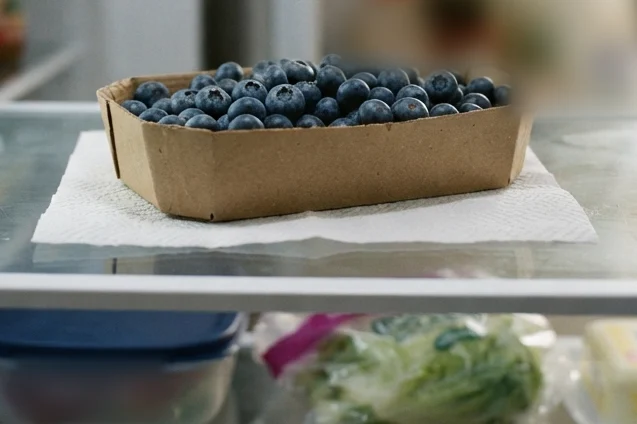
Unwashed, in the punnet, on a shelf rather than in the door.
How long can you store blueberries?
One to two weeks in the fridge, although the published figures spread wider than that. In fact NC State Extension and Alabama Extension both give up to 2 weeks. The UC Davis postharvest manual agrees on 2 weeks. It also puts blueberries in its most perishable class, at under 2 weeks of potential storage life. Clemson Cooperative Extension, however, is the outlier, at 2 to 3 days. That is a quality figure rather than a safety one, so treat it as the cautious end. So eat them inside a week and you will never have to choose between the two.
In other words, a fortnight is the ceiling and a week is the sensible plan. Berries are also on the UC Davis list of crops that one light freezing can ruin. So the coldest corner at the back of the fridge is not a bonus.
Should you store blueberries washed or unwashed?
Unwashed, and this is the one point every source agrees on. Alabama Extension stores them unwashed and rinses them just before eating. Clemson Cooperative Extension stores berries unwashed in plastic bags or containers. It then washes them gently under cool running water before use. Mississippi State University Extension gives the reason most plainly. Washing berries before refrigerating or freezing, it says, will make them break down and leak. So rinse the handful you want, then leave the rest of the box alone.
What to store blueberries in
The punnet they came in is fine, and so is a bag. Clemson Cooperative Extension names plastic bags or containers for unwashed produce. It also adds a step worth copying. Instead of washing the fruit, brush off any dirt and wipe it clean with a paper towel. Online you will often read that the container must never be airtight. No extension or federal source I could open makes that claim, however. A published humidity target of 90 to 95% also points the other way. That dusty grey film on the skin is worth protecting too. The UC Davis postharvest manual notes that food-grade waxes replace some of the natural waxes removed in washing. In other words, rinsing takes a berry's own coating off.
How to store blueberries you have already washed
Dry them properly, then eat them soon. The FDA asks you to wash produce under running water. Then dry it with a clean cloth towel or paper towel, which it says further reduces bacteria. Drying is the step people skip. Alabama Extension will let you freeze washed berries, but only once they are dried completely. The same logic holds in the fridge, so a washed punnet is no longer a two-week punnet. If a rinsed bowlful stood out all evening, the food left out overnight guide covers that.
Can you freeze blueberries?
Yes, and they are one of the easiest things in the freezer, because no blanching is involved. The National Center for Home Food Preservation calls the dry pack the easiest method. Clemson Cooperative Extension gives frozen berries 12 months.
How to store blueberries in the freezer
Freeze them dry and loose, then bag them. Michigan State University Extension is blunt about the first step. Do not wash blueberries before freezing, because washing results in a tougher skinned product. The National Center for Home Food Preservation says the same thing and gives the mechanism, since the skins will toughen if frozen wet. First pull out the leaves, stems and any bruised or immature berries. Then spread the fruit in a single layer on a shallow tray and freeze it until firm. After that, pack it promptly into bags or containers with headspace. Tray freezing is what keeps the berries loose, so you can pour out a cupful. Alabama Extension allows the other route for anyone who would rather wash first: rinse thoroughly, dry completely, then freeze.
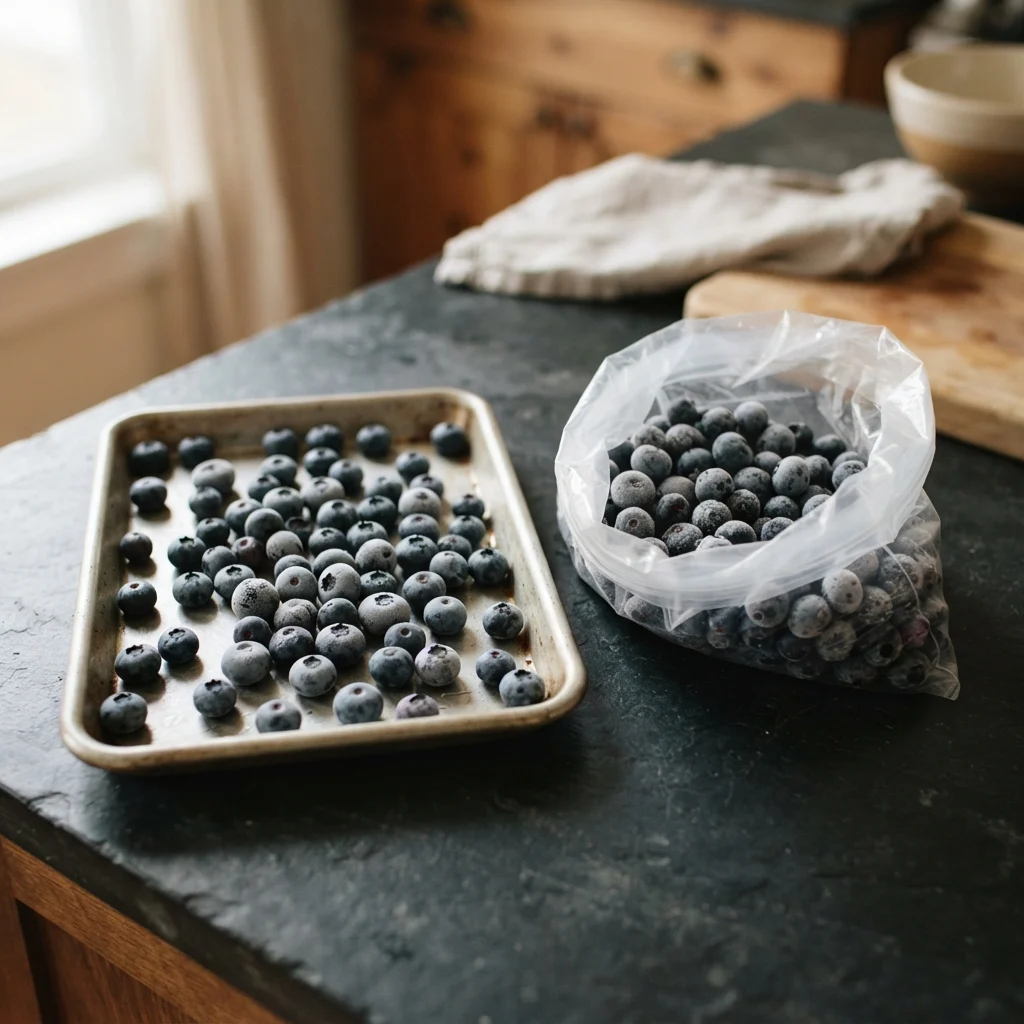
Dry, loose and in one layer. Bag them once they are firm.
Can you store blueberries in the freezer in syrup or sugar?
Yes, and what they are for decides which. Michigan State University Extension prefers a syrup pack for berries headed for cooking. It covers them with a cold 50 percent syrup and leaves half an inch of headspace. For crushed or puréed fruit it mixes 1 to 1 1/8 cups of sugar into each quart. The National Center for Home Food Preservation adds the exception, since berries bound for jam or jelly should go in unsweetened.
What happens to blueberries you store in the freezer
The skin firms up and the flesh softens, so a thawed blueberry is a cooking blueberry. Frozen whole, though, they hold their shape well enough for muffins, pancakes and smoothies. Michigan State University Extension also sets a sensible ceiling on the whole exercise. It asks you to preserve no more than the household will eat in a year.
How to tell if blueberries have gone bad
Most of a tired punnet is still good. A dull or wrinkled berry has only lost water. A soft one is still fine in a pan. So really only two things empty a box: leaking and mold. Here is what each stage means.

Verdict: use them
Firm, dusty-blue blueberries
Even blue, with a grey film on the skin, and a little resistance when you press one. NC State Extension describes the fruit it wants as firm but not hard, which is exactly this. So eat them, and leave the film where it is.
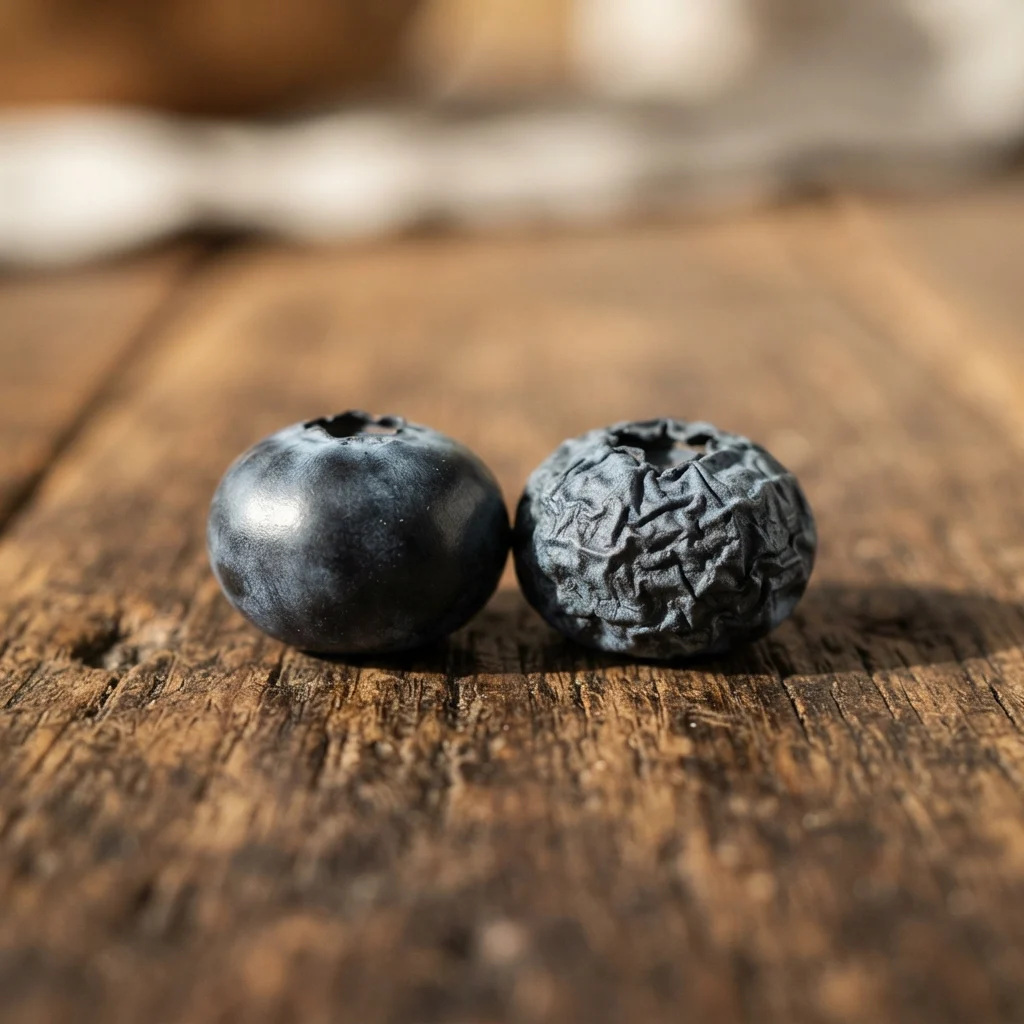
Verdict: use these first
Dull or wrinkled blueberries
A berry with slack, lightly creased skin has lost water rather than gone off. Nothing puts that water back, however, and the published humidity targets of 90 to 95% exist to slow exactly this. So use these before the firm ones, since they are the part of the box already on the way down.
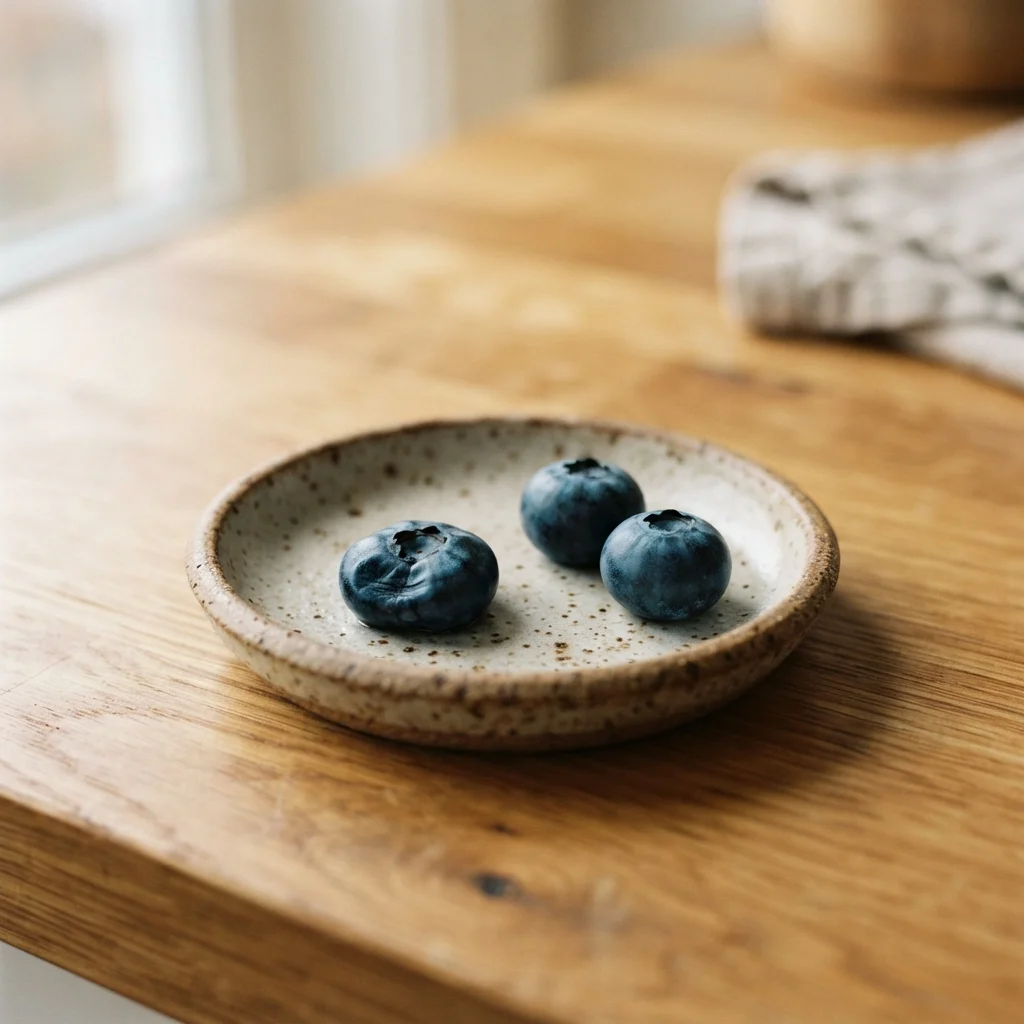
Verdict: cook with them
Soft blueberries that still hold their skin
Squashy under a finger, but not split and not wet. That is a texture problem rather than a safety one, so cook them. A soft blueberry still behaves perfectly well in a compote, a pancake or a crumble. Freeze them instead if today is busy, since freezing stops the clock anyway.
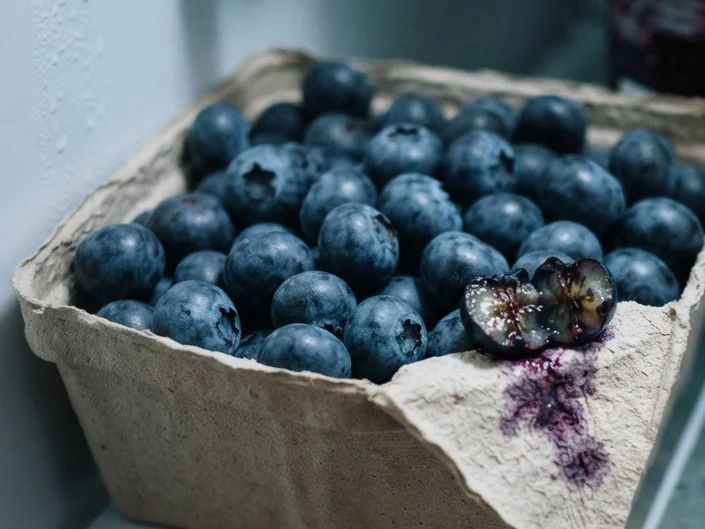
Verdict: throw them out
Leaking blueberries
Once the skin is broken and juice is wetting the box, that berry is finished. Be honest about why, though. No extension source I could open gives a smell test or a taste test for blueberries. So the skin is what you have to go on. NC State Extension names Botrytis, or grey mold, and ripe rot as blueberry postharvest diseases. It calls both of them rare, though. Neither source says what lets them in. So take the cautious route and lift the wet fruit out.
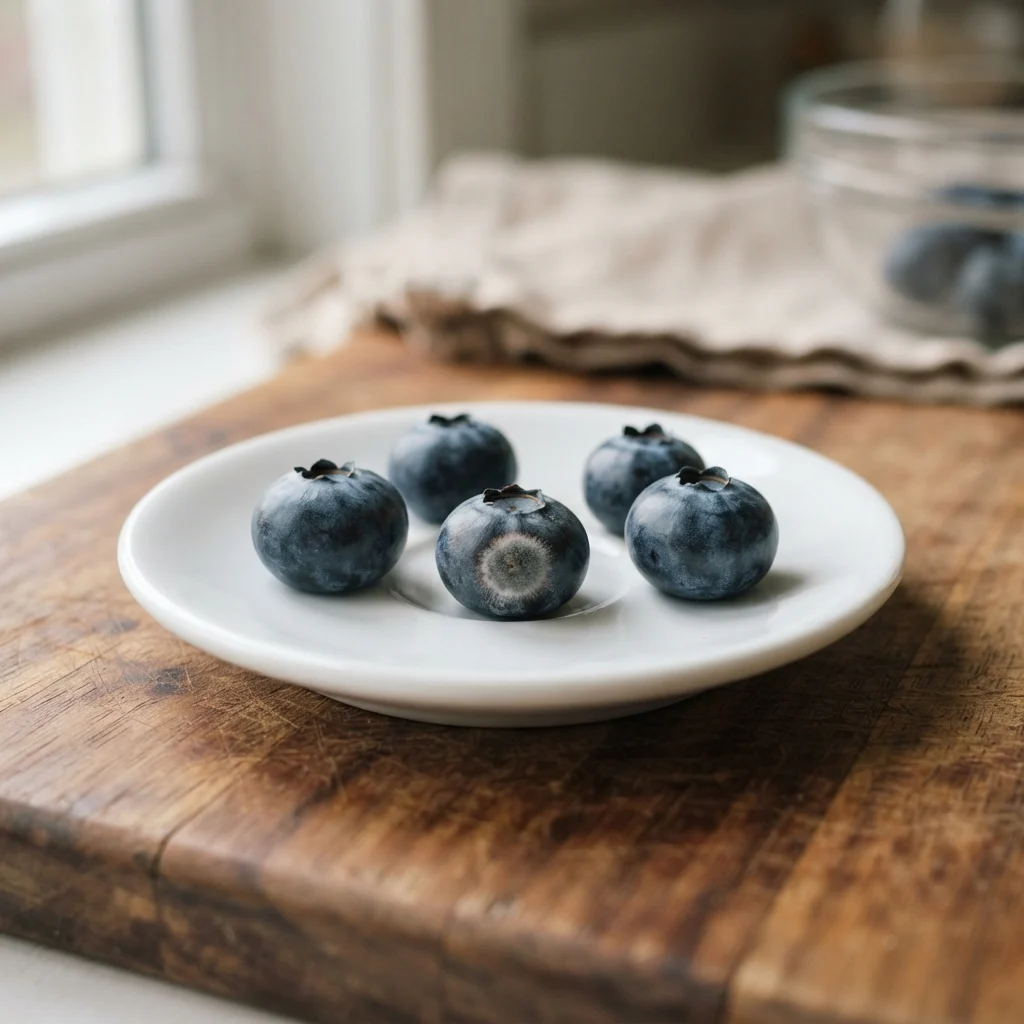
Verdict: throw it out, then sort the box
Blueberries with grey or white mold
Fuzz on a berry means that berry goes, whole. UConn Extension is explicit about the class. Soft fruits and vegetables, such as strawberries or tomatoes, should be discarded entirely if moldy. Only firm produce earns the trim of an inch around and below. So there is no cutting the fuzzy side off a blueberry. Then go through the rest of the punnet berry by berry, the way the strawberries guide does. After that, eat the sound ones soon rather than later.
Does a vinegar wash help blueberries you store in the fridge?
No source worth citing says it does. The vinegar rinse is usually three parts water to one part white vinegar. It is everywhere online, but the pages I could open that recommend it are blogs rather than research. The authorities point the other way. The FDA says washing produce with soap, detergent or commercial produce wash is not recommended. It asks for plain running water instead, followed by drying with a clean cloth or paper towel. There is also an obvious problem with the method, since a vinegar rinse wets the fruit. Mississippi State University Extension says washing berries before refrigerating makes them break down and leak. So try it on the portion you are about to eat, rather than on the punnet you are putting away.
Blueberry substitutes
Out of fresh blueberries, or did the punnet turn before you got to it? Then these will stand in.
Substitute
Works best in
What changes
Frozen blueberries
Baking, smoothies and compote
The same fruit, and they go in unthawed.
Blackberries
Crumbles and cobblers
Juicier and sharper, so taste before you sweeten.
Raspberries
Sauces and breakfast bowls
Softer, and they collapse faster in the pan.
Dried blueberries
Muffins, oats and granola
Concentrated and chewy, so use about half.
Mistakes people make when they store blueberries
These are the ways people store blueberries that cost them the most, and each one has an easy fix.
Washing the whole box on the way in from the shop. Wet berries break down and leak, so rinse only what you are about to eat.
Leaving the punnet in a warm car or a sunny kitchen. Field heat is the first thing commercial handlers take out, so get them into the fridge.
Leaving one collapsed berry in the box. It wets everything around it, so lift it out as you put the punnet away.
Rinsing them before they go into the freezer. Wet fruit freezes to a tougher skin, so freeze it dry.
Tipping them into the freezer in one bag. They set into a block, so freeze them loose on a tray first.
Cutting the mold off a blueberry. Soft fruit gets discarded whole, so there is nothing to trim.
Keeping the punnet beside raw meat. Juices cross-contaminate, so store the fruit well away from it.
Sources
Postharvest Produce Guide: Blueberries, NC State Extension Fresh Produce Safety, on ripe fruit being firm but not hard and relatively stem free, on storage at 35 to 39°F and 90 to 95% relative humidity for up to 2 weeks, on removing field heat immediately, and on Botrytis grey mold and ripe rot.
Small-Scale Postharvest Handling Practices: A Manual for Horticultural Crops, Lisa Kitinoja and Adel A. Kader, University of California Davis Postharvest Technology Center, 4th edition, July 2002 and revised November 2003, on blueberries at 31 to 32°F with 90 to 95% humidity for 2 weeks, on blueberries in the most perishable class at under 2 weeks, on berries being injured by one light freezing, and on food-grade waxes replacing natural waxes removed in washing.
Blueberries: Pick, Pack, and Preserve, Bridgette Brannon, Alabama Extension, June 2026, on blueberries not ripening after harvest, on storing them unwashed and rinsing just before use, on up to 2 weeks in the refrigerator, and on freezing washed or unwashed fruit.
Time to Get Blueberries in Your Freezer?, National Center for Home Food Preservation, University of Georgia, May 2020, on the dry pack being the easiest method, on skins toughening if frozen wet, on removing leaves, stems and bruised or immature berries, on tray freezing, and on freezing unsweetened for jam.
Using, Storing and Preserving Blueberries, Laurie Messing, Michigan State University Extension, June 2012, on buying fruit that is not bruised or damaged, on keeping berries away from raw meat and meat juices, on washing before freezing producing a tougher skinned product, on the syrup pack and the sugar quantity for crushed fruit, and on preserving no more than a year of supply.
Tips for Harvesting Blueberries, Susan Collins-Smith, Mississippi State University Extension, on uniform blue colour and the stem end still being green, white or rose, and on washing berries before refrigerating or freezing making them break down and leak.
Selecting and Storing Fruits and Vegetables, HGIC 4038, E.H. Hoyle, revised by Adair Hoover and Gayle Willford, Clemson Cooperative Extension, revised January 2013, on storing berries unwashed in plastic bags or containers, on 2 to 3 days in the refrigerator and 12 months frozen, on wiping produce clean rather than washing it, and on washing gently under cool running water before use.
Selecting and Serving Produce Safely, U.S. Food and Drug Administration, March 2024, on soap, detergent and commercial produce washes not being recommended, on washing under running water and drying with a clean towel, on choosing produce that is not bruised or damaged, and on holding perishable produce at 40°F or below.
Handling Food with Mold, Austin Goldberg, Daniela Avelino and Valerie Duffy, UConn Extension, April 2024, on discarding soft fruits and vegetables whole when moldy and trimming an inch from firm ones.
Storage times and safety advice on this page come from the sources above. Food safety depends on conditions I cannot see, so read the Disclaimer, and if in doubt, throw it out.
Other ingredient guides
Browse all guides


Share this guide
Never miss a guide
New ingredient guides when they go up, plus one storage tip worth knowing. Anything sponsored is labelled.

Emilly White