
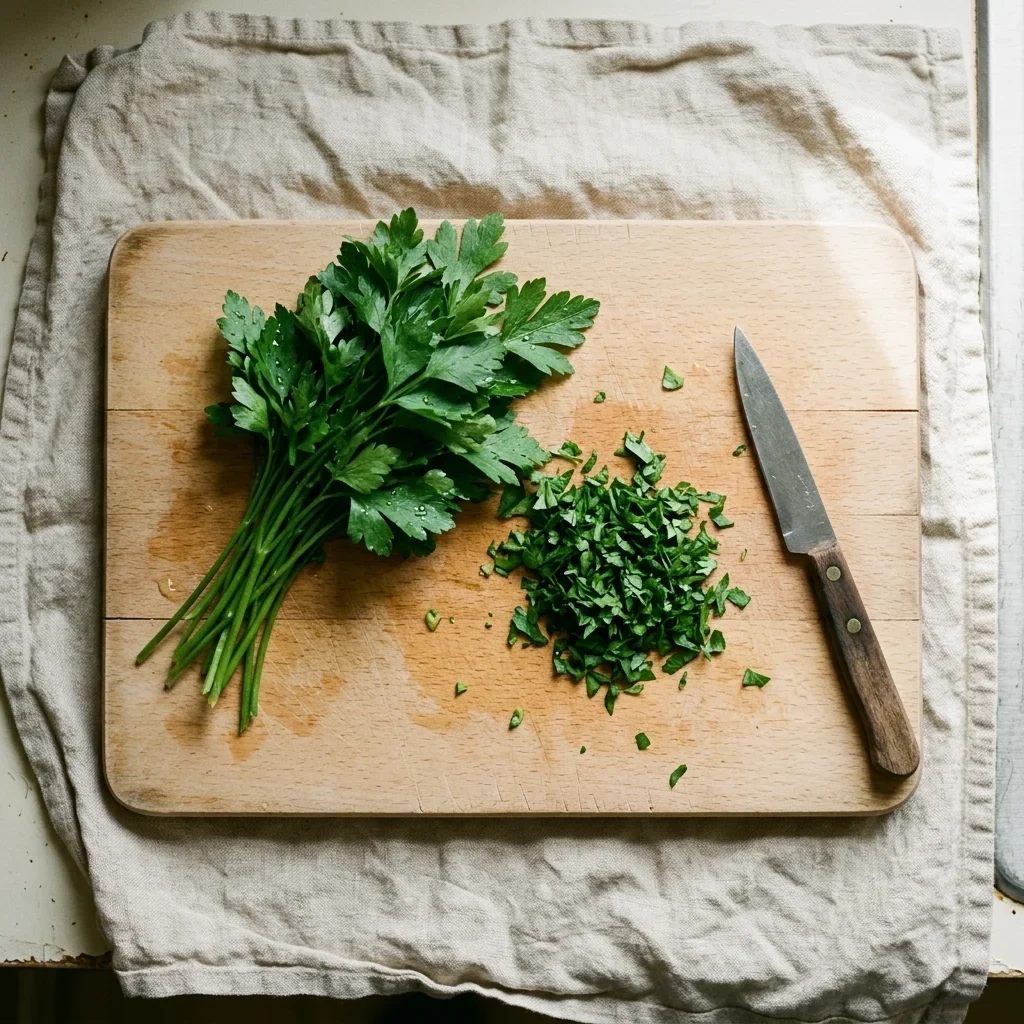
No
Parsley wants 32°F and near-saturated air, which no kitchen counter offers
About 2 weeks
Stems in water, or wrapped in a barely damp towel, away from the fruit
Yes, for cooking
No blanching needed. It thaws limp, so never as a garnish
The short version: to store parsley well, keep it cold, keep it damp and keep it away from apples. Stand the unwashed stems in a jar of water, or wrap the bunch in a barely damp towel. Also give the leaves room to breathe rather than sealing them in the shop bag. Then plan on about two weeks.
Storage guidance from Oregon State University Extension, Rutgers NJAES and Oregon Vegetables.
On this page
How to choose parsley you can store for weeks
Parsley gives itself away at the leaves rather than the stems, so look there first. Smell it too, because a bunch that already smells sour will not recover in your fridge. However carefully you treat it, the smell stays.
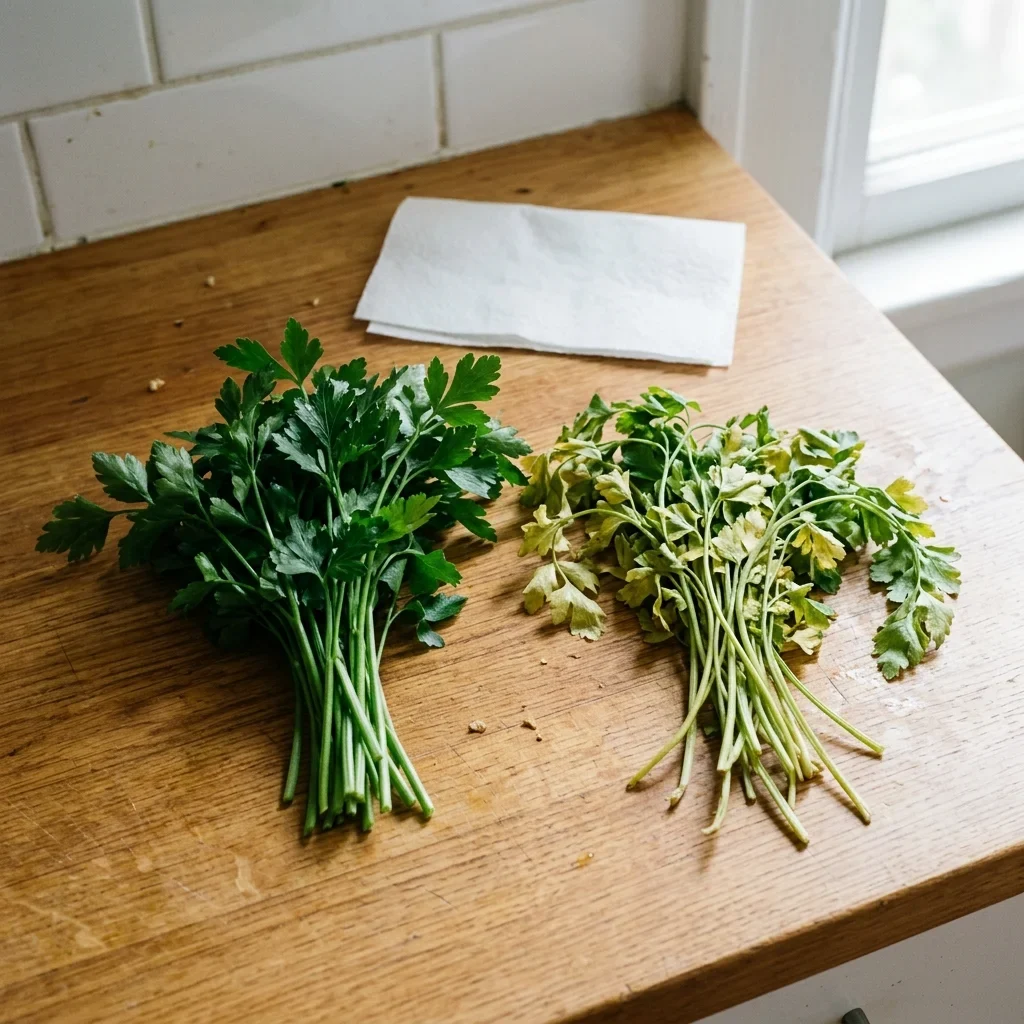
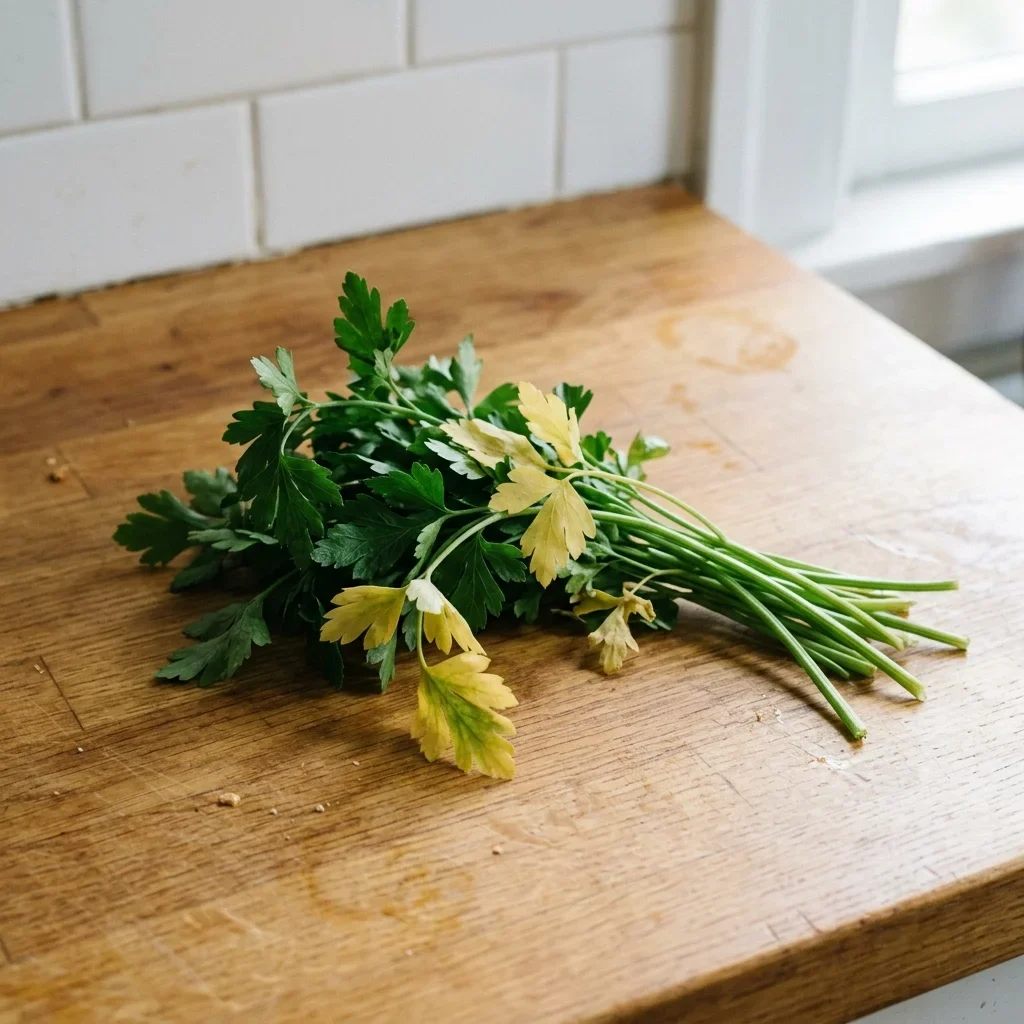
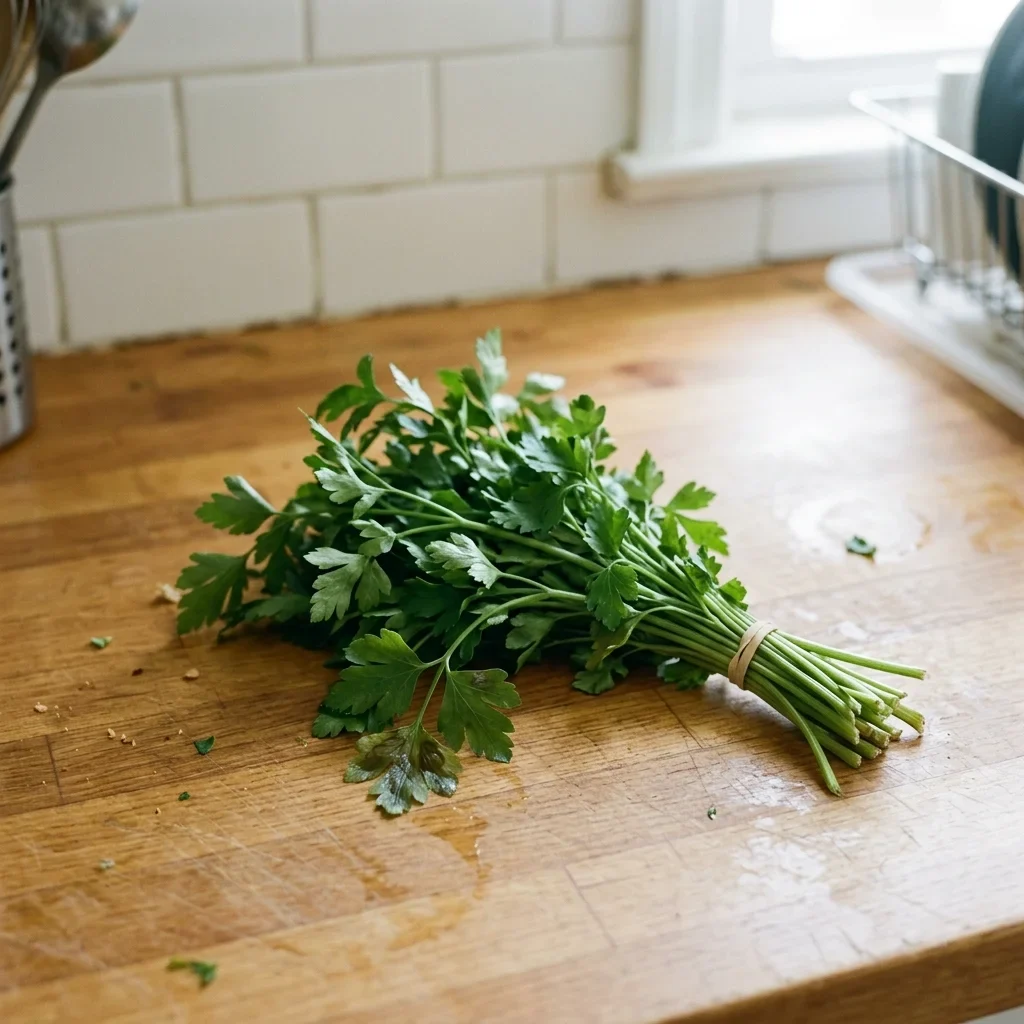
Deep green all over, stems still holding themselves up. Yellow leaves mean it has sat too long or too close to fruit.
Deep green all over. Rutgers NJAES calls parsley very sensitive to ethylene. Both Rutgers and Oregon Vegetables also note that growers use a controlled atmosphere to retain parsley's green color in storage. In other words, losing the green is what bad storage looks like.
Stems that hold themselves up. Limp stems mean the bunch has lost water, and Oregon Vegetables says high humidity is essential to prevent that desiccation.
Curly or flat-leaf, whichever you cook with. Rutgers also lists the two types side by side: Banquet and Darki for curly, Giant of Italy for flat-leaf. However, nothing in its storage advice separates them.
No crushed or bruised leaves. The FDA says to cut away damaged or bruised areas before you prepare produce. So a crushed bunch simply leaves you less to cook with.
How to store parsley so it lasts
To store parsley so it lasts, give it three things: cold, damp air and some space. Because the leaves lose water quickly and react to ethylene, the fridge is the only sensible place. But where in the fridge you put it matters as much as the wrapping.
How to store parsley in the fridge
Stand the unwashed stems in a jar with an inch or two of water. Strip off any leaves that would sit below the water line. Oregon State University Extension gives exactly that method. It says cut herbs such as parsley can last up to several weeks in the fridge this way. Do not cram the jar, though. It warns that crowded stems cause premature decay, since the leaves need room to breathe. Then drape a loose bag or a mesh produce bag over the top instead of sealing it. The same guide says a grocery plastic bag traps moisture in and causes decay.

Stems in an inch or two of water, bag loose rather than sealed, and room around the leaves.
How long can you store parsley?
Longer than most people expect, although the figure follows the temperature. Rutgers NJAES and Oregon Vegetables both put parsley at 32°F and 95 to 100% relative humidity. At that temperature it keeps 2 to 2.5 months. No home fridge is that cold or that humid, however. So Oregon State University Extension is the better guide for a kitchen. It gives up to several weeks in a glass of water. Plan on about two weeks and treat anything past that as a bonus.
In other words, the gap between two weeks and two months is a refrigeration gap rather than a parsley gap. Since the leaves slow down as they get colder, the back of the coldest shelf beats the door. Also, the crisper drawer beats the counter by a wide margin.
Should you store parsley in a jar of water or a damp towel?
Either one works, and the extension services split on it. Oregon State University Extension stands the stems in a glass of water for the long haul. It also accepts a mesh produce bag with a moistened paper towel. University of Wisconsin-Extension skips the jar entirely. It simply wraps herbs such as parsley in a slightly damp paper towel before refrigerating them. The jar asks more of you, since the water needs changing and the stems need space. The towel asks only that it stay damp rather than wet. So use the jar for a bunch you want to keep for weeks. Use the towel for one you will finish this week.
Can you store parsley next to fruit?
No, and this is where most bunches are lost. Rutgers NJAES says plainly not to store parsley with other crops that produce ethylene. That is because parsley is very sensitive to it. Apples are the biggest ethylene source in a home fridge. That is why the apples guide keeps them on a shelf of their own. Keep the parsley in the crisper and the fruit somewhere else. Then the leaves stay green noticeably longer.
How to store parsley you have already chopped
Use chopped parsley the same day if you can, since every cut edge loses water. If you must keep it, dry the parsley thoroughly first and get it cold fast. That matters because surface water is what turns chopped herbs to slime. Instead, freezing is the better answer for a big pile, and that comes next. A bunch that spent the afternoon on the counter is a different question. Food left out overnight covers that one.
Can you store parsley in the freezer?
Yes, for cooking. The NCHFP says to wash, drain and pat the herbs dry. Then wrap a few sprigs or leaves in freezer wrap and put that inside a freezer bag. It also warns that frozen herbs are usually not suitable for garnish, because the thawed product becomes limp. So freeze parsley for the pot rather than for the plate. That is the line the cilantro guide takes as well.
How to store parsley in the freezer
Wash the parsley, drain it and pat it dry as the NCHFP directs. Then wrap small portions and bag them. For cooking in measured amounts, Oregon State University Extension chops the leaves small. It packs them into ice cube trays, adds water and freezes them. Then it moves the cubes into another container once they are solid. After that a cube drops straight into a soup or a sauce. Either way no blanching is needed, since parsley is not a vegetable you are trying to hold crisp.
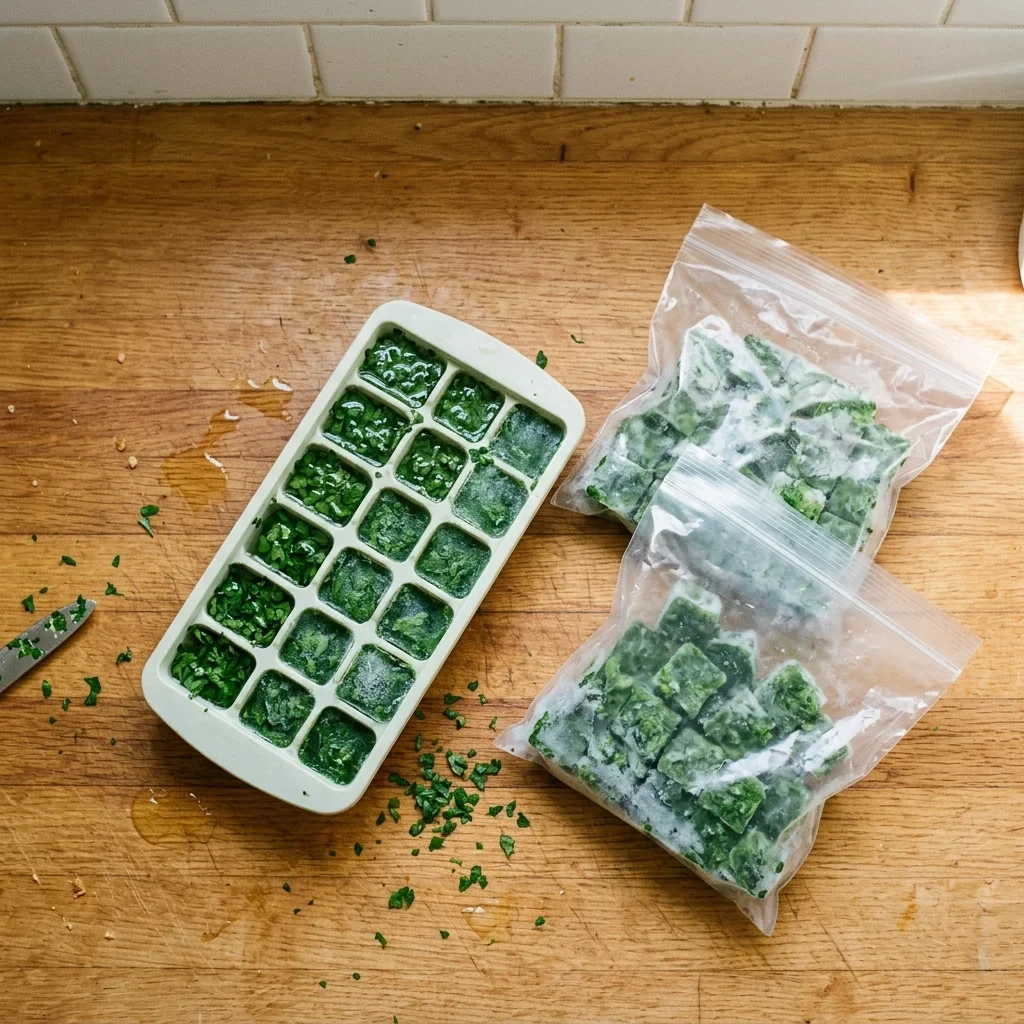
Chopped small, packed into the tray and topped with water. One cube goes straight into the pot.
Can you dry parsley instead?
Parsley dries better than most soft herbs. The NCHFP groups it with rosemary, sage and thyme as the sturdy herbs easiest to dry without a dehydrator. Tie small bundles and hang them, and dry them indoors. Indoors the color and flavor hold up better than outdoors. In a dehydrator it also asks for 95 to 115°F, or as high as 125°F in humid weather. That takes one to four hours, and it is done when the leaves crumble and the stems snap. The two sources disagree on the result, however. The NCHFP says dried herbs run 3 to 4 times stronger than fresh. So you use a quarter to a third as much. Oregon State University Extension makes parsley an exception, however, and says dill, cilantro and parsley all taste milder dried. Treat dried parsley as a different ingredient rather than a swap.
What happens to parsley you store in the freezer
It goes limp. Ice breaks the leaves open, so thawed parsley is soft and dark rather than springy. That is why the NCHFP rules frozen herbs out as a garnish. The flavor survives better than the look does. So frozen parsley works in soup, stew, sauce and rice. Keep a little fresh back if you want something to scatter on top.
How to tell if parsley has gone bad
Most of the parsley people throw out is still good. Yellow leaves and a limp bunch are storage faults rather than spoilage. Slime, blackening and a sour smell, however, are the end of the road. Here is what each stage means.
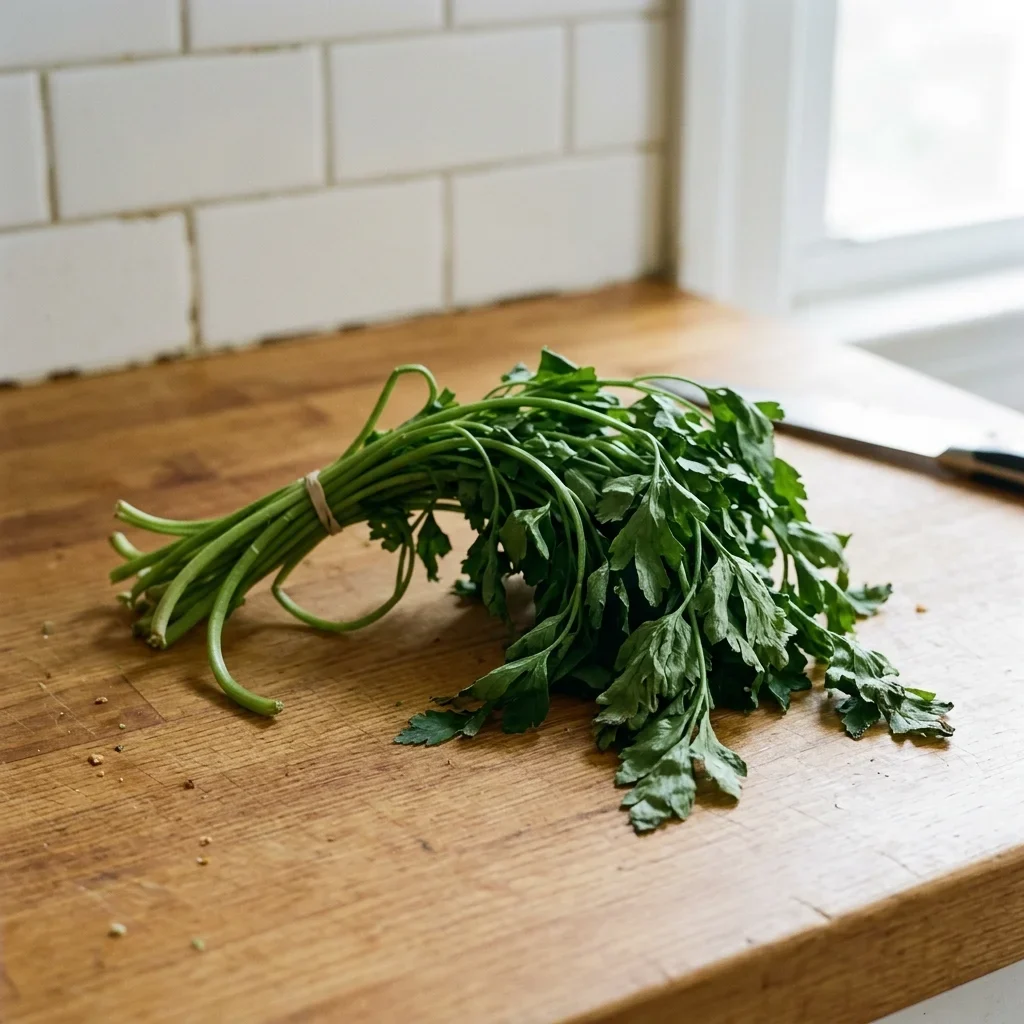
Verdict: use it
Limp parsley
Soft, drooping stems mean the bunch has lost water. Oregon Vegetables also calls that desiccation and says high humidity is essential to prevent it. Since that is water loss rather than decay, the leaves are still food. Stand the stems in cold water in the fridge. That is the jar method the extension services recommend for storage anyway. Then give it a few hours before you judge it.
Verdict: use the green
Yellowing parsley
Yellowing is a storage fault with a known cause. Rutgers NJAES calls parsley very sensitive to ethylene. The growers' answer is also a controlled atmosphere to retain the green color. So a yellow bunch has usually been sitting too close to fruit, or too long in a warm drawer. Pick the yellow leaves off and cook with the green ones. Then move whatever is left away from the fruit.
Verdict: use the rest
Parsley with dark, wet patches
A few leaves at the bottom of the bag often go dark and wet before the rest. That is because moisture collects there. Pull those out, dry the remainder and rewrap it loosely. Oregon State University Extension warns that crowding and trapped moisture cause premature decay. However, if the wet patch has gone slimy rather than merely dark, read on.

Verdict: throw it out
Slimy parsley
Slimy leaves or stems are the end. The USDA FSIS mold factsheet puts soft fruits and vegetables in the discard column rather than the trim-it column. That is because high-moisture foods can be contaminated below the surface. A slimy bunch is as soft as produce gets. So bin it instead of rinsing it. Then check whatever it was touching, which the same factsheet also asks you to do.

Verdict: throw it out
Moldy or sour-smelling parsley
Mold on parsley is a whole-bunch problem. The USDA FSIS factsheet discards soft produce outright. It also adds two instructions people skip. Do not sniff the moldy item, since that can cause respiratory trouble. Also clean the spot in the fridge where the food was stored. Mold grows at refrigerator temperatures too. That is why the strawberries guide takes the same hard line on soft produce.
Should you wash parsley before you store it?
Wash it when you are about to cook, and dry it properly whenever you do. The FDA says to rub produce gently under plain running water, with no soap and no produce wash. It also asks you to wash your hands for 20 seconds first. University of Wisconsin-Extension gives a gentler version for herbs. Put the leaves in a bowl of cold water and swirl them around. Lift them out, then repeat with fresh water until no dirt settles. After that, dry the leaves. Dry is the operative word in both, because no source here tells you to store parsley wet. Water sitting on the leaves is what turns a bunch slimy in the drawer.
Parsley substitutes
Out of parsley, or did the bunch go slimy before you got to it? Then these will cover most of what it does.
Substitute
Works best in
What changes
Cilantro
Salsas, curries and rice
Stronger and more divisive, but it keeps the same way.
Celery leaves
Stocks, soups and stuffing
Darker and a little bitter, and free with the bunch.
Dried parsley
Long-cooked dishes
Milder rather than stronger, so add it early.
Chives or green onion tops
Garnish and potatoes
Oniony rather than grassy, with the same fresh green.
Mistakes people make when they store parsley
These are the ways people store parsley that cost them the most, and each one has a quick fix.
Keeping it beside the apples. Rutgers NJAES says parsley is very sensitive to ethylene, so move the fruit or move the herbs.
Sealing it in the shop bag. However, Oregon State University Extension says that traps moisture and causes decay. So leave the bag loose or use a mesh one.
Cramming the jar full. The same guide warns that crowded stems decay early, because the leaves need a little room to breathe.
Putting it away wet. Water on the leaves is also what turns a bunch slimy. So wash the parsley when you cook rather than when you shop.
Leaving the jar water as it is. Oregon State University Extension also adds a little lemon juice or a vitamin C tablet. So the water stays slightly acidic, which deters bacterial growth.
Binning a yellow bunch. Strip the yellow leaves and cook with the green ones instead.
Freezing it to use as a garnish. The NCHFP says frozen herbs are not suitable for that, so freeze parsley for the pot.
Sources
Five Ways to Preserve Fresh Herbs, Nicole Sanchez, Oregon State University Extension, June 2020, on the glass of water, crowding, the sealed bag, herbed ice cubes and milder dried parsley.
Parsley, Mid-Atlantic Commercial Vegetable Production Recommendations, Rutgers New Jersey Agricultural Experiment Station, 2026/2027 edition, on 32°F, 95 to 100% humidity, 2 to 2.5 months, ethylene sensitivity and the curly and flat-leaf types.
Parsley, Oregon Vegetables, Oregon State University, published July 2010, on storage temperature and humidity, desiccation, perforated bags and top ice.
Herbs (Hierbas) fact sheet, University of Wisconsin-Extension, St. Croix County, on washing herbs in a bowl of cold water and wrapping them in a slightly damp paper towel.
Drying Herbs, National Center for Home Food Preservation, University of Georgia, from So Easy to Preserve, 6th edition, 2014, on parsley as a sturdy herb, dehydrator temperatures and dried herbs being 3 to 4 times stronger.
Freezing Fresh Herbs, National Center for Home Food Preservation, University of Georgia, on washing, wrapping sprigs for the freezer and why frozen herbs are not a garnish.
7 Tips for Cleaning Fruits, Vegetables, U.S. Food and Drug Administration, on plain running water, skipping soap and produce washes, and cutting away bruised areas.
Molds on Food: Are They Dangerous?, USDA Food Safety and Inspection Service, revised September 2005, hosted by UC Davis Food Safety, on discarding soft produce, not sniffing mold and cleaning the storage spot.
Storage times and safety advice on this page come from the sources above. Food safety depends on conditions I cannot see, so read the Disclaimer, and if in doubt, throw it out.
Other ingredient guides
Browse all guides


Share this guide
Never miss a guide
New ingredient guides when they go up, plus one storage tip worth knowing. Anything sponsored is labelled.

Emilly White