
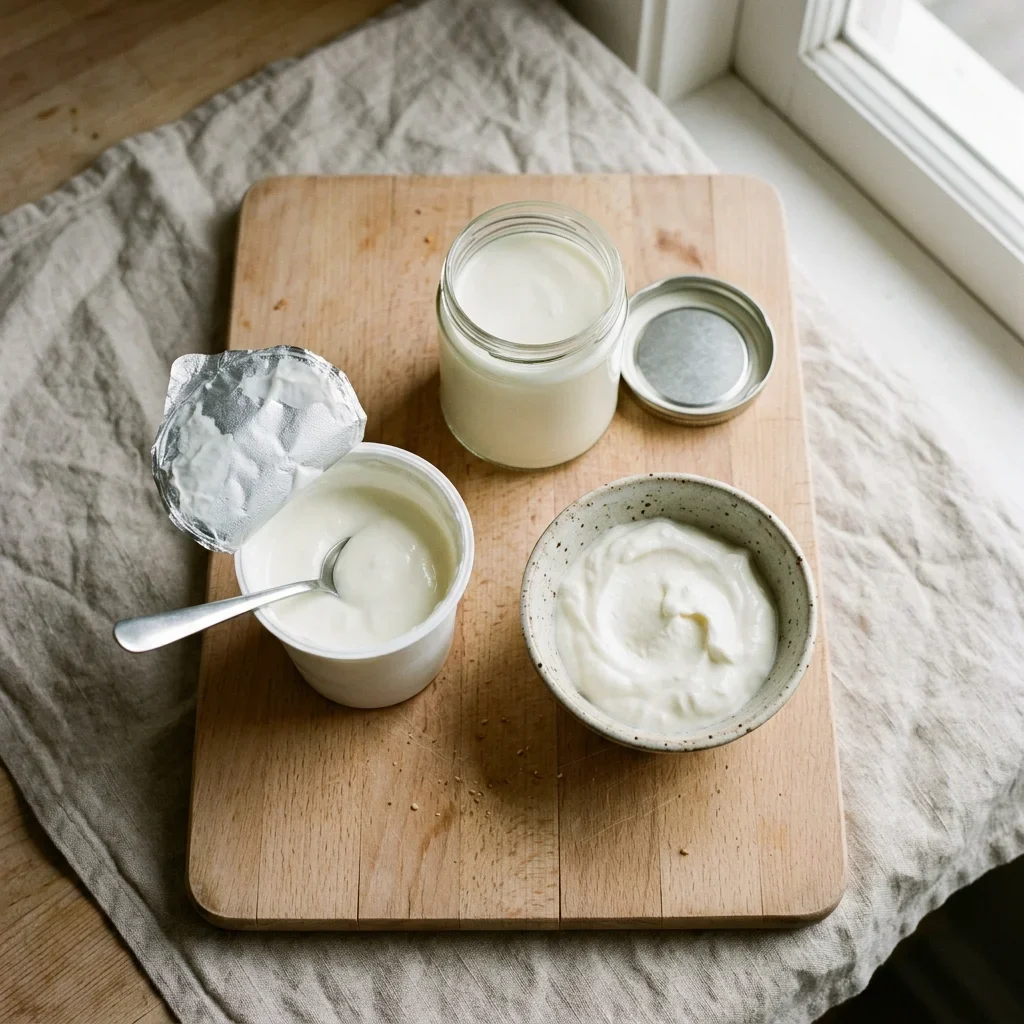
Not at all
Perishable, so it goes back in the fridge within 2 hours
1 to 2 weeks
Covered, at 34 to 40°F, on a shelf rather than the door
1 to 2 months
It turns grainy, so freeze it for cooking and smoothies
The short version: when you store yogurt, keep it covered on a cold fridge shelf at 34 to 40°F. Scoop with a clean, dry spoon, because a used one carries whatever is on it into the tub. Then eat it within about a week.
Storage times from NDSU Extension, Clemson Cooperative Extension and the USDA Food Safety and Inspection Service, plus the dairy makers' own numbers.
On this page
How to choose yogurt that will store well
Yogurt is sold cold and stays cold, so the choice is mostly about the date and the pot. Pick the size you will actually finish, since an opened tub you forget is the one that goes to waste.
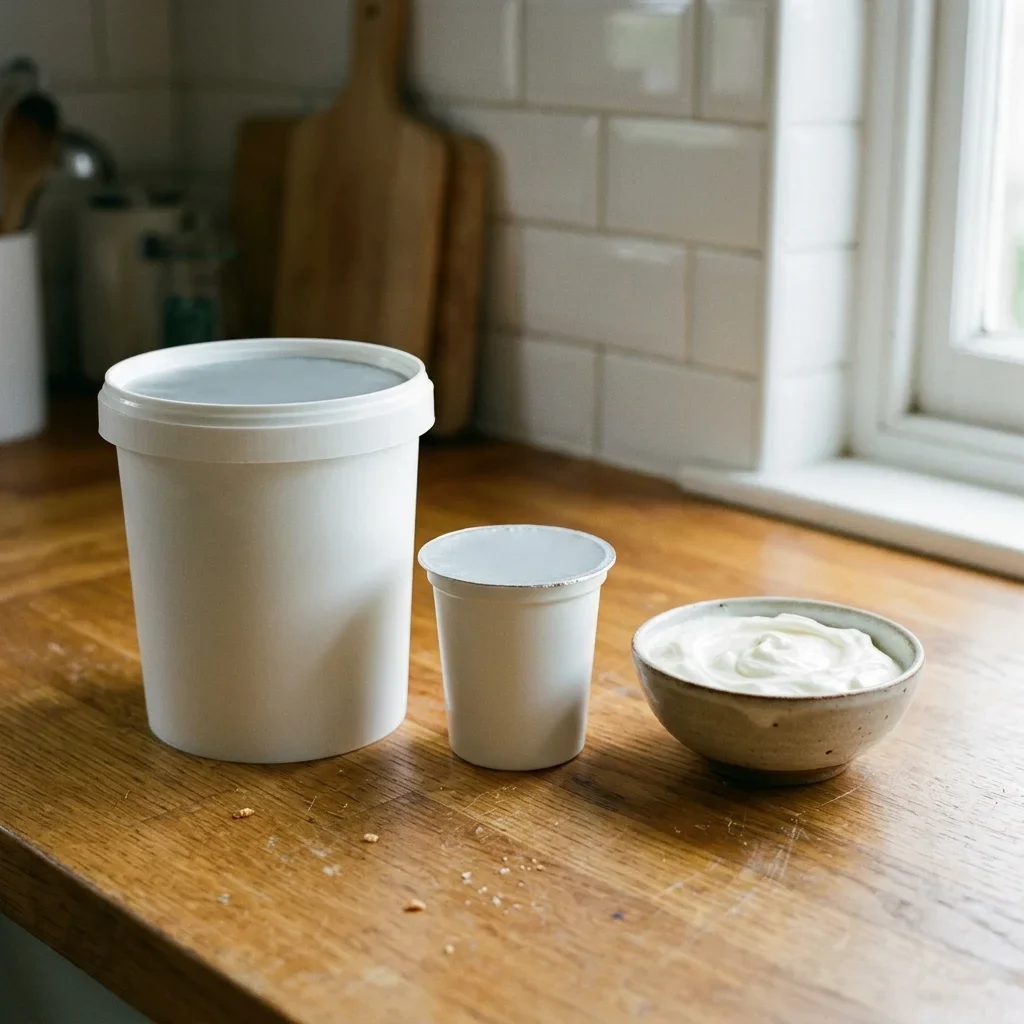
Buy the size you will finish, because an opened tub is on a one-week clock.
The furthest date on the shelf. Since University of Maine Cooperative Extension says most date labels do not indicate the safety of a food, this is about quality rather than risk. Even so, a later date buys you more good eating.
Plain or flavored, because it changes what the freezer does. NDSU Extension says flavored yogurts may be more stable because of the fruit and sugar.
A size you will finish in a week. That is because Clemson Cooperative Extension gives yogurt only 7 to 14 days in the fridge. So a family-sized tub only pays off if a family is eating it.
Greek or regular, because the two pots behave differently. In fact US Dairy describes Greek yogurt as regular yogurt strained to remove the liquid whey. That whey is the same liquid you later find pooled on a regular tub.
How to store yogurt so it lasts
To store yogurt so it lasts, keep it cold, covered and free of stray spoons. None of that is hard, but the numbers are worth knowing. In fact the sources disagree on how long an opened tub keeps.
How to store yogurt in the fridge
Keep the pot covered, and keep it cold. NDSU Extension says to keep yogurt covered and refrigerated. It puts the best fridge range at 34 to 40°F. Perishable foods above 40°F spoil rapidly, it warns, so that number is a ceiling rather than a target. So the back of a shelf beats the door. Clemson Cooperative Extension agrees on the ceiling and calls 32 to 40°F ideal. Press the lid back on properly, because NDSU asks for airtight containers or moisture-proof wrap, not a loose fold of foil.
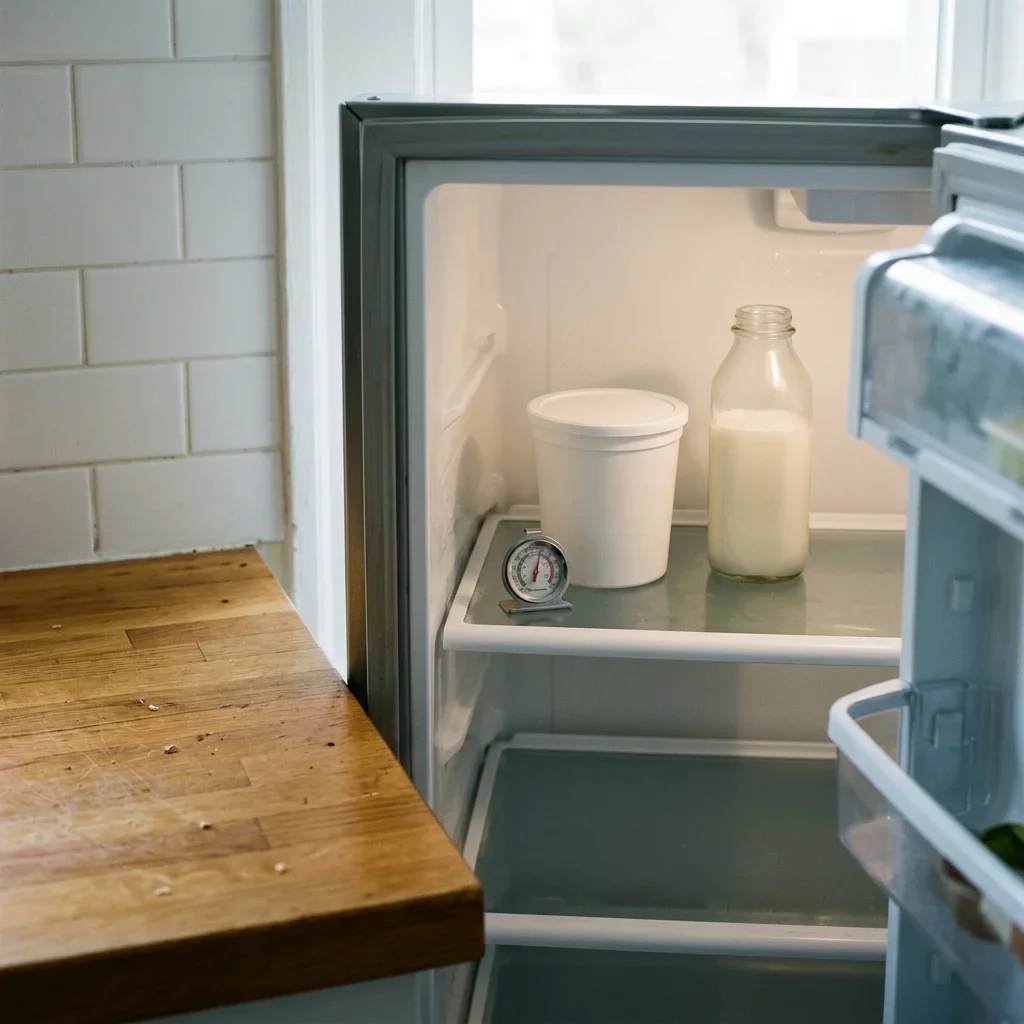
A shelf at 34 to 40°F with the lid pressed on, rather than the door.
How long can you store yogurt?
One to two weeks once it is open, though the sources spread out around that. NDSU Extension gives yogurt 1 to 2 weeks in the fridge, for example. It also says to follow the use-by date on the package, or up to two weeks after a sell-by date. Clemson Cooperative Extension gives 7 to 14 days. Stonyfield Organic, however, is much stricter about its own pots. It asks you to finish small cups and pouches within 24 hours of opening, while quarts get 7 days. Homemade yogurt is a separate case. University of Alaska Fairbanks Cooperative Extension gives it about 10 to 21 days at 40°F or lower.
So take the shorter number when they disagree, and take the number on your own pot over any of them. That spread exists because a cup you eat straight from is not the same as a sealed quart. In other words, how you treat the tub matters more than the label does.
Where in the fridge should you store yogurt?
On a shelf rather than in the door. The reason is temperature rather than habit. NDSU Extension puts the best refrigerator range at 34 to 40°F, and warns that perishable foods above 40°F spoil rapidly. Clemson Cooperative Extension sets the same 40°F ceiling. Neither of them names the door, so this is us reading across from their numbers rather than quoting a rule. So if you want the honest version, put a fridge thermometer where the yogurt sits. NDSU asks you to check temperatures with one anyway.
How to store yogurt after you open the tub
Cover it, then put it straight back, and keep used spoons out. That matters, because Stonyfield Organic ties its own numbers to yogurt that is properly refrigerated and tightly closed between uses. Watch the clock as well. The USDA Food Safety and Inspection Service says not to leave perishables out of the refrigerator more than 2 hours. That covers the tub sitting on the counter while you make breakfast. When one has sat out all night, food left out overnight covers what to do next.
How to store yogurt you made yourself
Homemade yogurt carries no best-by date, so judge the batch instead. University of Alaska Fairbanks Cooperative Extension says yogurt keeps about 10 to 21 days at 40°F or lower. It also warns that additions to the yogurt may reduce the shelf life. So stir the fruit into the bowl rather than the jar. The same page also tells you to discard any batch with visible signs of microbial growth. It says the same for any odor other than the acidic smell of fresh yogurt. A batch that fails to set goes too, because that can mean a bad culture.
Can you store yogurt in the freezer?
Yes, but only for cooking. NDSU Extension is blunt about cultured dairy. All of them lose their smooth texture when frozen. They become grainy, it says, and sometimes separate out their water. They can still be used for cooking, though.
How to store yogurt in the freezer
Freeze it in the portions you will actually use, because you only get to thaw it once. Small tubs, an ice cube tray or a freezer bag laid flat all work, while the cubes are easiest for smoothies. Leave a little headspace. NDSU Extension then gives frozen yogurt 1 to 2 months, and asks you to keep the freezer at 0°F or lower. The FDA adds the reassuring part. Freezing at 0°F keeps food safe indefinitely, so those times are about quality only. Flavored yogurt is the better bet here, since NDSU says the fruit and sugar may make it more stable.
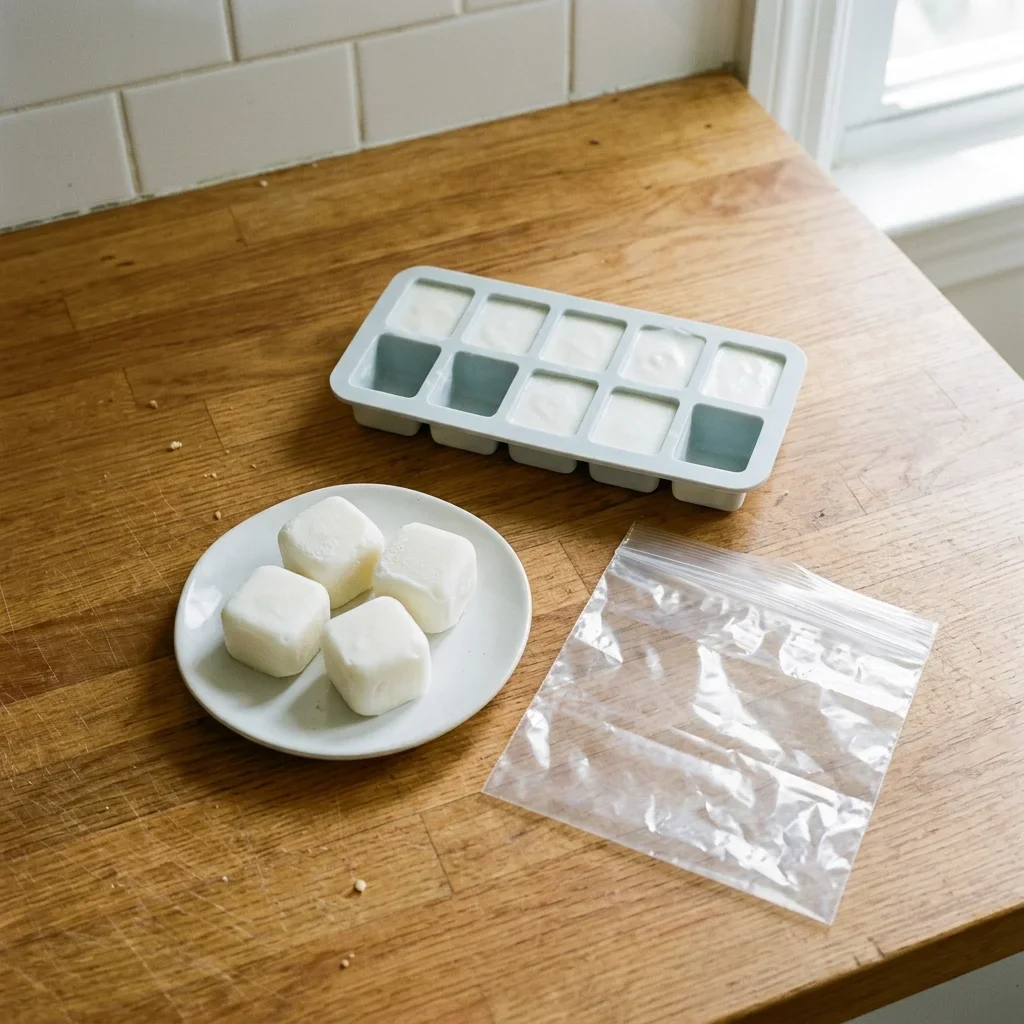
Cubes freeze in smoothie-sized portions, since you only get to thaw yogurt once.
How to thaw yogurt you store frozen
In the fridge, and expect it to look wrong. Stonyfield Organic says frozen and thawed yogurt will have a different look and texture than fresh yogurt. That is the polite version. Stir it hard or blend it, then use it in something. NDSU Extension notes it may taste more acidic when thawed. So a thawed tub suits a marinade or a smoothie better than a bowl of granola.
What happens to yogurt you store in the freezer
It goes grainy, and then some of the water comes out of it. Those are NDSU Extension's words rather than ours. The cultures are a separate question, although nobody we could open answers it. Stonyfield says plainly that it has not tested whether its cultures survive freezing. So freeze yogurt for the dairy rather than the bacteria. Cream cheese comes out of the freezer the same way. That is why its guide also sends it to the cooking pile.
How to tell if yogurt has gone bad
In fact most of what looks alarming in a yogurt pot is not. Whey on top is normal, and so is a sharper taste after a week. Mold, however, is the one that ends the tub. A swollen lid is the one nobody gives a straight answer on. Here is what each stage means.
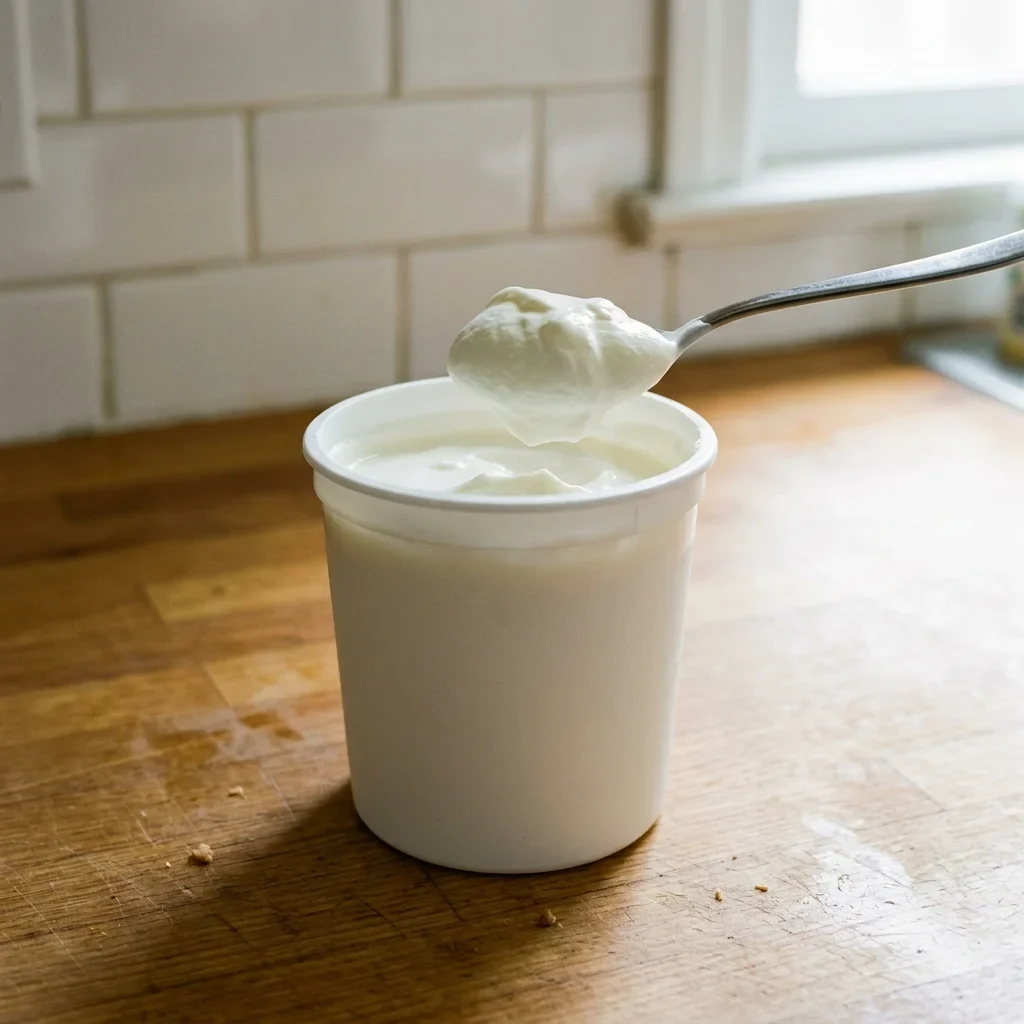
Verdict: use it
Fresh yogurt
Thick and even, with a clean acidic smell. University of Alaska Fairbanks Cooperative Extension uses that smell as its reference point. It tells you to discard yogurt with any odor other than the acidic smell of fresh yogurt. A little liquid at the surface does not change that, though.

Verdict: stir it in
Yogurt with whey pooled on top
That clear or yellowish liquid is whey, and in fact it is meant to be there. Stonyfield Organic says separated whey is normal, and that it occurs when the product has undergone a temperature change. Stir it back in, or pour it off a big tub when you want the yogurt thicker. University of Alaska Fairbanks Cooperative Extension even has a name for it, syneresis, and calls some of it natural.
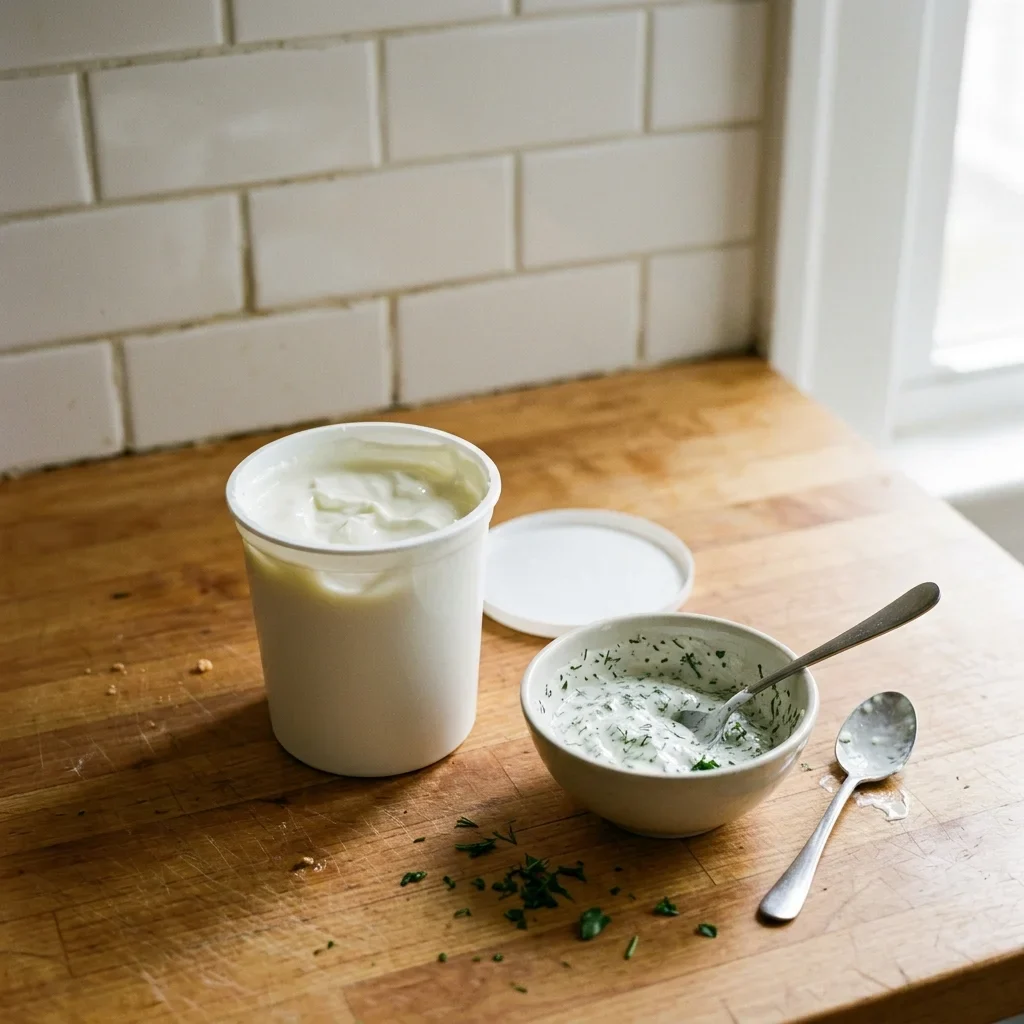
Verdict: cook with it
Yogurt that has turned sharper
A sharper taste is a quality change rather than a safety one. For example, a 2026 study in the Emirates Journal of Food and Agriculture followed two commercial yogurts for up to 49 days past the date on the pot. Taste, texture and structural integrity deteriorated first, while the microbiology held. So use a sharp tub where the sourness helps. Marinades, curries finished off the heat and soda bread all want it.
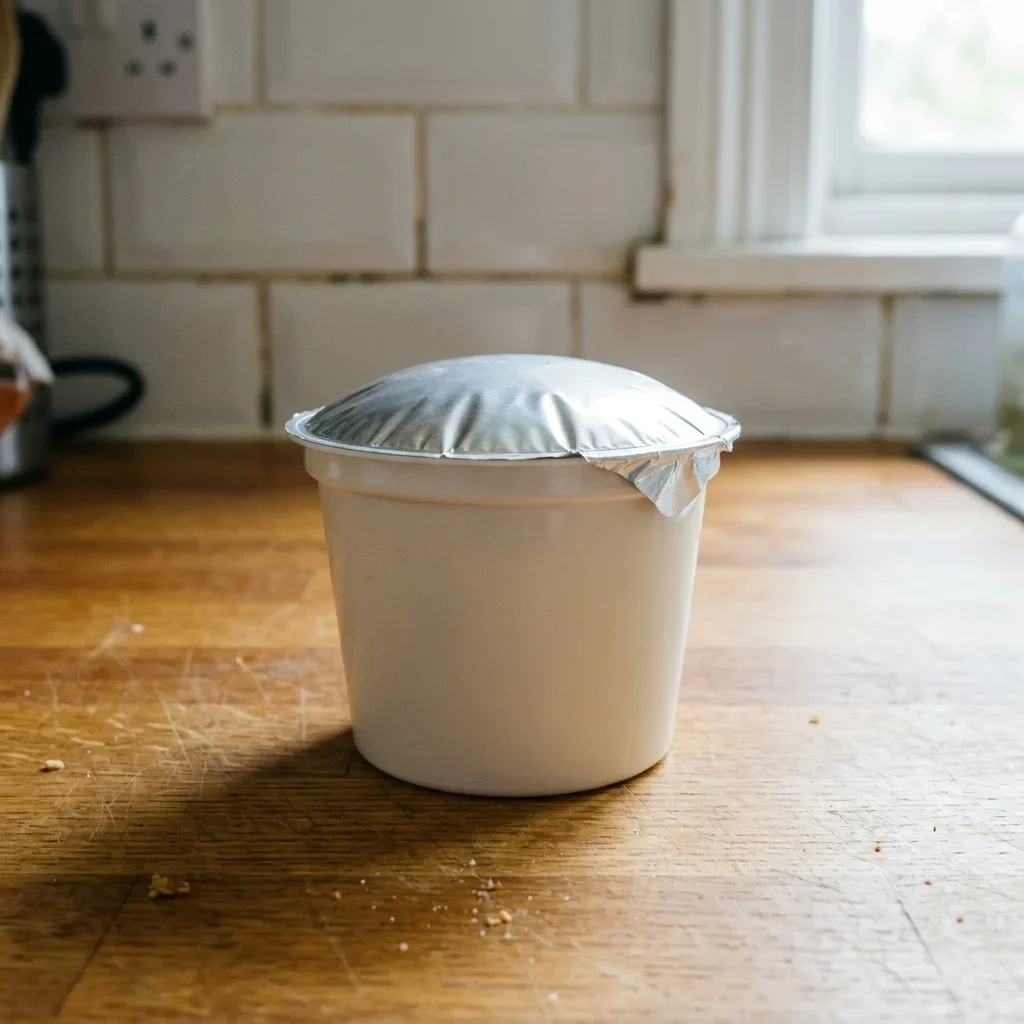
Verdict: throw it out
Yogurt with a swollen lid or a fizzy smell
Here the honest answer is that nobody publishes one. None of the extension services or makers we opened rules on a domed lid, although all of them rule on mold. So we will not pretend otherwise. What they do give is a default. NDSU Extension puts it in five words: when in doubt, throw it out. A pot under pressure counts. So throw it out, and do not taste it to decide.
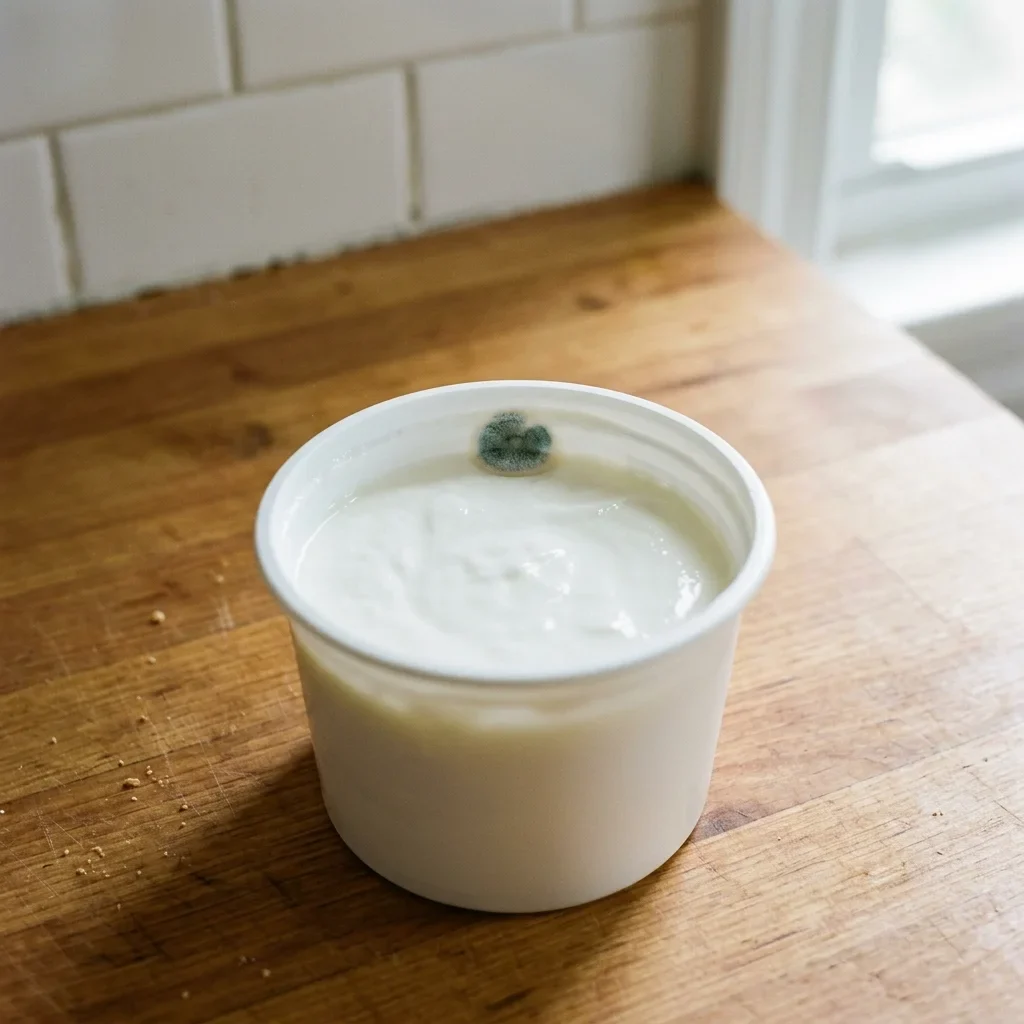
Verdict: throw the tub out
Moldy yogurt
One spot of fuzz and the whole pot goes. The USDA Food Safety and Inspection Service puts yogurt and sour cream in the discard column. That is because foods with high moisture content can be contaminated below the surface, it explains. Moldy foods may also have bacteria growing along with the mold. UConn Extension says it in plainer words: yogurt and sour cream should be disposed of at any sign of mold. The factsheet also adds three things people skip. Do not sniff it, since that can cause respiratory trouble. Bag or wrap it, then put it in a covered bin. After that, clean the spot where it stood and check nearby items the moldy food might have touched. Hard cheese is the exception. That is why the cheese guide lets you cut an inch around a spot instead.
Can you store yogurt past the use-by date?
Usually yes, and in fact the research backs that up. University of Maine Cooperative Extension starts from the label. Most date labels on food packages do not indicate the safety of a food, it says. A best-if-used-by date is instead a recommendation for best flavor and quality. NDSU Extension is more specific for yogurt. It allows the use-by date on the package, and then up to two weeks after a sell-by date. Then there is a 2026 study in the Emirates Journal of Food and Agriculture. It kept two commercial yogurts at 4, 24 and 32°C. Both still held acceptable quality for 2 to 3 weeks past the stated date at 4°C. No Salmonella, Staphylococcus aureus or Enterobacteriaceae turned up, and yeast and mold stayed within regulatory limits. That is two brands rather than a rule, however. The same study also found that warmer storage accelerated deterioration. So treat the date as a starting point and the pot in front of you as the evidence.
Yogurt substitutes
Out of yogurt, or did a pot go moldy before you got to it? Then these will stand in.
Substitute
Works best in
What changes
Sour cream
Dips, baking and finishing soups
Richer and less tangy. NDSU Extension gives it 2 weeks in the fridge.
Buttermilk
Pancakes, scones and marinades
Thin rather than thick, so use less of it in a batter.
Kefir
Smoothies and dressings
Drinkable and tangier. Not a stand-in for a thick spoonful.
Blended cottage cheese
High-protein bowls and dips
Milder, although it needs a blender to go smooth.
Mistakes people make when they store yogurt
These are the ways people store yogurt that cost them the most, and each one has an easy fix.
Eating straight from the tub. Stonyfield ties its storage times to yogurt kept tightly closed between uses, so spoon a portion into a bowl instead.
Keeping it in the fridge door. NDSU Extension wants 34 to 40°F, so use a shelf and check it with a thermometer.
Throwing a pot out for the liquid on top. That liquid is whey, so stir it back in.
Scraping the mold off. The USDA puts yogurt in the discard column, because mold in a moist food runs below the surface.
Leaving the tub out while you cook. The USDA gives perishables 2 hours out of the fridge, so put it back after you scoop.
Freezing it for the same job. It comes out grainy, so plan it into a smoothie or a sauce before it goes in.
Trusting the date over the pot. University of Maine Extension says most date labels do not indicate safety, so look and smell first.
Sources
Food Storage Guide, Julie Garden-Robinson, NDSU Extension publication FN579, revised May 2020, on yogurt at 1 to 2 weeks refrigerated and 1 to 2 months frozen, keeping it covered, sell-by and use-by dates, and the 34 to 40°F fridge range.
Food Freezing Basics: Freezing Dairy Products, Eggs and Other Foods, Julie Garden-Robinson, NDSU Extension publication FN616, reviewed September 2022, on cultured dairy losing its smooth texture, going grainy, separating out water, tasting more acidic and still working for cooking.
Safety of Stored Foods, Pamela Schmutz and E.H. Hoyle, Clemson Cooperative Extension Home and Garden Information Center factsheet HGIC 3520, revised April 2020, on yogurt at 7 to 14 days and refrigerator temperatures of 32 to 40°F.
Making Yogurt at Home, Julie Cascio, University of Alaska Fairbanks Cooperative Extension publication FNH-00062, reviewed October 2024, on 10 to 21 days at 40°F or lower, syneresis, additions shortening shelf life, and discarding yogurt that smells wrong or fails to set.
Molds on Food: Are They Dangerous?, USDA Food Safety and Inspection Service, slightly revised September 2005, hosted by UC Davis Food Safety, on discarding moldy yogurt and sour cream, the 2-hour rule, not sniffing mold, bagging it, cleaning the spot and checking nearby items.
Handling Food with Mold, UConn Extension publication EXT063, April 2024, on disposing of yogurt and sour cream at any sign of mold and on trimming hard cheese instead.
Frequently Asked Questions, Stonyfield Organic, on refrigerating yogurt tightly closed between uses, finishing cups within 24 hours and quarts within 7 days, the best-if-used-by date, separated whey after a temperature change, and the look and texture of thawed yogurt.
Refrigerator and Freezer Storage Chart, U.S. Food and Drug Administration, March 2018, on 40°F refrigeration and on freezing at 0°F keeping food safe indefinitely so freezer times are for quality only.
A longitudinal assessment of quality stability and edible safety of commercial yogurt beyond the stated expiration date, Shuang Zhang, Emirates Journal of Food and Agriculture volume 38, 2026, on two commercial yogurts held at 4, 24 and 32°C for up to 49 days past the date, acceptable quality for 2 to 3 weeks at 4°C, and no Salmonella, Staphylococcus aureus or Enterobacteriaceae detected.
Don't Toss That Food Yet! Understanding Food Product Dating Labels, Alex Bosse, University of Maine Cooperative Extension, February 2025, on most date labels not indicating safety, best-if-used-by meaning quality, and keeping refrigerated food at 40°F or lower.
What is Greek Yogurt?, U.S. Dairy, June 2016, on Greek yogurt being regular yogurt strained to remove the liquid whey, and on its protein, lactose and calcium compared with regular yogurt.
Storage times and safety advice on this page come from the sources above. Food safety depends on conditions I cannot see, so read the Disclaimer, and if in doubt, throw it out.
Other ingredient guides
Browse all guides





Share this guide
Never miss a guide
New ingredient guides when they go up, plus one storage tip worth knowing. Anything sponsored is labelled.

Emilly White