
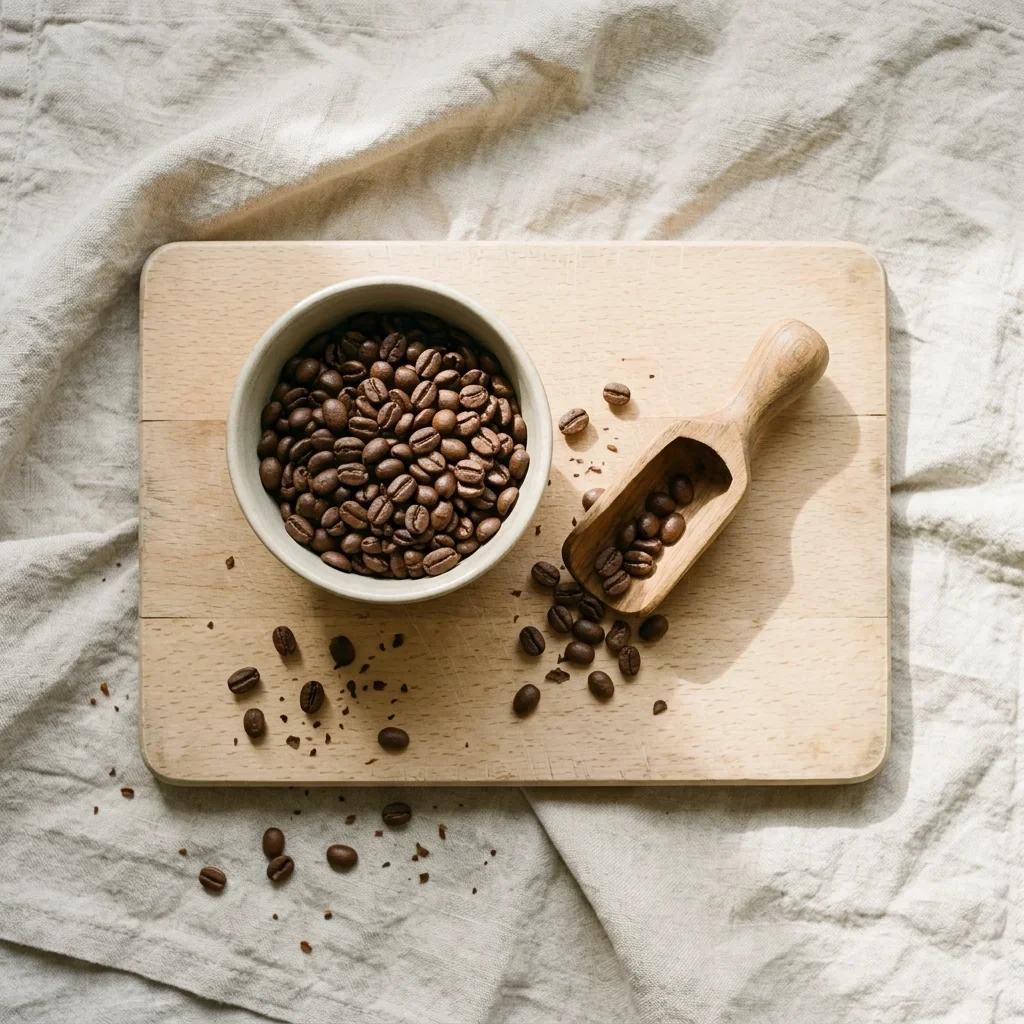
1 to 3 weeks
Airtight, opaque, cool and dark (NCA)
Not ideal
Beans pick up moisture and odors there (NCA)
3 to 4 months
Truly airtight, a week's worth at a time (NCA)
The short version: to store coffee beans, move them into an airtight, opaque container and keep it in a cool, dark cupboard. The National Coffee Association says roasted beans stay fresh for 1 to 3 weeks that way. Grind them just before brewing. Freeze any beans you will keep longer, in airtight portions, for 3 to 4 months. Throw them out if they turn damp or moldy.
Freshness times here come from the National Coffee Association and Ohio State University Extension, with shelf-life figures from the USDA's FoodKeeper data and mold guidance from Colorado State University Extension and the USDA.
On this page
Should you keep coffee beans in the bag they came in?
Coffee beans keep better out of their retail bag once it is open, because the National Coffee Association says an airtight container helps coffee stay fresher for longer. So check a few things before the beans go into the cupboard.
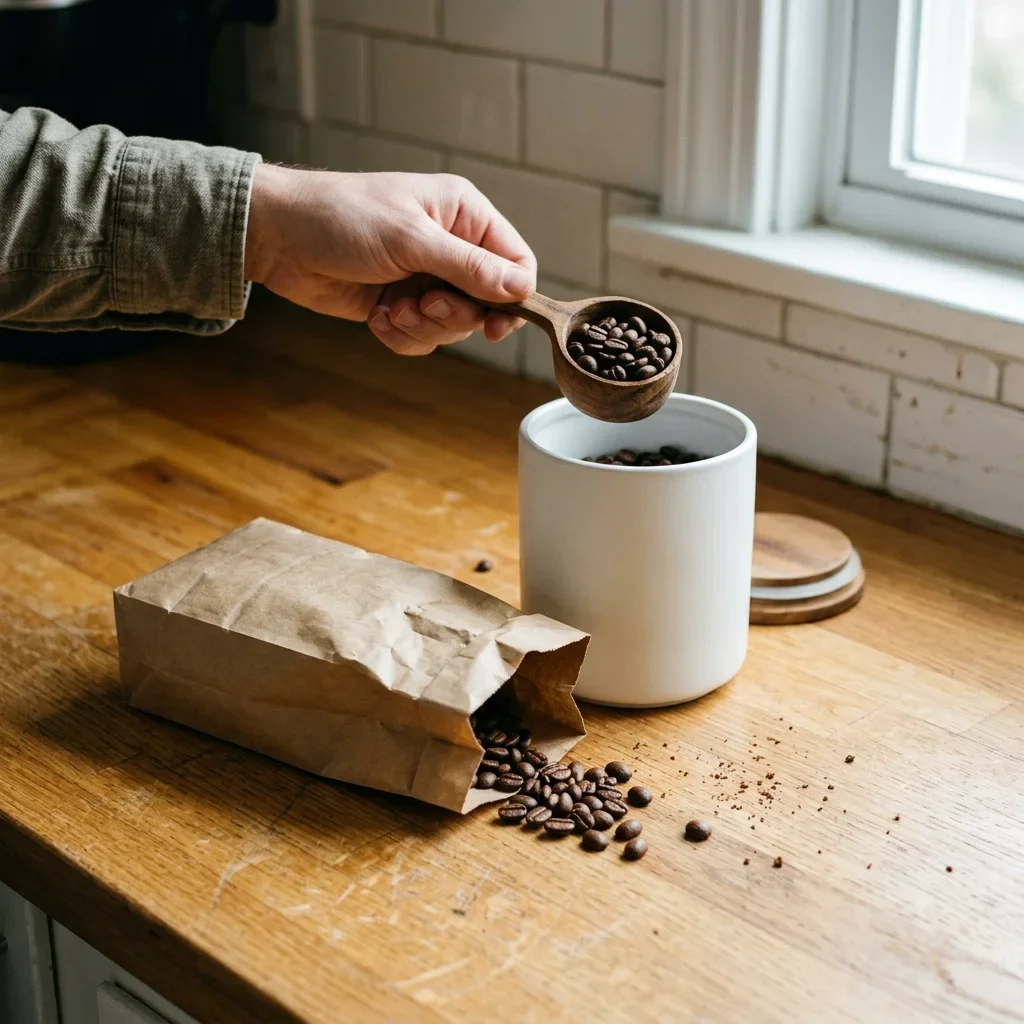
Glass, a lid that seals, and a spoon that is properly dry.
First, check how much you bought. The National Coffee Association says coffee starts to lose freshness almost immediately after roasting. So it suggests buying smaller batches, enough for one or two weeks.
Then check the package. An unopened bag of roasted beans keeps until its best-by date, according to the same source. Once you open it, though, the 1 to 3 week clock starts.
Next, look at your container. The National Coffee Association asks for an opaque one, because clear canisters let in light. A clear jar works only if it lives in a dark cupboard.
Finally, keep the beans whole. Ground coffee keeps only 1 to 2 weeks, according to the National Coffee Association, so grind just what each brew needs. The same airtight, dark rule protects whole spices such as nutmeg.
How to store coffee beans so they stay fresh
To store coffee beans so they stay fresh, keep them airtight, dark, cool and dry. Each of those blocks one of the four things that stale coffee. Miss one, and the beans fade faster.
Where should you store coffee beans?
Coffee beans belong in a dark, cool cupboard, according to the National Coffee Association, away from the oven, the dishwasher and strong afternoon sun. Ohio State University Extension also says to keep beans away from air and light. So a closed cupboard away from the stove is the best spot.
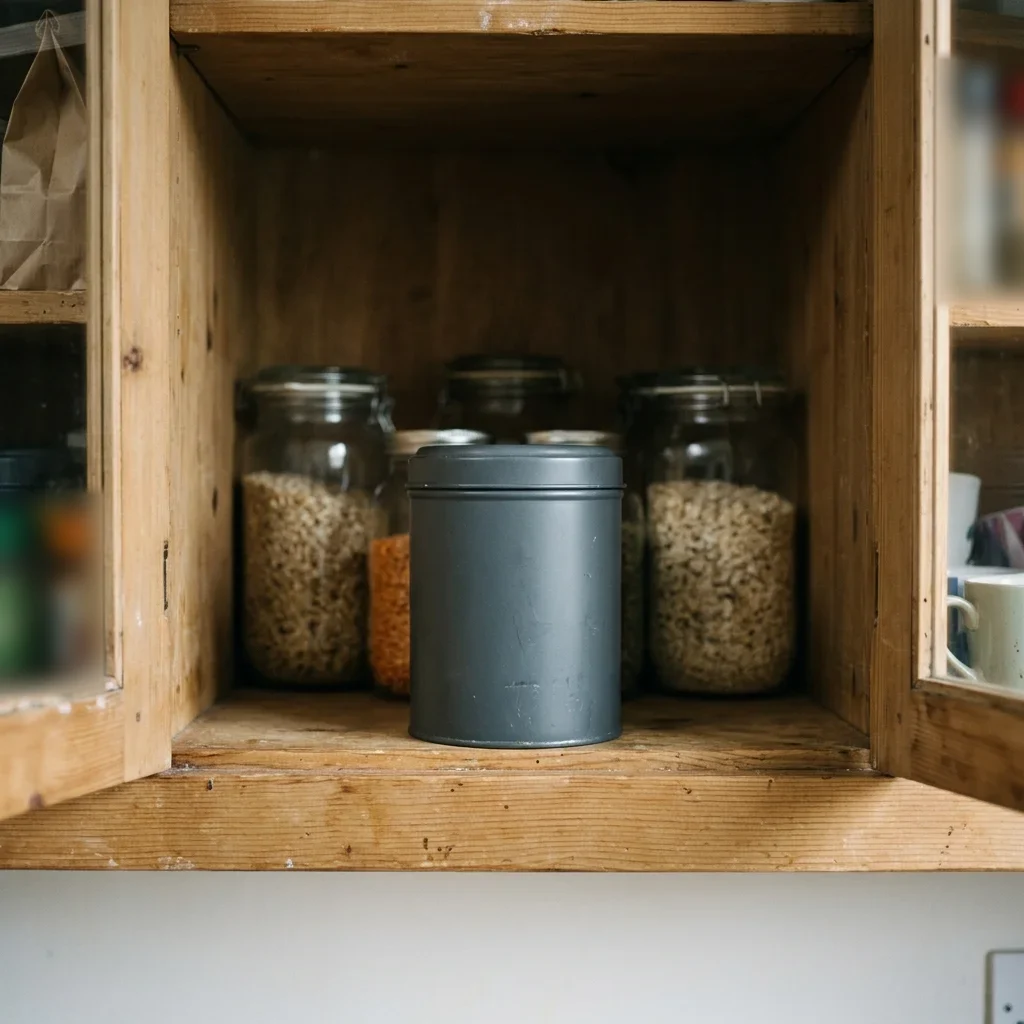
Sealed, cool and dark, and nowhere near the cooker.
How long do coffee beans stay fresh?
Roasted coffee beans stay fresh for 1 to 3 weeks at room temperature once opened, according to the National Coffee Association. Ohio State University Extension says beans you can finish in 10 to 12 days can stay on the counter in an airtight container.
By contrast, the USDA's FoodKeeper data lists whole beans at 3 to 5 months in the pantry. The figures measure different things. The shorter one is peak flavor, while the longer one is how long beans stay usable. So brew within 3 weeks for the best cup.
Should you store coffee beans in the fridge?
Coffee beans are better kept out of the fridge, because the National Coffee Association says coffee absorbs moisture, odors and tastes from the air around it. It adds that condensation can build up in the fridge. So use the cupboard for this week's beans and the freezer for the rest.
Should you grind coffee beans before storing them?
Coffee beans should be ground just before brewing rather than ahead, according to the National Coffee Association, which gives ground coffee only 1 to 2 weeks at room temperature. So keep the beans whole. Then grind the amount you need each morning.
What container is best for coffee beans?
The best container for coffee beans is airtight and opaque, according to the National Coffee Association, because clear canisters let in light. So choose a ceramic or metal canister with a tight lid. Also, keep it a size that the beans mostly fill, since less space means less air.
Can you freeze coffee beans?
Coffee beans can be frozen for 3 to 4 months, according to the National Coffee Association, although it says views differ on whether freezing coffee is a good idea. Ohio State University Extension is clearer: freeze any beans you plan to keep longer than 12 days. The risk is moisture, so packaging decides whether it works.
How do you freeze coffee beans?
Coffee beans freeze best in a truly airtight container, according to the National Coffee Association, for up to 3 to 4 months. So split the bag into week-sized portions, each in its own airtight jar or freezer bag with the air pressed out. Then label each portion with the date.
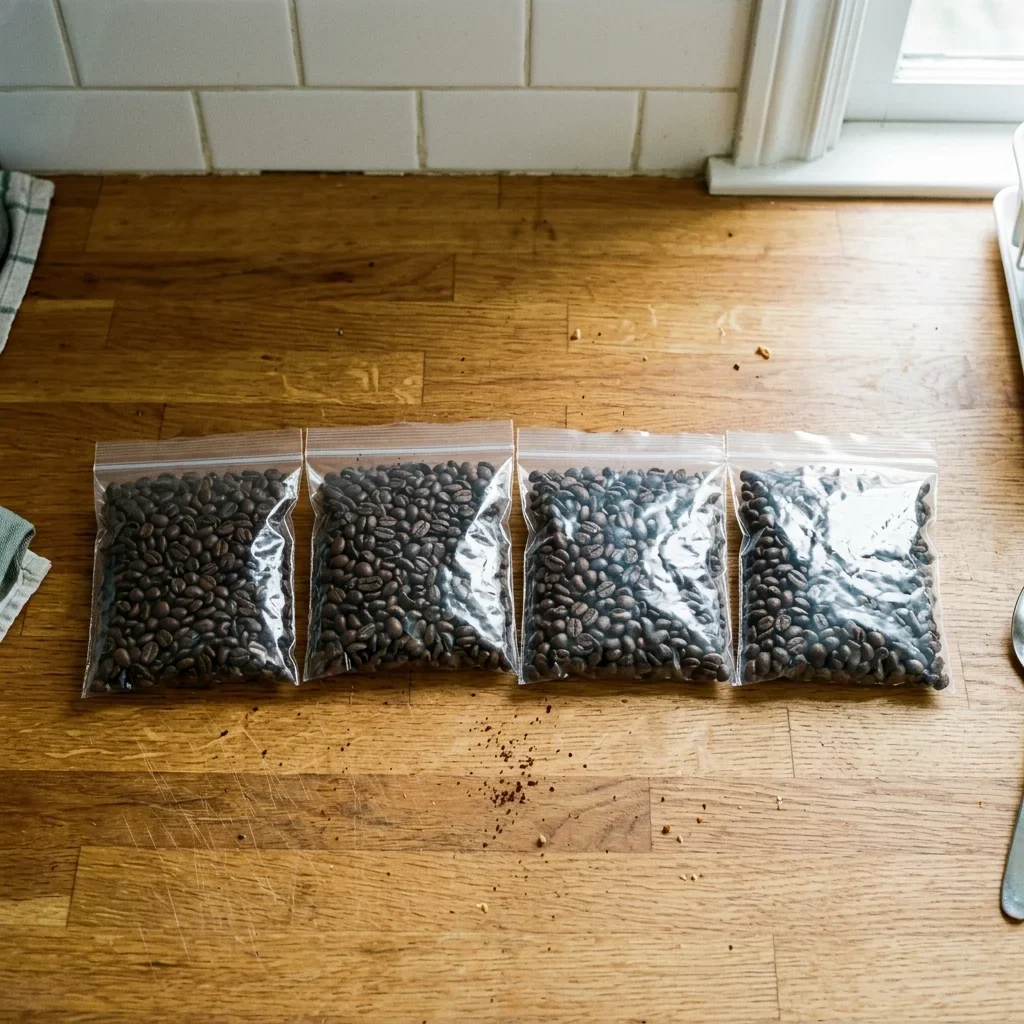
Below 41 degrees it keeps for years, but it barely pours.
How do you use frozen coffee beans?
Frozen coffee beans should come out a week's worth at a time, according to the National Coffee Association. It says to remove what you need quickly. Then return the rest before any condensation forms on the coffee. With week-sized portions, you simply take out one container and leave the others sealed.
How long do frozen coffee beans last?
Frozen coffee beans keep their freshness for 3 to 4 months, according to the National Coffee Association. The USDA's FoodKeeper data gives home-ground coffee 1 to 2 years in the freezer. So the beans stay usable far longer, but brew them within 4 months for the best flavor.
How to tell if coffee beans have gone bad
Old coffee beans are usually stale rather than unsafe. The National Coffee Association says beans past their peak are generally not a safety problem unless they have been exposed to moisture and grown mold. So the signs that matter are dampness, a musty smell and mold. Here is what each stage means, then.
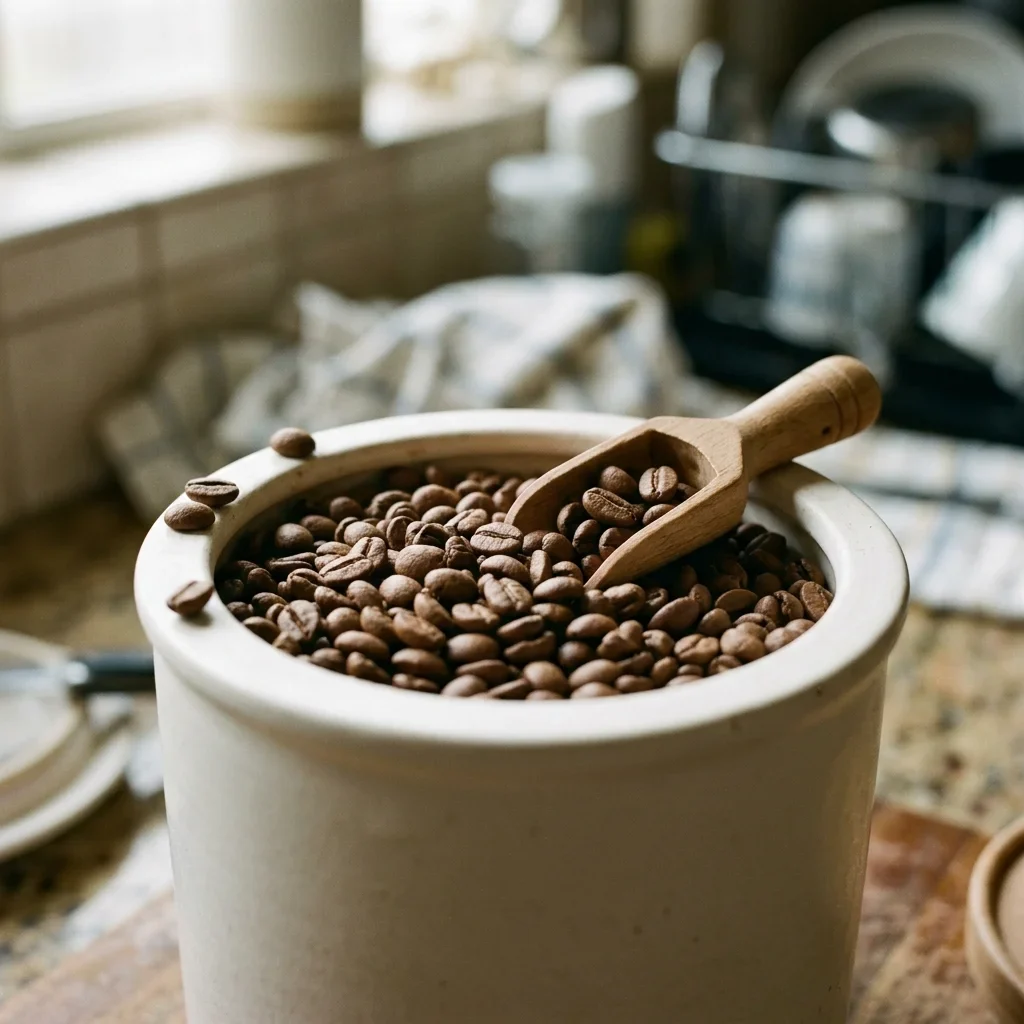
Verdict: brew them
Fresh coffee beans
Dry, evenly colored beans with a strong, rich smell the moment you open the container. These are beans inside their 1 to 3 weeks after opening. So brew them, and close the lid straight after.
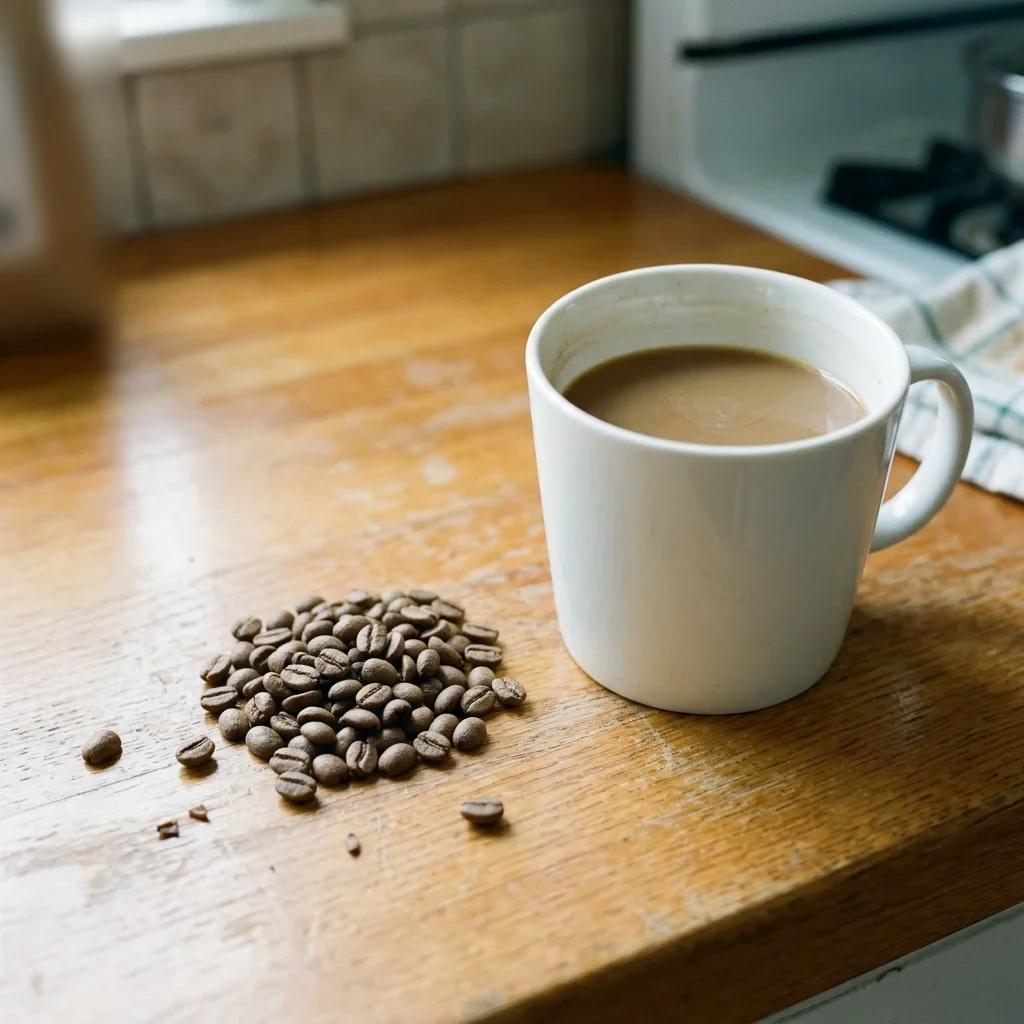
Verdict: brew them, but expect less flavor
Stale coffee beans
Beans that look normal but smell faint and brew a flat, dull cup. The National Coffee Association says roasted beans decline in quality over time. So use them up, perhaps in cold brew or baking, and buy smaller amounts next time.
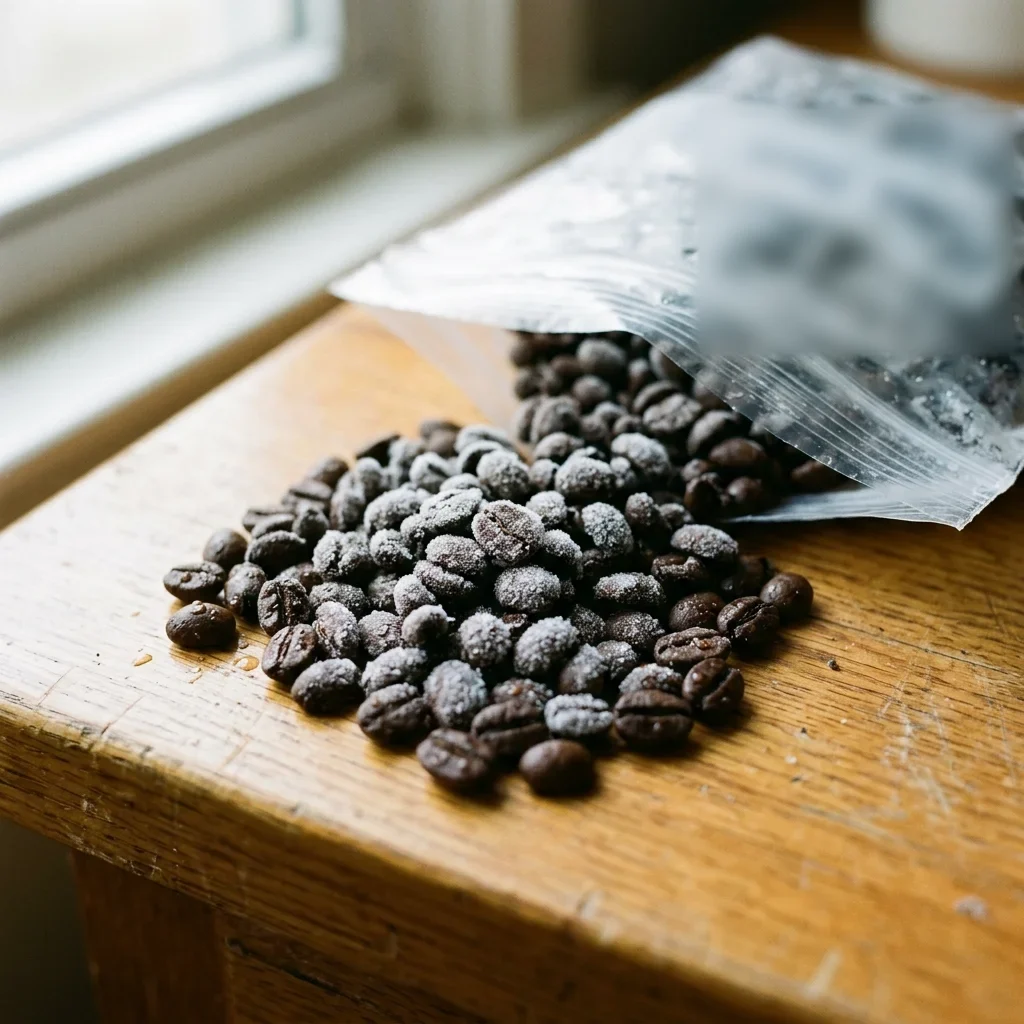
Verdict: brew them soon, and seal the next batch better
Frosty coffee beans from the freezer
Beans with ice crystals or a damp sheen after the freezer. That is moisture getting in, which the National Coffee Association warns about. So brew them soon, and use a truly airtight container next time.
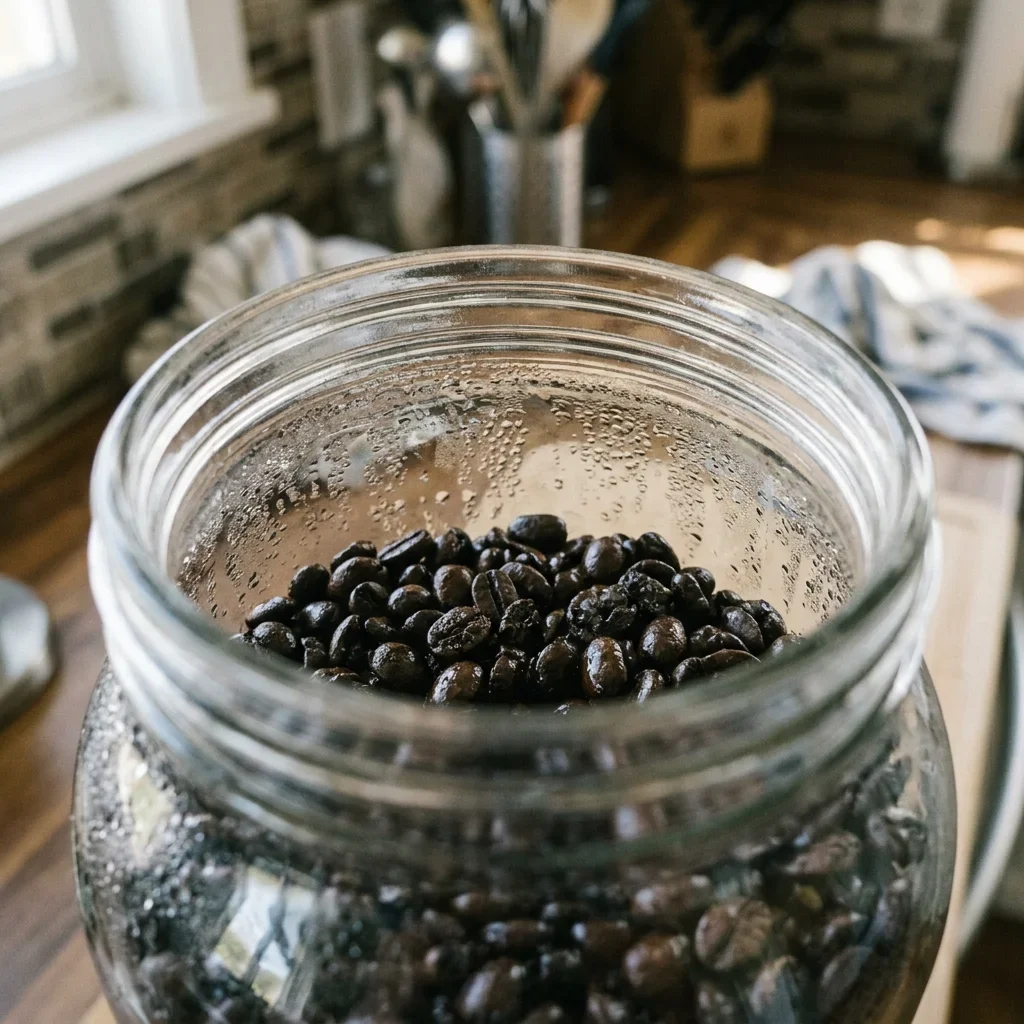
Verdict: throw them out
Damp or musty-smelling coffee beans
Beans that feel damp or clump together, or smell musty instead of roasted. Colorado State University Extension says coffee beans can pick up molds, most often through improper storage. So bin them rather than brew them.
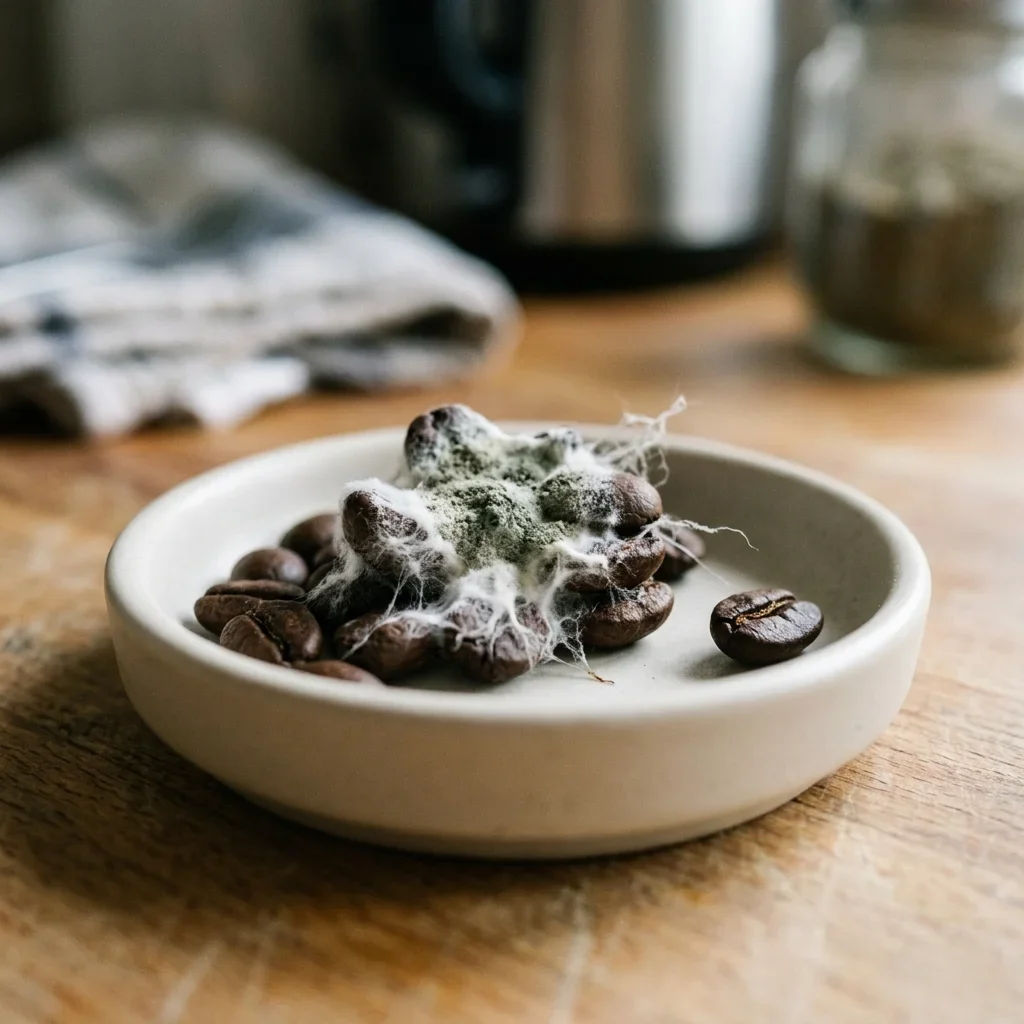
Verdict: throw them out
Moldy coffee beans
Fuzzy white, grey or green growth on the beans or inside the container. The National Coffee Association says beans become a safety problem once they are exposed to moisture and develop mold. So throw out the whole batch, and do not sniff it, as the USDA advises for moldy food.
Can you leave coffee beans in an open bag?
Coffee beans left in an open bag go stale faster, because the National Coffee Association names air as one of coffee's greatest enemies. One night will not ruin them. Still, move them into an airtight container as soon as you notice, or roll the bag tightly and clip it shut.
What to store coffee beans in
The right container keeps out air and light. Here is what each one suits.
Substitute
Works best in
What changes
Opaque airtight canister
The cupboard, 1 to 3 weeks
Blocks air and light, as the NCA recommends.
Clear glass jar
A dark cupboard only
The NCA says clear canisters let in light.
Original bag, opened
A few days at most
Roll it tight and clip it, then move the beans.
Airtight freezer portions
The freezer, 3 to 4 months
One week's worth per jar or bag.
Mistakes people make when they store coffee beans
These are the ways people store coffee beans that cost them the most flavor, and each one is easy to fix.
Buying a month's supply at once. The NCA suggests enough for one or two weeks.
Keeping beans in a clear canister on the counter. The NCA says clear canisters let in light.
Storing them next to the oven or dishwasher. Keep them in a cool, dark cupboard instead.
Keeping them in the fridge. The NCA says coffee absorbs moisture and odors there.
Grinding the whole bag at once. Ground coffee keeps only 1 to 2 weeks, so grind just before brewing.
Taking the whole bag in and out of the freezer. Freeze week-sized portions instead.
Brewing damp or musty beans. Colorado State says coffee beans can pick up molds when stored badly.
Sources
Storage and Shelf Life, National Coffee Association USA, on air, moisture, heat and light as coffee's greatest enemies, buying enough for one or two weeks, airtight opaque containers, a dark and cool location away from the oven, dishwasher and afternoon sun, grinding just before brewing, differing views on refrigerating and freezing, taking out no more than a week's worth of frozen coffee, and roasted beans at 1 to 3 weeks at room temperature, 2 weeks refrigerated and 3 to 4 months frozen.
Pantry Food Storage, Lesley Fisher and Lydia Medeiros, Ohio State University Extension fact sheet HYG-5401, December 2010, on keeping coffee beans you can finish in 10 to 12 days in an airtight container on the counter, keeping them away from air and light, and freezing beans you plan to keep longer than 12 days.
FoodKeeper App, Food Safety and Inspection Service, U.S. Department of Agriculture, whose published FoodKeeper data lists whole coffee beans at 3 to 5 months in the pantry and home-ground coffee at 1 to 2 years frozen.
Nuts and Seeds, Food Smart Colorado, Colorado State University Extension, on nuts, seeds and coffee beans picking up molds, most commonly during improper storage.
Molds on Food: Are They Dangerous?, Food Safety and Inspection Service, U.S. Department of Agriculture, on not sniffing moldy food and discarding food covered with mold.
Storage times and safety advice on this page come from the sources above. Food safety depends on conditions I cannot see, so read the Disclaimer, and if in doubt, throw it out.
Other ingredient guides
Browse all guides

Share this guide
Never miss a guide
New ingredient guides when they go up, plus one storage tip worth knowing. Anything sponsored is labelled.

Emilly White