
About 6 months
Airtight, cool and dry, counted from the day you buy it (Illinois Extension)
Up to 1 year
NDSU's figure for opened white flour, airtight at 40°F
Longer, but test it
NDSU freezes white flour indefinitely, yet the lift still fades (NDSU, MU)
The short version: tip self-rising flour into an airtight container, then keep it cool, dry and dark. Also write the purchase date on the lid. Then use it within about six months, because Illinois Extension says that is how long the leavening stays worth having.
Storage times here come from Illinois Extension, NDSU Extension, Clemson Cooperative Extension and MU Extension. The leavening test comes from Penn State Extension, and the raw-flour rules from the FDA.
On this page
What to check before you store self-rising flour
Self-rising flour is not plain flour, so two clocks run at once. Illinois Extension says it leaves the mill with leavening and salt already mixed in. That is why it should not stand in for all-purpose flour. So check these four things before the bag goes in the cupboard.
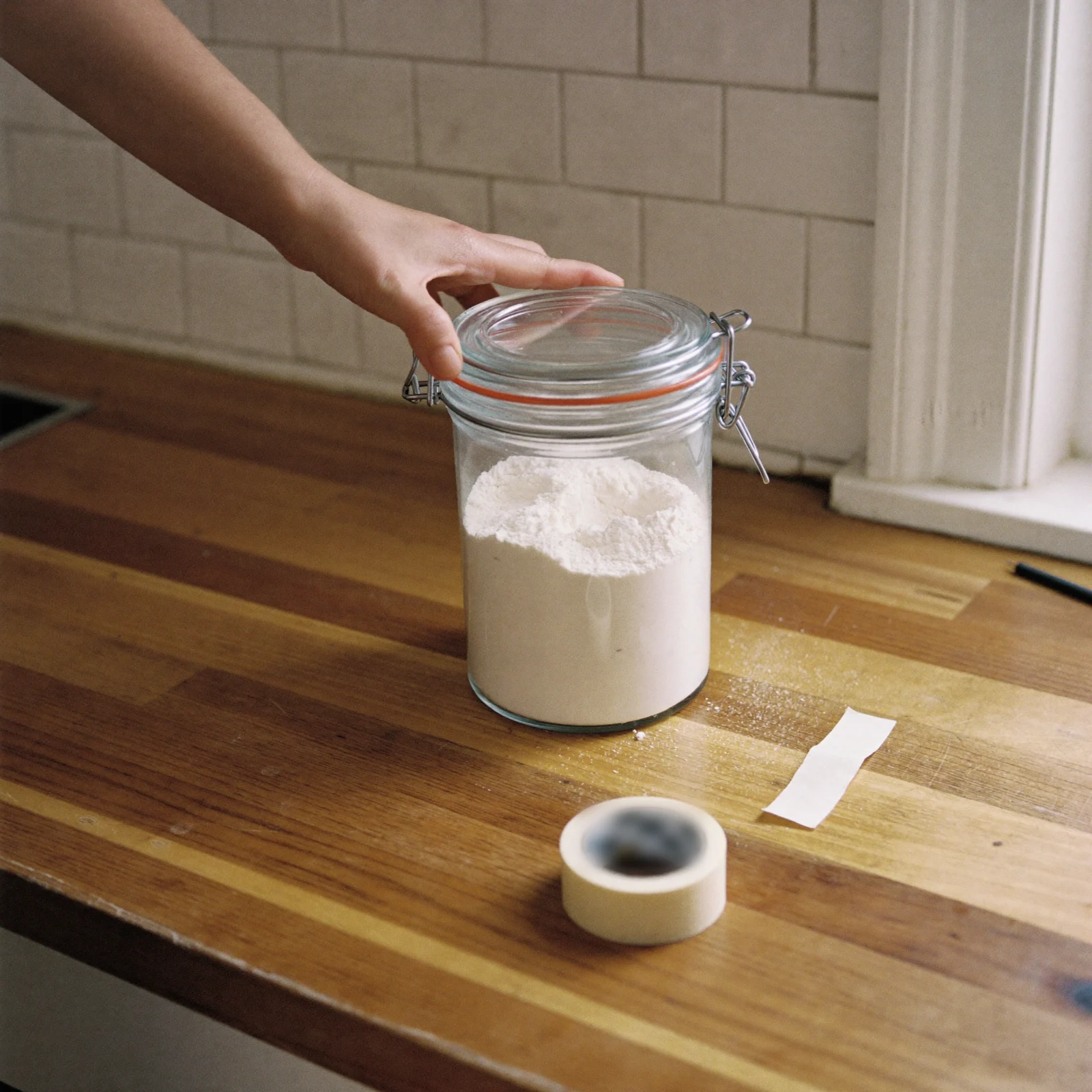
Move the flour out of the bag, then date the lid.
Glass, a lid that seals, and a spoon that is properly dry.
First, find the date you bought it. Illinois Extension says to use self-rising flour within six months of purchase, when the leavening is still worth having. So the day you bought it matters as much as the printed date.
Next, check the bag is sealed and undamaged. Texas A&M AgriLife Extension warns that even unopened containers may be infested. In fact, some pests get through plastic, waxed paper and cardboard.
Then decide where it will live. Clemson Cooperative Extension asks for airtight containers in a cool, dry place below 60 percent humidity. Damp is what ruins leavening, so a sealed box beats a paper bag.
Finally, check whether it is white or whole wheat. White keeps longest, whereas NDSU Extension gives unopened whole wheat flour only 3 to 6 months. The flour guide covers that split.
How to store self-rising flour so it lasts
To store self-rising flour so it lasts, keep it airtight, cool, dry and dated. Damp and warmth are what kill the baking powder, so the container matters more than the cupboard it stands in.
Where should you store self-rising flour?
Self-rising flour belongs in an airtight container, kept cool and dry below 60 percent humidity, according to Clemson Cooperative Extension. Paper bags let in damp, dust and insects, so MU Extension asks for vapor-proof packaging and a tight-fitting lid. Flour also takes on smells readily, which is why MU Extension keeps it away from soap and onions. Also keep it off the shelf above the cooker. NDSU Extension stores staples in cool cabinets, away from appliances that produce heat.
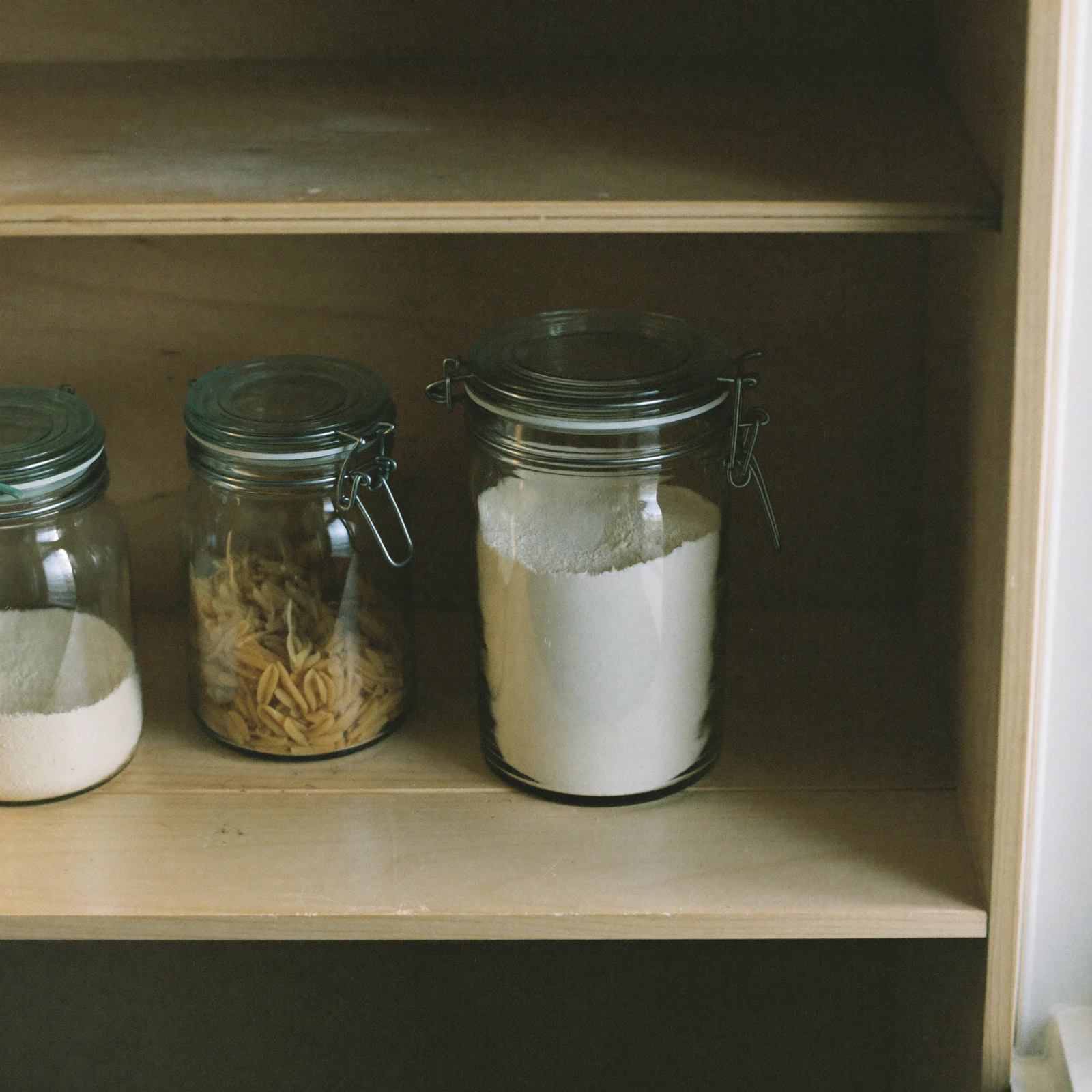
An airtight container in a cool, dry cupboard.
Sealed, cool and dark, and nowhere near the cooker.
How long does self-rising flour last?
Self-rising flour lasts about six months from purchase, according to Illinois Extension. That is shorter than plain flour, because of the leavening. For comparison, NDSU Extension gives opened white flour 6 to 8 months in the pantry. In the fridge, however, it gets a year. Clemson gives white flour 10 to 15 months in a 65 to 70°F pantry.
The gap is the baking powder rather than the flour. NDSU Extension gives opened baking powder just 3 to 6 months, and 6 to 18 months unopened. So does self-rising flour go bad, or does it only go flat? Mostly it goes flat, since the flour outlives its own rising power.
How can you tell if self-rising flour still rises?
Test it in hot water: Penn State Extension mixes 1 teaspoon of baking powder into a third of a cup. Then vigorous foaming means it still has rising power. Expect a smaller fizz from self-rising flour, since Clemson Cooperative Extension puts only 1½ teaspoons of baking powder in a cup. However, the water test flatters an old tin. America's Test Kitchen found that every powder it tried bubbled and passed, including one opened for a year. Even so, biscuit rise began to drop at six months. By ten months it had fallen to half the height of fresh powder. So bake a small test batch when a bag is old, instead of trusting the bubbles.
Should you keep self-rising flour in the fridge?
The fridge buys time. NDSU Extension gives opened white flour a year refrigerated, against 6 to 8 months in the pantry. In fact, that only holds for an airtight container. Clemson Cooperative Extension goes further for plain flours, giving two years at 40°F against one year at 70°F. Cold does not revive dead baking powder, though, so the fridge only slows the loss. Also let the flour warm up before you bake, since Penn State Extension says cold affects the baking powder.
Can you use self-rising flour after the date on the bag?
Usually yes, if it smells clean and still foams. Cornell Cooperative Extension says a best-if-used-by date is for flavor or quality. In other words, it is not a safety date. Clemson Cooperative Extension asks you to inspect stored flour for rancidity and taste. So test the lift. Then, if it has gone, treat the bag as plain flour and add your own leavening.
Can you freeze self-rising flour?
Yes, and the freezer is the longest-lasting spot for the flour itself. MU Extension says flour in airtight, moisture-proof containers keeps well for several years at 0°F. NDSU Extension marks white flour as fit for indefinite freezer storage. The leavening is the catch, since neither figure promises the bag will still rise.
How do you freeze self-rising flour?
Repackage it first. MU Extension asks for an airtight, moisture-proof container before flour goes into the freezer at 0°F. Then it keeps well for several years. Press the air out, label it with the date, and keep it away from strong smells, because flour absorbs odors readily. Then leave the container shut while it thaws, since Clemson Cooperative Extension warms frozen flour to room temperature before use.
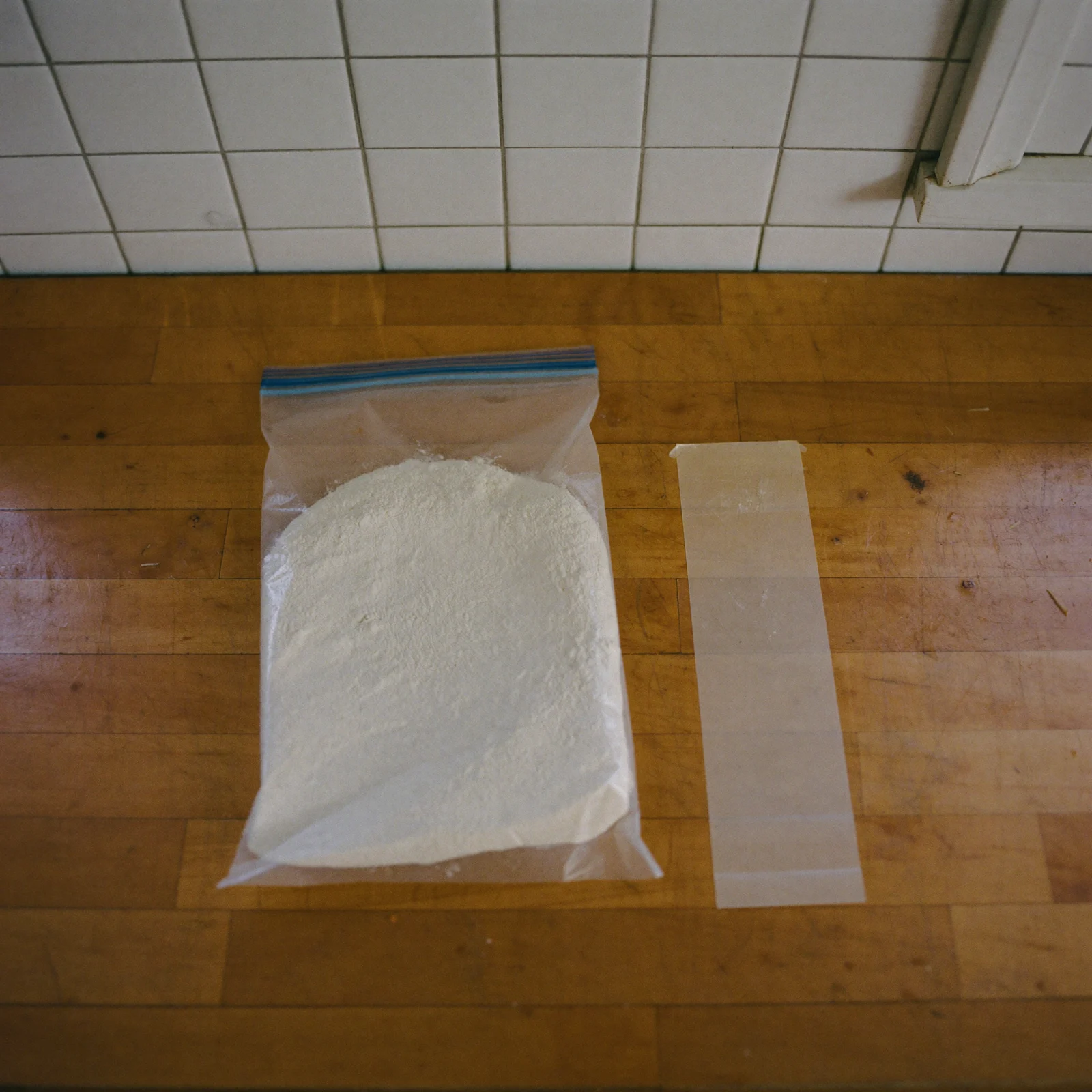
Airtight and moisture-proof before it goes to 0°F.
Below 41 degrees it keeps for years, but it barely pours.
Does freezing kill flour bugs?
Yes: Texas A&M AgriLife Extension says 7 to 14 days in the freezer eliminates pantry pests and their eggs. Similarly, an hour in a 130°F oven does the same. That is why a new bag can go straight into the freezer. Texas A&M warns that even unopened packages may already be infested. Freezing a suspect bag also keeps the problem away from the rest of the shelf.
Do you need to thaw self-rising flour before baking?
Yes, so let it reach room temperature first. Penn State Extension says cold flour affects the action of ingredients such as baking powder or yeast. Clemson Cooperative Extension also warms frozen flour, and checks it for rancidity, before use. So measure it once it has come round, rather than straight from the freezer.
Does self-rising flour go bad?
Does self-rising flour go bad? It does, eventually, but it goes flat long before it goes off. NDSU Extension gives opened baking powder only 3 to 6 months, which is the clock that matters. So the first three stages below are about lift, while the last two are the ones to throw out.
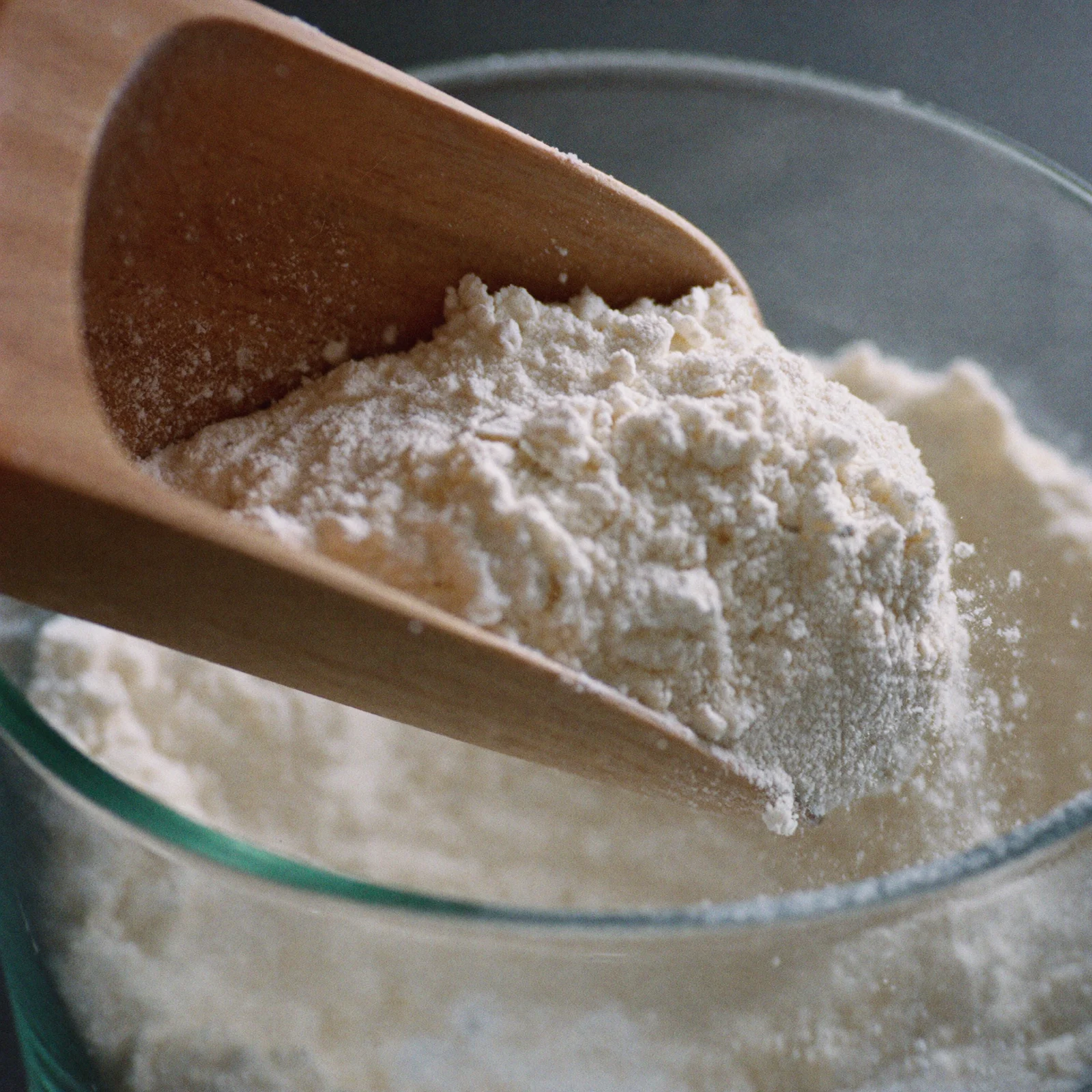
Verdict: use it
Fresh self-rising flour
Dry, soft and loose, with a clean, faintly floury smell, inside about six months of purchase. That is the window Illinois Extension gives for the leavening, so bake with it as the recipe stands.
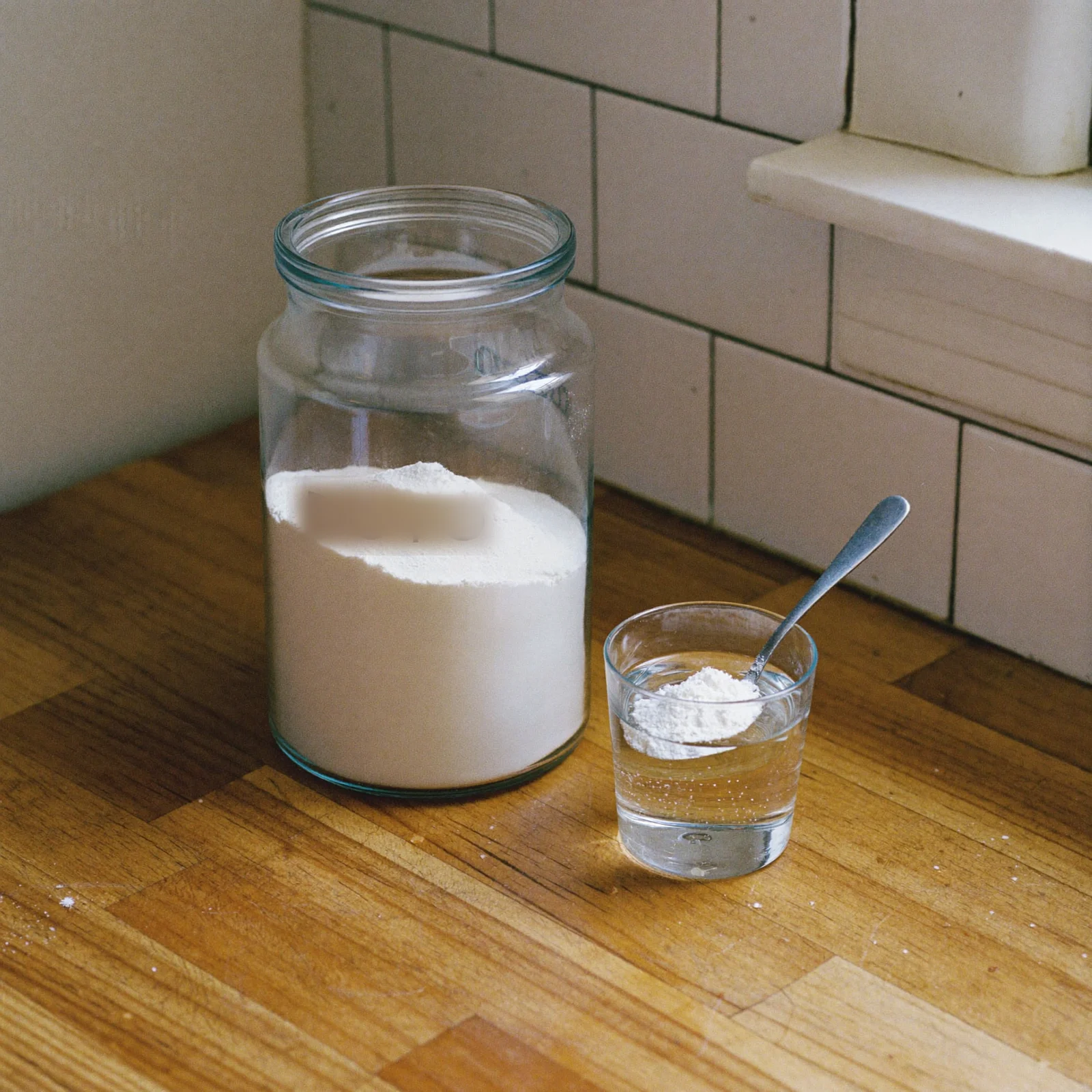
Verdict: test it, then use it
Self-rising flour past its date
Dry and clean-smelling, but older than the date on the bag. Cornell Cooperative Extension says that date is about quality rather than safety. Clemson Cooperative Extension asks you to inspect flour for rancidity and taste instead. So run the hot-water test, then bake a small batch before you trust it with a cake.
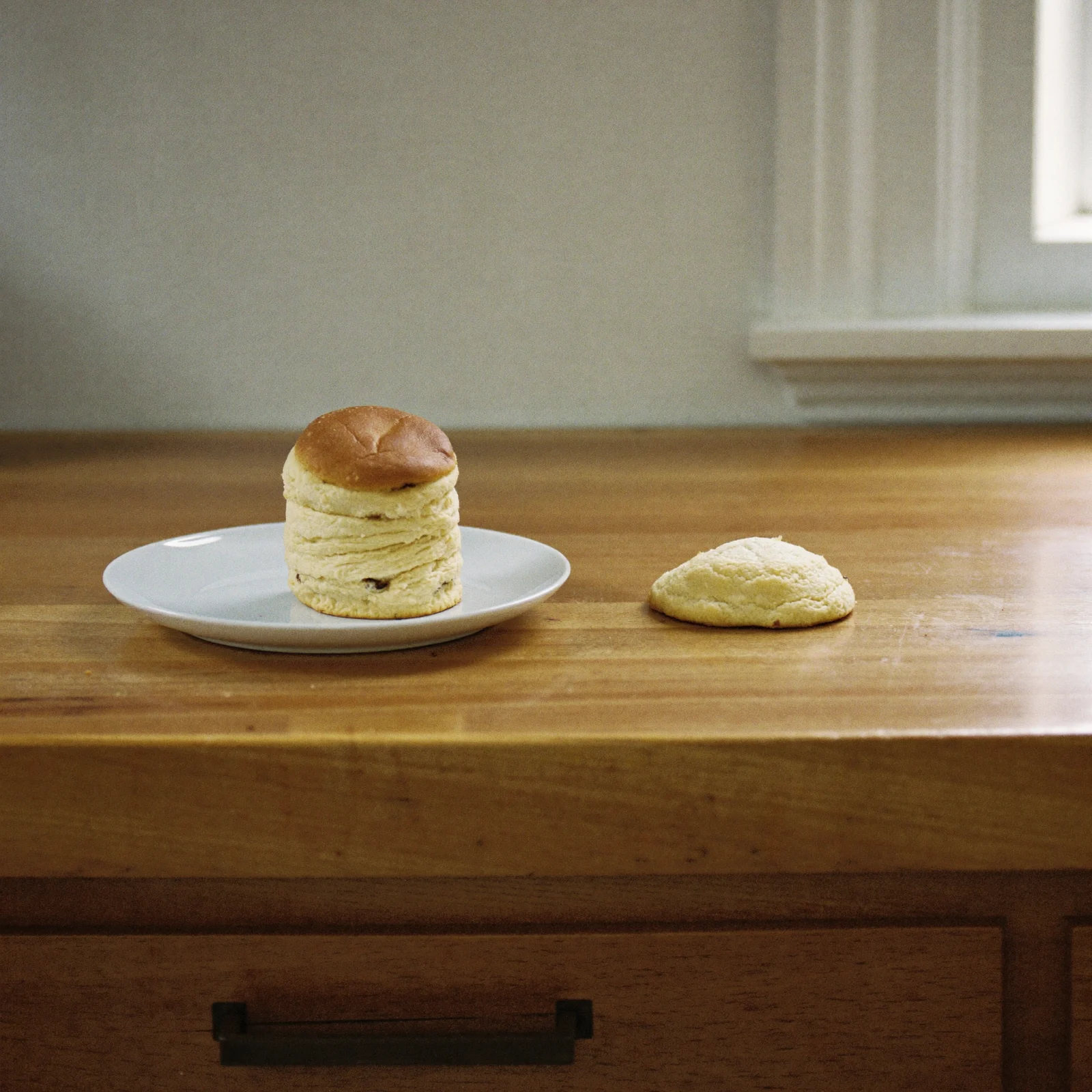
Verdict: use it as plain flour
Self-rising flour that has lost its lift
Flour that smells fine but bakes flat and dense. In other words, the baking powder is what has gone, since NDSU Extension gives an opened tin only 3 to 6 months. So use the bag as plain flour. Then add 1½ teaspoons of baking powder and ½ teaspoon of salt per cup. That is what Clemson Cooperative Extension says a cup of self-rising flour holds.
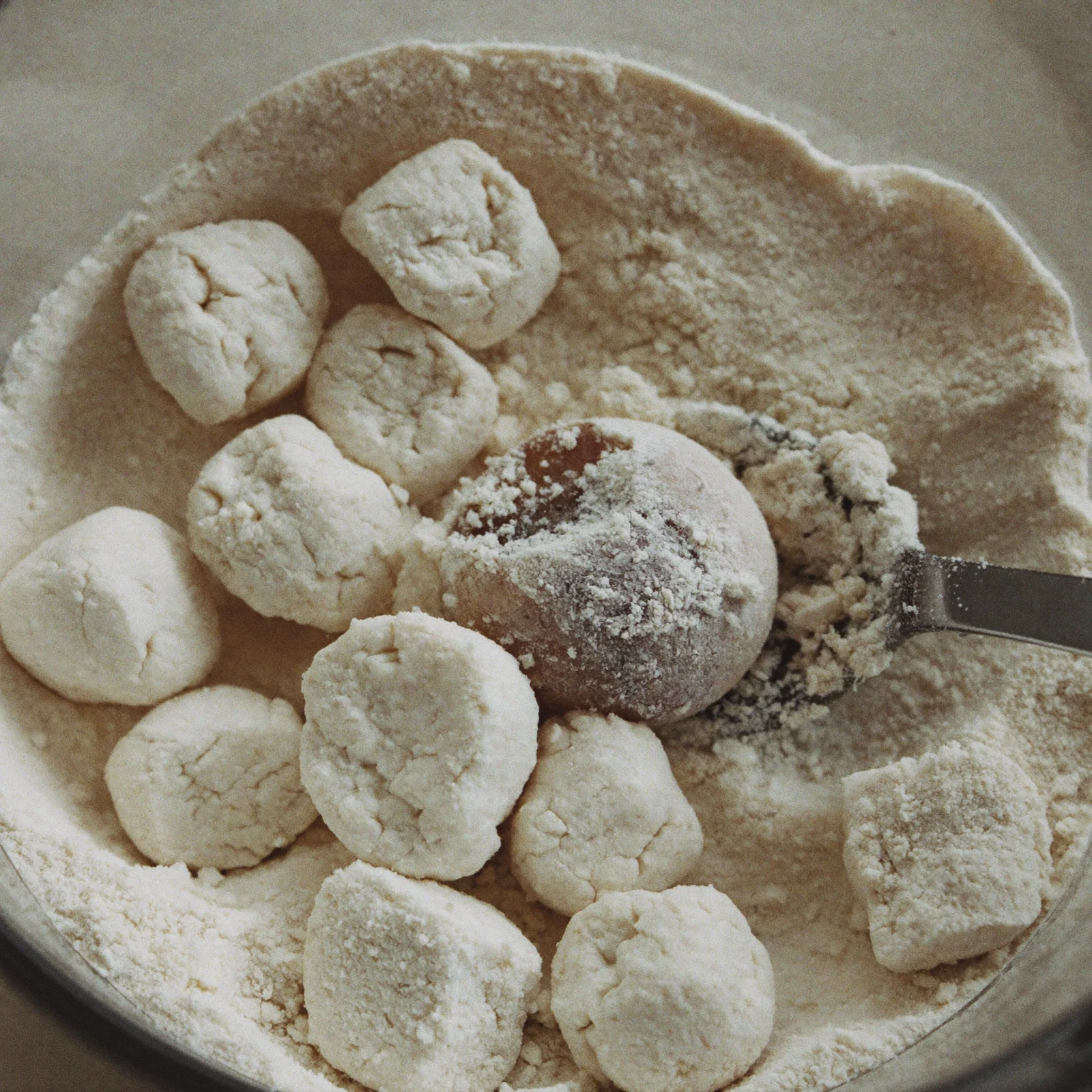
Verdict: throw it out
Damp, caked or stale-smelling self-rising flour
Lumps that will not break up under a spoon, a musty or oily smell, or any sign of damp. Moisture sets the leavening off early and invites mold. That is why Clemson Cooperative Extension keeps flour below 60 percent humidity. The same sheet also asks you to inspect stored flour for rancidity. So throw the bag out, then wash and dry the container before it is refilled.
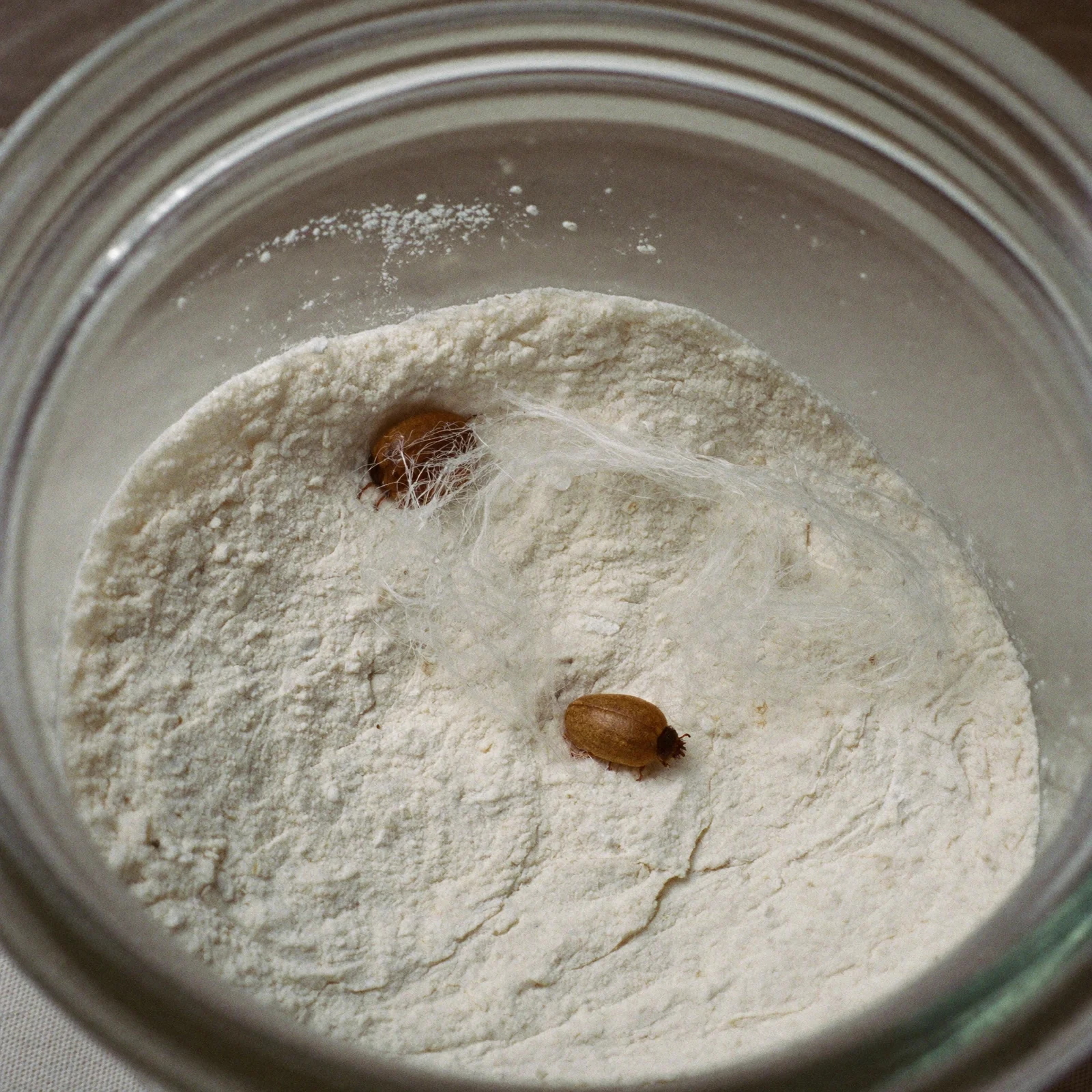
Verdict: throw it out
Self-rising flour with bugs or webbing
Small reddish-brown beetles, moving specks, or fine webbing through the flour. Texas A&M AgriLife Extension says flour beetles favor flour and other milled grain products. In fact, infested food can have a foul odor and taste. So bin that package. Then vacuum the shelf, and check the pasta and rice next to it. Texas A&M also says to discard old packages of grain and pasta, and to clean up spilled food.
Can you taste self-rising flour raw?
No, never, because the FDA says flour is a raw food. So it tells you never to eat or taste raw flour, dough or batter. Grain grown in fields can pick up Salmonella and pathogenic E. coli, and milling does not kill them. So judge an old bag by its smell and a baked test batch, instead of by licking the spoon.
Self-rising flour substitutes
Out of self-rising flour, or did the last bag bake flat? Then one of these will stand in.
Substitute
Works best in
What changes
Plain flour, baking powder and salt
Biscuits and pancakes
Clemson's ratio: 1½ teaspoons baking powder and ½ teaspoon salt per cup.
All-purpose flour on its own
Cookies, roux and dusting
Fine where nothing has to rise, as the flour guide covers.
Cake flour plus leavening
Light cakes and muffins
A softer crumb, so handle the batter gently.
A fresh bag of self-rising flour
Anything that must rise well
Illinois Extension's six-month window starts again.
Mistakes people make when they store self-rising flour
These are the ways people store self-rising flour that cost them the most, and each one has an easy fix.
Treating it like all-purpose flour. Illinois Extension gives it six months, because the leavening ages faster than the flour.
Leaving it in the paper bag. MU Extension asks for vapor-proof packaging, since flour takes on damp and odors.
Keeping it above the cooker. NDSU Extension stores staples in cool cabinets away from appliances that produce heat.
Trusting a bubble test. America's Test Kitchen found old powder still bubbled, yet lost half its rise by ten months.
Baking straight from the fridge. Penn State Extension says cold affects how the baking powder acts, so let it warm up.
Binning a flat-baking bag. It still works as plain flour once you add baking powder and salt yourself.
Tasting the batter to check it. The FDA says never to eat or taste raw flour, dough or batter.
Sources
Choose the Right Flour for the Job, Jenna Smith, Illinois Extension, August 2019, on self-rising flour having leavening and salt added during milling, using it within six months of purchase to maximize the leavening, and not substituting it for all-purpose flour.
Food Storage Guide, Julie Garden-Robinson, NDSU Extension publication FN579, on white flour at 6 to 12 months unopened, 6 to 8 months opened in the pantry, 1 year refrigerated and indefinite in the freezer, whole wheat flour at 3 to 6 months unopened, baking powder at 6 to 18 months unopened and 3 to 6 months opened, and storing staples in cool cabinets away from appliances that produce heat.
Selecting & Storing Cereals & Grains, E.H. Hoyle, Clemson Cooperative Extension Home & Garden Information Center fact sheet HGIC 3485, revised November 2006, on one cup of self-rising flour containing 1½ teaspoons of baking powder and ½ teaspoon of salt, airtight storage in a cool, dry place at less than 60 percent humidity, flour keeping six months at 90°F, one year at 70°F and two years at 40°F, and warming refrigerated or frozen flour and inspecting it for rancidity and taste.
Food Storage: Pantry, Pamela Schmutz and E.H. Hoyle, Clemson Cooperative Extension fact sheet HGIC 3525, revised March 2020, on white flour at 10 to 15 months and whole wheat flour at 3 months in a cool, dry pantry at 65 to 70°F.
Using and Storing All-Purpose Flour, Barbara J. Willenberg and Karla Vollmar Hughes, MU Extension publication GH1116, reviewed January 2023, on properly stored flour keeping six to eight months, several years at 0°F in airtight moisture-proof containers, vapor-proof packaging because flour absorbs odors, tight-fitting lids against dust, insects and damp, and warm damp conditions letting insects hatch.
Storing Staple Ingredients in the Kitchen, Martha Zepp, Penn State Extension, updated August 2024, on testing baking powder with 1 teaspoon in a third of a cup of hot water and looking for vigorous foaming, all-purpose flour keeping up to two years at 40°F and indefinitely in the freezer, and letting cold flour warm so it does not affect ingredients such as baking powder or yeast.
Baking Powder Shelf Life, America's Test Kitchen, on every powder passing the bubbling water test including one opened for a year, biscuit rise beginning to decrease with 6-month-old powder and falling to half the height of fresh at 10 months, and writing the opening date on the can.
Pantry and Fabric Pests in the Home, Tommy Doederlein, Michael Merchant, Wizzie Brown and Grady Glenn, Texas A&M AgriLife Extension publication ENTO-PU-171, September 2018, on flour beetles favoring flour and other milled grain products, infested food having a foul odor and taste, even unopened containers being infested because pests penetrate plastic, waxed paper and cardboard, using dried food within 2 to 4 months, and 130°F for 1 hour or 7 to 14 days in the freezer to eliminate pests and their eggs.
Handling Flour Safely: What You Need to Know, U.S. Food and Drug Administration, March 2024, on flour being a raw food, grains picking up Salmonella and pathogenic E. coli in the field, processing not killing those bacteria, and never eating or tasting raw flour, dough or batter.
Food Dating, Cornell Cooperative Extension of Warren County, updated January 2025, on a best-if-used-by date being recommended for best flavor or quality rather than being a purchase or safety date.
Storage times and safety advice on this page come from the sources above. Food safety depends on conditions I cannot see, so read the Disclaimer, and if in doubt, throw it out.
Other ingredient guides
Browse all guides



Share this guide
Never miss a guide
New ingredient guides when they go up, plus one storage tip worth knowing. Anything sponsored is labelled.

Emilly White