

3 to 7 days
Buttercream pops, cool and dry, as for baked cake (NDSU)
7 to 10 days
Required for cream cheese frosting, under 41°F (Illinois Extension)
About 1 month
Frosted cake, wrapped, at 0°F (Illinois Extension)
The short version: how to store cake pops comes down to the frosting. Buttercream pops keep 3 to 7 days in a cool, dry spot, which is what NDSU Extension gives baked cake. Cream cheese pops go in the fridge instead. Then box them airtight, because a cold shell sweats the moment it meets warm air.
Storage guidance here comes from NDSU Extension and Illinois Extension. The frosting rules come from University of Minnesota Extension, and the shell from Clemson Cooperative Extension.
On this page
Which cake pops need the fridge?
The frosting in the crumb decides everything that follows. So how to store cake pops starts with the recipe, not the weather. Buttercream and cream cheese behave as differently as a biscuit and a bowl of soup.

Buttercream sits out; cream cheese does not.
Glass, a lid that seals, and a spoon that is properly dry.
Butter and icing sugar: the counter is fine. Illinois Extension accepts that dairy in a buttercream frosting without eggs is a stable product, because of the large amounts of powdered sugar added. Sugar binds the available water, it explains.
Cream cheese: the fridge, always. Illinois Extension says cream cheese frosting should always be transported and sold under 41 F. NDSU Extension gives soft cream cheese 2 weeks there.
No raw egg in the frosting. Illinois Extension allows frostings such as buttercream, but says they may not contain raw eggs. Powdered dehydrated eggs are allowed instead.
A shell that has set hard. Clemson Cooperative Extension keeps chocolate between 65 and 70°F, with relative humidity under 50 to 55 percent. A coated pop wants the same room.
How to store cake pops so they last
Two clocks run on a cake pop. Inside it is cake, so NDSU Extension's cake times apply to how to store cake pops. Outside it is a confectionery shell, which hates damp. That is why how to store cake pops is a compromise rather than one rule.
Do cake pops need to be refrigerated?
Cake pops made with cream cheese do, and Illinois Extension is firm that cream cheese frosting should always be transported and sold under 41 F. Buttercream splits the sources, though. Illinois Extension treats buttercream without eggs as a stable product, because of the powdered sugar in it. NDSU Extension is stricter, since it says to refrigerate cakes that have buttercream, whipped cream or custard frostings or fillings. Take the safer reading in a warm kitchen, then, and chill them. For the counter case, Clemson Cooperative Extension wants a cool, dry pantry at 65 to 70°F. Clemson also rules out storage areas near oven ranges, hot water pipes or heating ducts.

Flat, spaced, and sealed before the cold.
Sealed, cool and dark, and nowhere near the cooker.
How long do cake pops last?
Cake pops keep 3 to 7 days in the pantry and 7 to 10 days in the fridge, the windows NDSU Extension gives for baked cake. A purchased cake gets far less, at 1 to 2 days. NDSU attaches its refrigerate-if-frosted rule to that same line. The pages ranking for this question go much further, offering a week on the counter and two weeks to a month in the fridge. None of them cites anyone. So keep to the extension figures. Then shorten them in a warm room, because Clemson Cooperative Extension warns that high temperature or humidity may reduce storage time considerably.
There is a third clock, too. NDSU Extension gives opened frosting 2 to 3 weeks in the fridge. So a pop rolled from a tub opened a fortnight ago starts late. Date the tub, in other words, and work out how to store cake pops from the oldest thing in them.
Why do cake pops sweat when they leave the fridge?
Because the shell takes on moisture in cold, damp air. Clemson Cooperative Extension says chocolate absorbs odours and moisture in refrigerated environments, leading to bloom. Clemson's advice is to avoid refrigerating chocolate when possible. Where there is no choice, it asks you to wrap it tightly to limit moisture absorption. So box the pops airtight before they go in. Then let the closed box come back to room temperature before you open it, so the condensation lands on the lid. MU Extension uses the same trick for baked goods, keeping them in their original wrapping to limit drying and moisture condensing on the surface.
Can you leave cake pops out overnight?
Buttercream cake pops can sit out overnight, whereas cream cheese ones cannot. NDSU Extension says potentially hazardous foods should not stay between 40°F and 140°F for longer than two hours. Cream cheese frosting falls on that side of the line. University of Minnesota Extension gives the test behind the rule. A non-potentially-hazardous product needs a water activity of 0.85 or lower, or a pH of 4.6 or lower. It also asks for about 2 ounces of powdered sugar for every 1 ounce of cream cheese to reach the sugar ratio. So a very sugary frosting may hold, whereas a soft, tangy one will not. The cream cheese guide covers the cheese itself. Our food left out overnight hub covers the rest of a forgotten plate.
How should you store cake pops for a party?
Stand cake pops upright in a block, or lay them flat in one layer out of the sun. Clemson Cooperative Extension wants chocolate between 65 and 70°F. Heat softens a shell, so a sunny table is the wrong table. Keep the air dry as well, since Clemson asks for relative humidity under 50 to 55 percent. Then put cream cheese pops out in small batches. NDSU Extension's two-hour clock starts the moment they leave the fridge.
Can you freeze cake pops?
Yes, for about a month: Illinois Extension gives frosted baked cake 1 month in the freezer, against 2 to 4 months unfrosted. NDSU Extension is more generous and gives baked cakes 6 months, so the two disagree. Take the shorter figure, because the shell and the frosting are the parts that suffer. The freezer is still the best answer to how to store cake pops for weeks rather than days. MU Extension also warns off some frostings entirely, since it says not to freeze seven-minute frosting or frosting made with egg whites.
How do you freeze cake pops?
Freeze cake pops on a tray first, then wrap them and seal them. That is how MU Extension handles a frosted cake, which it quick-freezes on a tray before packaging. Keep the freezer at 0°F or lower, as NDSU Extension asks. Wrap each pop, then box them so the sticks cannot pierce the bag. Also freeze them fresh, because Illinois Extension says freezing only maintains whatever quality the food had before freezing.

Wrap each pop, then box the sticks safely.
Below 41 degrees it keeps for years, but it barely pours.
How do you thaw frozen cake pops?
Thaw cake pops in the fridge, still wrapped, which is what MU Extension says for frosted or filled cakes. The wrapper takes the condensation instead of the shell. Then let the sealed box reach room temperature before you open it, since Clemson Cooperative Extension warns that chocolate absorbs moisture in refrigerated environments. So the slow route is the one that protects the shine.
Can you freeze cake pops made with cream cheese frosting?
You can, although the texture pays for it: NDSU Extension says cream cheese becomes crumbly when frozen and may be used for cooking. It also marks soft cream cheese as not recommended for the freezer at all. The crumb in a pop is already mashed, though, so crumbliness costs less here than in a cheesecake. Even so, eat those pops first and freeze the buttercream ones for later.
How can you tell if cake pops have gone bad?
Most cake pops go dull and dry long before they become unsafe. So three of the stages below are quality calls about the shell. Cream cheese pops are the exception, because they carry a clock. Mold is the end of the road for any of them, and here is what each stage means.

Verdict: use it
Glossy, firm cake pops
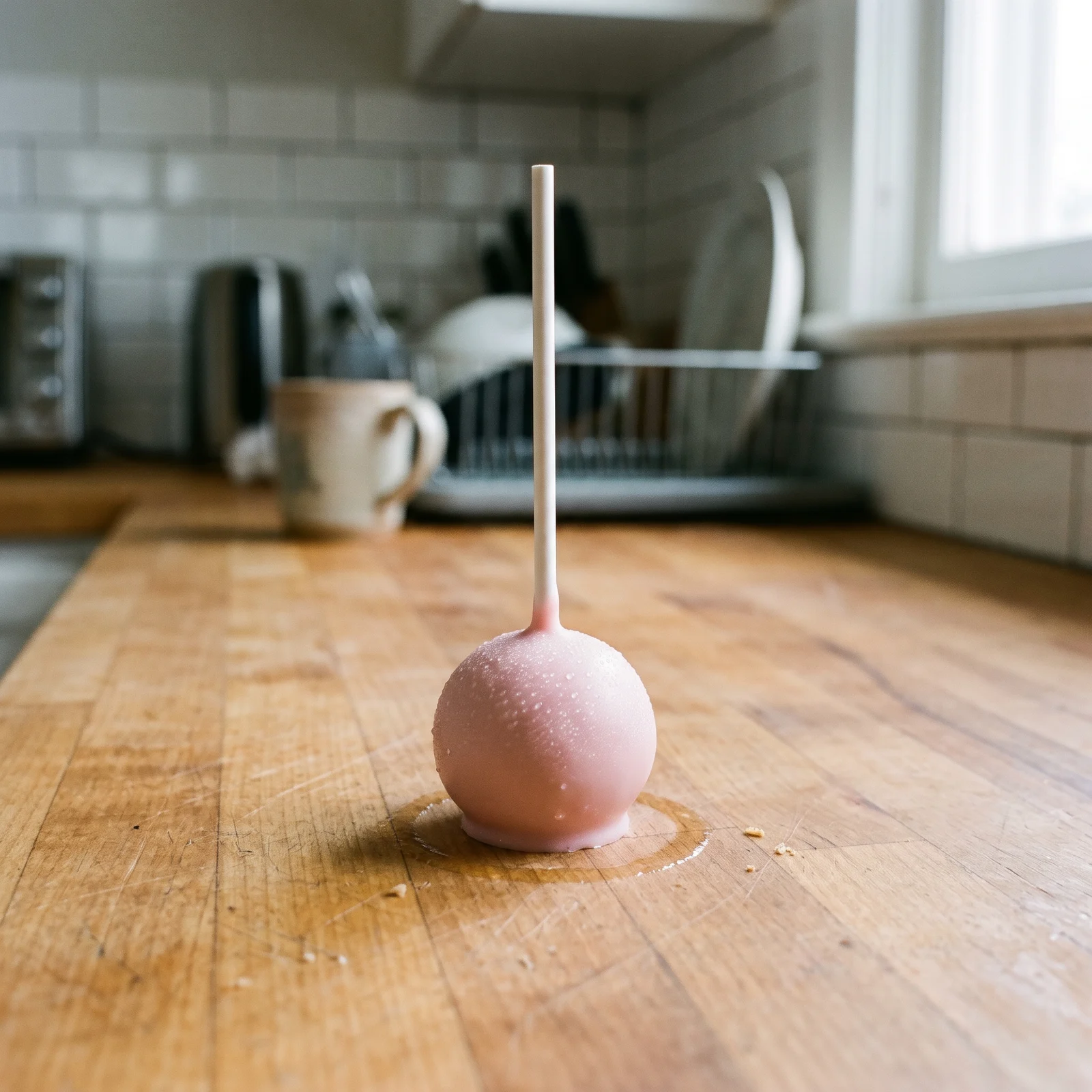
A smooth shell with a slight sheen, and a crumb that still gives. That is a pop kept the way Clemson Cooperative Extension wants chocolate, at 65 to 70°F with the humidity under 50 to 55 percent. So serve them as they are. That is how to store cake pops working as intended.
Verdict: use it, once dry
Sweating cake pops
Beads of water on the shell, minutes out of the fridge. Clemson Cooperative Extension explains it, since chocolate absorbs moisture in refrigerated environments. So leave them in the closed box until they warm up, rather than wiping them. A pop that sat wet can go sticky, though, so eat those first. The caramel sauce guide covers another sugar that dampness changes.

Verdict: use it
Bloomed, grey cake pops
A white or grey haze across the shell, with no change in smell. Clemson Cooperative Extension calls bloom the white powdery look that appears on the surface of chocolate. It also links it to the moisture and odours chocolate picks up in the fridge. So it is a looks problem, not a safety one. Use them at home, then coat a fresh batch for a party.

Verdict: eat them today
Dry, cracked cake pops
A cracked shell, and a crumb that has gone firm and dusty. Cake dries with age, and NDSU Extension warns that foods stored longer than recommended times may change quality, color and flavor. Illinois Extension adds the freezer version of that point, because freezing cannot refresh a baked good. They are safe to eat, though. So finish them today rather than chilling them again.

Verdict: throw it out
Moldy or sour cake pops
Any fuzzy spot, a sour smell, or a cream cheese pop that spent the night out. NDSU Extension lists cake among the foods to discard when they are visibly moldy. The visible mold may not be all the mold that developed. Its threadlike hyphae may have penetrated the food. NDSU settles the other half too, since potentially hazardous foods should not remain in the 40°F to 140°F range for longer than two hours. So bin them, bagged, then wash the box. Then check the pops that touched the bad one, as the sourdough bread guide does for a moldy loaf.
Can you make cake pops ahead of time?
Yes, up to a week ahead in the fridge, which is the 7 to 10 days NDSU Extension gives baked cake. For longer than that, freeze them, because Illinois Extension gives frosted cake 1 month at 0°F. Dip them on the day where you can, since the shell is the part that suffers in storage. MU Extension goes further for cakes, because it freezes cake and frosting separately for best results. So freeze the undipped balls, then coat them when they thaw. That is the version of how to store cake pops that holds up for a party.
Cake pop substitutes
Out of cake pops, or holding a tray that has gone dry? Then one of these will stand in.
Substitute
Works best in
What changes
Cupcakes
A party without sticks
NDSU Extension gives baked cakes 3 to 7 days in the pantry.
Muffins
A lunchbox
NDSU Extension gives baked muffins 7 to 10 days in the fridge, 6 months frozen.
Home-baked cookies
Keeping for weeks
NDSU Extension gives them 2 to 3 weeks in an airtight container.
Fruit cake
Making something far ahead
NDSU Extension gives fruit cakes 6 months in the pantry, 12 months frozen.
Mistakes people make when they store cake pops
These are the ways people get how to store cake pops wrong, and each one has an easy fix.
Chilling a cream cheese pop, then forgetting it on the table. NDSU Extension's two-hour limit starts the moment it leaves the fridge.
Unwrapping them straight from the fridge. Clemson Cooperative Extension says chocolate absorbs moisture in refrigerated environments, so let the closed box warm up first.
Standing them in a sunny window. Clemson keeps chocolate at 65 to 70°F, because heat softens the shell.
Freezing a dipped pop for months. Illinois Extension gives frosted cake 1 month, against 2 to 4 months unfrosted.
Using an egg-white frosting in the crumb, then freezing it. MU Extension says not to freeze seven-minute frosting or frosting made with egg whites.
Trusting a blog's two-week fridge figure. NDSU Extension gives baked cake 7 to 10 days, and no extension source goes beyond that.
Keeping the box in a damp cupboard. Clemson Cooperative Extension asks for relative humidity under 50 to 55 percent.
Sources
Food Storage Guide, Julie Garden-Robinson, NDSU Extension publication FN579, reviewed January 2023, on baked cakes keeping 3 to 7 days in the pantry, 7 to 10 days refrigerated and 6 months frozen, purchased cakes keeping 1 to 2 days, refrigerating cakes that have buttercream, whipped cream or custard frostings or fillings, opened frosting keeping 2 to 3 weeks in the refrigerator, soft cream cheese keeping 2 weeks refrigerated and not being recommended for freezing, cream cheese becoming crumbly when frozen, baked muffins keeping 7 to 10 days refrigerated and 6 months frozen, homemade cookies keeping 2 to 3 weeks in an airtight container, fruit cakes keeping 6 months in the pantry and 12 months frozen, keeping the freezer at 0 F or lower, and foods stored longer than recommended times changing quality, color and flavor.
Is Food In My Kitchen a Safety Hazard?, Julie Garden-Robinson, NDSU Extension publication FN492, reviewed October 2026, on potentially hazardous foods not remaining between 40 and 140 F for longer than two hours, discarding visibly moldy cake, the visible mold not being all the mold that developed, threadlike hyphae penetrating the food, and bagging moldy food before discarding it.
2024 Cottage Food Guide, University of Illinois Extension, October 2024, on cream cheese frosting always being transported and sold under 41 F, dairy in a buttercream frosting without eggs generally being a stable product because of the large amounts of powdered sugar added, sugar binding with available water to lower water activity, and frostings not containing raw eggs while powdered dehydrated eggs are allowed.
Frosting and dessert fillings, University of Minnesota Extension, Cottage Food Connection, October 2025, on a non-potentially hazardous product needing a water activity of 0.85 or lower or a pH of 4.6 or lower, uncooked dairy frostings needing a sugar concentration above 65 percent soluble solids, and about 2 ounces of powdered sugar for every 1 ounce of cream cheese.
Chocolate Overload: Tips for Storing Various Forms of Chocolate, Lauren Kucera, Clemson Cooperative Extension Home & Garden Information Center, February 2026, on storing chocolate at room temperature between 65 and 70 F with relative humidity lower than 50 to 55 percent, avoiding refrigerating chocolate when possible, chocolate absorbing odors and moisture in refrigerated environments leading to bloom, bloom being the white powdery look that appears on the surface, and wrapping chocolate tightly when refrigeration is unavoidable.
Freezer Storage, Illinois Extension, on frosted baked cake keeping 1 month in the freezer against 2 to 4 months unfrosted, freezing not refreshing baked goods and only maintaining the quality a food had before freezing, and 0 F as the safe temperature for frozen food.
How to Freeze Home-Prepared Foods, Susan Mills-Gray and Barbara Willenberg, MU Extension publication GH1505, reviewed August 2026, on freezing cake and frosting separately for best results, quick-freezing frosted cakes on a tray before packaging, not freezing seven-minute frosting or frosting made with egg whites, thawing frosted or filled cakes in the refrigerator, and keeping baked goods in their original wrapping to limit drying and moisture condensing on the surface.
Food Storage: Pantry, Pamela Schmutz and E.H. Hoyle, revised by Faith C Isreal, Clemson Cooperative Extension fact sheet HGIC 3525, revised March 2020, on a cool, dry pantry at 65 to 70 F, high temperature or humidity reducing storage time considerably, and avoiding storage areas near oven ranges, hot water pipes or heating ducts.
Storage times and safety advice on this page come from the sources above. Food safety depends on conditions I cannot see, so read the Disclaimer, and if in doubt, throw it out.
Other ingredient guides
Browse all guides




Share this guide
Never miss a guide
New ingredient guides when they go up, plus one storage tip worth knowing. Anything sponsored is labelled.

Emilly White