
About 3 days
Uncovered on day one, then bagged (NDSU, King Arthur)
2 to 3 weeks
NDSU, to slow mold; King Arthur says it dries bread fast
Up to 3 months
Sliced, wrapped airtight (King Arthur; NDSU says 3 to 5)
The short version: to store sourdough bread, leave a crusty loaf uncovered or under a bowl for its first day, then put it in an airtight bag. It keeps about 3 days that way. Slice and freeze anything you will not eat by then, because frozen sourdough keeps up to 3 months. Throw it out if you see mold, or if the crumb turns sticky and smells of overripe fruit.
Storage times here come from NDSU Extension and King Arthur Baking, while the mold rules come from the USDA Food Safety and Inspection Service and the rope science from a 2022 review in Foods.
On this page
What to check before you store sourdough bread
Two things decide how you store it: the crust and the size of the loaf. A crusty boule and a soft sandwich loaf both carry the sourdough name, but they want different handling. So look at the loaf before you reach for a bag.
Glass, a lid that seals, and a spoon that is properly dry.
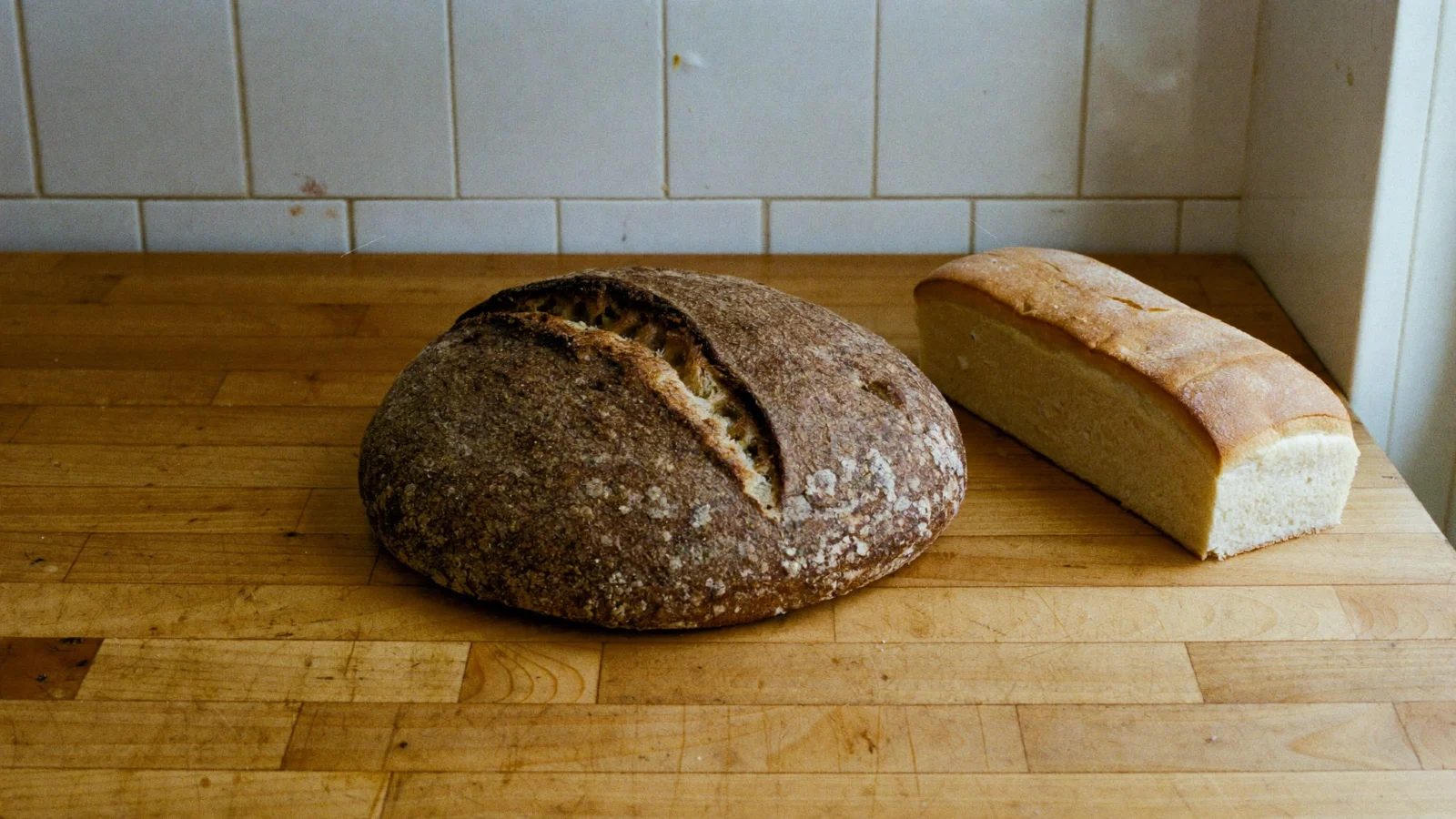
Crusty or soft changes the first day. King Arthur Baking treats them as two separate breads. Soft sourdough goes straight into an airtight bag, where it keeps up to a week at room temperature. A crusty loaf, by contrast, should cool uncovered, because a non-breathable bag softens its crust within hours.
Size matters as well. The same King Arthur page says large whole-grain rounds or ovals keep longer than small, thin loaves made with all-purpose or bread flour. So a big boule buys you an extra day, whereas a skinny baguette is best eaten the day you buy it.
Then check that the loaf is completely cool. King Arthur asks for that before you slice it, and its freezing guide explains why. Wrapping warm bread traps steam, which can lead to condensation and mold. That is the quickest way to ruin a good loaf.
Finally, look at the crumb for anything already wrong. USDA Food Safety and Inspection Service guidance is to discard bread and baked goods with mold, because porous foods can be contaminated below the surface. So a loaf with a spot on day one will not get better in a bag. The bread guide covers yeast loaves the same way.
How to store sourdough bread so it lasts
To store sourdough bread so it lasts, give it air first and a bag second. The crust needs to stay dry, while the crumb needs to keep its moisture. Since you cannot do both forever, the counter is a short stay and the freezer is the long one.
How do you keep sourdough bread fresh on the counter?
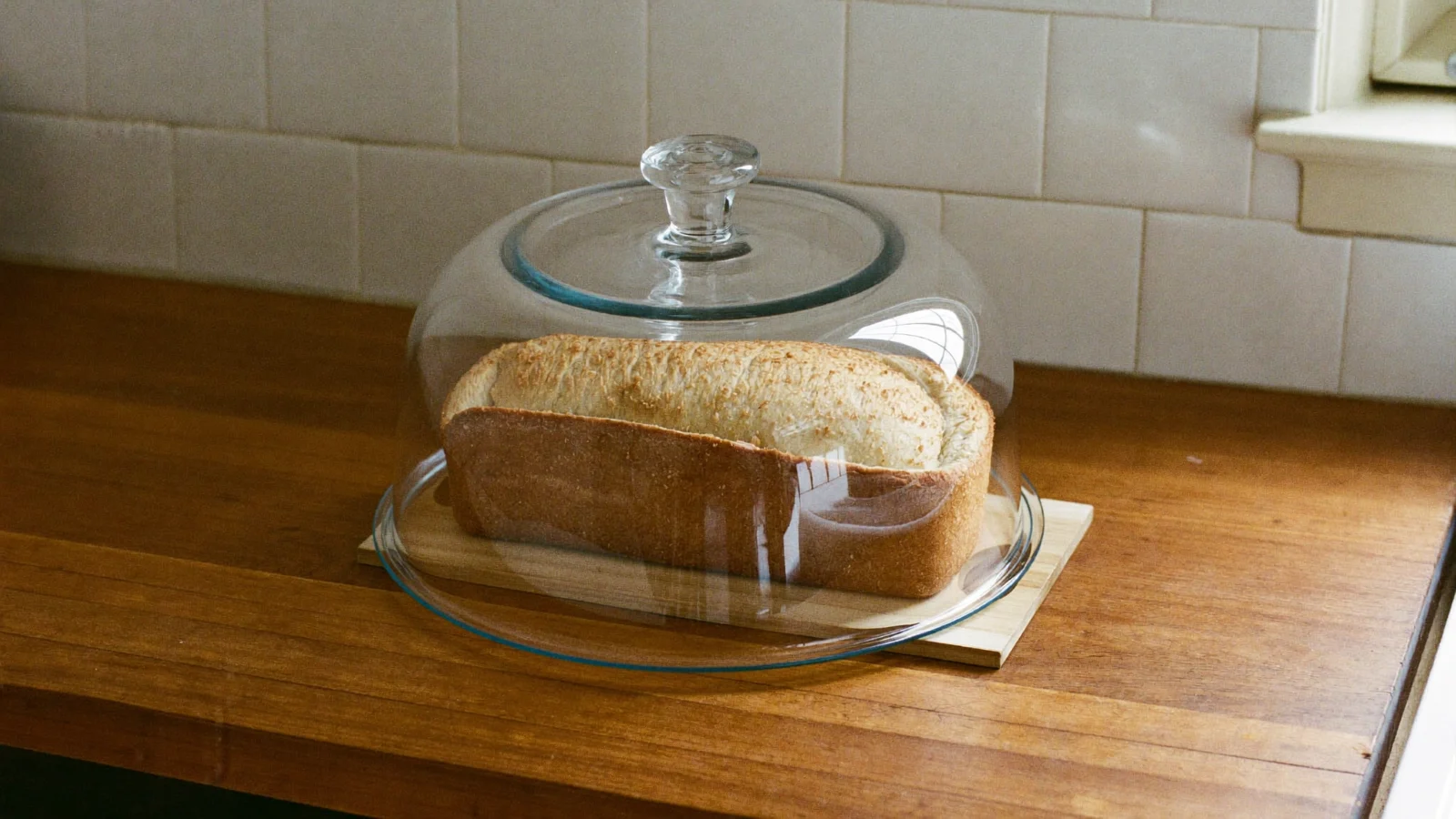
Crusty sourdough stays fresh on the counter for about a day uncovered or under a bowl, then needs an airtight bag, according to King Arthur Baking. For the first 12 hours, it says to leave the cooled loaf uncovered. Up to about 24 hours, a cake cover or a large bowl keeps the inside moist while air keeps the crust crisp. After that, an airtight bag is its top choice, because paper does not stop the crust softening and it speeds up staling inside. Cloth, meanwhile, is only slightly better than paper.
Sealed, cool and dark, and nowhere near the cooker.
How long does sourdough bread last?
Sourdough bread lasts about 3 days on the counter, 2 to 3 weeks in the fridge and up to 3 months in the freezer, according to NDSU Extension and King Arthur Baking. NDSU Extension gives bread and rolls 3 days in the pantry. Its chart then gives baked bread with no preservatives 2 to 3 weeks in a fridge at 32 to 40°F, and 3 to 5 months in a freezer at 0°F.
King Arthur stretches the counter figure for soft sourdough, however, since it gives a bagged soft loaf up to a week at room temperature. So treat 3 days as the safe figure for a crusty loaf, and a week as the outside limit for a soft one. In both cases, the freezer is where anything older belongs.
Should you refrigerate sourdough bread?
Sourdough bread does keep longer in the fridge, but the experts disagree about whether that is worth it. NDSU Extension recommends refrigeration for bread with no preservatives, because cold inhibits mold growth. King Arthur Baking, on the other hand, says refrigeration dries bread out very quickly. So use the fridge only in a hot, humid kitchen where mold is the bigger risk, and plan to toast what comes out of it.
Does sourdough bread go moldy slower than other bread?
Sourdough bread does resist mold a little better than ordinary bread, because the acids its cultures make slow mold down, according to King Arthur Baking and a University of Nebraska study. King Arthur Baking credits the bread's pH for keeping it mold-free longer. A University of Nebraska-Lincoln study explains the reason, since lactic acid bacteria in the cultures produce organic acids that inhibit spoilage molds. That study tested four American sourdough cultures in the lab rather than in loaves, however. So it is a head start, not a guarantee.
How do you store sourdough bread after cutting it?
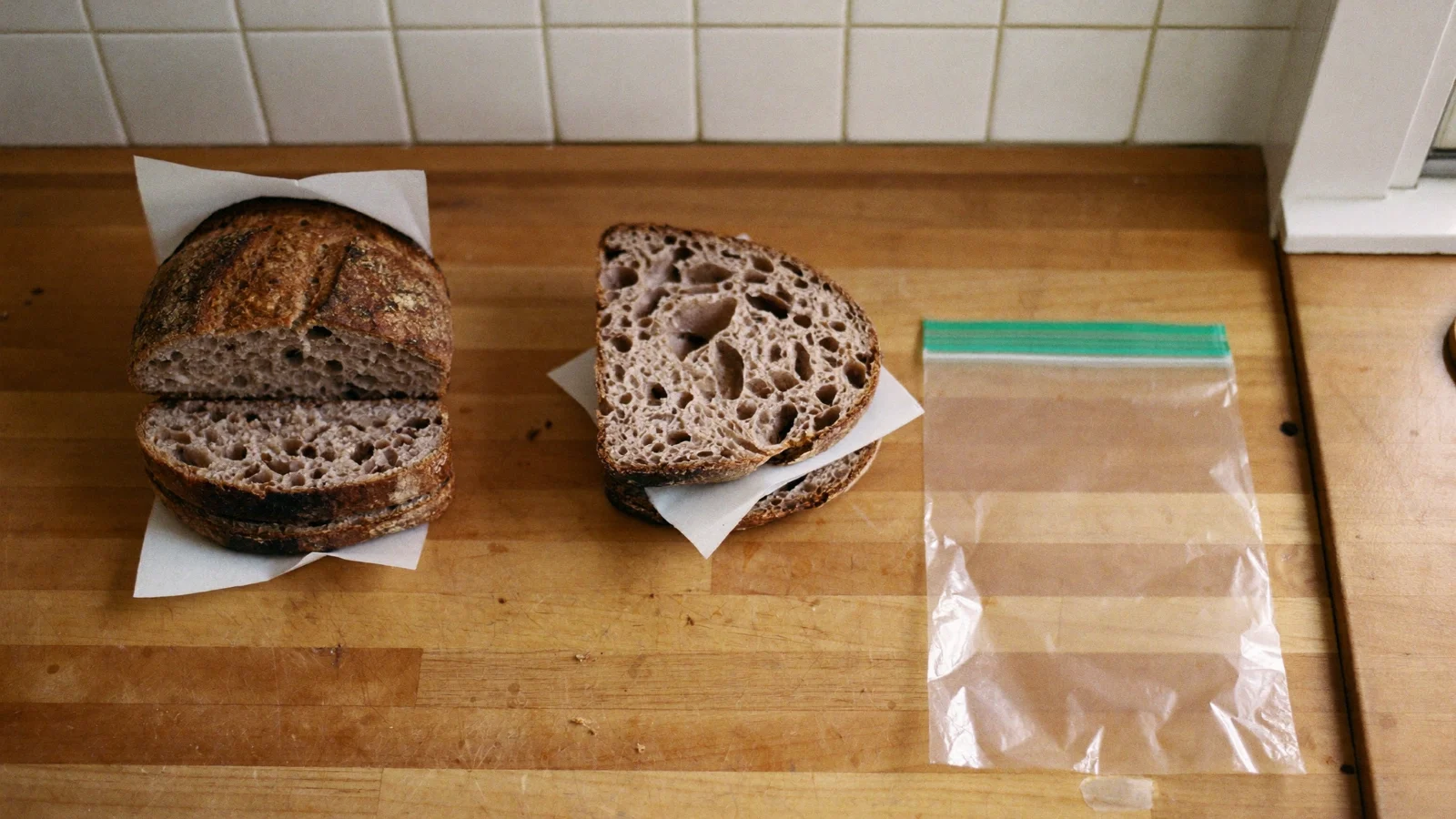
Cut sourdough bread keeps best when you slice from the middle and press the two halves together, according to King Arthur Baking. That way the crust covers both cut faces, which helps the loaf hold on to its moisture. Then wrap it tightly. A loaf cut from one end, by contrast, leaves an open face drying out on the board.
Can you freeze sourdough bread?
Sourdough bread freezes well for up to 3 months, according to King Arthur Baking, and it is the better choice than the fridge for anything you will not eat within a few days. NDSU Extension allows longer, since it gives baked bread with no preservatives 3 to 5 months at 0°F. Take the shorter figure for flavor, then.
How do you freeze sourdough bread?
Sourdough bread freezes best sliced, with parchment between every one or two slices, in an airtight bag, according to King Arthur Baking. Let the loaf cool completely first. King Arthur's freezing guide also asks for more than one airtight layer, such as plastic wrap inside a bread bag, because air exposure brings staling and freezer smells. Slicing first means you can take out two pieces at a time rather than thawing the whole loaf.
Below 41 degrees it keeps for years, but it barely pours.
How do you thaw frozen sourdough bread?
Frozen sourdough slices can go straight into the toaster, while a whole loaf needs about three hours on the counter in its wrapping, according to King Arthur Baking. A large loaf or a cold kitchen takes longer than that. Slices left out instead thaw in under 30 minutes. Then, to bring back the crust, warm the thawed loaf in a 350°F oven.
How do you revive stale sourdough bread?
Stale sourdough bread comes back if you spray it with water and bake it at 350°F for about 15 minutes, according to King Arthur Baking. Sprinkle or spray the loaf generously, then warm it uncovered, straight on the oven rack. For single slices, a toaster or toaster oven does the same job. This works on staling only, though, so it will not rescue a loaf with mold.
How to tell if sourdough bread has gone bad
Most old sourdough is stale rather than spoiled, and stale bread is still food. Two things end a loaf, however: mold and rope. USDA Food Safety and Inspection Service guidance is to discard moldy bread, and rope is a bacterial spoilage you can smell before you see it. Here is what each stage means, then.

Verdict: use it
Fresh, crackly sourdough
A hard, crackly crust and a soft, slightly springy crumb. This is the loaf on its first day, and the reason to leave it uncovered, since King Arthur Baking says a sealed bag softens that crust within hours. So enjoy it as it is, and bag it tomorrow.

Verdict: toast it
Sourdough with a soft, leathery crust
The crust has gone soft and chewy, while the inside is still fine. That is what a bag does to a crusty loaf, as King Arthur explains, and it is a texture change rather than spoilage. So toast the slices, or warm the whole loaf in a 350°F oven, which King Arthur uses to bring a crust back.

Verdict: refresh it or bake with it
Hard, stale sourdough
Dry, firm and crumbly when you tear it, with no spots and no odd smell. Staling is moisture leaving the crumb, which is why King Arthur Baking warns that the fridge dries bread out so quickly. Spray it and warm it at 350°F for about 15 minutes. If it is past that, turn it into croutons or breadcrumbs instead.
Verdict: throw it out
Sticky, stringy sourdough
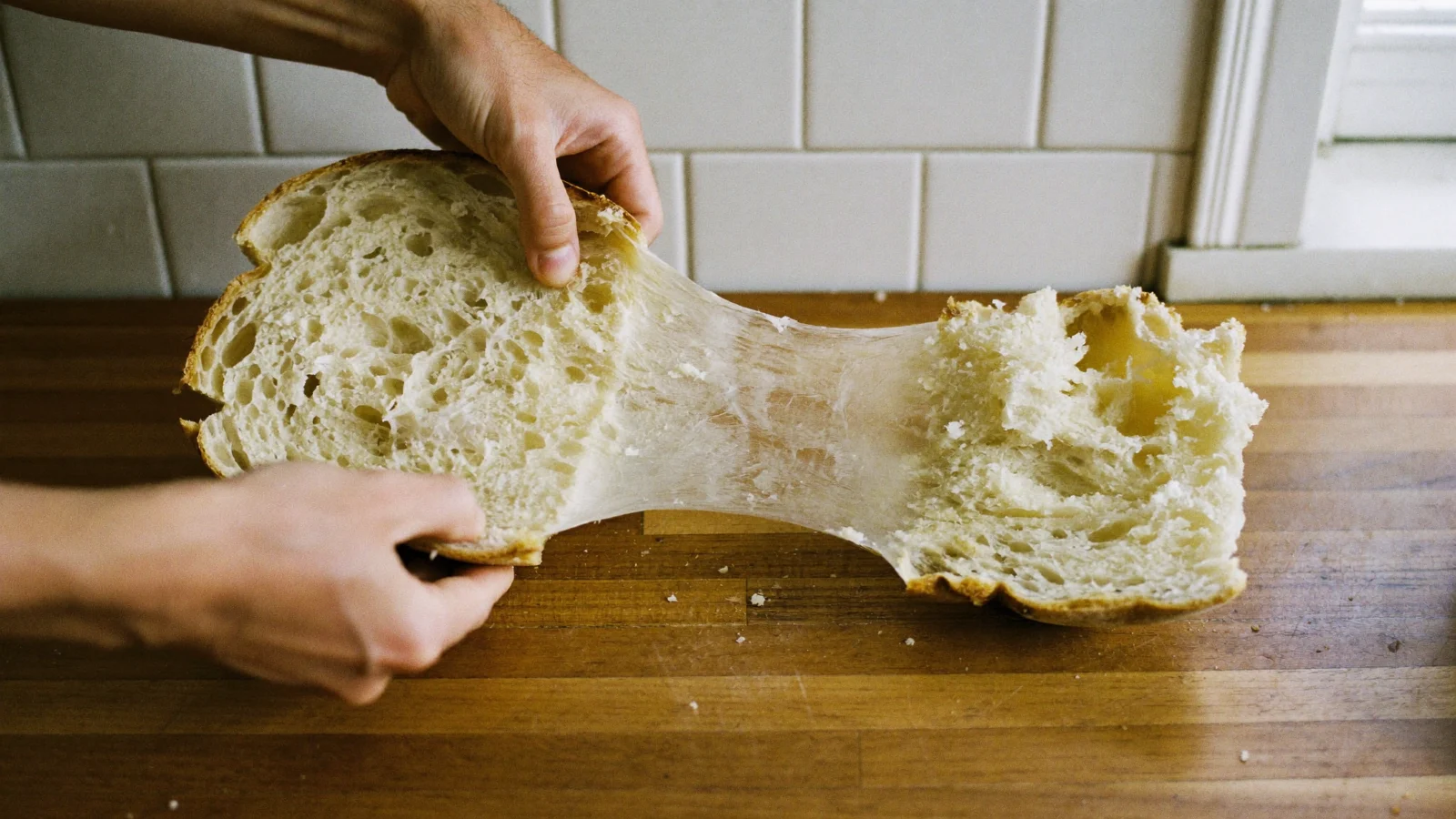
A damp, sticky crumb that pulls into fine threads, and a sweet smell like overripe melon or pineapple. This is rope, a spoilage caused by Bacillus bacteria. A 2022 review in Foods describes the crumb forming long, silky, web-like strands when pulled apart. It also says rope favors warm, moist bread with a pH above 5, which is why sourdough is less prone to it. Less prone is not immune, though, so bin it.
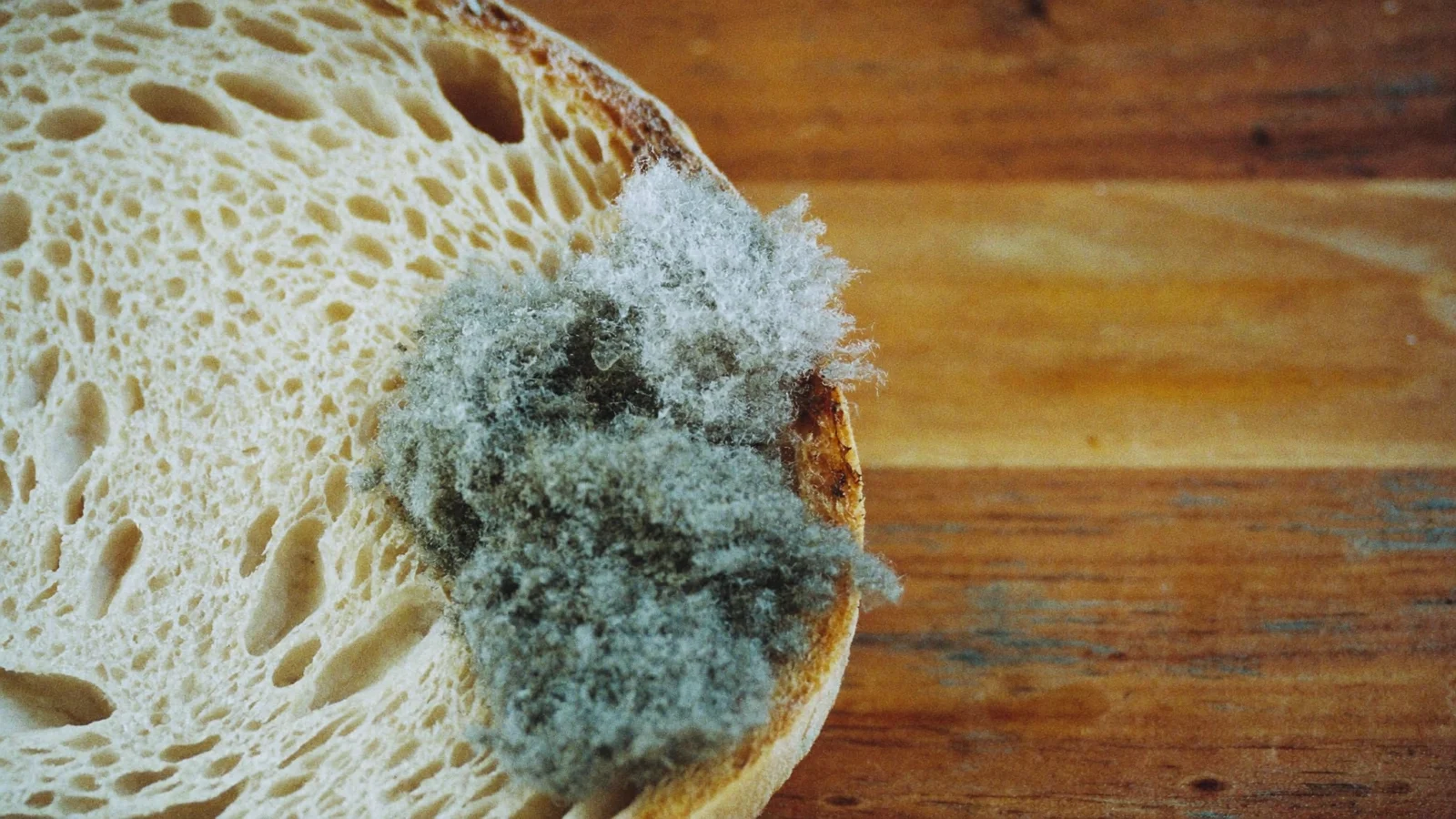
Verdict: throw it out
Moldy sourdough bread
Fuzzy spots in white, green, blue or black, on the crust or in the crumb. USDA Food Safety and Inspection Service guidance says to discard bread and baked goods with mold, because porous foods can be contaminated below the surface. Its explanation is that molds send root threads deep into food. FSIS also warns not to sniff the moldy item. So throw out the whole loaf, not just the slice with the spot.
Is sourdough bread left out overnight okay?
Sourdough bread left out overnight is fine to eat, because bread is meant to live at room temperature and NDSU Extension gives it 3 days in the pantry. The only cost is texture, since a crusty loaf left uncovered all night will be drier in the morning. Bag it once you are up. The food left out overnight list covers the rest of the table, where most other foods are not so forgiving.
Sourdough bread substitutes
Out of sourdough, or did the last loaf turn? Then one of these will stand in.
Substitute
Works best in
What changes
Rye bread
Sandwiches and toast
Tangy and dense, so it is the closest in flavor.
Ciabatta
Dipping and panini
Open and chewy, although it lacks the sour note.
Whole wheat bread
Everyday sandwiches
Softer crust, so it handles a bag better.
Mistakes people make when they store sourdough bread
These are the ways people store sourdough bread that cost them the most, and each one has a simple fix.
Bagging it while it is still warm. King Arthur warns that trapped steam leads to condensation and mold, so let the loaf cool completely first.
Sealing a crusty loaf on day one. A non-breathable bag softens the crust within hours, so leave it uncovered or under a bowl for the first day.
Trusting a paper bag for days. King Arthur found paper does not stop the crust softening and speeds up staling inside, so switch to an airtight bag after day one.
Cutting from the end. Slice from the middle instead and press the halves together, so the crust protects both cut faces.
Putting it in the fridge by default. Cold slows mold, but King Arthur says it dries bread out very quickly, so freeze what you cannot finish.
Freezing the loaf whole. Slice it first, with parchment between slices, so you can take out only what you need.
Cutting the mold off. USDA guidance is to discard moldy bread, because the mold's roots reach below what you can see.
Sources
How to store sourdough bread, PJ Hamel, King Arthur Baking, November 2024, on storing soft and crusty sourdough, uncovered, covered and bagged storage times, paper and cloth bags, larger whole-grain loaves keeping longer, cutting from the middle, sourdough's pH and mold, refrigeration drying bread out, freezing sliced with parchment, and refreshing a loaf at 350°F for about 15 minutes.
How can I freeze my bread? (And defrost it, too!), Annabelle Shippee, King Arthur Baking, December 2023, on freezing most bread for up to three months, cooling it completely first, airtight layers, thawing a loaf for about three hours and slices in under 30 minutes, and warming at 350°F.
Food Storage Guide, Julie Garden-Robinson, NDSU Extension publication FN579, reviewed January 2023, on bread and rolls at 3 days in the pantry, baked bread with no preservatives at 2 to 3 weeks in the refrigerator and 3 to 5 months frozen, refrigeration to inhibit mold, a refrigerator at 32 to 40°F and a freezer at 0°F.
Molds on Food: Are They Dangerous?, Food Safety and Inspection Service, U.S. Department of Agriculture, on discarding moldy bread and baked goods, porous foods being contaminated below the surface, mold root threads, and not sniffing moldy food.
Inhibition of Mold Growth by Sourdough Bread Cultures, Pei Ven Kam, Andreia Bianchini and Lloyd B. Bullerman, University of Nebraska-Lincoln, Review of Undergraduate Research in Agricultural and Life Sciences, May 2007, on lactic acid bacteria in sourdough cultures producing organic acids that inhibit spoilage molds, tested with four American sourdough cultures.
Ropiness in Bread: A Re-Emerging Spoilage Phenomenon, Nicola Pacher and colleagues, Foods, 2022, on the sweet, fruity smell and silky, web-like strands of rope, the Bacillus bacteria behind it, and rope favoring warm, moist bread above pH 5.
Storage times and safety advice on this page come from the sources above. Food safety depends on conditions I cannot see, so read the Disclaimer, and if in doubt, throw it out.
Other ingredient guides
Browse all guides


Share this guide
Never miss a guide
New ingredient guides when they go up, plus one storage tip worth knowing. Anything sponsored is labelled.

Emilly White