
Unopened jars only
Cool and dark. Homemade caramel never belongs here
2 to 3 weeks
Airtight, with a clean dry spoon. It hardens a little as it chills
About 3 months
Airtight plastic rather than glass. Thaw it, then warm it
The short version: to store caramel sauce well, refrigerate anything made with cream or butter. Keep it airtight, then use it within 2 to 3 weeks, or freeze it for about 3 months.
Storage times from Iowa State University Extension, with caramel apple safety from Penn State and University of Minnesota Extension.
On this page
What to check before you store caramel sauce
Caramel sauce keeps for weeks rather than days, so the question is not freshness but what is in it. Read the label or your own recipe first, because cream, butter and milk all change where the jar belongs. The Halloween leftovers guide covers candy, pumpkin pie and party food too.
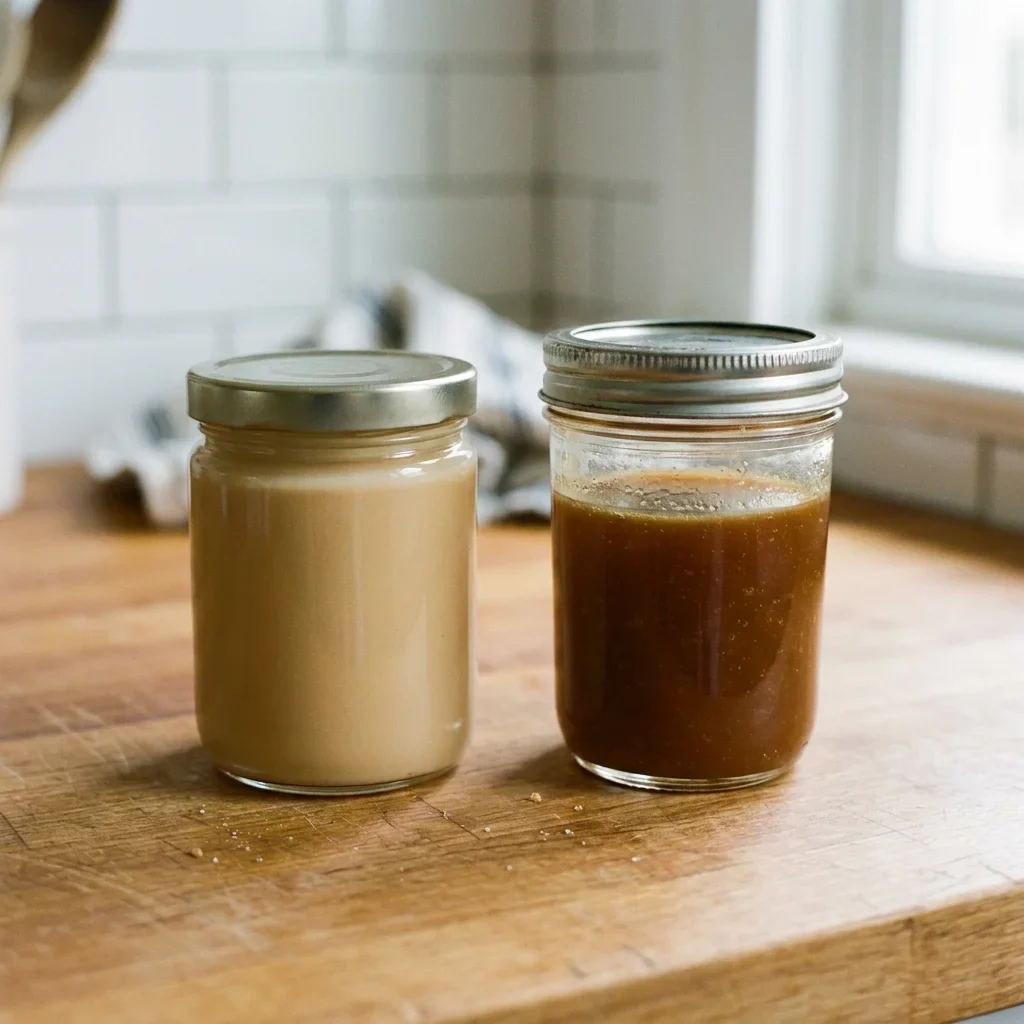
Homemade caramel sits darker and less even than a store jar.
Dairy in the ingredients means the fridge. Iowa State University Extension is blunt about it: any caramel product made with dairy, such as cream, must be refrigerated.
A shelf-stable jar can still contain milk. Smucker's lists nonfat milk in its spoonable caramel topping. The brand then points you to the package for storage, so read that line before you put the jar away.
Some toppings should never go in the fridge. Smucker's says to keep its Magic Shell caramel topping at room temperature, even after opening. Below 65°F, the brand warns, it separates and hardens.
A jar you can seal, rather than a bottle you have already opened. Air dries caramel out, while humidity makes it sticky. That is why Iowa State University Extension asks for an airtight container.
How to store caramel sauce so it lasts
To store caramel sauce so it lasts, keep it cold, covered and clean. Because the sauce carries cream and butter, it behaves like dairy rather than like sugar. So treat the jar the way you treat an open carton of cream.
How to store caramel sauce in the fridge
Let the sauce cool first, then pour it into an airtight jar and refrigerate it. Iowa State University Extension warns that air dries caramel out, while humidity makes it sticky. So a tight lid does more work than the material of the jar. Also use a clean, dry spoon each time, since crumbs and water are what mold needs to start.

Airtight, cold, and stiffer than when you poured it.
How long can you store caramel sauce?
In the fridge, 2 to 3 weeks. Iowa State University Extension gives that window, and it notes the sauce hardens a little as it chills. Recipe sites often stretch it to 4 weeks, but none of them names a test or an authority. So take the shorter figure, especially for a sauce heavy with cream.
Those weeks describe quality as much as safety, though. In fact, a jar that has hardened or turned grainy is usually still good. Mold or a sour smell, on the other hand, is the line you do not cross.
Should you store caramel sauce in the pantry?
Only while the jar is sealed. A shelf-stable topping is processed to sit at room temperature, so an unopened jar belongs in a cool, dark cupboard. After you open it, read the storage line on the package. Smucker's sends you there rather than giving one rule for every topping. Homemade caramel skips the pantry altogether, since Iowa State University Extension puts any dairy caramel in the fridge.
How to store caramel apples at Halloween
Refrigerate them, and do not let them sit out all evening. Penn State food safety specialist Luke LaBorde puts the limit at about two hours. After that, caramel apples belong in the fridge at 40°F or lower. Iowa State University Extension then gives refrigerated caramel apples up to one week. So a tray dipped on Halloween afternoon is fine for the party. The leftovers go into the fridge, though, rather than onto a plate left out overnight.
How to store caramel sauce for caramel apples
Keep the dipping caramel warm while you work, then chill what is left. Iowa State University Extension dips in a slow cooker set to low. It stirs every 10 minutes, so the butter does not separate. Pour any leftover caramel into a jar once it has cooled, then refrigerate it like any other batch. Push the sticks into the apples only when you are ready to dip. The hole, after all, is where the trouble starts.
Can you freeze caramel sauce?
Yes, for about three months. Iowa State University Extension freezes caramel sauce in an airtight plastic container for up to three months. After that it thaws the jar at room temperature, then warms it if the sauce needs loosening. So the freezer is the honest answer to a big October batch you will not finish in three weeks.
How to store caramel sauce in the freezer
Cool the sauce completely first, because warm caramel puts steam inside the container. Then pack it into airtight plastic, which is what Iowa State University Extension recommends for the freezer. Air dries caramel out, as the same source notes, so press the lid down firmly. Label the container with the date, since three months passes faster than it sounds.
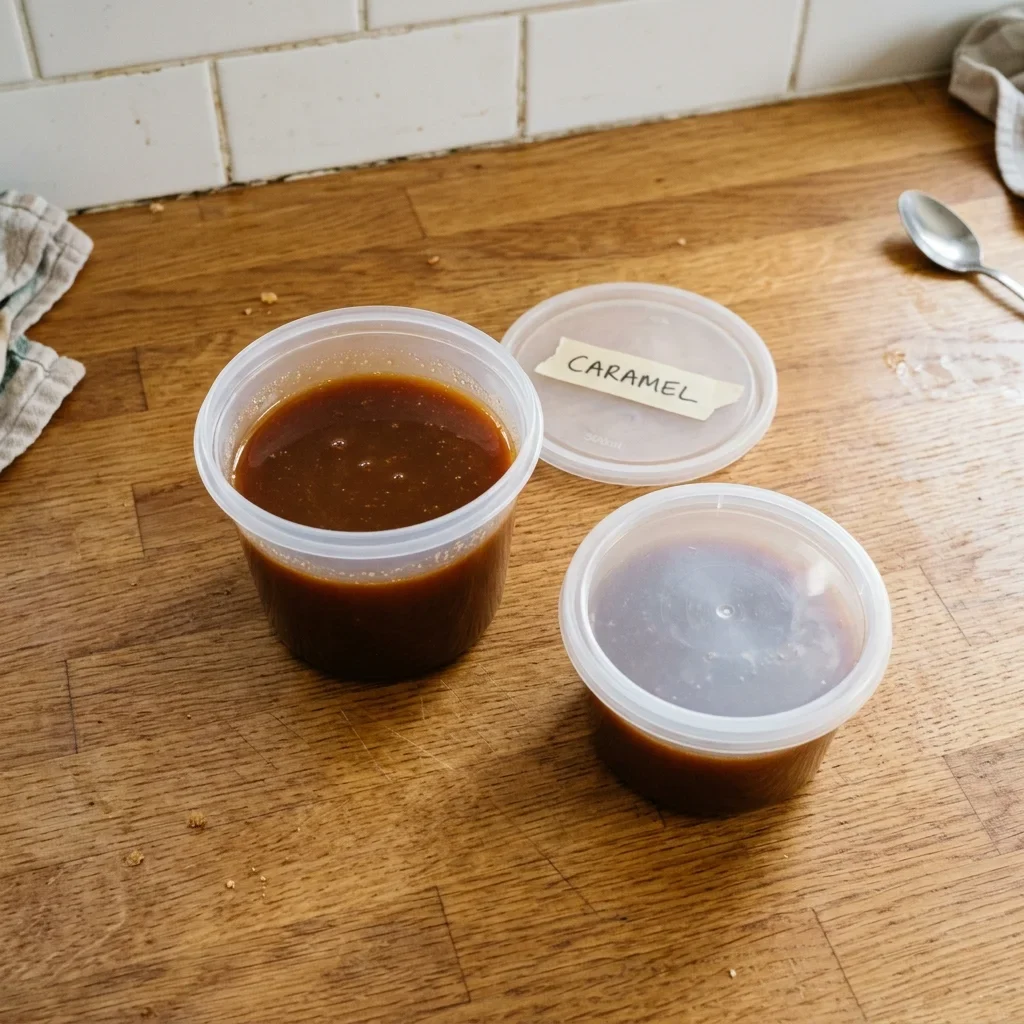
Airtight plastic rather than glass, for a batch you will not finish.
Can you store caramel sauce in a glass jar?
In the fridge, yes, and a clean glass jar with a tight lid is ideal. For the freezer, though, Iowa State University Extension calls for an airtight plastic container instead. Glass also washes out more easily than a squeeze bottle, so it suits a jar you refill every autumn.
What happens when you store caramel sauce in the freezer
Mostly it thickens, and then it comes back. Iowa State University Extension thaws frozen sauce at room temperature, then warms it if it needs loosening. In other words, the freezer costs you a little texture rather than the batch. Still, a sauce you plan to drizzle is better made fresh. A frozen jar, meanwhile, is fine stirred into coffee or spooned over ice cream.
How to tell if caramel sauce has gone bad
However you store caramel sauce, most of what goes wrong is texture rather than safety. Hard, grainy and separated caramel can all be warmed back into shape. Mold and a sour smell, on the other hand, mean the jar goes in the bin. Here is what each stage means.

Verdict: use it
Smooth, pourable caramel sauce
Even amber color, a glossy surface, and the smell of cooked sugar and butter. Fresh from the pan or straight out of a new jar, that is what it should look like. Kept airtight in the fridge, it holds for 2 to 3 weeks.

Verdict: warm it, then use it
Firm, thick caramel sauce from the fridge
Cold caramel sets up hard, and that is normal. Iowa State University Extension says refrigerated caramel sauce hardens slightly, so microwave it to smooth it again. A short burst, a stir, then another burst works better than one long blast.

Verdict: fix it, then use it
Grainy or crystallized caramel sauce
Grainy caramel is not spoiled, it has crystallized. Iowa State University Extension explains that sucrose molecules regroup into crystals. An undissolved grain on the side of the pan often seeds that, and extra stirring can start it too. Adding a little water and reheating gently dissolves the crystals again. To avoid it next time, use corn syrup, honey or a squeeze of lemon juice. Honey crystallizes for much the same reason, and it takes the same warm-water fix. Invert sugars and acids both get in the way of crystals forming.
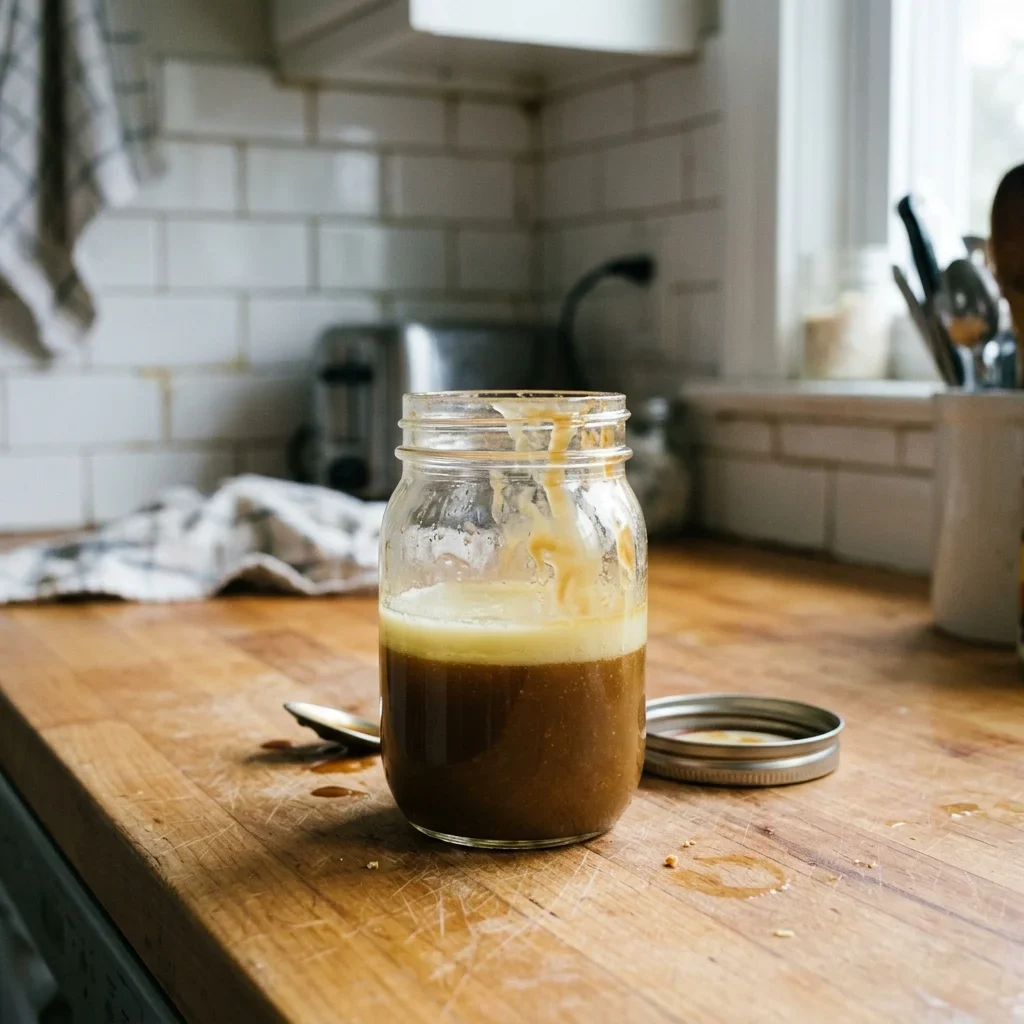
Verdict: stir it back together
Separated or oily caramel sauce
A layer of butterfat on top means the emulsion has broken, usually from heat. Iowa State University Extension meets the same problem in a dipping pot. That is why it stirs slow-cooker caramel every 10 minutes. Warming the jar gently and stirring usually brings it back together. Even so, check the smell first, because separation and spoilage can turn up in the same old jar.
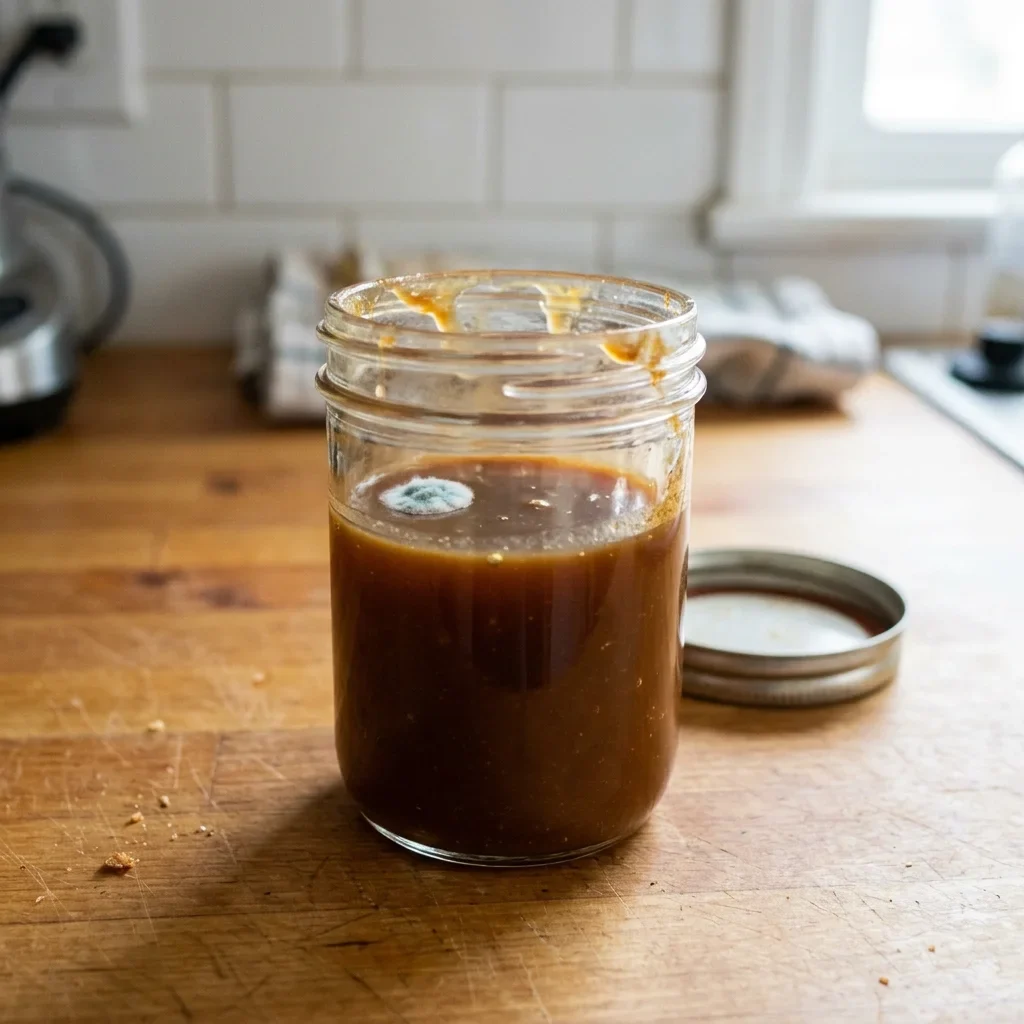
Verdict: throw it out
Moldy or sour caramel sauce
Fuzz of any color on the surface, or a sour, fermented smell, and the jar goes. The USDA puts jams and jellies in the discard column. Its factsheet says the mold could be producing a mycotoxin. Microbiologists, it adds, recommend against scooping out the mold and using the rest. The same factsheet notes that molds tolerate salt and sugar better than most other food invaders. They also grow at fridge temperatures. Do not sniff it closely, which the USDA warns against as well.
Why do caramel apples need the fridge?
Because the stick creates a pocket that the caramel then seals in. University of Minnesota Extension puts an apple's pH at 4.0 or lower, which is too acidic for Listeria. Caramel is usually too dry for it too, at a water activity of 0.80 or lower. Push a stick in, though, and pathogens travel into the fruit while juice collects under the coating. Penn State calls the result a sugary microenvironment where Listeria could grow unchecked. That was not theory. In the outbreak the CDC traced to prepackaged caramel apples, 35 people in 12 states fell ill. Of those, 34 went to hospital, and the CDC reported seven deaths. Minnesota Extension also notes that Listeria grows below 41°F. So a week in the fridge is the limit, not a month.
Caramel sauce substitutes
Out of caramel sauce, or had to throw the jar out? Then one of these will usually do the job.
Substitute
Works best in
What changes
Dulce de leche
Drizzling and filling
Milkier and less toasty. Refrigerate it like caramel.
Butterscotch sauce
Ice cream and puddings
Brown sugar rather than caramelized sugar. Just as sweet.
Maple syrup
Pancakes and oatmeal
Thinner and less rich. Good where you want no dairy.
Honey warmed with butter
Apple slices and toast
Floral rather than toasty. Mix it fresh each time.
Mistakes people make when they store caramel sauce
These are the ways people store caramel sauce that cost them the most, and each one has an easy fix.
Leaving homemade caramel on the counter. Because it is made with cream and butter, it belongs in the fridge.
Throwing out grainy caramel. Crystals dissolve again with a little water and gentle heat, so warm it instead.
Scooping mold off the top. The USDA says to discard a moldy jar rather than scraping it, so the whole jar goes.
Dipping with a wet spoon. Water and crumbs give mold a start, so use a clean, dry spoon each time.
Freezing it in a glass jar. Iowa State University Extension packs caramel for the freezer in airtight plastic instead.
Leaving caramel apples out for the whole party. After about two hours they belong in the fridge at 40°F or lower.
Pushing the sticks in early. Dip the apples straight after the sticks go in, since that hole is where Listeria grows.
Sources
Success with Caramel, Marlene Geiger, AnswerLine, Iowa State University Extension and Outreach, October 2021, on crystallization, refrigerating dairy caramel, fridge and freezer times and dipping caramel apples.
Caramel apples stored at room temperature for extended periods can pose risk, Penn State, October 2017, on the two-hour limit, 40°F and the sugary microenvironment under the caramel.
Listeria and candied and caramel coated apples, University of Minnesota Extension, reviewed 2023, on apple pH, caramel water activity, inserted sticks and Listeria growth below 41°F.
Multistate Outbreak of Listeriosis Linked to Commercially Produced, Prepackaged Caramel Apples, Centers for Disease Control and Prevention, final update February 2015, on the 35 illnesses in 12 states, 34 hospitalizations and seven deaths.
Molds on Food: Are They Dangerous?, USDA Food Safety and Inspection Service, revised September 2005, on discarding moldy jams and jellies, mycotoxins and mold tolerating sugar.
Caramel Flavored Spoonable Topping, Smucker's, on nonfat milk in the ingredients and reading the package for storage.
Magic Shell Caramel Flavored Topping, Smucker's, on room-temperature storage after opening and separating below 65°F.
Storage times and safety advice on this page come from the sources above. Food safety depends on conditions I cannot see, so read the Disclaimer, and if in doubt, throw it out.
Other ingredient guides
Browse all guides
Share this guide
Never miss a guide
New ingredient guides when they go up, plus one storage tip worth knowing. Anything sponsored is labelled.

Emilly White