
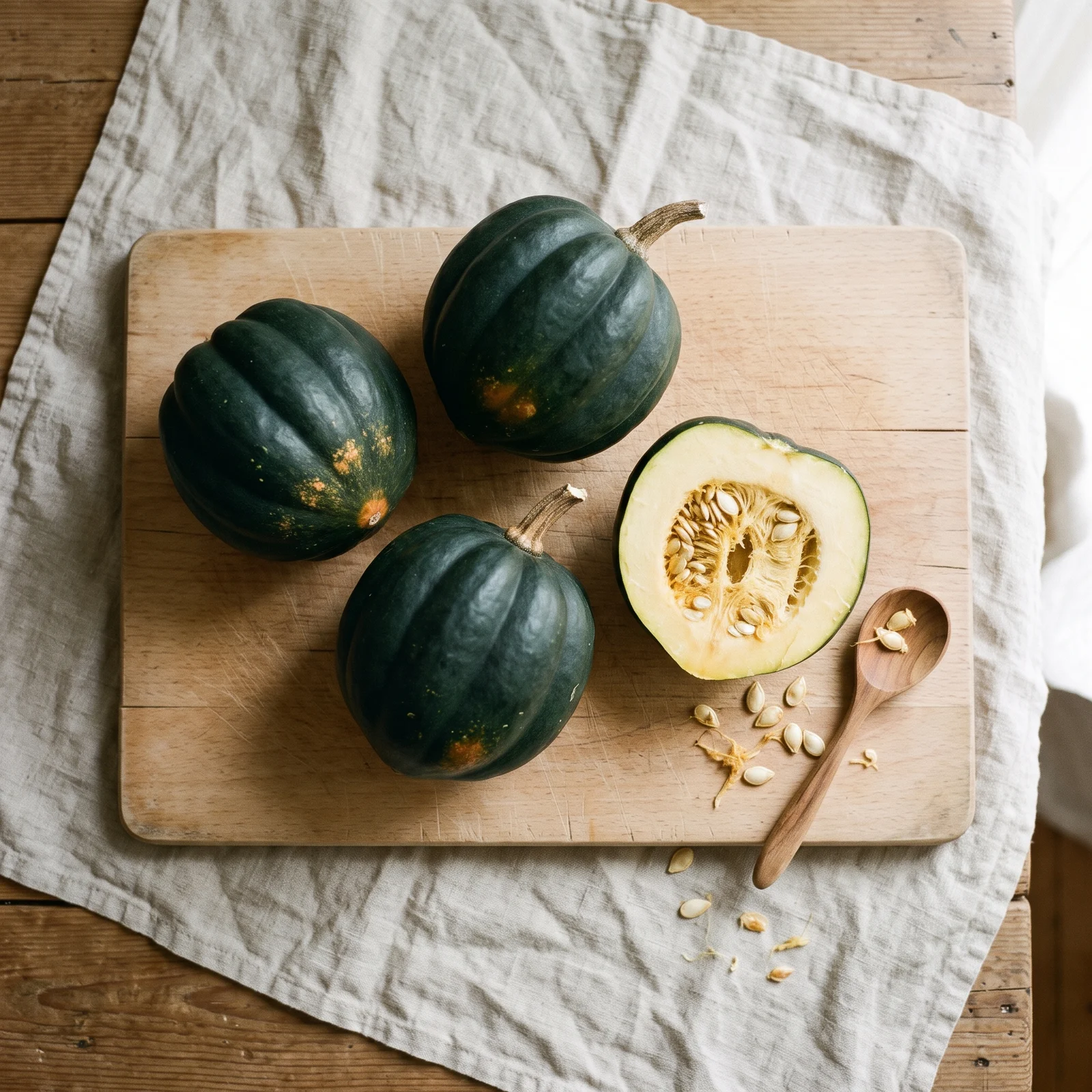
5 to 8 weeks
Whole and uncured, 50 to 55°F, dry and ventilated (Iowa State)
Up to 1 week
Cut, wrapped or in a vapor-proof container (WSU)
Up to 1 year
Cooked and mashed, half-inch headspace (Penn State)
The short version: to store acorn squash well, skip the curing step. Keep it whole somewhere cool, dry and airy at 50 to 55°F, because warmth shortens the clock. Then plan on 5 to 8 weeks rather than months. After you cut it, however, wrap it and refrigerate it for up to a week. For anything longer, cook it, mash it and freeze it.
Storage temperatures and shelf lives here come from Iowa State University Extension and Clemson Cooperative Extension. The cut and frozen figures also come from WSU Extension and Penn State Extension.
On this page
What should you look for when you buy acorn squash?
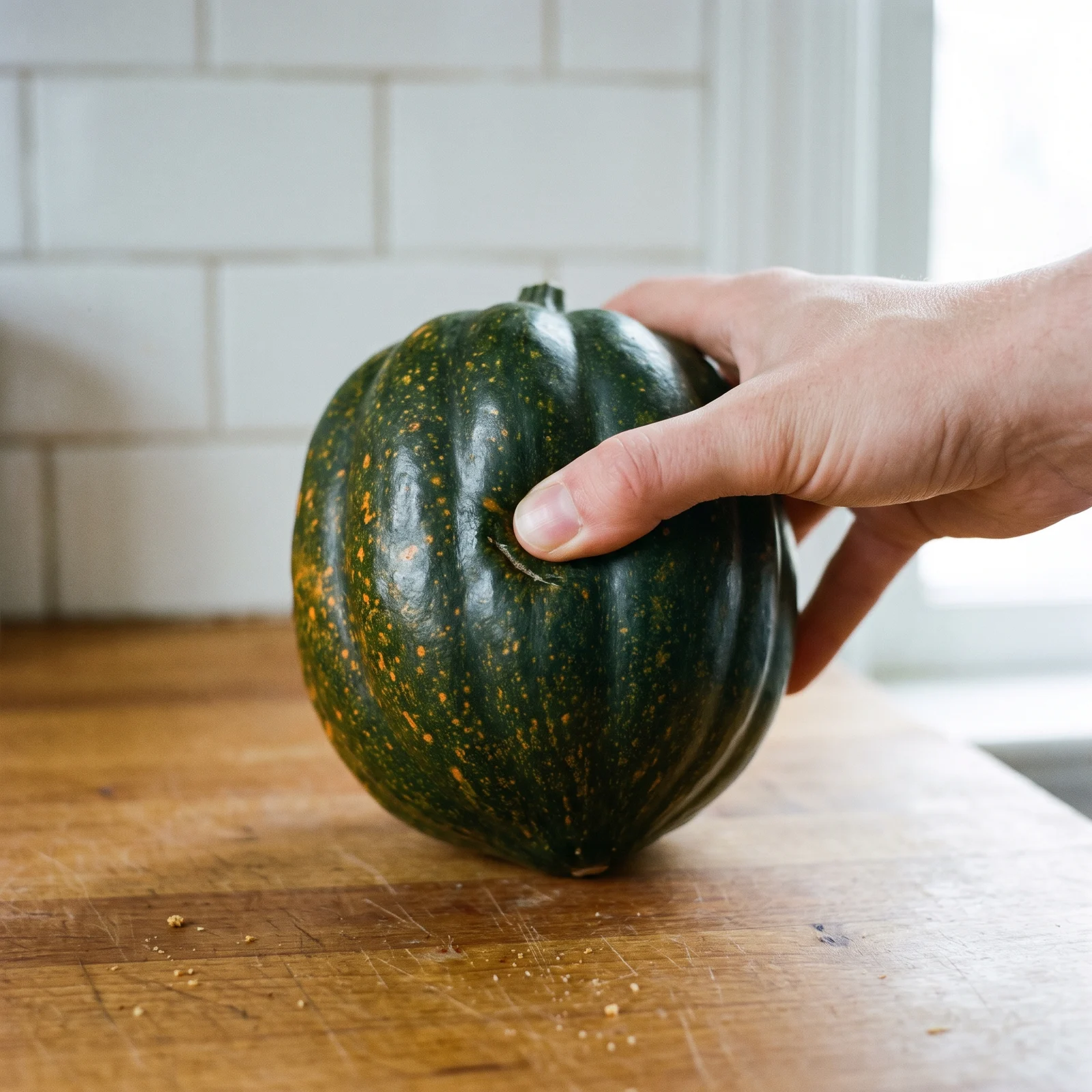
Pick an acorn squash with dull, hard skin. Iowa State Extension calls a squash fully mature when the surface looks dull. The rind should also resist a thumbnail. A glossy one was picked early, so it will not keep however well you store it.
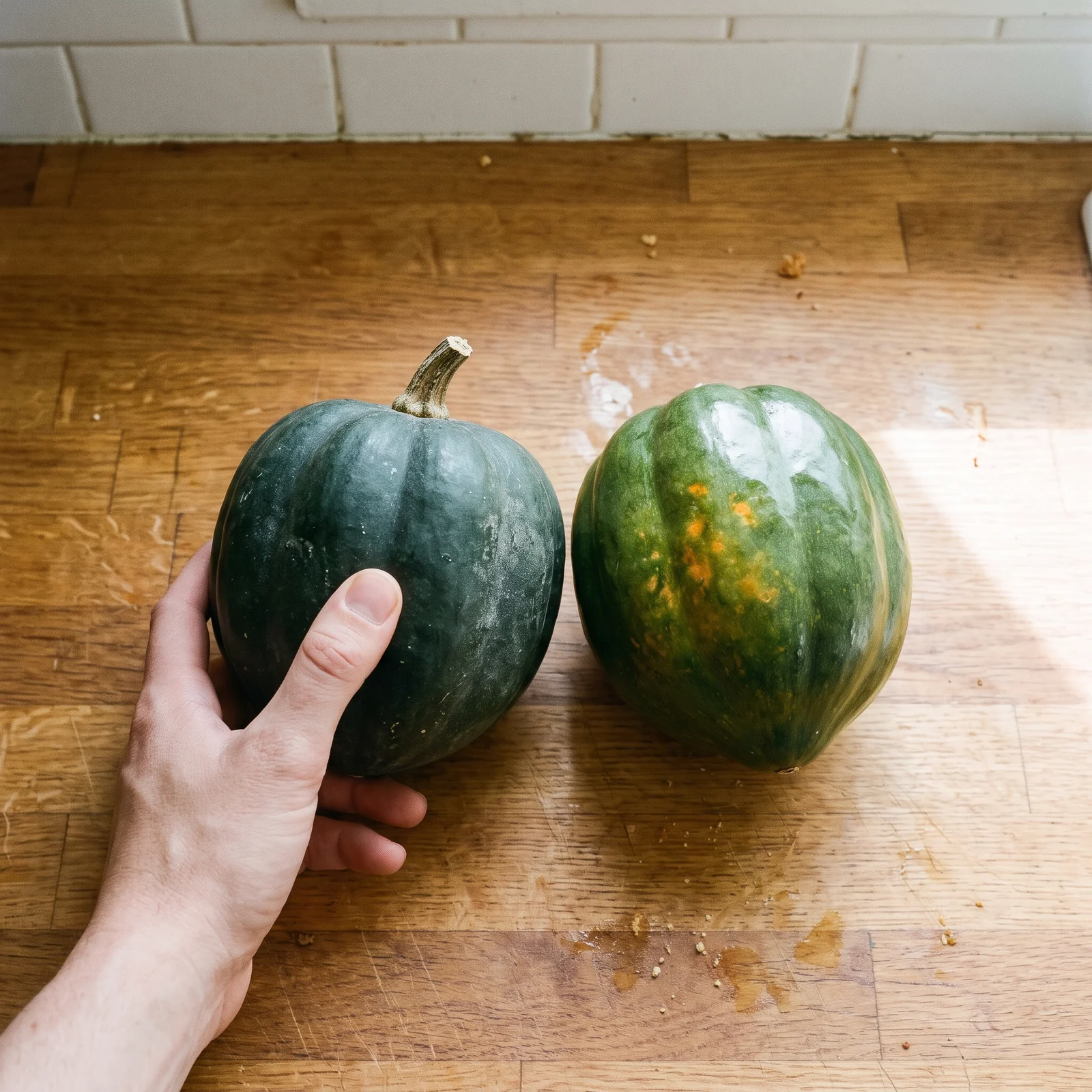
Dull skin, a dry stub of stem, and no soft patches.
Dull skin, a dry stub of stem, and no soft patches.
Dull skin rather than glossy. Iowa State Extension harvests winter squash when the surface looks dull. That dullness is the sign the rind has finished hardening.
A rind that resists a thumbnail, rather than one that dents. The same page tests maturity by pressing a thumbnail into the skin. So a rind you can pierce still belongs to an immature squash.
A stub of stem still attached. Iowa State Extension also cuts the fruit from the vine with pruning shears, leaving a 1-inch stem. So the wound stays small and dry.
No cuts, bruises or soft patches. Cuts and bruises let rot organisms in, so Iowa State Extension handles every squash carefully. Colorado State University goes further, since it says not to use squash that shows decay or mold at all.
How to store acorn squash so it lasts
To store acorn squash so it lasts, keep it whole, cool and dry. Then resist the urge to cure it. Curing is right for butternut and hubbard, but acorn squash is the exception. So yours goes into the cupboard the day you bring it home.
Should you cure acorn squash?
No, acorn squash should not be cured. That is because Iowa State Extension says curing reduces its quality and storage life. Other winter squash are cured at 80 to 85°F and 80 to 85 percent humidity. That treatment hardens the skin and heals small scratches, so it earns its place for a hubbard. The UC Master Gardener Program of Contra Costa County names the same exception. It also says acorn squash can be eaten right away after harvest, or simply stored. So a shop-bought acorn squash needs nothing done to it. Instead, take it home and put it somewhere cool, dry and dark.
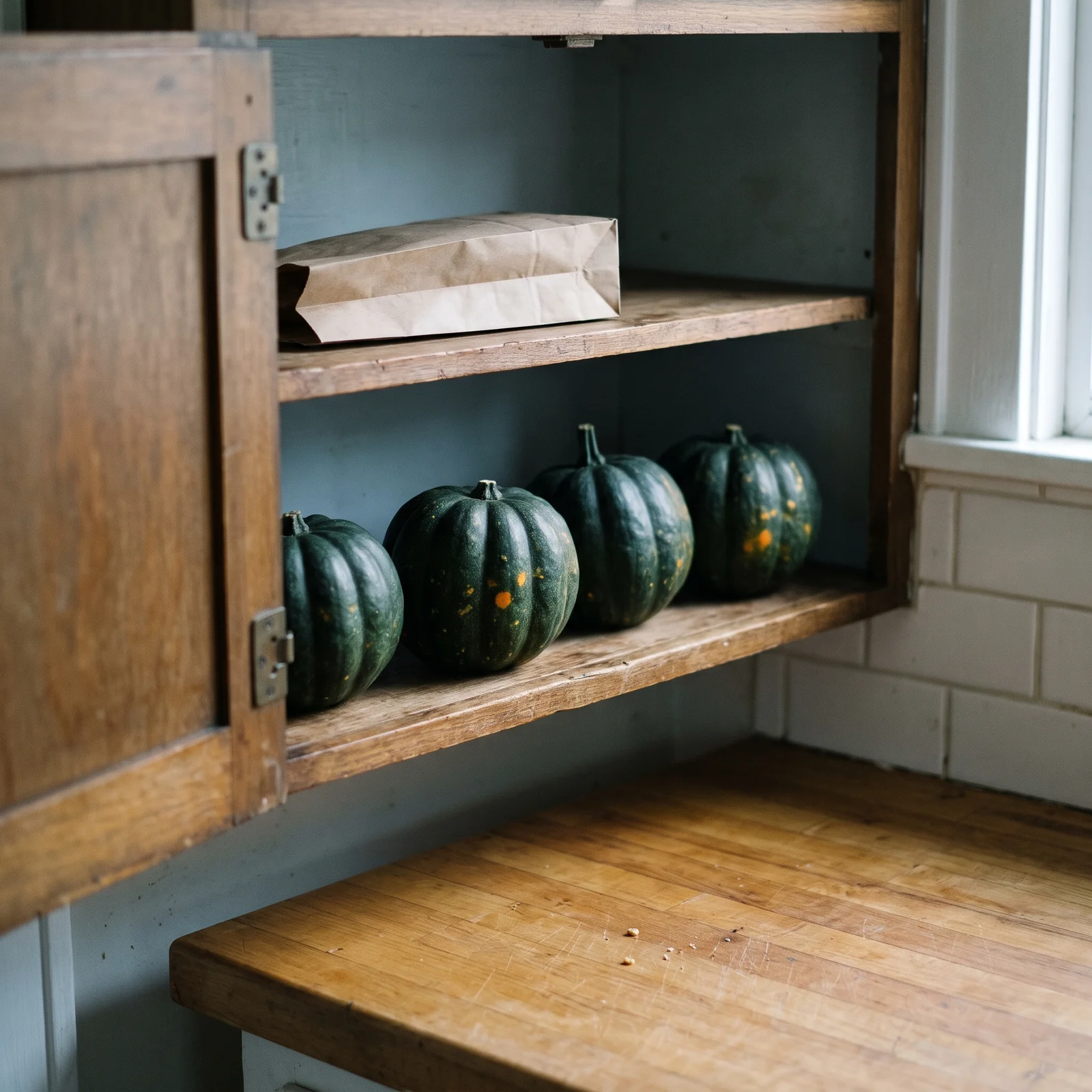
A cool, dark cupboard, with air around each squash.
A cool, dark cupboard, with air around each squash.
How long does acorn squash last?
Whole acorn squash lasts about 5 to 8 weeks, according to Iowa State Extension. That is well short of the 5 to 6 months it gives a hubbard, although both are winter squash. Meanwhile the UC Master Gardener Program of Contra Costa County puts acorn squash at up to 2 months. So the two land close together, and 5 to 8 weeks is the safer figure to plan around. Temperature then decides which end of that range you get. Clemson Cooperative Extension gives hard-rind squash 1 to 3 months at 60°F. At room temperature, though, it gives only about 1 week. In other words, a warm kitchen counter is not storage at all.
So note the day you bought it rather than trusting the look of the skin. The rind stays handsome long after the flesh has started to dry. Also think about where that cupboard sits. A shelf above the oven is a warm kitchen by another name.
Should you refrigerate acorn squash?
Not while it is whole, since the fridge is colder and damper than an acorn squash wants. WSU Extension keeps whole, uncut squash in a dry place at 50 to 60°F instead. It arranges them in a single layer, so air can circulate around each one. After you cut it, however, the fridge is exactly right. WSU Extension gives cut squash up to 1 week there, in plastic wrap or a vapor-proof container. The services differ a little on the whole-squash range. Iowa State Extension says 50 to 55°F, while WSU goes up to 60°F. So aim for the low 50s and you satisfy both.
How do you store cut acorn squash?
Wrap cut acorn squash and refrigerate it for up to 1 week, as WSU Extension advises. Use plastic wrap or a vapor-proof container, so the cut faces do not dry out. Cooked squash runs on a shorter clock than raw squash does. Also, food left out overnight is never worth the gamble, whatever the ingredient. For longer than a week, freeze it rather than hope.
Can you store acorn squash next to apples?
No, keep acorn squash away from apples and pears. That is because Iowa State Extension says ripening fruit release ethylene gas, which shortens the storage life of squash. Ethylene is the same gas the apples guide puts to work on purpose. So the fruit bowl and the squash shelf should be different places. Pumpkin has the same problem, since it shares the cupboard and the method.
Can you freeze acorn squash?
Yes, and cooked is the way to do it. Penn State Extension cooks winter squash until soft, then scrapes the flesh from the peel and mashes it. It names acorn squash among the squashes handled that way. So the freezer is where an acorn squash should go when those 8 weeks are nearly up.
How do you freeze acorn squash?
Cook the acorn squash until soft, scrape out the flesh and mash it. Then cool it quickly and pack it with half an inch of headspace, as Penn State Extension directs. It cools the mash by standing the container in cold water and stirring now and then. That matters, because a warm purée freezes slowly. Colorado State University packs the cooled squash tightly into rigid containers. It leaves the same half-inch of headspace, then freezes to 0°F or below. Label each container, since one tub of orange purée looks much like another in February.
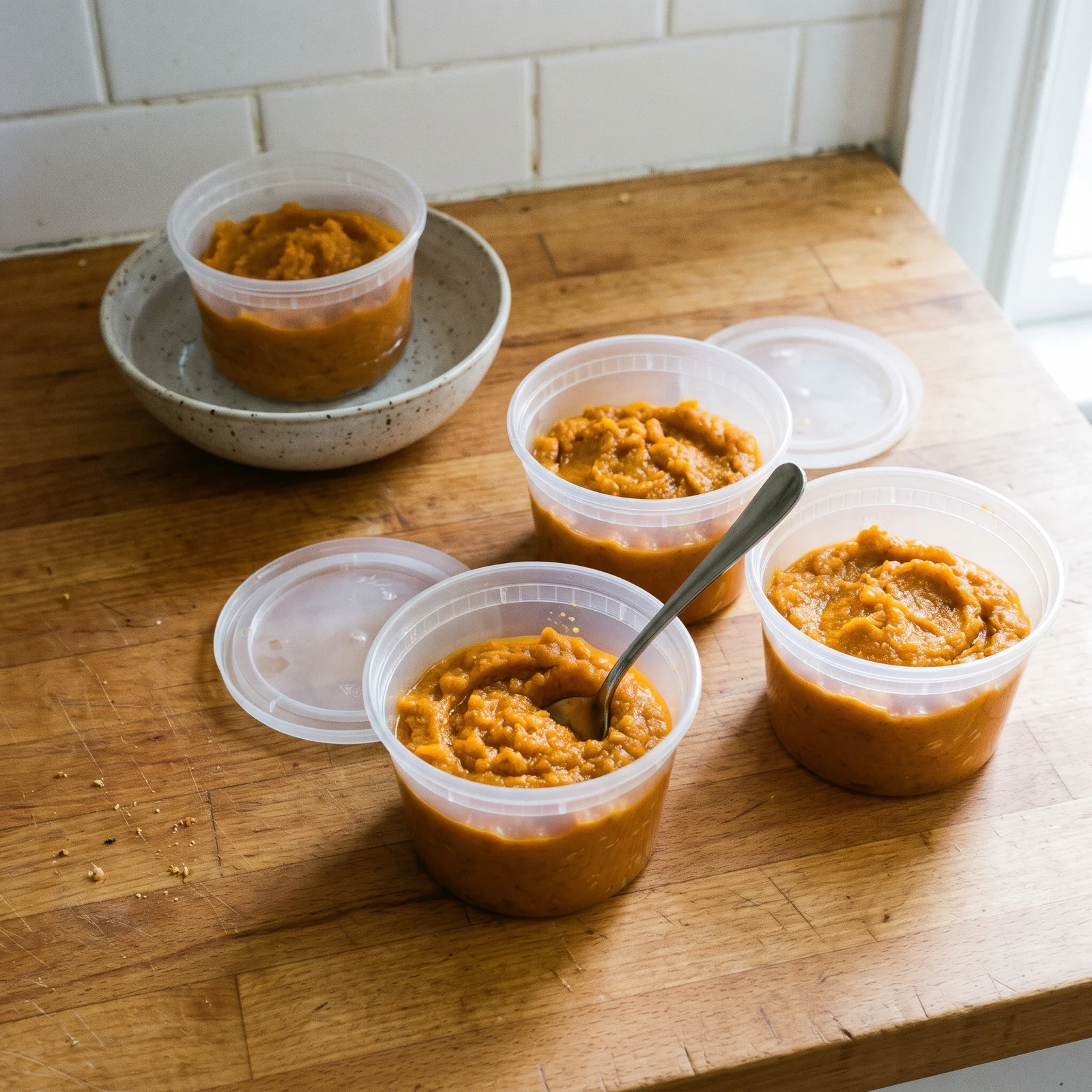
Cooked, mashed and cooled, with half an inch of headspace.
Cooked, mashed and cooled, with half an inch of headspace.
Can you freeze raw acorn squash?
Raw cubes need blanching first. University of Missouri Extension blanches washed, peeled cubes for 3 minutes, then chills and drains them. After that it spreads them on trays to freeze solid, and bags them once firm. Penn State Extension offers no raw route at all, since it cooks the squash first. Either way the flesh softens once thawed. So treat frozen acorn squash as soup, purée or mash rather than something to roast in wedges.
How long does acorn squash last in the freezer?
Frozen acorn squash keeps up to 1 year, according to Penn State Extension. Colorado State University is more generous. It says most frozen vegetables hold high quality for 12 to 18 months at 0°F or below. So the two overlap, and a year is the figure worth planning around. Quality slips before safety does, though. That is why a tub from last autumn is better used before this autumn fills the freezer again.
How to tell if acorn squash has gone bad
Knowing how to store acorn squash is only half the job. The other half is knowing when to stop. An acorn squash does not spoil the way a berry does, because it has a hard rind. Instead it dries out first, then lets rot in through a wound. So the warning sign is a sunken spot rather than fuzz. Here is what each stage means.

Verdict: store it
Firm, dull-skinned acorn squash
A hard rind, a dull surface, and a thumbnail that will not go in. Iowa State Extension treats that as fully mature, since the rind has finished hardening. So this is the acorn squash that will last 5 to 8 weeks in a cool cupboard.
Verdict: eat it soon
Shiny, thin-skinned acorn squash
A glossy rind that gives under a thumbnail belongs to a squash picked early. Iowa State Extension's own test is that simple. It is perfectly good to eat, but it will not keep. So roast this acorn squash within a few days rather than storing it.

Verdict: use it now
Cut or bruised acorn squash
A gash, a deep bruise or a snapped-off stem is an open door. Iowa State Extension says cuts and bruises let rot organisms in. While the flesh underneath is firm and dry, it is still fine to eat. So cook this acorn squash today rather than putting it back on the shelf.

Verdict: throw it out
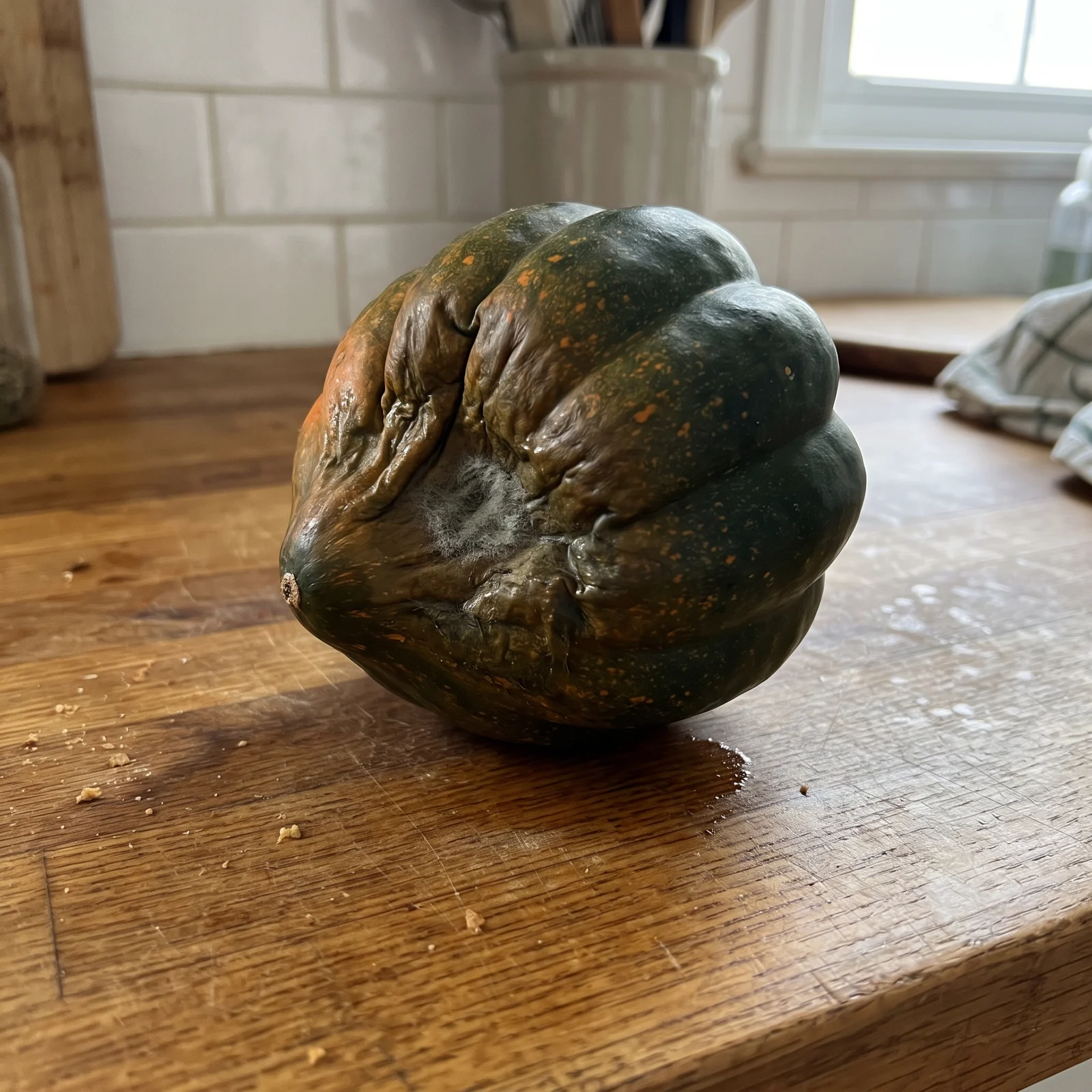
Sunken brown spots on acorn squash
Dark brown, circular, sunken spots are the sign to stop. Cornell University describes anthracnose on winter squash as exactly that. There is sometimes salmon-colored growth in the dimple too. Cornell also notes that the spots often develop in storage. Colorado State University is blunter still, since it says not to use squash showing signs of decay or mold.
Verdict: throw it out
Watery, collapsing acorn squash
An acorn squash that leaks, caves in or feels wet underneath is finished. Cornell University describes a watery, odorless rot with white cottony mold in it, plus hard black bodies. It also describes a water-soaked rot that ends in the fruit collapsing. Then check the squash that were sitting beside it, since a leaking fruit wets its neighbors.
Can you can acorn squash?
Only under pressure, and only in cubes. WSU Extension says pressure canning is necessary for pumpkins and winter squash. That is to prevent the growth of botulinum bacteria, so a boiling-water bath will not do. For the steps themselves WSU also sends readers to the National Center for Home Food Preservation. Freezing is the simpler route for most kitchens, though, since it needs no special equipment.
Acorn squash substitutes
Out of acorn squash, or did the one in the cupboard give up? Then one of these will stand in.
Substitute
Works best in
What changes
Butternut squash
Roasting and soup
Sweeter and smoother, and Iowa State gives it 2 to 3 months.
Delicata squash
Roasted rings
Thin skin, so there is nothing to peel.
Mistakes people make when they store acorn squash
These are the ways people store acorn squash that cost them the most, so each one has an easy fix.
Curing it like a butternut. Iowa State Extension says curing reduces acorn squash's quality and storage life, so skip that step entirely.
Leaving it on the counter for a month. Clemson Cooperative Extension gives hard-rind squash about 1 week at room temperature, so move it somewhere cool instead.
Keeping it beside the fruit bowl. Ripening apples and pears give off ethylene gas, so Iowa State Extension keeps them away from squash.
Refrigerating it whole. WSU Extension wants whole squash dry at 50 to 60°F, whereas a fridge is colder and damper than that.
Stacking them in a crate. WSU Extension arranges squash in a single layer instead, so air can move and one leaking fruit cannot reach the rest.
Putting a bruised one back on the shelf. Cuts and bruises let rot organisms in, according to Iowa State Extension. So cook that squash the same day instead.
Freezing it raw in wedges. Penn State Extension cooks and mashes winter squash first, while Missouri Extension blanches raw cubes for 3 minutes. So neither route leaves you a roastable wedge.
Sources
What is the proper way to harvest and store winter squash?, Iowa State University Extension and Outreach Yard and Garden, last updated December 2024, on curing every winter squash except acorn, storage at 50 to 55°F, the 5 to 8 week shelf life and ethylene from apples and pears.
Harvesting and Storing Winter Squash and Pumpkins, Help Desk Team, HOrT COCO-UC Master Gardener Program of Contra Costa County, University of California Agriculture and Natural Resources, September 2025, on curing at 80 to 85°F for 7 to 14 days, the acorn exception and storage at 50 to 60°F.
Skagit Food Preservation: Winter Squash, Washington State University Extension Skagit County, August 2025, on whole squash at 50 to 60°F in a single layer, cut squash for up to a week in the fridge, and pressure canning.
Freezing Winter and Summer Squash, Stacy Reed, Penn State Extension, updated August 2026, on cooking and mashing winter squash, half-inch headspace and using it within a year.
Squash, Winter, PreserveSmart, Colorado State University, on rejecting squash that shows decay or mold, half-inch headspace and freezing to 0°F or below.
Preserving winter squash, University of Missouri Extension, July 2018, on blanching raw cubes for 3 minutes and freezing purée.
Food Storage: Pantry, Pamela Schmutz and E.H. Hoyle, Clemson Cooperative Extension Home and Garden Information Center factsheet HGIC 3525, revised March 2020, on hard-rind squash at 1 to 3 months at 60°F and about a week at room temperature.
Winter Squash Fruit Symptoms, Thomas A. Zitter, Cornell University Vegetables, on anthracnose spots that often develop in storage and the watery rots that collapse a fruit.
Storage times and safety advice on this page come from the sources above. Food safety depends on conditions I cannot see, so read the Disclaimer, and if in doubt, throw it out.
Other ingredient guides
Browse all guides





Share this guide
Never miss a guide
New ingredient guides when they go up, plus one storage tip worth knowing. Anything sponsored is labelled.

Emilly White