
1 to 3 weeks
Opened, airtight, cool and dark; 2 years sealed
1 month
Opened and airtight; the sources disagree on whether it helps
6 to 12 months
Airtight; best within 3 to 4 months for flavor
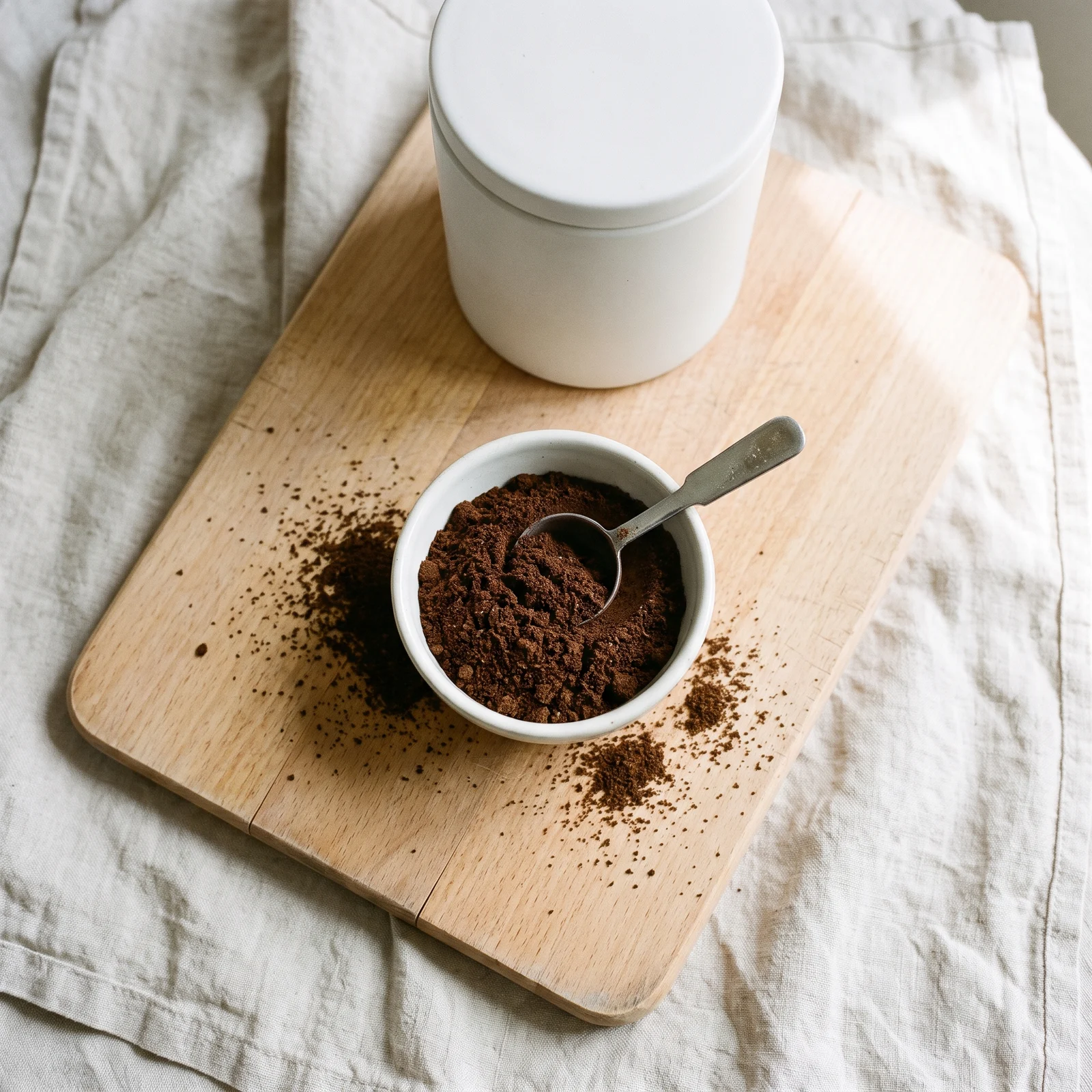
Ground coffee does not go bad in the way milk does, it goes flat and then rancid. Opened, it keeps its flavor for 1 to 3 weeks in an airtight, opaque jar in a cool, dark cupboard, while a sealed pack lasts about 2 years. It is safe after that, but it tastes of very little.
On this page
What should you check when you buy ground coffee?
Check the roast date, and buy ground coffee in amounts that last one or two weeks, because grinding is what starts the decline.
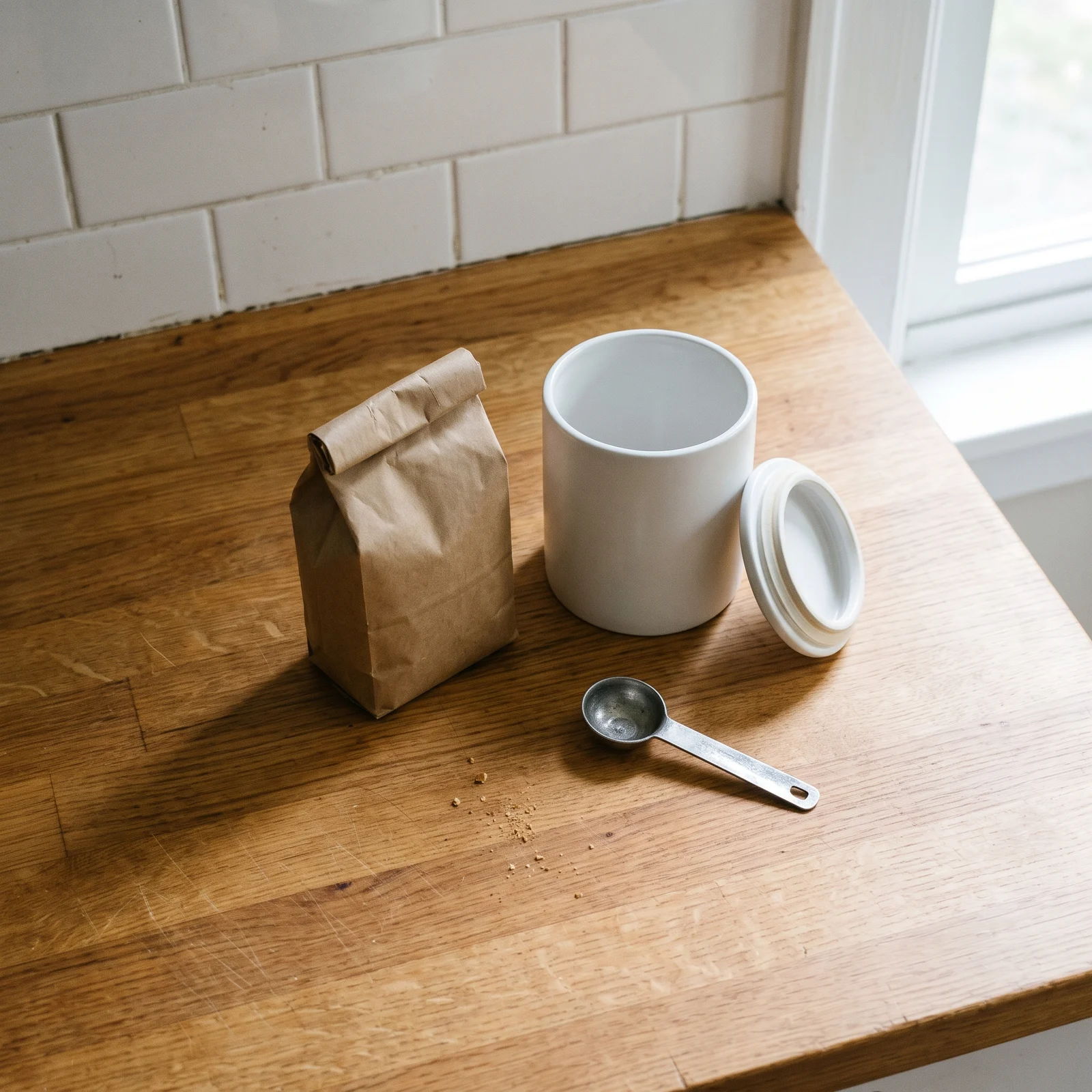
A small bag, a roast date, and a jar waiting to take it.
A small bag, a roast date, and a jar waiting to take it.
Look for a roast date as well as a best-by date, since ground coffee is freshest within two weeks of being roasted.
Choose a bag small enough to finish in one or two weeks, and buy more often instead of buying big.
Buy whole beans if you own a grinder, because roasted beans keep 1 to 3 weeks at room temperature against 1 to 2 weeks for ground coffee, so whole beans buy you time.
Have a jar ready to tip it into, since the retail bag is not designed for long-term storage.
How to store ground coffee so it lasts
To store ground coffee so it lasts, shut out air, moisture, heat and light, and oxygen most of all.
Where should you store ground coffee?
Ground coffee keeps best in an airtight, opaque container in a cool, dark cupboard, well away from the oven, the stove and direct sunlight. Clear canisters let in light, which hurts the taste, so choose something you cannot see through. A pantry at 65 to 70°F is right, while high temperature or humidity can shorten storage time considerably.
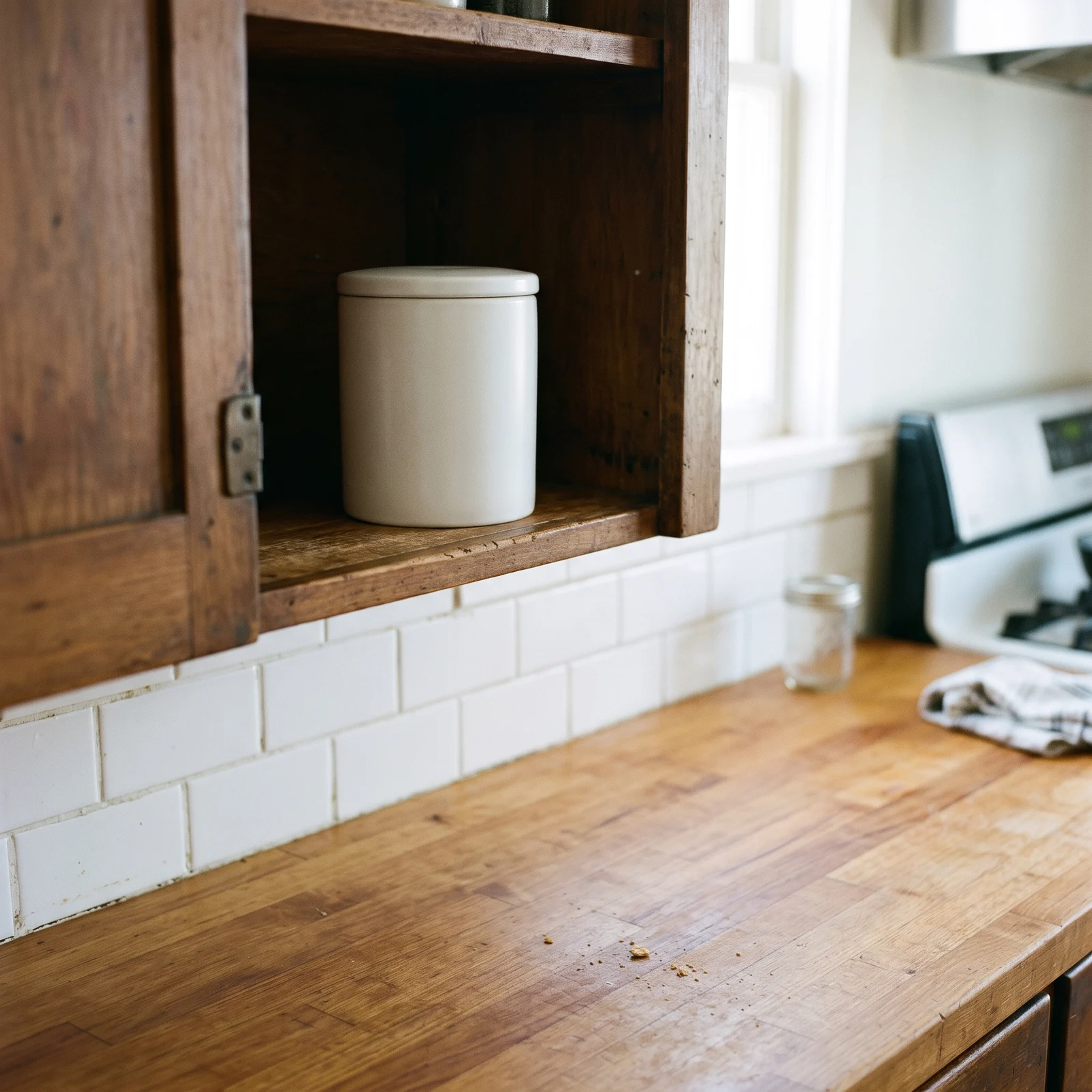
Airtight, opaque, and well away from the stove.
Airtight, opaque, and well away from the stove.
How long does ground coffee last?
Opened ground coffee lasts 1 to 3 weeks, and the sources cluster tightly around that figure, from 1 to 2 weeks in an airtight container up to 3 weeks after opening. Sealed, it keeps far longer, about 2 years for an unopened can or until the printed date on a pack. One pantry chart gives canned coffee only 12 months, so it is the outlier.
So the sealed figure describes the pack, while the opened figure describes your cupboard, which means the bag is fine until you open it and then you have about two weeks.
Should you store ground coffee in the fridge?
Ground coffee does not need the fridge, although the sources split two to one on whether it helps. Two extension charts give opened coffee 1 month refrigerated against 2 weeks in the pantry, and one says to refrigerate it after opening. A coffee maker says never to refrigerate it, because the fridge exposes ground coffee to moisture and to the smells of other food. Both camps can be right, since condensation forms in a fridge and coffee absorbs moisture and odors, so the fridge only suits a hot, humid kitchen and only with a lid that truly seals.
Does ground coffee go bad?
Ground coffee does not go bad the way milk does, because roasted coffee does not spoil through enzymes or microbes. What it does instead is go stale, and oxygen is the most important factor in how fast. Cutting the oxygen in a container to 0.5% has been shown to increase shelf life 20-fold, so the date on the bag is a flavor date rather than a safety line, just as it is for matcha powder.
Can old ground coffee make you sick?
Stale ground coffee will not make you sick, because roasted coffee is shelf-stable. Two things change that, however, and both come from the cupboard rather than the calendar: water, since coffee pulls moisture from the air, and insects, since cigarette and drugstore beetles feed on coffee beans alongside flour, cereals and spices. So a jar that really seals protects more than the flavor.
Can you freeze ground coffee?
Yes, ground coffee can be frozen, although the sources disagree on how long it holds its flavor there. The longest figure is 6 to 12 months, while a coffee trade body gives frozen beans only 3 to 4 months, because most home containers let in a little oxygen. A coffee maker is the most cautious, since freezing can make moisture develop, and it asks you to use frozen coffee within a few weeks. So freeze ground coffee only when you have more than a month's worth, sealed properly first.
How do you freeze ground coffee?
Divide the ground coffee into small airtight portions, about a week's worth each. Take out only what you need, then return the rest before condensation can form, and scoop with a dry spoon every time, because water is what undoes frozen coffee.
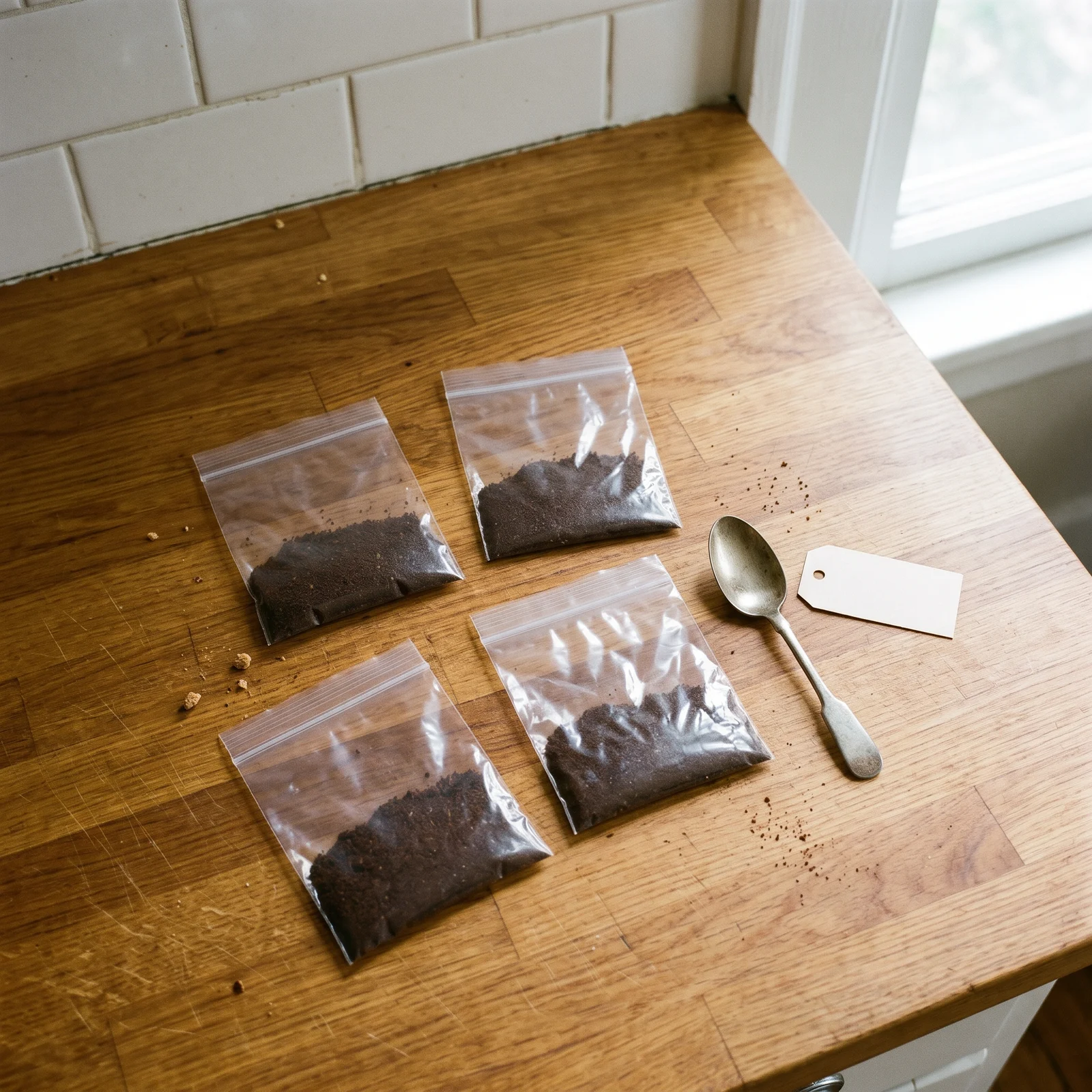
A week's worth per jar, sealed and scooped with a dry spoon.
A week's worth per jar, sealed and scooped with a dry spoon.
Should you freeze ground coffee or whole beans?
Freeze whole beans when you have the choice, because grinding raises the surface area and speeds up staling. So the freezer suits whole beans better than it suits grounds, and you grind them just before brewing.
How long does frozen ground coffee last?
Frozen ground coffee lasts 6 to 12 months by the longest figure, but only 3 to 4 months by a coffee trade body and a few weeks by a coffee maker. Since the shorter figure costs you almost nothing, treat 3 to 4 months as the target, after which the coffee is still safe but tastes of very little.
How to tell if ground coffee has gone bad
Ground coffee rarely looks any different, so your nose does almost all the work here. It fails in a sequence: first the aroma goes, then damp flattens it, then the oils turn rancid, and insects end it. Here is what each stage means.
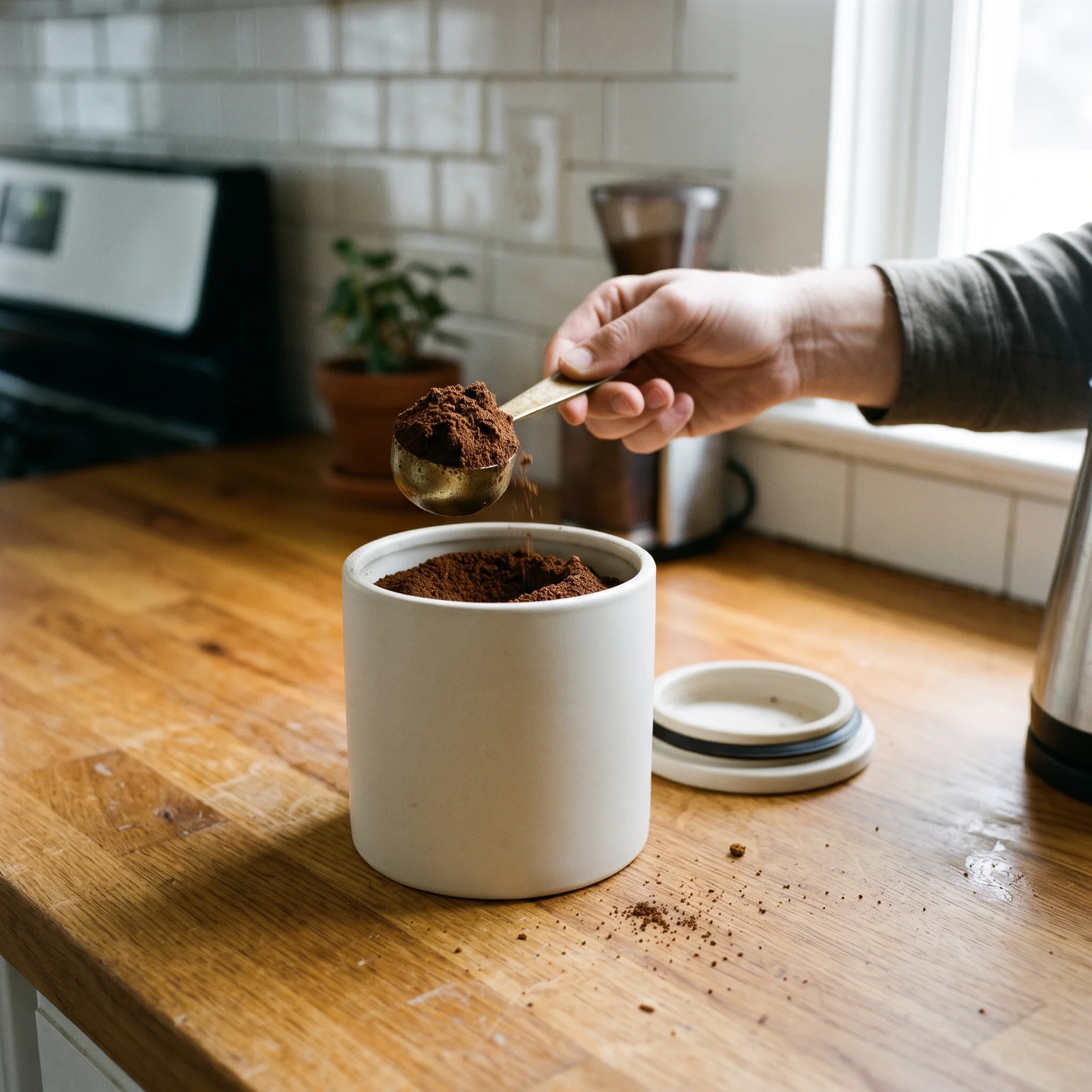
Verdict: use it
Fresh, aromatic ground coffee
The bag smells strong and roasted the moment you open it, and the grounds pour loose and dry. Ground coffee is at its freshest within two weeks of roasting, so this is the coffee you paid for, and you can brew it as it is.
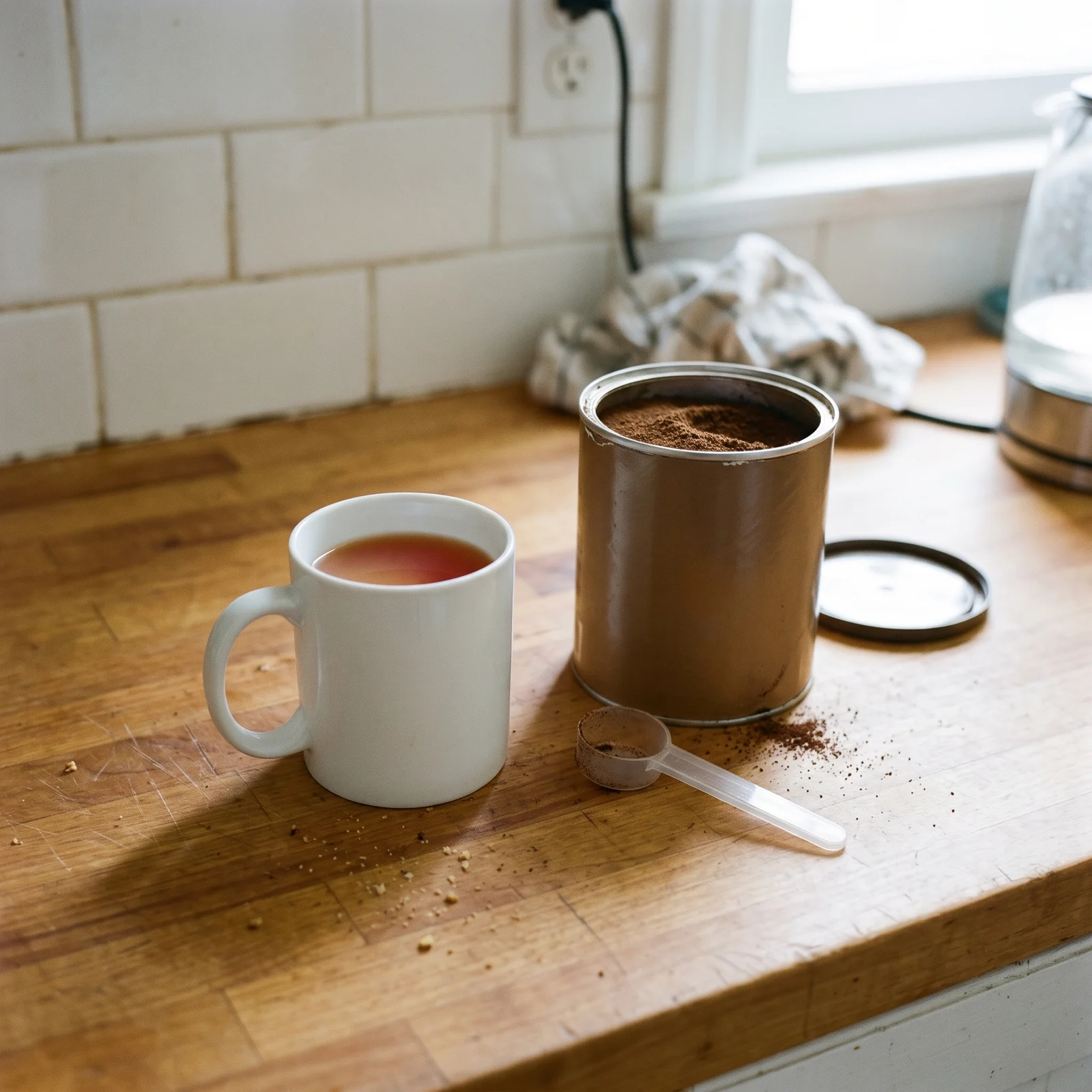
Verdict: use it
Flat, stale ground coffee
There is very little smell when you lift the lid, and the cup tastes thin and dull. Coffee loses the most freshness in its first month, but stale coffee is still safe, so use it up with milk and sugar rather than throwing it out.
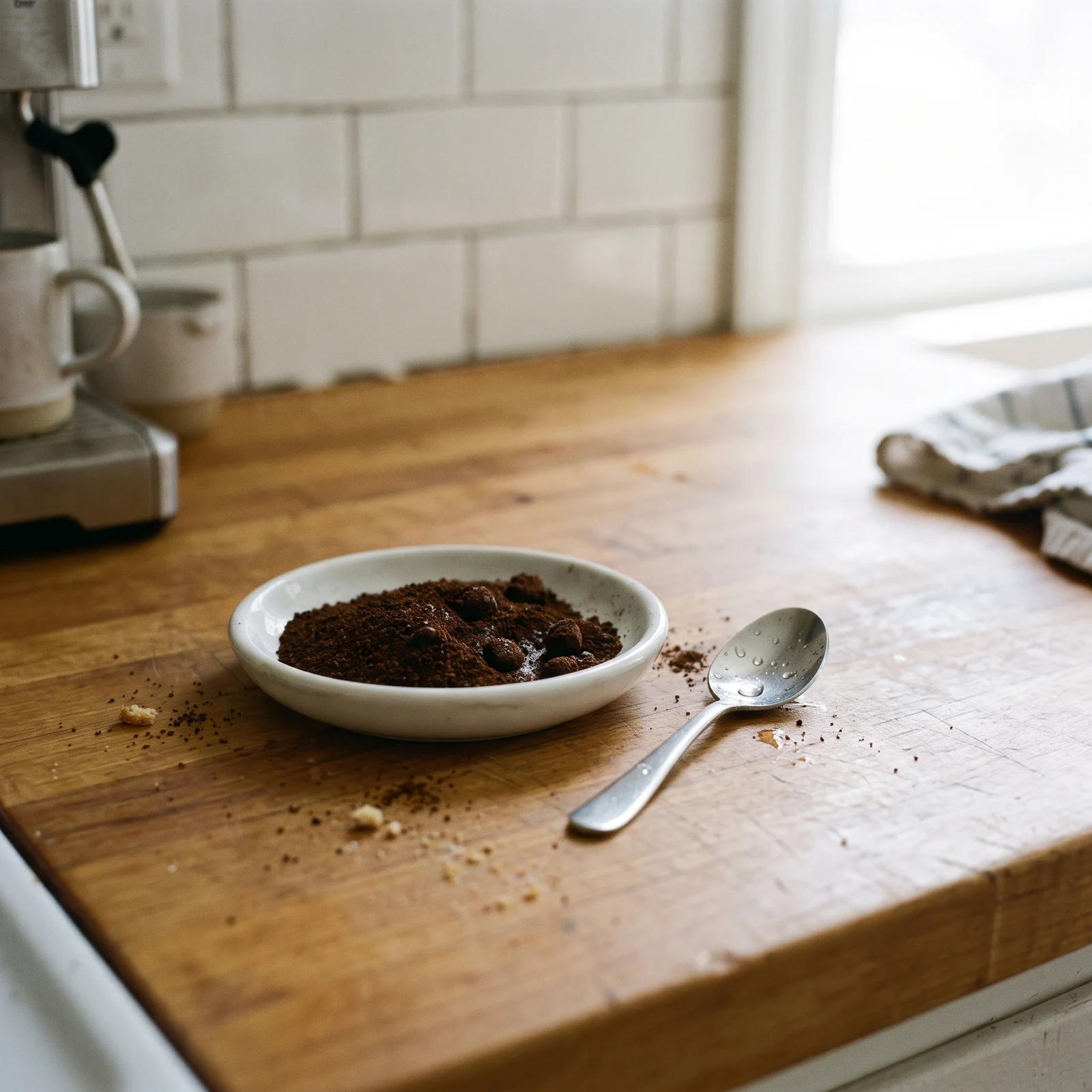
Verdict: use it up quickly, or replace it
Clumped, damp ground coffee
The grounds have stuck together into lumps, usually after a wet spoon or a shelf near the kettle. Moisture speeds up staling, which is why a dry measuring spoon matters, so brew this coffee within the week or start a fresh bag.
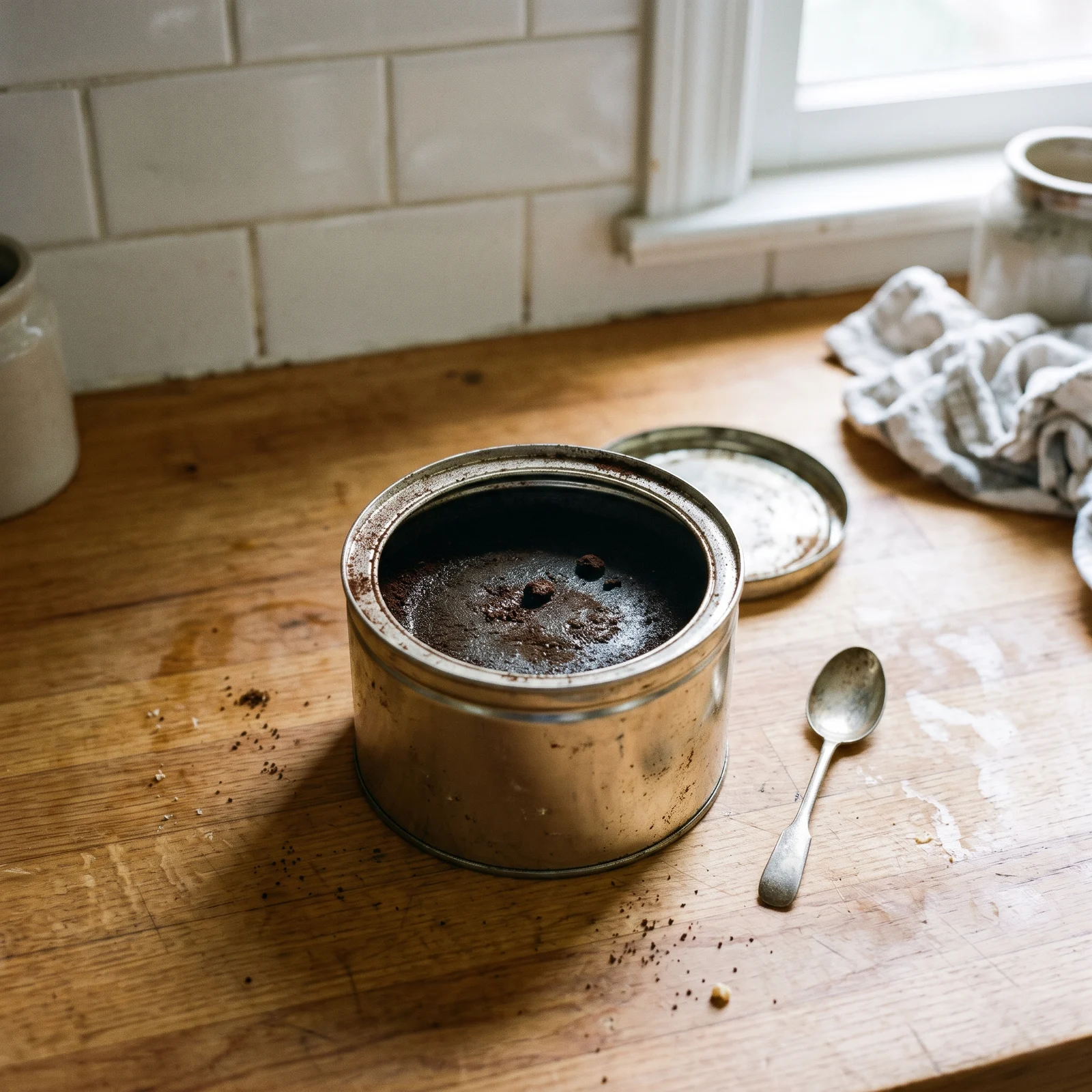
Verdict: throw it out
Rancid ground coffee
The coffee smells like old oil, putty or damp cardboard, and the cup tastes sour and bitter. That rancid note comes from the oils in the coffee breaking down, and it has been detected in air-packed coffee after four months, so rancid coffee will not come back and should be thrown out.
Verdict: throw it out
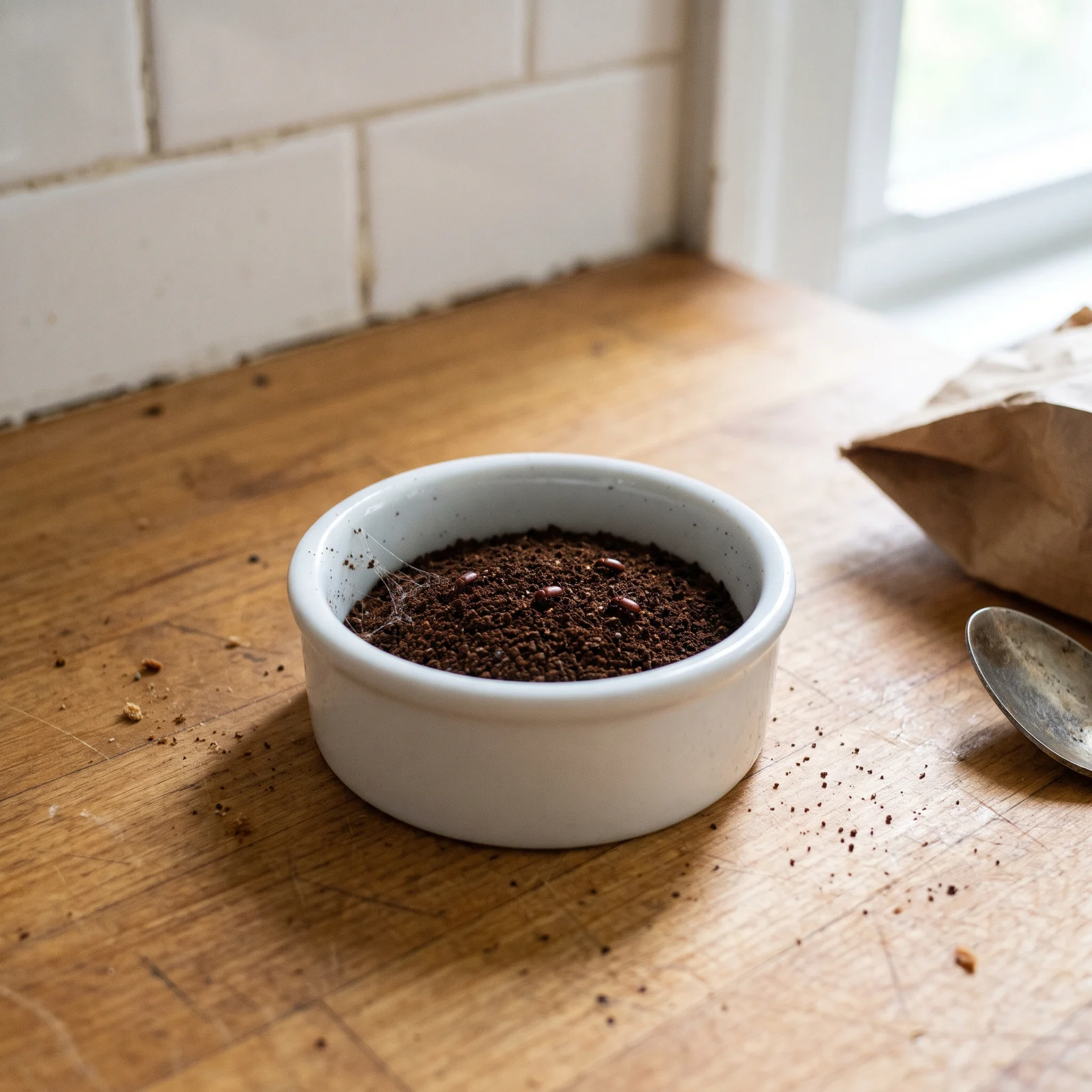
Ground coffee with pantry pests
There are small reddish-brown beetles in the jar, or fine silken webbing across the surface. Cigarette and drugstore beetles feed on coffee, and heavily infested food should be thrown away outdoors in a tightly sealed bag. Then check the flour, the cereal and the spices beside it, because those beetles eat all of them.
Can ground coffee sit out overnight?
Yes, ground coffee can sit out overnight, because it is a shelf-stable pantry food that does not spoil at room temperature. An open bag or jar loses some aroma to the air, though, and it pulls in moisture, so close it tightly in the morning. Brewed coffee with milk is a different matter, and the food left out overnight guide covers that kind of thing.
Ground coffee substitutes
If you are out of ground coffee, or the last of it smelled like putty, one of these will get you through the morning.
Substitute
Works best in
What changes
Any brew, if you have a grinder
Beans keep 1 to 3 weeks against 1 to 2 for grounds.
Instant coffee
A fast cup
It keeps 2 to 3 months once opened, far longer than grounds.
Coffee pods
Single cups without waste
They stay fresh until the best-by date.
Mistakes people make when they store ground coffee
These are the ways people store ground coffee that cost the most flavor, so each one has an easy fix.
Leaving it in the bag with a clip, when the retail bag is not designed for long-term storage and an airtight jar is.
Using a clear canister on the counter, when light gets in and an opaque one keeps it out.
Keeping the jar beside the stove, when heat is one of the four things that stale coffee.
Scooping with a wet spoon, when coffee pulls in moisture and a dry measuring spoon prevents it.
Buying the big tub to save money, when a large bag goes stale long before you reach the bottom.
Taking the whole tub out of the freezer each morning, rather than removing a week's worth and returning the rest before condensation forms.
Trusting the fridge without a real seal, when condensation forms there and coffee absorbs it.
Sources
Storage and Shelf Life, National Coffee Association, on air, moisture, heat and light as coffee's enemies, airtight and opaque containers, ground coffee at 1 to 2 weeks at room temperature, beans at 1 to 3 weeks and 3 to 4 months frozen, buying one or two weeks' worth, and not using the retail bag.
Food Storage Guide FN579, Julie Garden-Robinson, NDSU Extension, reviewed January 2023, on canned coffee at 2 years unopened, 2 weeks opened in the pantry, 1 month refrigerated and 6 to 12 months frozen, and on using a dry measuring spoon.
Safe Food Storage: The Cupboard, Karen Blakeslee, K-State Research and Extension publication MF3131, revised June 2026, on coffee at 2 years unopened and 2 weeks opened, refrigerating after opening, freezing to extend shelf life, and a cool, dry, dark cupboard away from appliances.
How to Store Ground Coffee, Folgers, on ground coffee being freshest within two weeks of roasting, 1 to 3 weeks after opening, airtight containers, not refrigerating, and freezing causing moisture.
What is the Shelf Life of Roasted Coffee? A Literature Review on Coffee Staling, Emma Sage, Specialty Coffee Association, February 2012, on roasted coffee not spoiling microbially, oxygen as the controlling factor, grinding accelerating degassing and staling, moisture, and rancidity from the breakdown of coffee oils.
Food Storage: Pantry, Pamela Schmutz and E. H. Hoyle, Clemson Cooperative Extension factsheet HGIC 3525, revised March 2020, on canned coffee at 12 months, a cool, dry pantry at 65 to 70°F, and humidity shortening storage time.
Common Pantry Pests, Illinois Extension, on cigarette and drugstore beetles feeding on coffee beans, Indian meal moth webbing, tightly closed glass or metal containers, and discarding heavily infested food outdoors in a sealed bag.
Every storage time, temperature and verdict on this page comes from the sources listed above, and none of it is made up. Food safety still depends on conditions we cannot see, so read the Disclaimer, and if in doubt, throw it out.
Other ingredient guides
Browse all guides



Share this guide
Never miss a guide
New ingredient guides when they go up, plus one storage tip worth knowing. Anything sponsored is labelled.

Emilly White