
Up to 8 weeks
Whole bulbs, somewhere cool, dry and dark
Not for bulbs
Cold makes garlic sprout. Garlic in oil: 4 days at most
3 to 4 months
Whole, cloves or chopped, for best flavor
The short version: to store garlic well, keep the bulb whole, in a basket, in the coolest dark cupboard you have rather than the fridge.
Storage times from Purdue Extension, NDSU Extension and the National Center for Home Food Preservation.
On this page
How to choose garlic that will store well
In fact, storage starts at the shop. A tired bulb will not give you 8 weeks, however carefully you store it, so spend ten seconds choosing.
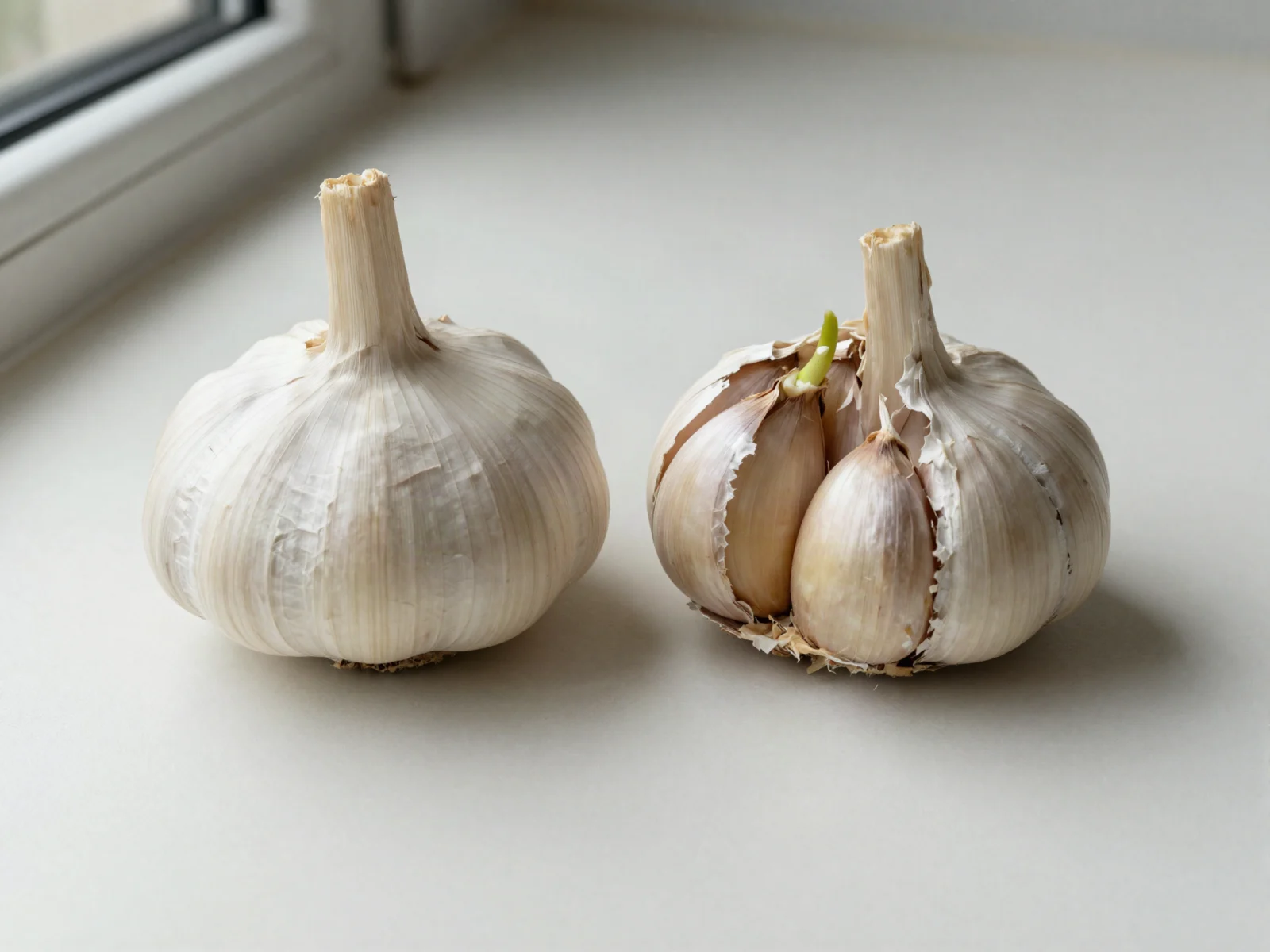
A firm, tightly closed garlic bulb compared to an older bulb with torn skin, exposed cloves and a small green sprout.
Heavy and firm. When you press the bulb gently, it should feel solid all the way round, with no soft cloves.
Tight, dry skin. In other words, the papery wrapper should close over the top of the bulb.
No cloves showing. That is because bulbs with exposed cloves and few wrappers store poorly. Buy them only if you will cook them this week.
No sprouts, bruises or mold. Bruised garlic goes downhill fast, so leave it on the shelf.
How to store garlic so it lasts
To store garlic so it lasts, give it three things: cool, dry and dark, with air moving around it. Keep the bulb whole until you need a clove. Every clove you break off starts to dry out sooner than the ones still on the bulb.
Where to store whole garlic bulbs
First of all, put whole bulbs in a mesh bag, a wire basket or a bowl with space around them. Cornell Small Farms recommends mesh bags for longer storage, because good air flow keeps mold from growing, and suggests 45 to 50 percent humidity. Handle bulbs gently too. Oregon State University Extension notes that bruised garlic deteriorates very quickly.
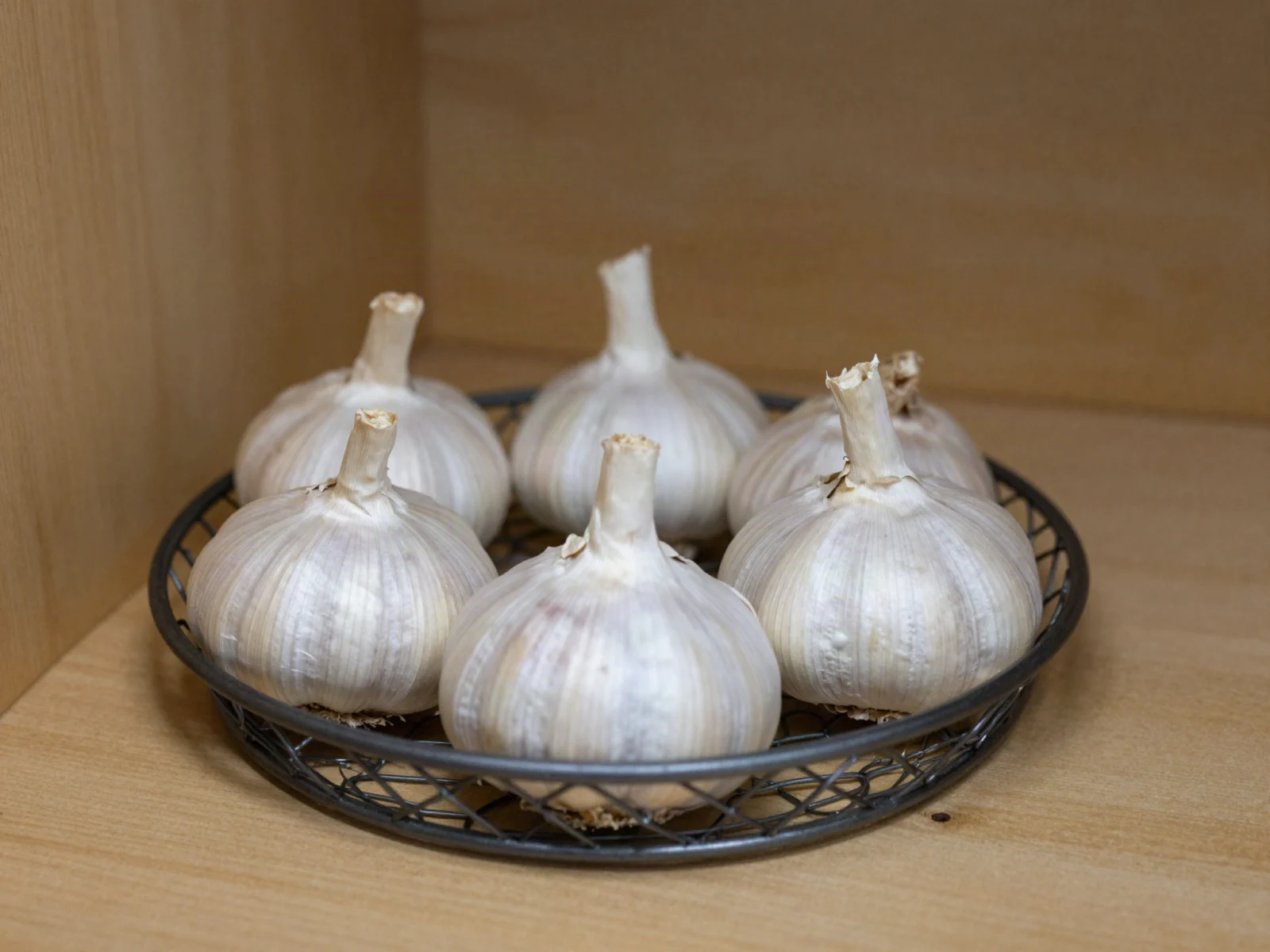
Whole garlic bulbs in an open wire basket on a pantry shelf, so that air reaches every bulb.
The Kitchn ran a useful side-by-side test of six methods for just over four weeks, in a kitchen at 67 to 68°F, using partly broken heads and loose cloves. Garlic left on a plate on the counter, or in the mesh bag it came in, stayed firm with no sprouts showing, although about three-quarters of the cloves had small green sprouts inside once cut. In contrast, garlic sealed in a zip-top bag in the fridge came out worst: about half the cloves had soft spots and the flavor had gone muted.
How long can you store garlic at room temperature?
Up to 8 weeks, according to Purdue Extension, somewhere cool, dry and dark. Be honest about your kitchen, though. For example, Cornell Small Farms found garlic keeps best at 56 to 58°F, sprouts below 50°F and shrivels quickly above 66°F.
Most kitchens run warmer than that. If yours does, count on weeks rather than the full two months, and pick the cupboard furthest from the oven, the dishwasher and the sunny window.
Should you store garlic in the fridge?
Not whole bulbs. It feels like the careful choice, but it is the one that backfires. NDSU Extension advises against it, because temperatures around 40°F make garlic sprout. A home fridge is no better: University of Nebraska–Lincoln Extension puts it at about 45°F, still in the sprouting range.
What about peeled cloves? I could not find a university source that gives a fridge time for plain peeled garlic, so I will not invent one. If you peel more than you need, freeze the extra instead.
How long does garlic last when you store it cold?
Much longer, but not in a kitchen. In a cold, dry storage room at 32 to 38°F and under 70 percent humidity, Oregon State University Extension says softneck garlic keeps up to 9 months and hardneck up to 6. That is a farm store, not a refrigerator, which is why the fridge result above is so different.
Can you freeze garlic?
Yes. In fact, freezing is the best way to store garlic you will not get through in time. Frozen garlic, however, is for cooking. It softens once thawed, although that matters far less once it is cooked into a sauce. Also, use it within 3 to 4 months for the best flavor.
How to store garlic cloves in the freezer
Freeze a whole bulb, separate cloves, or peeled and chopped cloves. In particular, NDSU Extension suggests a single layer in a freezer bag or jar. Wrap it well, because Oregon State University Extension warns that the smell will spread to everything else in the freezer.
How to store minced garlic in the freezer
Spread chopped garlic on parchment paper and freeze it flat before you bag it, so you can snap off what a recipe needs. You can also blend peeled cloves with oil, two parts oil to one part garlic, as Oregon State University Extension suggests, and freeze it straight away. However, never leave that mixture at room temperature.
Can you store garlic in vinegar?
Yes, you can store garlic in vinegar, as long as it lives in the fridge. Peeled cloves covered in vinegar or wine keep for up to 4 months, according to University of Nebraska–Lincoln Extension. Throw the jar out as soon as mold or yeast appears on the surface, and never keep it at room temperature.
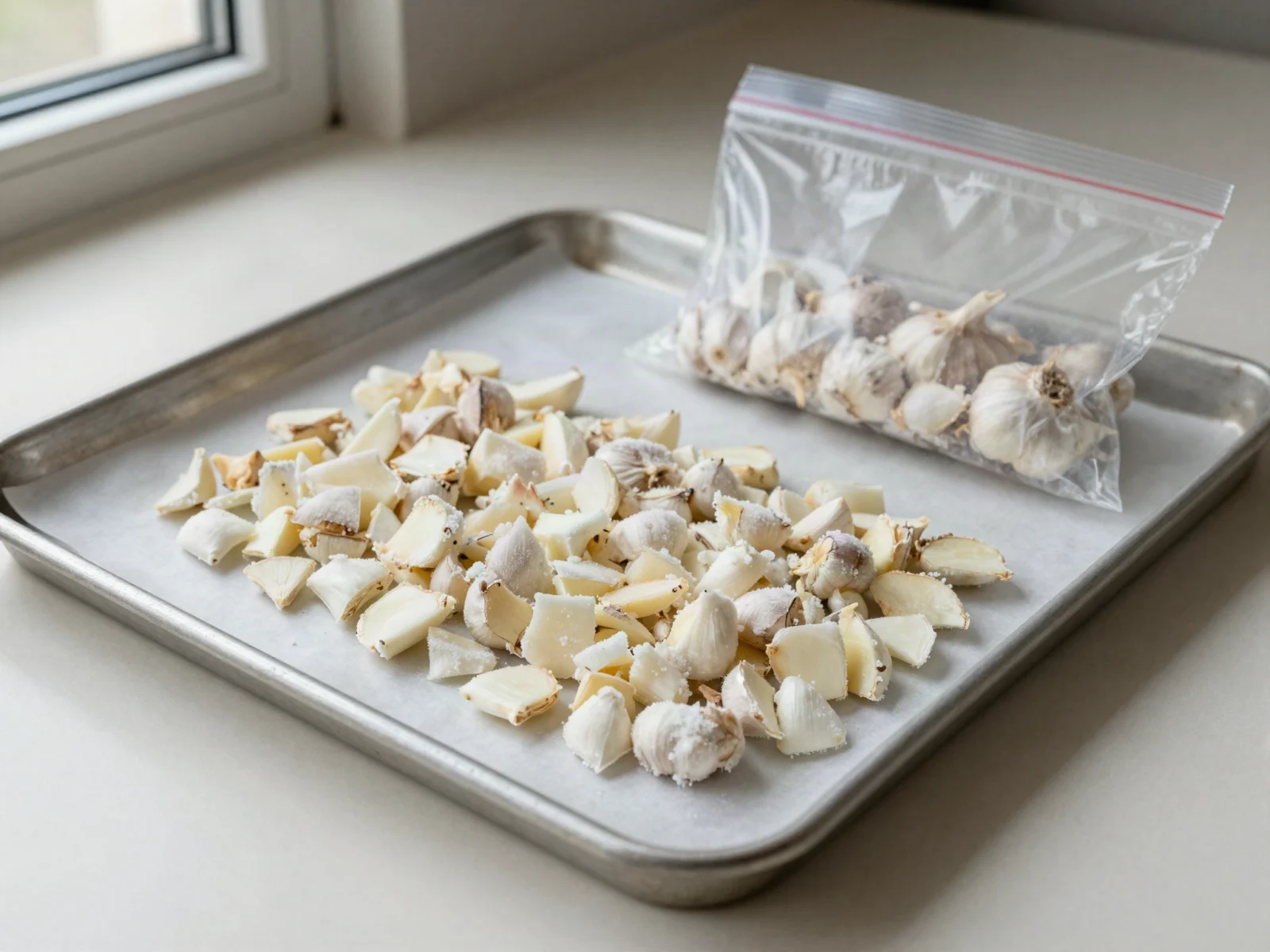
Frozen chopped garlic on parchment paper on a baking tray, as well as whole bulbs in a freezer bag.
How to tell if garlic has gone bad
However you store garlic, most of what gets thrown away is old, not bad. Old garlic is dry, sprouted or a little soft at the edges, and you can still cook with it. Bad garlic, on the other hand, is wet, collapsing or moldy. Here is how to tell which one you are holding.
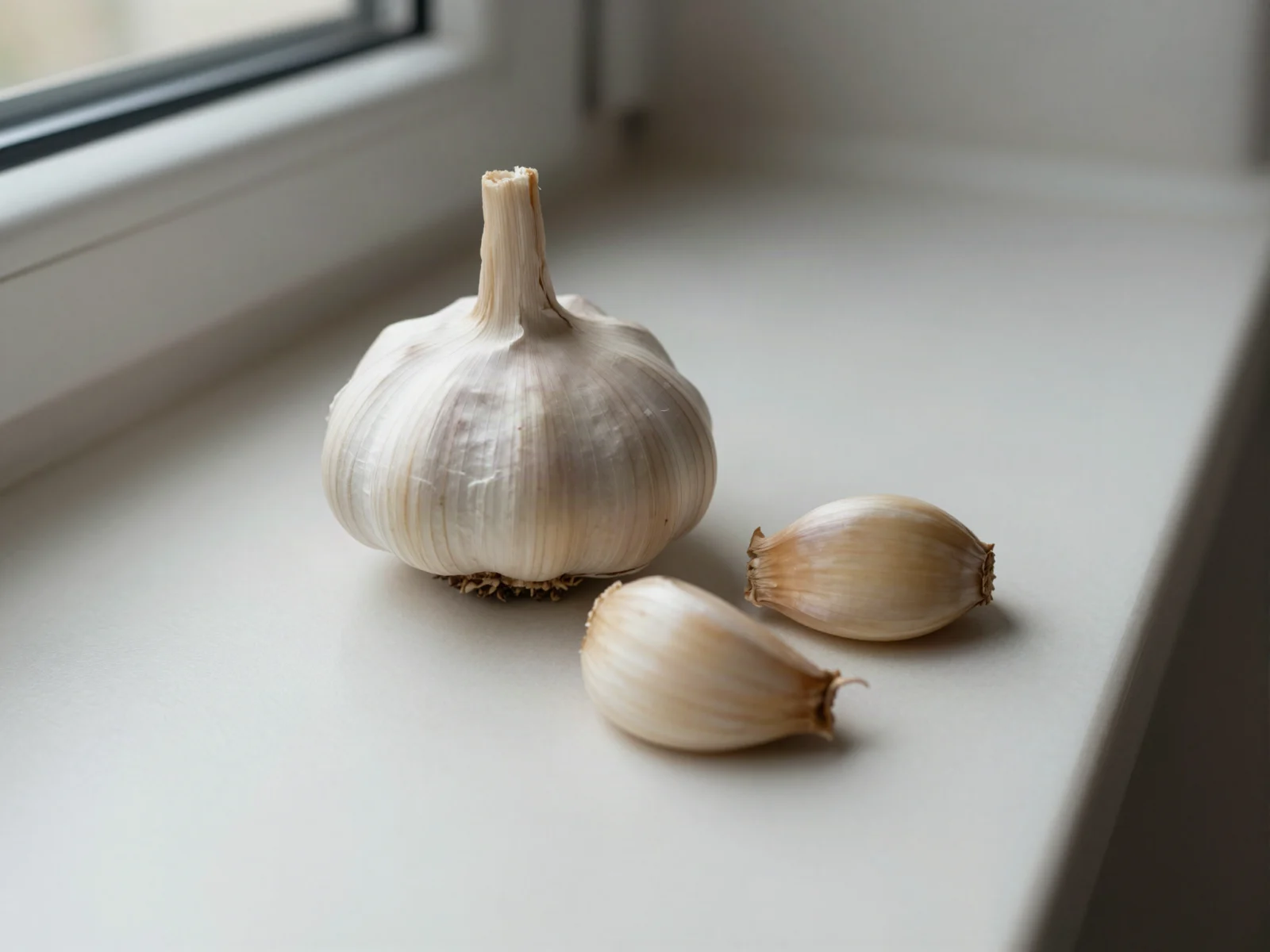
Verdict: use it
Fresh
Firm and heavy, with dry papery skin closed over the cloves. This is also what Purdue Extension tells you to buy.
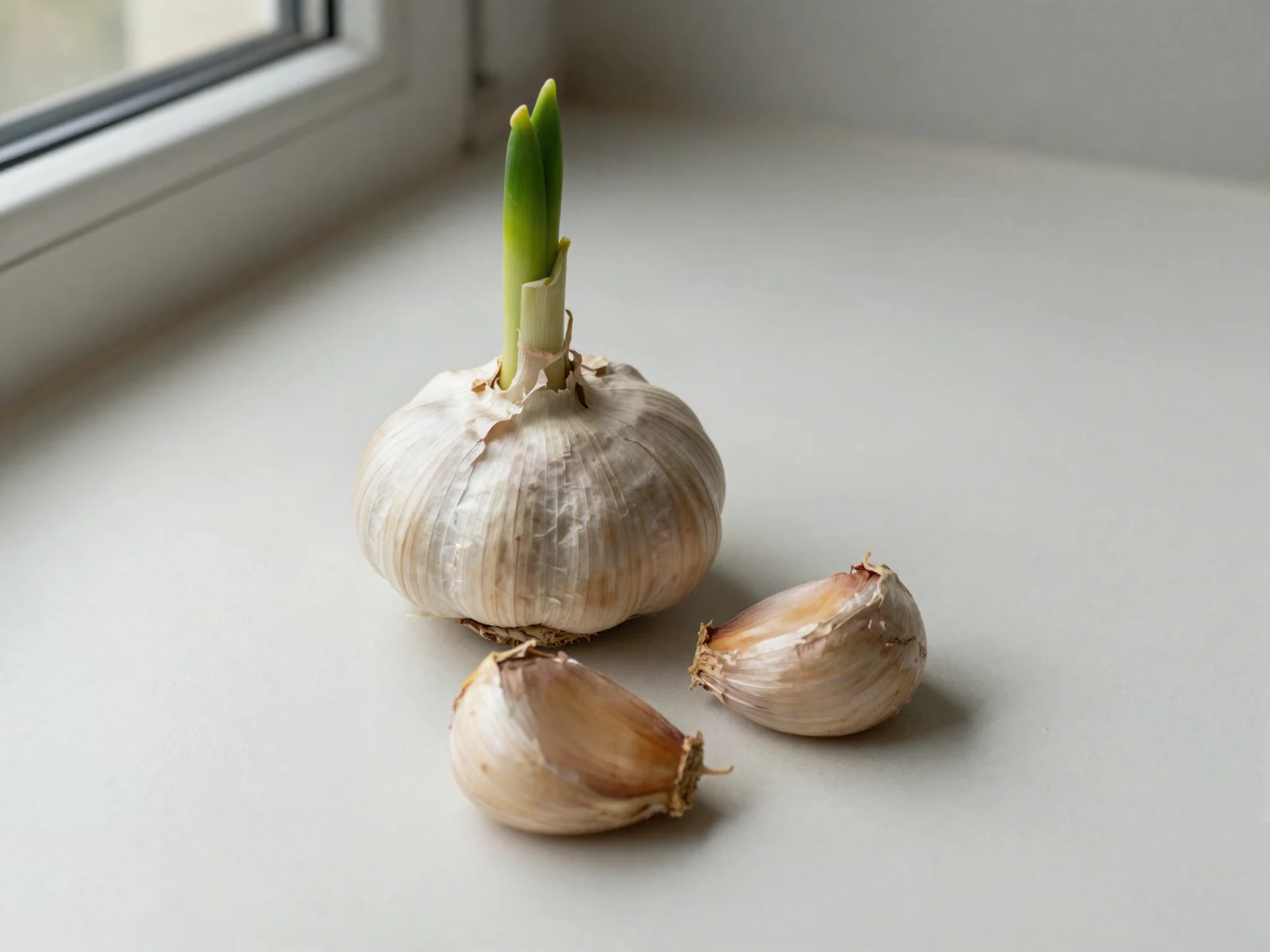
Verdict: use it soon
Sprouting garlic
A green shoot at the tip means the garlic is past its best, not spoiled. NDSU Extension does not treat it as spoiled, and University of Vermont Extension calls the sprouts harmless. Use it soon, though, because the clove feeds the shoot and dries out.
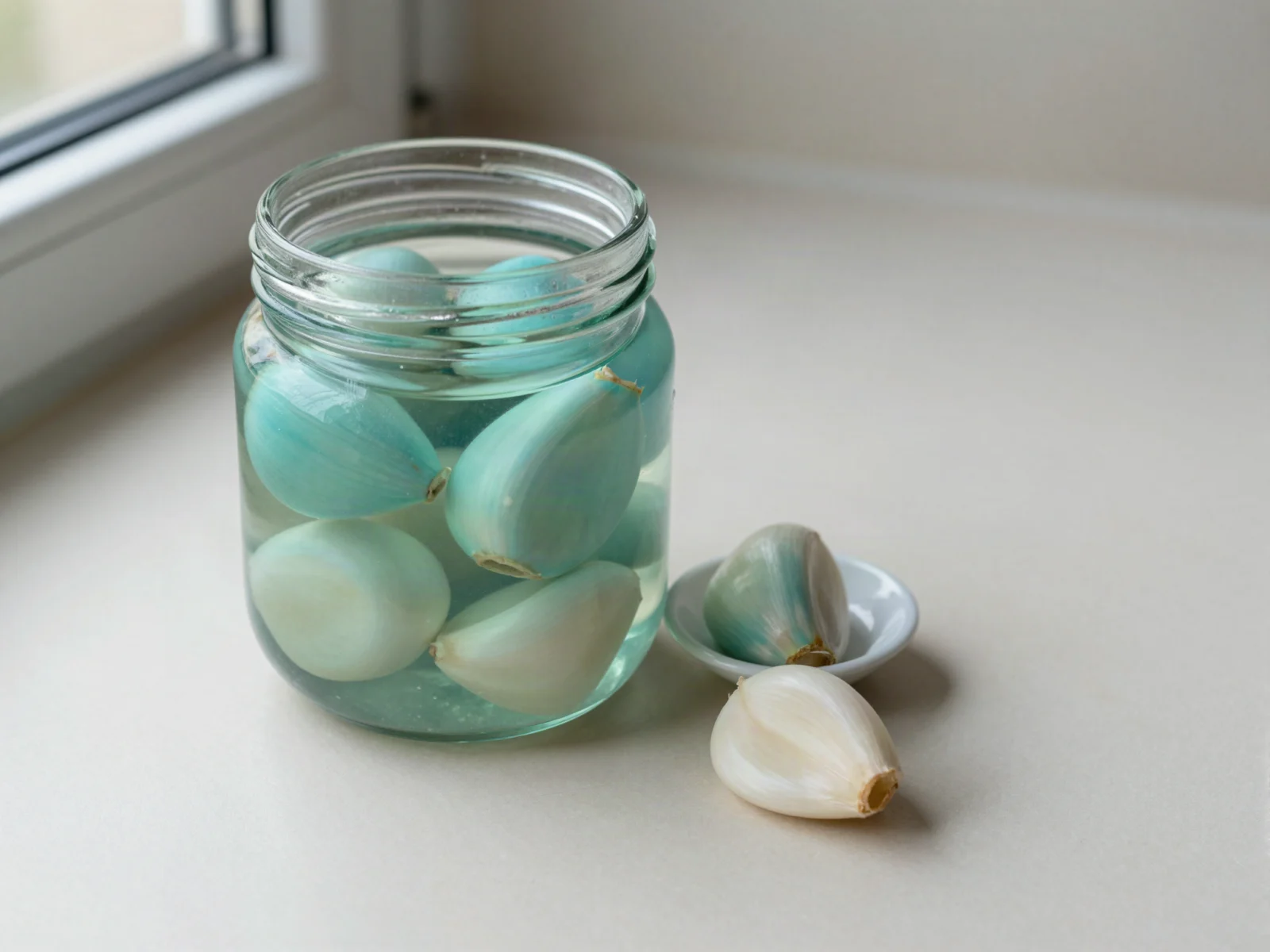
Verdict: use it
Garlic blue or green after pickling
Garlic can turn blue or green when it meets acid, such as vinegar or lemon juice. It looks alarming, but America's Test Kitchen explains it is a harmless reaction and the garlic is safe to eat. Do not confuse it with blue or green fuzz on the outside of a bulb, which is mold.
Verdict: use the firm cloves, toss the rest
Shriveled, soft or hollow garlic
Cloves that shrink, soften or dry out inside are at the end of their life. That is why Cornell Small Farms advises eating softening bulbs promptly. Break the bulb open, then sort it: firm cloves go in the pan, and cloves that are dried to a husk, wet or moldy go in the bin.
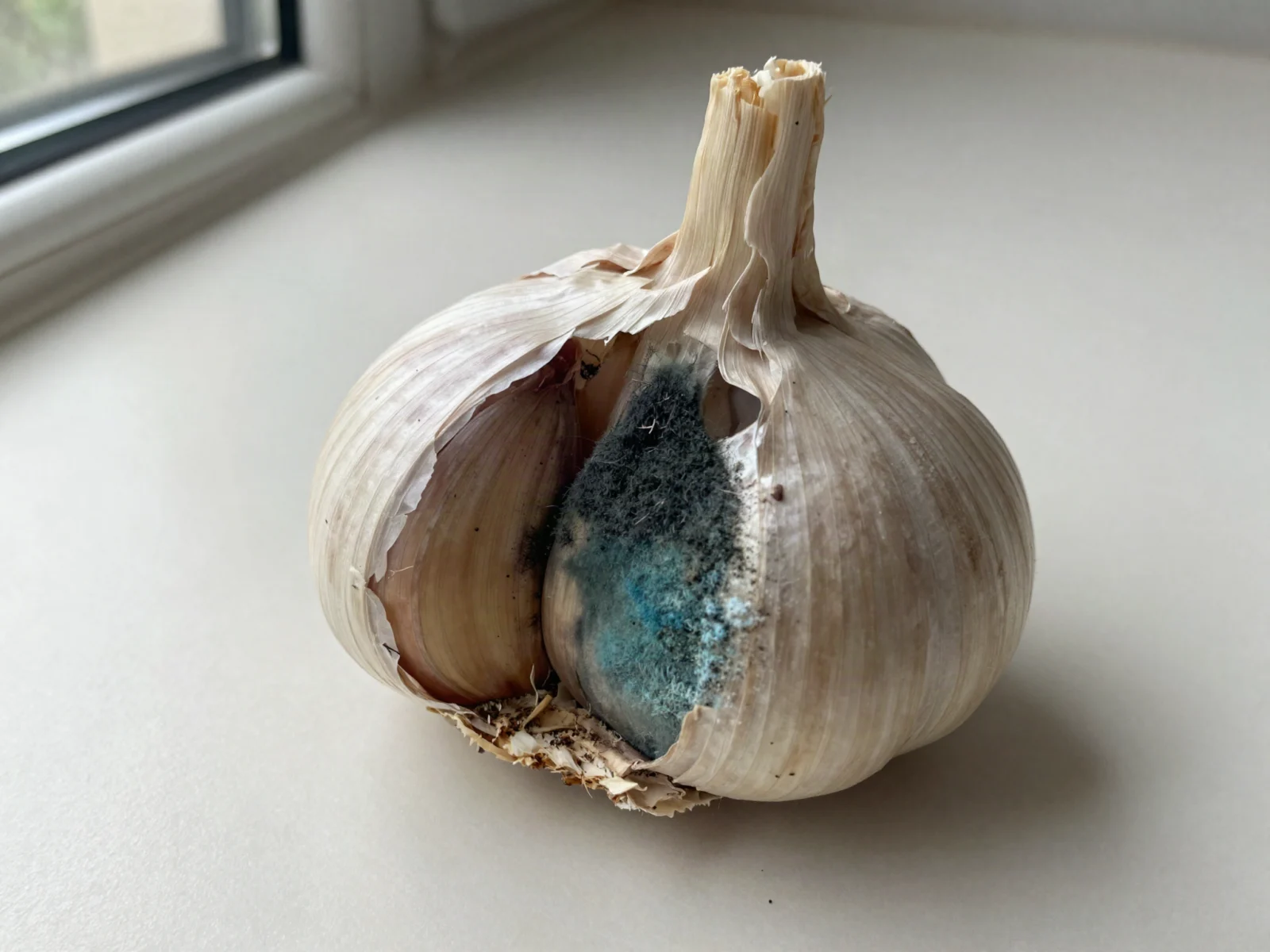
Verdict: throw it out
Black or fuzzy mold on garlic
Black mold shows up as a sooty black powder between the dry outer skin and the cloves, according to the UC Statewide IPM Program, and it can turn the bulb into a watery soft rot. White, green or blue fuzz is mold too. UConn Extension advises cutting 1 inch around and below mold on firm produce, and a garlic clove is simply too small for that. So throw moldy garlic out. It is also the same mold that streaks the necks of onions.
Is homemade garlic in oil safe?
Only cold, and only for 4 days. This is the one garlic question where "probably fine" is not good enough. That is because raw garlic in oil at room temperature is at risk of botulism, a potentially fatal illness, according to the National Center for Home Food Preservation. Make it fresh, keep it at 40°F or below and use it within 4 days. Otherwise, freeze it for up to several months.
Garlic substitutes
Out of garlic, or just threw out a moldy bulb? Then these will get dinner on the table.
Substitute
Works best in
What changes
Frozen garlic
Soups, sauces and stir-fries
Softer once thawed. Best cooked.
Garlic powder
Rubs, dressings and sauces
No fresh bite. Start with a small pinch and taste.
Shallots
Sauces and dressings
Milder, closer to onion than garlic.
Garlic chives or scapes
Finishing dishes and stir-fries
Milder and grassier.
Mistakes people make when they store garlic
These are the ways people store garlic that cost them the most bulbs, and each one has an easy fix.
Putting whole bulbs in the fridge. The cold wakes garlic up, so it sprouts. Use a cool, dark cupboard instead.
Sealing it in plastic. Garlic needs air, so a mesh bag, a wire basket or an open bowl all work.
Breaking up the bulb too early. Loose cloves dry out faster than a whole bulb. Pull cloves off as you cook.
Leaving garlic in oil on the counter. Instead, refrigerate it and use it within 4 days, or freeze it.
Storing it next to the oven. Warmth makes garlic shrivel and also favors black mold. Instead, use the coolest dark spot you have.
Throwing out sprouted garlic. If the cloves are still firm, it is safe to cook with. Just use it soon.
Sources
Garlic, FoodLink, Purdue Extension. Choosing garlic and pantry storage.
Field to Fork: Garlic, NDSU Extension, August 2021. Refrigeration, sprouting and freezing.
Preserving garlic, Oregon State University Extension Service, November 2024. Cold storage, freezing, bruising and garlic in oil.
Secrets of Storing Garlic, Cornell Small Farms Program, July 2020. Storage temperature, humidity and bulbs that store poorly.
Garlic Production in the Home Garden, University of Nebraska–Lincoln Extension, November 2013. Refrigerator temperatures and garlic in vinegar.
Prevent Late Winter Loss of Stored Garlic, University of Vermont Extension, February 2022. Sprouting garlic and how to preserve it.
Freezing Garlic-In-Oil, National Center for Home Food Preservation, University of Georgia. Garlic in oil and botulism.
Black Mold on Onions and Garlic, UC Statewide IPM Program. What black mold looks like and how storage affects it.
Handling Food with Mold, UConn Extension, April 2024. Cutting mold from firm produce.
Why Acid Turns Garlic Blue, Cook's Illustrated, America's Test Kitchen. Blue and green garlic.
I Tried 6 Ways of Storing Garlic, Ann Taylor Pittman, The Kitchn, February 2024. Counter, mesh bag and fridge compared over four weeks.
Storage times and safety advice on this page come from the sources above. Food safety depends on conditions I cannot see, so read the Disclaimer, and if in doubt, throw it out.
Other ingredient guides
Browse all guides
Share this guide
Never miss a guide
New ingredient guides when they go up, plus one storage tip worth knowing. Anything sponsored is labelled.

Emilly White