
Up to 4 weeks
Whole and dry, somewhere cool, dry and dark
Up to 7 days
Cut or peeled, covered
A few months
Diced, no blanching. Best in cooked dishes
The short version: to store onions well, keep them whole, dry and in the dark with air around them, and also away from your potatoes.
Storage times from Purdue Extension, Colorado State University Extension and the National Center for Home Food Preservation.
On this page
How to choose onions that store well
In fact, a long life starts at the shop. Buy loose onions rather than a closed bag when you can, so you can check each one before it comes home.
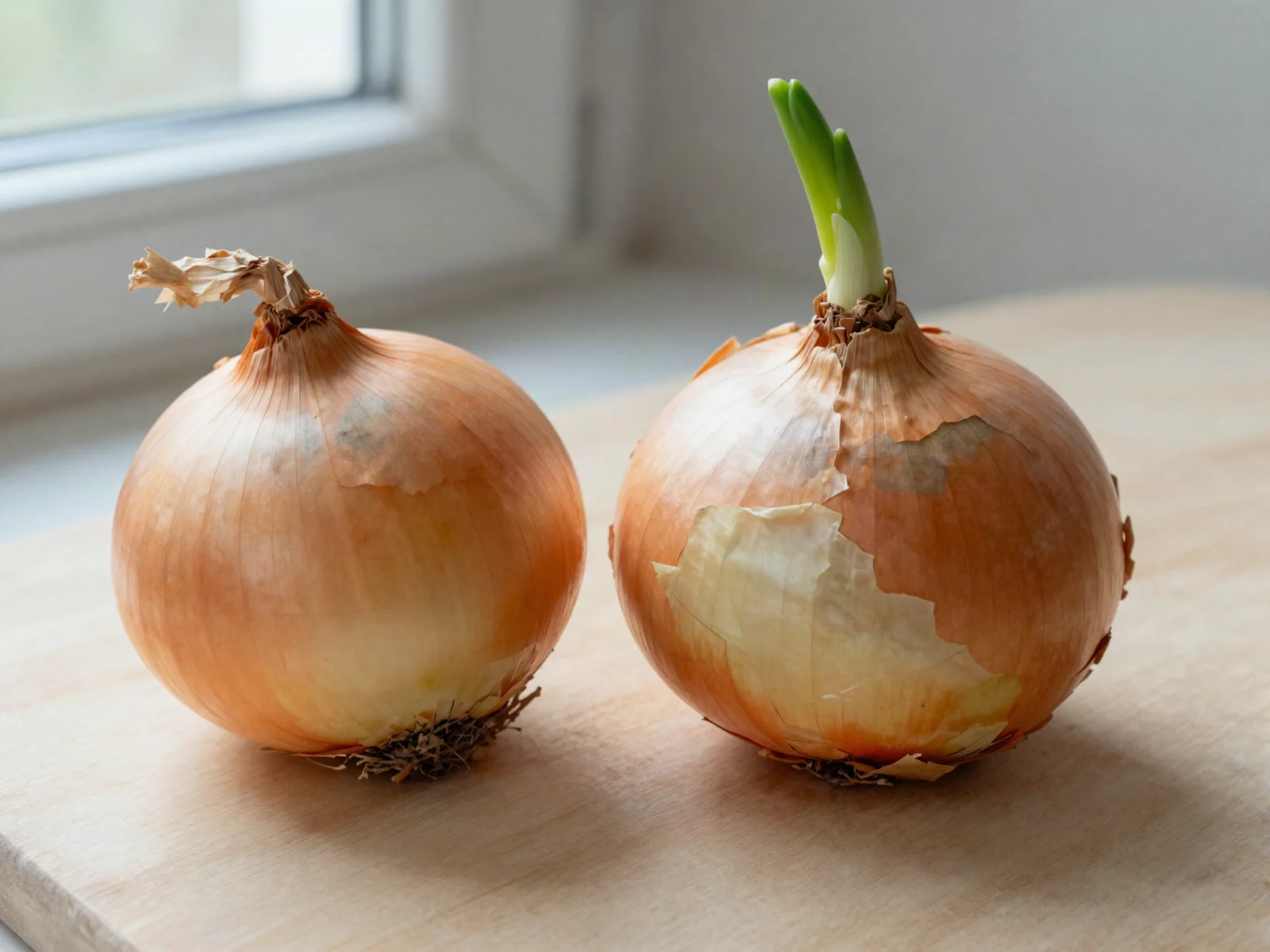
A firm yellow onion with dry papery skin, compared to an older onion with loose skin and a green sprout.
Firm at the shoulder. Before you buy, press the top, near the stem, with your thumb. When it gives, there is likely rot inside, according to the extension specialists America's Test Kitchen asked.
Dry, papery skin. In other words, the outer layers should be dry, not damp.
Little or no smell. An uncut onion should barely smell, so one that smells like rotting food is already breaking down.
No cuts, bruises or black specks. That is because damaged skin is where mold and bacteria get in. Also, specks that look like black dirt are usually mold.
How to store onions so they last
To store onions so they last, keep them cool, dry, dark and airy. A breathable bag such as mesh or burlap helps them last longer. The fridge, on the other hand, is for cut onions, not whole ones.
How to store whole onions
First of all, put whole, unpeeled onions in a mesh bag, wire basket or crate, somewhere cool, dry and dark. The National Onion Association says never to keep them in plastic, because without air they spoil sooner, and to keep them out of sunlight and away from heat. How cool is cool? Specifically, the association gives 45 to 55°F. For storage over months, Iowa State University Extension goes colder, 32 to 40°F with 65 to 70 percent humidity, which is cellar territory rather than a kitchen cupboard.
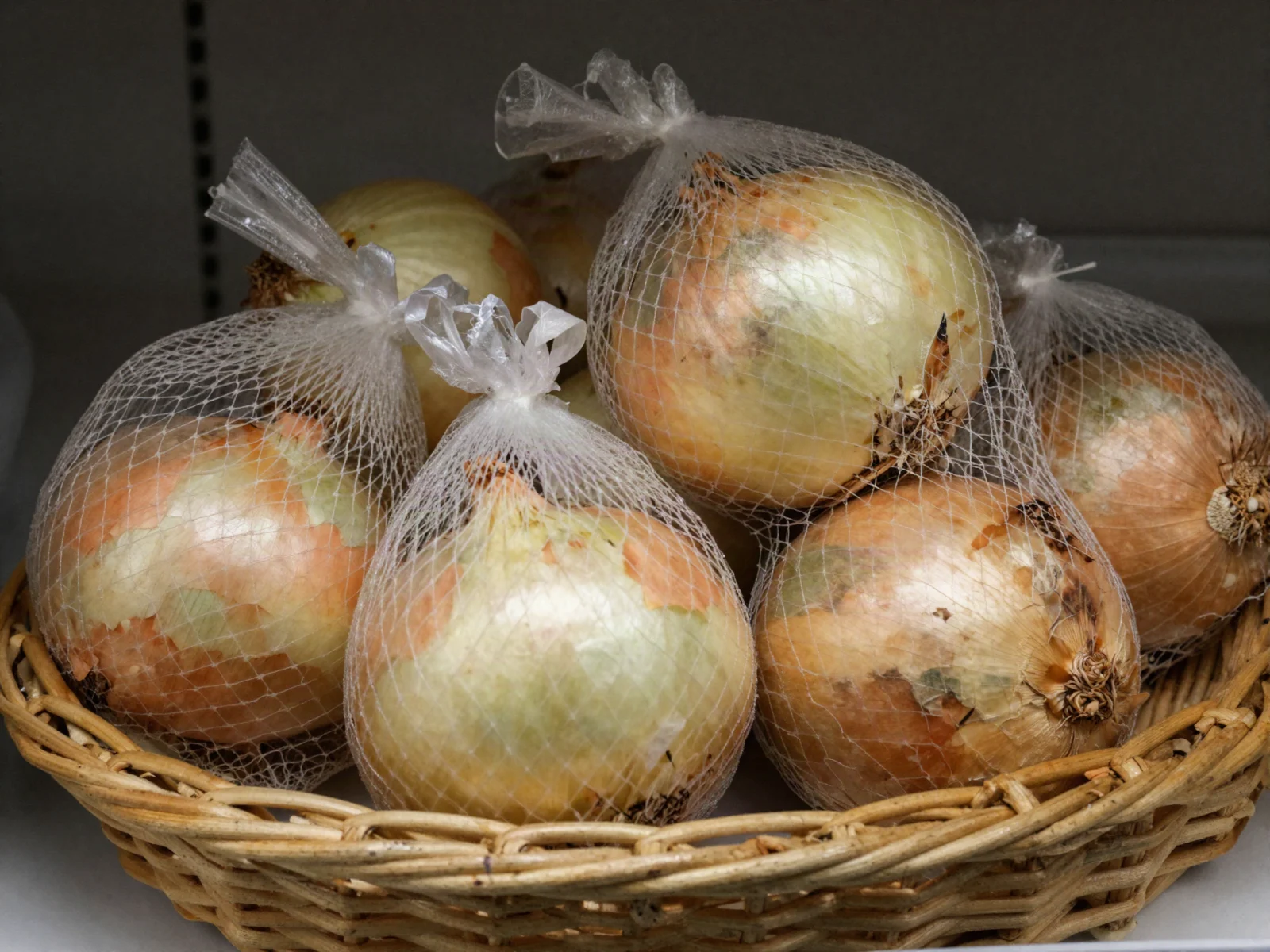
Yellow onions in mesh bags in a wicker basket on a pantry shelf, so that air can reach every one.
Also, check them once a week. That is because one rotten onion will spoil the ones stored next to it, and a University of Illinois Extension educator told America's Test Kitchen that if anything smells bad, there is a bad onion in there somewhere. Then find it and throw it out.
How long can you store onions at room temperature?
Up to 4 weeks on the counter, according to Purdue Extension. Variety matters more than most people expect. Iowa State University Extension notes that sweet onions such as Walla Walla keep only a few weeks, while good storage varieties can last months somewhere cold.
However, a warm kitchen shortens that. When your onions sit near the stove or in a sunny spot, expect them to sprout or soften sooner, so buy fewer at a time.
How to store cut onions
Wrap it or seal it in a container, then refrigerate it. Sources do not agree on how long it lasts: Colorado State University Extension gives up to 7 days, while the National Onion Association says several days. Go by the shorter one. America's Test Kitchen also suggests using a stored cut onion in cooked dishes rather than raw. Otherwise, if you will not get to it soon, freeze it. Left a cut onion out overnight? See food left out overnight.
How to store sweet onions
Sweet onions, however, do not keep like storage onions. Iowa State University Extension calls varieties such as Walla Walla poor keepers that last only a few weeks, so buy them in small amounts and use them before your everyday yellow onions.
Can you freeze onions?
Yes. In fact, freezing is the best way to store onions you will not get through in time, and you do not need to blanch them first. Frozen onion softens, so use it within a few months in cooked dishes, not raw.
How to store chopped onions in the freezer
Peel, trim and rinse the onion, then dice it into pieces about 1/4 inch across. Unlike many vegetables, onion needs no blanching. After that, pack it into freezer bags or containers, leaving 1/2 inch of headspace, and press out as much air as you can.
How to store frozen onions so the pieces stay separate
Spread the diced onion on a tray and freeze it before you bag it. The pieces stay loose, so you can take out only what you need. Packing it in serving-size portions works too.
How to use frozen onions
When you need it, cook it straight from the freezer in soups, stews, casseroles and stir-fries. Penn State Extension recommends frozen onion for cooked dishes only, so keep a fresh onion for salads and salsa.
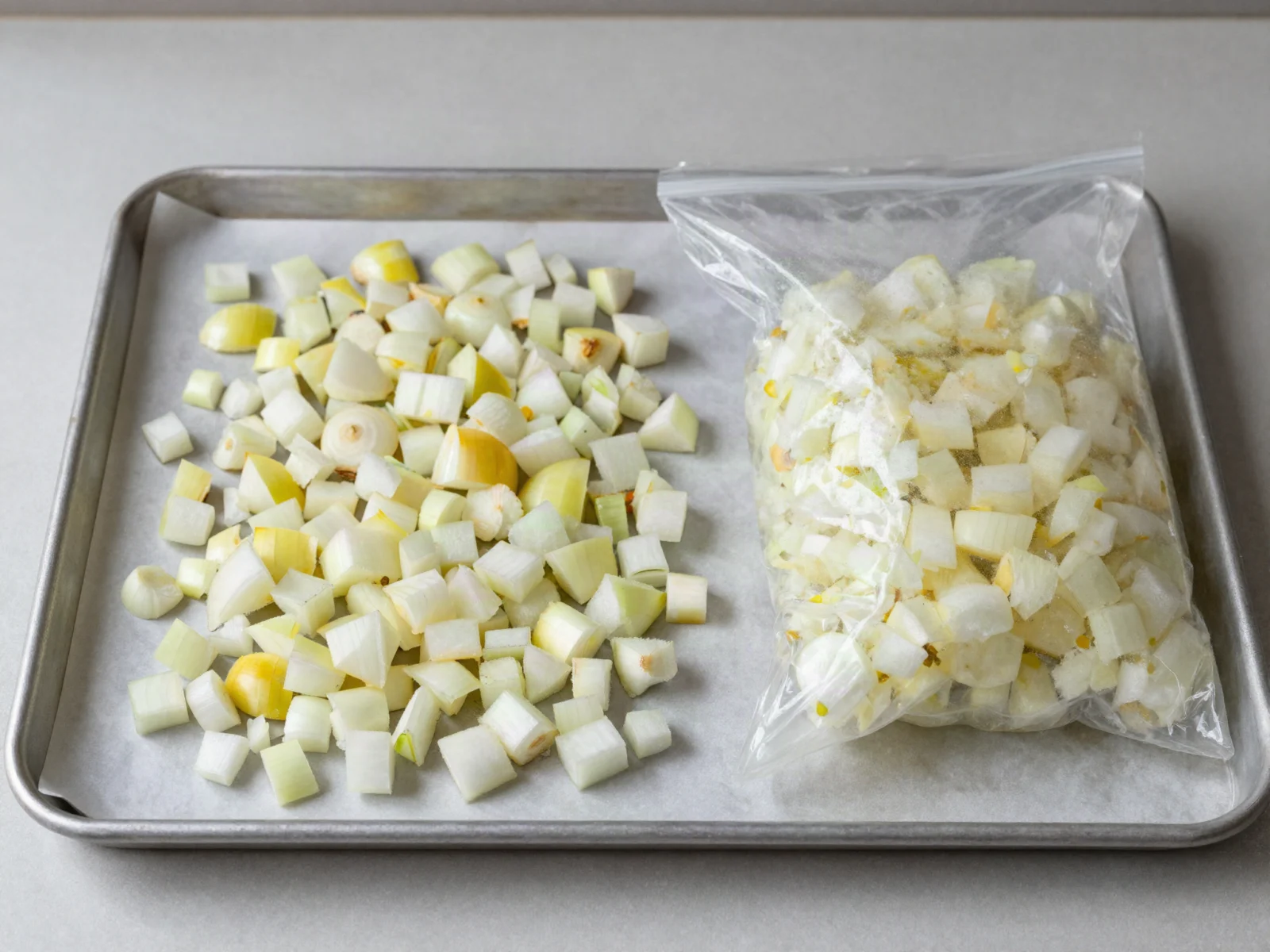
Diced yellow onion spread on a lined baking tray to freeze before it goes into the freezer bag beside it.
How to tell if an onion has gone bad
However you store onions, most old ones are still usable. Old means dry skin, a sprout or a tired outer layer. Bad, on the other hand, means a soft shoulder, a brown or wet layer inside, spreading mold or a smell of rot. Here is how to tell which one you have.
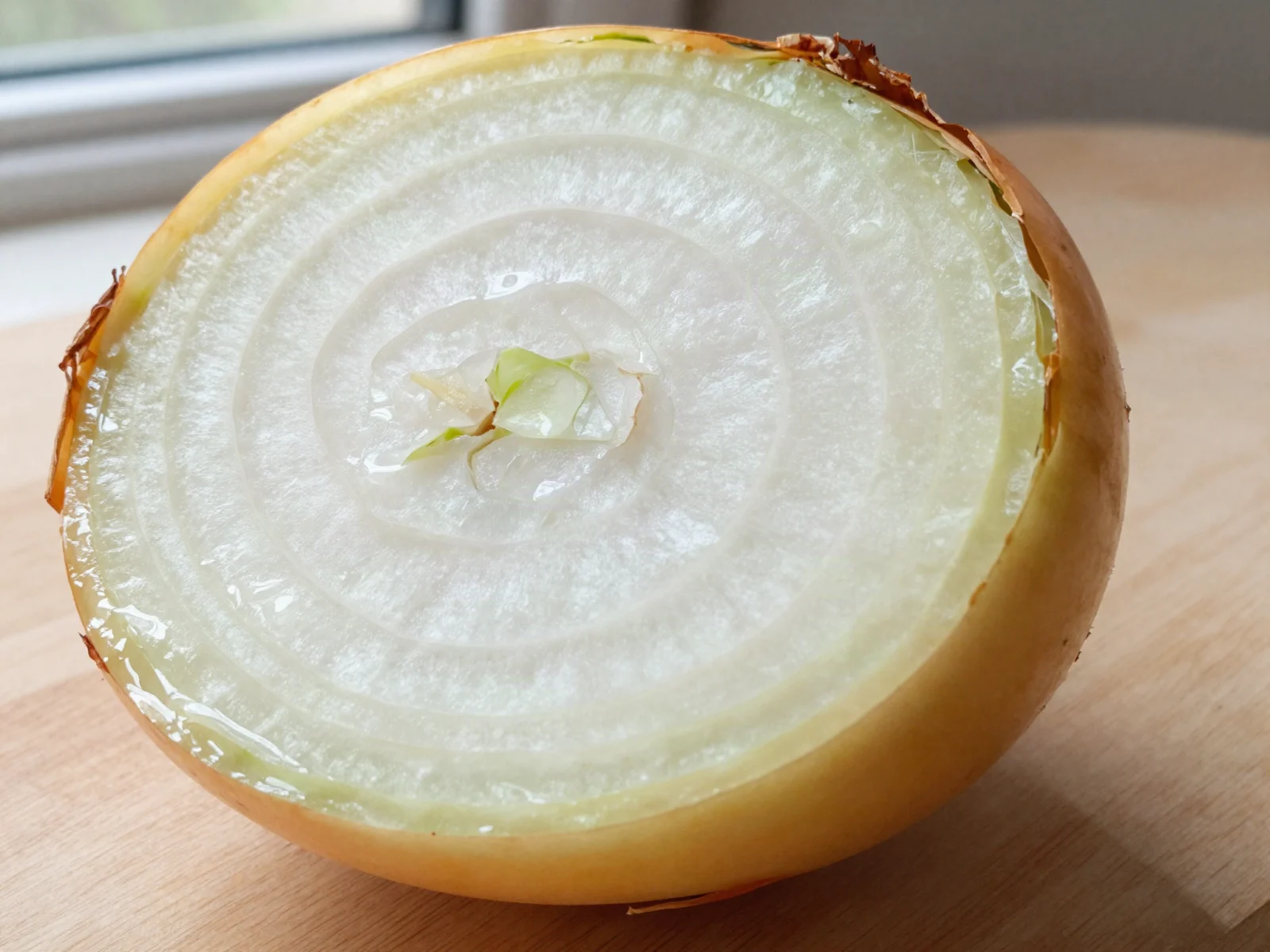
Verdict: use it
Fresh
Firm and heavy, with dry, papery skin and crisp white layers inside. It barely smells until you cut it.
Verdict: use it soon
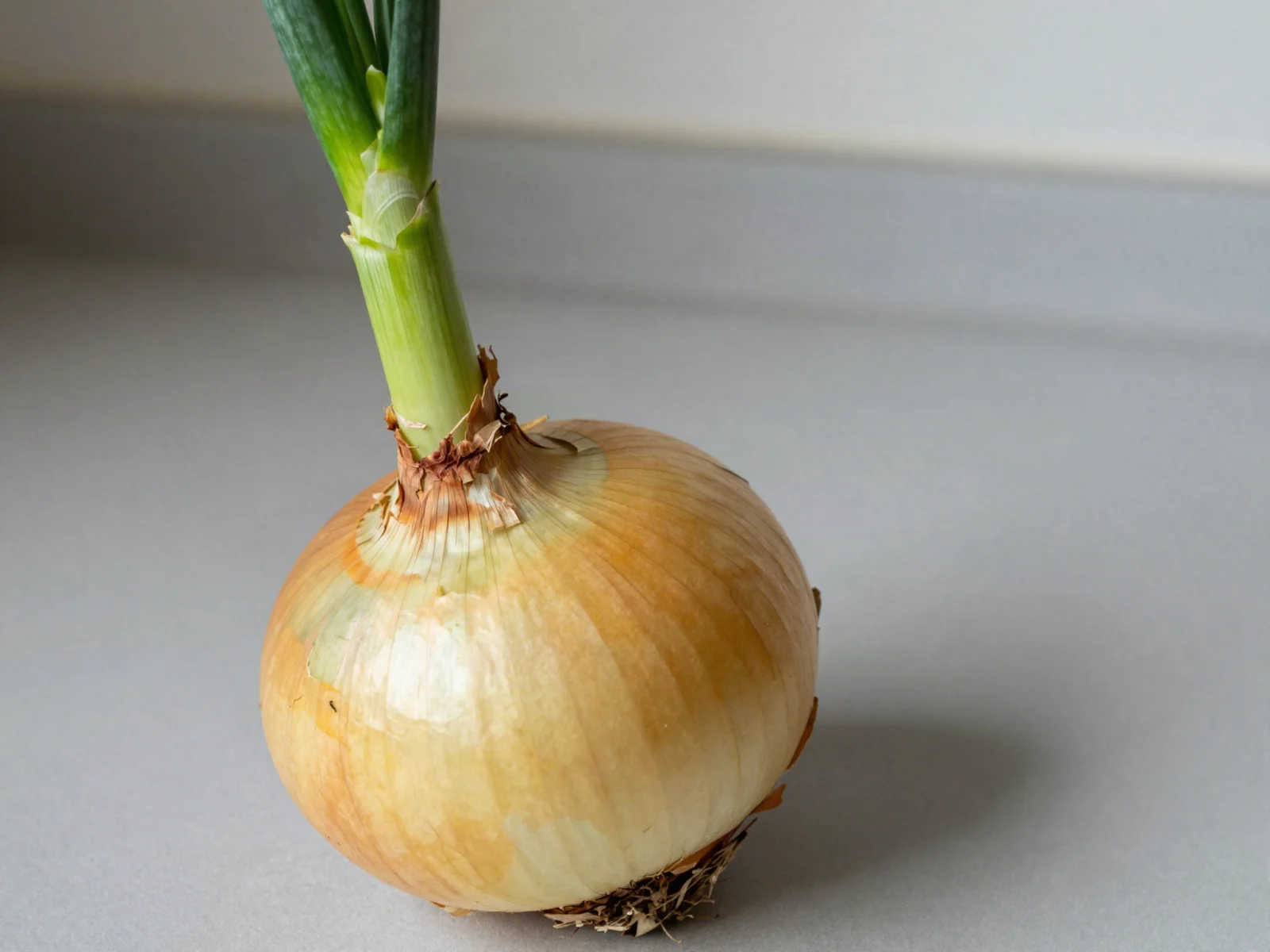
Sprouting onions
A green shoot means the onion is getting old, not unsafe. Purdue Extension says the firm white parts are still fine to use. America's Test Kitchen found sprouted onions more fibrous and less sweet, with a bitter shoot, so cut the sprout out and cook the onion soon.
Verdict: throw it out
Brown ring or soft, watery layers inside
Cut an onion open and find a brown layer, mushy or dry and papery? That is usually a bacterial rot. In this case, the experts America's Test Kitchen consulted say to throw the onion out. Soft spots, a watery texture, or gray to black discoloration running from the neck toward the center also mean it goes. Do not try to cut around it.
Verdict: cut it away, or throw it out
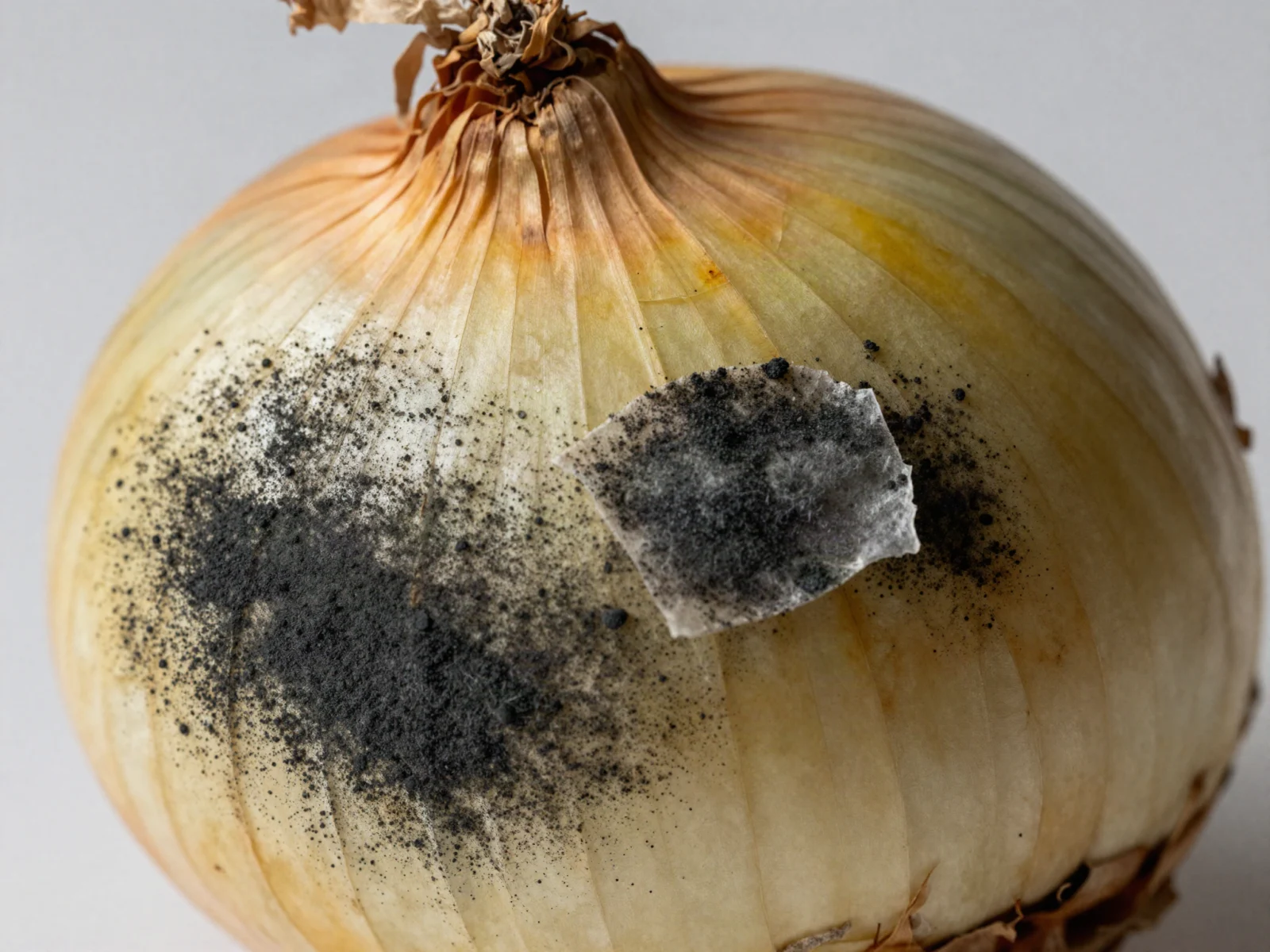
Black mold under onion skin
Black mold shows up as sooty black streaks or specks on the neck and under the dry outer skin. If there is only a little on the outside, America's Test Kitchen reports that USDA guidance allows rinsing it off or cutting the moldy part away, and UConn Extension advises cutting at least 1 inch around and below mold on firm produce. If the black reaches the center, the mold is heavy, or the onion is soft, throw it out. The same black mold also turns up under the skin of garlic.
Verdict: throw it out
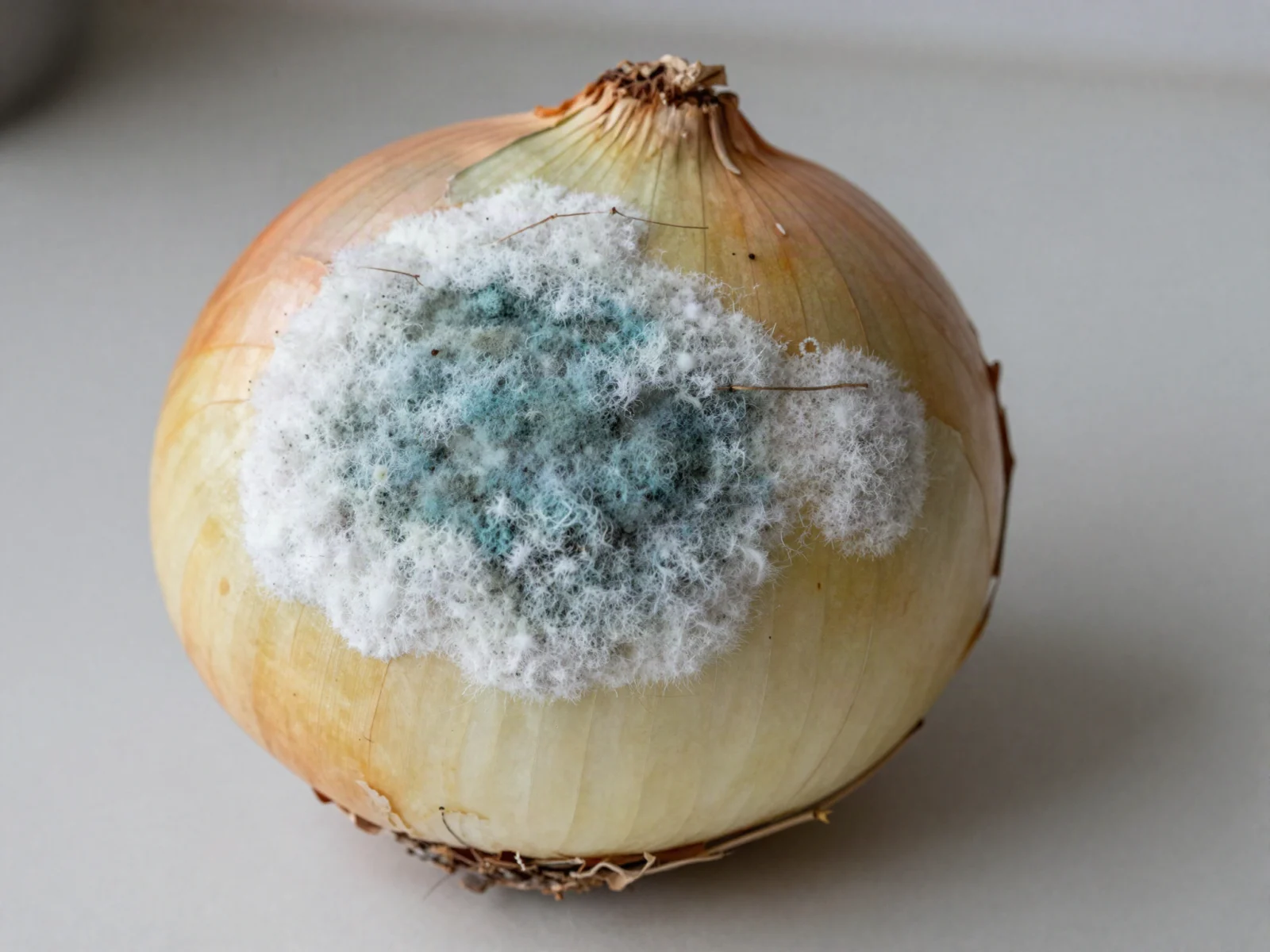
Fuzzy mold or decay
White, gray, green or blue fuzz, a wet surface or a rotten smell mean the onion has gone. That is because onions with those molds are likely contaminated below the surface, according to the experts America's Test Kitchen asked, and Iowa State University Extension advises discarding any onion that shows signs of decay.
Can you store onions and potatoes together?
No. Iowa State University Extension advises keeping them apart, because storing them together shortens the life of both. Onions give off ethylene gas, which makes potatoes spoil sooner, and the moisture from potatoes can make onions turn brown and rot.
Onion substitutes
Onion gone soft halfway through a recipe? Then these will stand in.
Substitute
Works best in
What changes
Frozen diced onion
Soups, stews and sauces
Very little once cooked. Not for raw use.
Shallots
Dressings, sauces and raw dishes
Milder and a little sweeter.
Leeks or green onions
Soups and cooked dishes
Milder and grassier.
Onion powder
Rubs, soups and sauces
Much stronger. Start with a small pinch and taste.
Mistakes people make when they store onions
These are the ways people store onions that cost them the most, and each one has an easy fix.
Sealing them in plastic. Onions need air, so use a mesh bag, a basket or a crate instead.
Keeping them somewhere warm. Heat and sunlight shorten their life, and warm spots also favor black mold. Instead, use the coolest dark place you have.
Dropping or bruising them. Mold and bacteria get in through cuts and bruises, so handle onions gently.
Leaving a cut onion uncovered. Wrap it or seal it, refrigerate it, and then use it within 7 days at most.
Treating sweet onions like storage onions. Since sweet varieties keep only a few weeks, use them first.
Throwing out a sprouted onion. If it is still firm, cut out the sprout and cook it soon.
Storing them with potatoes. Keep them apart, because each one makes the other spoil sooner.
Never checking the bag. Since one rotten onion spoils its neighbors, look through them once a week.
Sources
Onion, green onion, scallion, FoodLink, Purdue Extension. Choosing onions, counter storage and sprouting.
How to Use Onions, Food Smart Colorado, Colorado State University Extension. Whole and cut onion storage.
How do you harvest, dry, and store onions?, Yard and Garden, Iowa State University Extension and Outreach, August 2025. Long-term storage conditions and varieties.
Spouting or Greening Potatoes . . . Keep or Toss?, AnswerLine, Iowa State University Extension and Outreach, April 2024. Why onions and potatoes should be stored apart.
Freezing Onions, National Center for Home Food Preservation, University of Georgia. Freezing diced onions.
The Well-Preserved Onion, Penn State Extension. Freezing and using frozen onions.
Black Mold on Onions and Garlic, UC Statewide IPM Program. What causes black mold and how storage affects it.
Onion Black Mold, Plant Health Clinic, University of Arkansas Cooperative Extension Service. What black mold looks like inside and out.
Handling Food with Mold, UConn Extension, April 2024. Cutting mold from firm produce.
Storage and Handling, National Onion Association. Storage temperature, plastic bags, cut onions and storing apart from potatoes.
How to Tell If an Onion Is Bad, Rebecca Hays, America's Test Kitchen, June 2023. Interviews with University of Georgia and University of Illinois Extension specialists on rot, mold, sprouting and choosing onions.
Storage times and safety advice on this page come from the sources above. Food safety depends on conditions I cannot see, so read the Disclaimer, and if in doubt, throw it out.
Other ingredient guides
Browse all guides
Share this guide
Never miss a guide
New ingredient guides when they go up, plus one storage tip worth knowing. Anything sponsored is labelled.

Emilly White