
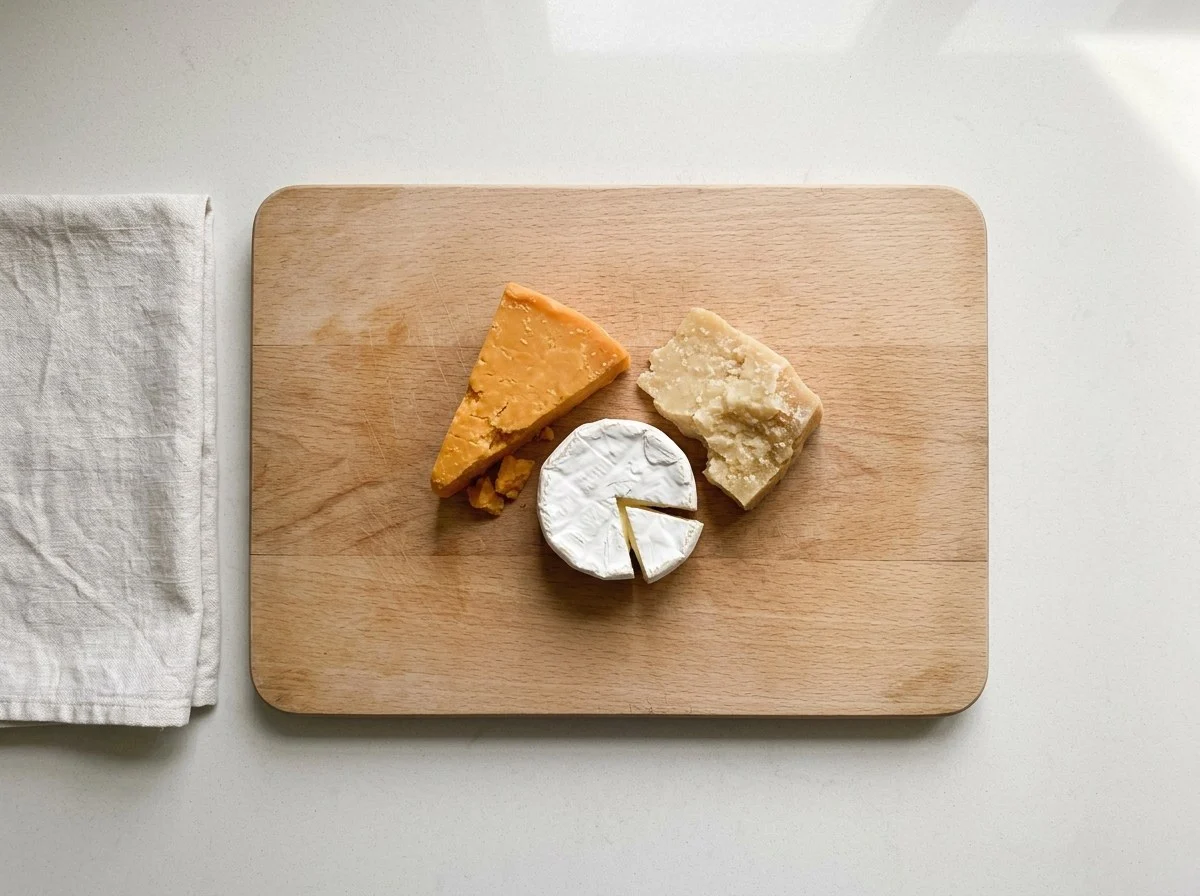
2 hours at most
1 hour if the room is above 90°F
3 to 4 weeks
Hard cheese, opened. Soft cheese: 1 to 2 weeks
6 months
Hard cheese, for cooking. Shredded: 3 to 4 months
The short version: to store cheese well, wrap it in paper, then loosely in a container, and keep it in the coldest part of the fridge rather than the door.
Storage times from the USDA FoodKeeper data, U.S. Dairy and UConn Extension.
On this page
How to choose cheese that will store well
In fact, what you buy decides how long it lasts. A block keeps for weeks, while the same cheese shredded is on a much shorter clock.
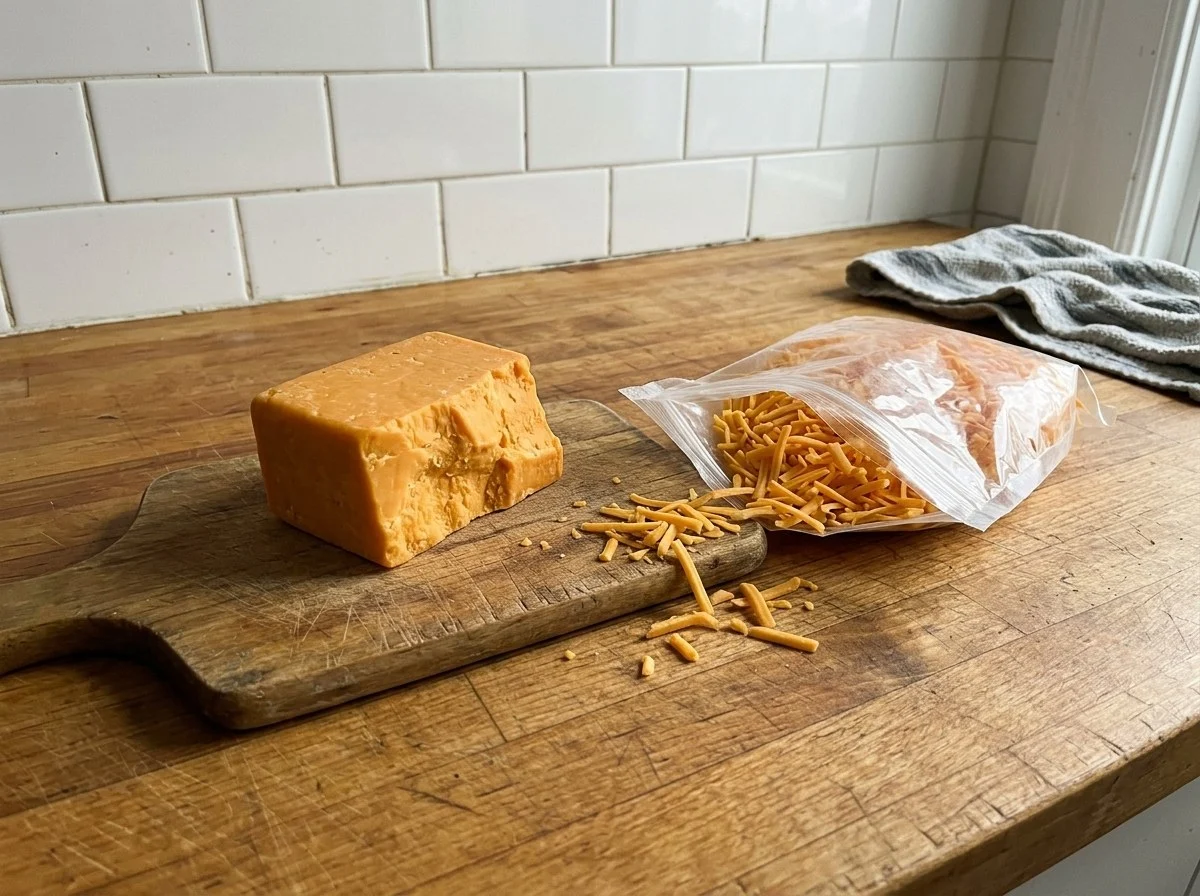
A block of cheddar next to an open bag of the same cheese, shredded. Unopened, the block keeps about 6 months in the fridge, whereas the shreds keep about 1 month.
A block or wedge over pre-cut pieces. Small pieces have more surface area, so they dry out and warm up faster, as U.S. Dairy notes.
Shredded only if you will use it soon. USDA FoodKeeper data gives shredded cheddar or mozzarella about 1 month in the fridge, against 6 months for an unopened block.
Check the date on soft cheese. Brie, goat cheese and fresh mozzarella keep 1 to 2 weeks, so buy them for this week, not next month.
Skip anything cracked, damp or moldy in the case. After all, cheese that has dried at the edges or sweated in its wrapper will not improve at home.
How to store cheese so it lasts
To store cheese so it lasts, give it cold air and a wrapper that breathes. That is because cheese dries out in nothing, sweats in plastic and takes on the smell of whatever sits beside it.
How to store cheese in the fridge
Keep the fridge below 40°F, as UConn Extension advises, and leave cheese in its unopened package until you need it. Once it is open, UConn suggests wrapping or sealing it tightly before it goes back in the fridge, and putting the wrapped cheese in an airtight container if you have one. U.S. Dairy prefers wax, parchment or cheese paper first, then a loosely sealed container, so the surface can breathe without drying. Either way, keep it in the coldest steady part of the fridge rather than the door, and use clean hands or a knife when you cut a piece off.
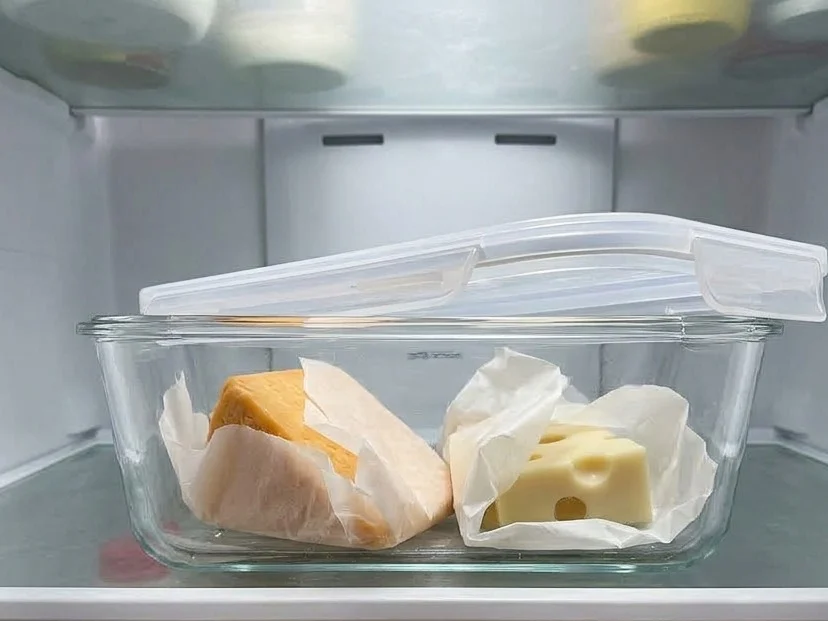
Cheddar and Swiss wrapped loosely in parchment paper, in a glass container with the lid resting on top rather than sealed.
How long can you store cheese in the fridge?
It depends on the cheese, and the USDA FoodKeeper data is the clearest guide: an unopened block of hard cheese such as cheddar, Swiss or Parmesan keeps about 6 months, and 3 to 4 weeks once opened. Soft cheeses such as brie or goat cheese keep 1 to 2 weeks. Shredded cheddar or mozzarella gets about 1 month, processed slices 3 to 4 weeks, cream cheese 2 weeks, and cottage cheese about 1 week after opening.
Those are quality windows, not hard safety limits, and they assume a fridge that stays below 40°F. Cheese that is still firm, smells right and has no mold past its window is usually fine, whereas cheese that is slimy, cracked and gray is not, whatever the date says.
How long can cheese sit out?
Two hours at room temperature, and one hour if the room is above 90°F, according to U.S. Dairy. That includes the 20 to 30 minutes cheese benefits from sitting out before serving, so start counting when it leaves the fridge. After a cheese board has been out for two hours, Sarah Hill of the Dairy Farmers of Wisconsin tells U.S. Dairy that soft, fresh cheeses such as queso fresco, brie and camembert should be thrown out, while hard cheeses such as cheddar, Swiss, gouda and Parmesan can be wrapped well and refrigerated again. For more, see food left out overnight and food after a power outage.
What if cheese was left out overnight?
Soft and fresh cheeses left out overnight should go in the bin. Hard cheeses may still be safe, says U.S. Dairy, though the bigger problem is quality: they dry, crack and pick up off flavors. If a hard cheese has dried out, wrap it in foil and freeze it for cooking rather than eating it as it is.
Where should you store cheese in the fridge?
In the coldest stable part, usually a lower shelf or a drawer, away from the door and away from strong-smelling food. That is because cheese picks up odors, and the door swings between temperatures every time someone opens it. It is the same reason eggs belong on an inside shelf rather than in the door.
Can you freeze cheese?
Yes, with a catch: freezing changes the texture. Frozen cheese comes back drier and more crumbly, which is fine in cooking but disappointing on a cracker. Specifically, USDA FoodKeeper data gives hard cheese about 6 months in the freezer and shredded cheese 3 to 4 months, and does not recommend freezing cottage cheese, cream cheese, processed slices or grated Parmesan.
How to store hard cheese in the freezer
UConn Extension suggests freezing harder cheeses in the original unopened package. If it is already open, cut it into small pieces, wrap them tightly in plastic wrap and freezer paper, then freeze. Thaw the wrapped cheese in the fridge and use it soon after.
How to store shredded cheese in the freezer
Shredded cheese freezes well and is the easiest kind to use later: freeze it flat in a bag with the air pressed out, then take out what you need and cook it straight from frozen on pizza, pasta or a sauce. Plan on 3 to 4 months.
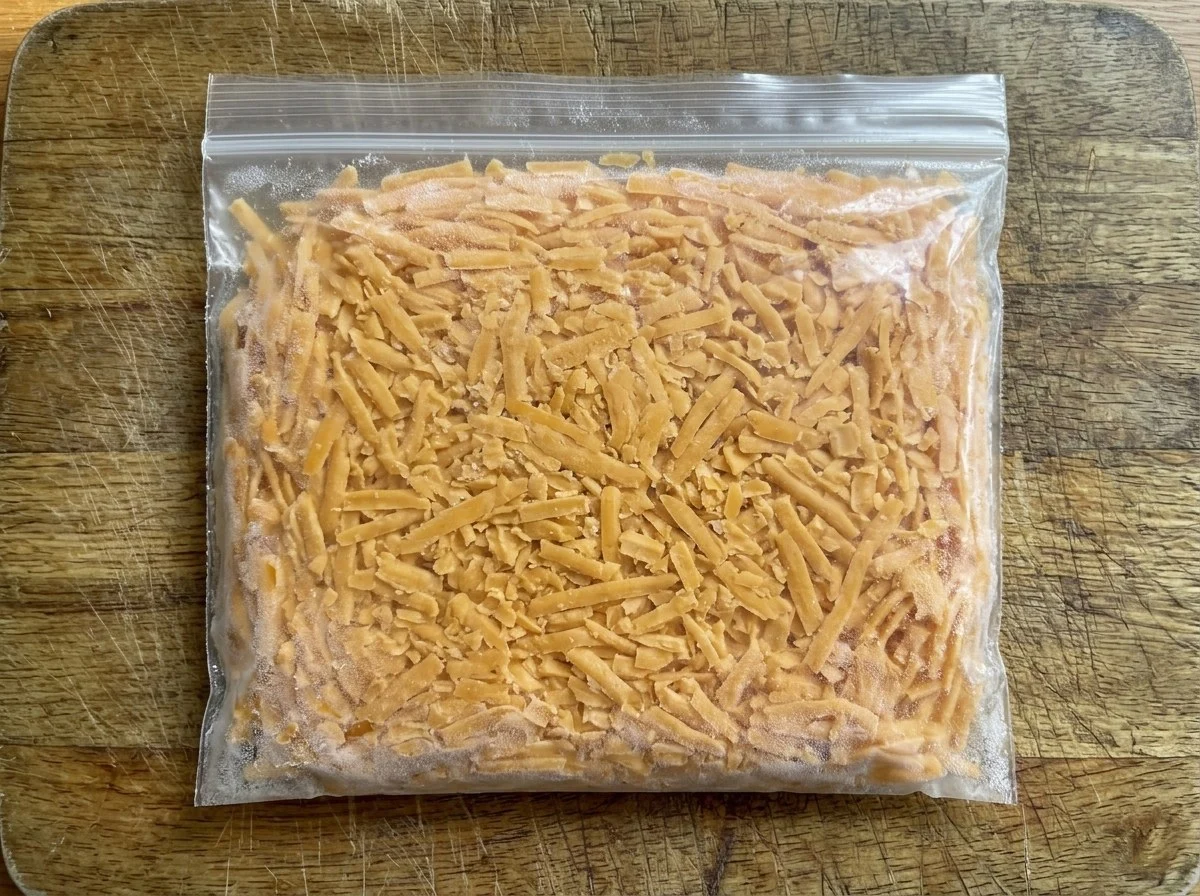
Shredded cheddar frozen flat in a zip-top bag with the air pressed out, so you can break off what you need.
What happens to cheese you store in the freezer
Ice crystals break up the structure, so thawed cheese is crumblier and drier and can turn grainy in a sauce if you melt it too fast. Use frozen cheese where it is melted or baked, and keep a fresh piece for the cheese board.
How to tell if cheese has gone bad
However you store cheese, mold is the question that decides most of it, and the answer depends entirely on the cheese. On a hard block, mold is a surface problem you can cut away. On anything soft, shredded or sliced, however, it is the whole package. Here is how to tell which one you are holding.
Verdict: use it
Still good
Firm, with no mold, no slime and no sour or ammonia smell. Hard cheese may sweat a little oil after time out of the fridge, but that is texture, not spoilage.
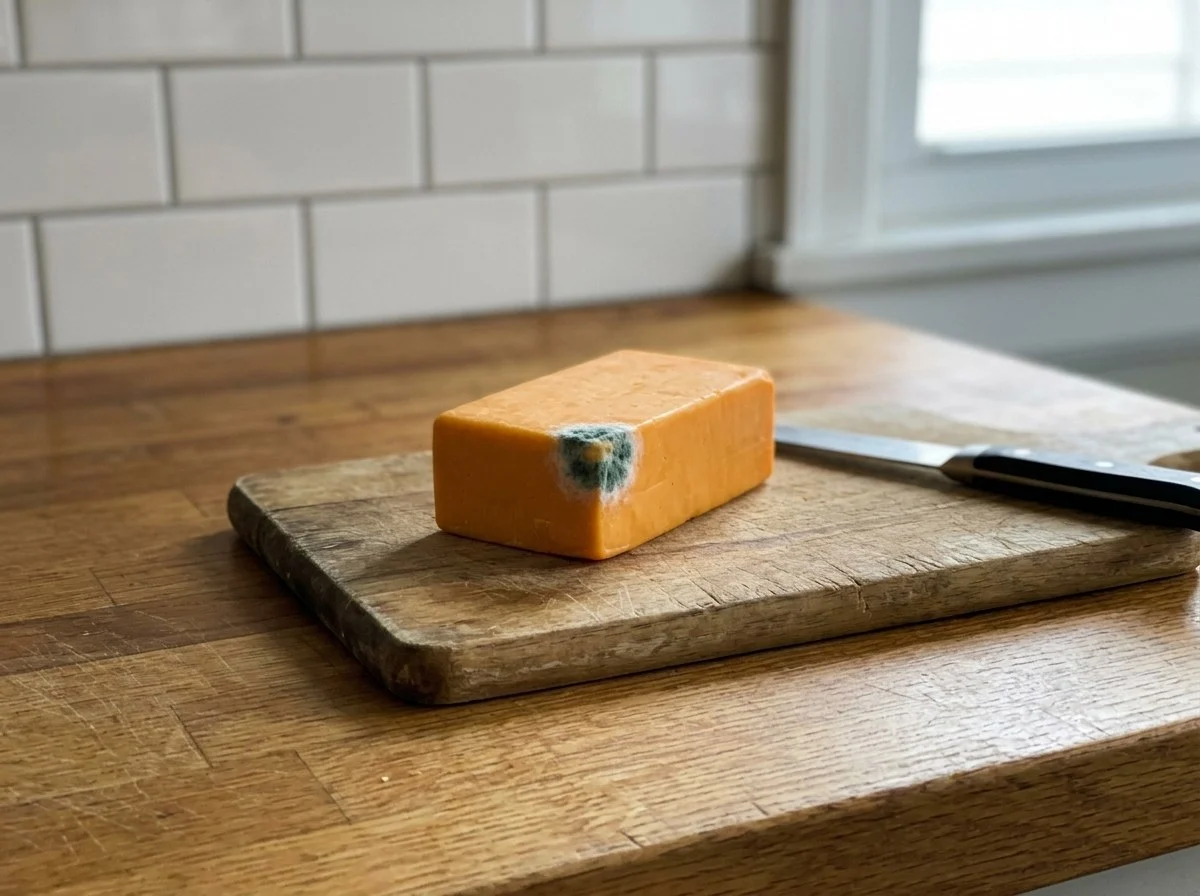
Verdict: cut it away
Mold on hard or semisoft cheese
Mold rarely gets far into cheddar, colby, Parmesan or Swiss, so Mayo Clinic says to cut out the moldy part and eat the rest. Cut at least 1 inch around and below the spot and keep the knife out of the mold, so you do not carry it into the clean cheese. UConn Extension gives the same 1-inch rule for hard cheese, although an earlier UConn Q&A says about half an inch. Take the more cautious inch, and rewrap the cheese in fresh wrapping.
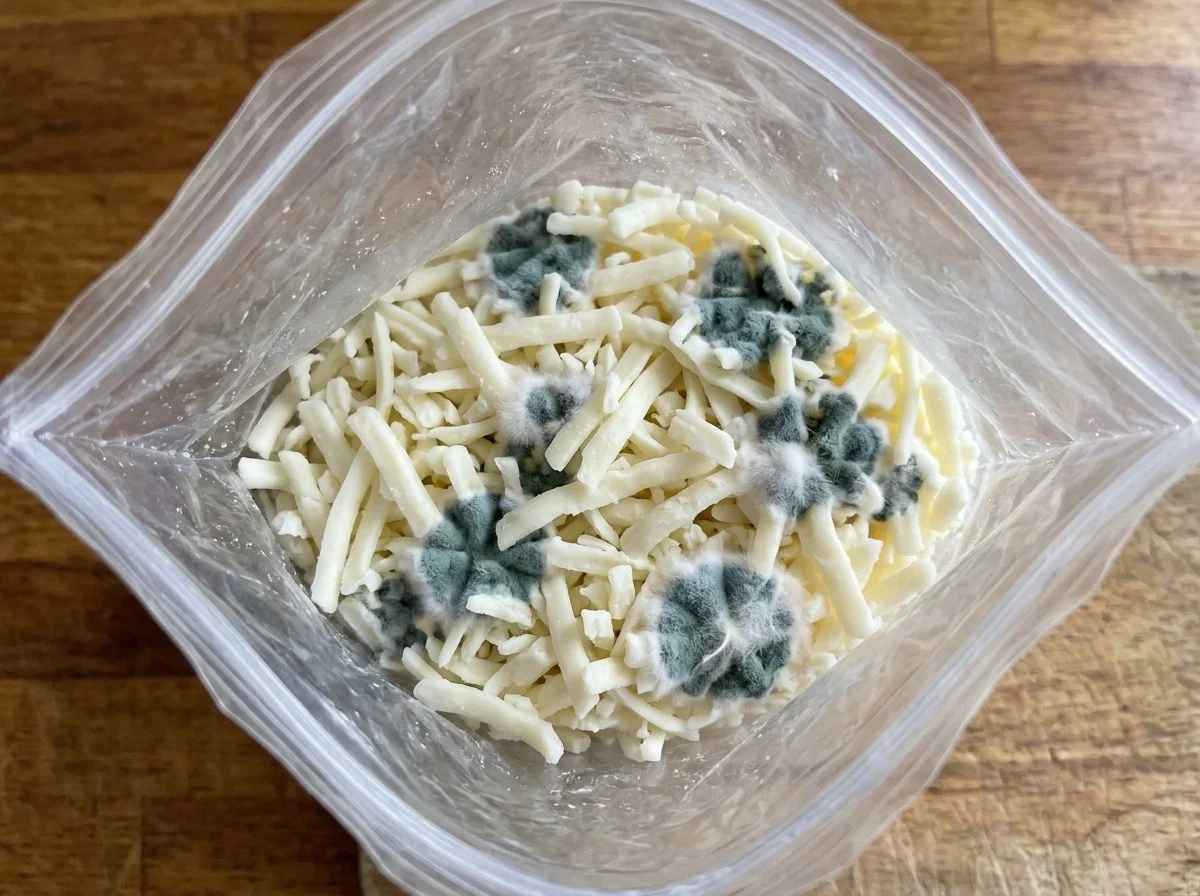
Verdict: throw it out
Mold on soft, shredded, crumbled or sliced cheese
Throw out soft cheeses such as cottage cheese, cream cheese and ricotta if they grow mold, and any shredded, crumbled or sliced cheese too, Mayo Clinic says. The mold can spread through them where you cannot see it, and harmful bacteria such as listeria, brucella, salmonella and E. coli can grow alongside it. UConn Extension adds yogurt and sour cream to that list. The same also goes for bread and other porous baked goods.
Verdict: use it
Mold that is meant to be there
Blue cheese, Roquefort, Gorgonzola, brie and camembert are made with molds that are safe to eat, as UConn Extension explains. Mayo Clinic adds the limit: if a soft cheese such as brie grows mold that is not part of how it was made, throw it out, and treat unexpected mold on a hard cheese such as Gorgonzola the way you would on cheddar.

Verdict: cook with it
Dried out, cracked or oily
Hard cheese that has dried at the edges, cracked or picked up off flavors after sitting out is as much a quality problem as a safety one, according to U.S. Dairy. If it went back in the fridge within the two-hour limit, grate it into a sauce, a bake or a soup, or wrap it in foil and freeze it for cooking later.
Is moldy cheese safe to eat?
It depends on the cheese, and the rule is worth memorizing: cut 1 inch around mold on hard and semisoft cheese, and throw out anything soft, shredded, crumbled or sliced. Mayo Clinic adds two cautions: cheese made with unpasteurized milk carries extra risk, especially for people who are pregnant, very young, older or immunocompromised, and if you are unsure about a piece of cheese, throw it out.
Cheese substitutes
Out of the cheese a recipe asks for? Then these swap in without much fuss.
Substitute
Works best in
What changes
Frozen shredded cheese
Pizza, pasta bakes and sauces
Melts the same. Crumblier if you eat it cold.
Hard cheese, grated
Anywhere soft cheese was melting
Sharper and saltier. Use a little less.
Cream cheese
Standing in for ricotta or mascarpone
Denser and tangier. Loosen it with a spoon of milk.
Processed slices
Grilled cheese and burgers
Milder, and melts very smoothly.
Mistakes people make when they store cheese
These are the habits that cost the most cheese, and each one has an easy fix.
Keeping cheese in the fridge door. Since it is the warmest, least steady spot, use a lower shelf or a drawer instead.
Wrapping it tightly in plastic wrap and forgetting it. Paper first, then a loose container, so the surface can breathe.
Cutting mold off soft or shredded cheese. That only works on hard cheese, so soft, shredded and sliced cheese goes in the bin.
Using the same knife through the mold. That is because it carries mold into the clean cheese. Wipe the blade, then cut 1 inch clear.
Leaving the board out all afternoon. Two hours is the limit, or one above 90°F, so serve small amounts and refill.
Freezing cheese you meant to eat fresh. Freezing is for cooking cheese, so keep the good wedge in the fridge.
Storing it next to last night's curry. Since cheese takes on smells, give it its own corner, away from strong food.
Sources
FoodKeeper, Food Safety and Inspection Service, U.S. Department of Agriculture. Refrigerator and freezer times for hard, soft, shredded, processed, cottage and cream cheese.
Moldy cheese: Is it OK to eat?, Mayo Clinic, October 2025. Which cheeses to cut and which to discard, the 1-inch rule and unpasteurized milk.
Handling Food with Mold, UConn Extension, April 2024. Hard versus soft cheese, molds used to make cheese, and yogurt and sour cream.
Ask UConn Extension: All About Cheese, UConn Extension, April 2022. Fridge temperature, wrapping, freezing and thawing.
How Long Can Cheese Sit Out?, U.S. Dairy, April 2026. The two-hour rule, cheese boards, wrapping and dried-out cheese.
Storage times and safety advice on this page come from the sources above. Food safety depends on conditions I cannot see, so read the Disclaimer, and if in doubt, throw it out.
Other ingredient guides
Browse all guides



Share this guide
Never miss a guide
New ingredient guides when they go up, plus one storage tip worth knowing. Anything sponsored is labelled.

Emilly White