
3 to 5 days
Homemade or bakery bread, wrapped. Packaged bread: its date
Not recommended
It slows mold but makes bread stale faster
About 3 months
Sliced first and wrapped in two layers
The short version: to store bread well, wrap soft loaves airtight, keep crusty ones cut side down for a day, skip the fridge, and freeze anything you will not eat within a few days.
Storage times from the USDA FoodKeeper data, King Arthur Baking and America's Test Kitchen.
On this page
How to choose bread that will store well
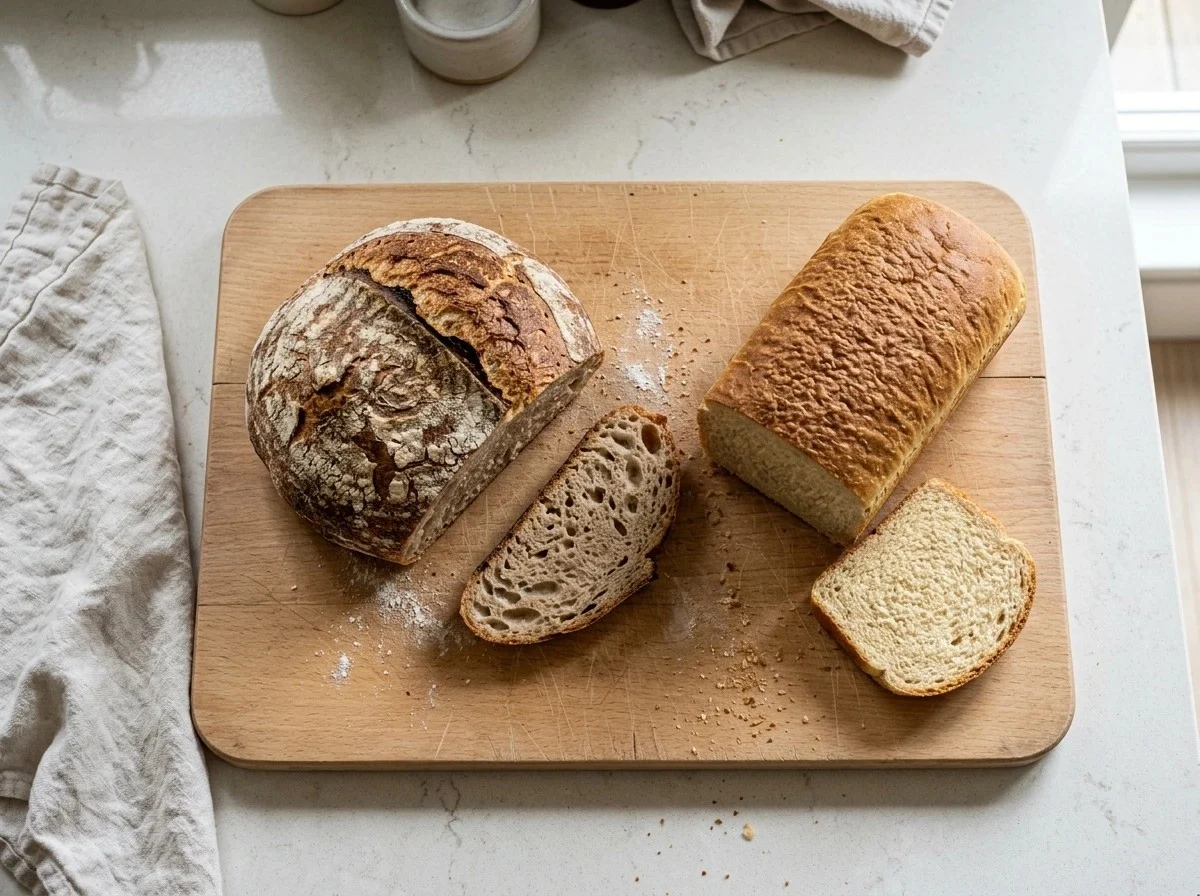
How long a loaf lasts starts with which loaf you buy. Because packaged, bakery and homemade breads age very differently, it pays to know which kind you have before you decide where it goes.
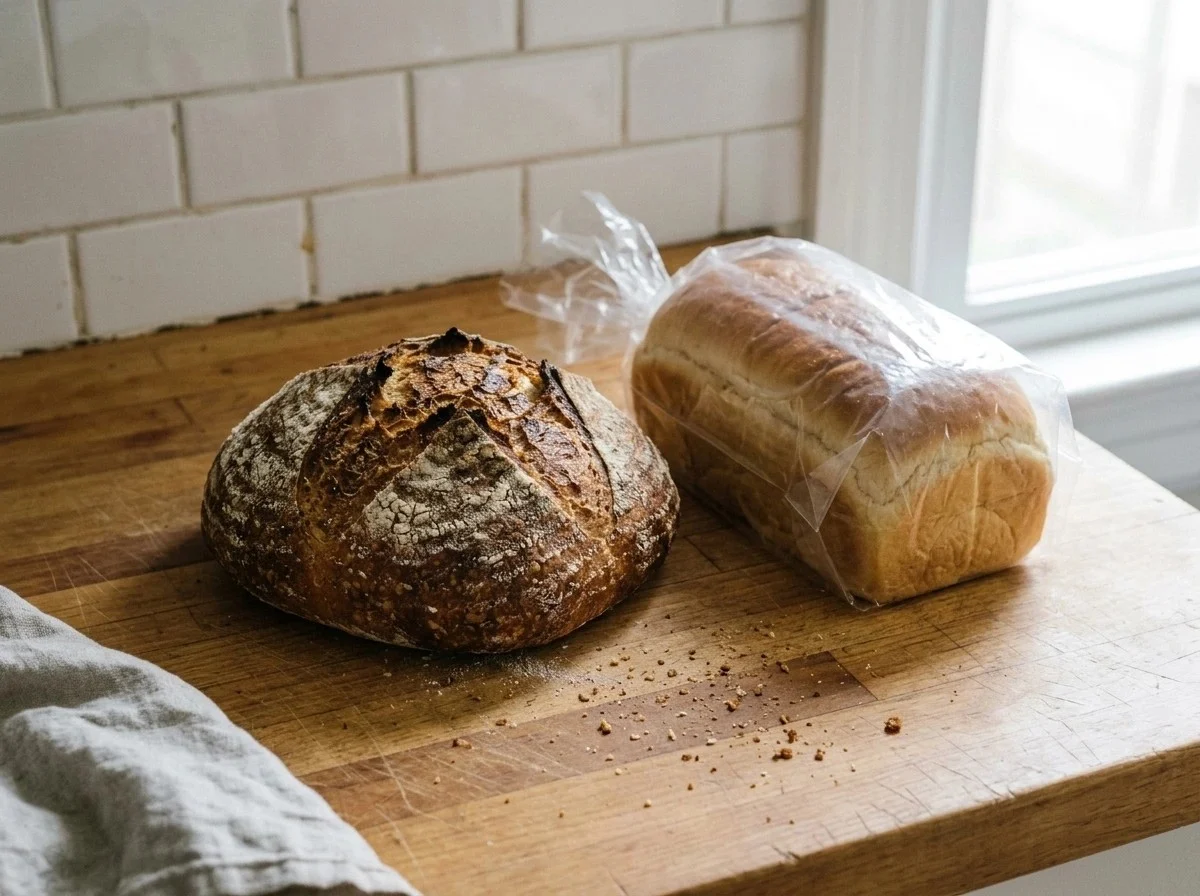
A crusty sourdough loaf beside a soft sandwich loaf in its bag. The two need opposite storage: the crusty one breathes, the soft one stays wrapped.
Packaged bread lasts longest. The USDA FoodKeeper data gives commercial bread 14 to 18 days in the pantry, while homemade bread gets only 3 to 5 days because it has no preservatives.
Sourdough keeps mold away longer. According to King Arthur Baking, sourdough's acidity keeps it mold-free for days longer than ordinary yeast bread.
Buy a whole loaf rather than sliced when you can. Every cut face dries out, so an unsliced loaf that you cut as you go stays fresh longer.
Buy only what you will eat soon, then freeze the rest. Since bread freezes well, a half loaf in the freezer beats a whole loaf going stale on the counter.
How to store bread so it lasts
To store bread so it lasts, match the wrapping to the crust and keep it out of the fridge. In fact, most bread is ruined by staling long before it is ruined by mold, and the way you wrap it decides which comes first.
How to store bread at room temperature
Wrap soft bread tightly in plastic or foil, and store it at room temperature. In King Arthur Baking's storage test, loaves in plastic and foil stayed soft after a day, while the one in a cloth bag was already drying out. Crusty bread is different: left unwrapped and cut side down, it keeps its crisp crust for about a day, although wrapping it keeps it soft for longer. For other foods left on the counter, see food left out overnight.
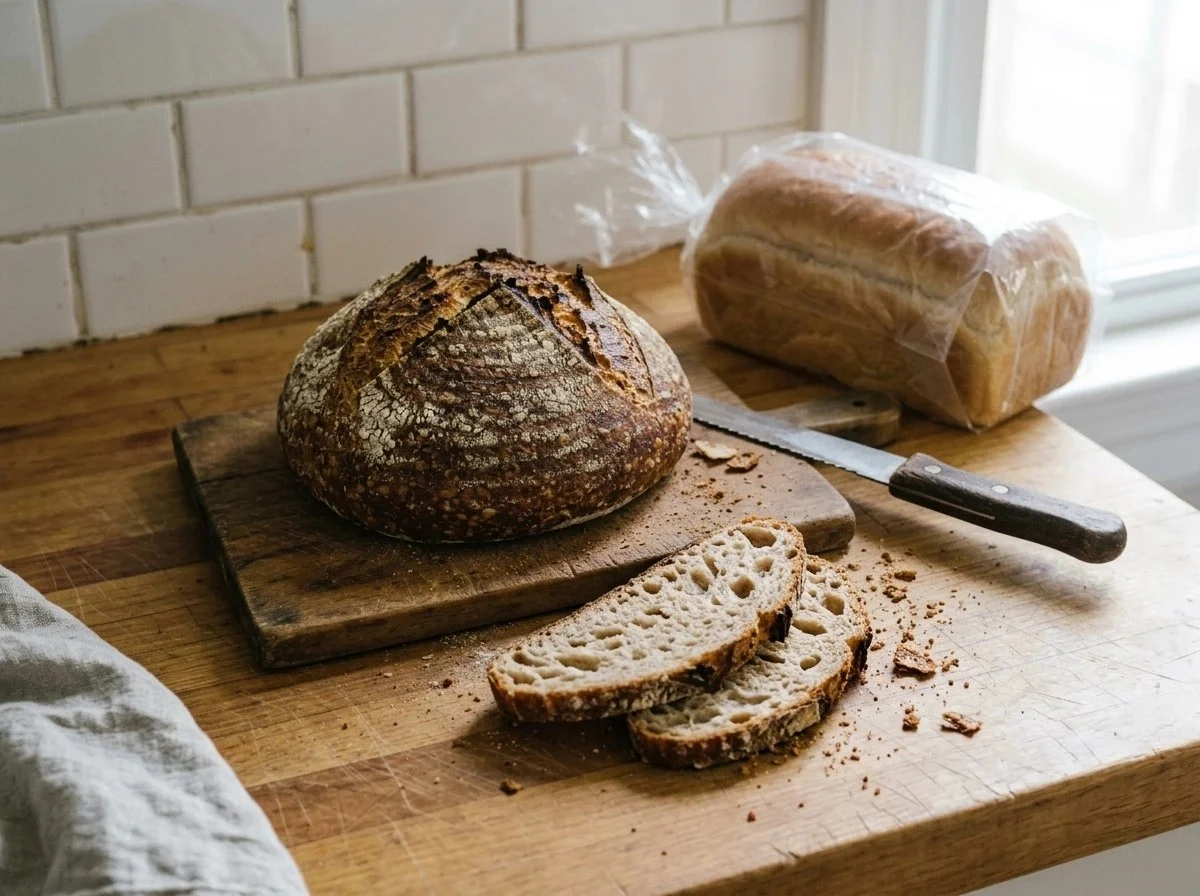
A crusty sourdough loaf left unwrapped on a board after slicing. Stored like this, it keeps its crust for about a day.
How long can you store bread?
Three to five days for homemade and bakery bread, according to the USDA FoodKeeper data. America's Test Kitchen is stricter: it keeps sandwich bread double-wrapped for up to three days and rustic loaves for just one. Packaged bread, meanwhile, lasts 14 to 18 days thanks to its preservatives, so go by the date on the bag.
Those are quality windows rather than safety limits. Stale bread is safe to eat, whereas moldy bread is not, so the day it goes stale is the day to toast it or freeze it.
Should you store bread in the fridge?
Usually not. The fridge slows mold, but it makes bread stale faster, because the cold speeds up retrogradation, the recrystallizing of starch, as America's Test Kitchen explains. That is why the USDA FoodKeeper data calls refrigeration not recommended for homemade and whole wheat bread. Oddly, the same data gives opened packaged bread 2 to 3 weeks in the fridge, so in a hot, humid kitchen the fridge can save a packaged loaf from mold. Even so, the freezer does both jobs better.
How to store sourdough bread
Treat it like the loaf it is. According to King Arthur Baking, soft sourdough keeps up to a week in an airtight bag, whereas a crusty sourdough loaf can sit uncovered for its first 24 hours and should then go into an airtight bag. King Arthur also suggests cutting from the middle of the loaf, then pressing the two halves together so no crumb is exposed.
How to store homemade bread
Let it cool completely first, because wrapping warm bread traps steam, and King Arthur Baking warns that the condensation encourages mold. After that, wrap a soft sandwich loaf in a double layer of plastic, as America's Test Kitchen does, and keep a crusty loaf cut side down on a board. The same cooling rule applies to bagels and rolls.
Can you freeze bread?
Yes, and it is the best way to store bread for more than a few days. King Arthur Baking says most breads freeze well for up to three months, and gluten-free bread for about a month. The sources differ on the outer limit, though: the USDA FoodKeeper data gives packaged bread 3 to 5 months, while America's Test Kitchen keeps its frozen sandwich bread for just one. So aim for three months, and use it sooner if you can.
How to store bread in the freezer
Let the loaf cool, then slice it first so you can take out only what you need. Next, wrap it in two airtight layers. King Arthur Baking uses plastic and then a bread bag, while America's Test Kitchen uses foil and then plastic; either way, the double layer keeps out freezer burn and odors. For sourdough, King Arthur adds a bit of parchment between portions so they do not stick.
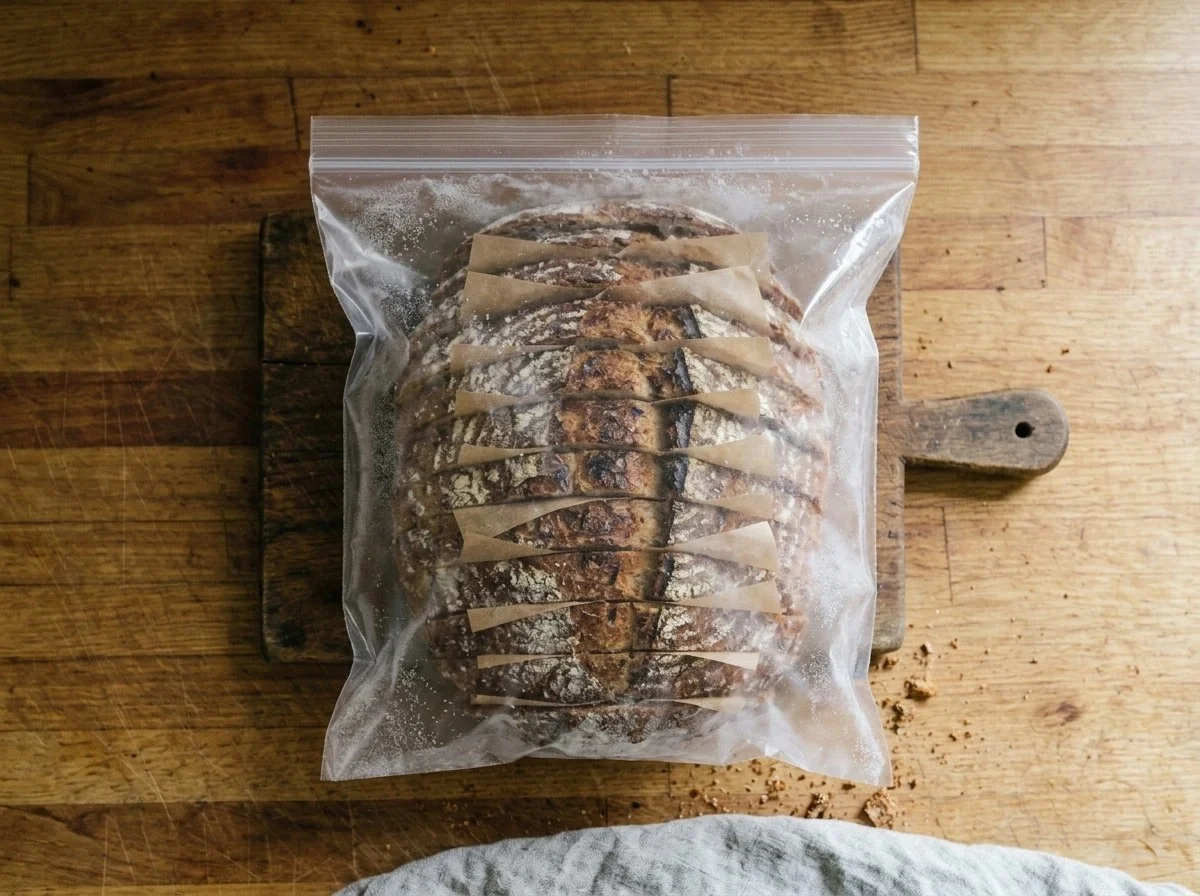
A sliced sourdough loaf in a freezer bag, with parchment between the slices so you can take out one at a time.
How to thaw and refresh frozen bread
Toast frozen slices straight from the freezer. For a whole loaf, King Arthur Baking recommends thawing it on the counter, which takes about three hours for a loaf, one hour for rolls and under 30 minutes for slices, then refreshing it in a 350°F oven. For a crusty loaf, America's Test Kitchen heats it wrapped in foil in a 450°F oven for 10 to 15 minutes, then unwraps it for a minute or two to crisp the crust.
What happens to bread you store in the freezer
Very little, when it is wrapped well. Poorly wrapped bread, however, can get freezer burn, the dry, leathery patches that the USDA calls a quality problem rather than a safety one. In other words, a freezer-burned slice is safe but dry, so trim it or toast it.
Can you store bread in the freezer twice?
Yes, but it will be drier. The USDA says food thawed in the fridge is safe to refreeze, although it loses quality from the moisture lost in thawing. Bread is safe at room temperature anyway, so the real cost is texture, because every thaw dries it out a little more. That is why slicing before you freeze works better, since you only take out what you need.
How to tell if bread has gone bad
However you store bread, it goes stale long before it goes bad. Staling is a texture problem that heat can fix, while mold is a reason to throw the loaf out. Here is how to tell which one you have.
Verdict: use it
Fresh
A crust that is crisp or soft as it should be, and a springy inside that bounces back when pressed. That is the three-to-five-day window for homemade bread.
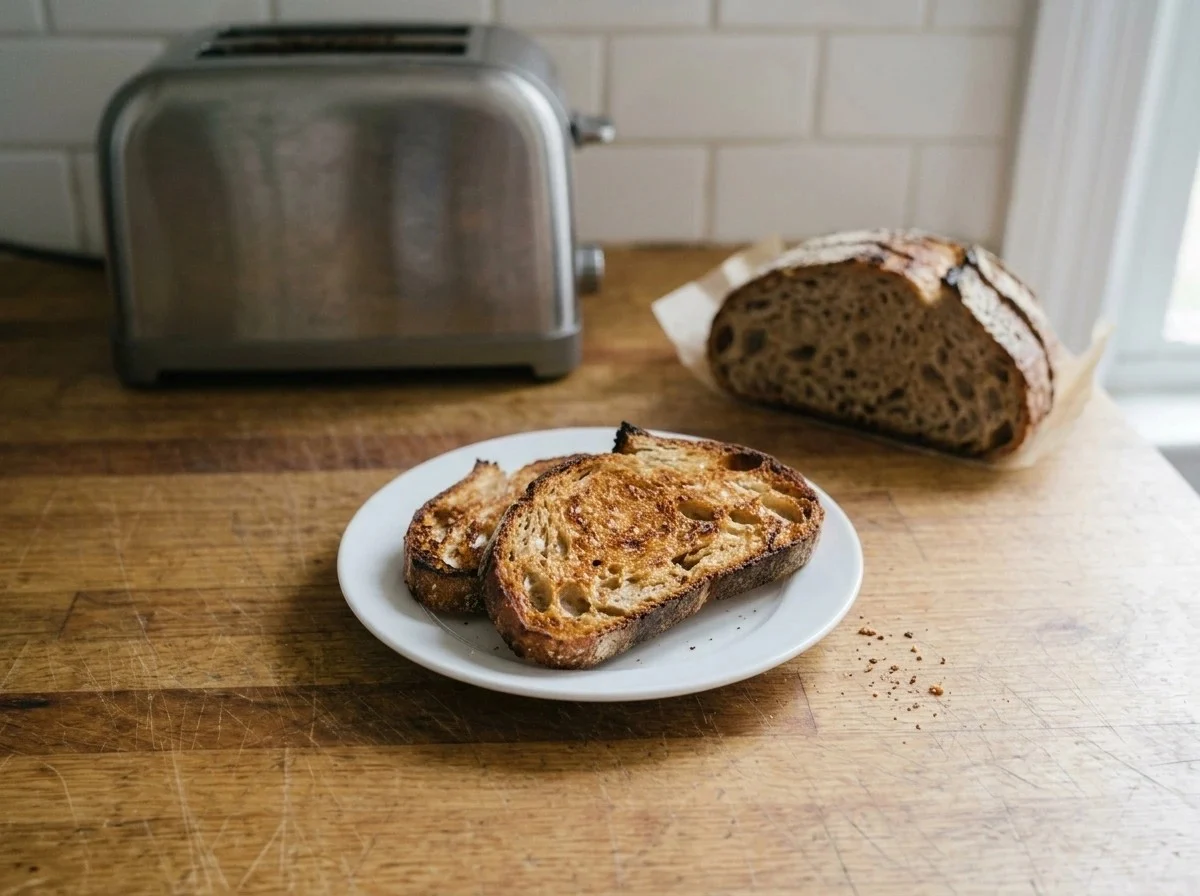
Verdict: toast it or refresh it
Stale and a little firm
The inside has firmed up and the crust has gone leathery, which is staling rather than spoilage. So toast the slices, or refresh the loaf in a 350°F oven as King Arthur Baking suggests, because heat softens the starch again for a while.
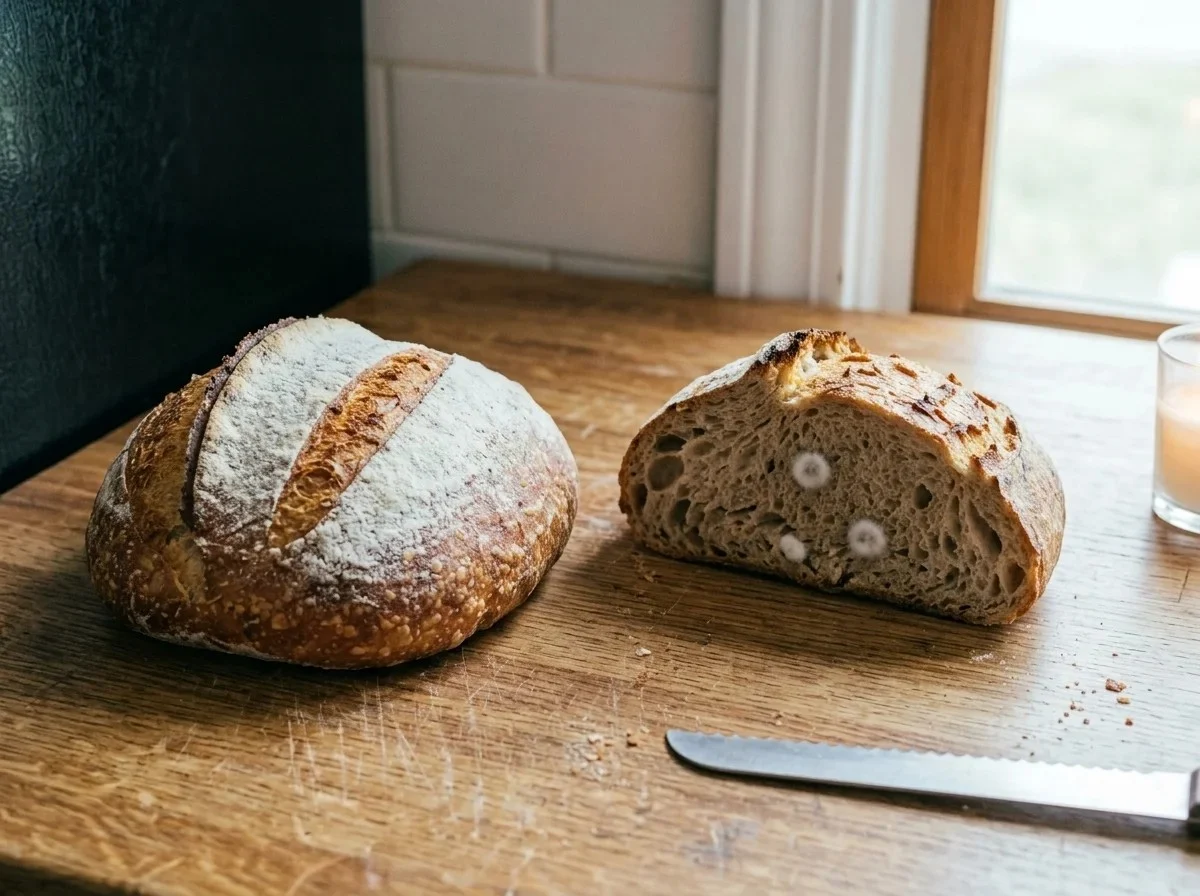
Verdict: check it first
White spots on bread: flour or mold?
Flour is dusted on before baking, so it sits on the top crust from the day you buy the loaf, looks flat and powdery, and brushes off with a dry finger. Mold is different: the USDA describes it as threads with stalks that rise above the food, so it looks raised or fuzzy, often starts on the cut face or the sides, and gets bigger from one day to the next. If the spots were not there when you bought the loaf, will not brush away, or are spreading, treat them as mold and throw the loaf out. Also, do not sniff it to check, because the USDA warns that smelling moldy food can cause breathing problems.
Verdict: cook with it
Hard and dry all the way through
A loaf that is dry to the core has lost too much to refresh. Instead, turn it into breadcrumbs, croutons, bread pudding or a strata, where dry bread is actually an advantage.
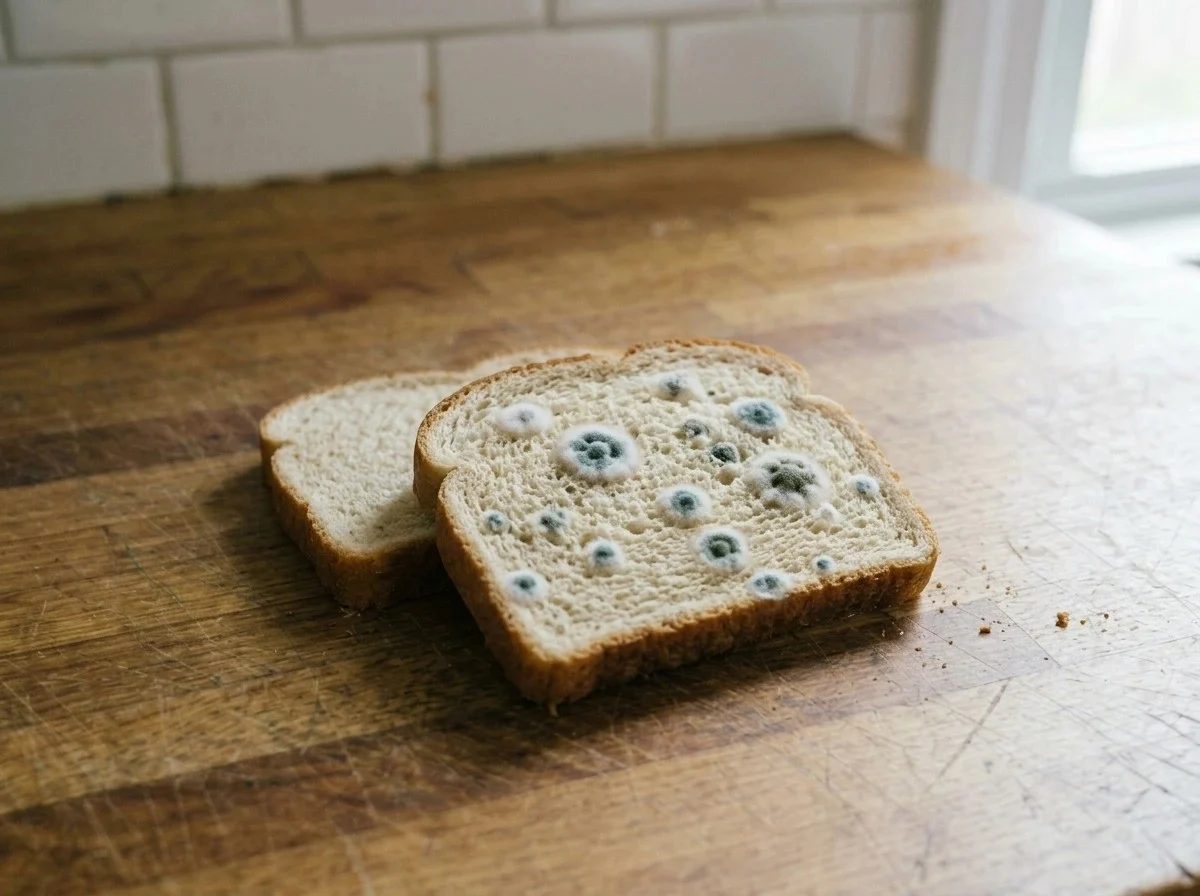
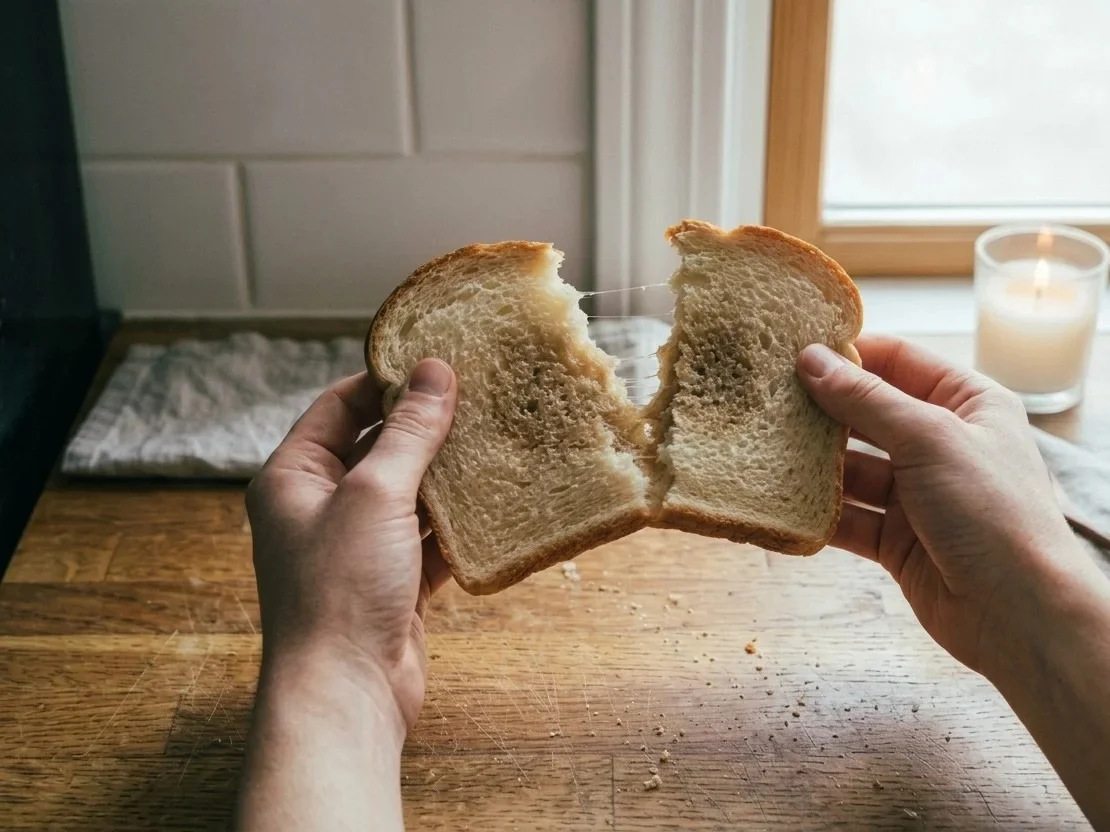
Verdict: throw it out
Sour, sticky or stringy bread
Bread can spoil without any mold. In warm weather, bacteria whose spores survive baking can turn the crumb sticky and discolored, with a fruity smell, and in bad cases it pulls apart in thin, web-like strands, as a 2022 review of this "rope" spoilage in the journal Foods describes. It can appear within a day of baking. Because the problem is inside the crumb, do not trim it; throw the loaf out.
Verdict: trim it, then toast it
Freezer burn
Dry, grayish patches on frozen bread are freezer burn. The USDA says freezer burn does not make food unsafe, merely dry in spots, so cut those patches away and toast the rest.
Can you cut mold off bread?
No. When mold grows on food, its root threads can reach well below what you see, which is why the USDA puts bread and baked goods on its discard list rather than its trim list. So throw the moldy loaf out, even if only one slice shows spots.
How to tell if bread has gone bad without mold
Check three things. First, the crumb: sticky, damp or stringy bread has spoiled, even if the crust looks fine. Second, the smell: a sour, fruity or alcohol-like smell from an older loaf is a warning, whereas a faint yeasty smell in a fresh homemade loaf simply comes from the yeast that made it rise. Third, the texture: hard, dry bread with no odd smell and no stickiness is only stale, so toast it or turn it into breadcrumbs.
Bread substitutes
Out of bread, or had to throw a loaf away? These will fill in.
Substitute
Works best in
What changes
Frozen bread
Toast and sandwiches
Nearly the same, if sliced before freezing.
Tortillas or flatbread
Wraps and quick sandwiches
Thinner and softer, with a long shelf life.
English muffins
Breakfast and toast
Airier, with more nooks for butter.
Crackers or rice cakes
Soup and snacks
Crunchy rather than soft.
Mistakes people make when they store bread
These are the ways people store bread that cost them the most, and each one has an easy fix.
Keeping it in the fridge. The cold makes bread stale faster, so use the counter or the freezer.
Wrapping it while warm. Trapped steam turns into moisture, and moisture invites mold, so let it cool first.
Wrapping a crusty loaf in plastic on day one. It softens the crust, so leave it cut side down for the first day.
Slicing the whole loaf at once. Every cut face dries out, so slice as you go.
Freezing it unsliced. A frozen loaf is hard to cut, so slice it before it goes in. Cooked rice freezes the same way, in single portions.
Cutting around mold. Bread is porous, so the whole loaf goes, even for a small spot.
Throwing out stale bread. If there is no mold, toast it, refresh it or turn it into crumbs.
Sources
FoodKeeper, Food Safety and Inspection Service, U.S. Department of Agriculture, on pantry, fridge and freezer guidance for packaged, homemade and whole wheat bread.
The best way to store yeast bread, PJ Hamel, King Arthur Baking, July 2020, on its tests of plastic, foil and cloth, and storing soft versus crusty bread.
How to store sourdough bread, PJ Hamel, King Arthur Baking, November 2024, on soft and crusty sourdough, acidity and mold, and freezing.
Molds on Food: Are They Dangerous?, Food Safety and Inspection Service, U.S. Department of Agriculture, on why bread and baked goods with mold are discarded.
How can I freeze my bread? (And defrost it, too!), Annabelle Shippee, King Arthur Baking, December 2023, on wrapping, freezer times and thawing.
Freezing and Food Safety, Food Safety and Inspection Service, U.S. Department of Agriculture, on freezer burn and frozen food safety.
How to Store Homemade Bread, Caren White, America's Test Kitchen, May 2023, on wrapping, the fridge and retrogradation, freezing and reheating.
Ropiness in Bread: A Re-Emerging Spoilage Phenomenon, Foods, 2022, on how spore-forming bacteria make bread sticky, stringy and fruity-smelling.
Storage times and safety advice on this page come from the sources above. Food safety depends on conditions I cannot see, so read the Disclaimer, and if in doubt, throw it out.
Other ingredient guides
Browse all guides
Share this guide
Never miss a guide
New ingredient guides when they go up, plus one storage tip worth knowing. Anything sponsored is labelled.

Emilly White