
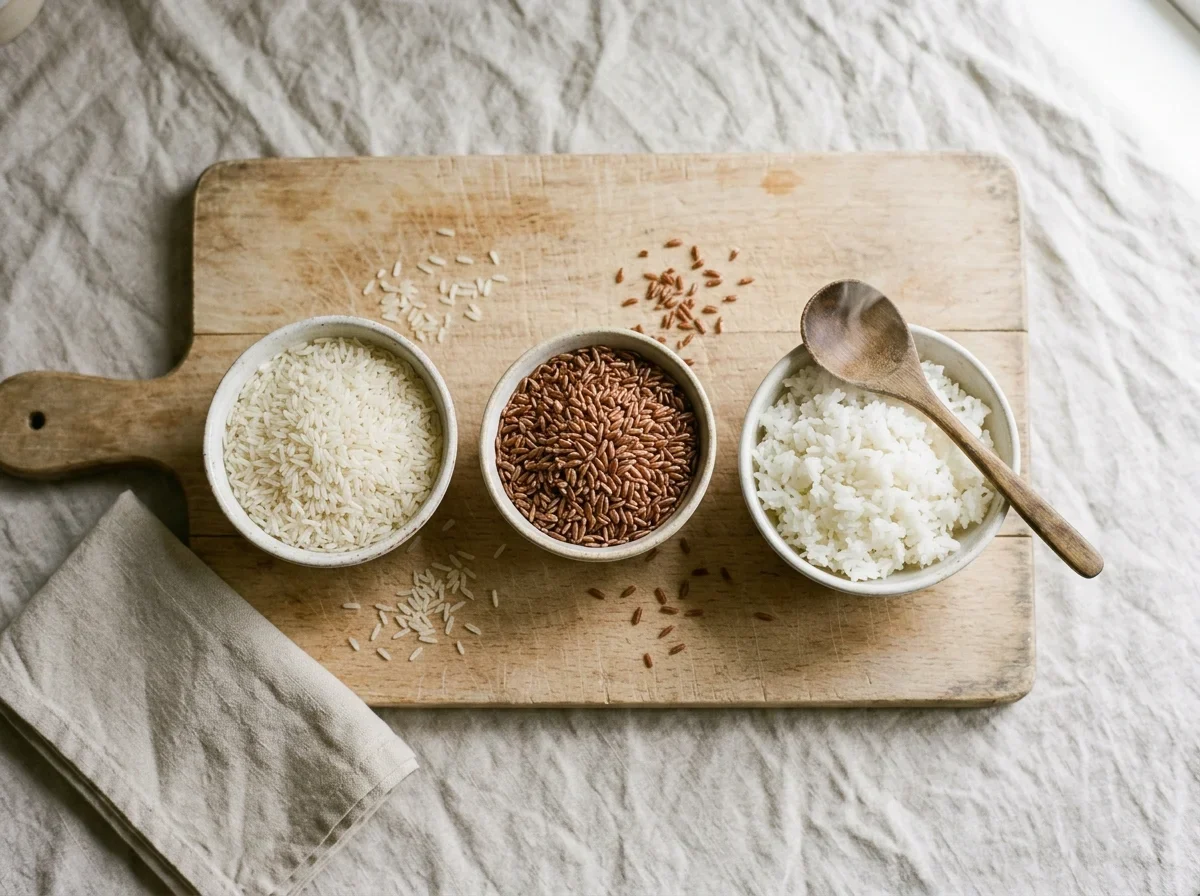
White: years
Cool, dry and tightly closed. Brown rice: about 6 months
Cooked: 3 to 4 days
Shallow container, chilled fast. Sources differ: 3 to 7 days
Cooked: up to 6 months
Freeze it in portions once it has cooled
The short version: to store rice well, keep it cool, dry and tightly closed. Also, move brown rice to the fridge or freezer. Then get cooked rice into a shallow container in the fridge within two hours.
Storage guidance from USA Rice, Utah State University Extension and University of Wisconsin-Madison Extension, as well as the CDC on rice left out.
On this page
How to choose rice that will store well
Rice is cheap and it keeps, so what you buy matters more than how you store rice later. Buy the type you will actually finish, because white and brown rice keep for very different lengths of time.
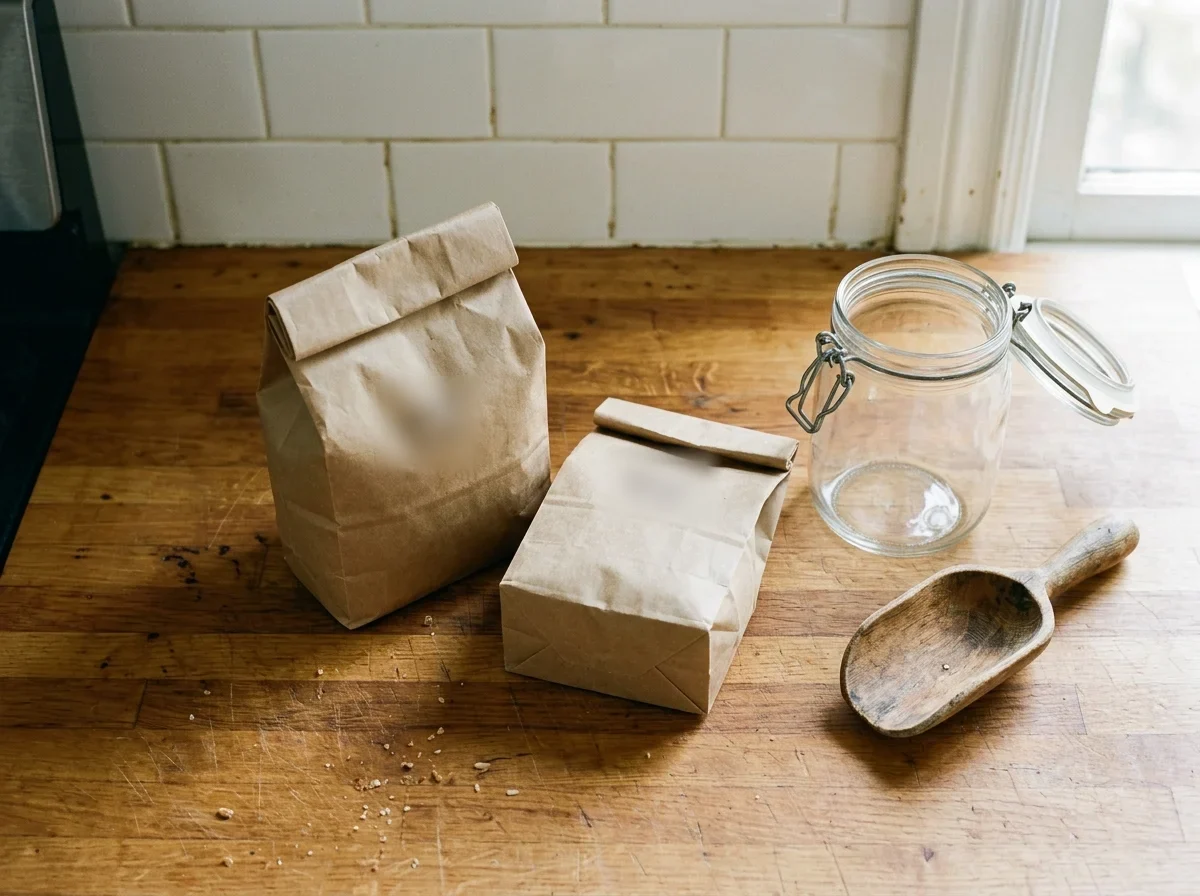
Buy the rice you will finish, then tip it into something that closes tightly.
White rice for the back of the cupboard. USA Rice says milled rice such as white rice keeps almost indefinitely on the pantry shelf, if stored properly.
Brown rice in small bags. USA Rice gives whole grain rice about six months, because of the oil in the bran layer. It also recommends the fridge or freezer for longer storage.
A bag you can seal, or a jar to tip it into. Instead of the packet, University of Maryland Extension says to keep food in glass jars, plastic containers or metal canisters with tight-fitting lids. Insects get through plastic bags and cardboard boxes, so the lid matters more than the label.
No insects and no discoloration. Utah State University Extension says to inspect rice for insects or discoloration before you prepare it for home storage. So look at the bag in the shop, then again at home.
How to store rice so it lasts
Dry rice and cooked rice have almost nothing in common once you get them home. Dry rice only has to stay cool, dry and sealed. Cooked rice, on the other hand, is moist and low in acid, which is what bacteria want. So it belongs in a cold fridge quickly.
How to store rice in the cupboard
Keep it somewhere cool and dry, in a container that closes tightly, as USA Rice advises. Dust, moisture and insects all find their way into an open bag. Temperature does the rest: Utah State University Extension says the best temperature for grains is 40°F or below. Even so, rice held at a steady 70°F with oxygen absorbers still stores well for up to ten years. Keep it away from strong smells too, since USA Rice warns that rice absorbs aromas from onions or garlic.
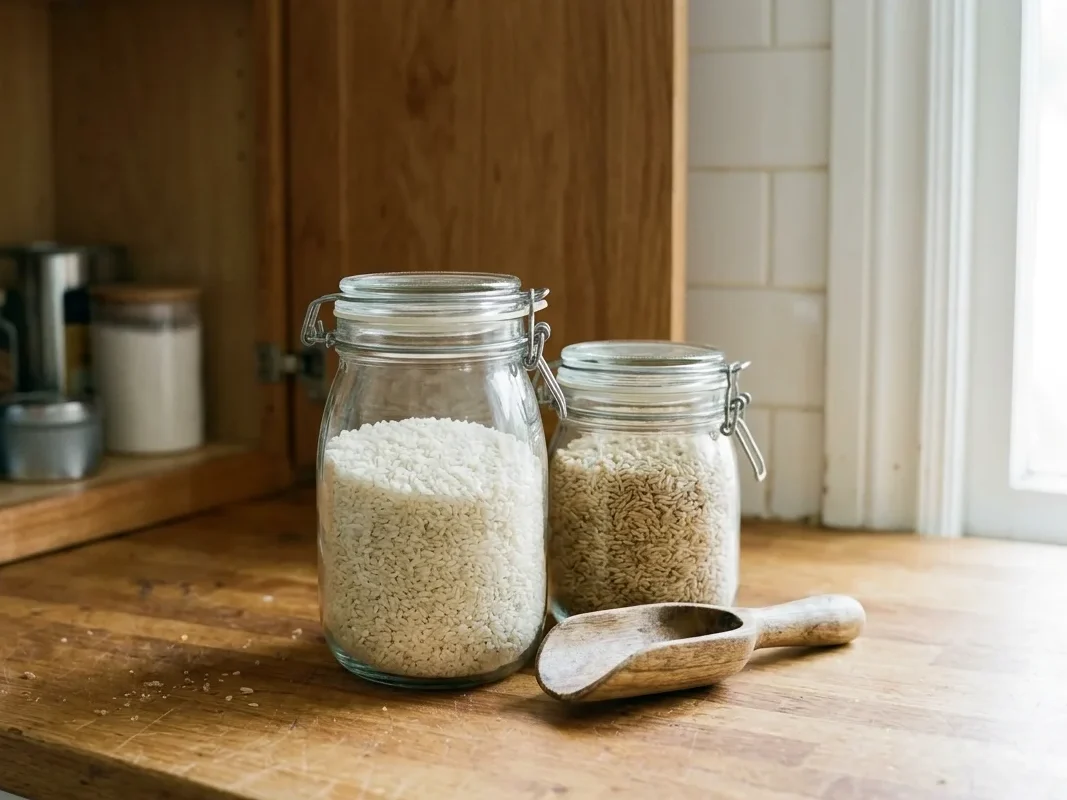
A cool, dry cupboard and a jar that seals keep dust, damp and insects out.
How long can you store rice?
Dry white rice outlasts almost everything else in the kitchen. In fact, Utah State University Extension says properly sealed polished white rice will store well for 25 to 30 years. Similarly, a Brigham Young University study it cites found polished and parboiled rice kept its flavor for 30 years. Brown rice, though, is the short-lived one, at roughly six months on the shelf. Cooked rice is shorter still, and here the sources disagree. USA Rice and University of Wisconsin-Madison Extension both say three to five days. North Carolina Cooperative Extension, however, says properly refrigerated leftovers stay microbiologically safe for seven days. Take the shorter figure, then plan on three or four days.
In other words, the clock really starts when the rice is cooked. Until then, a sealed jar in a cool cupboard is doing all the work for you.
Should you store rice in the fridge?
Dry white rice does not need it, but brown rice does better cold. USA Rice recommends refrigerator or freezer storage for whole grain rice. The bran layer it keeps is where the oil sits. Cooked rice, on the other hand, always goes in the fridge, and quickly. Aim to have it cold well before two hours are up.
How to store rice you have cooked
Get it cold quickly, and give the heat somewhere to go. University of Wisconsin-Madison Extension says to put leftover rice in shallow containers, no more than 3 inches deep. Then put it directly into the refrigerator, rather than cooling it on the counter, within one hour. North Carolina Cooperative Extension puts numbers on the cooling: 135°F down to 70°F within two hours. Then it goes down to 41°F within four more hours. Rice that has not reached 70°F in those first two hours should be thrown out. After that, reheat only what you are about to eat, until the internal temperature reaches 165°F.
Why you cannot store rice on the counter overnight
Because the spores survive the pot. North Carolina Cooperative Extension explains that Bacillus cereus spores are still present in properly cooked rice. They grow into a toxin if the rice is not cooled properly, or if it is left at room temperature. That toxin is the real problem. The Centers for Disease Control and Prevention reported an outbreak at two Virginia day care centers. The fried rice had been cooled at room temperature the evening before. The next morning it was pan-fried, then held unrefrigerated from 10:30 until noon. Its emetic toxin is highly stable, surviving high temperatures and brief heating such as stir frying. So reheating will not rescue rice that sat out, the same rule the food left out overnight guide applies.
Can you freeze rice?
Yes, and cooked rice takes to the freezer better than most leftovers. USA Rice gives it up to six months frozen, so one big pot on Sunday can become four dinners. Dry rice goes in the freezer too, although for different reasons. The cold keeps brown rice from going stale, and it kills anything living in the bag.
How to store rice in the freezer
Cool the rice first, then freeze it in meal-sized portions in airtight containers or bags. One large block takes too long to cool, and too long to heat through. University of Wisconsin-Madison Extension recommends spreading it out in a shallow container while it cools. That matters here too, since a freezer cannot chill a hot block quickly either. Portions also mean you heat each one once, which is why the bread guide slices a loaf first.
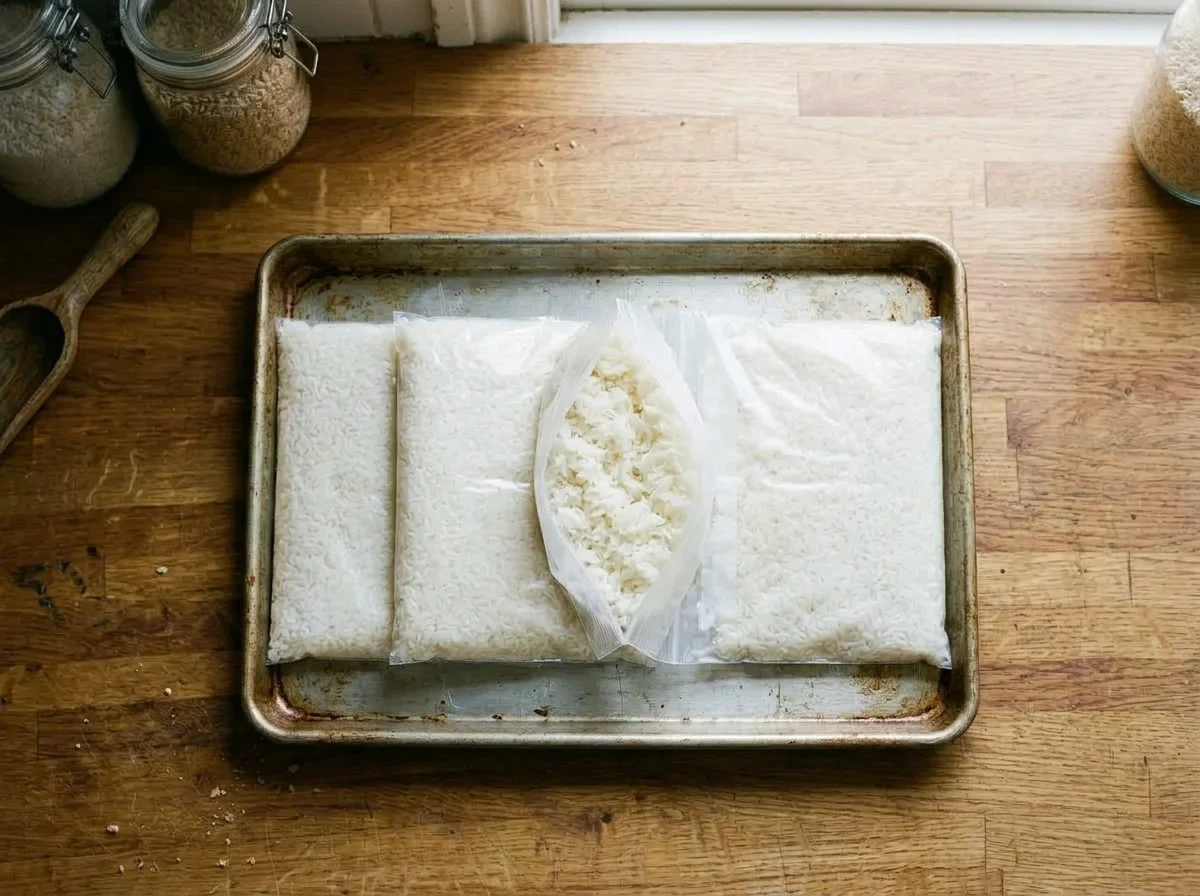
Freeze cooked rice flat, in portions you will heat once.
How long can you store rice in the freezer?
Up to six months for cooked rice, according to USA Rice. Dry brown rice is a different case. USA Rice recommends refrigerator or freezer storage to get past its six months on the shelf. It does not say how much longer that buys you, though. So freeze the brown rice you cannot finish, and label the bag with the date.
What happens to rice you store in the freezer
Not much, as long as it was cooled properly first. The grains firm up and separate, so frozen rice comes back with a little water. University of Wisconsin-Madison Extension adds 1 to 2 tablespoons of water per cup. Then it heats for 3 to 4 minutes, until it is piping hot throughout. Rice that went into the freezer late, however, is still rice that sat out. Freezing stops bacteria growing, but it does not remove a toxin they have already made.
How to tell if rice has gone bad
Rice does not make a scene when it turns. Dry rice mostly loses quality, so the only question there is whether it still tastes good. Cooked rice, however, is a safety question, and that depends on time and temperature rather than on smell. Here is what each stage means.
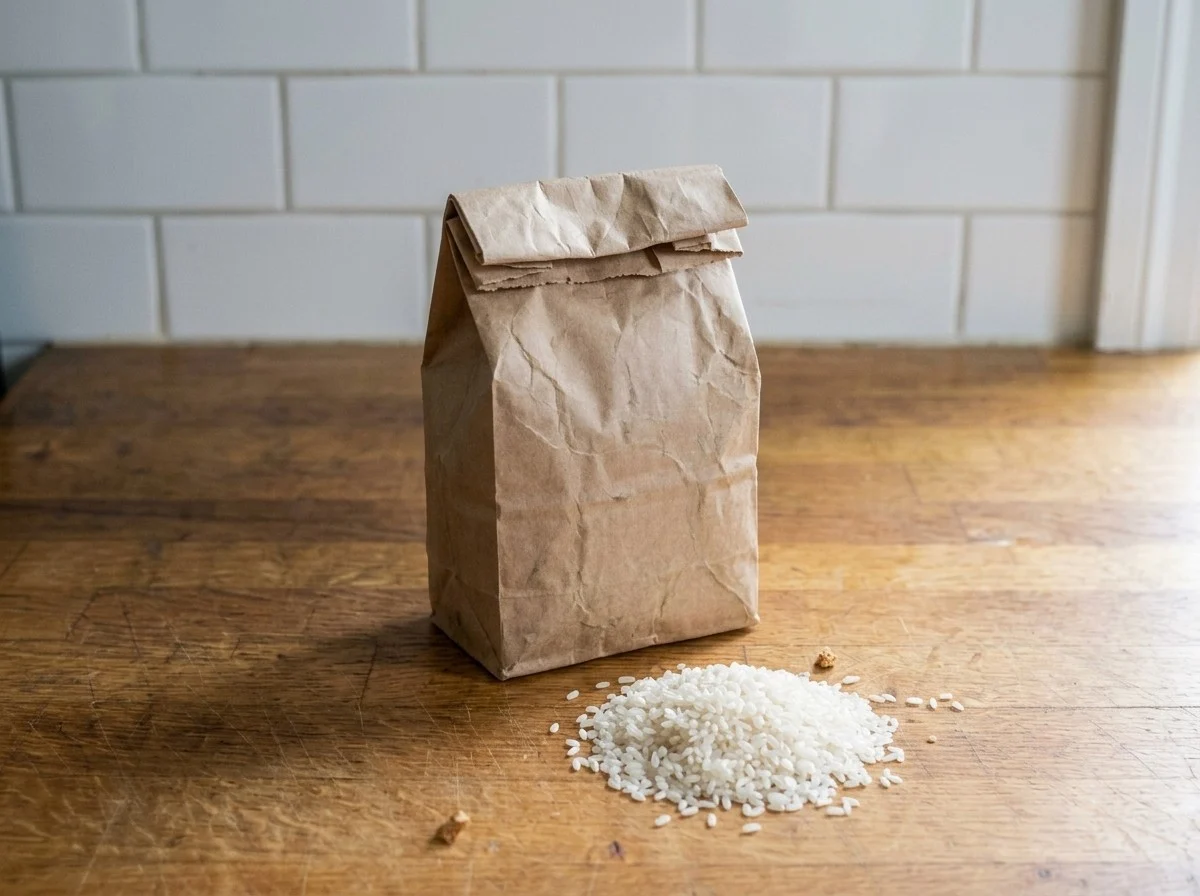
Verdict: use it
Dry rice past the date on the bag
A date on a bag of rice is about quality rather than safety. Penn State Extension says a Best if Used-By date is recommended for best flavor or quality. These dates describe the quality of the food, not the safety. So white rice that has been sealed, cool and dry is almost certainly fine to cook.
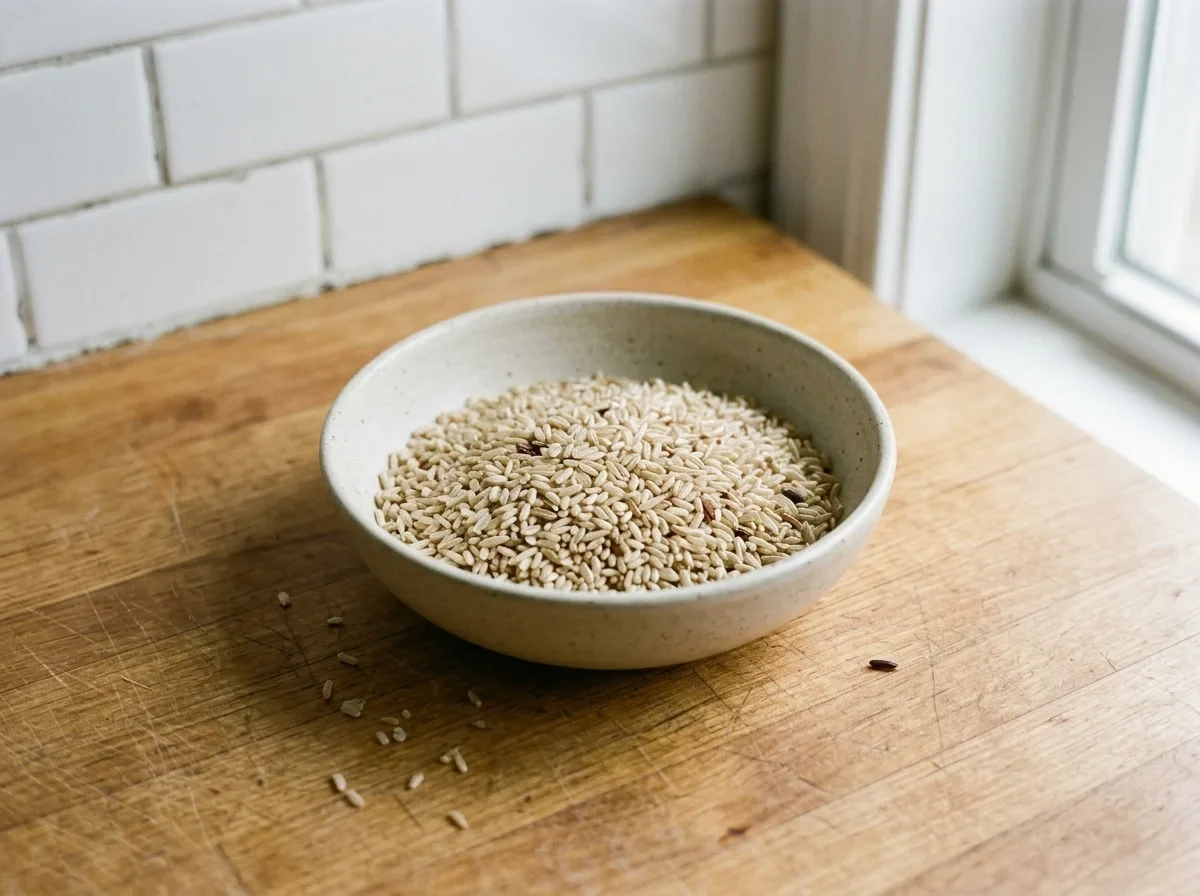
Verdict: throw it out
Brown rice that smells oily or soapy
Brown rice keeps its bran, and the oil in bran does not last. A review in Nutrients describes how lipase enzymes break that oil into free fatty acids after milling. The result is a soapy taste and off-flavor. The same review contrasts white rice keeping for about a decade with rice bran keeping about a year. Nothing here will make you ill, but cooking will not undo it either. So a musty or soapy smell is your cue to start a new bag.
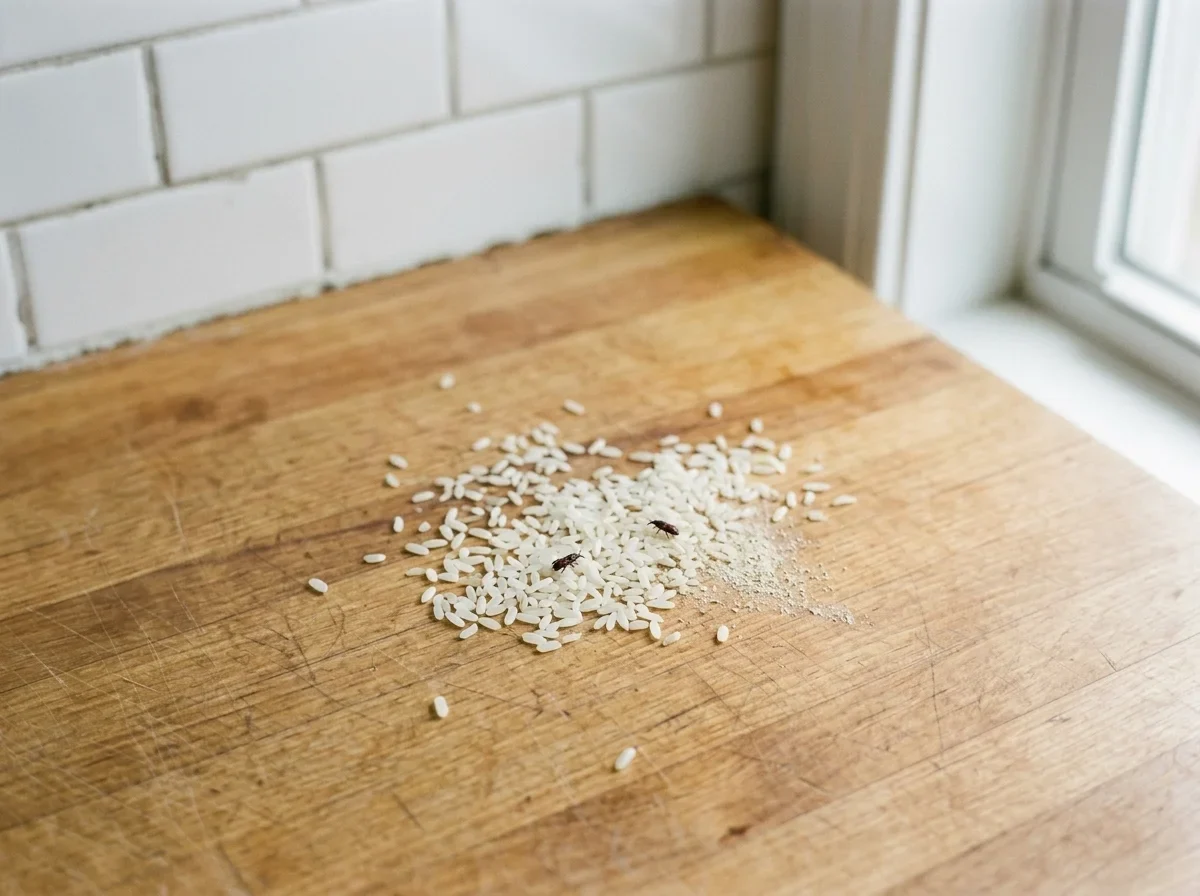
Verdict: freeze it or throw it out
Weevils or fine webbing in the rice
Rice weevils are about an eighth of an inch long, with a distinct snout. University of Maryland Extension says to look for webbing, worm-like larvae, or sawdust-like droppings called frass. Then discard the infested product, and check the containers beside it. A lightly affected bag can still be saved. UF/IFAS Extension says infested foods can go in a freezer at 0°F for four days. An oven at 130°F for 30 minutes also kills the insects. Badly infested items should be thrown away, though. Afterwards, vacuum the shelves and wash the cupboard with warm soapy water.
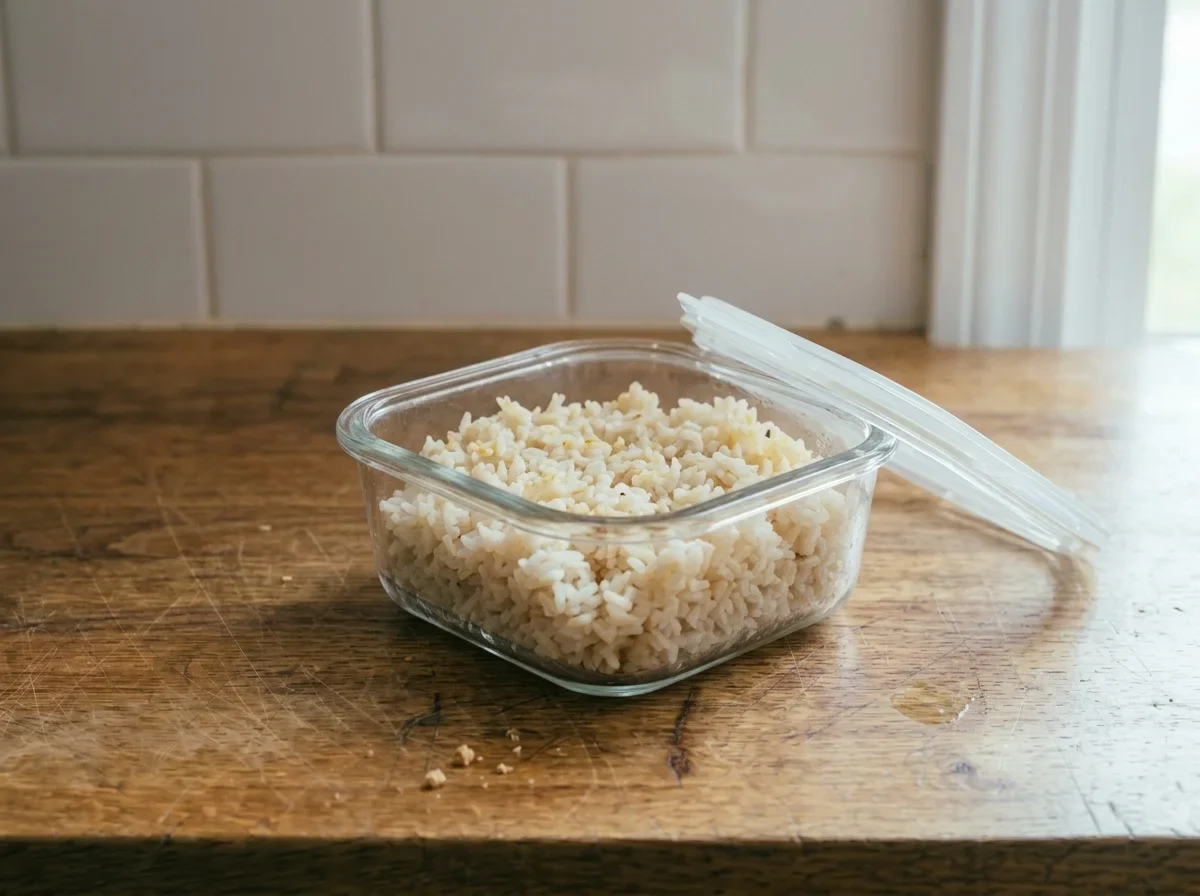
Verdict: throw it out
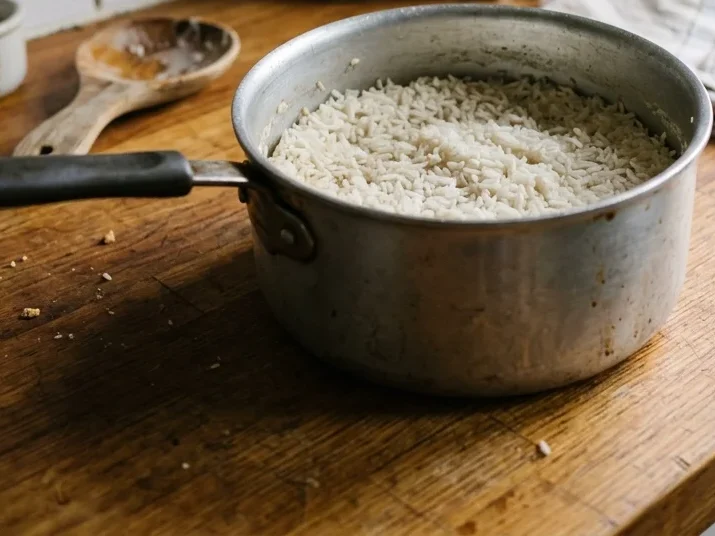
Cooked rice after four days in the fridge
This is where the sources part company. For example, USA Rice and University of Wisconsin-Madison Extension both give cooked rice three to five days cold. However, North Carolina Cooperative Extension says properly refrigerated leftovers stay microbiologically safe for seven days. That assumes a thermometer showing 41°F or below. Since the shorter figure costs you almost nothing, treat the fourth day as the last.
Verdict: throw it out
Cooked rice left out overnight
Rice that spent the night on the counter is the one clear case. North Carolina Cooperative Extension applies the two hour rule. Cooked food should not sit at room temperature for longer than two hours. The Centers for Disease Control and Prevention describes an emetic toxin that survives high temperatures, trypsin, pepsin and pH extremes. In other words, overnight rice can look and smell perfectly normal and still make you ill. So throw it out, rather than reheating it hard and hoping.
Is it safe to store rice you have already reheated?
Better not to. Instead, North Carolina Cooperative Extension advises reheating only the portion you plan to eat. Reheating and cooling food several times takes it back through the temperatures where bacteria grow and toxins form. So split cooked rice into portions before it goes into the fridge, then heat each portion once.
Rice substitutes
Out of rice, or had to throw a batch away? Then these will fill the same space on the plate.
Substitute
Works best in
What changes
Quinoa
Bowls and salads
Cooks faster, with a firmer bite.
Couscous
Stews and tagines
Ready in minutes, and softer.
Orzo or other small pasta
Soups and bakes
Starchier, so it thickens the dish.
Pearl barley
Soups and braises
Chewier, and slower to cook.
Mistakes people make when they store rice
These are the ways people store rice that cost them the most, although each one has an easy fix.
Cooling cooked rice on the counter. Instead, spread it in a shallow container and put it straight into the fridge.
Treating brown rice like white rice. It has about six months in the cupboard, so buy smaller bags or keep it cold.
Leaving rice in a paper bag or a cardboard box. Insects get through both, so tip it into a jar or a sealed tub.
Keeping it next to the onions. Because rice picks up strong aromas, give it a shelf of its own.
Reheating the same rice twice. Portion it before it goes into the fridge, then heat each portion once.
Trusting your nose with leftovers. Rice that sat out overnight can smell fine and still be unsafe, so go by the clock.
Storing the jar above the stove. Heat and steam shorten its life, although a cool, dry cupboard costs nothing.
Sources
How To Store Rice, USA Rice, on containers and aromas, milled and whole grain shelf life, and cooked rice in the fridge and freezer.
Storing White Rice, Brian Nummer and Jana Darrington, Utah State University Extension, on 25 to 30 year storage, containers, oxygen absorbers and storage temperature.
Safe Handling of Cooked Rice, Barb Ingham, University of Wisconsin-Madison Extension, April 2019, on Bacillus cereus spores, shallow containers, 3 to 5 days and reheating to 165°F.
Safety of Leftover Rice, Cheryle Syracuse, N.C. Cooperative Extension, February 2024, on cooling targets, the two hour rule, seven day storage and reheating once.
Bacillus cereus Food Poisoning Associated with Fried Rice at Two Child Day Care Centers, Virginia, 1993, Morbidity and Mortality Weekly Report, Centers for Disease Control and Prevention, on spores surviving cooking and the heat-stable emetic toxin.
Rice and Granary Weevils, University of Maryland Extension, updated October 2024, on identifying weevils and frass, discarding infested food and choosing containers.
Pantry and Stored Food Pests, P. G. Koehler and Wai-Han Chan, UF/IFAS Extension, on killing insects in infested food at 0°F for four days or 130°F for 30 minutes.
Are Best if Used-By and Use-By dates for Food Quality or Food Safety?, Penn State Extension, updated December 2025, on dates describing quality rather than safety.
Rice Bran: From Waste to Nutritious Food Ingredients, Bee Ling Tan, Mohd Esa Norhaizan and Lee Chin Chan, Nutrients, May 2023, on lipase, free fatty acids, soapy off-flavor and the shelf life of bran against white rice.
Storage times and safety advice on this page come from the sources above. Food safety depends on conditions I cannot see, so read the Disclaimer, and if in doubt, throw it out.
Other ingredient guides
Browse all guides



Share this guide
Never miss a guide
New ingredient guides when they go up, plus one storage tip worth knowing. Anything sponsored is labelled.

Emilly White