
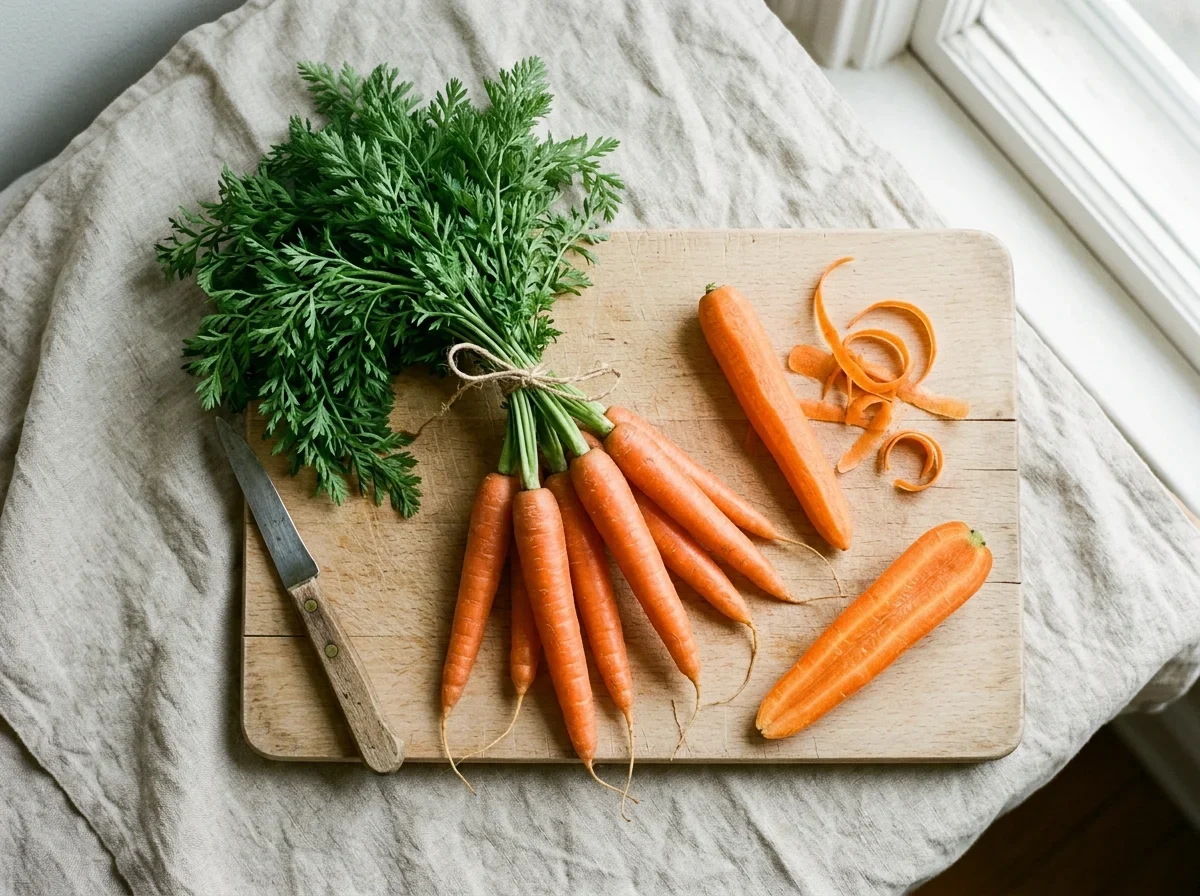
Not the place
Cold and damp suits carrots, so the fridge wins
Up to 2 weeks
Tops off, in a closed bag or container. Colder storage: months
Blanched, not raw
2 minutes sliced, 5 minutes for small whole carrots
The short version: to store carrots well, twist off the tops first. Then keep the roots cold and damp in a closed bag, away from apples.
Storage guidance from University of Maine Cooperative Extension, University of Minnesota Extension and Colorado State University Extension, as well as Penn State on ethylene.
On this page
What to look for before you store carrots
Carrots keep for weeks, so the ones you bring home matter less than how you treat them. Still, a cracked or wilted carrot starts further along. So pick the firm ones, and plan to take the tops off.
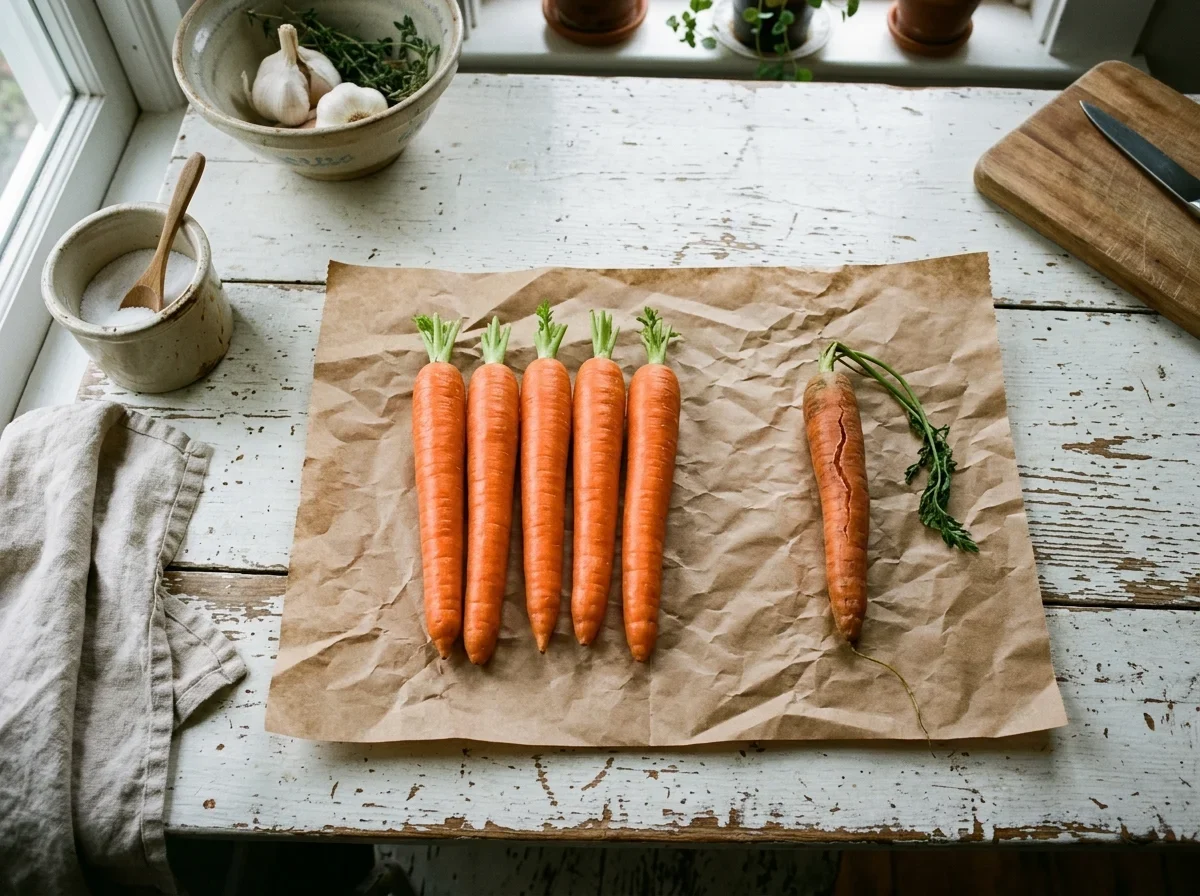
Firm and evenly colored, with little green at the crown.
Firm and well-colored. That is what University of Maine Cooperative Extension says to look for.
No wilting, cracks or flabbiness. University of Maine Cooperative Extension also says to avoid carrots that are wilted, flabby or cracked.
Little green at the top. A large amount of green there is on the same list to avoid.
Young and even, if you plan to freeze them. The National Center for Home Food Preservation asks for young, tender, coreless, medium length carrots.
How to store carrots so they last
Carrots are a root, so they want what a root cellar gives: cold, damp and dark. Your fridge does most of that. The one thing it does not give is moisture, which is why the bag matters. Cabbage wants the same cold, damp dark, and a late head will sit there for months. The zucchini guide needs the bag for the same reason, even though the cold itself works against the squash. Beets want the same once their greens are off.
How to store carrots in the fridge
Take the tops off first. University of Maine Cooperative Extension says to remove leafy green tops before storing, because the tops make the carrots wilt. Then store them in a closed plastic bag or container in the fridge. They stay fresh for up to two weeks that way. Colorado State University Extension puts them in the produce drawer in perforated plastic bags instead. Either way the aim is the same: damp air around the carrots, without standing water. Also, wait to wash them until you are ready to cook, as Colorado State University Extension advises.
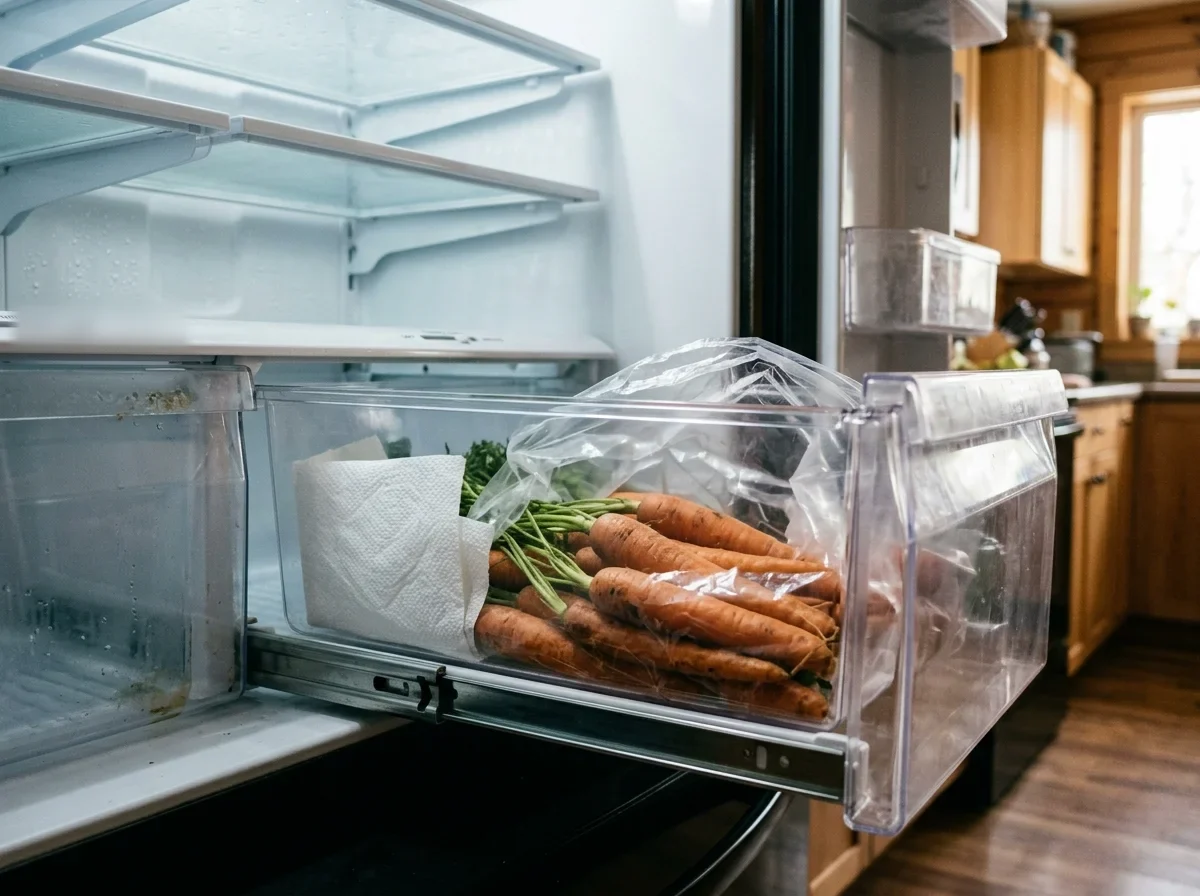
Tops off, closed bag, cold drawer. Damp air, but no standing water.
How long can you store carrots?
In a home fridge, about two weeks, according to University of Maine Cooperative Extension. Proper cold storage does far better, although the figures vary. University of Minnesota Extension gives carrots eight months at 32 to 40°F with 95 percent humidity. University of Alaska Fairbanks Cooperative Extension gives five months at 32°F with 90 to 95 percent humidity. Take the shorter one if your cold store is a garage rather than a cellar. In any case, a fridge near 40°F is warmer than either, so plan around two weeks.
In other words, carrots are not really a fridge vegetable. They are a cellar vegetable that puts up with a fridge.
Should you store carrots in water?
The top results say yes, although none of the extension sources covers it. Colorado State University Extension and University of Maine Cooperative Extension both ask for damp air rather than standing water. So a perforated bag, or a closed bag or container, is what the evidence here supports. There is a reason for care, too. The Pacific Northwest Plant Disease Handbook says soft rot can be introduced by cleaning carrots in infected wash water. It also says high humidity is essential for the rot to progress. So if you keep cut carrots in water, change it often and eat them within a few days.
How to store carrots from the garden
Trim the tops, but leave a stub. University of Alaska Fairbanks Cooperative Extension tops carrots leaving a quarter-inch stem, then packs them in moistened sawdust or sand. The damp packing is the point, because it stops the roots drying out. It holds them at 32°F with 90 to 95 percent humidity for about five months. University of Minnesota Extension harvests when the tops are an inch across, then stores them without tops. It gives eight months in cold, moist conditions. Unlike potatoes, which want cool and dark but not cold, carrots want the coldest damp spot you have.
Why you should not store carrots next to apples
Because ethylene makes them bitter. Penn State lists apples, pears and bananas among the fruit that give off a lot of ethylene. It puts carrots and parsnips on the sensitive side, and says both get very bitter when exposed to it. Its advice is simple: put the ethylene-sensitive produce in paper bags, roll them shut, and keep them in one crisper. Then bag the heavy ethylene producers and store them in a separate crisper. That is the same reason the spinach guide keeps leaves away from apples and tomatoes. Broccoli belongs on that list too, since SDSU Extension calls it ethylene-sensitive, which is why the broccoli guide keeps it away from the fruit bowl.
Can you freeze carrots?
Yes, although not raw. Carrots need blanching first, and the National Center for Home Food Preservation gives exact times for it. Colorado State University Extension sets out the same sequence: clean, remove tops, peel, blanch, cool in ice water, drain, package and freeze. So the freezer is for a glut of carrots, rather than for rescuing a bendy one.
How to store carrots in the freezer
Clean them well, remove the tops and peel them, as Colorado State University Extension sets out. Leave small carrots whole, and cut larger ones into quarter-inch thick pieces. Then blanch them, cool them in ice water, drain, package and freeze. The National Center for Home Food Preservation packs them with half an inch of headspace, then seals and freezes. Also label the bag with the date, since frozen carrots all look alike by February.
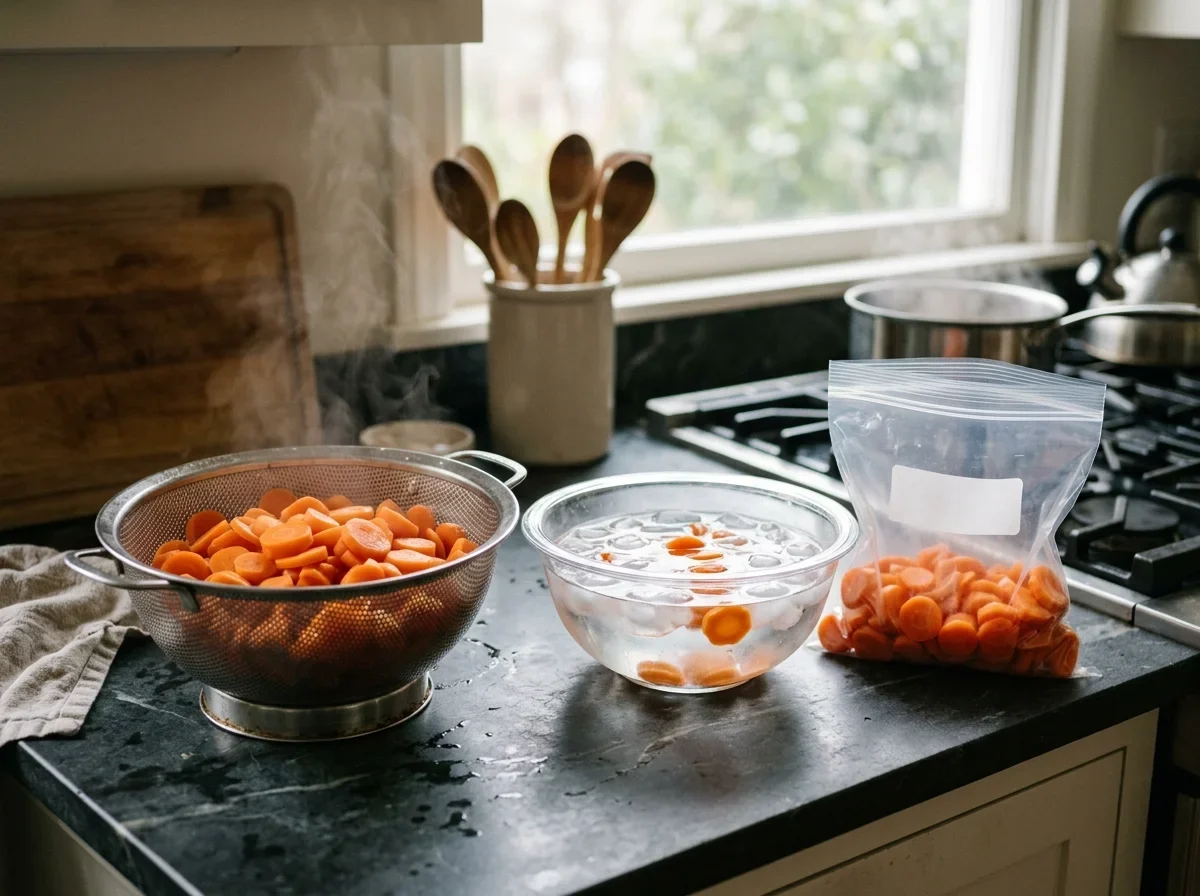
Blanch, chill in ice water, drain, then pack with half an inch of headspace.
What to do before you store carrots in the freezer
Blanch them, and time it. The National Center for Home Food Preservation gives small whole carrots five minutes in boiling water. Diced, sliced or lengthwise strips take two minutes. Then cool them promptly, drain and package, which is what both sources say to do next.
What happens to carrots you store in the freezer
They soften. Freezing costs texture rather than flavor, so thawed carrots go into soups, stews and mash. A raw platter, on the other hand, needs one from the fridge. Because of that, freeze the carrots you plan to cook, and keep the crisp ones cold. Blanched celery ends up in the same pot, since it never comes back crisp either.
How to tell if carrots have gone bad
Most carrots people throw out are not spoiled at all. A bendy carrot has lost water, and a white film is not mold. Slime, however, is the one that means it is over. Here is what each stage means.
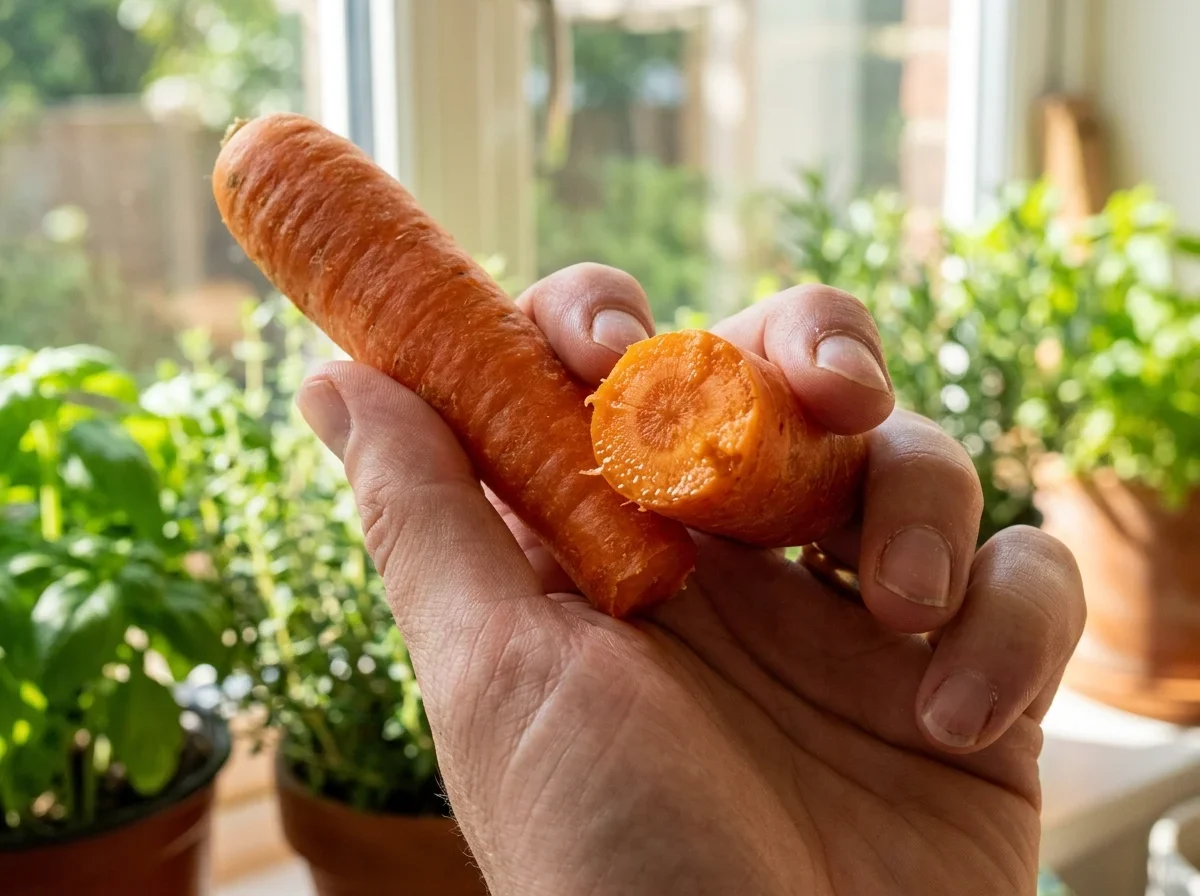
Verdict: use it
Firm, bright carrots
Firm and evenly colored, snapping cleanly when you break one. That is what University of Maine Cooperative Extension says to look for, so this is the carrot you want. Keep it in a closed bag with the tops off, and it has weeks left.
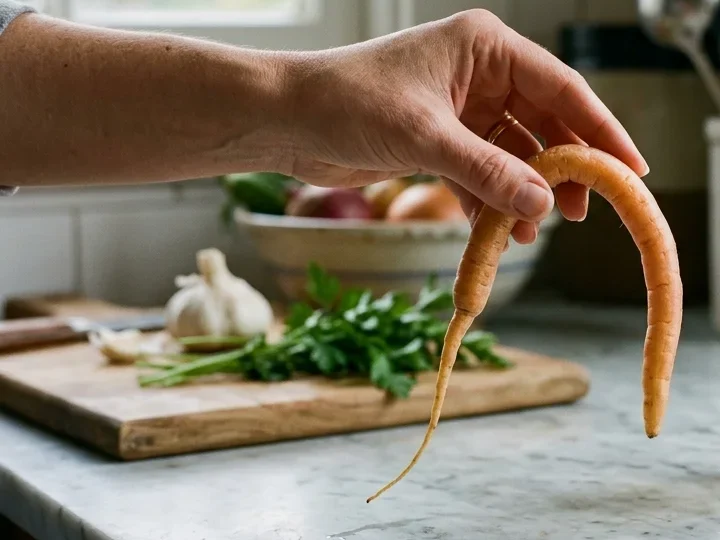
Verdict: soak it, then use it
Bendy carrots
A carrot that bends instead of snapping has lost water, not safety. University of Maine Cooperative Extension says wilting can be reversed by soaking them in cold water. The University of Saskatchewan uses an ice bath for five to ten minutes instead. So soak it, then cook it if it is still limp.
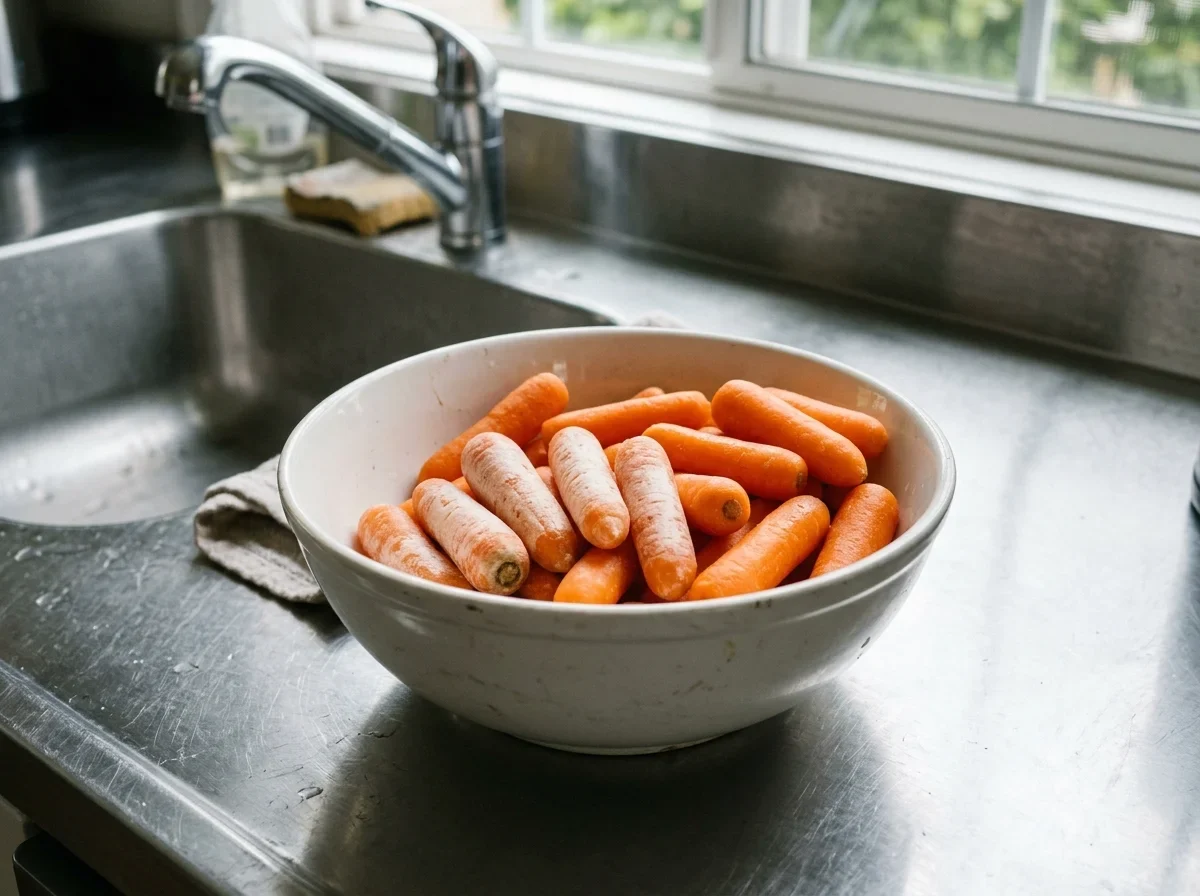
Verdict: use it
Carrots with a white film
The white blush on bagged baby carrots is not mold. A study in the International Journal of Molecular Sciences found the white blush on fresh-cut carrots is lignin, not carotenoids. Cutting ruptures the surface cells, which triggers lignin synthesis and the whiteness that follows. The same paper notes it helps prevent the invasion of disease and pests, so it is a defense. Rinse them, or simply eat them.
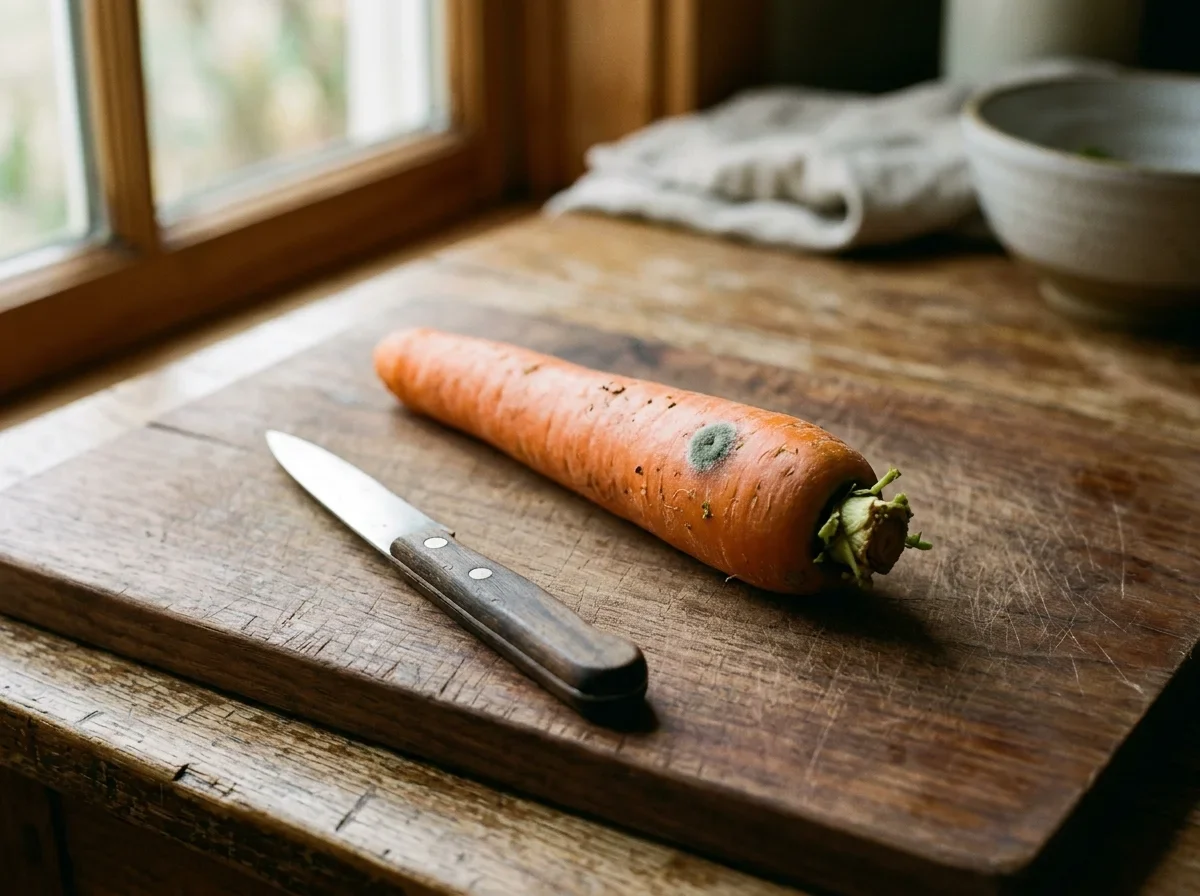
Verdict: cut an inch around it
Carrots with a mold spot
A carrot is a firm vegetable, so one small mold spot does not condemn it. UConn Extension says to cut at least one inch around and below the moldy area on vegetables such as carrots. It also warns against cross-contaminating with the knife, so rinse the blade afterwards. The University of Saskatchewan gives the same one inch rule for firm produce. If the mold went with the trimming and the rest is firm, cook it.
Verdict: throw it out
Slimy carrots
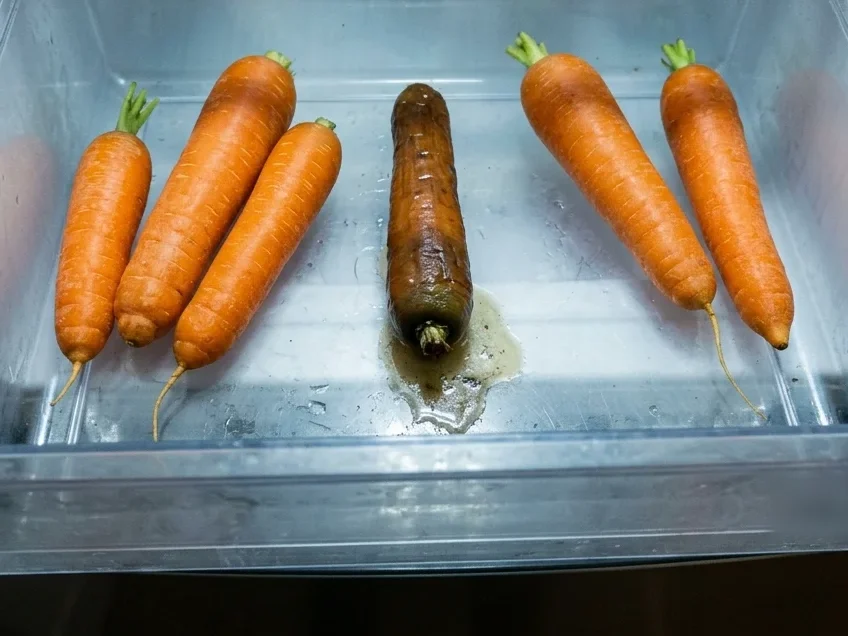
Slime is bacterial soft rot, and it does not trim out. The Pacific Northwest Plant Disease Handbook describes a soft decay of the root that turns watery or slimy as the rot progresses. It gets in through wounds, bruises, freezing injury and insect openings. The University of Saskatchewan puts the home test plainly: produce that is slimy, paler than it was and stinky is probably fully rotten. So throw that carrot out, then check the ones it was touching.
Can you store carrots that have started to sprout?
Yes, if the root itself is still sound. New shoots pull moisture out of the carrot, which is why University of Maine Cooperative Extension removes the tops before storing. So twist the shoots off, then judge the root on its own. Firm, with no slime, mold or off smell, means it is still a carrot by the University of Saskatchewan's test. Limp means it needs the cold water soak first.
Carrot substitutes
Out of carrots, or had to throw some away? Then these will do much the same work.
Substitute
Works best in
What changes
Parsnips
Roasting and soups
Sweeter and softer once cooked.
Sweet potato
Soups and stews
Sweeter, and it breaks down faster.
Celery
Stocks and soffritto
Savory rather than sweet, so use less.
Butternut squash
Soups and roasting
Softer, so add it later in the cooking.
Mistakes people make when they store carrots
These are the ways people store carrots that cost them the most, although each one has an easy fix.
Leaving the leafy tops on. They make the root wilt, so twist them off before the carrots go in the fridge.
Storing them next to the apples. Since ethylene turns carrots bitter, give each one its own crisper.
Washing them before they go in. Wait until you are ready to cook, because wash water is one way soft rot spreads.
Throwing out bendy carrots. They are dehydrated rather than spoiled, so soak them in cold water instead.
Keeping them in the cupboard. Carrots want cold and damp, unlike potatoes, so the fridge is the right place.
Leaving them loose in the fridge. Dry air shrivels them, so use a closed bag or a perforated one.
Trimming mold off a slimy carrot. Slime runs deeper than a mold spot, so that one goes out whole.
Sources
Carrots 101: Selection, Storage, and Cooking Tips for Maximum Flavor, Kate Yerxa, University of Maine Cooperative Extension, November 2024, on choosing carrots, removing the tops, two weeks in the fridge and reviving wilted carrots.
Harvesting and storing home garden vegetables, Cindy Tong, University of Minnesota Extension, reviewed 2026, on cold and moist storage at 32 to 40°F with 95 percent humidity and an eight month shelf life.
Vegetable Storage in Root Cellars, Phillip Kaspari and Ray Morgan, University of Alaska Fairbanks Cooperative Extension, revised June 2020, on 32°F, 90 to 95 percent humidity, five months, topping and packing in moist sand.
How to Use Carrots, Food Smart Colorado, Colorado State University Extension, on perforated bags in the produce drawer, trimming tops, washing late and the freezing sequence.
Freezing Carrots, National Center for Home Food Preservation, University of Georgia, on selecting carrots, blanching times and headspace.
Your Produce May Be Getting Gassed In The Refrigerator, Peter Ferretti and Kathleen Brown, Penn State, April 1998, on ethylene producers, carrots turning very bitter and separate crispers.
Carrot (Daucus carota), Bacterial Soft Rot, Pacific Northwest Plant Disease Management Handbook, Oregon State University, Washington State University and University of Idaho, revised March 2026, on watery or slimy decay, wash water and storage temperature.
Characterization of Abscisic Acid and Ethylene in Regulating the White Blush in Fresh-Cut Carrots, Chichang Chen and colleagues, International Journal of Molecular Sciences, October 2022, on white blush being lignin rather than carotenoids.
Handling Food with Mold, UConn Extension, April 2024, on cutting one inch around and below mold on firm vegetables such as carrots.
How to tell imperfect produce from spoiled produce, University of Saskatchewan College of Agriculture and Bioresources, on ice baths for wilted produce, the one inch mold rule and slimy, pale and stinky produce.
Storage times and safety advice on this page come from the sources above. Food safety depends on conditions I cannot see, so read the Disclaimer, and if in doubt, throw it out.
Other ingredient guides
Browse all guides
Share this guide
Never miss a guide
New ingredient guides when they go up, plus one storage tip worth knowing. Anything sponsored is labelled.

Emilly White