
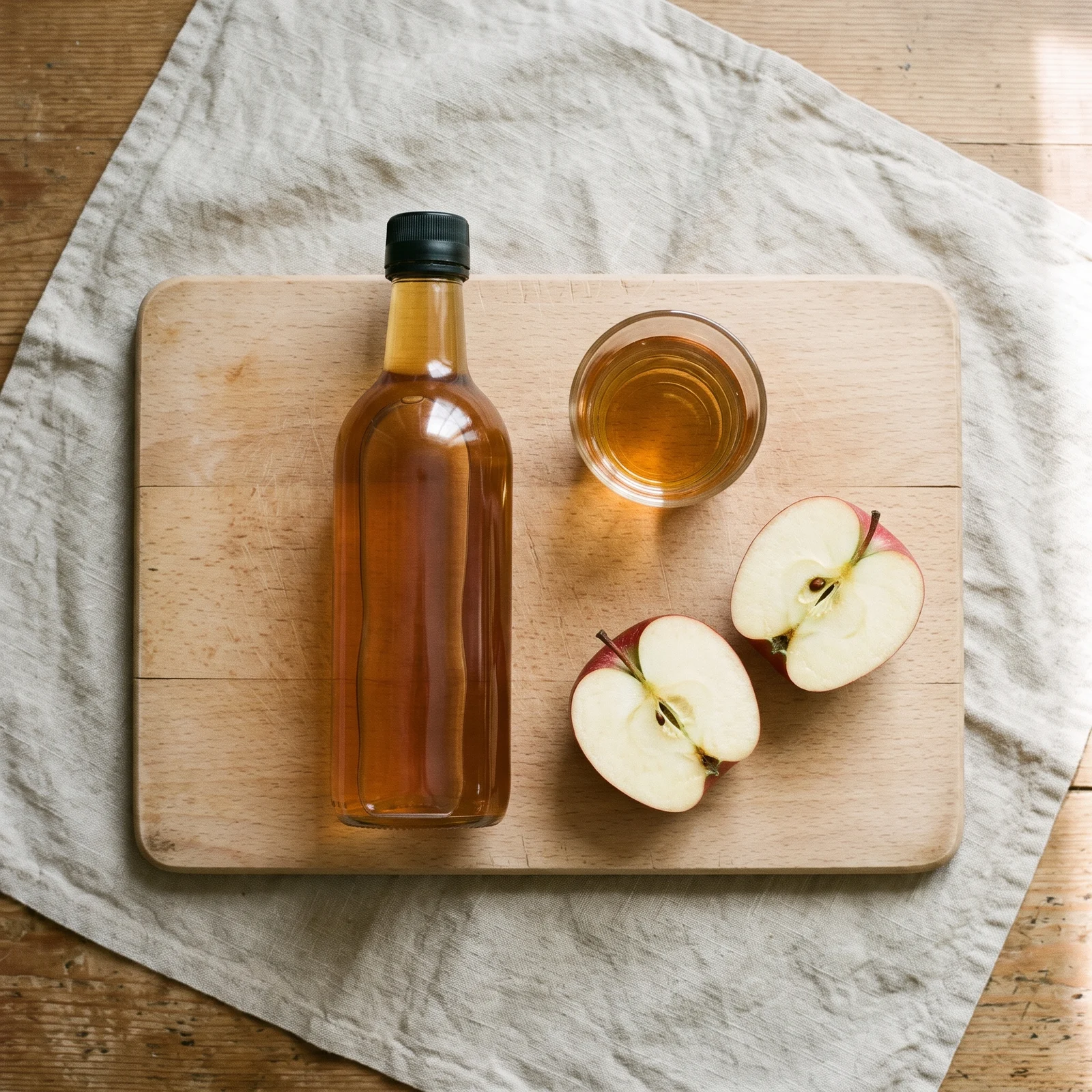
2 years or more
Capped tight, cool and dark, opened or unopened
Not needed
The acid preserves it, so cold adds nothing
No figure
Nothing we opened recommends freezing it
Has your apple cider vinegar gone bad?
See all 5 stages ↓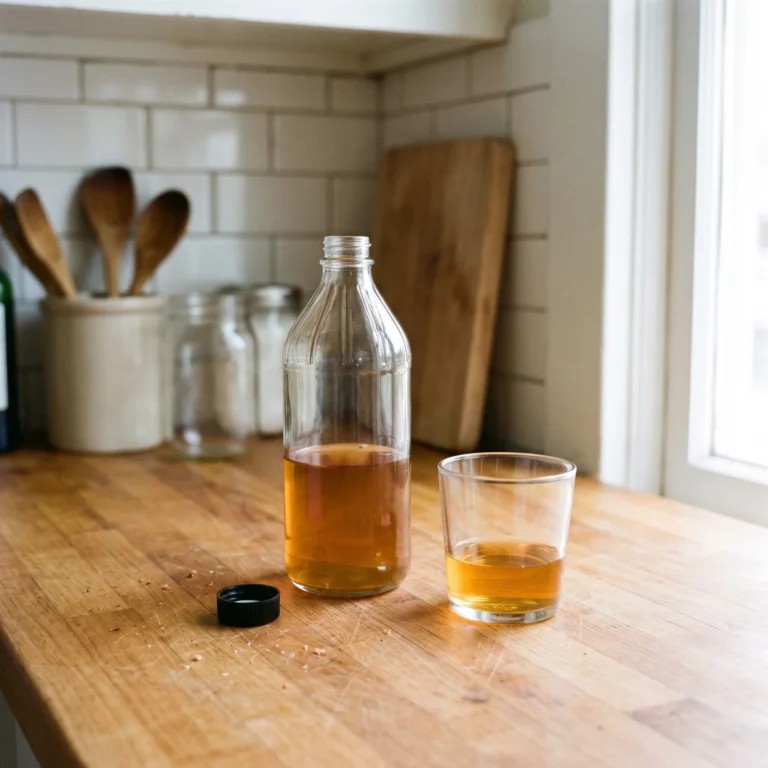 Use itClear, sharp apple cider vinegar
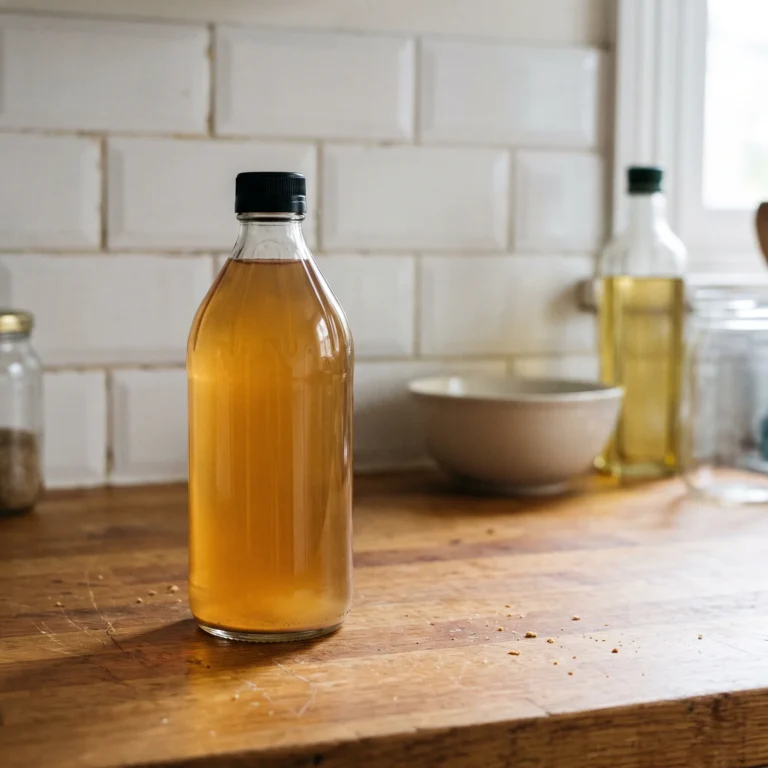 Use it or strain itCloudy apple cider vinegar with sediment
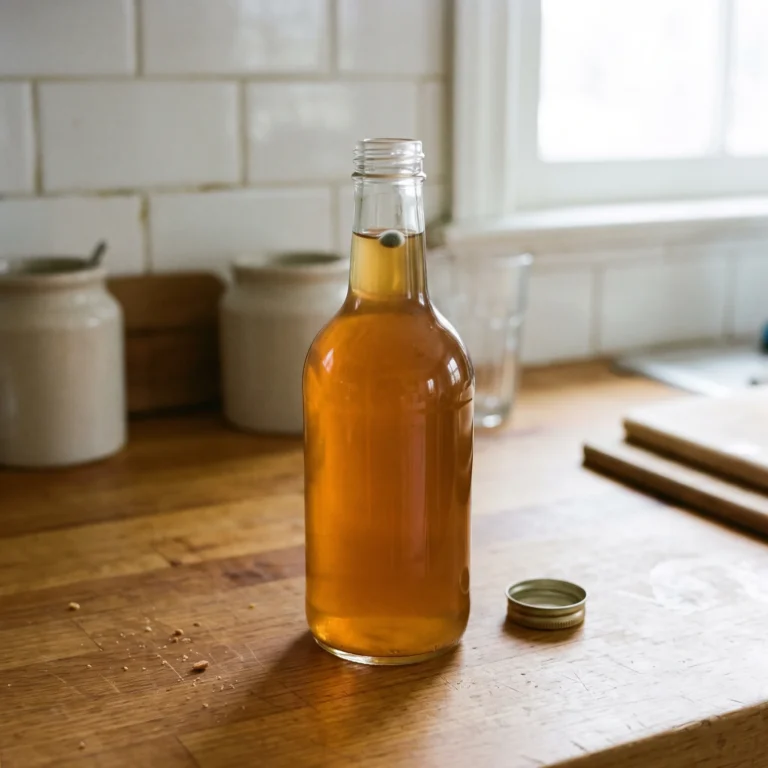 Throw it outMoldy apple cider vinegar
Apple cider vinegar almost never goes bad. The acid preserves it, so a capped bottle keeps for years in a cool, dark cupboard. Storage charts give it 2 years to 30 months, while vinegar's own industry studies call the shelf life almost indefinite. Cloudiness and the mother are harmless.
Is your apple cider vinegar raw or filtered?
The label tells you: a raw bottle says unfiltered or made with the mother, while a filtered one stays clear. Both keep in the same cupboard, so the label changes what you will see inside the glass rather than where the bottle goes. That matters, because the raw kind is the one that worries people.
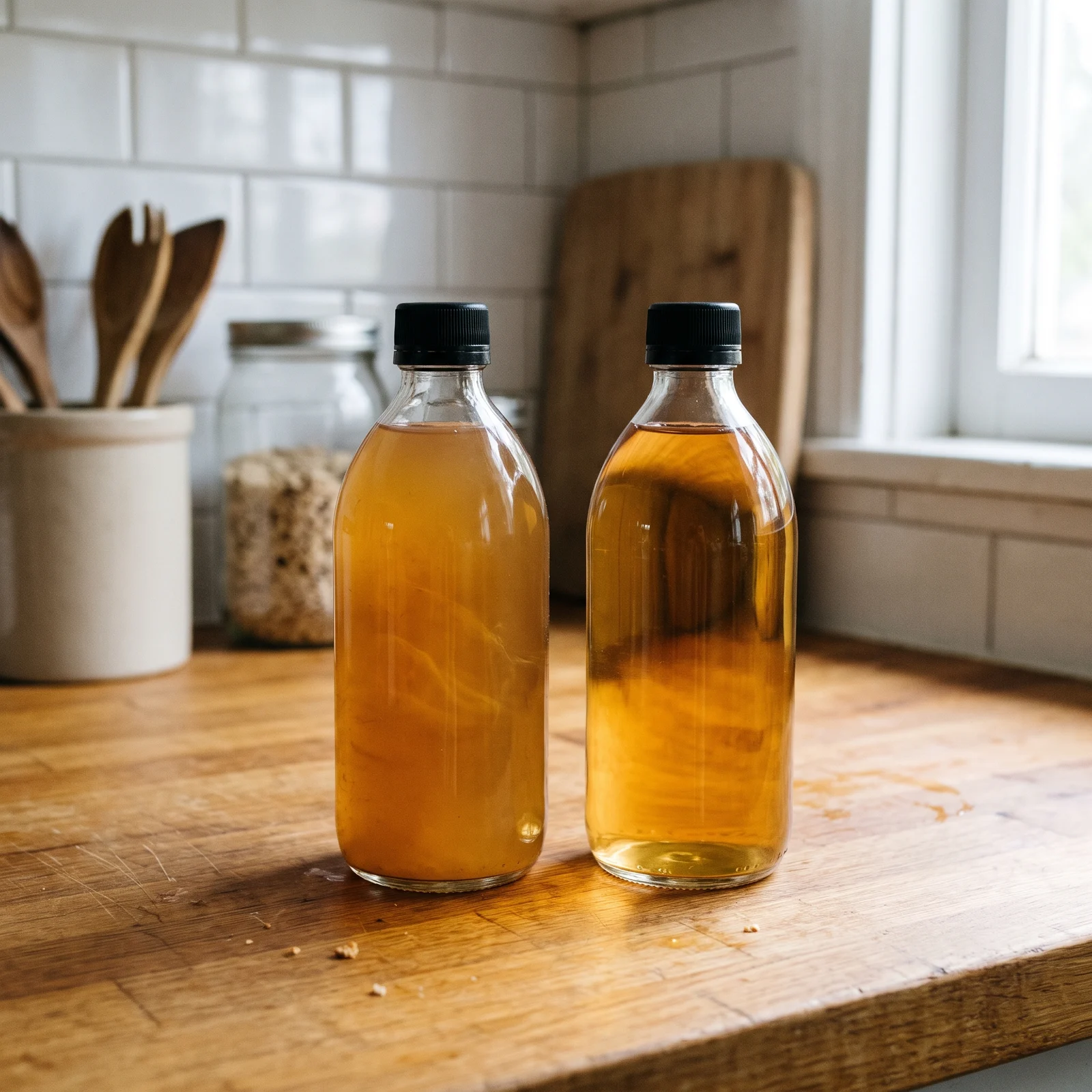
A raw bottle will throw sediment, and that is normal.
Cider vinegar is apple juice fermented twice, first to alcohol and then to acetic acid. A bottle sold as vinegar should carry 4 grams of acetic acid per 100 millilitres at 20°C. That second fermentation is also what eventually turns apple cider sour and fizzy.
Raw and unfiltered is the live kind, so expect the mother. Bragg, the bottle most people picture, is unfiltered and made with the mother, and it is sold as a live, raw product.
Filtered bottles look clear, and they stay that way for longer. Distilled white vinegar also keeps longer than cider vinegar on the storage charts. That is why a cloudy cider bottle surprises people more often than a clear white one does.
The seal matters more than the material. Vinegar belongs in glass, plastic or another non-reactive container, so the bottle it came in is usually the right one. Then the cap goes back on straight away.
How to store apple cider vinegar so it lasts
To store apple cider vinegar so it lasts, keep it capped in a cool, dark cupboard and leave the fridge out of it. That is the whole routine, because the acid does the preserving. What drifts over the years is flavor and clarity rather than safety.
Where should you store apple cider vinegar?
Keep apple cider vinegar in a cool, dry, dark cupboard between 50 and 70°F, with the cap screwed down. Avoid the shelf above the cooker or beside hot pipes, since heat and light both wear the flavor down. The bottle it came in is fine, so long as it is glass or plastic rather than bare metal.
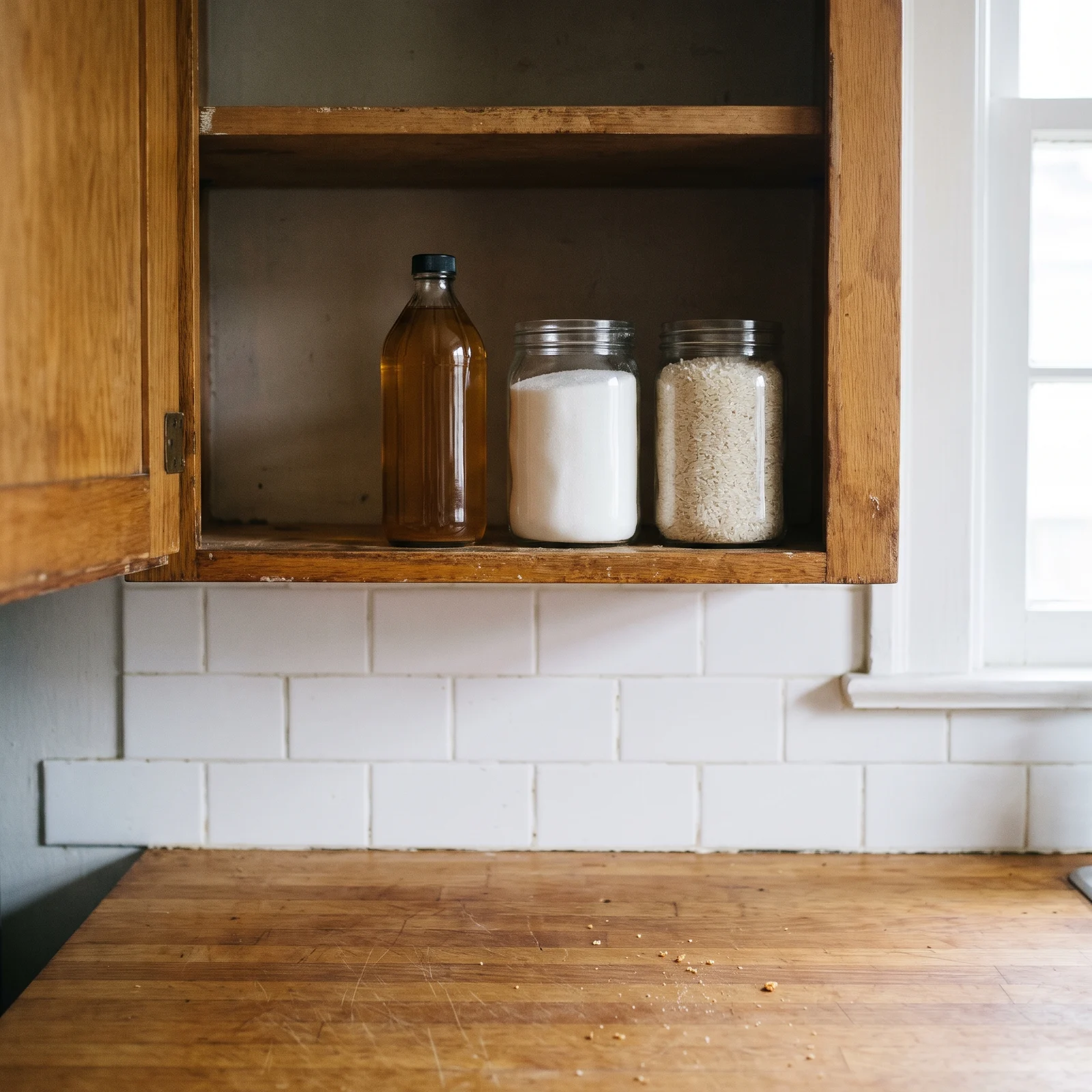
A closed cupboard, away from the cooker, is all the bottle needs.
How long does apple cider vinegar last?
Apple cider vinegar lasts years, and the published figures disagree about how many. One pantry chart gives a sealed bottle 30 months. Another gives an unopened bottle 2 years and an opened one 12 months, while a third puts non-white vinegars at their best within 2 to 3 years. Vinegar's own industry storage studies, on the other hand, call the shelf life almost indefinite.
So treat 12 months after opening as the point where flavor starts to drift, not as a deadline. In other words, the chart tells you when to taste the bottle rather than when to bin it, and a vinegar that still smells sharp is still good.
Does apple cider vinegar need to be refrigerated?
No, apple cider vinegar does not need refrigeration, opened or unopened. Vinegar is self-preserving because of its acid, so the fridge buys nothing that a cool, dark cupboard does not. Cold does not spoil it either, so a bottle that has lived in the fridge door is still fine. The only real difference is the shelf it takes up.
Does apple cider vinegar expire?
Apple cider vinegar does not expire in any real sense, and the date on the neck is a quality marker set about two years after production. Vinegar does not sour or spoil the way perishable food does, since there is nothing in the bottle for bacteria to work on. So an old bottle is worth a smell and a taste before it is worth the bin, and a sharp, acidic smell means use it.
Can apple cider vinegar sit out overnight?
Yes, apple cider vinegar can sit out overnight, because the cupboard shelf is where it belongs anyway. The two-hour rule covers moist, low-acid foods such as meat, poultry, eggs, dairy, cut fruit and cooked dishes, and vinegar is the opposite of all of them. Put the cap back on, so air and water stay out, and see the food left out overnight guide for whatever the vinegar was dressing.
Can you freeze apple cider vinegar?
There is no reason to freeze apple cider vinegar, and nothing we opened recommends it. A cupboard already keeps the bottle for years, so the freezer has nothing to add, and none of the storage charts gives vinegar a freezer time at all. That leaves freezing an open question rather than a method, which is why the freezer cell above says no figure.
What is the mother in apple cider vinegar?
The mother in apple cider vinegar is a biofilm made by the bacteria that turn alcohol into acetic acid, and it is harmless. It looks like a cloudy disc or a jelly-like blob. It forms where unfermented sugar or alcohol is left, so it turns up most often in unpasteurized vinegar. Strain it out through a coffee filter if it bothers you, because the vinegar under it is neither harmful nor spoiled.
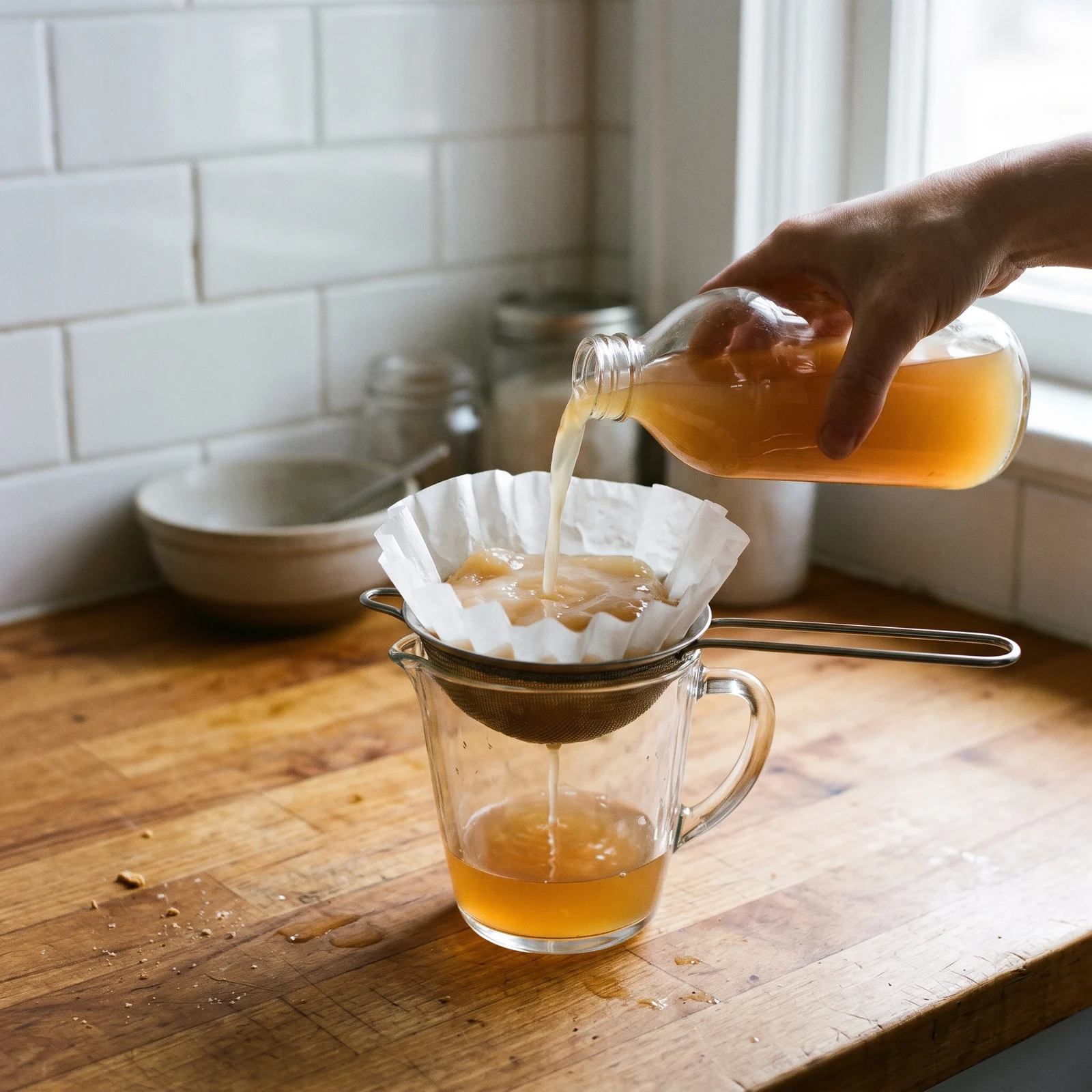
The mother is a bacterial film, so filter it out or leave it in.
Why is my apple cider vinegar cloudy?
Apple cider vinegar turns cloudy with age, and a slightly cloudy appearance does not affect quality. Each time the cap comes off, a little more air reaches the vinegar, which is why the advice is to close it again straight away. Pour it through a coffee filter set inside a fine-mesh strainer if you want it clear, or shake the bottle and carry on.
Can you still use old apple cider vinegar for pickling?
Old apple cider vinegar is safe for pickling only while it is still 5% acidity and still looks clear. Any vinegar at 5% acidity is safe for canning whatever its age. But a bottle that has clouded, thrown sediment or grown a mother should stay out of the jar. Those changes can darken the pickles and cloud the brine. A bottle left open, or one with condensation inside, may have dropped below 5%, so keep that one for salad dressing.
Does apple cider vinegar go bad?
Apple cider vinegar hardly ever goes bad, and that is the honest answer. Four of the five stages below are changes in looks or flavor rather than spoilage, so most of the bottles people throw out were still fine. Only the last one is a bin job, and here is what each stage means.
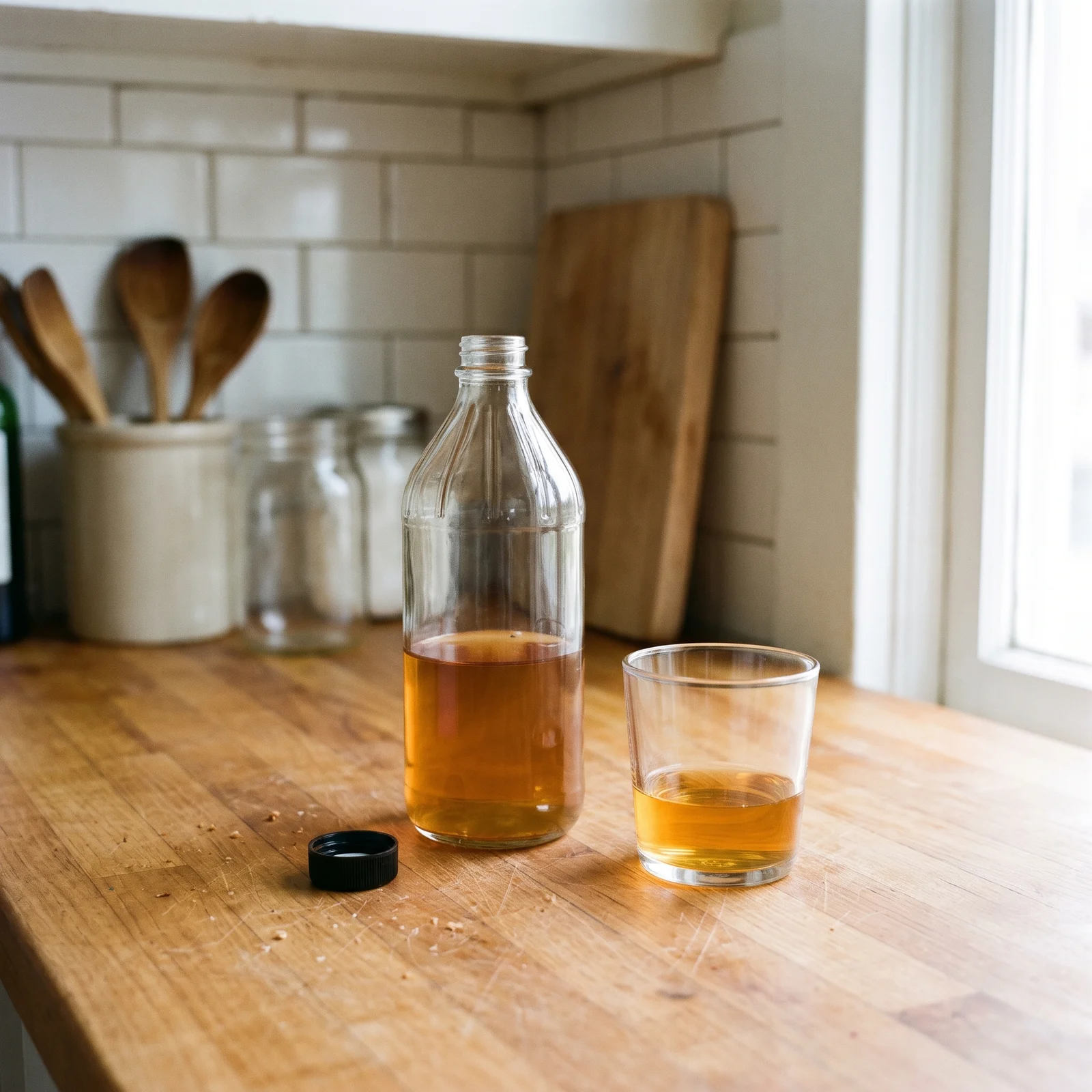
Verdict: use it
Clear, sharp apple cider vinegar
The vinegar is clear amber, and it smells sharp and fruity the moment the cap comes off. That is a bottle at its best, whatever the date on the neck says. So use it as it is, and screw the cap back down afterwards.
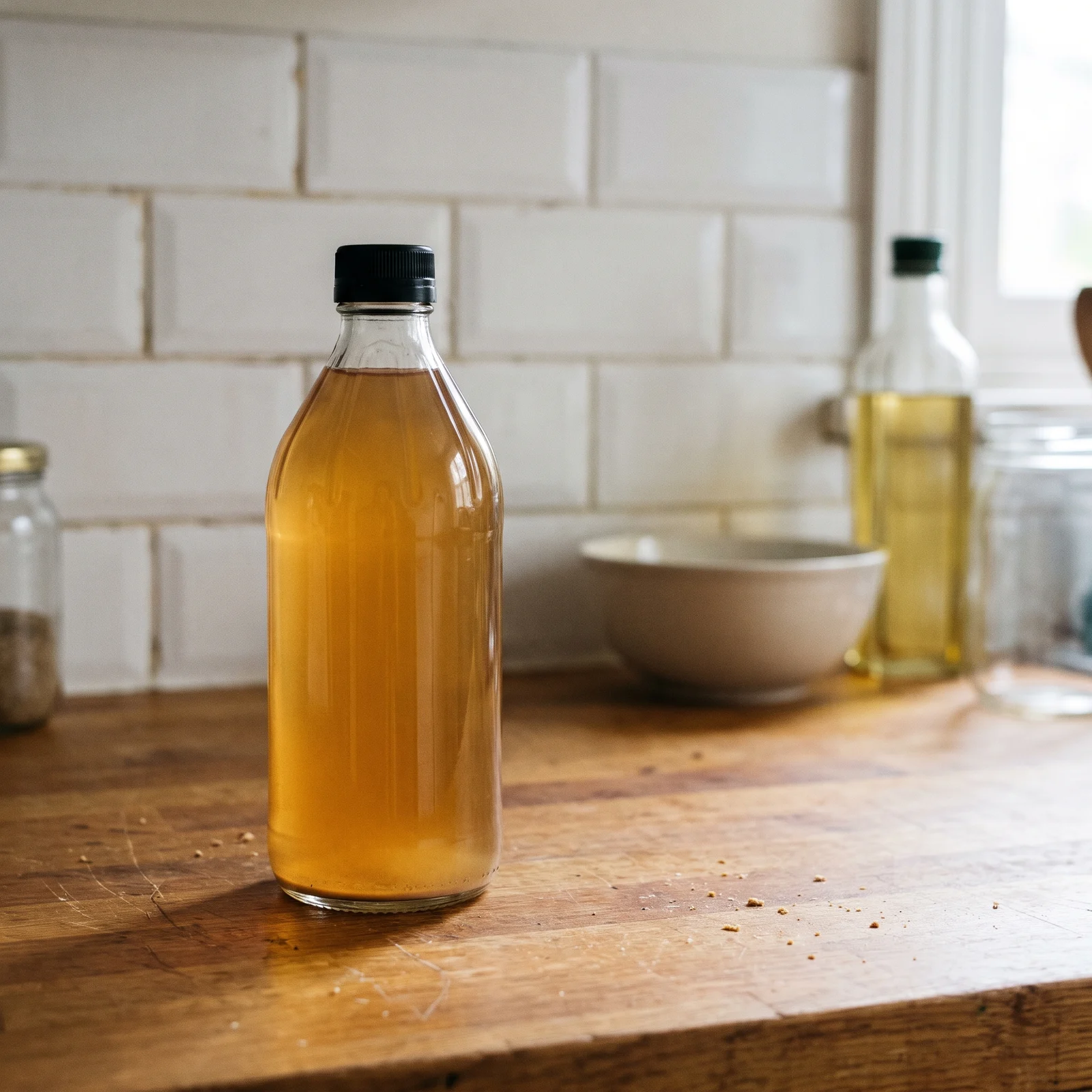
Verdict: use it or strain it
Cloudy apple cider vinegar with sediment
The bottle has gone hazy, or fine sediment has settled at the bottom. A slightly cloudy appearance does not affect quality, since haze and sediment come from age and air rather than from spoilage. So shake it and use it, or pour it through a coffee filter first if you want it clear again.
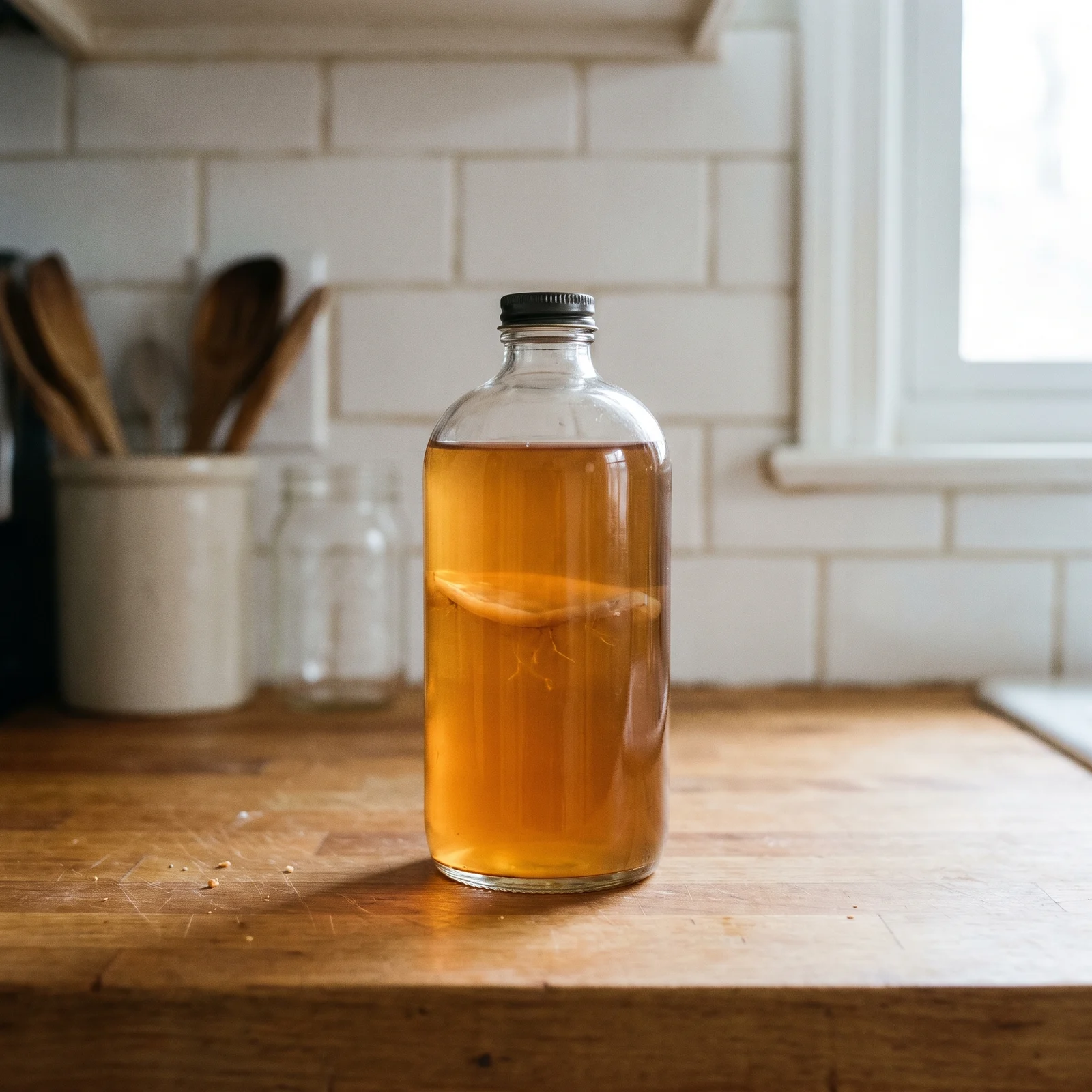
Verdict: filter it and use it
Apple cider vinegar with a mother in it
A jelly-like disc or a stringy blob is floating in the bottle, or sitting on the bottom. That is the mother, a film of the same bacteria that made the vinegar, and it is not harmful or spoiled. Filter it out through a coffee filter, or leave it where it is and keep using the bottle.
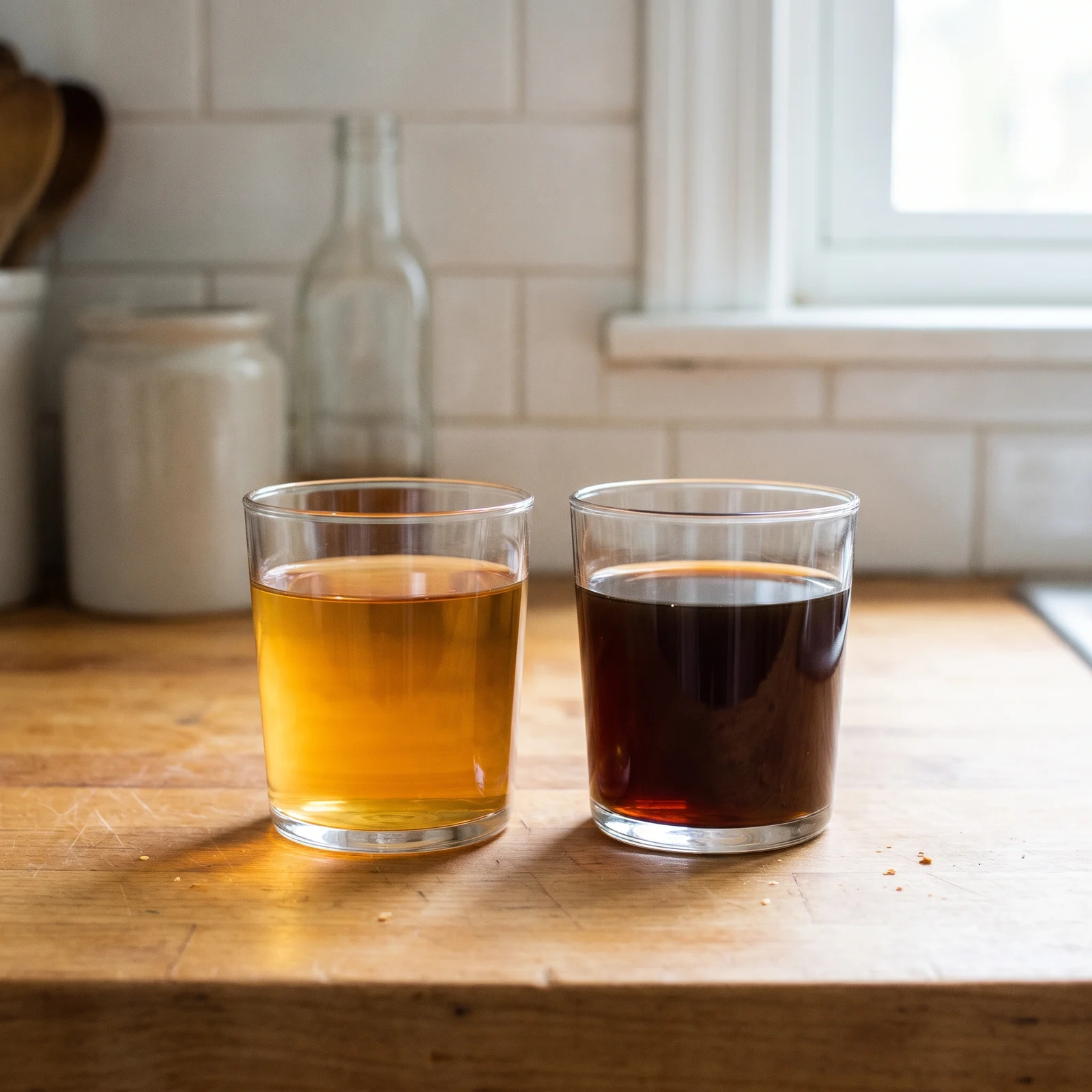
Verdict: use it in cooking
Darkened apple cider vinegar that smells flat
The color has deepened and the smell has lost its edge, so the vinegar tastes weaker than it did. Quality drifts with storage and air over the years, even though the acid keeps the bottle safe. Use it in a marinade or a braise where a little less bite will not show, and keep it out of pickling jars.
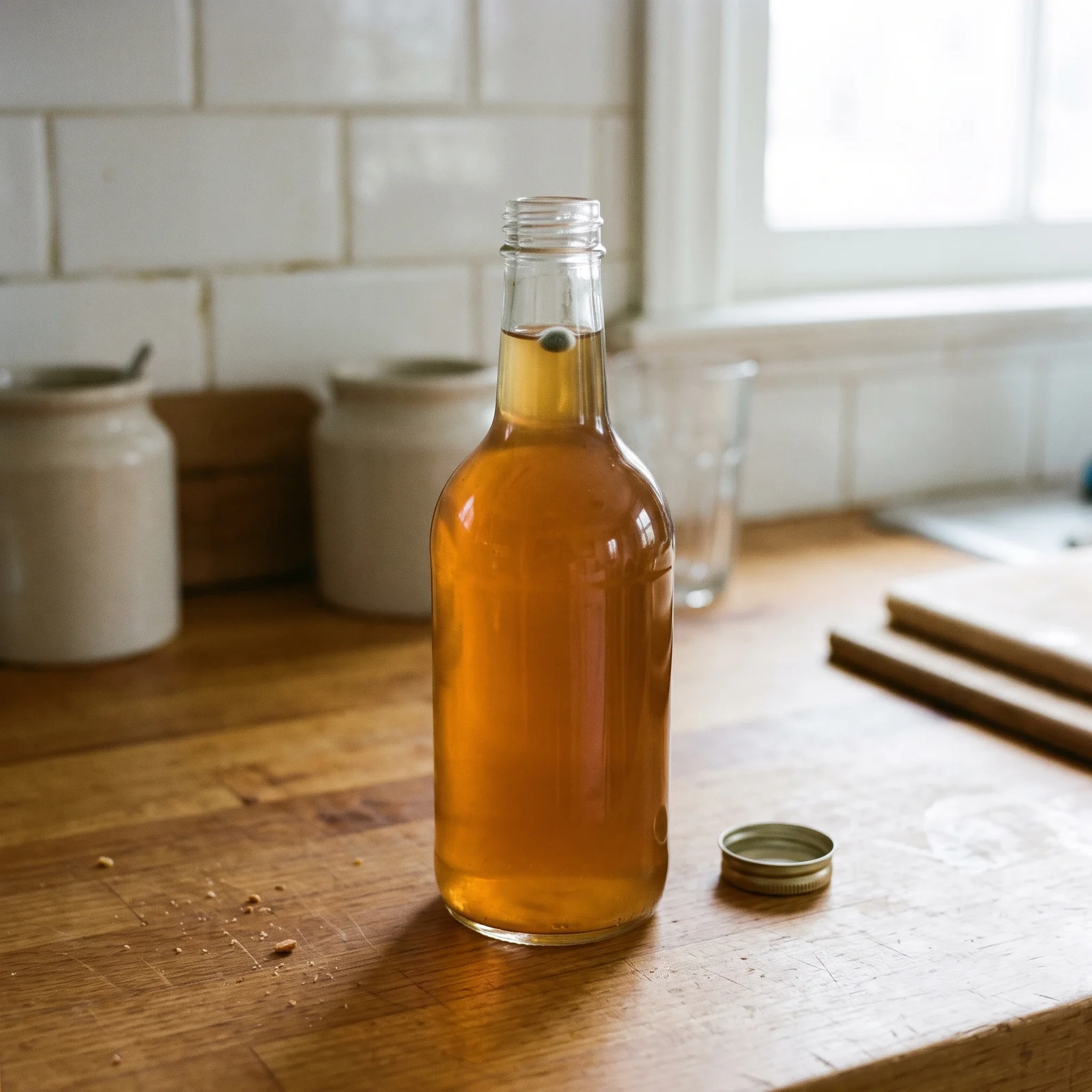
Verdict: throw it out
Moldy apple cider vinegar
There is a fuzzy blue, green or white growth on the surface, which is mold rather than the mother. Surface mold means tendrils and spores run right through the liquid, so the whole bottle counts as contaminated. Throw it out, bottle and all, and do not keep it back for cleaning either, because the mold count is unknown. The white wine vinegar guide covers the same test on a clearer bottle.
Does apple cider vinegar with the mother need different storage?
Apple cider vinegar with the mother goes in the same cupboard as any other bottle, although it changes more inside the glass. Unpasteurized vinegar is where the mother grows, so a raw bottle throws more sediment and more film than a filtered one does. Home-made cider vinegar is the exception worth naming, because its acidity varies too much for canned foods or anything kept at room temperature. Pasteurizing it at 140 to 160°F is what makes a bottle keep almost indefinitely.
Apple cider vinegar substitutes
Out of apple cider vinegar, or is the bottle too flat to taste of much? Then one of these will stand in.
Substitute
Works best in
What changes
White wine vinegar
Dressings and pan sauces
Cleaner and sharper, and the white wine vinegar guide covers how it keeps.
Distilled white vinegar
Pickling and cleaning
Harsher, although it keeps longer than cider vinegar does.
Lemon juice
Dressings and marinades
Fruitier, and the lemon juice guide covers its short fridge life.
Red wine vinegar
Braises and bean dishes
Deeper and less fruity, so use a slightly lighter hand.
Mistakes people make when they store apple cider vinegar
These are the ways people store apple cider vinegar that cost them the most, so each one has an easy fix.
Throwing out a cloudy bottle, when haze and sediment are both normal in vinegar.
Scooping the mother out and binning the rest, although the mother is harmless and the vinegar under it is fine.
Keeping the bottle on the shelf above the cooker, where heat and light wear the flavor down.
Leaving the cap loose, which lets in the air and the water that weaken the acid.
Pickling with an old, cloudy bottle, because those changes can darken the jar and cloud the brine.
Trusting the date on the neck instead of your nose, since vinegar does not spoil on a date.
Keeping a moldy bottle back for cleaning, when the spores are already through the whole liquid.
Sources
Vinegar Shelf Life and Safety, Marlene Geiger, Iowa State University Extension and Outreach AnswerLine, May 2021, on vinegar being self-preserving and needing no refrigeration, glass, plastic or non-reactive containers, replacing the lid to reduce oxygen, straining cloudiness and the mother through a coffee filter, non-white vinegars being best within 2 to 3 years, Best By dates not being safety dates, and vinegar at 5% acidity being safe for canning at any age.
Vinegar and its Shelf Life, Karen Blakeslee, Kansas State University You Asked It, June 2021, on vinegar not requiring refrigeration, a cool, dry, dark storage location, slight visible changes including cloudiness, color, sediment and the mother, and using 5% acidity vinegar for pickling.
Food Storage: Pantry, HGIC 3525, Pamela Schmutz and E.H. Hoyle, Clemson Cooperative Extension Home and Garden Information Center, revised March 2020, on vinegar keeping 30 months in a tightly sealed pantry at 65 to 70°F, away from ovens and hot pipes.
Food Storage Guide, Julie Garden-Robinson, NDSU Extension publication FN579, reviewed January 2023, on vinegar at 2 years unopened and 12 months opened, refrigeration not being needed, a cool, dark place in a tightly closed container, a slightly cloudy appearance not affecting quality, and distilled vinegar keeping longer than cider vinegar.
Frequently Asked Questions, The Vinegar Institute, on its own storage studies finding vinegar's shelf life almost indefinite, vinegar being self-preserving and not needing refrigeration, haze and sediment being only an aesthetic change, and vinegar containing the mother being neither harmful nor spoiled.
Mother of vinegar, Canadian Food Inspection Agency, modified July 2020, on the mother being a biofilm formed by bacteria that turn alcohol into acetic acid, not posing a health risk, forming where non-fermented sugar or alcohol remains, being more common in unpasteurized vinegar, and being filtered out with a coffee filter.
Mold on top of homemade cider vinegar, Jeanne Brandt, Ask Extension question 547866, March 2019, on surface mold indicating tendrils and spores throughout the product including the liquid vinegar, the product being contaminated, no consumption being recommended, and the mold count being unknown for cleaning use.
CPG Sec. 525.825 Vinegar, Definitions, U.S. Food and Drug Administration compliance policy guide, March 1995, on cider vinegar being the product of the alcoholic and subsequent acetous fermentations of apple juice, 4 grams of acetic acid per 100 mL at 20°C, and no standards of identity for vinegar having been established.
Making Cider Vinegar at Home, Christine Nicholas and Doris Herringshaw, Penn State Extension, updated December 2025, on acetic acid fermentation, filtering out the mother to prevent further fermentation or spoilage, pasteurizing at 140 to 160°F, pasteurized vinegar staying in excellent condition almost indefinitely, and homemade vinegar's acidity varying too much for canned or room-temperature foods.
Frequently Asked Questions, Bragg Live Food Products, on all Bragg apple cider vinegar products being unfiltered and made with the mother, and being live, raw products.
Food Storage for Safety and Quality, Elizabeth L. Andress and Judy A. Harrison, University of Georgia Cooperative Extension publication FDNS-E-119, June 2011, on meat, poultry, fish, eggs, cut fruits and vegetables, cooked foods and dairy being the foods that must not sit out more than two hours, and on a pantry kept at 50 to 70°F.
Every storage time, temperature and verdict on this page comes from the sources listed above, and none of it is made up. Food safety still depends on conditions we cannot see, so read the Disclaimer, and if in doubt, throw it out.
Other ingredient guides
Browse all guides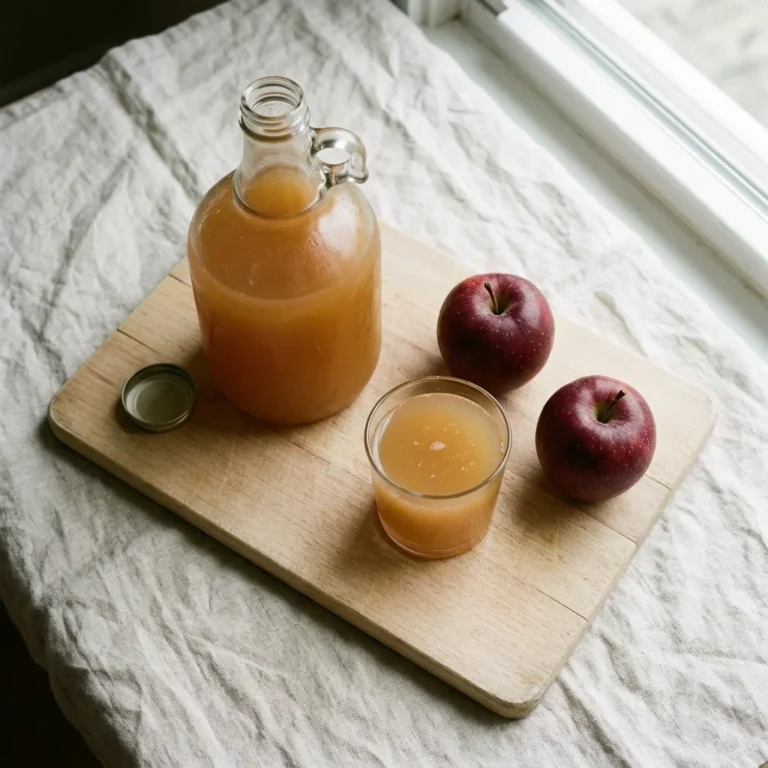

Share this guide
Never miss a guide
New ingredient guides when they go up, plus one storage tip worth knowing. Anything sponsored is labelled.

Emilly White