
12 to 18 months
Unopened shelf-stable bottle, 50 to 70°F (Clemson)
Up to 5 days
Fresh-squeezed or opened, 40°F or below (Washington State, Clemson)
Up to 1 year
Juice in cubes or jars at 0°F, quality only (UCCE El Dorado)
The short version: to store lemon juice well, refrigerate fresh-squeezed juice at 40°F or below. Use it within about five days, and keep opened bottles cold too. Then freeze the rest in ice cube trays, where the juice holds its quality for about a year.
Storage times here come from Washington State University Extension, Clemson Cooperative Extension and UCCE El Dorado. The safety rules, meanwhile, come from the FDA and UC Agriculture and Natural Resources.
On this page
What to check before you store lemon juice
Two things set the clock before the juice ever reaches the jar. Was the peel clean when the knife went in? And was the juice pasteurized? Neither one can be fixed later, so both are worth a minute now.

Scrub the peel first, because the knife carries whatever is on it inside.
Scrub the peel first, because the knife carries whatever is on it inside.
Scrub the outside before you cut. Sue Mosbacher of UCCE El Dorado County Master Food Preservers asks you to make sure the outsides are clean first. That is because any pathogens on the peel spread inside with the cut of the knife.
Then read the label on a bottle. The FDA requires packaged untreated juice to carry a warning that it has not been pasteurized. In fact the same warning says it may contain harmful bacteria. So if those sentences are on the label, the juice is raw. No warning does not prove the opposite, though, since the FDA exempts juice sold by the glass.
However, sour does not mean sterile. UC Agriculture and Natural Resources is blunt about the old assumption. In fact orange juice was once thought too acidic for bacteria like Salmonella to survive. We now know that bacteria survive for long periods in orange juice and other fruit juices, it says.
Also pick glass if the juice is going in the freezer. The National Center for Home Food Preservation packs juice in glass jars so that off-flavors stay out. Similarly, UCCE El Dorado repeats that line for citrus.
How to store lemon juice so it lasts
To store lemon juice so it lasts, split the problem in two. Fresh juice is a perishable food, so it lives in the fridge or the freezer. A sealed shelf-stable bottle, however, is a pantry item until the day you open it.
How long does fresh lemon juice last in the fridge?
Fresh-squeezed lemon juice keeps up to five days in the fridge, taking Washington State University Extension's figure for home-pressed juice. No source we opened puts a number on lemon juice by name. That is worth knowing when a blog offers you two weeks. The nearest published figures bracket it instead. Washington State University Extension says to refrigerate juice up to five days, or freeze it for longer storage. UC Agriculture and Natural Resources, meanwhile, gives cut fruit about 1 to 2 days refrigerated. So treat five days as the outer edge and the first two as the easy ones. Keep the jar at 40°F or below, as Clemson Cooperative Extension asks, rather than in the door.

On a cold shelf at 40 degrees or below, never in the door.
On a cold shelf at 40°F or below, rather than in the door.
How long does bottled lemon juice last?
An unopened bottle of lemon juice keeps 12 to 18 months at its best. Clemson Cooperative Extension gives commercial high-acid foods, juices among them, that same range. That figure assumes a pantry at 50 to 70°F, though. Storage time drops significantly above 75°F, the same factsheet says. Once the seal is broken, however, Clemson calls opened commercial product perishable and sends it to the refrigerator.
So the date on a bottle marks quality rather than safety. None of the extension sources we opened gives a day count for an opened bottle in the fridge. That is why the numbers online run from three weeks to a year without ever agreeing. In other words, judge an old bottle by its seal, its smell and its colour.
Do you have to refrigerate lemon juice after opening?
Yes, refrigerate lemon juice as soon as it is open. Clemson Cooperative Extension treats opened commercial product as perishable and asks you to refrigerate it. The FDA, however, puts the stricter case for raw juice. Untreated products should be kept under refrigeration, it says. Acidity slows spoilage, then, but it does not stand in for the cold.
Can you leave lemon juice out on the counter?
Lemon juice should not sit out longer than two hours, according to UF/IFAS Extension. It discards perishable food left at room temperature for longer than 2 hours. Above 90°F the limit drops to 1 hour. UC Agriculture and Natural Resources applies those same two limits to cut citrus. So a jug of lemonade goes back in the fridge between pours at a party. If one stood out all night, the food left out overnight guide covers that case.
Should you use fresh or bottled lemon juice for canning?
Use bottled lemon juice in the canner, always. K-State Research and Extension says bottled lemon juice is standardized, or uniformly acidified, per FDA regulations. In other words, that is a known level of safety for food preservation. Fresh lemons, however, carry an inconsistent acid, or pH, level. Instead it shifts with maturity, growing conditions, soil, fertilizer, rootstock and storage. Similarly, Sue Mosbacher reaches the same place from the other side. There is no way to guarantee the correct pH level in fresh lemon juice, she writes. So save the frozen cubes for cooking and drinks, and keep a bottle for canning. The lemons guide covers the fruit itself.
Can you freeze lemon juice?
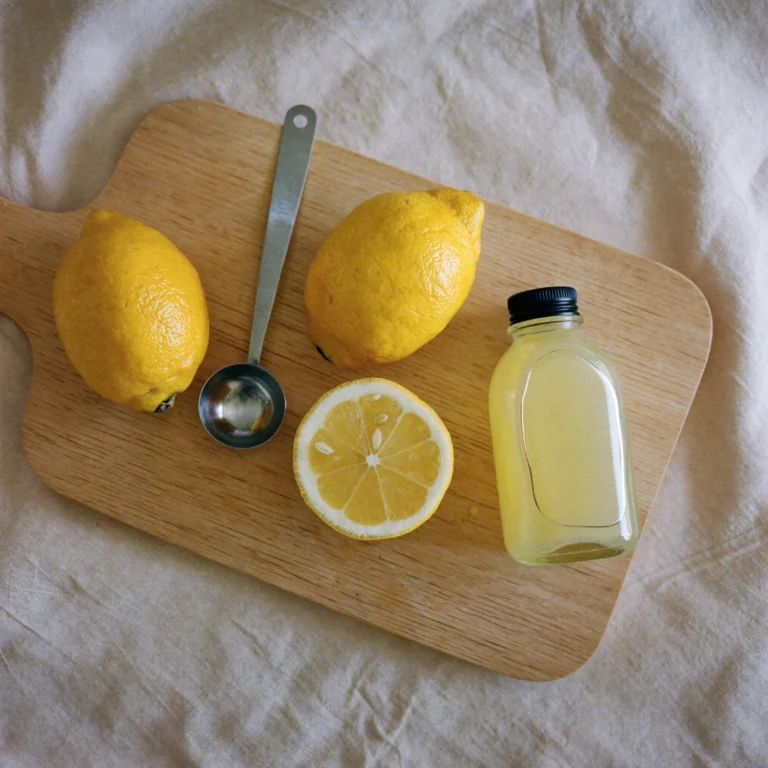
Yes, and the freezer is where a glut of lemons should go. Sue Mosbacher of UCCE El Dorado County Master Food Preservers freezes the juice in ice cube trays. In fact she says the cubes keep wonderfully for up to a year. Similarly, Utah State University Extension gives the same method in one line. It calls juicing and freezing the best way to preserve lemons.
How to store lemon juice in the freezer
Scrub the lemons, then juice them. Pour the juice into freshly washed ice cube trays, then lay wax paper over each tray. The loaded trays go in the freezer, as Sue Mosbacher describes. The next morning the cubes go into a freezer container, sealed and labelled. The label carries the contents, the freeze date and a use-by date. Each cube holds about two tablespoons, so measure one tray once and you will not guess again. A bigger batch goes into jars instead. The National Center for Home Food Preservation squeezes with a juicer that does not press oil from the rind. It then packs the juice in glass. UC Agriculture and Natural Resources leaves 1 1/2 inches of headspace. That space matters, because Penn State Extension points out that liquid expands when frozen.
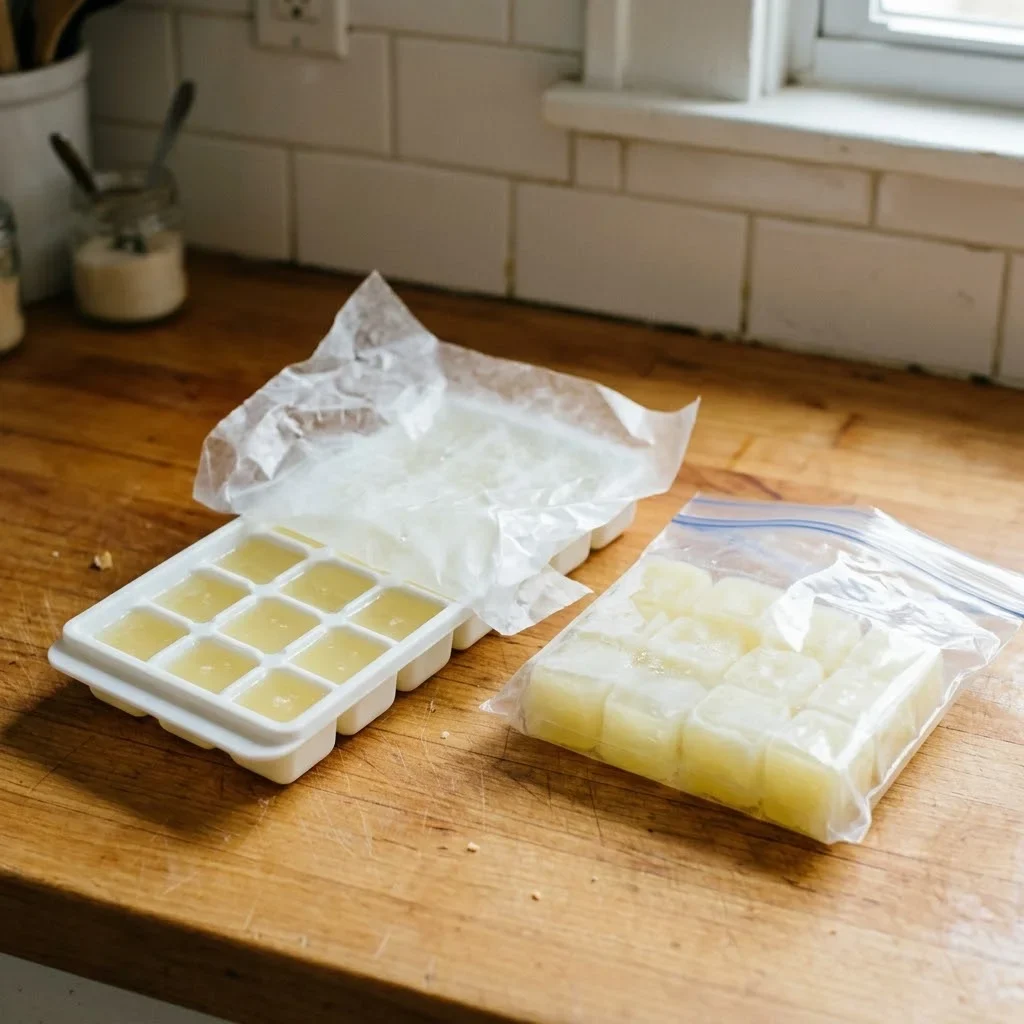
Cubes under wax paper, then bagged the next morning.
Cubes under wax paper, then bagged the next morning.
How long does frozen lemon juice keep?
Frozen lemon juice holds its quality for about a year, according to Sue Mosbacher. She also adds the part the charts leave out. The juice will still be good after that, she writes, but the quality starts to lessen. Even so, the item is still safe to eat. Colorado State University Extension gives most fruit 8 to 12 months at 0°F or below. So the two figures sit close together. Either way, a freezer figure is a quality clock rather than a safety one.
Does freezing change lemon juice?
Freezing costs lemon juice less than it costs most foods, which is why extension services recommend it here. Colour is the one thing that drifts. So Colorado State University Extension adds 3/4 teaspoon of ascorbic acid per gallon to prevent darkening. Sugar is optional. The National Center for Home Food Preservation offers 2 tablespoons per quart, or none at all. That is because sugar here is for flavour and colour rather than preservation. Use glass, though, since both the Center and UCCE El Dorado warn that other containers bring off-flavors. Lemon extract is a different product on a different clock, which the lemon extract guide covers.
How to tell if lemon juice has gone bad
Unlike milk, lemon juice does not fail loudly. Three of the five stages below are about quality, and two are not. Cloudiness and a darker colour are ordinary, whereas fizz, mold and a fermented smell end the jar. Still, one rule covers the lot. UCCE El Dorado says never to taste food that looks or smells strange. That is because most bacteria that cause foodborne illness are odorless, colorless, and tasteless.

Verdict: use it
Bright lemon juice
Pale yellow and sharp-smelling, with pulp that settles but stirs back in. This is juice well inside its window, so use it anywhere the recipe asks.
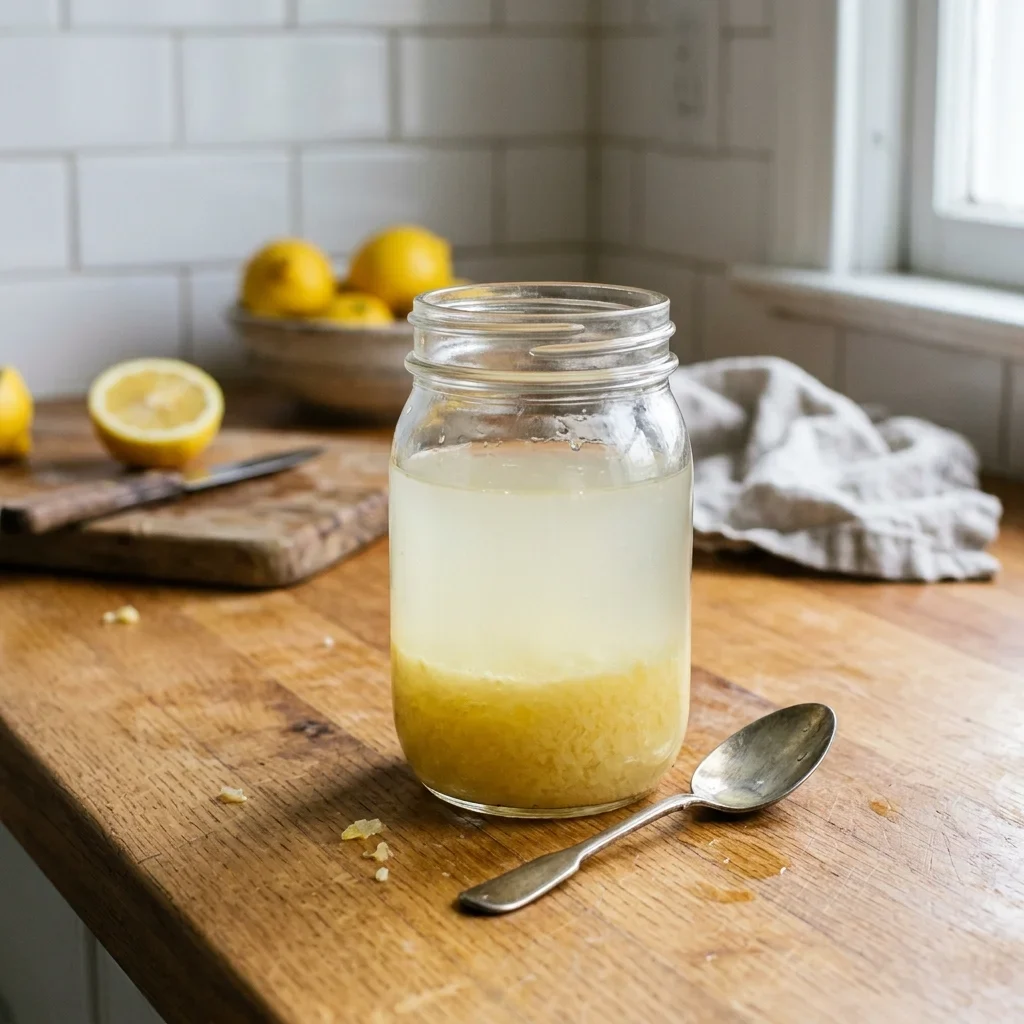
Verdict: use it
Cloudy lemon juice
A haze through the jar, or a layer that has separated out. Neither one, however, is spoilage by itself. In fact the apple cider guide makes the same point. Oregon State University Extension says fresh pressed cider has a cloudy appearance. So shake the jar, then smell it.

Verdict: cook with it
Darkened lemon juice
A duller, browner yellow than the day it was squeezed. Colorado State University Extension treats darkening as a colour fault, and it offers ascorbic acid to prevent it. So this is quality rather than safety. Use it in cooking, where the colour will not show.
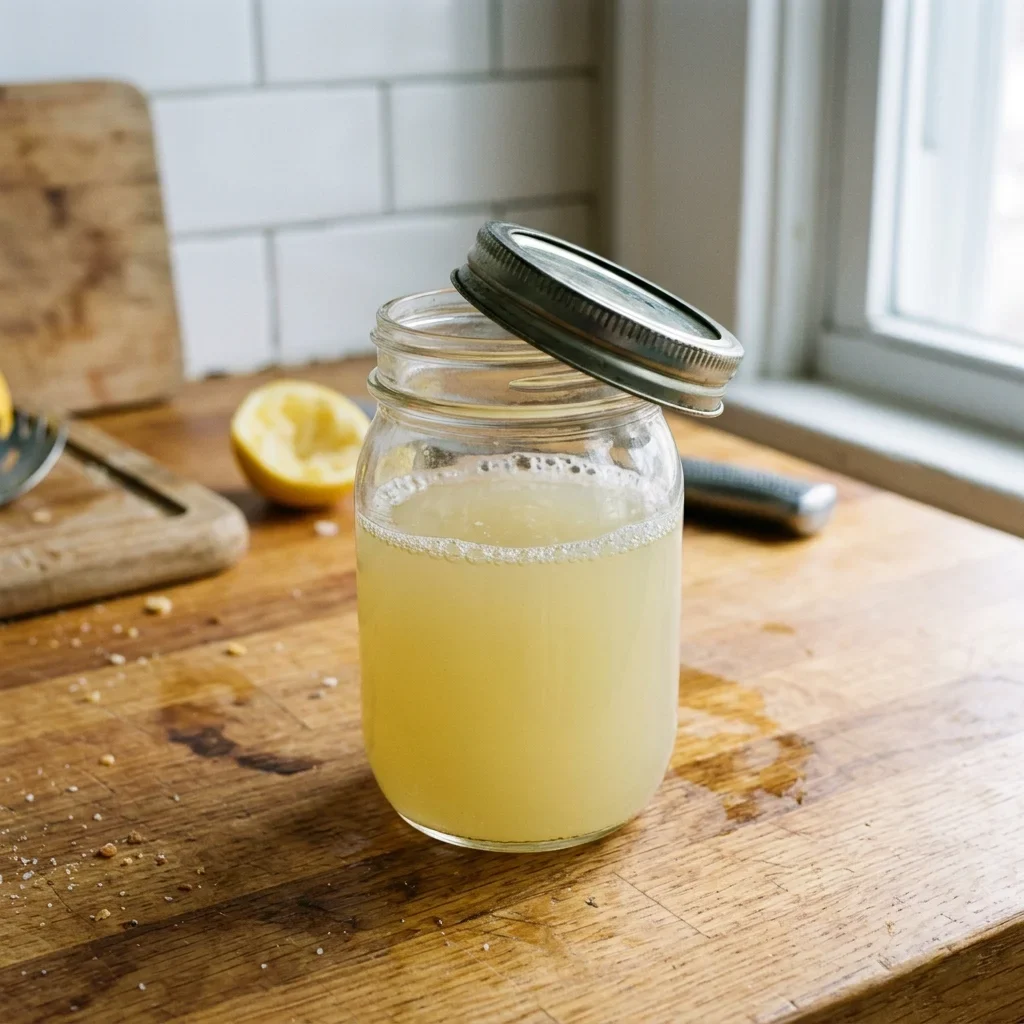
Verdict: throw it out
Fizzing lemon juice
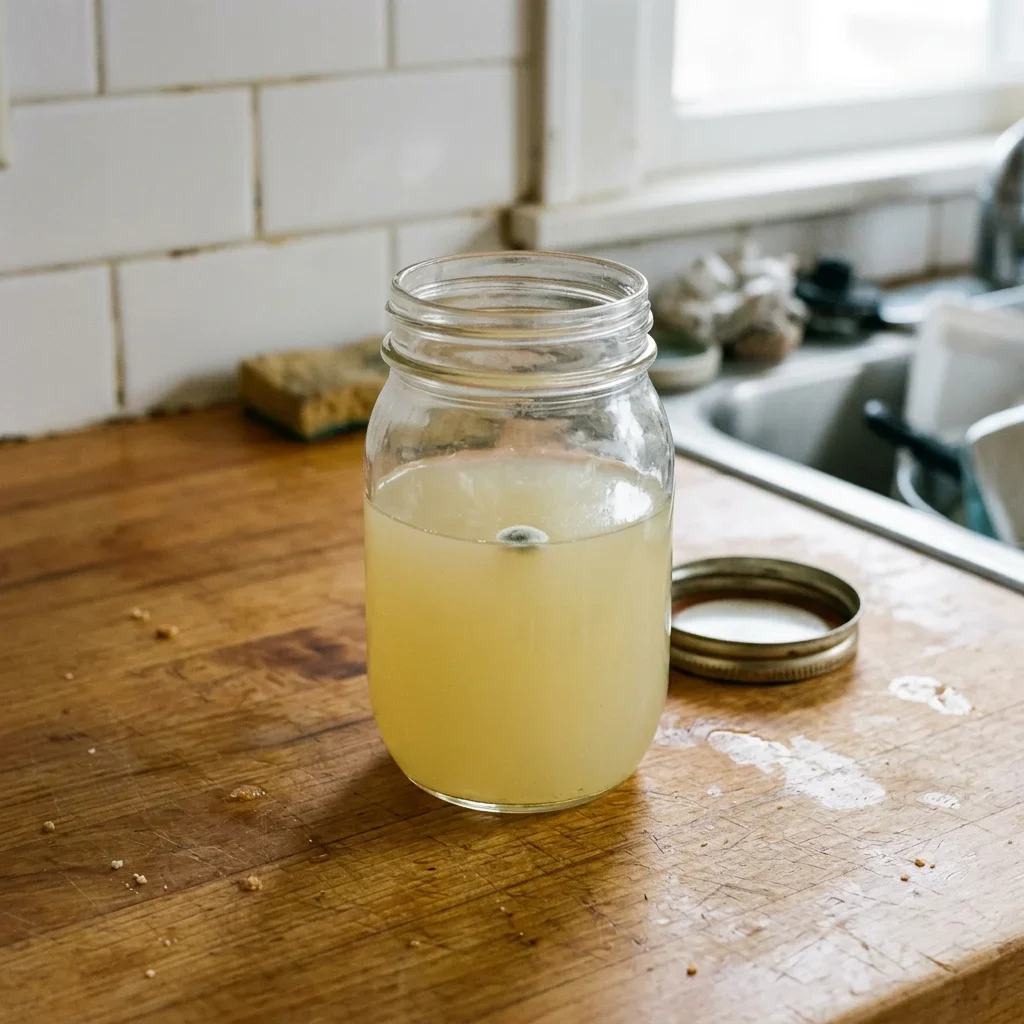
Bubbles, a hiss on opening, or a lid that pushes back. Something is fermenting the sugars. Oregon State University Extension describes where that ends, since fermented juice becomes an alcoholic beverage. No source we opened gives a home test that separates early fermentation from spoilage. So pour it away rather than tasting it.
Verdict: throw it out
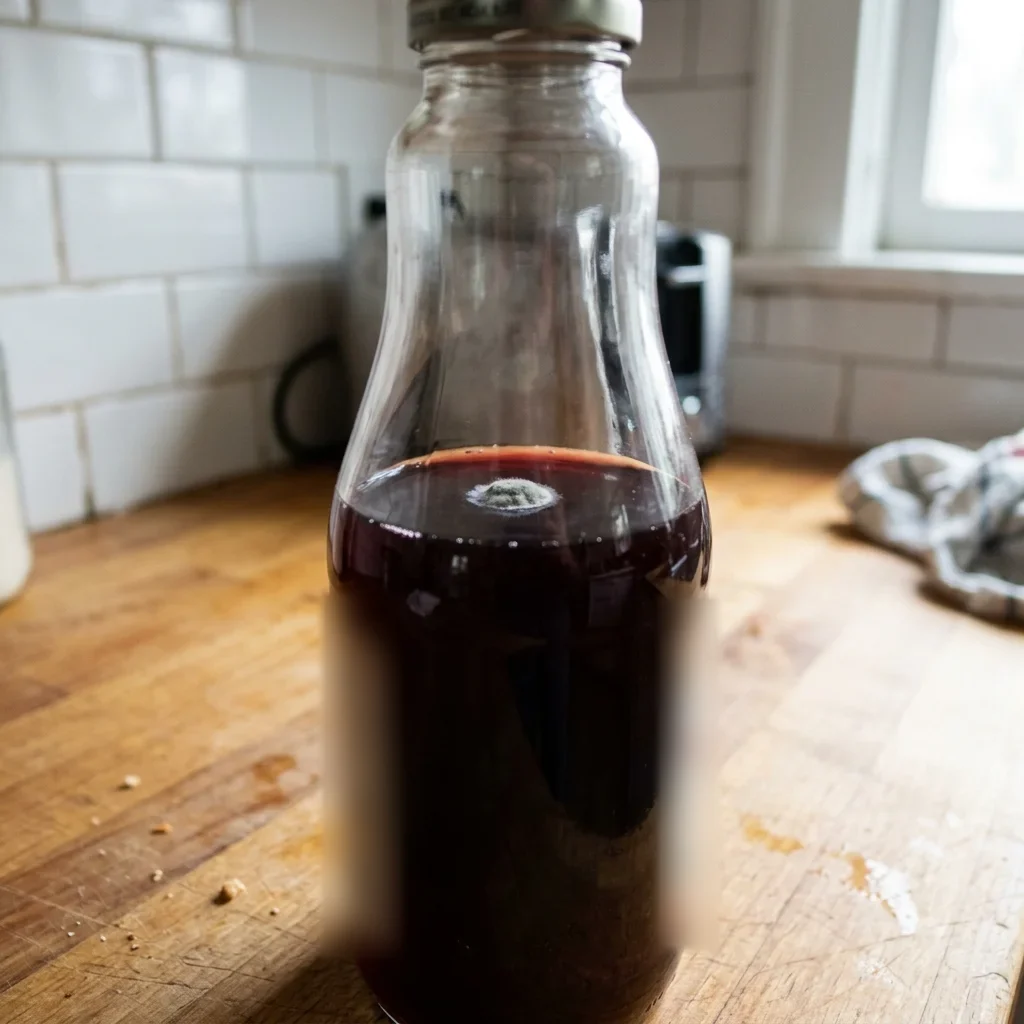
Sour-smelling or moldy lemon juice
A sour, yeasty or alcoholic smell, or fuzz on the surface or around the rim. The smell usually comes first, because fermenting juice turns alcoholic, as Oregon State University Extension describes. Mold is the rarer, visible sign. Either way, pour the juice away rather than tasting it, then wash the jar and the shelf it stood on.
Is lemon juice safe to use after the date on the bottle?
A date on a lemon juice bottle is a quality marker rather than a safety deadline. Clemson Cooperative Extension gives commercial high-acid foods 12 to 18 months for best quality. It also names what disqualifies a container: bulging lids, leaks, spurting contents, off odours or mold. So check the seal and the smell first. Even so, a bottle open in the fridge for months is better used in cooking than poured over a salad. That is because nobody we opened publishes a figure for it.
Lemon juice substitutes
Out of lemon juice, or did the last jar have to go? Then one of these will stand in.
Substitute
Works best in
What changes
Bottled lemon juice
Canning and baking
Standardized acidity, so it is the only safe choice in a canner.
Frozen juice cubes
Dressings, drinks and sauces
About two tablespoons a cube, and good for a year.
Lime juice
Drinks and marinades
Sharper and more floral, and it freezes the same way.
Citric acid
Canning, where acidity is the point
K-State gives 1/4 teaspoon per pint of tomatoes.
Mistakes people make when they store lemon juice
These are the ways people store lemon juice that cost them the most, although each one has a quick fix.
Cutting an unwashed lemon. Pathogens on the peel travel inside with the knife, so scrub the outside first, as UCCE El Dorado asks.
Leaving a jug out through a party. UF/IFAS Extension gives perishable food 2 hours at room temperature, or 1 hour above 90°F, so chill it between pours.
Acidifying canned food with fresh juice. Its pH cannot be guaranteed, so use bottled juice in the canner instead.
Filling a jar to the brim before freezing. Liquid expands, so Penn State Extension leaves headspace. UC Agriculture and Natural Resources asks for 1 1/2 inches in a narrow jar.
Tasting a jar that smells wrong. Most bacteria that cause foodborne illness are odorless, colorless and tasteless, so throw it out instead.
Keeping the opened bottle in the fridge door. The door is the warmest part, while Clemson wants the fridge at 40°F or below.
Binning cloudy juice. Pulp settles and juice separates, so shake it and smell it before you decide.
Sources
Freezing Fresh Lemon Juice, Sue Mosbacher, UCCE El Dorado County Master Food Preservers, March 2012, on scrubbing the peel before cutting, freezing juice in ice cube trays under wax paper, labelling the container with the contents, freeze date and use-by date, about two tablespoons a cube, up to a year of good quality, and using bottled juice rather than fresh for canning.
Preserving Citrus, UCCE Master Food Preservers of El Dorado County, October 2025, on squeezing citrus without pressing oil from the rind, packing juice in glass jars to avoid off-flavors, and never tasting food that looks or smells strange because most bacteria that cause foodborne illness are odorless, colorless and tasteless.
Oranges: Safe Methods to Store, Preserve, and Enjoy, Jennifer E. Snart, Mary Lu Arpaia and Linda J. Harris, UC Agriculture and Natural Resources publication 8199, January 2006, on bacteria surviving for long periods in fruit juices, Salmonella outbreaks traced to unpasteurized juice, pathogens moving from the rind into the flesh during juicing, cut fruit keeping 1 to 2 days refrigerated, the 2-hour and 1-hour limits, and a 1 1/2-inch headspace for freezing juice.
Freezing Citrus Fruits, National Center for Home Food Preservation, University of Georgia, on selecting firm fruit free from soft spots, 2 tablespoons of sugar per quart of juice, and packing juice in glass jars to avoid off-flavors.
Fresh Lemons vs. Bottled Lemon Juice for Canning, Karen Blakeslee, K-State Research and Extension, July 2023, on bottled lemon juice being standardized per FDA regulations, the inconsistent pH of fresh lemons, and 1/4 teaspoon of citric acid per pint of tomatoes.
Safety of Stored Foods, Pamela Schmutz and E. H. Hoyle, Clemson Cooperative Extension factsheet HGIC 3520, revised April 2020, on a refrigerator at 40°F or below, a freezer at 0°F or below, commercial high-acid foods such as juices keeping 12 to 18 months, a pantry at 50 to 70°F, storage time dropping above 75°F, opened commercial product being perishable, and discarding containers that bulge, leak or smell off.
FSM 356: Making Pasteurized Apple Cider at Home, Susie Craig, Food Safety in a Minute, Washington State University Extension, on Salmonella and E. coli O157:H7 in unpasteurized juice, pasteurizing at 160°F with a thermometer, and refrigerating juice up to five days or freezing it for longer storage.
What You Need to Know About Juice Safety, U.S. Food and Drug Administration, content current as of March 2024, on the required warning statement for untreated juice, children, older adults, pregnant people and people with weakened immune systems being at risk, the exemption for juice sold by the glass, and keeping untreated products refrigerated.
FOOD SAFETY: The 2-hour rule, Brenda Marty-Jimenez, UF/IFAS Extension Broward County, October 2023, on discarding perishable food left at room temperature longer than 2 hours, 1 hour above 90°F, and keeping cold food at 40°F or below.
Freezing Citrus-Juice, Preserve Smart, Colorado State University Extension, on 3/4 teaspoon of ascorbic acid per gallon of juice to prevent darkening, headspace by container type, freezing to 0°F or below, and most fruit keeping 8 to 12 months.
Why Allow Headspace when Canning and Freezing Food?, Martha Zepp, Penn State Extension, updated February 2024, on liquid expanding when frozen and 1 1/2 inches of headspace for juice in narrow jars.
Fruit and Vegetable Guide Series: Lemons, Susan Hawes, Utah State University Extension, July 2023, on lemons keeping about 2 weeks at room temperature and about 6 weeks bagged in the refrigerator, using them quickly after cutting, and freezing fresh-squeezed juice in ice cube trays.
Preserving foods: Fruit juice and apple cider, Nellie Oehler, Oregon State University Extension Service SP 50-455, revised July 2024, on fresh pressed juice looking cloudy, pasteurized cider keeping about a week in the refrigerator, 2 inches of headspace for freezing, and fermented juice becoming an alcoholic beverage.
Storage times and safety advice on this page come from the sources above. Food safety depends on conditions I cannot see, so read the Disclaimer, and if in doubt, throw it out.
Other ingredient guides
Browse all guides


Share this guide
Never miss a guide
New ingredient guides when they go up, plus one storage tip worth knowing. Anything sponsored is labelled.

Emilly White