
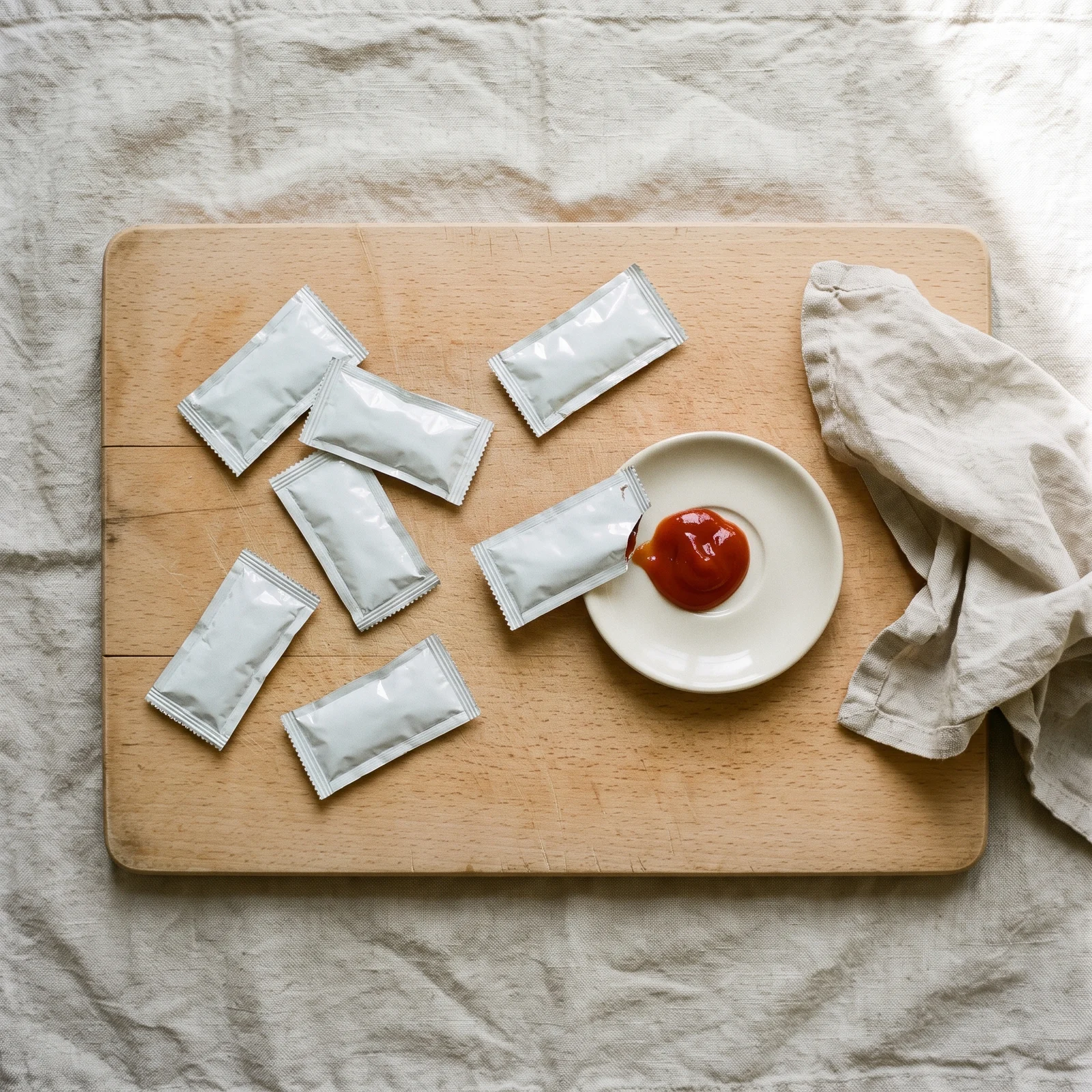
12 months
Sealed packets, somewhere cool, dark and dry at 50 to 70°F
6 months
Opened ketchup, covered, at 40°F or below
Not needed
A sealed packet already keeps a year in the cupboard
Have your ketchup packets gone bad?
See all 5 stages ↓ Use itA bright red ketchup packet
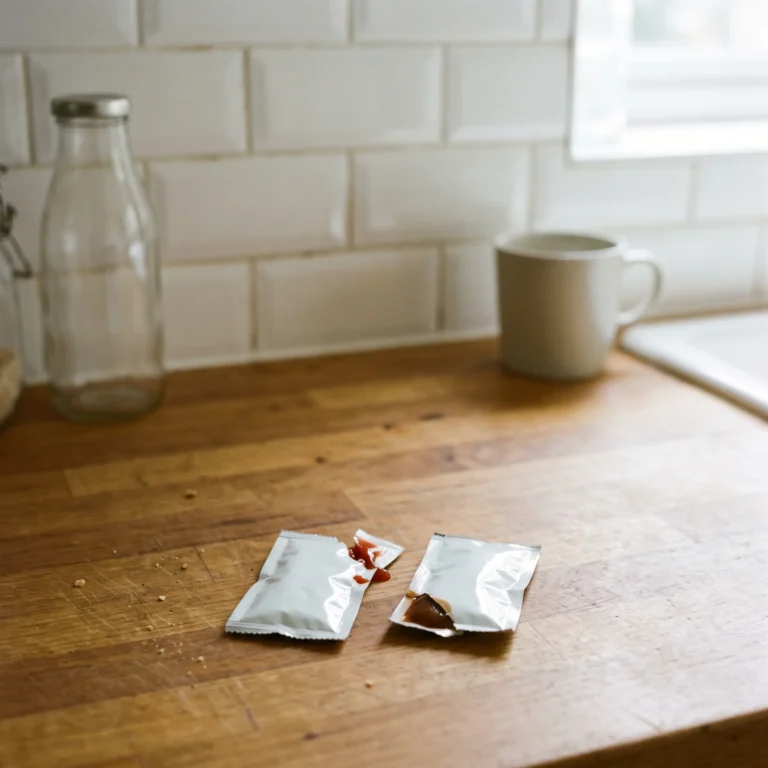 Use it upA ketchup packet that has darkened
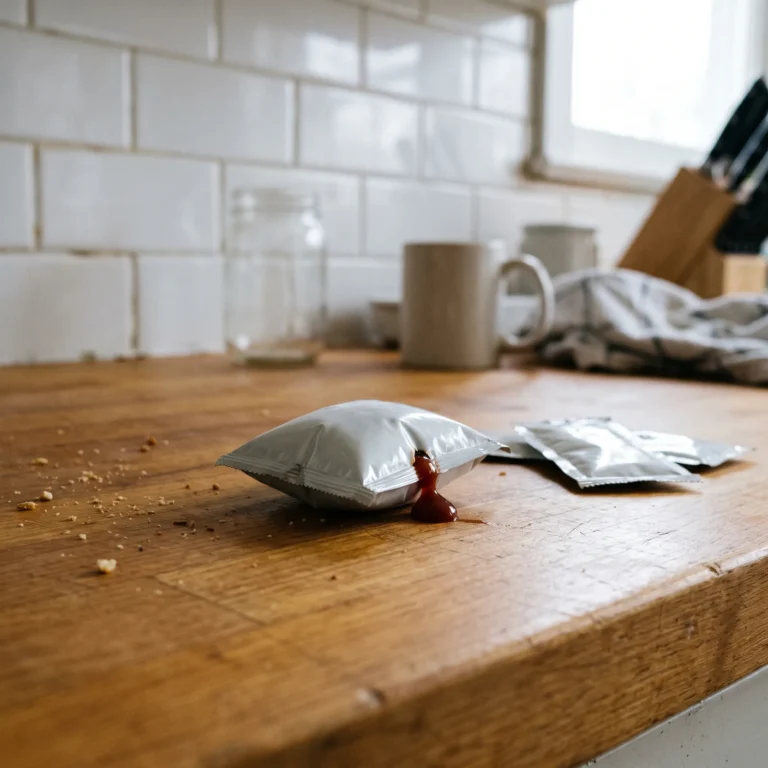 Throw it outA puffed or leaking ketchup packet
How to store ketchup packets is a cupboard question rather than a fridge one, because they are shelf-stable. No storage chart has a line for packets. The charts do give unopened ketchup 12 months in a cool, dark cupboard, though, and a sealed packet is unopened ketchup in a smaller container. Torn open, the rest is perishable.
What should you check before you store ketchup packets?
Two things decide how long a drawer of ketchup packets stays good, and neither is the date. The first is the seal, since an intact packet is sealed ketchup and a split one is open ketchup. The second is heat, because storage time drops away above 75°F. So the handful of sachets from last week's takeaway is fine, while the ones in the car are on a shorter clock.
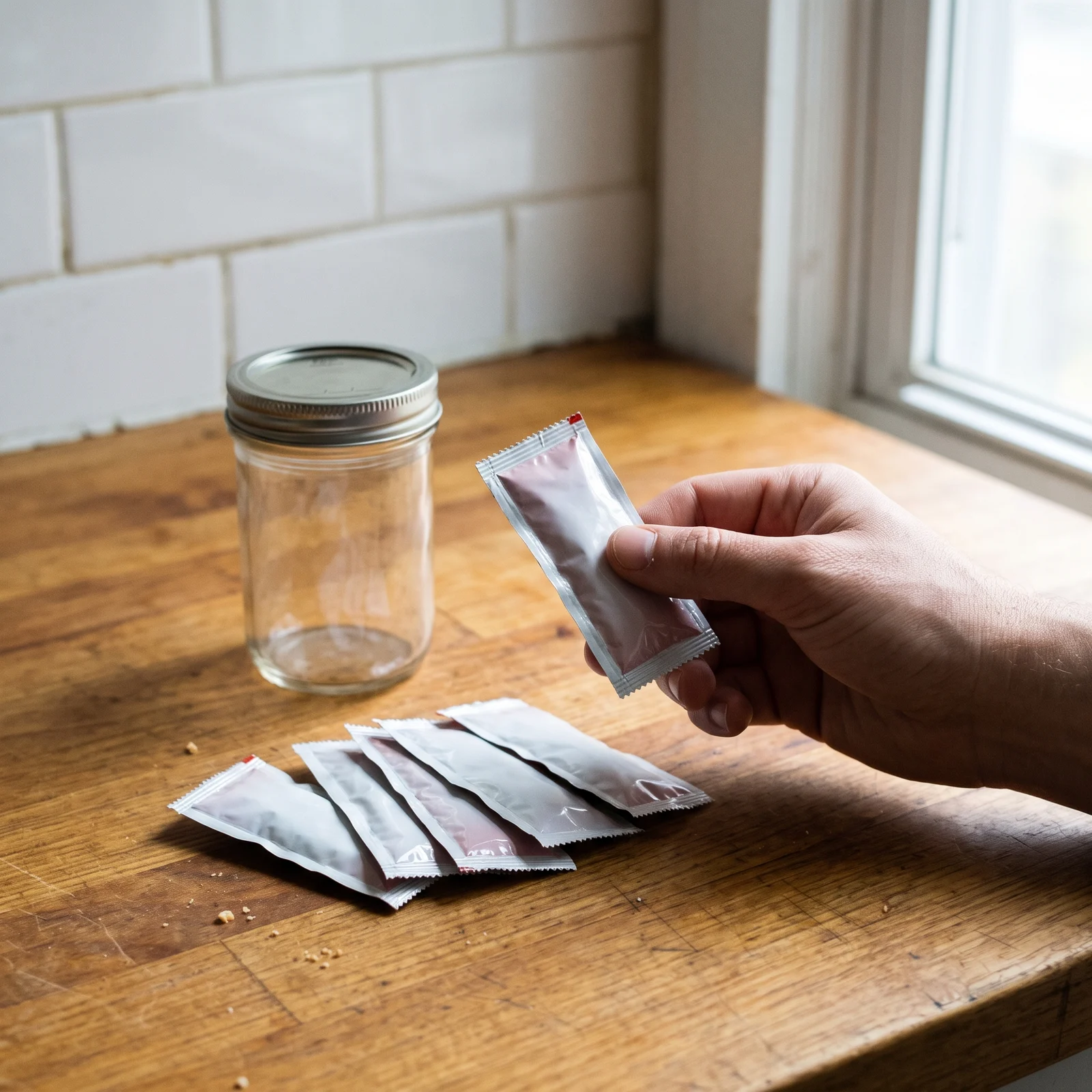
The seal is what matters, so a cool, dark drawer finishes the job.
Ketchup keeps itself. Vinegar takes it down to a pH of roughly 3.6 to 3.9, well under the 4.6 line that acidified foods have to meet, and at that acidity the bacteria behind botulism cannot grow or make toxin.
The packet has to be intact. Run your thumb over each one, because a pinhole or a split seam turns a shelf-stable packet into an open condiment.
Cool, dark and dry is the target, at 50 to 70°F. Warm spots near a range, a furnace, hot pipes or a sunny window all shorten the time, so a kitchen drawer beats a shelf above the cooker.
Sugar and salt do their part too, since they hold down the water the microbes would need. That is why ketchup, unlike mayonnaise, is not on the list of foods that have to stay cold.
How to store ketchup packets so they last
To store ketchup packets so they last, keep them sealed, dry and somewhere cool and dark between 50 and 70°F. Treat them like any other shelf-stable pantry item. The cupboard is not a compromise here, because an unopened packet gains nothing from the fridge.
Where should you keep ketchup packets?
Keep them in a lidded jar or tub in a cool, dark, dry cupboard, at 50 to 70°F. A jar keeps them from splitting against cutlery, and the cupboard keeps them out of the light. Avoid the spots that run warm, such as above the cooker, beside the kettle or on top of the fridge. Label the jar with the month they went in, then use the oldest first.
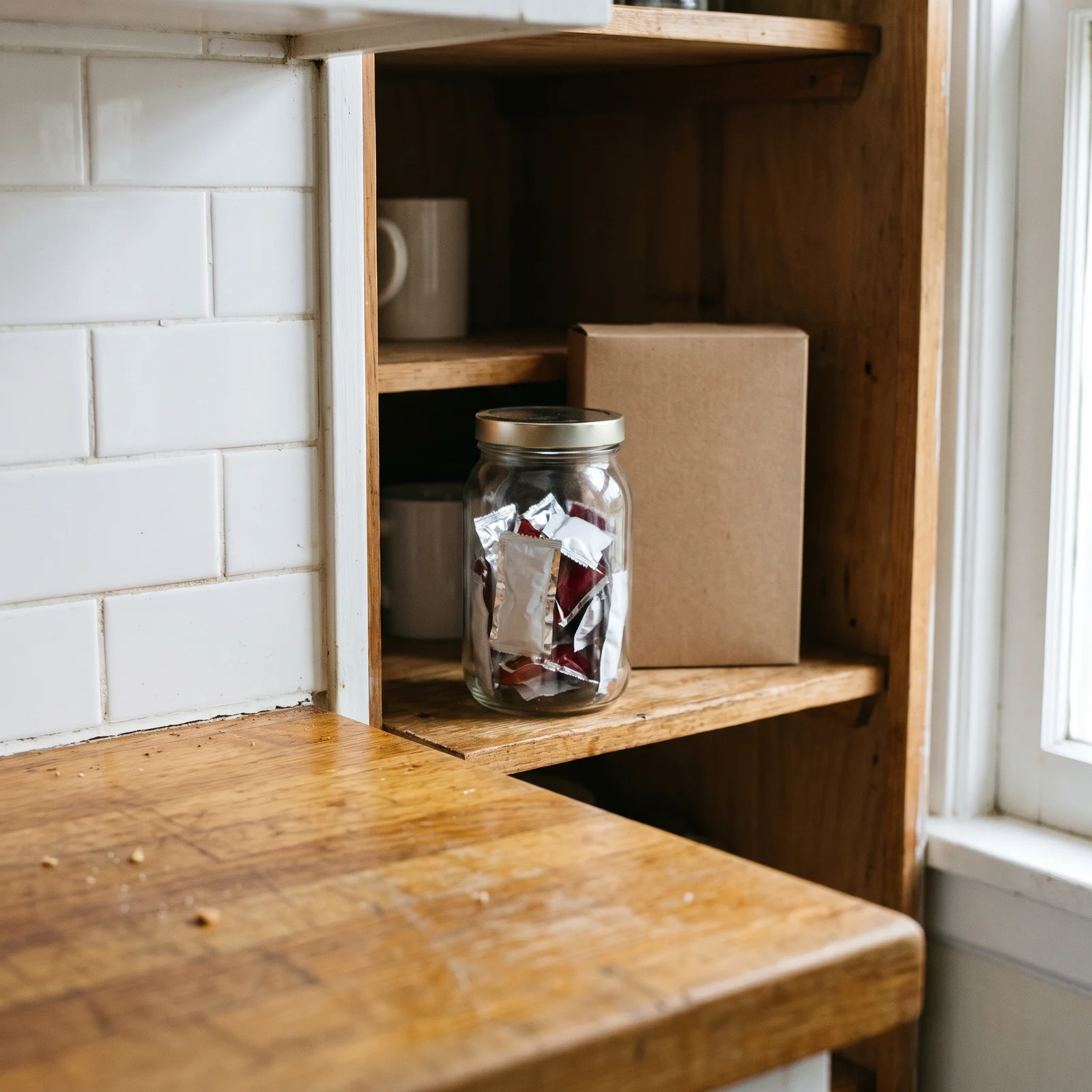
Keep them in a lidded jar in a cool cupboard, because the oldest should come out first.
How long do ketchup packets last?
Plan on about 12 months for a sealed packet, which is the figure the storage charts give unopened ketchup in the cupboard. Nothing we could open puts a number on a packet itself. The figures quoted online, 9 months or 270 days, trace back to the manufacturer through news articles rather than to anything published, so they are not used here. High-acid tomato products in general are given 12 to 18 months, so a year is a fair, conservative plan.
That is a quality window, not a safety deadline. A sealed, acidic packet kept cool does not become dangerous on its anniversary, although the colour and the flavour do fade. So treat 12 months as the point to use them up rather than the point to panic.
Do ketchup packets need to be refrigerated?
No, sealed ketchup packets do not need to be refrigerated. Refrigeration makes a negligible difference to unopened ketchup, which is why the packets sit in a basket on the counter at every takeaway. Once a packet is open, though, the rule flips. An opened condiment is perishable, so whatever you do not use goes in the fridge.
Do ketchup packets expire?
Most packets carry no date at all, so there is usually nothing to expire. Where a packet does carry a date, it is a best-by date, and those mark best quality rather than safety. Correctly stored ketchup is still safe past the date on the bottle. So judge a packet by the seal, the smell and the colour instead of the calendar.
Can ketchup packets sit out overnight?
Yes, a sealed ketchup packet can sit out overnight, because that is where packets live anyway. The 2-hour rule covers potentially hazardous foods such as meat, eggs, cut fruit, cooked dishes and dairy, and bacteria multiply fastest in foods that are moist and low in acid. Ketchup is neither. An opened packet is a different question, however, so squeeze the rest into a pot and chill it. The food left out overnight guide covers the food on the table beside it.
Can you freeze ketchup packets?
There is no reason to freeze ketchup packets, and no storage guidance asks you to. A sealed packet already keeps about a year in a cupboard, so the freezer buys you nothing and costs you a drawer. Keep the freezer for the foods that need it, and give the packets a jar.
What do you do with a ketchup packet you have opened?
Squeeze the rest into a small pot, put a lid on it and keep it in the fridge at 40°F or below. The charts give opened ketchup about 6 months in the fridge, and the moment a container is opened it counts as perishable. Air is the other reason to cover it, since it speeds the fading and the flavour loss. A squeezed packet folded over on itself is not a seal, so it does not count.
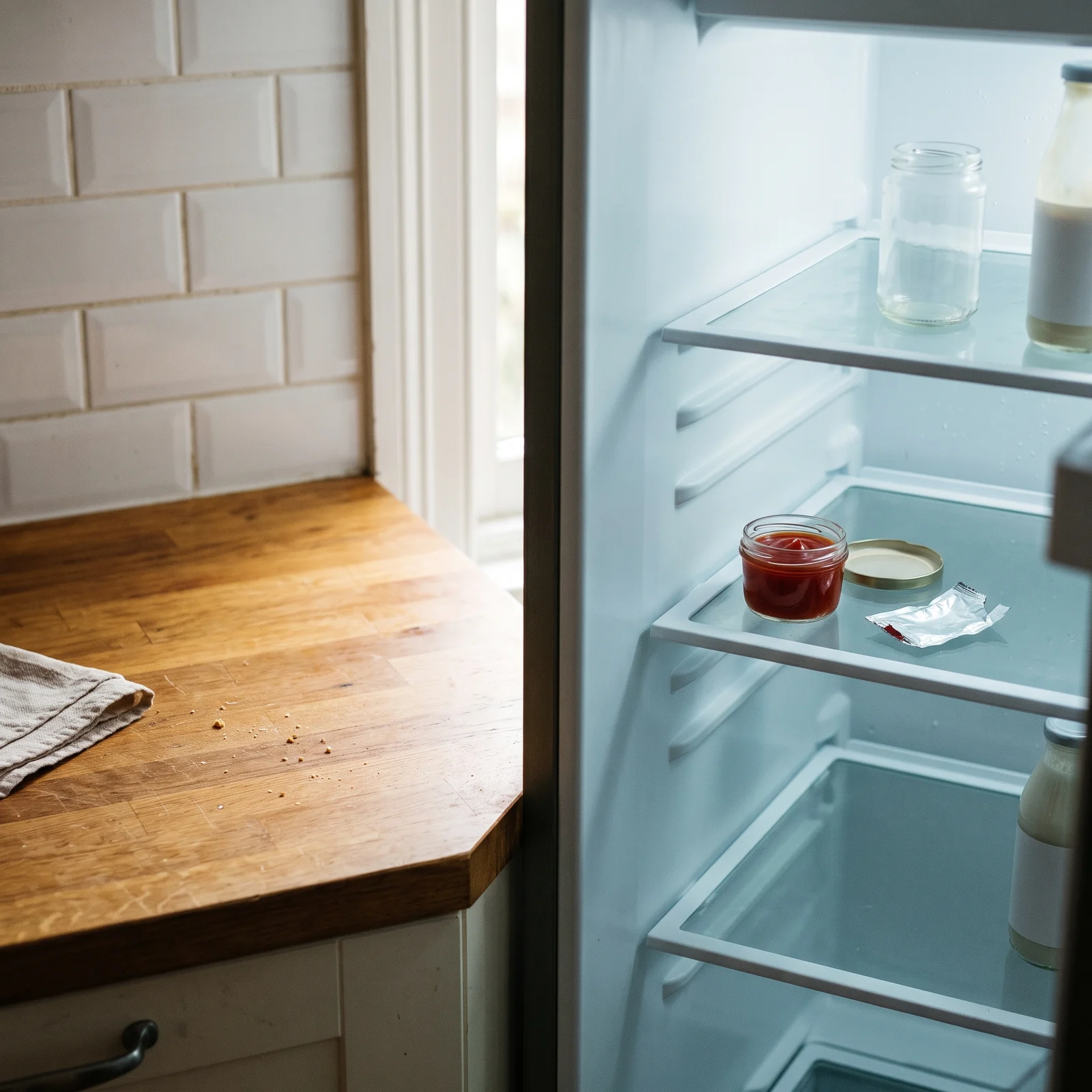
Opened means perishable, so the rest belongs in the fridge.
How long do ketchup packets last in a hot car?
Far less long than in a drawer, and no source gives a figure for a glove box. What the guidance does say is that storage time falls away sharply above 75°F, and that warm, sunny spots are the ones to avoid. A car in summer is well past 75°F for hours at a time. So the packets stay safe while the seal holds, yet they darken and flatten in flavour much faster than the cupboard ones.
Are ketchup packets different from a bottle?
A packet is simply unopened ketchup in a very small container, which is the advantage. A bottle starts losing quality the day you open it, because air gets at it every time. A packet has no air in it until you tear it, so it holds its colour and flavour longer than the ketchup in the door of your fridge.
How to tell if ketchup packets have gone bad
Ketchup packets rarely spoil, and that is the honest answer. Acid, salt and sugar make the inside of a sealed packet a bad place for microbes, so most of what you will see is quality fading. Two things do end a packet, though, and both are about the packet rather than the ketchup. Here is what each stage means.
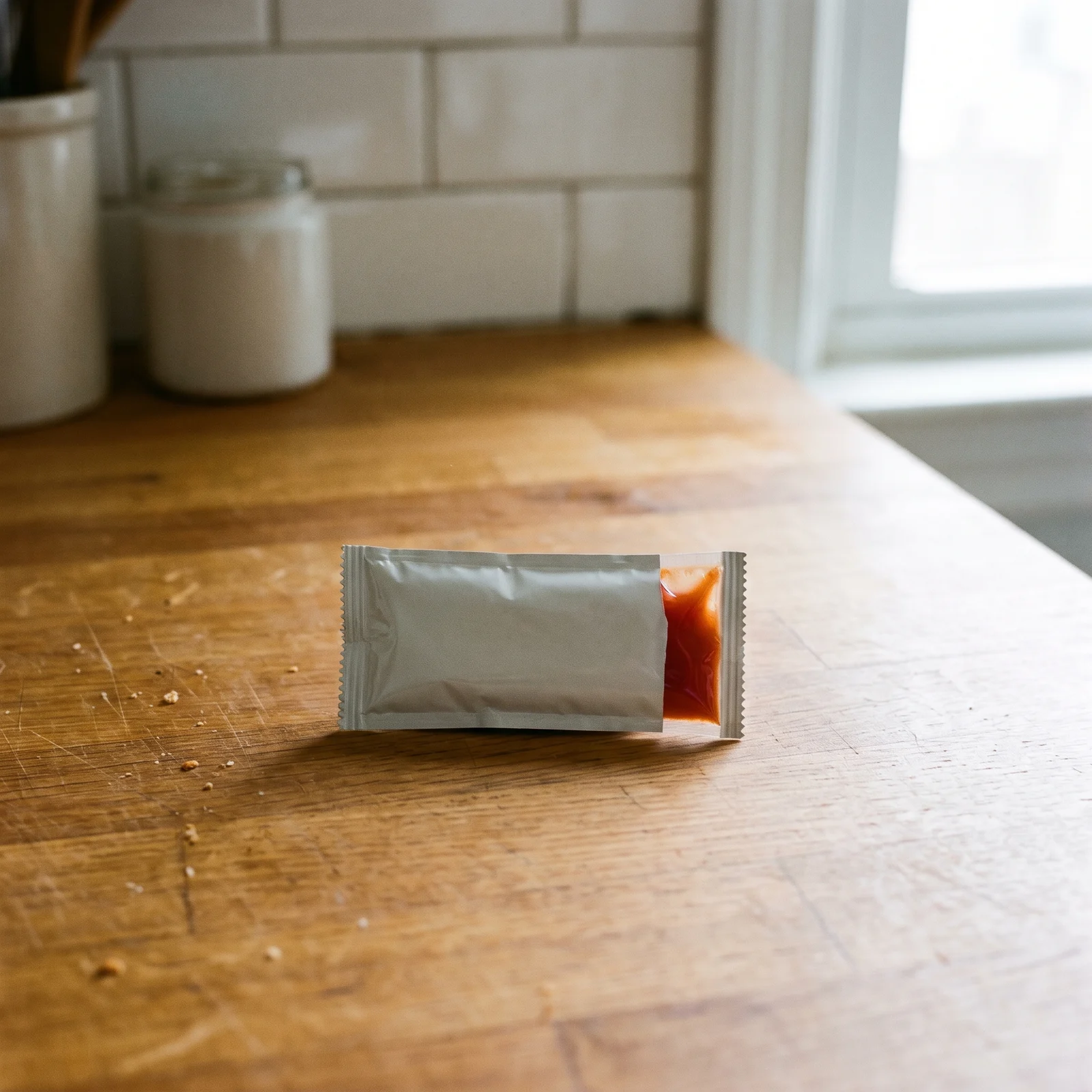
Verdict: use it
A bright red ketchup packet
The packet is firm, flat and intact, and the ketchup inside is bright red at the corners. A packet in that state is good, whatever the drawer has seen. So use it as it is, and keep the rest in a jar somewhere cool.
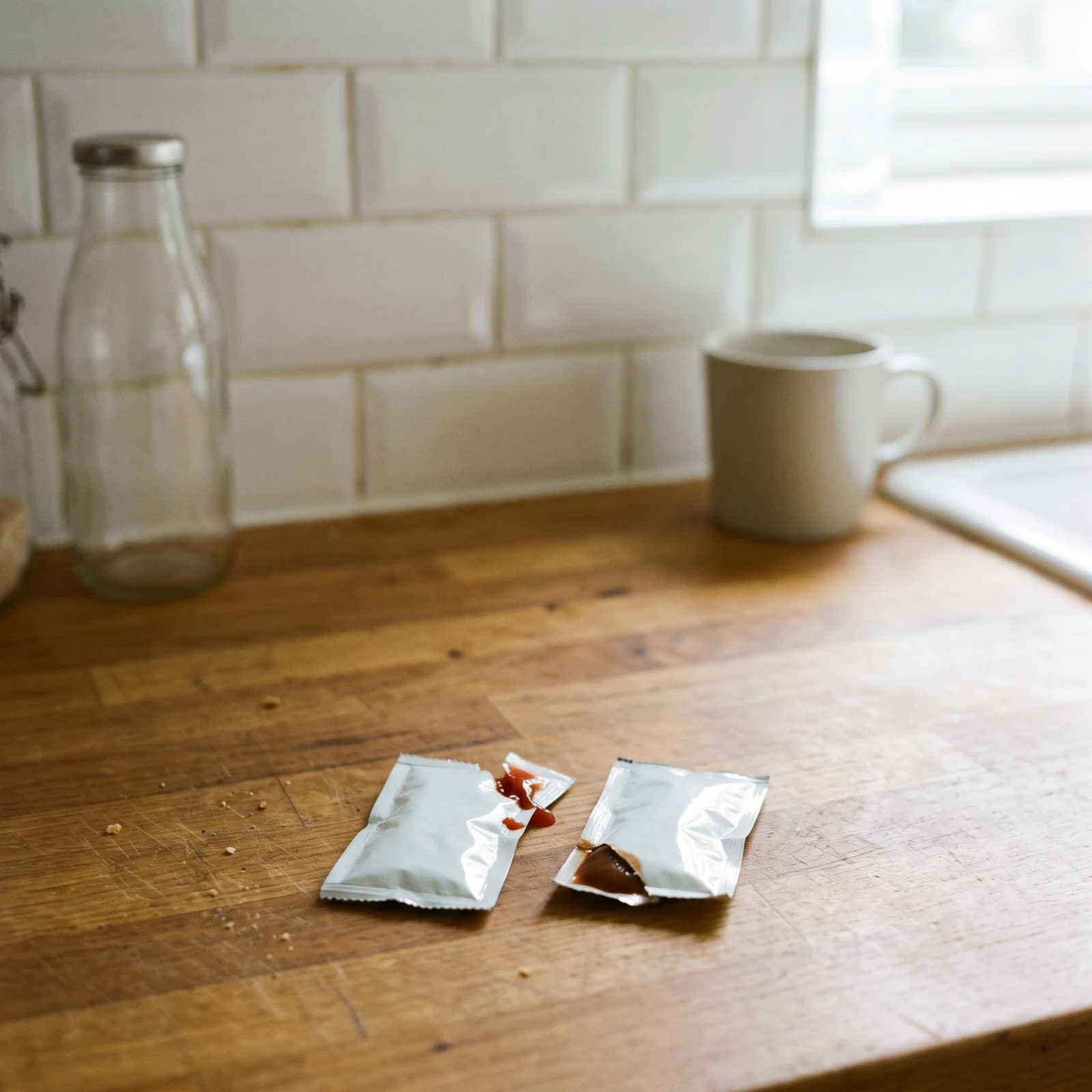
Verdict: use it up
A ketchup packet that has darkened
The ketchup has gone from bright red towards brick or brown, visible at the thin corner of the packet. Colour is the first thing to fade in ketchup, and it is a quality change rather than a safety one. So these are the packets to use up in a stew or a marinade, where the colour hardly matters.
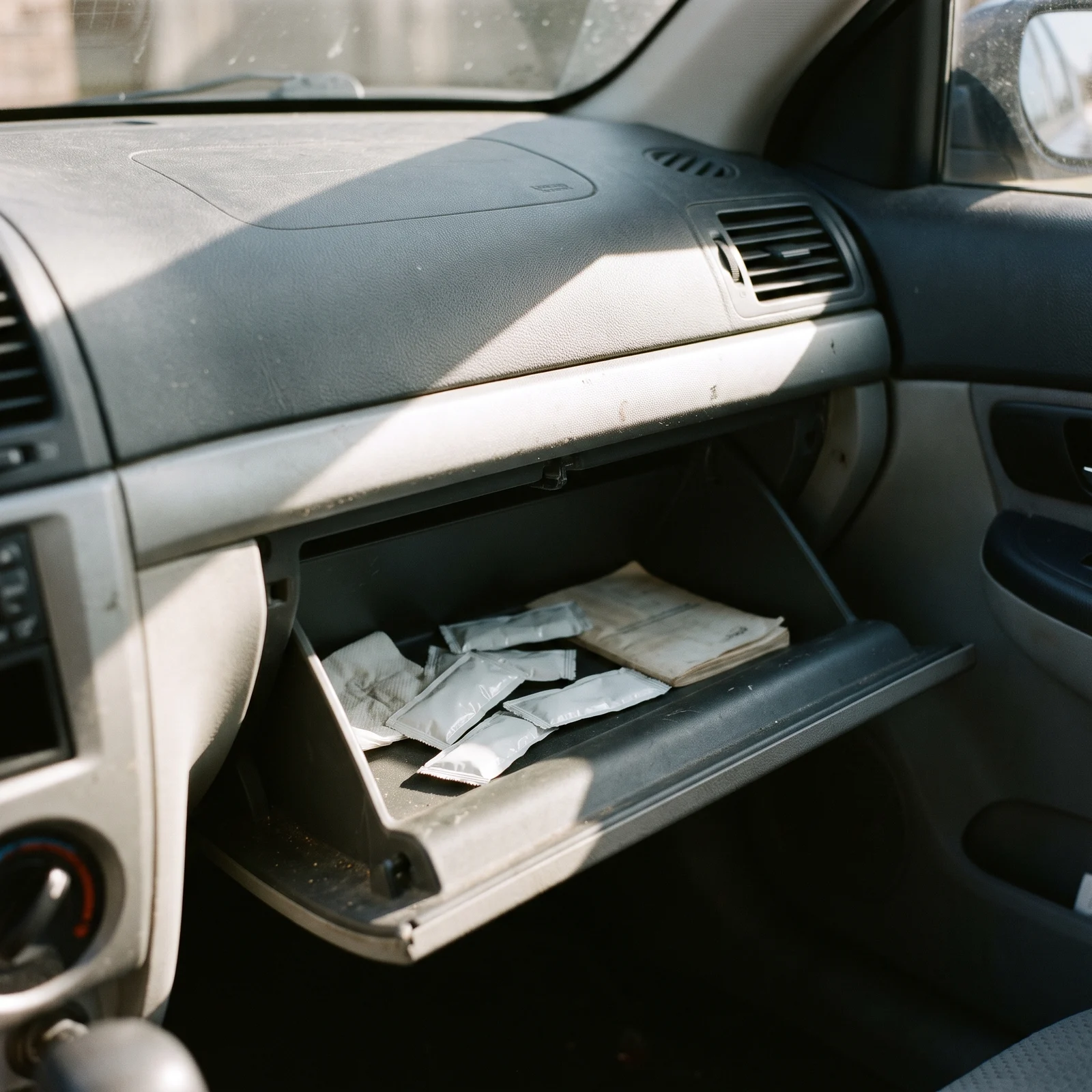
Verdict: use it soon
A ketchup packet from a hot car
The packet has lived in a glove box or a door pocket through a summer. Heat is what the storage guidance warns about, since time on the shelf shortens sharply above 75°F. The seal is what matters for safety, so an intact packet is not dangerous. Even so, use these first, because they will be the dullest and the flattest of the lot.
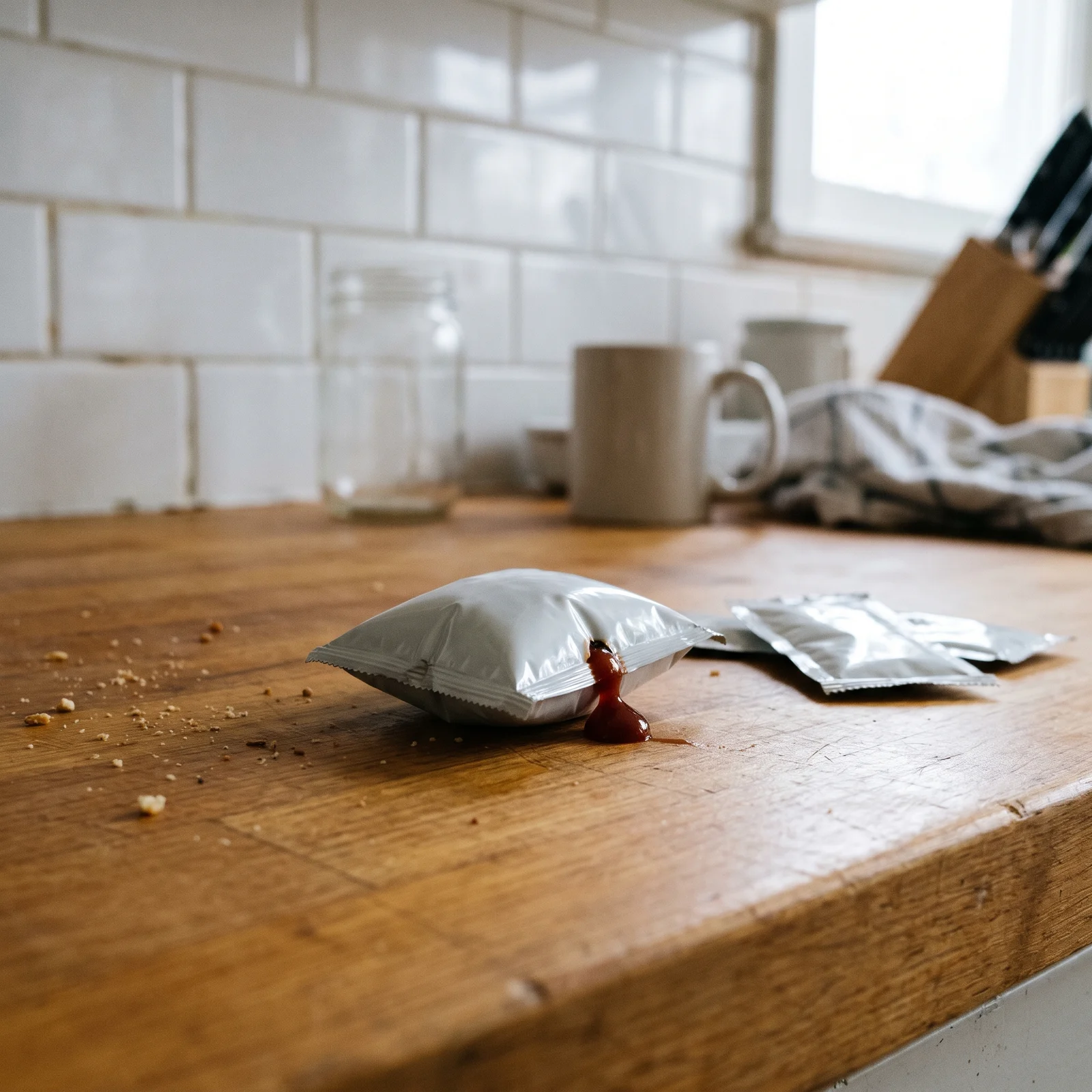
Verdict: throw it out
A puffed or leaking ketchup packet
The packet is swollen, sticky or weeping at a seam, or it spurts when you open it. The guidance names a bulging or leaking container as a sign of spoilage, along with liquid that spurts out on opening. So that packet goes in the bin, and so does any one that has split against a fork in the drawer.
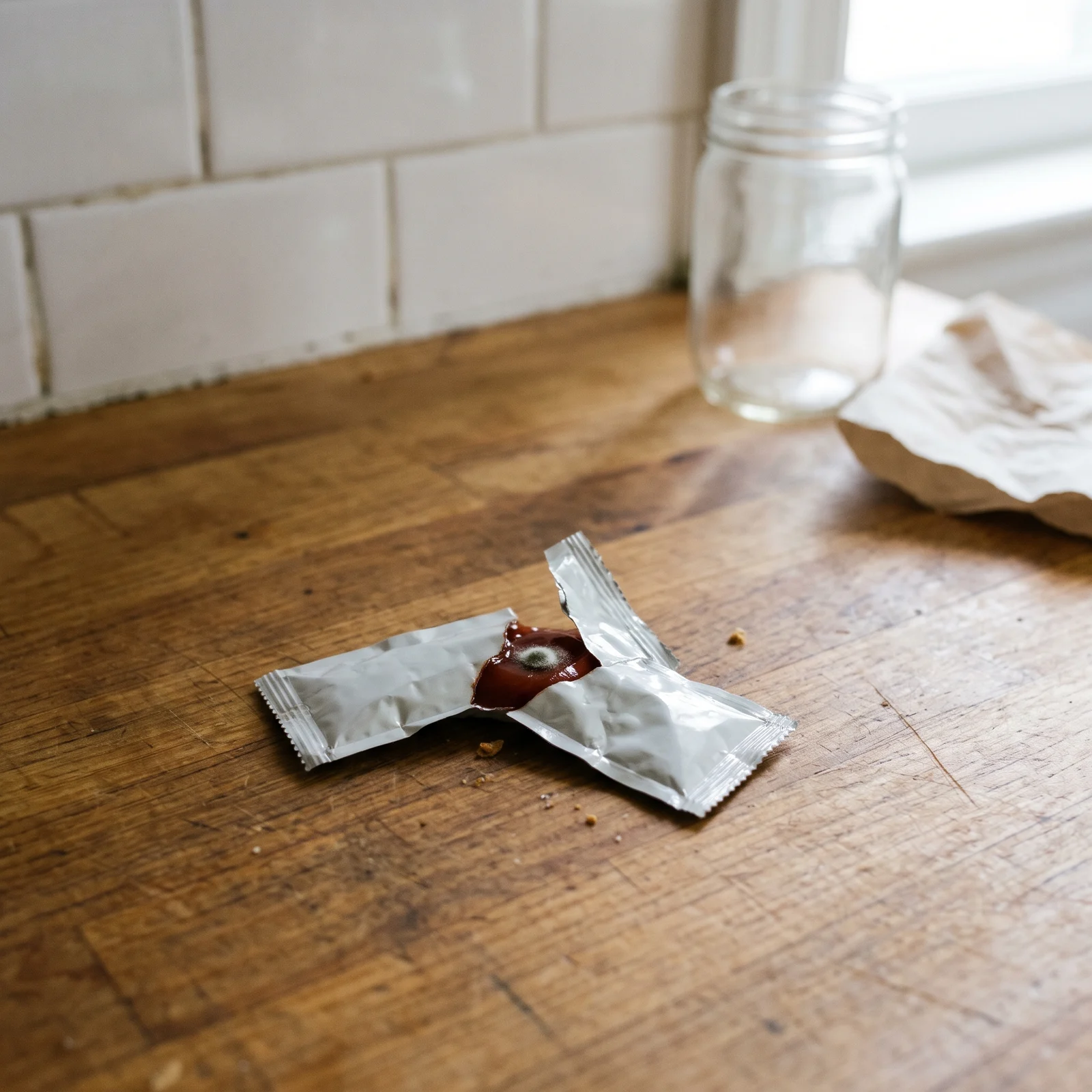
Verdict: throw it out
A ketchup packet that smells off or has mold in it
The ketchup smells sour, yeasty or simply wrong, or there is a fleck of mold inside the packet or around the tear. Mold growth, bubbling and unpleasant odours all mean the food goes out, and you never taste food that shows signs of spoilage to check it. So bin it without the taste test, and bin its neighbours if they were sitting in the same leak. The cocktail sauce guide sets out the same signs for an opened bottle.
How many ketchup packets should you keep?
Keep what you will use inside a year, since that is the sensible span for a sealed packet. A jar at the front of a cupboard is easy to rotate, and a bag at the back of a drawer is not. Date the jar when you top it up, then take from the oldest side, which is the same first in, first out habit the storage guidance asks for everywhere else. That way the question of whether a packet from 2023 is still good never comes up.
Ketchup packet substitutes
Out of packets, or did a split one spoil the drawer? Then one of these will stand in.
Substitute
Works best in
What changes
A bottle of ketchup
Everyday use at home
It keeps about 6 months in the fridge once opened.
Chili sauce
Burgers and meatloaf
The storage charts give it the same 12 months unopened.
Cocktail sauce
Something sharper with seafood
Ketchup plus horseradish, and the cocktail sauce guide has its times.
Mustard packets
The same drawer, a longer life
The charts give opened mustard a year, and the Dijon mustard guide explains why.
Mistakes people make when they store ketchup packets
These are the ways people store ketchup packets that cost them the most, so each one has an easy fix.
Keeping them loose in a drawer with the cutlery, where a fork eventually splits one open.
Leaving a handful in the car for the summer, when the time on the shelf drops away above 75°F.
Storing the jar on the shelf above the cooker, which is one of the warm spots the guidance tells you to avoid.
Folding over a packet you have opened and putting it back in the drawer, when opened ketchup is perishable.
Making room in the fridge for sealed packets that do not need it.
Tasting a packet that smells wrong, instead of binning it unopened.
Hoarding a bag of hundreds, then throwing the lot out because nobody knows how old it is.
Sources
Food Storage for Safety and Quality, Elizabeth L. Andress and Judy A. Harrison, University of Georgia Cooperative Extension publication FDNS-E-119, June 2011, on ketchup and chili sauce keeping 12 months unopened in the cupboard, on a pantry that is clean, free of pests, dry, cool and dark at 50 to 70°F, on avoiding storage near ovens, furnaces, water heaters or hot pipes where warm temperatures hasten undesirable changes, on labelling and dating food and using a first in, first out system, on refrigerators set at 35 to 38°F so food stays at or below 40°F, on bacteria multiplying rapidly in foods that are moist, rich in nutrients and low in acid when held between 40 and 140°F for more than two hours, on meat, poultry, fish, eggs, cut fruits and vegetables, cooked foods and dairy foods being the ones that must not sit out for more than two hours, and on throwing out food that shows mold growth, bubbling, bulging cans or lids or unpleasant odours.
Safety of Stored Foods, Pamela Schmutz and E. H. Hoyle with revisions by Faith C. Isreal, Clemson Cooperative Extension factsheet HGIC 3520, revised April 2020, on 50 to 70°F being the best temperature for storing canned foods, on storage time decreasing significantly above 75°F, on avoiding a warm place near hot pipes, a range or furnace or direct sunlight, on high-acid foods such as juices, tomatoes, fruits and pickles storing well for 12 to 18 months, on a container becoming perishable once it is opened, on a bulging lid or leaking can being a sign of spoilage, and on spurting liquid, an off odour or mold on opening.
Refrigerated Condiment Safety Tips, Words on Wellness, Iowa State University Extension and Outreach, May 2019, on ketchup keeping 6 months after opening, on mustard keeping a year and mayonnaise 1 to 2 months, and on best by, use by, best if used by and best before dates marking the date a product should be used for best quality rather than being a food safety or spoilage issue.
pH Values of Common Foods and Ingredients, compiled by Barbara Ingham and published by Clemson Cooperative Extension, on ketchup having a pH of 3.89 to 3.92, vinegar 2.40 to 3.40 and tomatoes 4.30 to 4.90.
Formulating Acidified Dressings and Sauces, NC State Extension Food Science, North Carolina State University, undated, on acidified foods having to reach an equilibrium pH of 4.6 or below, on most acidified foods sitting well below 4.6, on properly acidifying to 4.6 or below inhibiting the growth and toxin formation of the bacteria that cause botulism, on vinegar being the usual acid in dressings and sauces, on ketchup being listed at a pH of 3.6, and on acidified foods being heated as part of their processing.
Does Ketchup Need to be Refrigerated?, Red Gold, Inc., Elwood, Indiana, on room-temperature storage being safe for ketchup, on refrigeration having a negligible impact on the life of an unopened bottle, on the fridge keeping an opened bottle fresher for longer, on high acidity from vinegar preventing the growth of spoilage-causing microorganisms, on sugar and salt controlling the water activity, on a cool, dark pantry for unopened bottles, on air speeding deterioration once a bottle is open, on correctly stored ketchup still being safe beyond the date on the bottle, and on the bright red colour being the first thing to fade.
Every storage time, temperature and verdict on this page comes from the sources listed above, and none of it is made up. Food safety still depends on conditions we cannot see, so read the Disclaimer, and if in doubt, throw it out.
Other ingredient guides
Browse all guides





Share this guide
Never miss a guide
New ingredient guides when they go up, plus one storage tip worth knowing. Anything sponsored is labelled.

Emilly White