
Not at all
Every source here refrigerates lettuce. Keep the fridge at 40°F or below
1 to 4 weeks
Whole and unwashed, in the crisper drawer
Not for salad
Lettuce is on the list of foods that do not freeze well
The short version: store lettuce whole, dry and unwashed in the crisper drawer. Then wash it just before you eat it, and finish an opened bag within a few days.
Storage times from Clemson Cooperative Extension, University of Minnesota Extension and the FDA.
On this page
How to choose lettuce that will store well
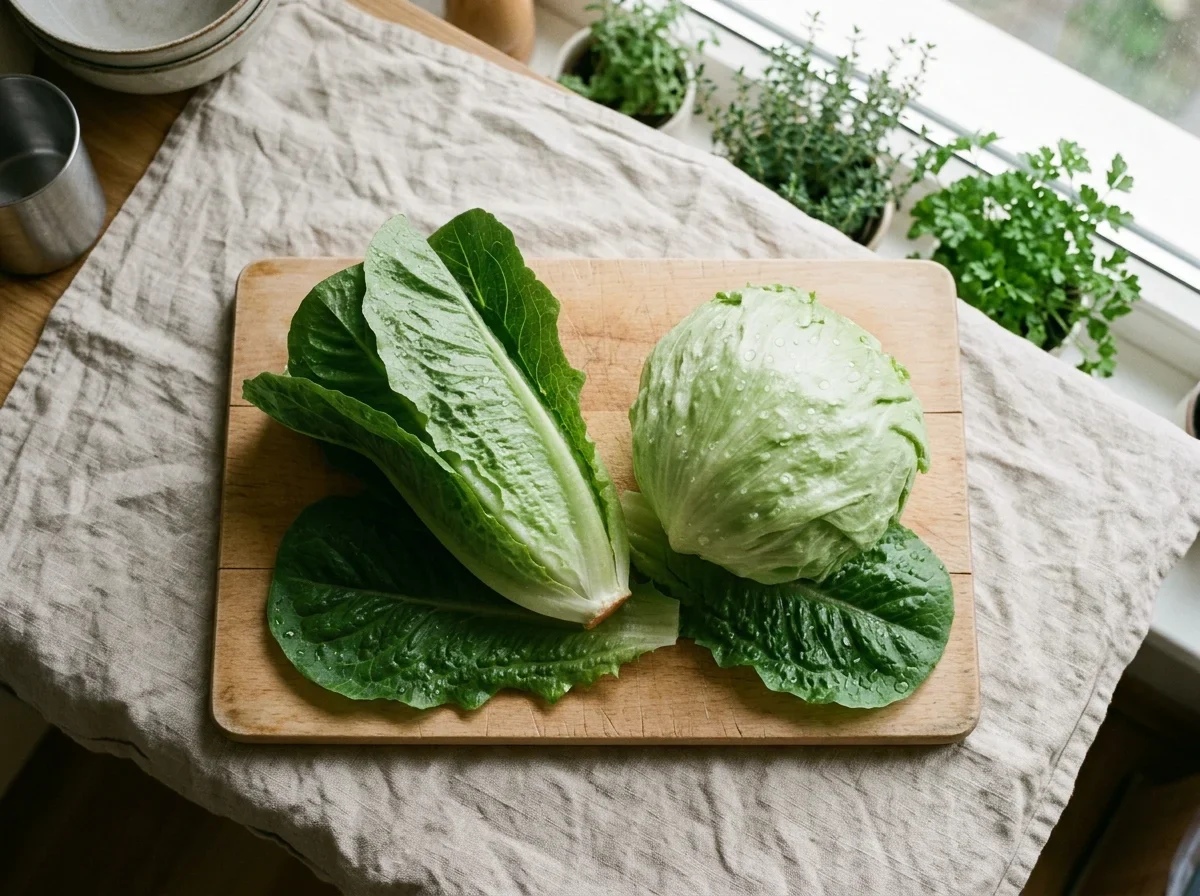
Storage starts in the shop, because a head that is already limp or yellow will not recover in your fridge. Whole heads also beat cut leaves, so buy the head when you can.
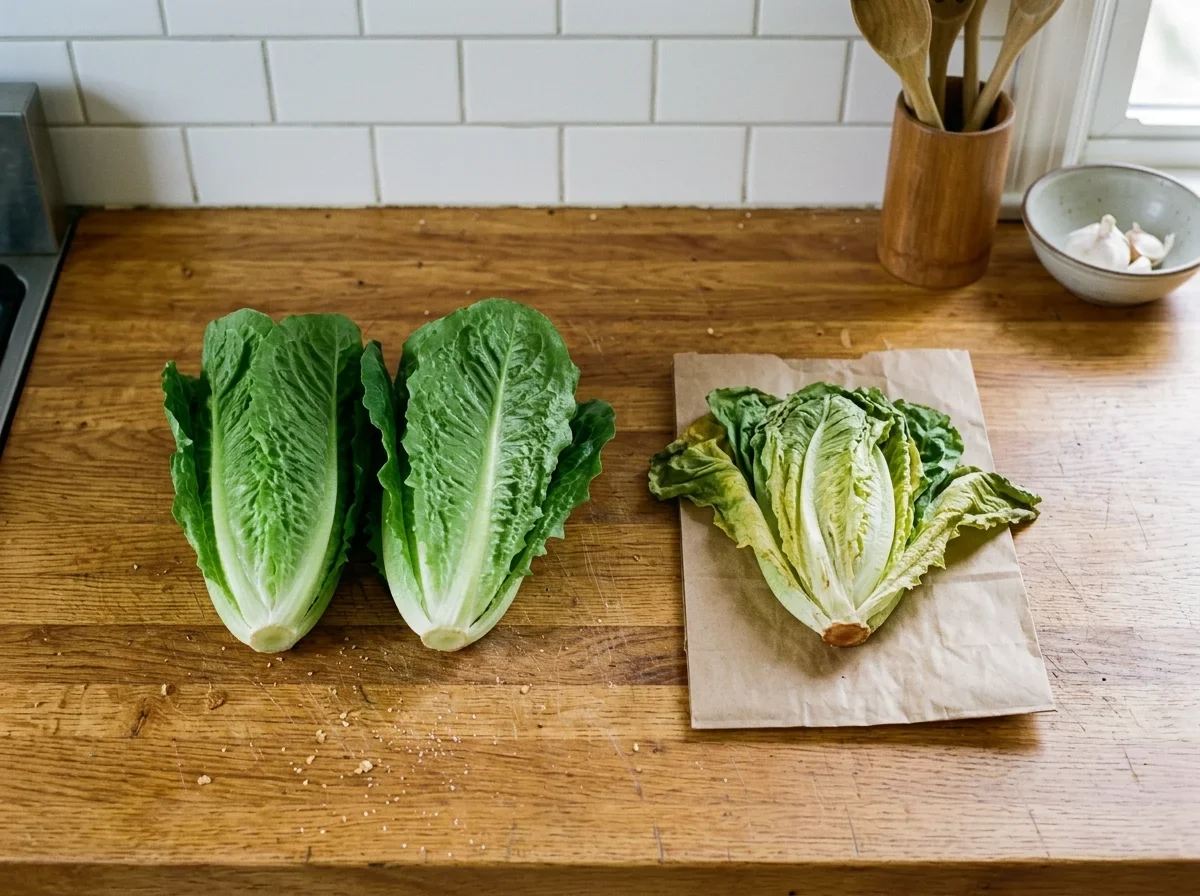
Firm and evenly colored, with no withered or yellow outer leaves.
Firm, evenly colored leaves. In fact, University of Minnesota Extension says to pass over heads with withered or yellow and brown leaves, or with bitter-smelling stems.
A whole head rather than a tub of cut leaves. Cut edges brown within days, as Widjaja and colleagues found when they tracked fresh-cut lettuce through 22 days of cold storage.
Iceberg and Bibb both keep for weeks. Clemson Cooperative Extension gives crisphead lettuce two weeks in good conditions, while leaf and Bibb types can reach four weeks. Even so, that last figure depends on dry leaves.
A bag you can close, or no bag at all. Food Smart Colorado lines a container with paper towels instead, since the towels take up the water that would otherwise rot the leaves.
How to store lettuce so it lasts
To store lettuce well, give it cold, damp air and as little handling as possible. Cold slows the leaves down, while damp air stops them drying out. Also, every cut you make starts a clock.
How to store lettuce in the fridge
Put the head in the crisper drawer, still unwashed, then keep the fridge at 40°F or below. That number comes from the FDA, which sets 40°F or below for fresh produce. Clemson Cooperative Extension picks the coldest part of the fridge, while Food Smart Colorado picks the crisper drawer. Both work, because the crisper holds the most humid air and keeps the leaves from wilting. Do not wash it first, since wet leaves rot. Clemson instead wraps loose greens in damp paper towelling inside a perforated bag, which holds humidity without trapping water. A whole cabbage survives that drawer far longer than a lettuce, because its outer leaves take the damage for it. The same towel trick works for soft herbs, which is why the cilantro guide offers it beside the jar of water.
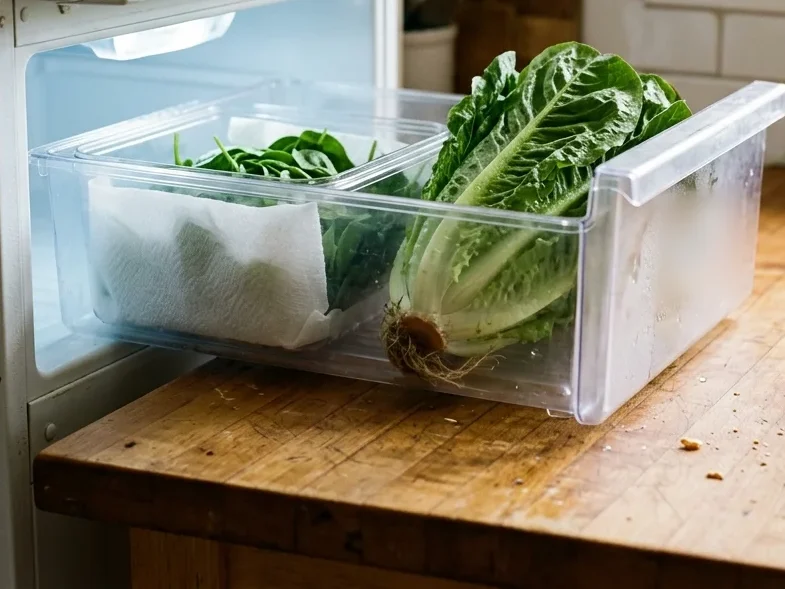
Whole, unwashed, in the crisper drawer. Cold and humid, but never wet.
How long can you store lettuce?
Sources differ, so take the shorter figure if you are unsure. University of Minnesota Extension gives lettuce up to one week in the fridge. Clemson also gives most greens a week, provided the paper towelling stays moist. Its lettuce factsheet is more generous, though: two weeks for crisphead, and up to four for leaf and Bibb. In other words, a firm iceberg head can outlast a tub of loose leaves by weeks.
Still, the clock restarts every time you cut or wash the leaves. Once a head is cut, treat it like loose leaves, then eat it within a few days.
How to store lettuce you have already washed
Dry it properly first, because water left on the leaves is what turns a salad slimy. Food Smart Colorado blots the leaves with paper towels, or spins them in a salad spinner. Then it lines a container with fresh paper towels and keeps that in the crisper drawer. Change the towels when they go wet, since a soaked towel does the opposite of its job. Clemson uses damp towelling rather than dry, so either way the towel is what you watch.
How to store lettuce from a bag
Keep the bag cold and closed, and go by the date printed on it. Once you open it, the leaves are cut, damp and crowded, so they run down faster than a head does. A bag marked washed, triple washed or ready-to-eat needs no rinse at home. Clemson Cooperative Extension says so, and the FDA agrees, though a rewash must not touch an unclean surface. Bags without those words still need washing.
How to store lettuce away from apples and bananas
Give lettuce its own shelf or drawer, away from the ethylene fruit. University of Minnesota Extension says lettuce goes downhill faster next to ethylene producers such as apples and bananas. That is why the apples guide keeps fruit away from greens, and the tomatoes guide does the same. Spinach shares the problem, so keep the two greens together, away from the fruit.
Can you freeze lettuce?
No, not for salad. The National Center for Home Food Preservation lists lettuce among the foods that do not freeze well. Thawed lettuce comes out limp and water-logged, and it also picks up an oxidized color, aroma and flavor. So the freezer is the one place to store lettuce that no source here recommends.
How to store lettuce in the freezer
If you freeze it anyway, freeze it for cooking, not for a salad bowl. Wash and dry the leaves, pack them flat in a bag, then press the air out. None of the sources opened for this guide gives a freezer time for lettuce, so this guide gives none either. Instead, use it in soup or a braise, where limp leaves do not matter.
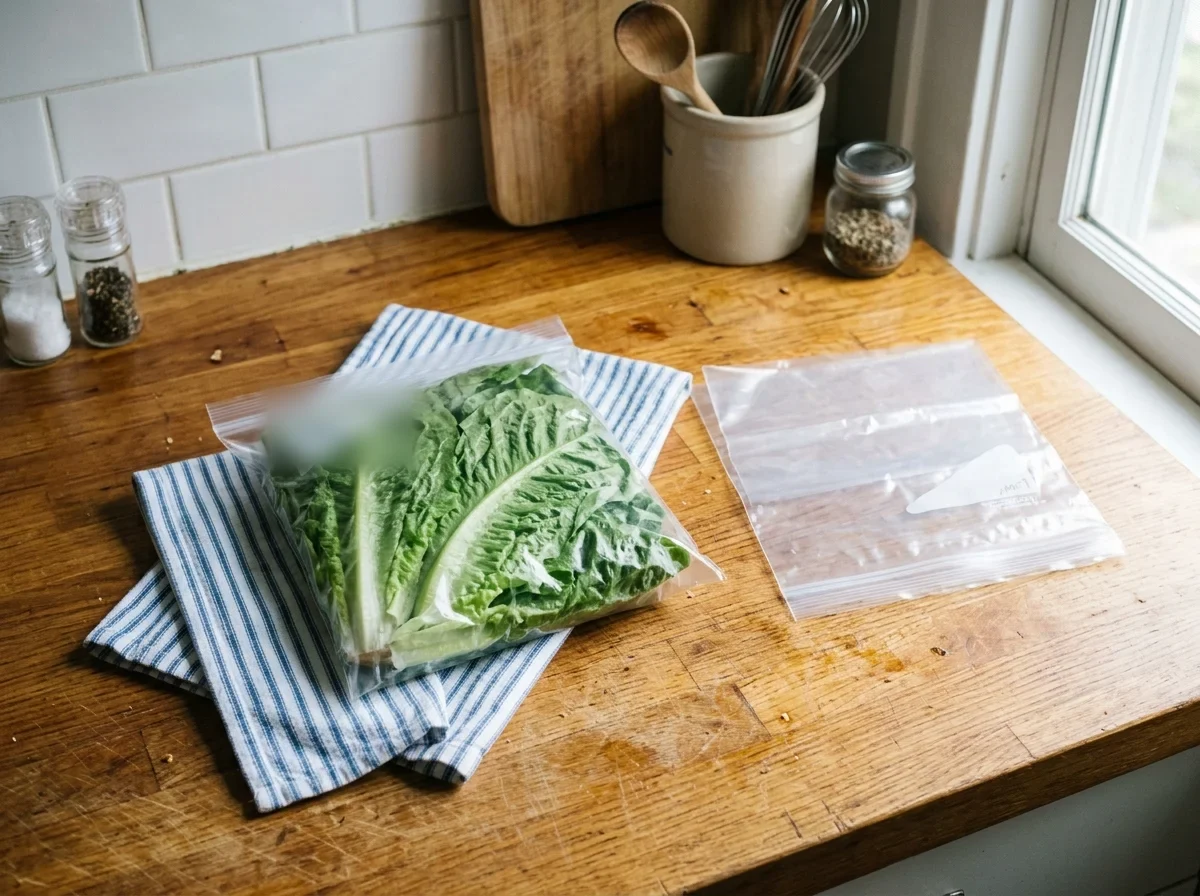
Flat in the bag, air pressed out, and only ever for soup.
Why the freezer is a poor place to store lettuce
Lettuce is mostly water, and water makes ice. Ice crystals push through the cell walls, so the leaf collapses as it thaws. The NCHFP puts the same point generally: rapid, uniform cooling matters because ice crystals hurt texture and quality. Even a fast home freezer cannot prevent that in a leaf this thin.
What happens to lettuce you store in the freezer
It goes limp, dark and watery, and the flavor turns flat. Also, the NCHFP groups lettuce with celery, cucumbers, endive, cress, parsley and radishes. So a frozen head is a cooking ingredient from then on, rather than a salad. The celery guide takes the same line, because blanched celery thaws limp as well. All of them thaw limp and water-logged, which is why the cucumber guide sends a glut to freezer pickles instead. For parsley the freezer is still worth it, because frozen parsley goes into the pot rather than onto the plate.
How to tell if lettuce has gone bad
However you store lettuce, most of what you see on the leaves is a quality problem rather than a safety one. Brown edges and a wilted leaf are still food, while slime and mold are not. Here is what each stage means.
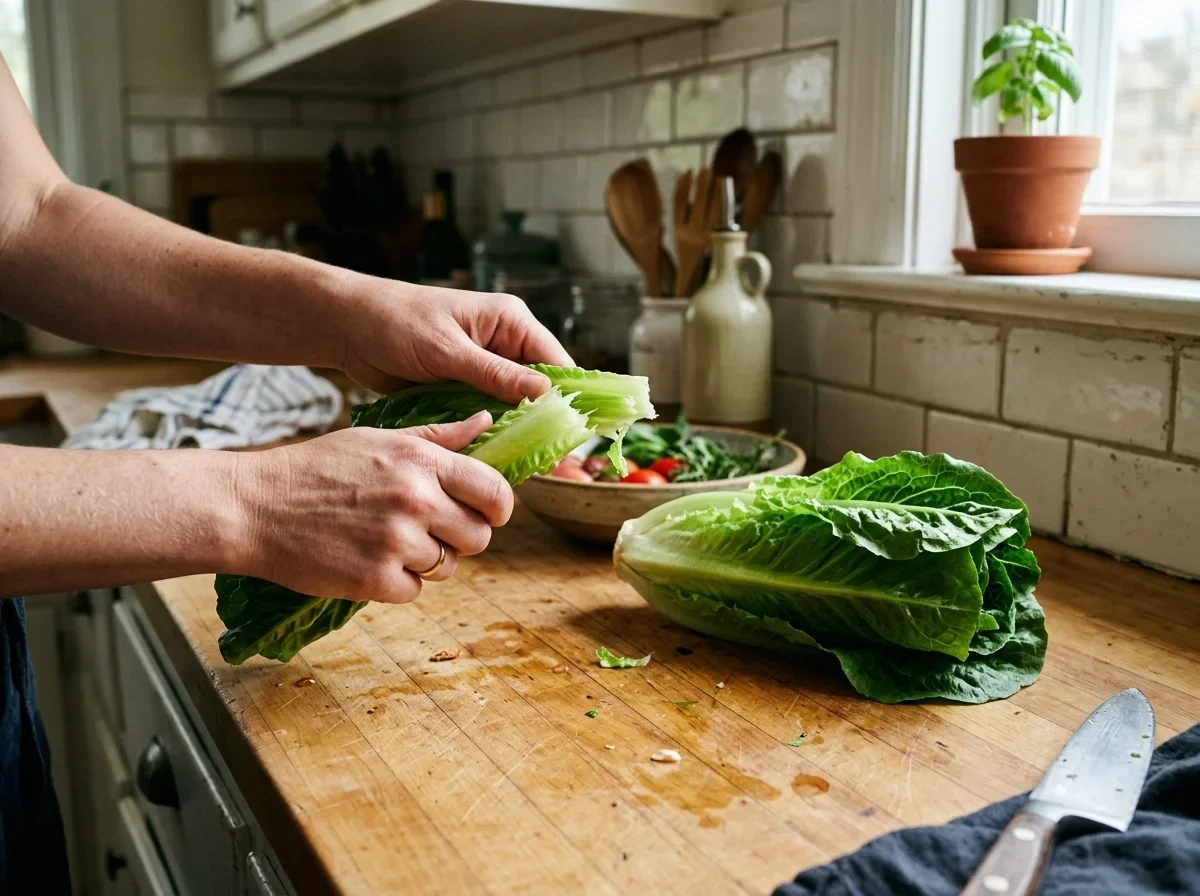
Verdict: use it
Crisp lettuce
Firm, evenly colored leaves that snap rather than bend. That is the head University of Minnesota Extension tells you to pick, so use it raw.
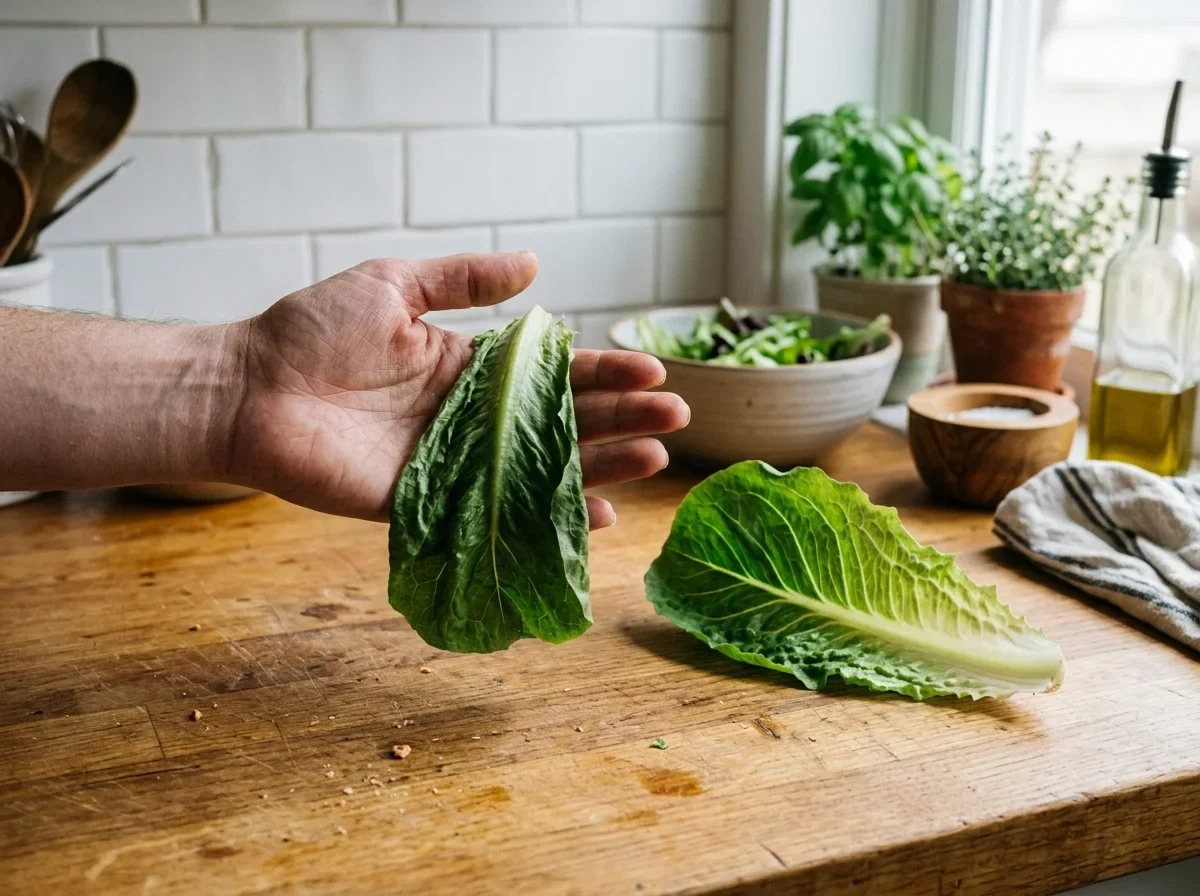
Verdict: use it
Wilted lettuce
Limp leaves have lost water. Food Smart Colorado keeps greens in the crisper because its humid air stops them wilting. So a wilted head has sat somewhere too dry for too long. None of the sources here calls wilting unsafe, though University of Minnesota Extension says not to buy a withered head. Cook it, then, or put it in a sandwich.
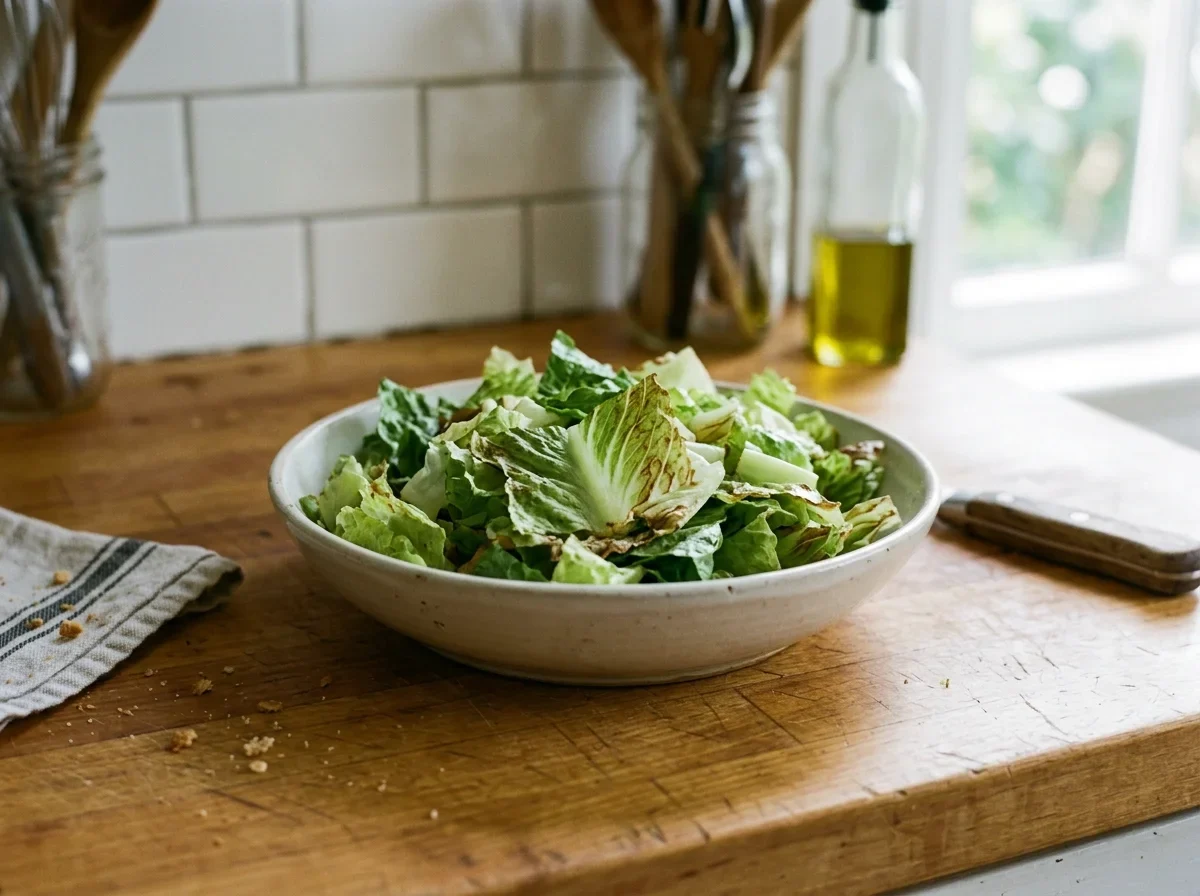
Verdict: trim it and use it
Brown edges on cut lettuce
Cutting a leaf starts the browning. Widjaja and colleagues tracked fresh-cut lettuce at 7°C for 22 days. For the first three days the cut edges browned by enzyme action, then the tissue shifted to lignification. Li and colleagues name the same culprits: oxygen, phenolic compounds and polyphenol oxidase. Both papers treat browning as a quality problem, so cut the brown edge away and eat the rest. Similarly, the FDA says to cut away damaged or bruised areas.
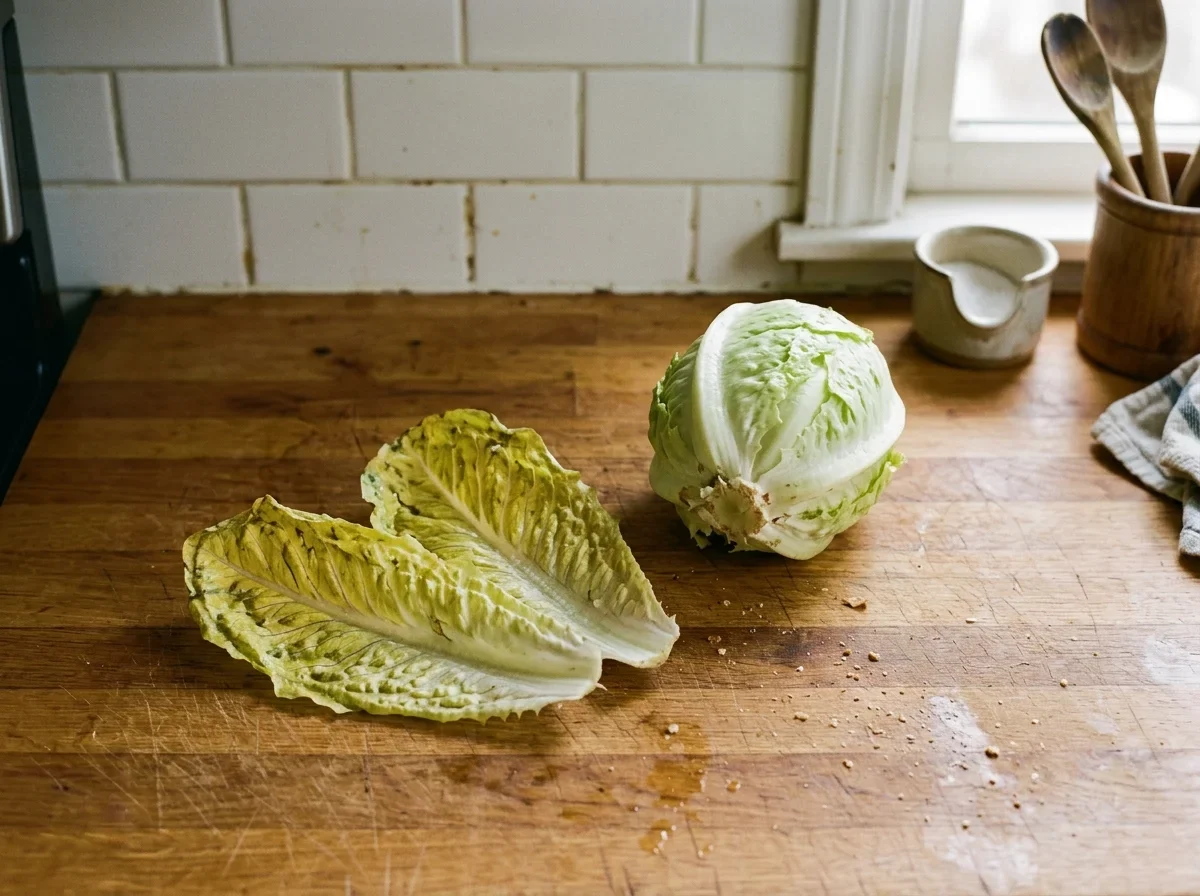
Verdict: pull those leaves off
Yellow lettuce leaves
Yellowing starts on the outer leaves, the oldest ones. University of Minnesota Extension removes withered or discolored outer leaves before preparing a head. Food Smart Colorado also discards torn or bruised outer leaves at the sink. So peel the yellow leaves off, then judge what is underneath. If the inner leaves are firm and pale green, the head is still a salad.
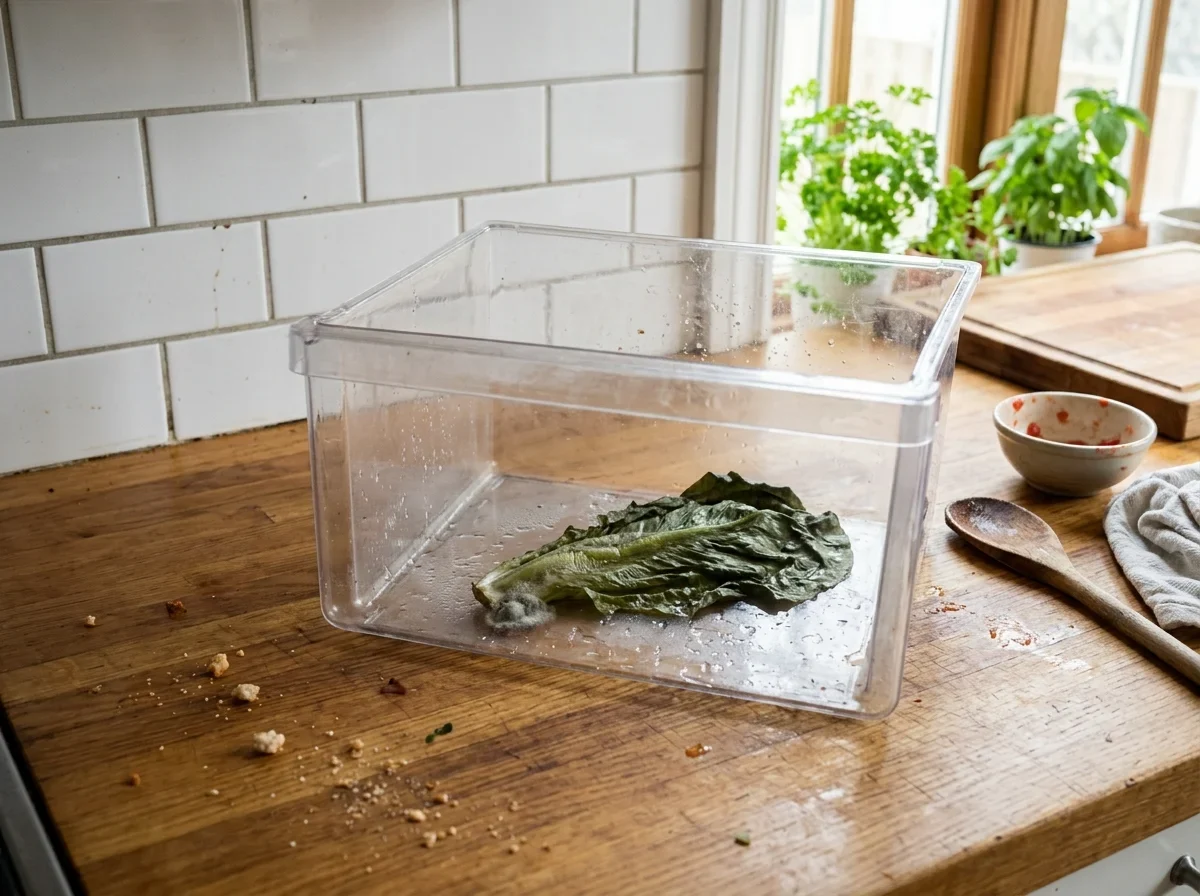
Verdict: throw it out
Slimy or moldy lettuce
Slime and mold end the head. Clemson Cooperative Extension discards produce that looks rotten or moldy, and so does the FDA. Utah State University Extension describes bacterial soft rot as mushy tissue with foul-smelling liquid, though it does not name lettuce. For mold, UConn Extension trims firm vegetables such as cabbage, while soft produce goes out whole. A lettuce leaf is neither firm nor dry, so throw the head away rather than trim it. Then check the leaves that were touching it.
Do you have to wash lettuce that says ready to eat?
No, and rewashing can make things worse. Clemson Cooperative Extension says a bag labeled washed, triple washed or ready-to-eat needs no washing at home. Further washing can raise the risk of cross-contamination instead. The FDA agrees, though a rewash must not touch an unclean surface. Loose lettuce is different. Clemson fills a clean sink with lukewarm water, swishes for 30 seconds, then rinses three times in cold water. Skip the soap, because the FDA warns that produce takes up detergents and they can make you sick.
Lettuce substitutes
Out of lettuce, or had to throw a head away? Then these will stand in.
Substitute
Works best in
What changes
Romaine hearts
Caesar salads and wraps
Sturdier ribs, so they hold their crunch longer.
Cabbage
Slaws and sandwiches
Firmer and cheaper, and UConn lets you trim a moldy spot.
Spinach
Salads and sandwiches
Softer leaves, so a hot dressing wilts them.
Cucumber ribbons
Bulking out a salad
Cool and watery, though with no leafy bite.
Mistakes people make when they store lettuce
These are the ways people store lettuce that cost them the most, and each one has an easy fix.
Washing the head before storing it. Wet leaves rot, so wash lettuce only just before you eat it.
Leaving it next to the fruit bowl. Apples and bananas give off ethylene, which runs lettuce down faster, so give it its own drawer.
Buying cut leaves for later in the week. Cut edges brown within days, whereas a whole head holds for weeks.
Rinsing a ready-to-eat bag. In fact, it needs no rinse, and rewashing only adds a chance of cross-contamination.
Sealing damp leaves in a tub. Trapped water speeds up rot, so line the tub with paper towels and change them when they go wet.
Throwing out a wilted head. Wilting is water loss, so cook those leaves instead of binning them.
Freezing it for salads. Frozen lettuce thaws limp and water-logged, so freeze it only for soup.
Sources
Lettuce, Real Life, Good Food, University of Minnesota Extension, undated, on one week in the crisper, removing withered outer leaves and keeping lettuce away from apples and bananas.
Lettuce, Powell Smith and colleagues, Clemson Cooperative Extension Home & Garden Information Center, updated January 2023, on two weeks for crisphead and up to four weeks for leaf and Bibb lettuce.
Leafy Green Basics, Pamela Schmutz and colleagues, Clemson Cooperative Extension, revised July 2021, on damp paper towelling, a perforated bag and one week for most greens.
Safe Handling of Lettuce & Leafy Green Salads, Adair Hoover and Rhonda Matthews, Clemson Cooperative Extension, revised July 2021, on ready-to-eat bags, washing loose lettuce and discarding rotten or moldy produce.
Leafy Greens, Food Smart Colorado, Colorado State University Extension, on the crisper drawer, paper-towel-lined containers and washing just before use.
Selecting and Serving Produce Safely, U.S. Food and Drug Administration, March 2024, on 40°F storage, pre-washed bags, running water and cutting away damaged areas.
Foods That Do Not Freeze Well, National Center for Home Food Preservation, University of Georgia, on lettuce thawing limp and water-logged.
Handling Food with Mold, UConn Extension, April 2024, on trimming firm vegetables an inch and discarding soft produce whole.
Bacterial Soft Rot, Utah State University Extension, on mushy, discolored tissue and foul-smelling liquid in stored vegetables.
Non-targeted LC-MS metabolomics reveal shifts from wound-induced enzymatic browning to lignification during extended storage of fresh-cut lettuce, Widjaja and colleagues, Current Research in Food Science, 2024, on enzymatic browning in the first three days and lignification afterwards.
Influence of polysaccharide-based edible coatings on enzymatic browning and oxidative senescence of fresh-cut lettuce, Li and colleagues, Food Science & Nutrition, 2021, on oxygen, phenolic compounds and polyphenol oxidase in cut lettuce.
Storage times and safety advice on this page come from the sources above. Food safety depends on conditions I cannot see, so read the Disclaimer, and if in doubt, throw it out.
Other ingredient guides
Browse all guides


Share this guide
Never miss a guide
New ingredient guides when they go up, plus one storage tip worth knowing. Anything sponsored is labelled.

Emilly White