
Not listed
USDA FoodKeeper gives it no pantry time
6 months
Strained, in a sealed jar (USDA FoodKeeper)
12 months
Portioned, sealed; time is for quality (USDA)
The short version: to store bacon grease, let it cool a little, strain out the browned bits, and pour it into a clean jar with a tight lid. Keep it in the fridge for up to 6 months, or in the freezer for up to 12, which are the USDA FoodKeeper's figures. Skip the coffee can on the stove, and throw out any grease that smells off or shows mold.
Storage times here come from the USDA's FoodKeeper data, with bacon handling from the USDA Food Safety and Inspection Service, fat storage from NDSU Extension, and drain advice from Central San.
On this page
What to check before you store bacon grease
Two things decide how long a jar of bacon grease lasts: what is floating in it and where it lives. Clear fat keeps far longer than fat full of browned bits, and the fridge beats the stove top every time. So deal with both before you put the lid on.
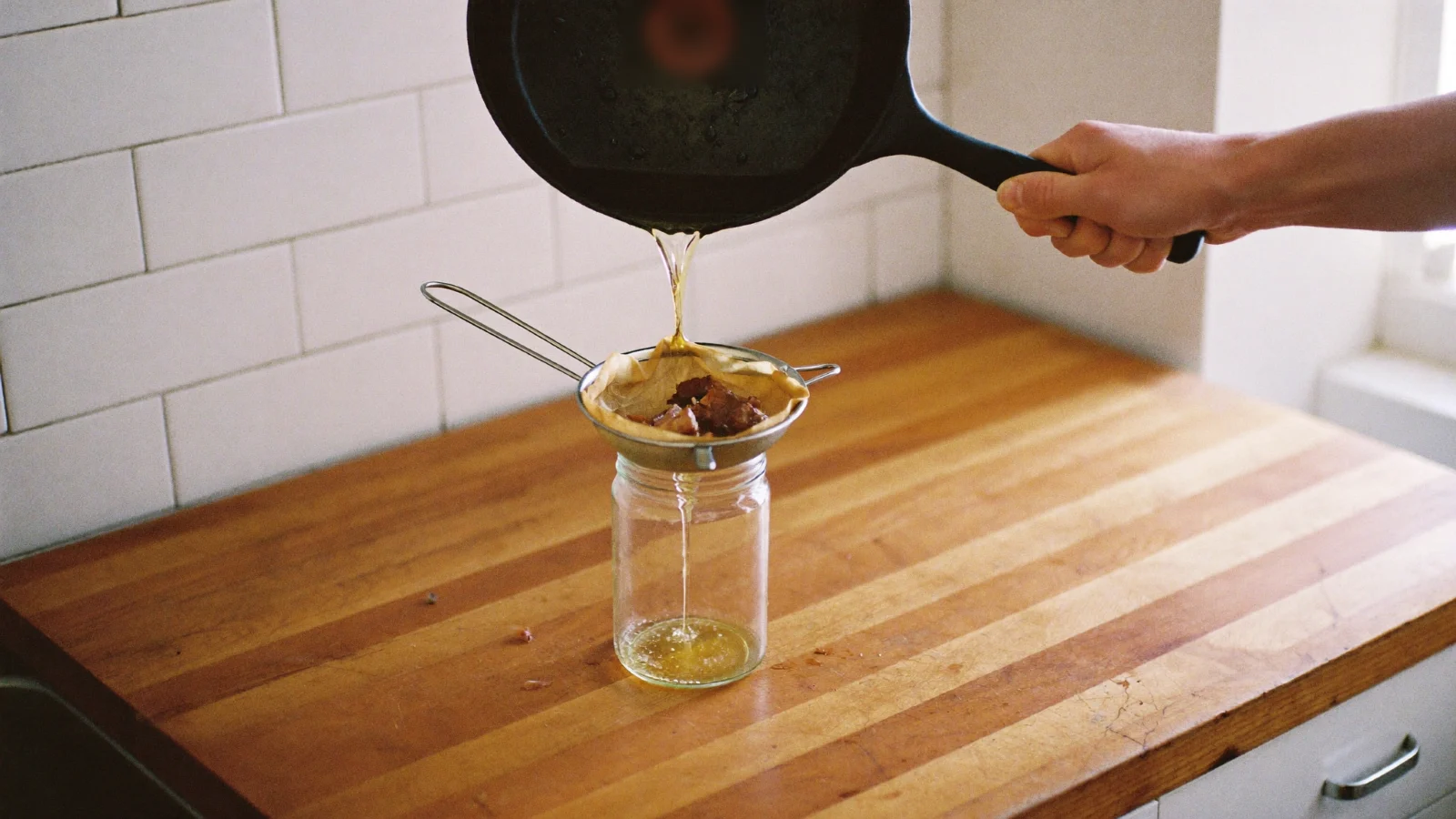
Glass, a lid that seals, and a spoon that is properly dry.
Check for bits first. The crumbs and browned flecks in the pan are cooked bacon, not fat. The USDA Food Safety and Inspection Service gives leftover cooked bacon only 4 to 5 days in the fridge, which is a tiny fraction of the grease's 6 months. So the bits, not the fat, set the clock if you leave them in. The bacon guide covers the strips themselves.
Then let it cool, but not all the way. Warm grease still pours through a strainer, whereas cold grease sets in the pan. So wait until the pan is safe to handle, and then strain it while it is still liquid.
Next, pick the container. A clean glass jar with a tight lid is the simplest choice, because it handles warm fat and seals well. NDSU Extension asks for a tightly closed container for other cooking fats, such as oil and shortening, so the same habit suits bacon grease.
Finally, decide where it goes, and make it the fridge. The USDA's FoodKeeper data lists bacon grease for the refrigerator and freezer only. Fat you want to keep for months belongs in the cold, the same as butter once it is opened.
How to store bacon grease so it lasts
To store bacon grease so it lasts, strain it, seal it and keep it cold. Air, heat and leftover meat bits are what shorten its life, so each step deals with one of them. In other words, the fridge does most of the work once the jar is clean.
Does bacon grease need to be refrigerated?
Bacon grease does need the fridge, since the USDA's FoodKeeper gives it 6 months there and lists no pantry time at all. The FoodKeeper data is the information behind the USDA's own storage app. So pour the strained grease into a jar, close the lid tightly, and keep it on a fridge shelf. It firms up there into a soft, spoonable fat, which is easy to scoop out a teaspoon at a time.
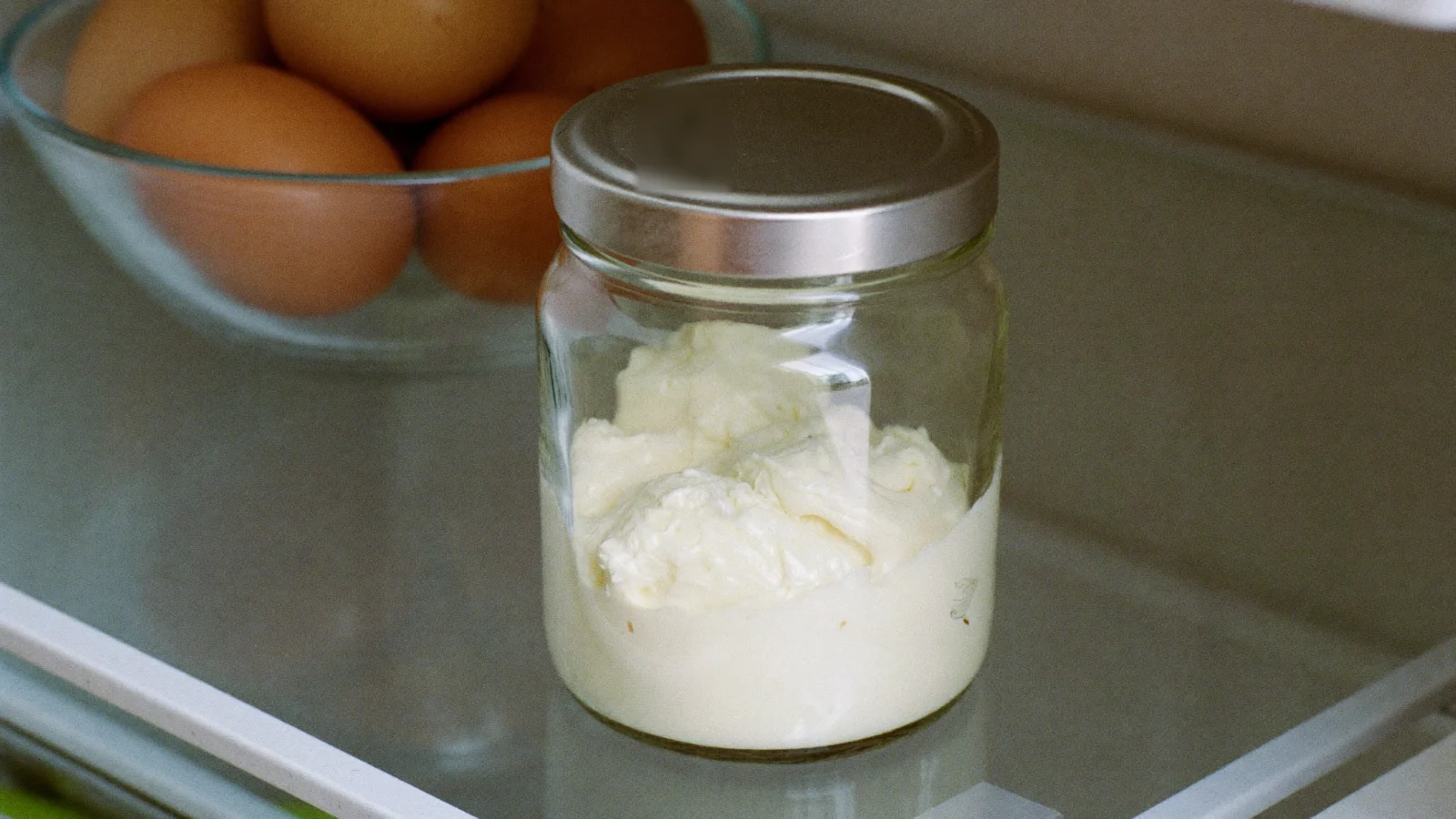
Sealed, cool and dark, and nowhere near the cooker.
How long does bacon grease last?
Bacon grease lasts up to 6 months in the fridge and up to 12 months in the freezer, according to the USDA's FoodKeeper data. Those figures assume strained grease in a sealed container. With bits left in, or with the jar opened and closed with dirty spoons, plan on less.
The figures on other websites run from a few weeks to nine months, and most of them name no source. The FoodKeeper is the USDA's own data, so this guide uses it. Even so, smell the jar every time you open it, because the date is a guide to quality rather than a guarantee.
Should you strain bacon grease before storing it?
Bacon grease should be strained before storing, because the browned bits in it are cooked bacon, which the USDA gives only 4 to 5 days in the fridge. Pour the warm grease through a fine strainer, a piece of cheesecloth or a coffee filter set over the jar. What is left in the jar is mostly fat, and fat is what keeps for months. The USDA Food Safety and Inspection Service figure for leftover cooked bacon is why this step matters.
What is the best container for bacon grease?
The best container for bacon grease is a clean glass jar with a tight lid, kept in the fridge. Glass copes with warm fat and is easy to see through, so you can check the color. NDSU Extension asks for a tightly closed container for cooking oils and shortening, because air is what turns fat stale. So skip the open can and the loose foil cover.
Can you keep bacon grease on the counter?
Bacon grease should not live on the counter, because the USDA's FoodKeeper lists no pantry storage for it at all. That is different from shortening, which NDSU Extension says needs no refrigeration. Shortening is made to be shelf-stable, whereas a jar of drippings from your pan is not. So treat the old coffee can by the stove as a habit worth breaking.
Can you freeze bacon grease?
Bacon grease freezes well for up to 12 months, according to the USDA's FoodKeeper data. The USDA Food Safety and Inspection Service adds that freezing keeps food safe indefinitely, so its freezer times are for quality only. Twelve months is when the flavor starts to fade, then, not a safety cliff.
How do you freeze bacon grease?
Bacon grease freezes most usefully in small portions, such as an ice cube tray, then moved into a sealed freezer bag. First, pour the strained, slightly cooled grease into the tray and freeze it until solid. Then pop the cubes into a bag, press the air out and label it. Since a cube is about a tablespoon, you can drop one straight into a hot pan without thawing a whole jar.
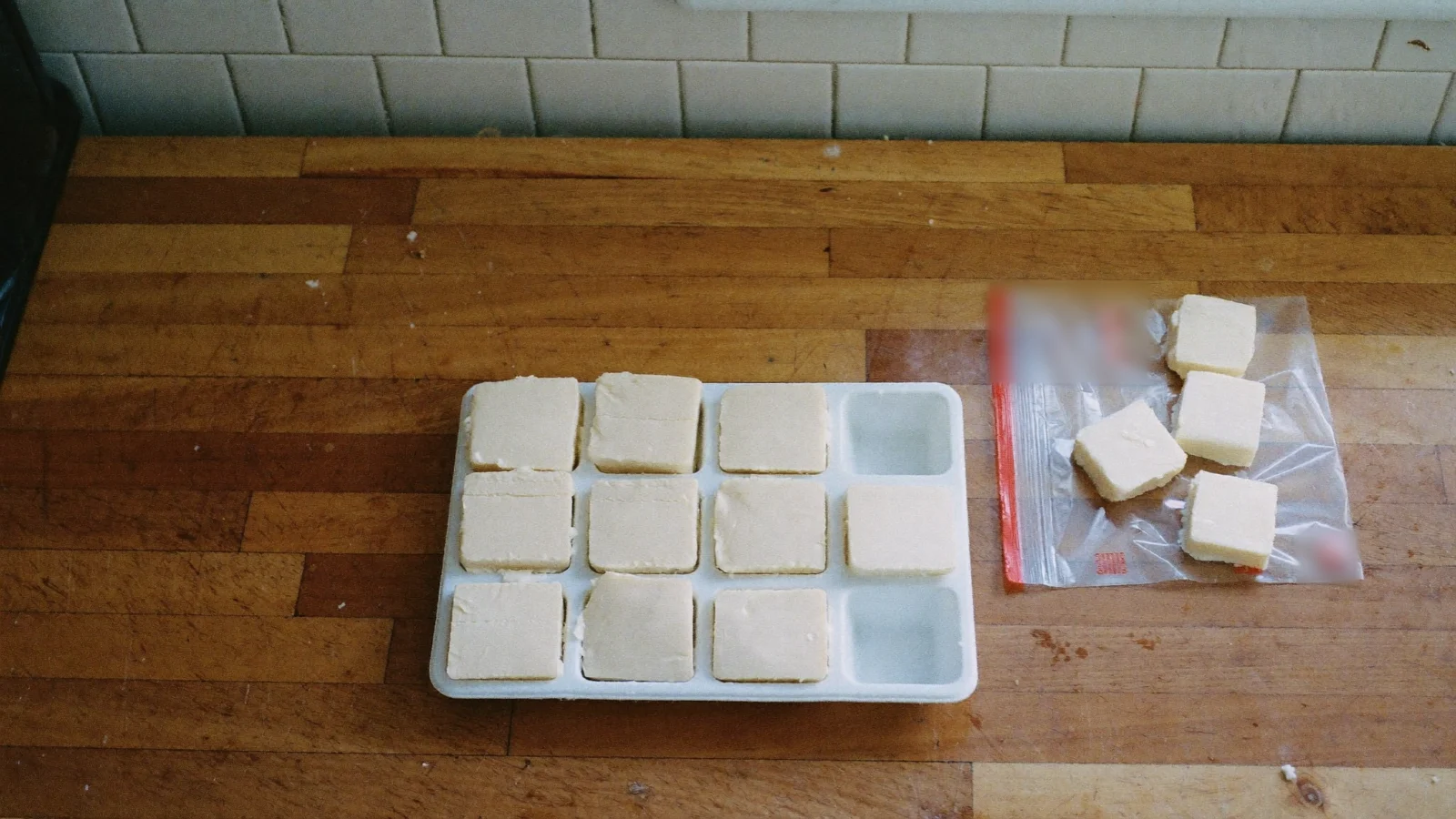
Below 41 degrees it keeps for years, but it barely pours.
How do you thaw frozen bacon grease?
Frozen bacon grease does not need thawing, because a frozen cube melts in a hot pan within moments. For a larger block, thaw it in the fridge. The USDA Food Safety and Inspection Service tells you never to thaw bacon on the counter, and the same habit suits its drippings.
Can you pour bacon grease down the drain?
Bacon grease should never go down the drain, because it sticks to the inside of pipes and can block them, according to Central San, a California sewer district. It also warns that hot water and detergent only break the grease up for a while, so it travels further down the line instead. For grease you are throwing out, pour it into a container you will not recycle, let it harden in the fridge, and put it in the trash.
How to tell if bacon grease has gone bad
Bacon grease mostly fades rather than spoils. It loses its smoky smell and starts to smell stale, and that is a quality problem. Mold is different, however, and so is any jar you are unsure about. NDSU Extension has the rule for those: when in doubt, throw it out. Here is what each stage means, then.

Verdict: use it
Fresh, strained bacon grease
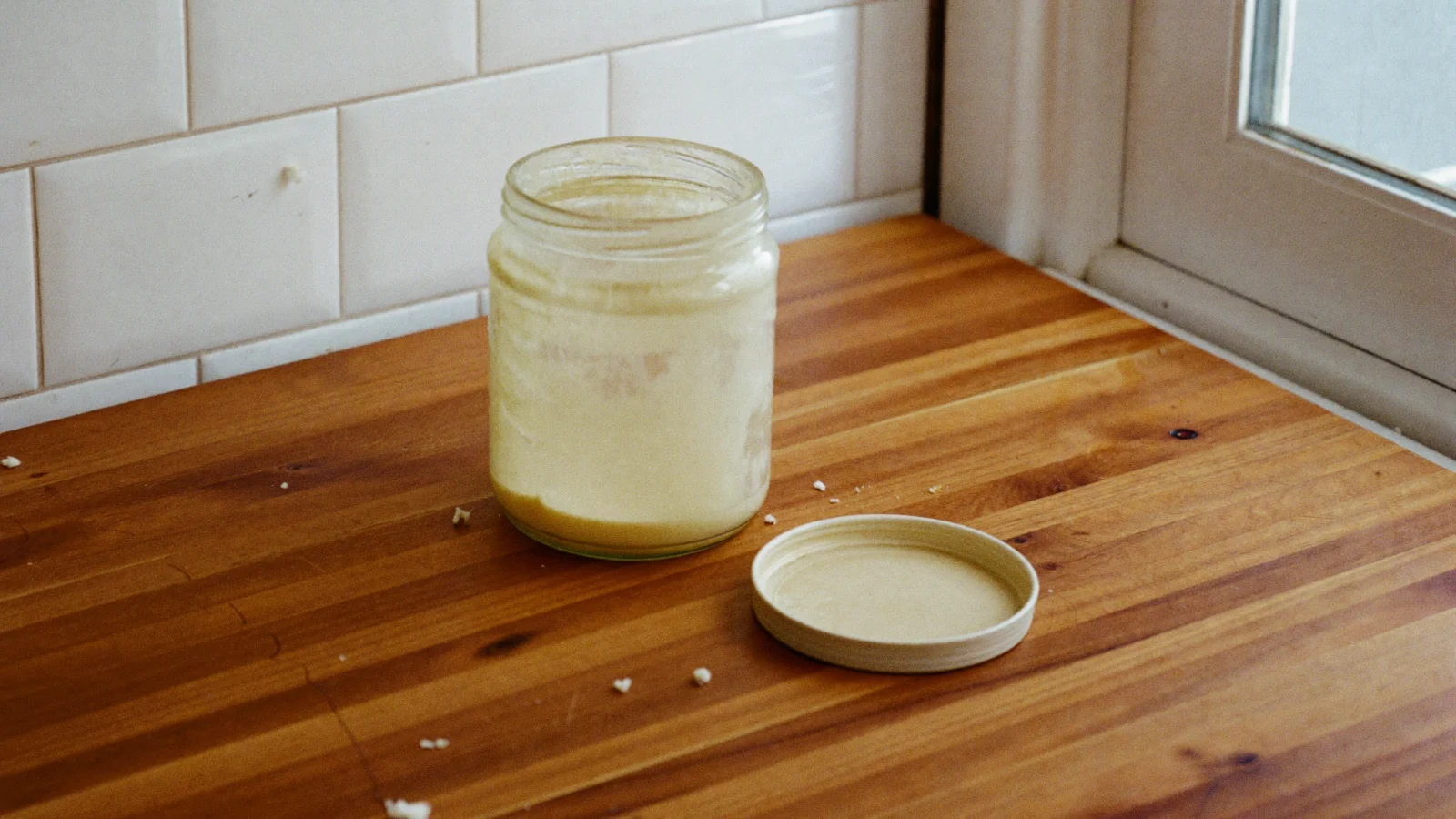
Creamy white to pale beige when cold, smooth, and smelling of bacon. This is grease that was strained and sealed, so it is inside the USDA's 6 months in the fridge. Cook with it, then, and scoop it with a clean, dry spoon.
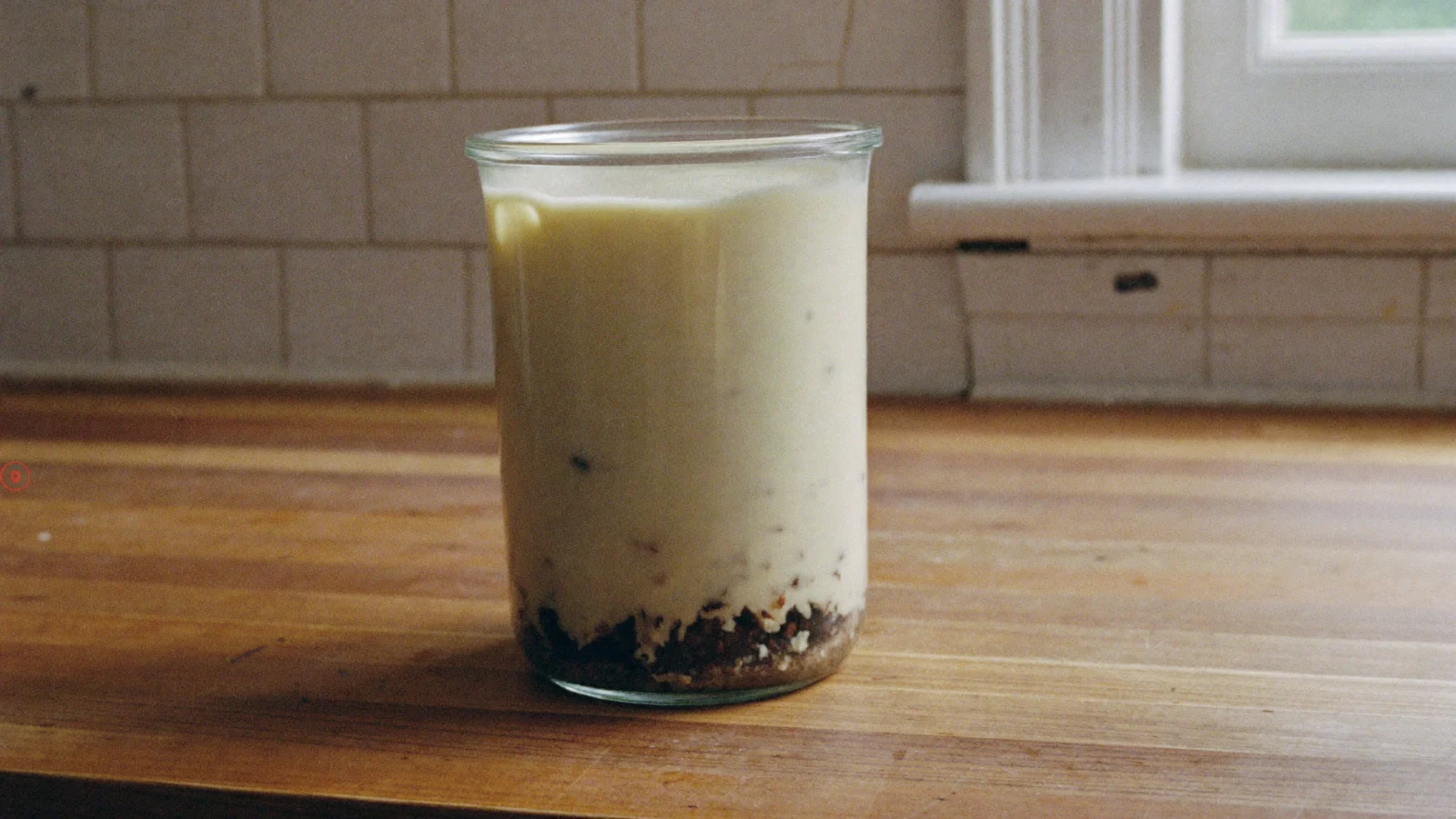
Verdict: strain it again
Bacon grease with bits settled at the bottom
Dark specks or a brown layer sitting in the bottom of the jar. Those are cooked bacon bits that got through, and the USDA Food Safety and Inspection Service gives cooked bacon only 4 to 5 days. If the jar is fresh, warm it gently, strain it into a clean jar and carry on. If it has sat for weeks with the bits in, however, throw it out.
Verdict: use it soon
Bacon grease that smells faint or stale
Still pale and smooth, but the smoky smell has faded and it smells flat. That is fat losing quality over time, which is why the USDA's times are for best quality. So use it this week for frying potatoes or eggs, where its flavor matters least.

Verdict: throw it out
Bacon grease that smells sour or sharp
A sour, sharp or paint-like smell instead of bacon, often with a darker yellow color. The fat has gone rancid, and it will taste the way it smells. NDSU Extension keeps the rule simple: when in doubt, throw it out. So bin it, and start a fresh jar.
Verdict: throw it out
Moldy bacon grease
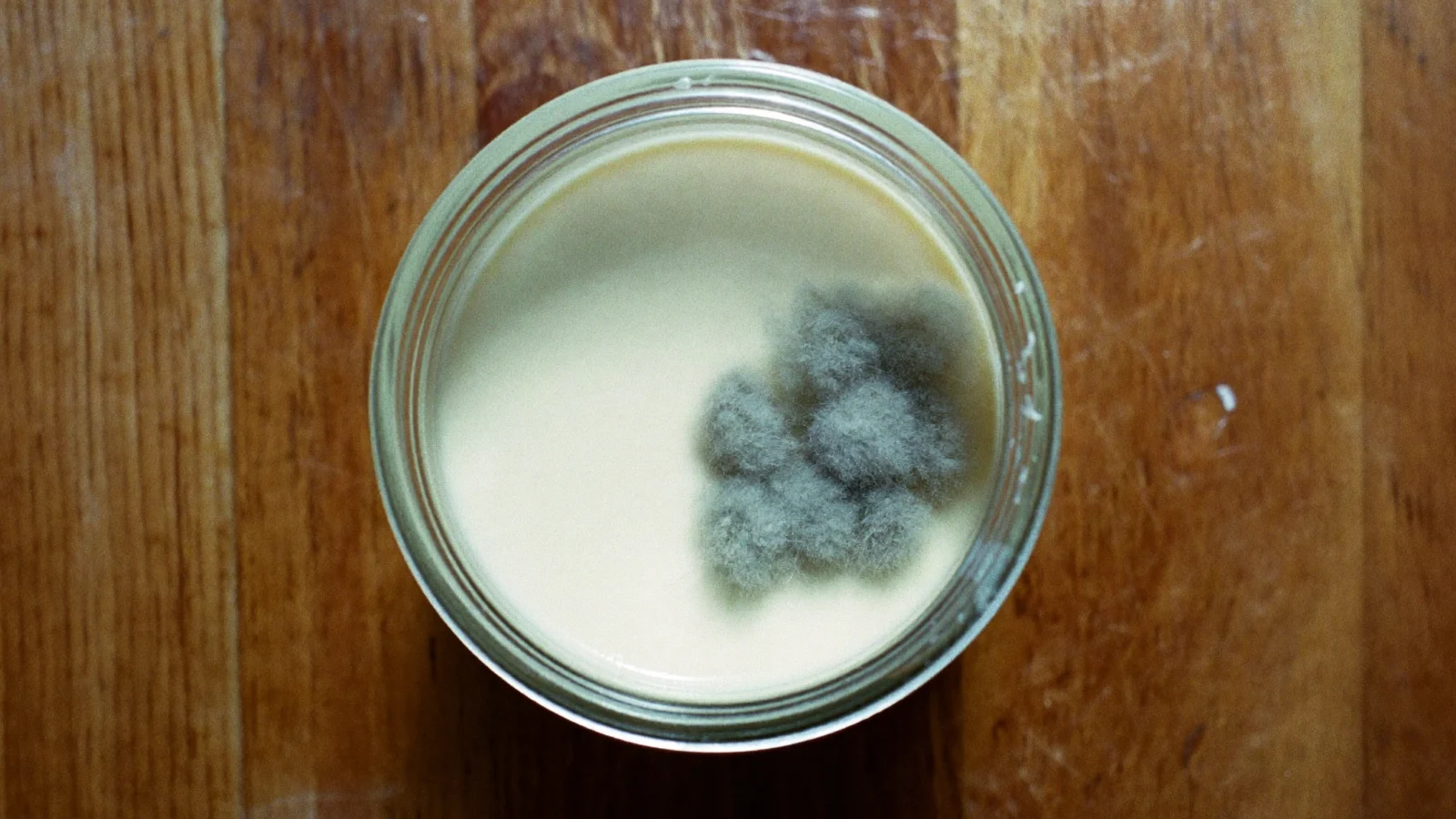
Fuzzy spots of white, green or black on the surface of the fat. USDA Food Safety and Inspection Service guidance is that if food is covered with mold, you discard it, and that you should not sniff the moldy item. So throw out the whole jar rather than scraping off the top, and wash the jar before you use it again.
Can old bacon grease make you sick?
Bacon grease with mold, or with meat bits left in it for weeks, can make you sick, so throw those jars out. The USDA Food Safety and Inspection Service says to discard moldy food, and its bacon page gives the cooked bits only 4 to 5 days. A strained jar that has only lost its smell, by contrast, is a quality problem. Even so, NDSU Extension says it plainly: when in doubt, throw it out.
Bacon grease substitutes
Out of bacon grease, or did the jar turn? Then one of these will do the job.
Substitute
Works best in
What changes
Lard
Frying and biscuits
The same kind of fat, although without the smoke.
Olive oil
Sautéing vegetables
Lighter flavor, and also no fridge needed.
A few slices of cooked bacon
Greens and beans
Cook them in the pan first, so you get both fat and flavor.
Mistakes people make when they store bacon grease
These are the ways people store bacon grease that cost them the most, and each one is easy to fix.
Keeping it in a can on the stove. The USDA's FoodKeeper gives bacon grease no pantry time, so keep it in the fridge.
Skipping the strainer. The bits are cooked bacon, which the USDA gives 4 to 5 days, so strain them out.
Leaving the jar open. NDSU asks for tightly closed containers for cooking fats, because air turns them stale.
Scooping with a wet or dirty spoon. Use a clean, dry one instead, so you are not adding water or crumbs to the jar.
Pouring it down the sink. Central San warns that grease sticks inside pipes and can block them, even with hot water.
Freezing it in one big block. Freeze it in cubes instead, because then you only take out what you need.
Scraping mold off the top. USDA guidance is to discard moldy food, so throw out the whole jar.
Sources
FoodKeeper App, Food Safety and Inspection Service, U.S. Department of Agriculture, whose published FoodKeeper data lists bacon grease at 6 months in the refrigerator and 12 months in the freezer, with no pantry storage time.
Bacon and Food Safety, Food Safety and Inspection Service, U.S. Department of Agriculture, on leftover cooked bacon at 4 to 5 days in the refrigerator, freezing keeping food safe indefinitely with freezer times for quality only, and never thawing bacon on the counter.
Molds on Food: Are They Dangerous?, Food Safety and Inspection Service, U.S. Department of Agriculture, on discarding food covered with mold and not sniffing moldy food.
Food Storage Guide, Julie Garden-Robinson, NDSU Extension publication FN579, reviewed January 2023, on storing vegetable oils and shortening in a tightly closed container, shortening needing no refrigeration, and the rule that when in doubt you throw it out.
Fats, Oils and Grease (FOG), Central Contra Costa Sanitary District, on never pouring grease down the drain, grease sticking inside pipes and blocking them, hot water and detergent only breaking it up temporarily, and putting hardened grease in the trash.
Storage times and safety advice on this page come from the sources above. Food safety depends on conditions I cannot see, so read the Disclaimer, and if in doubt, throw it out.
Other ingredient guides
Browse all guides



Share this guide
Never miss a guide
New ingredient guides when they go up, plus one storage tip worth knowing. Anything sponsored is labelled.

Emilly White