
2 hours max
Raw or cooked, then into the fridge (USDA)
3 to 5 days
Raw, at 40°F or below (USDA, NDSU)
4 to 12 months
For quality; safe indefinitely at 0°F (USDA)
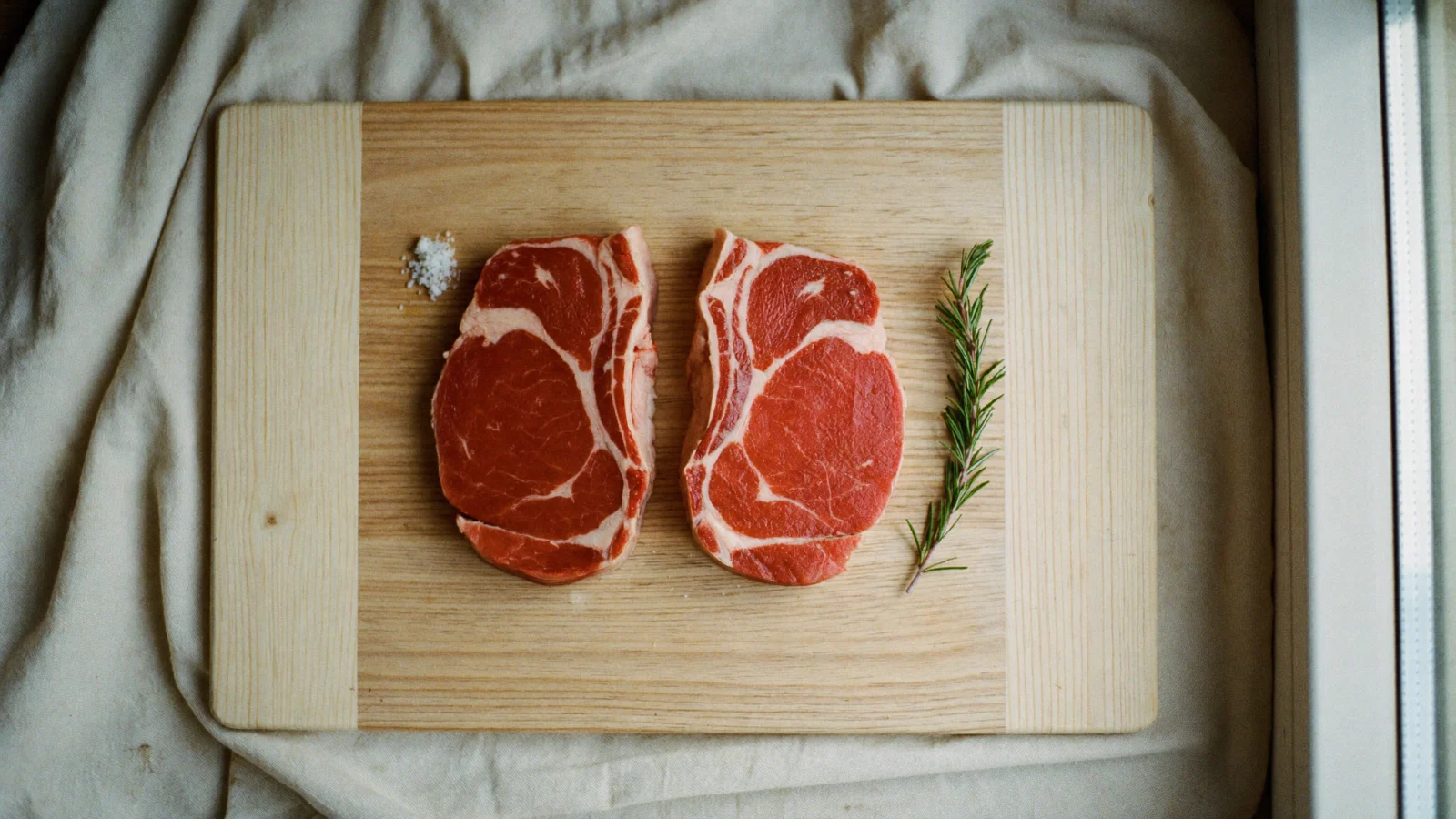
The short version: to store steak, keep it in its package at 40°F or below and cook or freeze it within 3 to 5 days. Frozen at 0°F, it stays safe indefinitely and tastes best within 4 to 12 months. Thaw it in the fridge, never on the counter. A brown or purple steak is usually fine, but a tacky surface and an off smell mean it goes in the bin.
Storage times, color and thawing advice here come from the USDA Food Safety and Inspection Service, with further figures from NDSU Extension and the USDA's FoodKeeper data.
On this page
What to check before you store steak
Three things decide how long a steak keeps: how cold it is, how long ago it was packed, and whether the package is sealed. So check all three before it goes in the fridge, because the clock started at the store.
Glass, a lid that seals, and a spoon that is properly dry.
Start with the date. The USDA Food Safety and Inspection Service says to use or freeze beef with a sell-by date within 3 to 5 days of purchase. It also notes that dates are not an indicator of safety, so how you store it matters more than the label.
Then look at the color, but do not panic over it. FSIS explains that beef kept away from oxygen, as in vacuum packaging, is a burgundy or purplish color. After about 15 minutes in the air, it turns bright cherry red. So a purple steak in a sealed pack is normal.
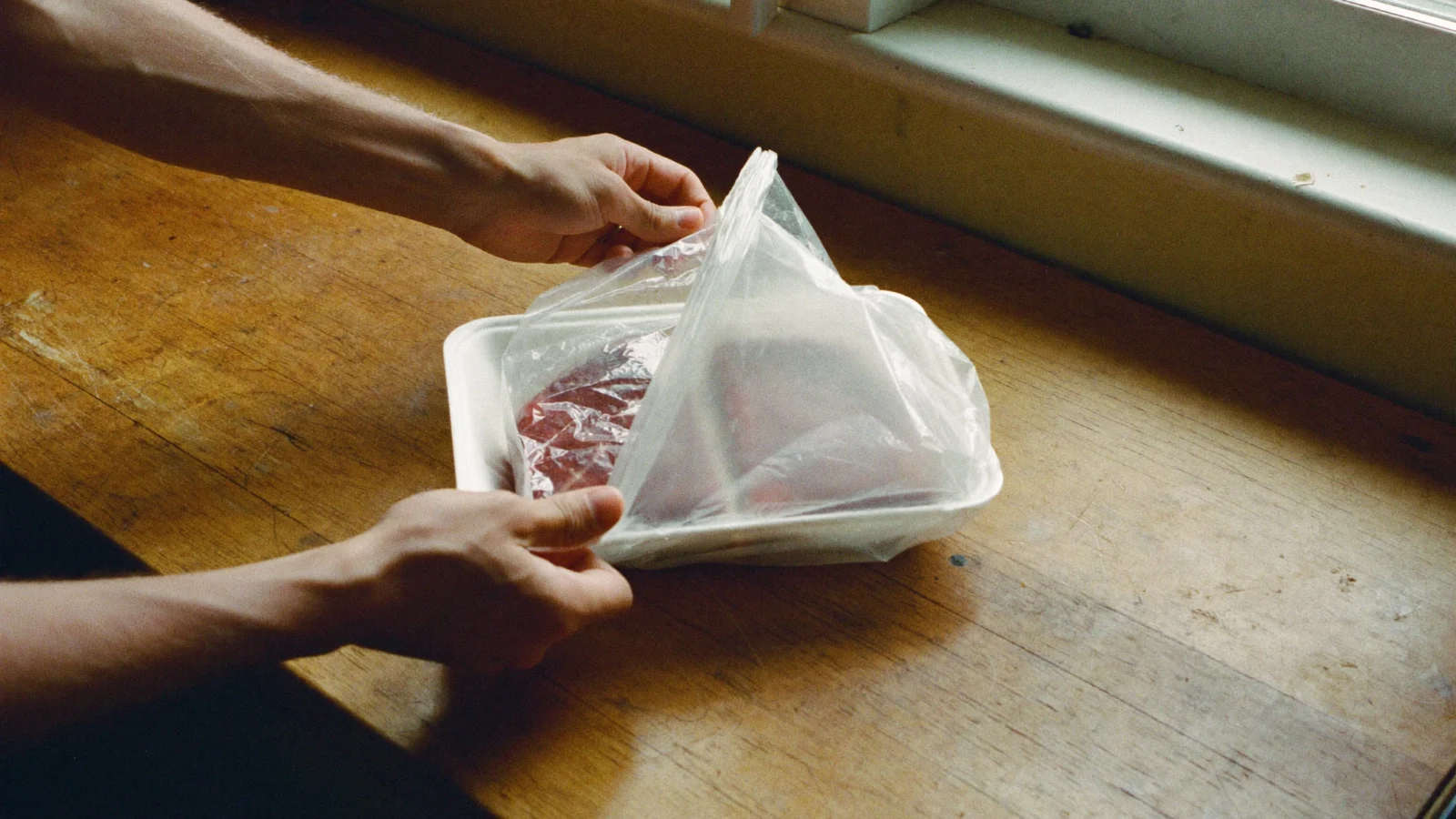
Next, contain the package. FSIS suggests putting raw beef in a plastic bag at the store, so any leakage cannot drip onto cooked food or produce. The same bag also works in the fridge, so keep it on until you cook.
Finally, skip the rinse. FSIS says it is not necessary to wash raw beef before cooking, since cooking destroys any bacteria on the surface. Rinsing, in fact, only spreads raw meat juice around the sink. The ground beef guide follows the same rules, although on a much shorter clock.
How to store steak so it lasts
To store steak so it lasts, keep it cold, sealed and on a clock. The fridge buys you days, while the freezer buys you months, so decide on day one which one each steak needs.
How do you store steak in the fridge?
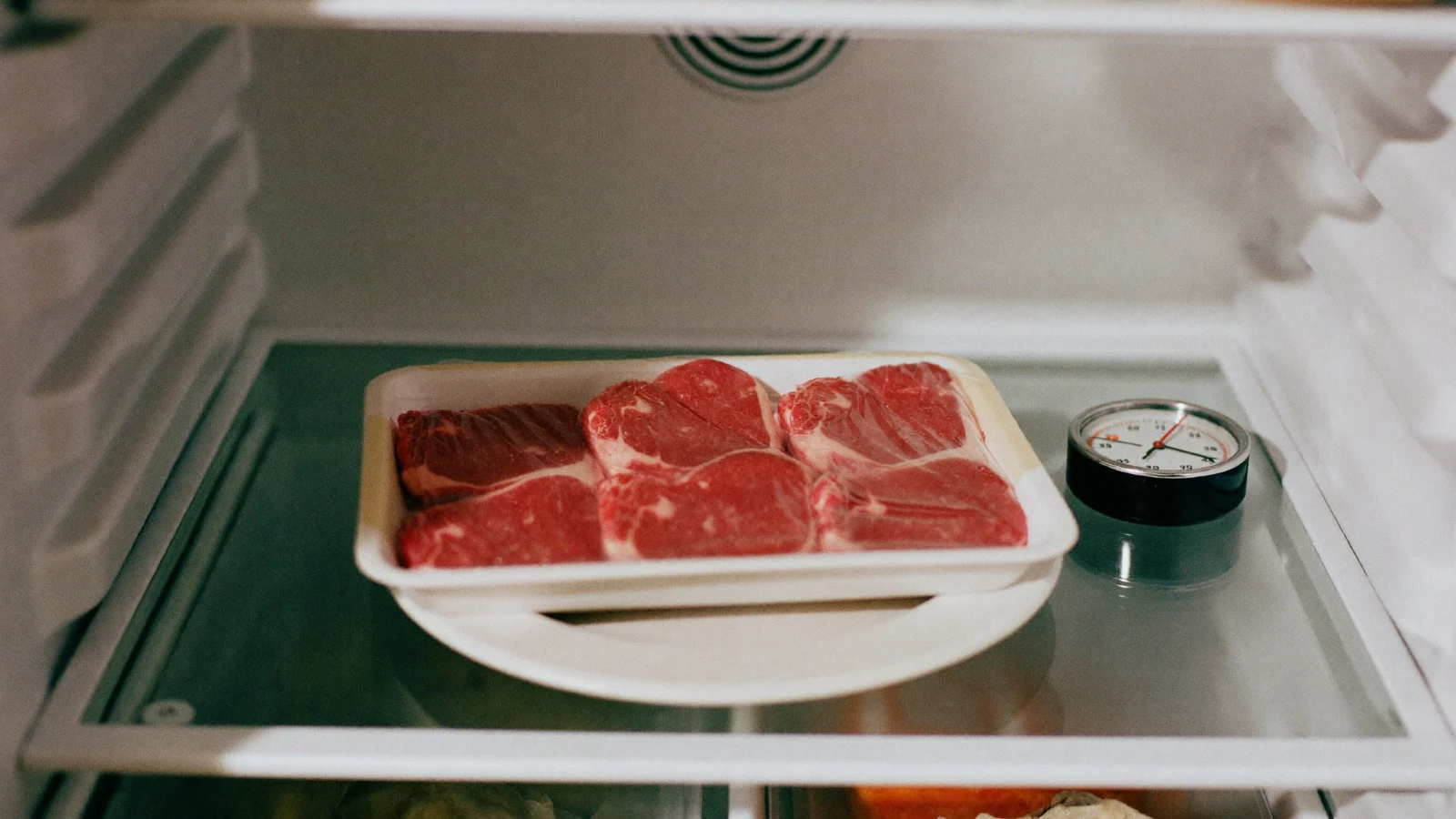
Steak keeps best in the fridge at 40°F or below, in its original package, for 3 to 5 days, according to the USDA Food Safety and Inspection Service. Leave it in the store wrapping, because opening it only adds handling. Then slip the package into a plastic bag or onto a plate, so no juice reaches other food. Check that your fridge really is at 40°F, since NDSU Extension builds its times on a fridge at 32 to 40°F.
Sealed, cool and dark, and nowhere near the cooker.
How long does steak last in the fridge?
Raw steak lasts 3 to 5 days in the fridge, according to the USDA Food Safety and Inspection Service, NDSU Extension and the USDA's FoodKeeper data. All three agree on that figure, which is rare. The USDA Food Safety and Inspection Service counts it from purchase when there is a sell-by date, so a steak bought on Monday wants cooking or freezing by Friday.
Thawed steak gets the same window. FSIS says beef thawed in the fridge stays safe there for another 3 to 5 days before cooking. So the clock resets once, but only if it thawed in the fridge.
Why is my steak brown or purple?
Steak turns purple without oxygen and brown after several days in the fridge, and both are usually chemistry rather than spoilage, according to the USDA Food Safety and Inspection Service. FSIS explains that a protein called myoglobin holds oxygen in the muscle. Without air it is purple, with air it turns bright cherry red, and after about 5 days it may turn brown. However, FSIS adds that beef which browns during extended storage may be spoiled, with an off smell and a tacky feel. So use your nose and your fingers, not just your eyes.
Can you dry-age steak in your fridge?
Dry-aging steak at home is not recommended by the USDA, because commercial aging takes 10 days to 6 weeks under controlled temperature and humidity. The USDA Food Safety and Inspection Service says plainly that it does not recommend aging beef in a home refrigerator. That is far past the 3 to 5 days it gives raw steak. So buy aged steak from a butcher, and treat it like any other steak once it is home.
How long does cooked steak last?
Cooked steak lasts 3 to 4 days in the fridge and 2 to 3 months in the freezer, according to the USDA Food Safety and Inspection Service, which gives those figures for home-cooked beef. Get leftovers into the fridge within 2 hours of cooking. Then slice what is left and keep it in a shallow, covered container, so it chills quickly.
Can you freeze steak?
Steak freezes well, and frozen beef stays safe indefinitely at 0°F, according to the USDA Food Safety and Inspection Service. Quality is a different matter, and the sources disagree on how long it lasts. FSIS gives steaks 6 to 12 months, whereas NDSU Extension and the USDA's FoodKeeper give 4 to 12 months. So aim to eat it within 4 months for the best texture.
How do you freeze steak?
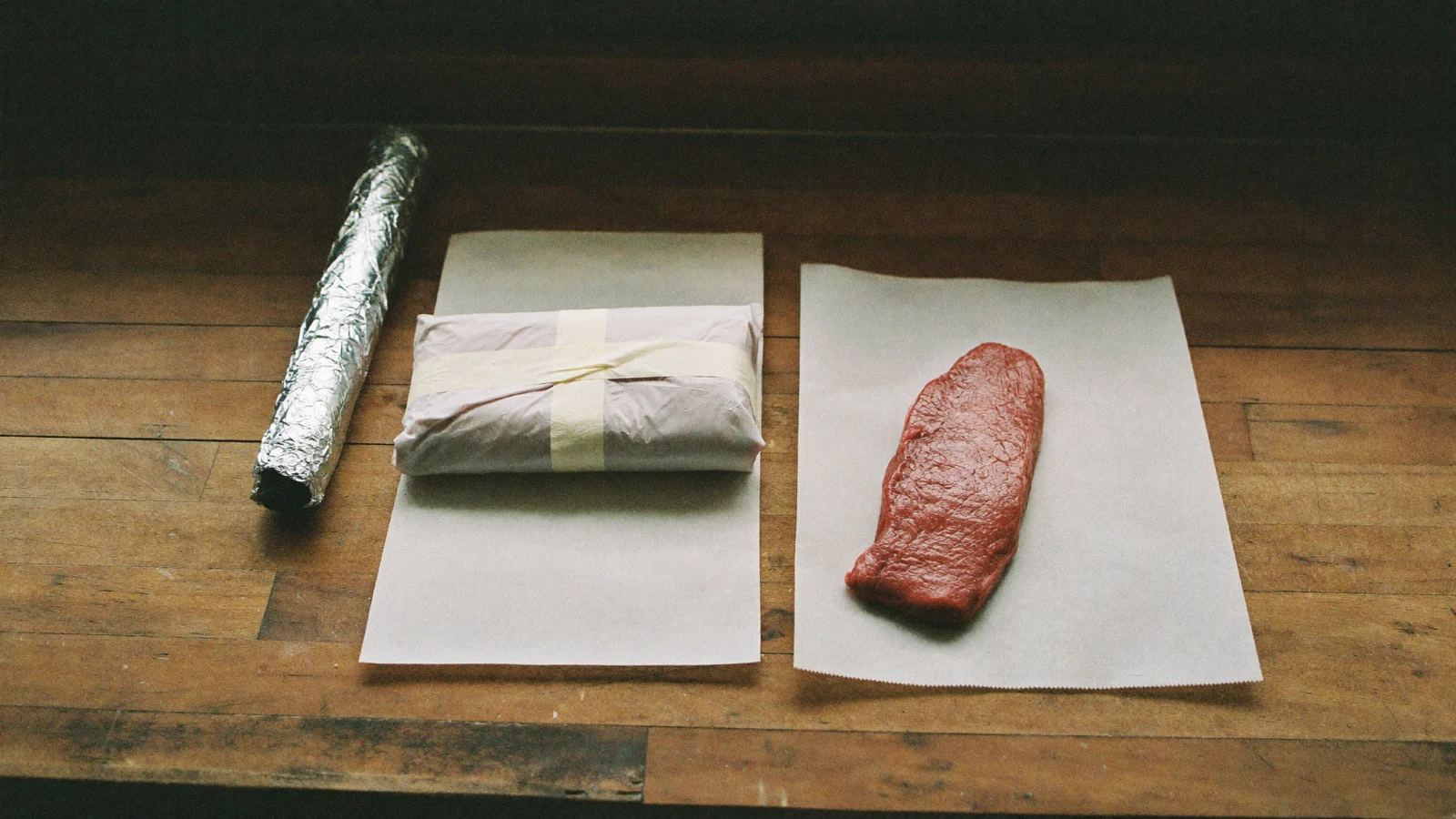
Steak can go into the freezer in its original package, but for more than 2 months it needs an extra airtight layer, according to the USDA Food Safety and Inspection Service. FSIS suggests overwrapping with heavy-duty foil, plastic wrap or freezer paper, or putting the package inside a plastic bag, because store plastic is porous. Then label the bag with the date, so you know which steak to use first.
Below 41 degrees it keeps for years, but it barely pours.
How do you thaw frozen steak?
Frozen steak should thaw in the fridge, in cold water or in the microwave, and never on the counter, according to the USDA Food Safety and Inspection Service. In the fridge, a steak may thaw within a day. In cold water, keep it in a leakproof bag and change the water every 30 minutes, which takes an hour or less for small packs. Cook microwave-thawed steak straight away, though, because parts of it may start to cook.
Is the red liquid in steak packaging blood?
The red liquid in a steak package is not blood, according to the USDA Food Safety and Inspection Service. FSIS explains that blood is removed at slaughter and that beef is about three-quarters water. That natural moisture, combined with protein, is what pools in the tray. So it is normal, although it is still raw meat juice, which is why the package belongs in a bag.
How to tell if steak has gone bad
Most color changes in steak are harmless, so color alone is a poor test. The reliable signs are smell and touch. The USDA Food Safety and Inspection Service describes spoiled beef as having an off smell and feeling tacky. Here is what each stage means, then.
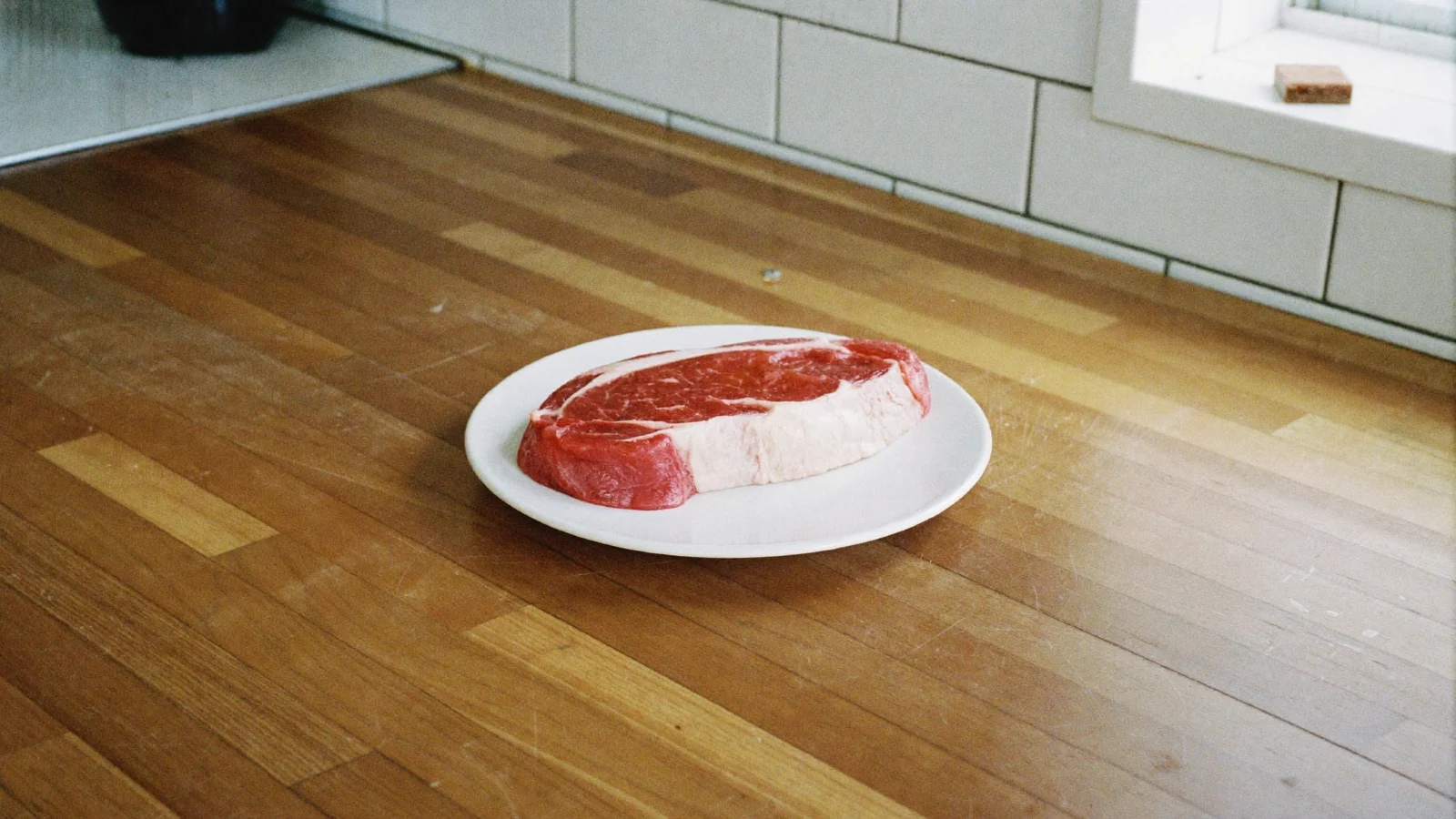
Verdict: use it
Bright red, fresh steak
Cherry red on the surface, firm and moist rather than wet, with a clean smell. That is myoglobin meeting oxygen, as FSIS explains, so it is how fresh beef looks in an overwrapped tray. Then cook it within the 3 to 5 days, to at least 145°F with a 3-minute rest.
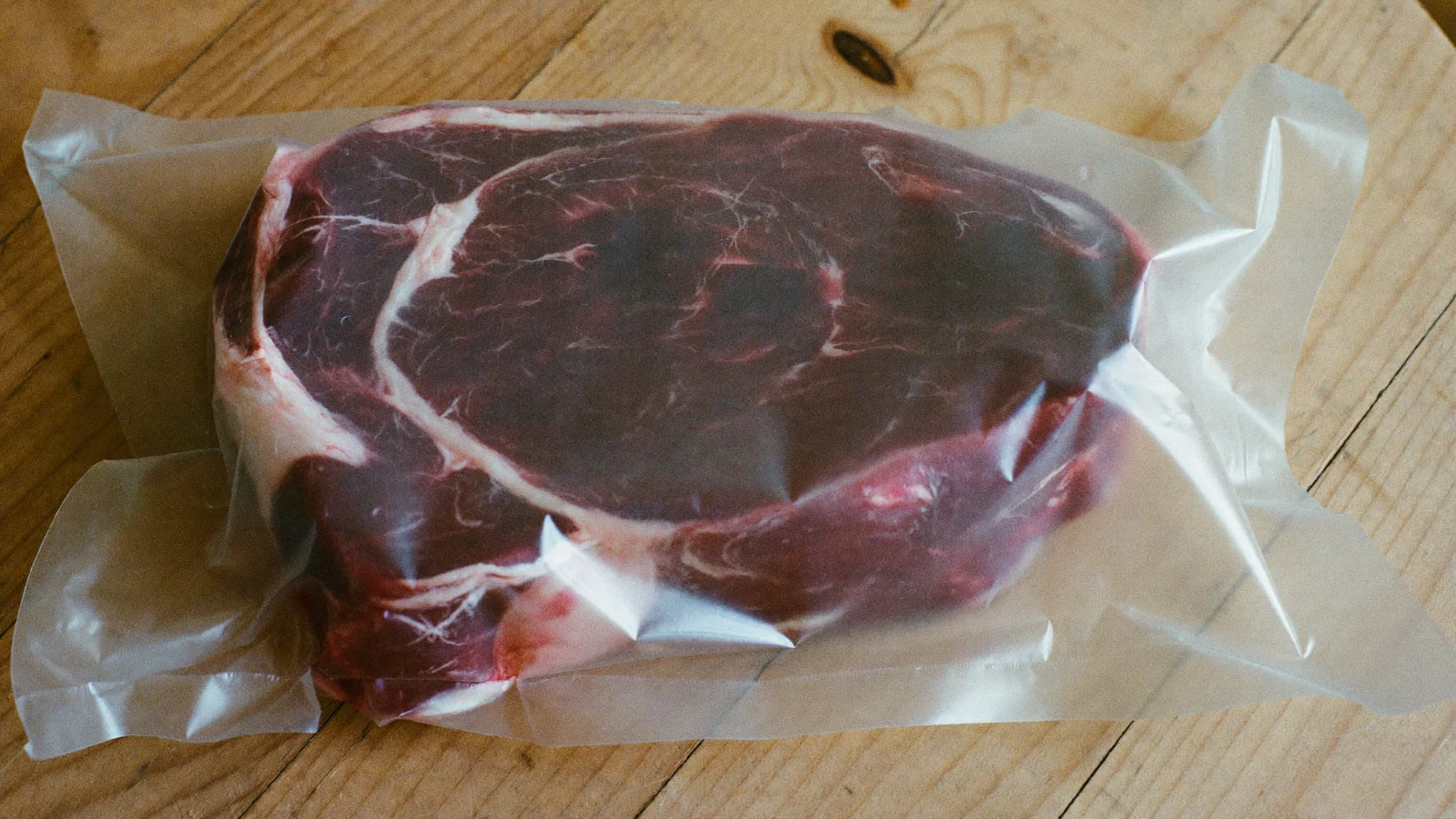
Verdict: let it breathe, then use it
Purple steak in a vacuum pack
Dark burgundy or purple, sealed tight in plastic. That is beef that has not met oxygen yet, and USDA Food Safety and Inspection Service guidance is that it turns cherry red after about 15 minutes in the air. So open it, let it bloom, and check the smell.
Verdict: smell and touch it
Brown or grey steak
Brown or grey patches after several days in the fridge. FSIS says beef may turn brown after about 5 days because the myoglobin changes. That alone is not spoilage, however. So if it smells clean and feels firm rather than tacky, cook it today. If it smells off or feels sticky, though, it has gone.
Verdict: cut it off
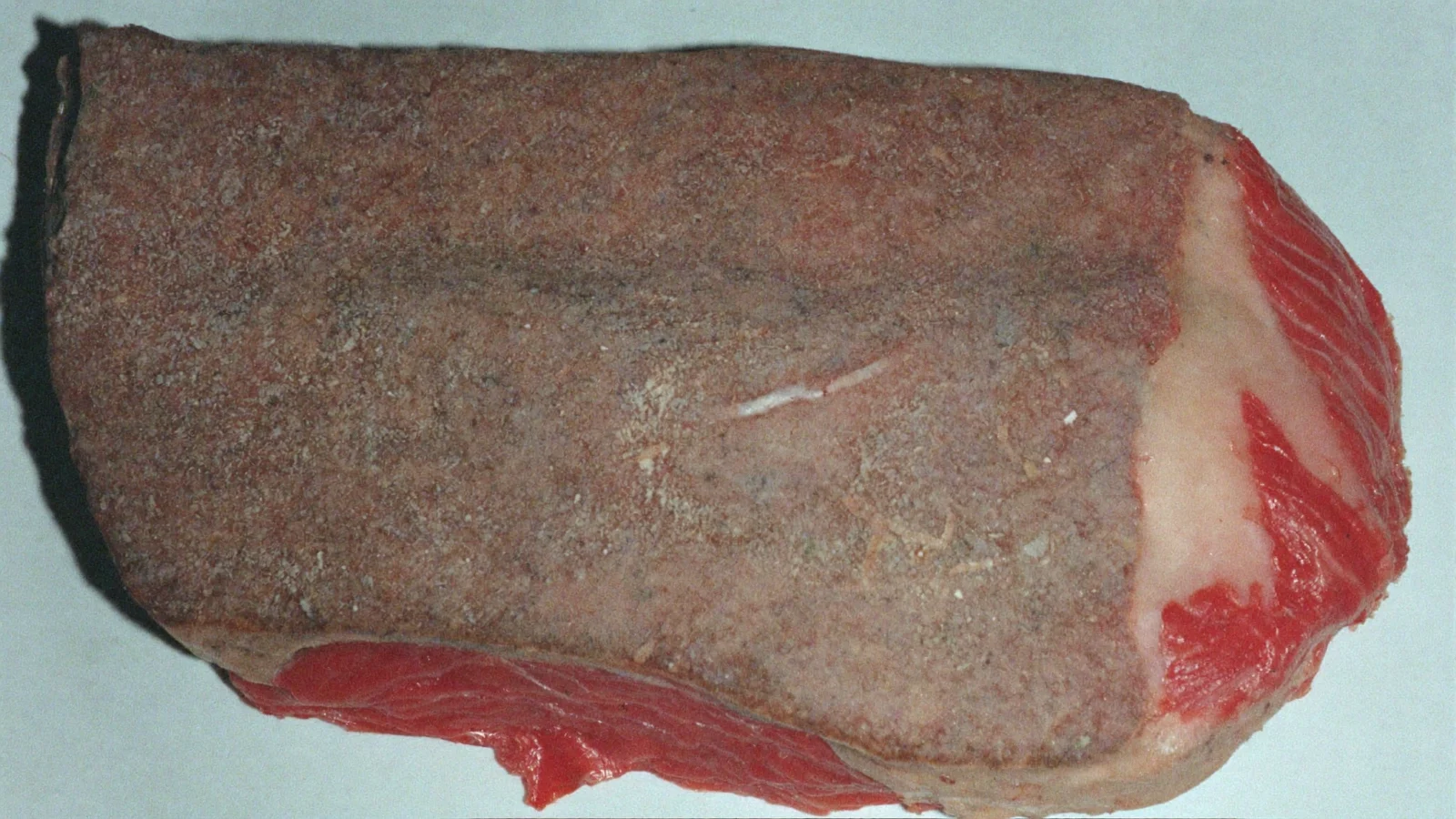
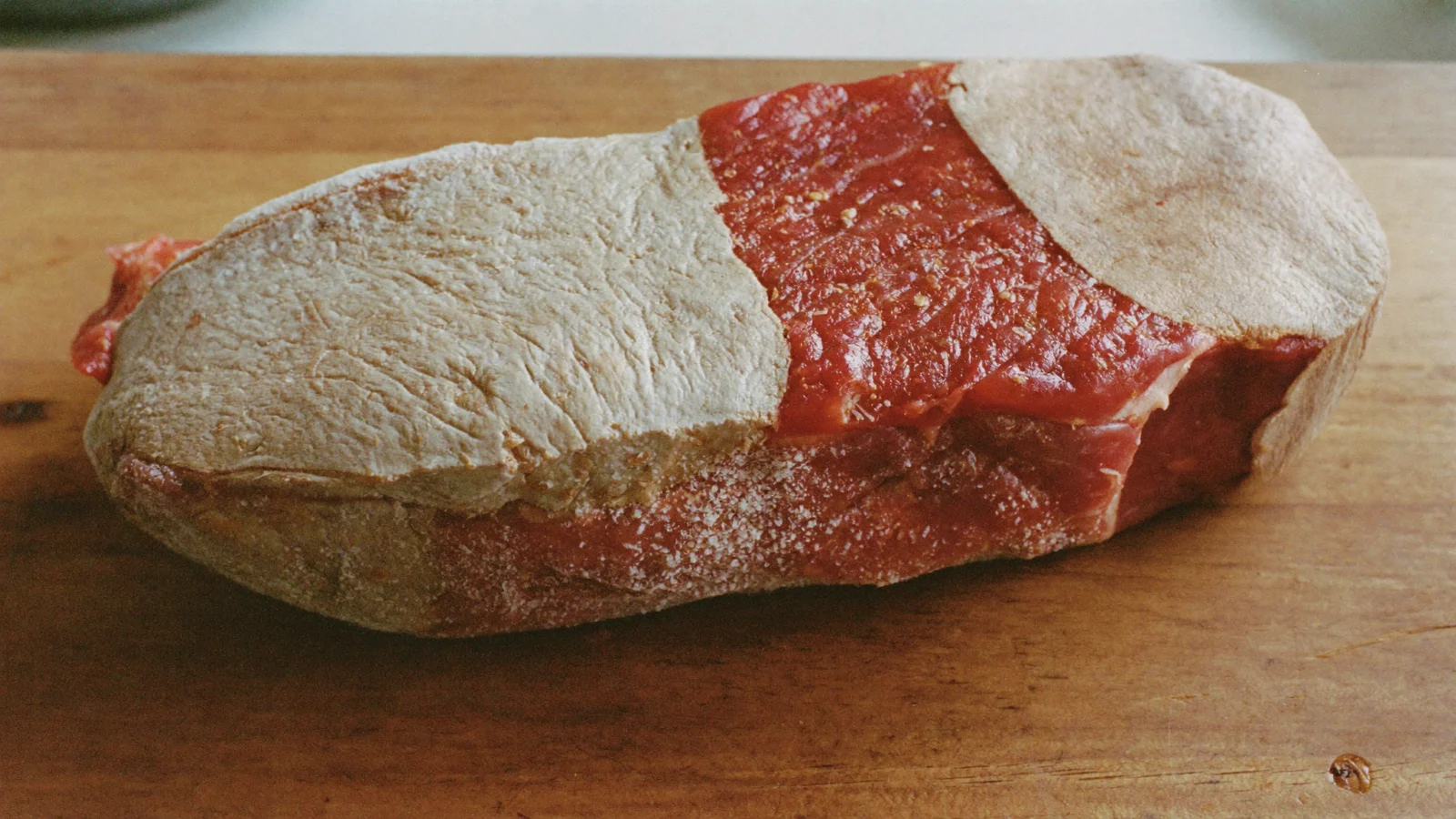
Freezer-burned steak
Greyish-brown, dry, leathery spots on a frozen steak. FSIS describes freezer burn exactly that way, and says it comes from air reaching the surface. It is a quality problem, not a safety one, so cut those parts away before or after cooking. A heavily burned steak may not be worth eating, though, which is why the overwrap matters.
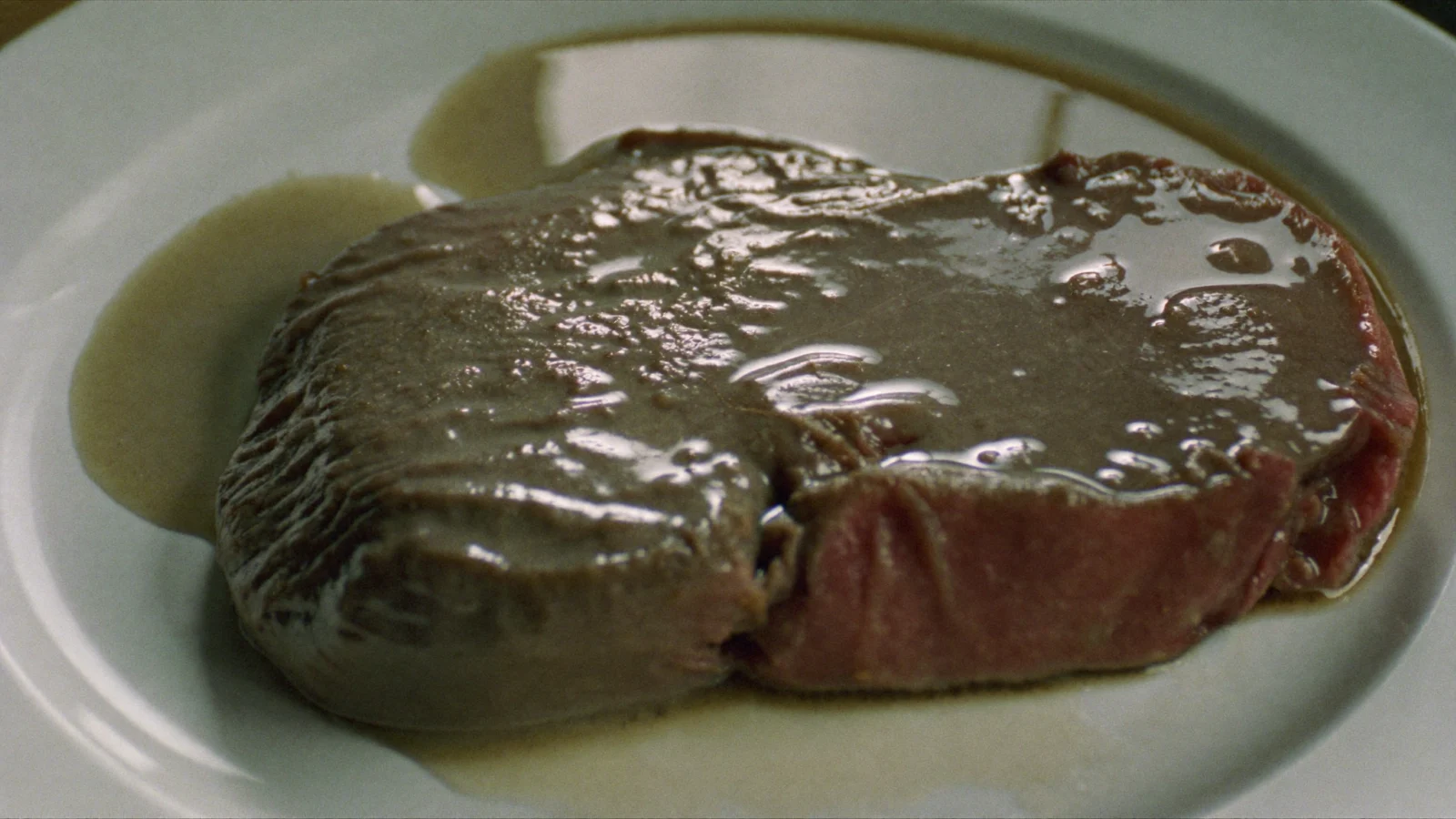
Verdict: throw it out
Slimy, sticky or sour-smelling steak
A slick or tacky surface, an off or sour smell, or both. The USDA Food Safety and Inspection Service names an off smell and a tacky feel as the signs that beef has spoiled. Cooking will not fix it. So bin it, wash your hands and the surface it touched, and check the date on any other meat from the same shop.
Can you eat steak left out overnight?
Steak left out overnight is not safe to eat, raw or cooked, because perishable food should not sit between 40 and 140°F for more than 2 hours, according to the USDA's Danger Zone rule. Above 90°F, the limit drops to 1 hour. A night on the counter is many hours past both. So throw it out, then check the food left out overnight list for the rest of the meal.
Steak substitutes
Out of steak, or did the last one turn? Then one of these will stand in.
Substitute
Works best in
What changes
Ground beef
Burgers and tacos
Cheaper, but only 1 to 2 days in the fridge, so cook it soon.
Pork chops
Grilling and pan-frying
Same 3 to 5 days in the fridge, per NDSU.
Firm tofu
Stir-fries
Press it first, so it sears well.
Mistakes people make when they store steak
These are the ways people store steak that cost them the most, and each one is easy to avoid.
Trusting the date over the clock. FSIS says to cook or freeze beef within 3 to 5 days of buying it, whatever the label says.
Freezing it in thin store wrap for months. FSIS asks for an airtight overwrap beyond 2 months, to stop freezer burn.
Thawing it on the counter. FSIS says never to defrost beef on the counter, so use the fridge or cold water.
Throwing out a purple or brown steak on sight. Color is often just myoglobin, so check the smell and feel first.
Dry-aging it in the home fridge. USDA does not recommend aging beef at home, because it takes 10 days to 6 weeks.
Rinsing it before cooking. FSIS says washing raw beef is not necessary, and it spreads juice around the sink.
Leaving cooked steak out after dinner. Get leftovers into the fridge within 2 hours, then eat them within 3 to 4 days.
Sources
Beef From Farm to Table, Food Safety and Inspection Service, U.S. Department of Agriculture, on raw steaks at 3 to 5 days in the refrigerator and 6 to 12 months frozen, home-cooked beef at 3 to 4 days and 2 to 3 months, using or freezing within 3 to 5 days of a sell-by date, myoglobin and purple, red and brown beef, spoiled beef smelling off and feeling tacky, overwrapping for freezing beyond 2 months, freezer burn, safe thawing, the liquid in the package, not rinsing beef, cooking to 145°F with a 3-minute rest, and not aging beef in a home refrigerator.
Food Storage Guide, Julie Garden-Robinson, NDSU Extension publication FN579, reviewed January 2023, on steaks and chops at 3 to 5 days in a refrigerator at 32 to 40°F and 4 to 12 months in a freezer at 0°F.
FoodKeeper App, Food Safety and Inspection Service, U.S. Department of Agriculture, whose published FoodKeeper data lists beef steaks at 3 to 5 days refrigerated and 4 to 12 months frozen.
Danger Zone (40°F-140°F), Food Safety and Inspection Service, U.S. Department of Agriculture, on the 2-hour limit for perishable food between 40 and 140°F and 1 hour above 90°F.
Storage times and safety advice on this page come from the sources above. Food safety depends on conditions I cannot see, so read the Disclaimer, and if in doubt, throw it out.
Other ingredient guides
Browse all guides



Share this guide
Never miss a guide
New ingredient guides when they go up, plus one storage tip worth knowing. Anything sponsored is labelled.

Emilly White