
Up to 1 month
Whole and unwashed, cool and dark. New potatoes: 2 weeks
Usually not
Cold turns the starch into sugar
Blanch first
Cut and blanched, not raw
The short version: to store potatoes well, keep them unwashed, in the dark, somewhere cool but not cold, and away from your onions.
Storage guidance from Purdue Extension, Iowa State University Extension and Colorado State University Extension.
On this page
How to choose potatoes that store well
Pick potatoes that will last before you worry about where to put them. That is because a bruised, soft or green potato is already on its way out.
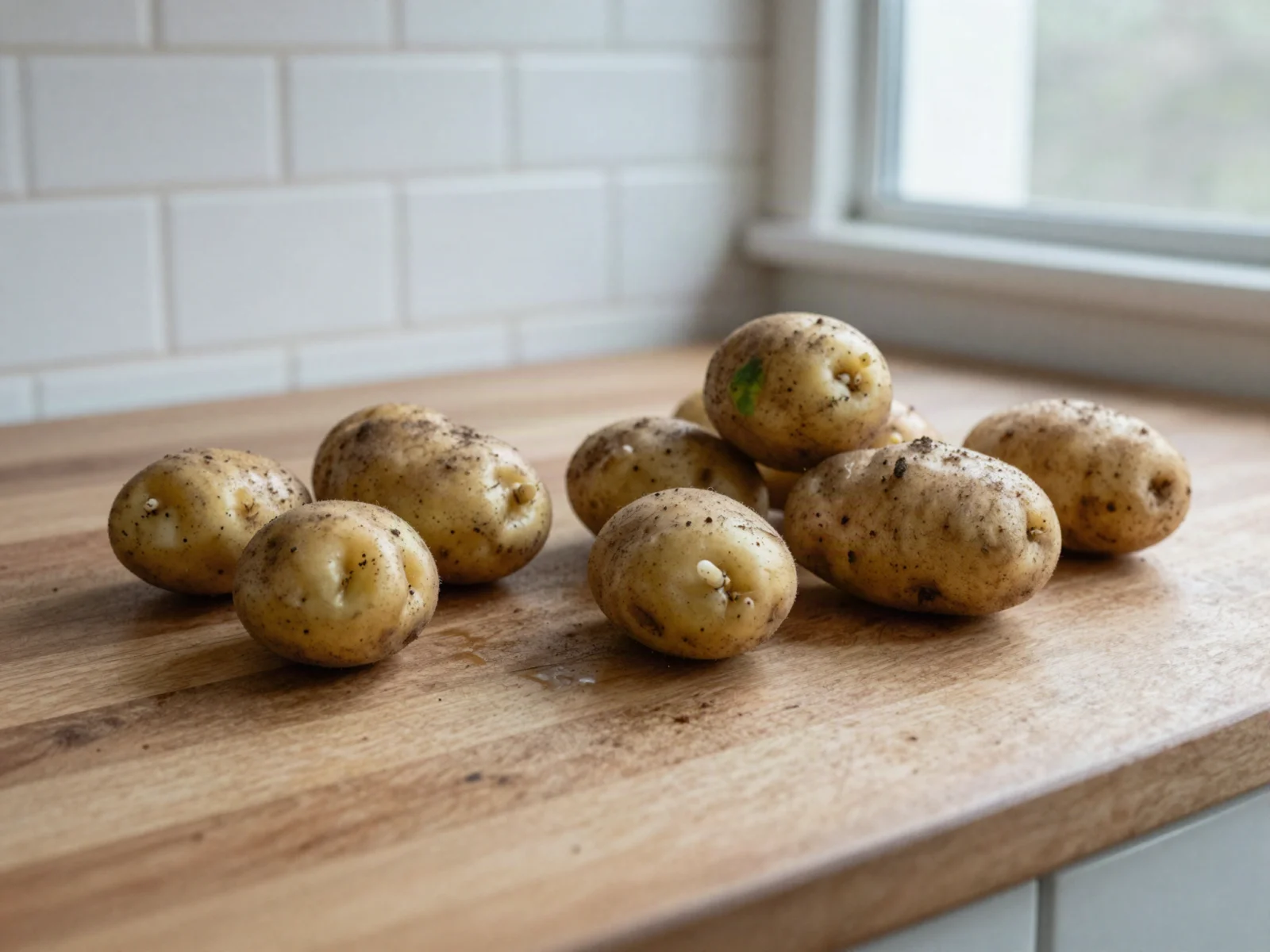
Unwashed potatoes on a kitchen counter, several with small sprouts at the eyes, as well as one with a green patch.
Firm all over. In other words, skip potatoes with soft spots.
Dry and clean. That is because damp potatoes spoil sooner.
About the same size. In particular, Purdue Extension suggests picking potatoes of a similar size.
No green, sprouts or blemishes. After all, soft, shriveled or blemished potatoes are the ones that spoil in storage.
How to store potatoes so they last
To store potatoes so they last, keep them whole and unwashed somewhere cool, dark, dry and well ventilated. Light turns them green, warmth makes them sprout sooner, and damp makes them rot.
How to store potatoes at home
First of all, put them in a brown paper bag in a dark cupboard, away from light and cold, as Purdue Extension suggests. Specifically, Iowa State University Extension gives 45 to 50°F as ideal, somewhere dark, dry and well ventilated. Brush off loose soil but do not wash them first: Colorado State University Extension notes that dampness promotes spoilage.
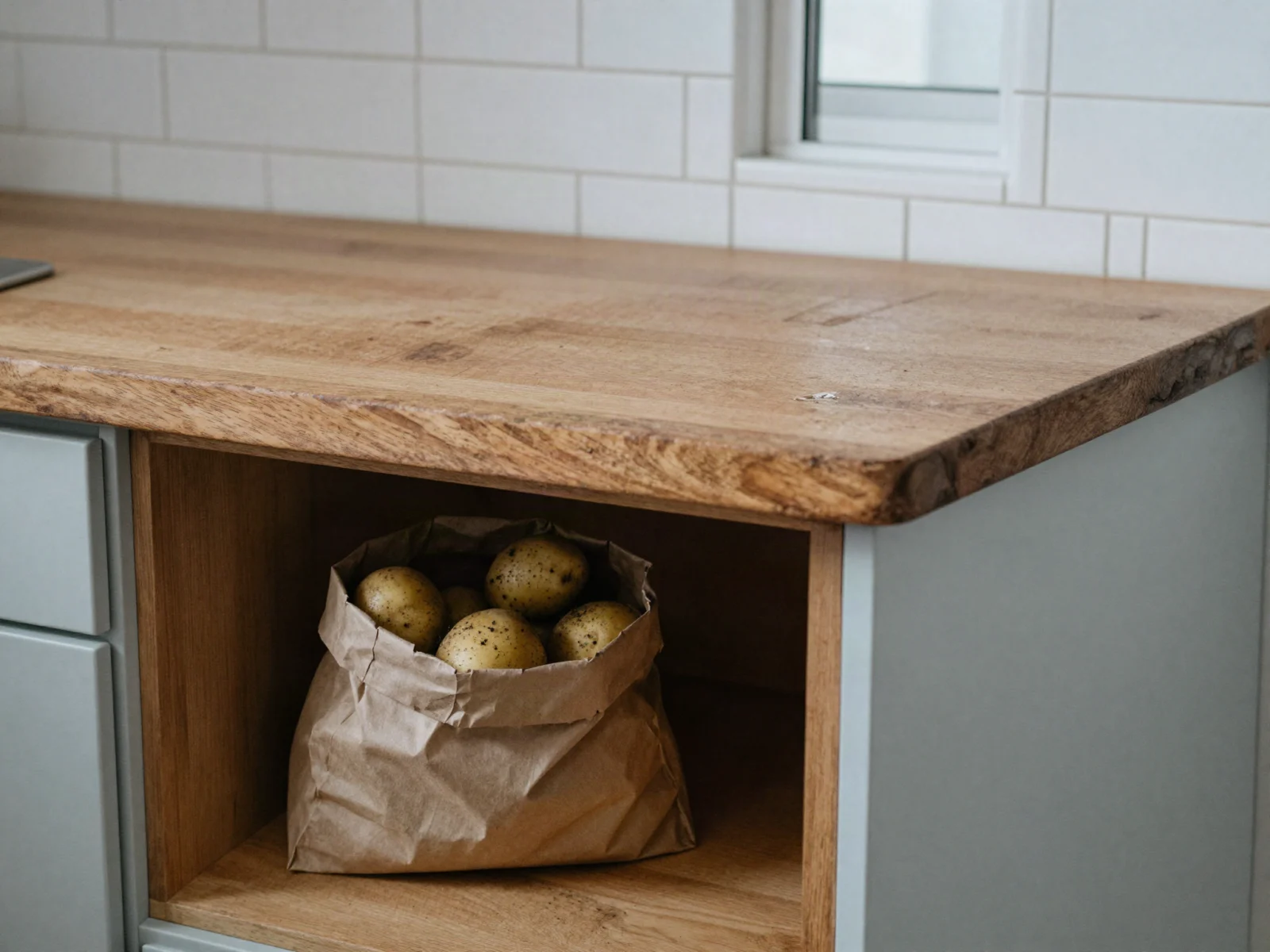
Potatoes in a brown paper bag on a shelf under the kitchen counter, so that light cannot reach them.
If you have a cardboard box, use it. In a storage comparison by The Kitchn, potatoes kept in a cardboard box did better than ones in a bowl, a basket, or a plastic or paper bag. In fact, they had the fewest sprouts, stayed firm, and kept the most flavor once cooked.
How long can you store potatoes?
In a kitchen cupboard, Purdue Extension says to use new potatoes within 2 weeks and larger storage potatoes within about a month. In a cool basement or garage they keep longer, though Nebraska Extension notes that above 45°F they start to sprout after two or three months.
However, most kitchens run warmer than the ideal 45 to 50°F. So treat Purdue's month as the upper end, keep the bag away from the oven and the dishwasher, and buy what you will use in a few weeks.
Should you store potatoes in the fridge?
Usually not. Iowa State University Extension, Purdue Extension and Colorado State University Extension all say to keep potatoes out of the fridge, because cold turns their starch into sugar. University of Minnesota Extension notes that cold storage keeps potatoes well but makes them discolor when fried, so keep potatoes for frying at 40 to 50°F. If cold potatoes taste sweet, Nebraska Extension says a few days at room temperature can bring the flavor back. Left cooked potatoes out overnight? See food left out overnight.
Should you wash potatoes before you store them?
No. Gently brush off dry soil and wash them just before cooking. Nebraska Extension says washing shortens storage life and also raises the chance of rot.
How to store potatoes after harvest
Cure them for about two weeks, then keep them cold, dark and humid. Leave freshly dug potatoes unwashed in a dark spot at 45 to 60°F with high humidity while the skins thicken and small cuts heal, as Nebraska Extension advises. After that, store them at 40 to 45°F and around 90 percent humidity, and sort out any cut or soft potatoes first, because they spoil in storage. University of Minnesota Extension cures them a little warmer, at 60 to 65°F for ten days or more.
Can you freeze potatoes?
Yes, but not raw. Freezing is a good way to store potatoes you will not get through, as long as you blanch or part-cook them first, the way university guidance does.
How to store potatoes in the freezer as cubes
Before freezing, clean and peel the potatoes, cut away any bad spots and cut them into 1/4 to 1/2 inch cubes. Colorado State University Extension says to blanch them in boiling water for about 5 minutes, cool them in ice water, drain well, then pack them into freezer bags or containers.
How to store new potatoes in the freezer
Peel or scrape and wash small new potatoes, then blanch them in boiling water for 3 to 5 minutes, depending on size. After that, pack them whole or cut, leaving 1/2 inch of headspace, as the National Center for Home Food Preservation advises.
How to freeze homemade French fries
Cut mature potatoes into strips and fry them at 360°F until tender but not browned. Drain, cool and freeze them. To serve, the National Center for Home Food Preservation finishes them in a 475°F oven until brown.
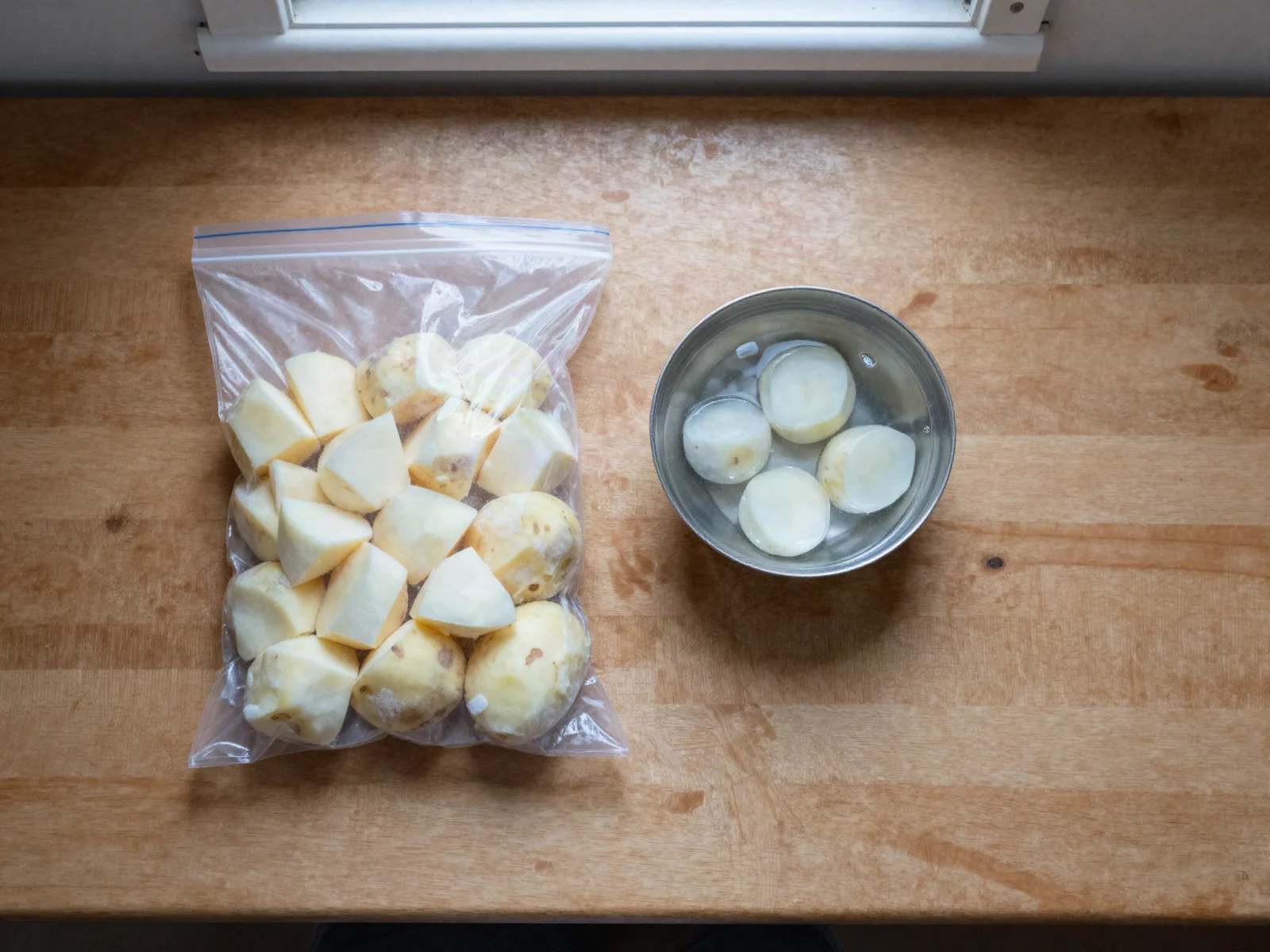
Peeled potato pieces packed in a freezer bag, while blanched pieces cool in a bowl of water.
How to tell if a potato has gone bad
However you store potatoes, many old ones are still usable once trimmed. Potatoes are the one vegetable in this collection where trimming comes with a real caveat, though, because the green parts and sprouts carry natural toxins. Soft, wet, smelly or badly green potatoes go in the bin, and so does any potato you are unsure about.
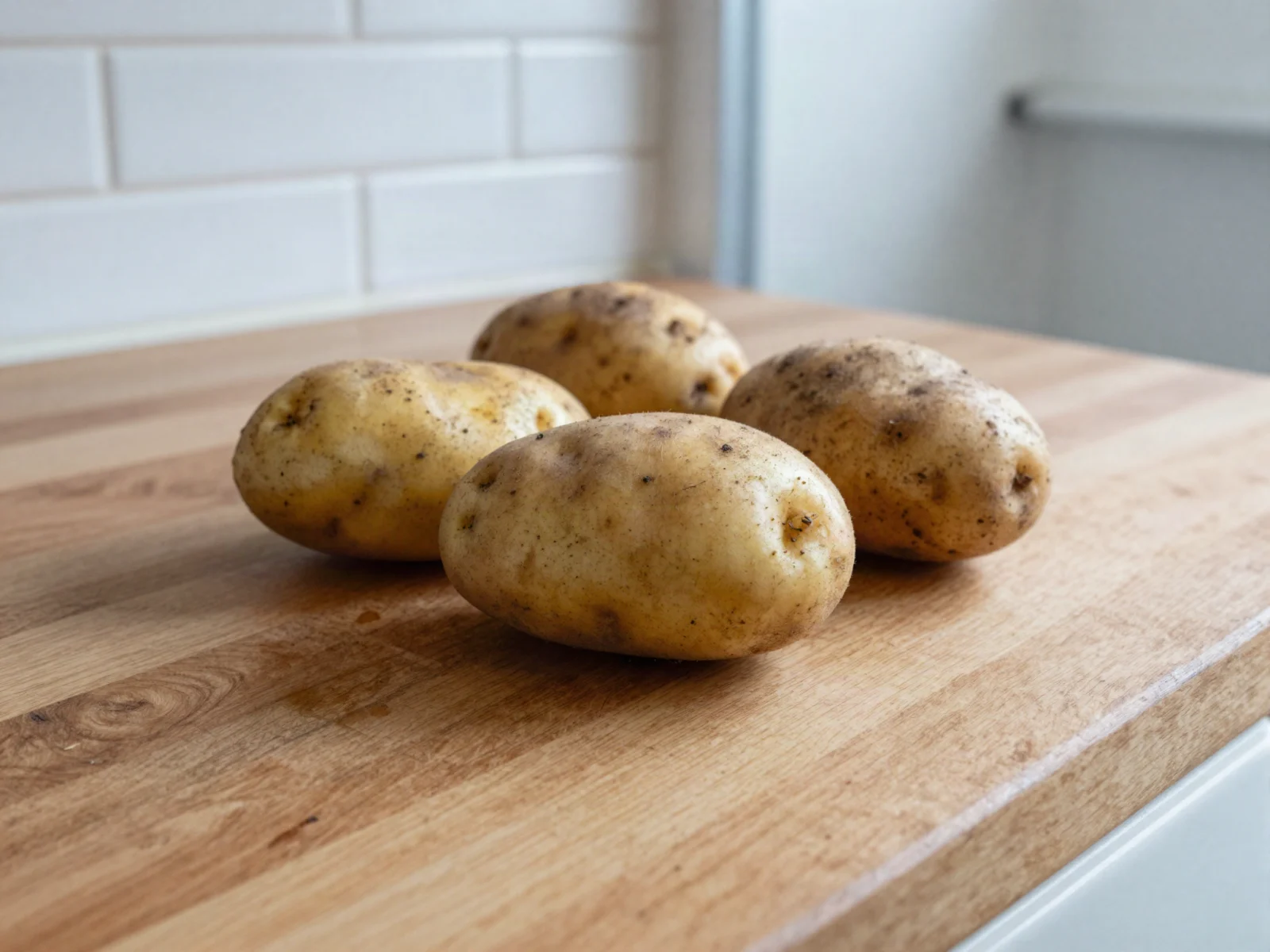
Verdict: use it
Fresh
Firm, dry and clean, with no green, sprouts or soft spots. That is also what Purdue Extension says to look for.
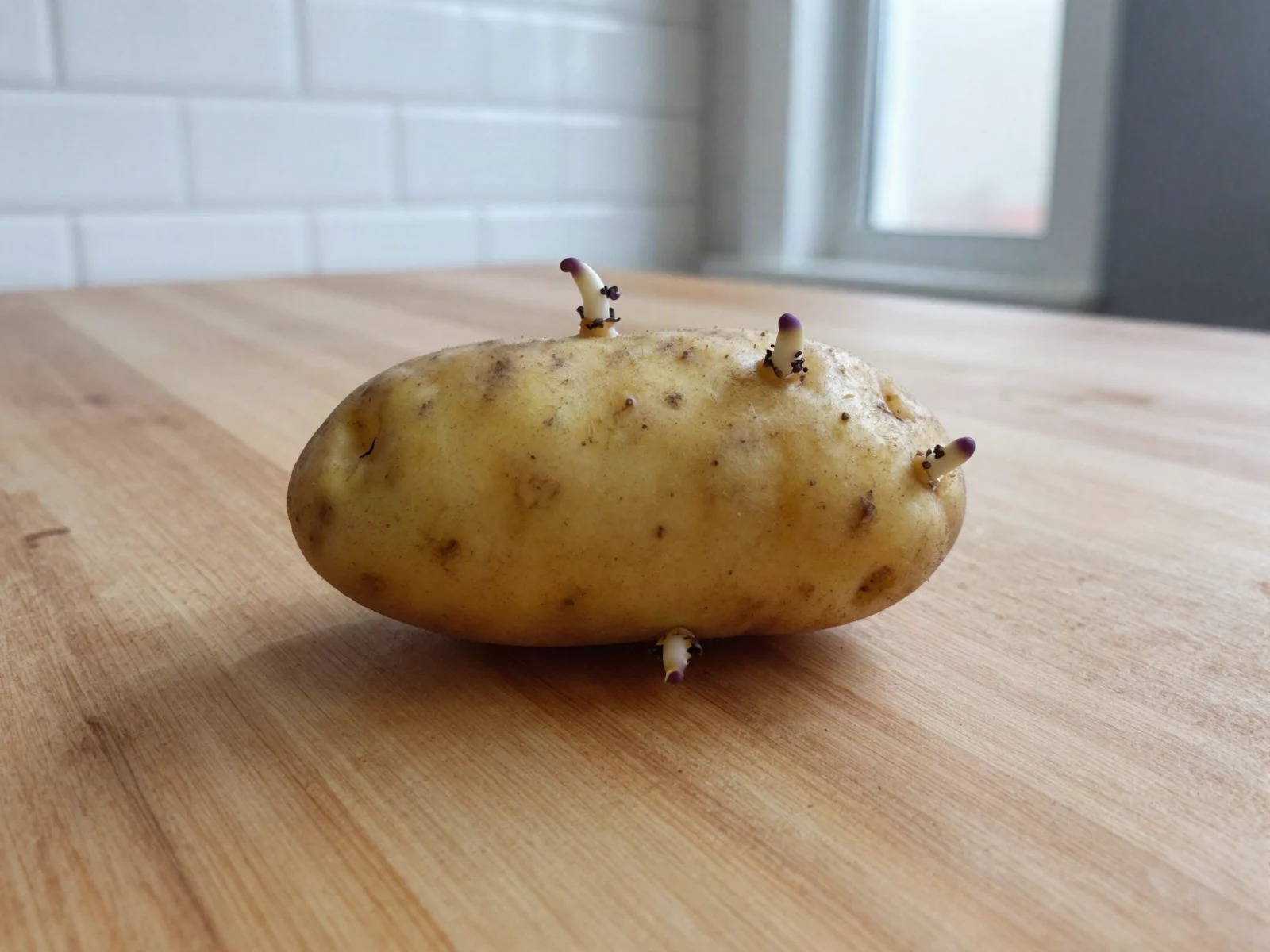
Verdict: cut out the sprouts
Potato with small sprouts, still firm
Sprouts mean the potato is starting to grow. University of Minnesota Extension warns the sprouts can be toxic, so cut them out along with any nubs, as Purdue Extension advises, and use the potato soon. Poison Control takes a stricter line and says you are better off throwing sprouted potatoes out. If you would rather not take the chance, follow Poison Control.
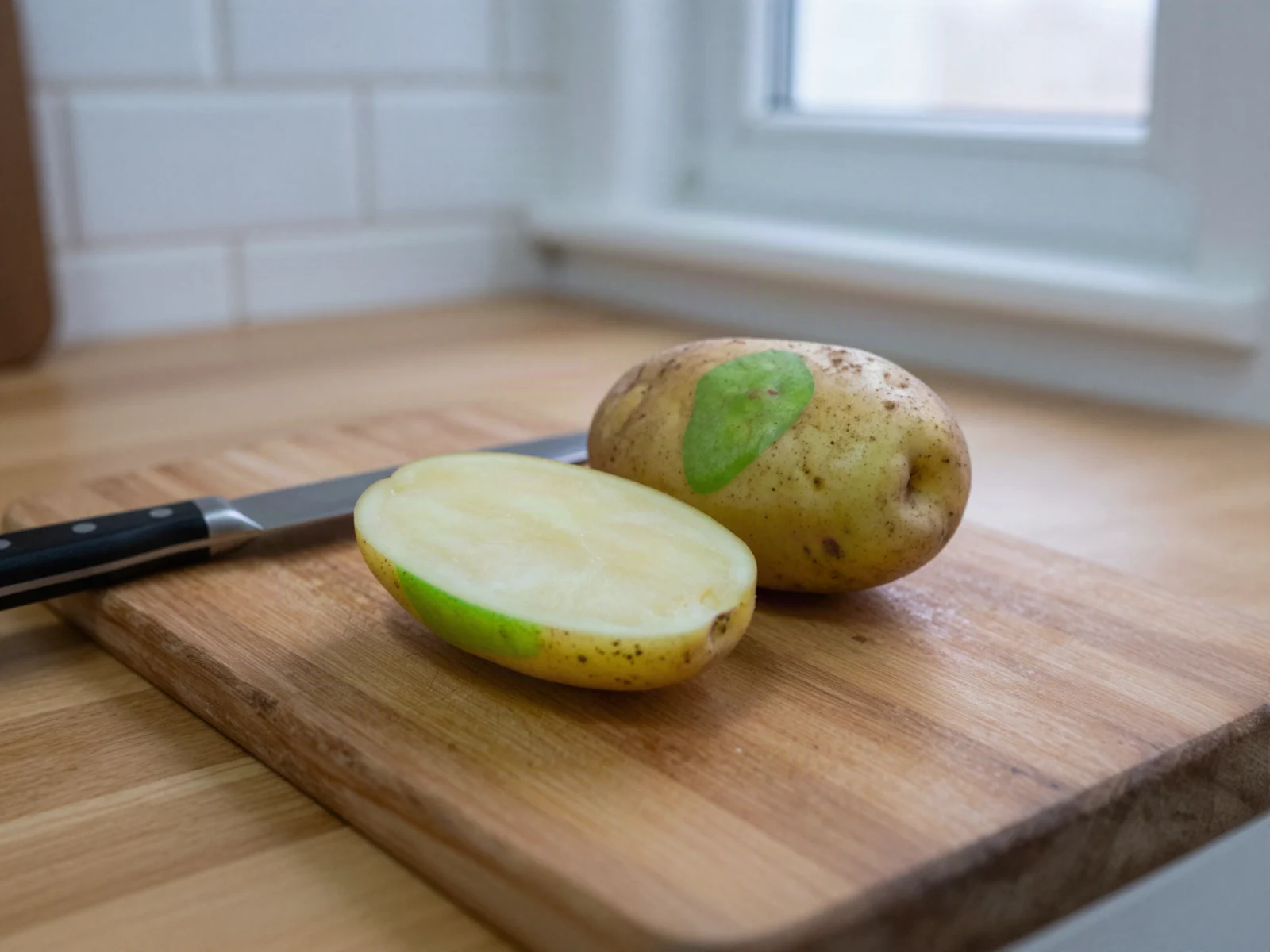
Verdict: cut away the green, or throw it out
Green potato skin
Green skin means the potato sat in the light, which also makes it produce solanine. Iowa State University Extension says peeling it and cutting out the green parts removes most of the toxin, and University of Minnesota Extension advises against eating a potato that is extensively green. Poison Control goes further: cooking does not destroy these toxins, and it says you are better off tossing green potatoes.
Verdict: throw it out
Shriveled potato with long sprouts
Iowa State University Extension advises throwing out a potato that has shriveled and has sprouts 1 inch or longer. Nebraska Extension also sorts out soft and shriveled potatoes, because they spoil in storage.
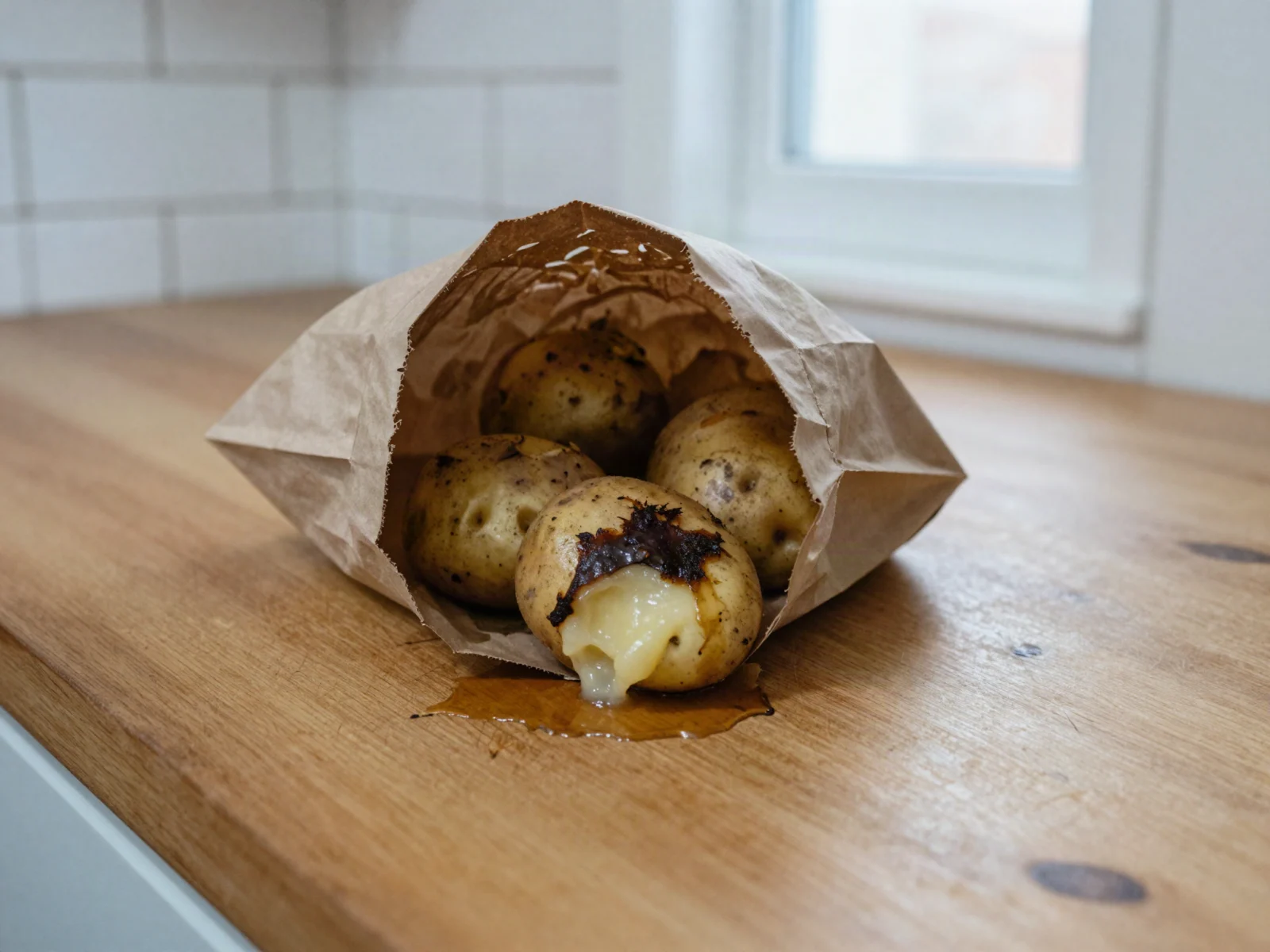
Verdict: throw it out
Wet rot or a bad smell
Soft rot starts as a creamy to tan patch with a brown or black edge and slowly turns the inside to liquid. Another rot, called leak, smells strongly, like rotting fish. University of Nebraska–Lincoln Extension says rotting potatoes are best discarded, and its ooze spreads rot, so check the potatoes that were touching it.
What if you ate a green or sprouted potato?
Solanine poisoning mostly causes vomiting, stomach pain and diarrhea, sometimes with headache, flushing, confusion or fever, according to Poison Control. Symptoms usually start within a few hours but can take up to a day. If you are worried, call Poison Control at 1-800-222-1222.
Can you store potatoes and onions together?
No. Iowa State University Extension advises keeping them apart, because onions give off ethylene gas, which makes potatoes spoil sooner. The onion guide covers the other side.
Potato substitutes
No usable potatoes left? Then these fill the gap.
Substitute
Works best in
What changes
Sweet potatoes
Roasting, mashing and soups
Sweeter and softer.
Cauliflower
Mash and creamy soups
Lighter and less starchy.
Parsnips or turnips
Roasting and stews
Earthier or sharper in flavor.
Frozen hash browns or fries
Breakfast and quick sides
Already cut. Cook from frozen.
Mistakes people make when they store potatoes
These are the ways people store potatoes that cost them the most, and each one has an easy fix.
Keeping them in the fridge. Cold turns the starch into sugar, so use a cool, dark cupboard instead.
Leaving them in the light. Since light turns potatoes green, keep them in a bag or a dark cupboard.
Washing them before storing. Damp potatoes rot sooner. Wash them just before cooking.
Storing them with onions. Keep them apart, because onions make potatoes spoil sooner.
Leaving a rotting potato in the bag. Rot spreads through its ooze, so remove it and then check the rest.
Freezing them raw. Blanch potato cubes for about 5 minutes before freezing.
Trusting the green to cook off. Cooking does not destroy the toxins in green potatoes, so peel and trim generously, or throw the potato out.
Sources
Potato, FoodLink, Purdue Extension. Choosing potatoes, cupboard storage, green skin and sprouts.
Spouting or Greening Potatoes . . . Keep or Toss?, AnswerLine, Iowa State University Extension and Outreach, April 2024. Sprouts, green skin, storage temperature and onions.
Potatoes: Harvesting & Storage, Nebraska Extension in Lancaster County, August 2021. Storage conditions, washing, sprouting and sweetening.
Wet Rots of Potato in Storage, University of Nebraska–Lincoln Extension, 2013. What soft rot and leak look and smell like.
Growing potatoes in home gardens, University of Minnesota Extension, reviewed 2026. Cold storage, frying potatoes, green skin and sprouts.
How to Use Potatoes, Food Smart Colorado, Colorado State University Extension. Storage, washing and freezing cubes.
Freezing New Irish Potatoes, National Center for Home Food Preservation, University of Georgia. Freezing new potatoes and French fries.
Should You Refrigerate Potatoes? How to Store Spuds the Right Way, Andrea Rivera Wawrzyn, The Kitchn, October 2025. Cardboard box compared with a bowl, basket and bags.
Are sprouted potatoes safe to eat?, National Capital Poison Center (Poison Control). Solanine in green and sprouted potatoes, and symptoms.
Storage times and safety advice on this page come from the sources above. Food safety depends on conditions I cannot see, so read the Disclaimer, and if in doubt, throw it out.
Other ingredient guides
Browse all guides
Share this guide
Never miss a guide
New ingredient guides when they go up, plus one storage tip worth knowing. Anything sponsored is labelled.

Emilly White