
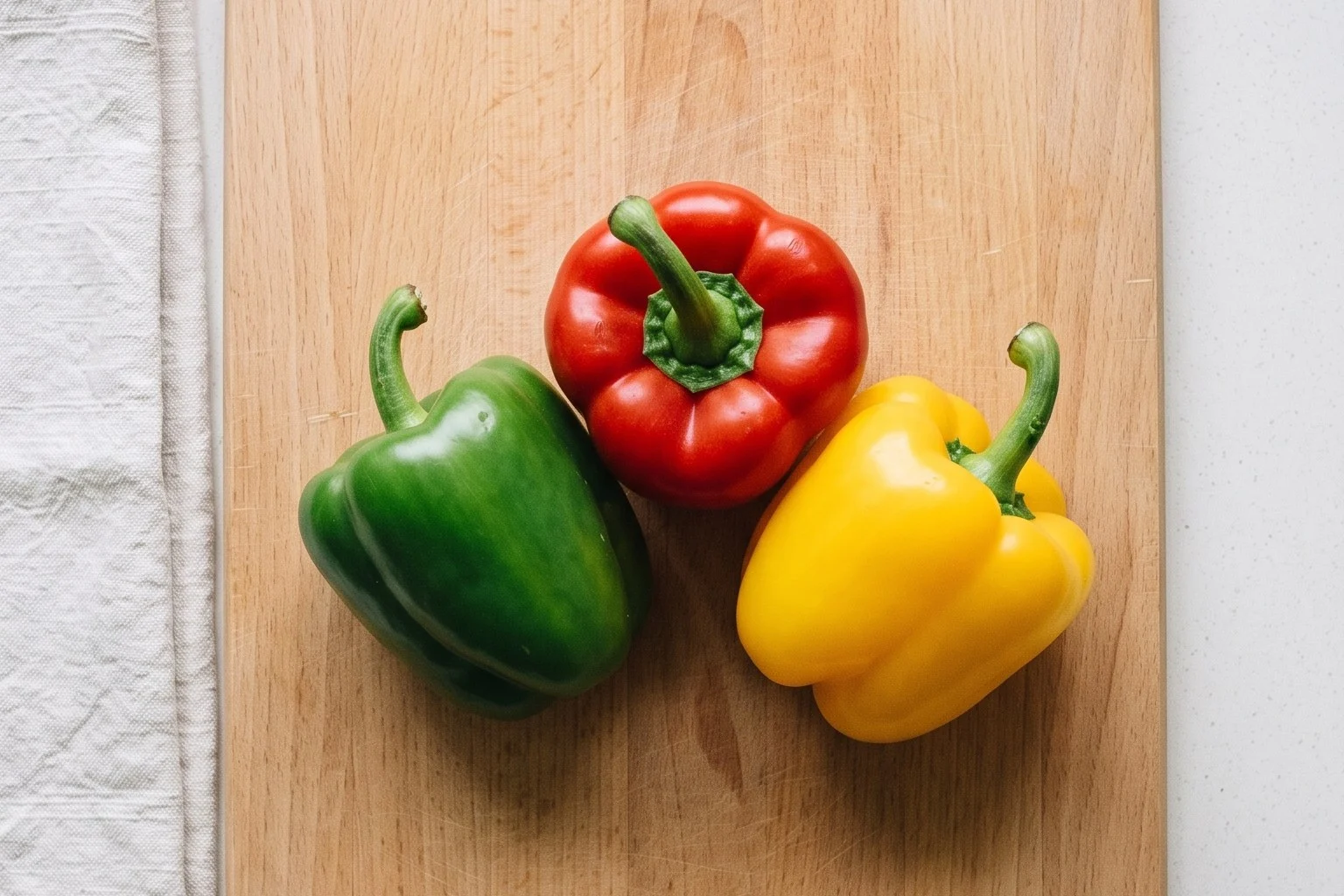
Not for storage
Every source here keeps whole peppers in the fridge
4 to 14 days
Whole, dry and unwashed. Cut: 2 to 3 days
6 to 8 months
Raw for crunch, blanched for cooking. Hot peppers: 9 months
The short version: to store peppers well, keep them whole, dry and unwashed in a breathable bag in the low-humidity drawer, and eat the red, orange and yellow ones before the green.
Storage times from the USDA FoodKeeper data, UC San Diego and University of Minnesota.
On this page
How to choose peppers that will store well
A pepper keeps only as well as it was when you bought it, and the color you pick matters more than most people expect.
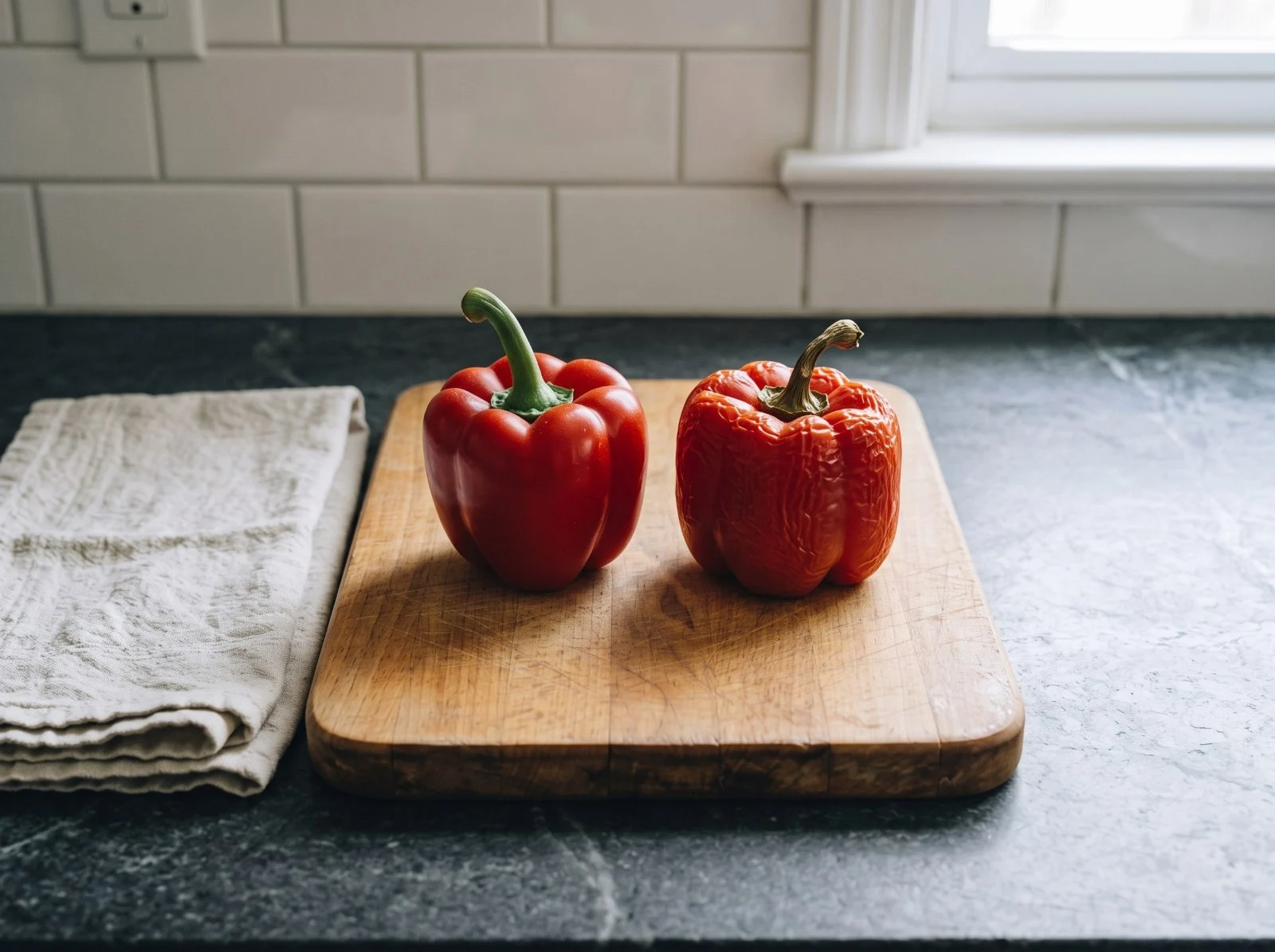
A firm, glossy red bell pepper with a fresh green stem, compared to an older one with wrinkled skin and a dried stem.
Heavy for its size. UC San Diego and the University of Minnesota both look for a pepper that feels heavy in the hand.
Firm, smooth and shiny skin. Also skip peppers that are soft, shriveled, bruised or broken.
A fresh green stem and no black spots. In fact, UC San Diego lists both as signs of a pepper worth buying.
Green if it has to last. Green peppers keep longer than red, orange or yellow ones, so buy colors for this week and green for next.
How to store peppers so they last
To store peppers so they last, keep them cold, dry and whole. That is because water on the skin, a sealed bag and a cut side are the three things that shorten their life.
How to store peppers in the fridge
Leave them unwashed and put them in a breathable bag in the low-humidity crisper drawer, as UC San Diego advises. Wash them just before you eat them, which the University of Minnesota also recommends, and give the crevices around the stem a proper rinse then.
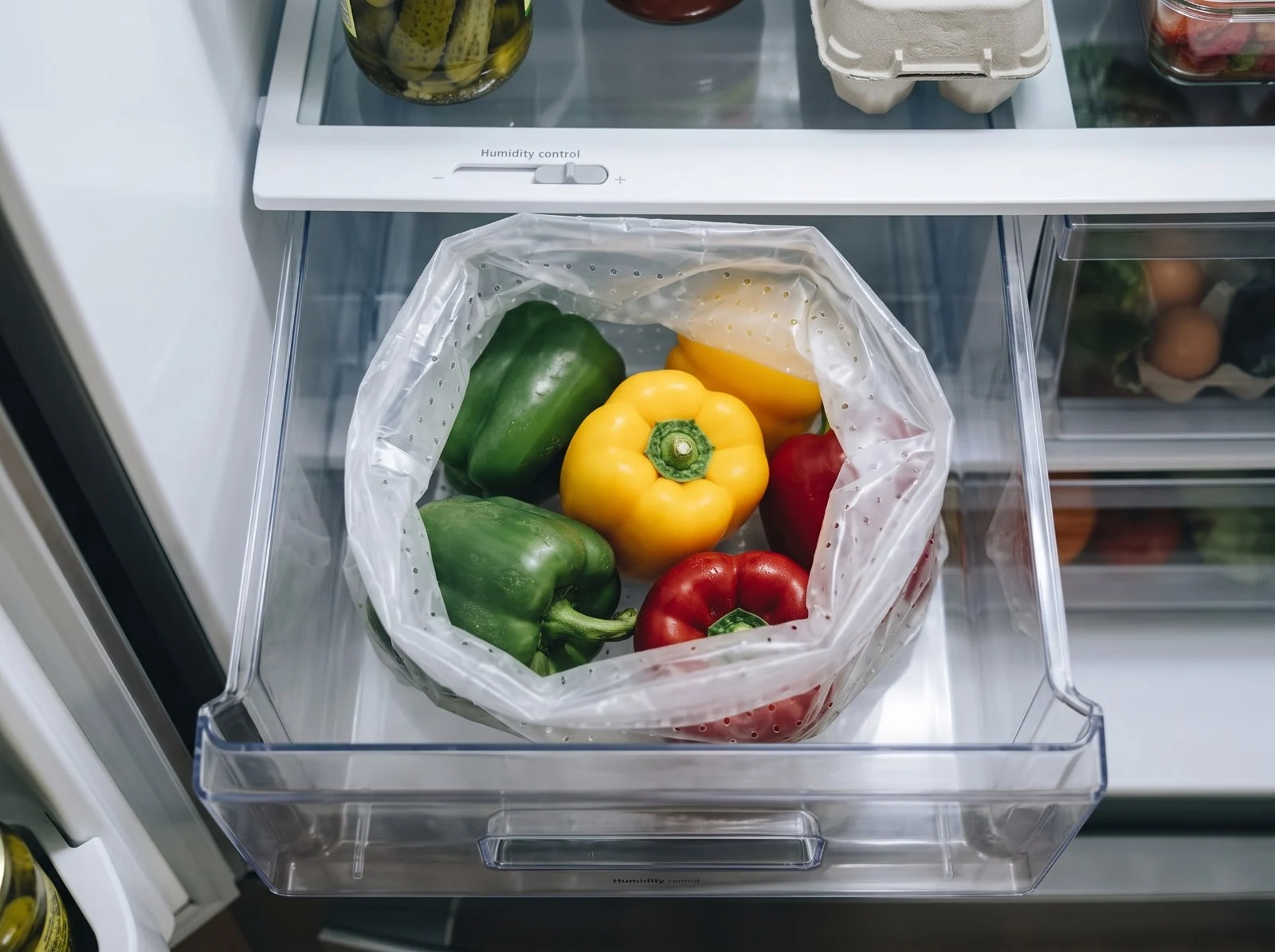
Whole, unwashed green, red and yellow bell peppers in a perforated produce bag in the crisper drawer, so that air can reach them.
How long can you store peppers in the fridge?
However, the sources do not agree. UC San Diego gives whole peppers up to 5 days, the University of Minnesota up to a week, and the USDA FoodKeeper data 4 to 14 days. The spread is mostly about color and how fresh the pepper was when you bought it.
That is why color matters. UC San Diego notes that green peppers last longer than red, orange or yellow ones, and the University of Minnesota explains that a red pepper is just an extra-ripe green one. A riper pepper has less time left, so eat the colored ones first and plan on the shorter end of the range for them.
How to store cut peppers
Put cut peppers in a covered, airtight container in the fridge. The University of Minnesota gives them 2 days, while UC San Diego gives up to 3. Go by the shorter one, and if you will not get to them in that time, freeze them instead.
How to store hot peppers
Hot peppers keep for about a week in the fridge, according to the USDA FoodKeeper data, which adds that fresh whole peppers last longer if you keep them dry. When frozen, they keep about 9 months.
Should you wash peppers before you store them?
No. Both UC San Diego and the University of Minnesota say to wash peppers just before eating. You will also see a vinegar soak recommended online as a way to make peppers last weeks longer. None of the university or government sources on this page mention it, so this guide does not recommend it. The same rule applies to spinach and strawberries: water on the surface is what speeds up spoilage.
Can you freeze peppers?
Yes, and it is the best way to store peppers you will not use in a week. The USDA FoodKeeper data gives bell peppers 6 to 8 months in the freezer and hot peppers about 9, and its hot pepper entry notes that peppers lose their crispness once frozen and thawed. Decide before you freeze whether they are for salads or for cooking, because that decides the method.
How to store peppers in the freezer raw
For the crispest result, the National Center for Home Food Preservation packs them raw: wash, cut out the stem, halve and seed the peppers, then cut them into 1/2-inch strips or rings if you like. Pack them with no headspace, seal and freeze. Raw-frozen peppers work in uncooked dishes as well as cooked ones. UC San Diego suggests freezing the pieces on a baking sheet first, then moving them to an airtight container, so they stay loose.
How to blanch peppers before you store them in the freezer
If the peppers are only for cooking, you can blanch them first. The National Center for Home Food Preservation blanches halves for 3 minutes and strips or rings for 2, then cools them promptly, drains them and packs them with 1/2 inch of headspace.
How to freeze hot peppers
Hot peppers are simpler still. The National Center for Home Food Preservation just washes and stems them, packs them with no headspace, seals and freezes.
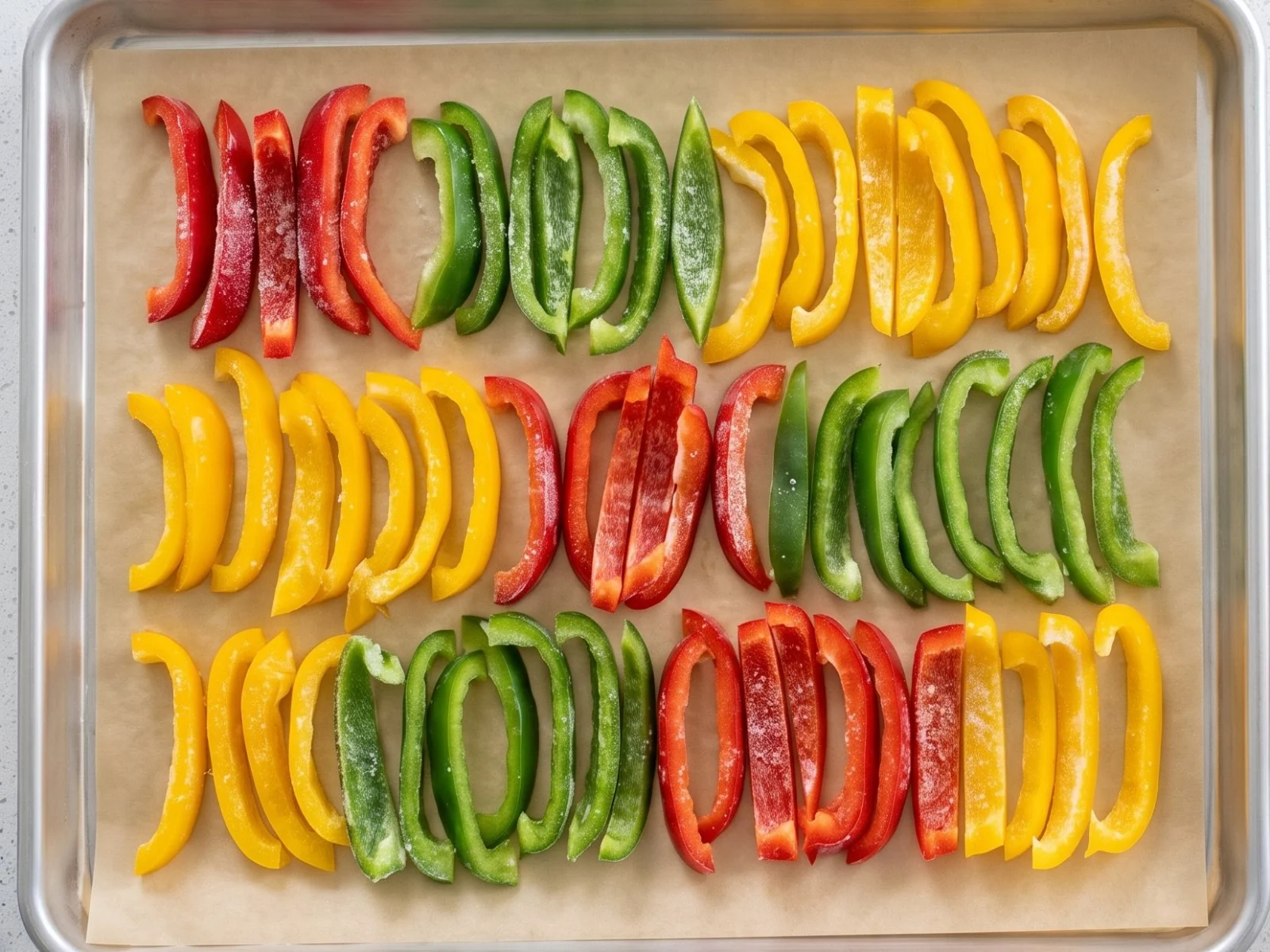
Raw red, green and yellow pepper strips frozen in a single layer on a parchment-lined baking sheet before they move into a freezer bag.
How to tell if a pepper has gone bad
However you store peppers, most old ones are tired rather than bad. A few wrinkles mean a pepper is drying out, and it can still go in the pan. Soft, slimy or sunken spots, spreading mold or a sour smell mean it has gone. Here is how to tell which one you have.
Verdict: use it
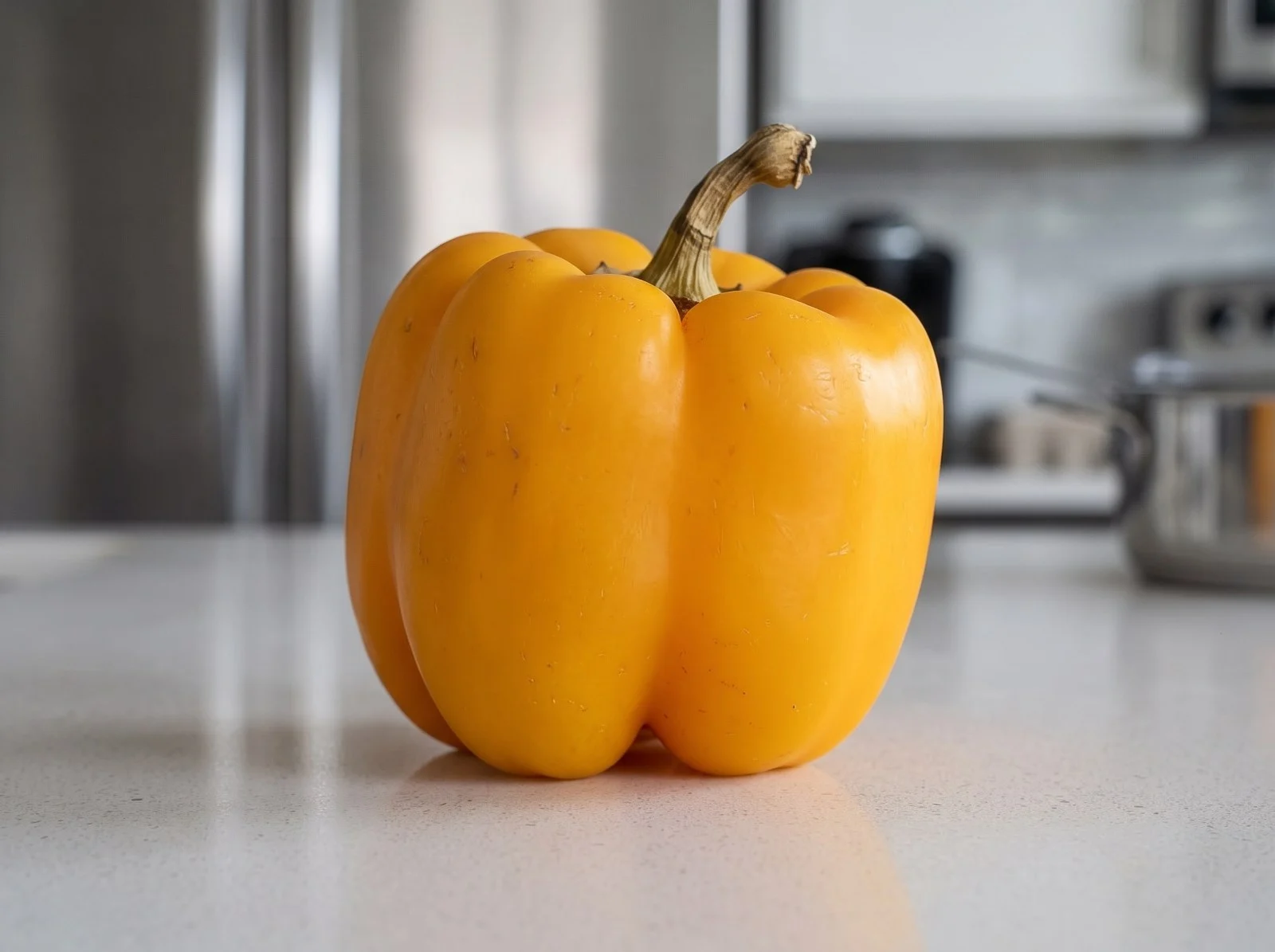
Fresh
Firm, shiny and heavy for its size, with a fresh green stem and no dark spots. That is also what UC San Diego and the University of Minnesota tell you to buy.
Verdict: use it soon
Wrinkled but firm pepper
Wrinkles mean the pepper is losing moisture. If it is still firm, with no soft or dark spots, it is past its best for eating raw but fine to cook. Then use it in the next day or two.
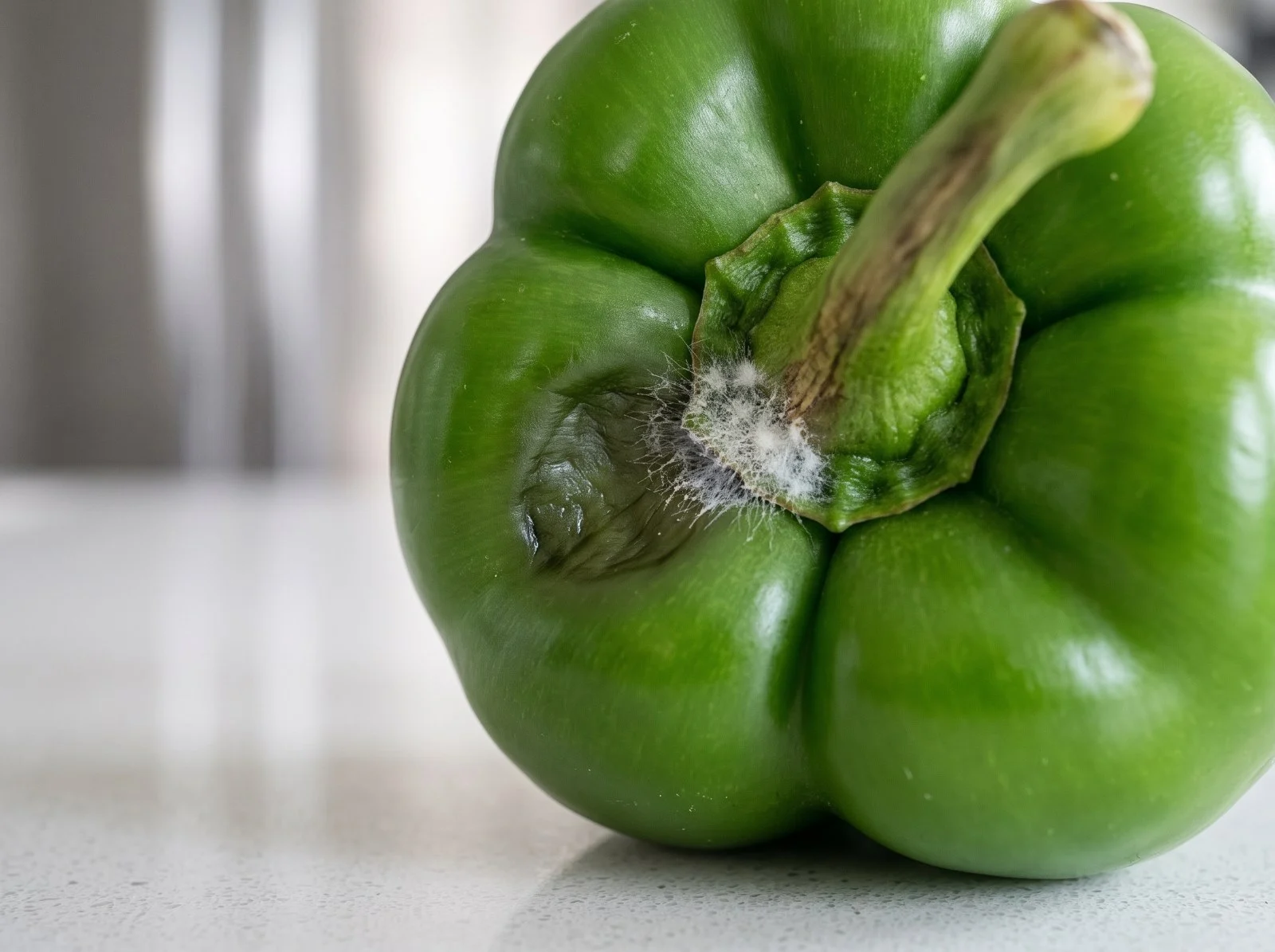
Verdict: cut it away, or throw it out
Mold on a pepper
Many guides say to throw out any pepper with mold. UConn Extension is more precise: it names bell peppers as firm produce, where you cut at least 1 inch around and below the moldy area and keep the knife out of the mold. Firm roots such as ginger are handled the same way. That rule is for firm flesh, though. If the mold is on the inside of the pepper, or the flesh around it has gone soft, throw the pepper out.
Verdict: throw it out
Soft, slimy or sunken spots
A pepper that has gone soft, slimy or sunken in places is rotting, not just drying out. Since UConn Extension treats soft produce with mold as a throw-out, a pepper this far gone is not worth trimming. Also check the peppers that were touching it.
Verdict: throw it out
Black spots or a sour smell
Black spots are one of the things UC San Diego says to avoid when buying, and they only spread once a pepper is past its best. A sharp, sour smell when you cut it open means the same. Throw it out.
Is a red pepper just a ripe green one?
Yes. The University of Minnesota explains that a red pepper is an extra-ripe green pepper. It is sweeter, and it also has less time left in the fridge, which is why UC San Diego says green peppers last longer than red, orange or yellow ones.
Pepper substitutes
Peppers gone soft before you got to them? These will stand in.
Substitute
Works best in
What changes
Frozen peppers
Stir-fries, sauces, chili and fajitas
Softer once thawed. Not for crunch.
Jarred roasted red peppers
Sandwiches, dips and sauces
Soft and smoky. USDA FoodKeeper gives an opened jar 4 to 6 months in the fridge.
Poblano or Anaheim peppers
Stuffed peppers and cooked dishes
Mild heat and a deeper flavor.
Celery or cucumber
Salads and crudités
The crunch without the sweetness.
Mistakes people make when they store peppers
These are the ways people store peppers that cost them the most, and each one has an easy fix.
Washing them before storing. Wet skin spoils faster. Wash peppers just before you eat them.
Sealing them in a closed bag. Use a breathable bag in the low-humidity drawer instead.
Eating the green ones first. Green peppers last longest. Use the red, orange and yellow ones before them.
Keeping cut peppers for a week. Two to three days is the limit, so freeze what you will not use.
Freezing without deciding what they are for. Pack them raw for salads, or instead blanch them if they are only for cooking.
Throwing out a wrinkled pepper. If it is still firm, cook it.
Trimming mold on a soft pepper. The 1-inch rule is for firm flesh, so a pepper that is soft or moldy inside goes in the bin.
Sources
FoodKeeper, Food Safety and Inspection Service, U.S. Department of Agriculture. Refrigerator and freezer times for peppers, hot peppers and jarred roasted red peppers.
Peppers, Eat CA, Center for Community Health, UC San Diego. Choosing, fridge storage, cut peppers, freezing and why green peppers last longer.
Bell peppers, Real Life, Good Food, University of Minnesota. Choosing, washing, whole and cut storage, and red versus green peppers.
Freezing Bell or Sweet Peppers, National Center for Home Food Preservation, University of Georgia. Raw and blanched freezing methods.
Freezing Hot Peppers, National Center for Home Food Preservation, University of Georgia. Freezing hot peppers.
Handling Food with Mold, UConn Extension, April 2024. Cutting mold from firm produce such as bell peppers.
Storage times and safety advice on this page come from the sources above. Food safety depends on conditions I cannot see, so read the Disclaimer, and if in doubt, throw it out.
Other ingredient guides
Browse all guides
Share this guide
Never miss a guide
New ingredient guides when they go up, plus one storage tip worth knowing. Anything sponsored is labelled.

Emilly White