
7 to 10 days
50 to 55°F with high humidity, if you have somewhere that cool
Up to 1 week
Bagged, on the warmest shelf, away from apples and tomatoes
Only as pickles
Raw slices thaw limp and water-logged. Freezer pickles work
The short version: store cucumbers bagged in the warmest part of the fridge, then eat them within about a week. Because cold below 45°F pits and softens them, the coldest shelf is the one to avoid.
Storage guidance from Utah State University Extension, University of Minnesota Extension and UConn Extension.
On this page
How to choose cucumbers that store well
A fresh cucumber is 90 percent water, according to Penn State Extension. So almost everything that goes wrong is either water leaving it or cold damaging it. That is why the firmest one in the pile keeps longest.

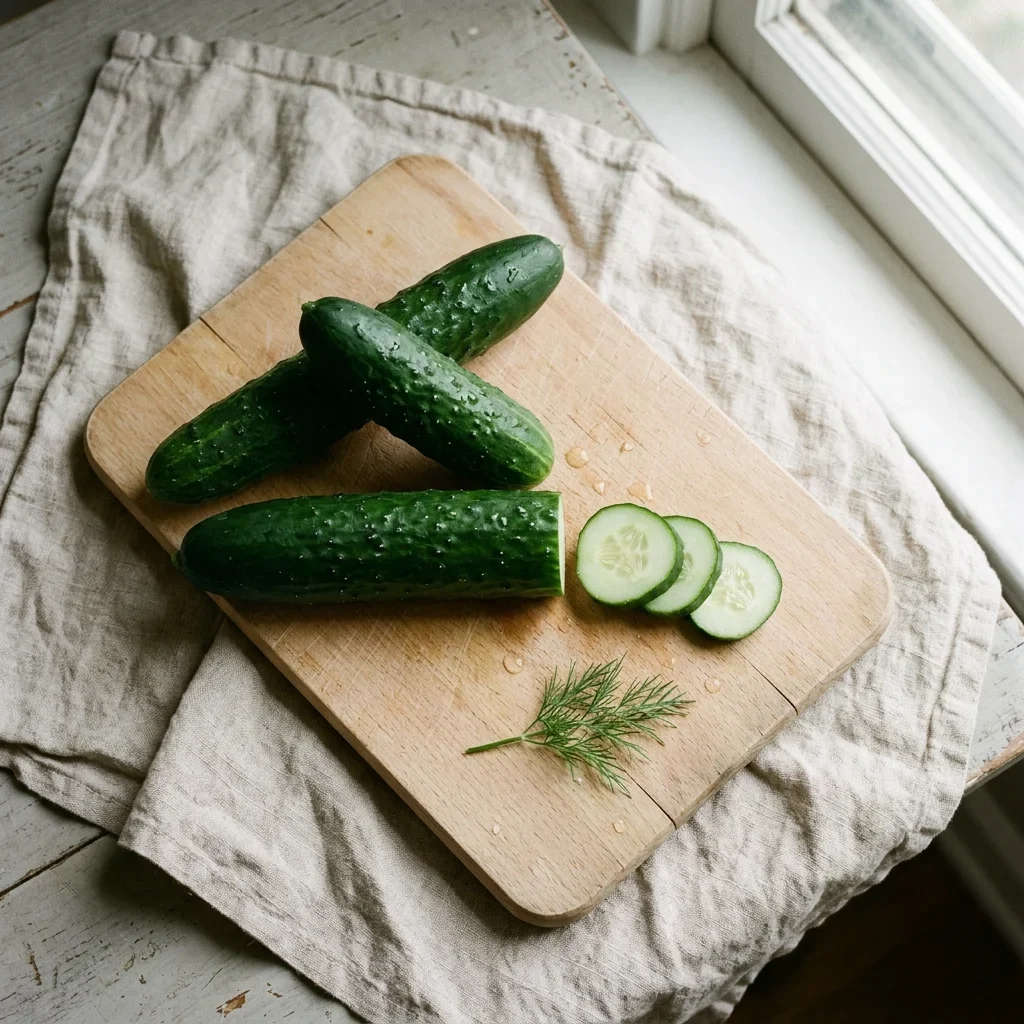
Firm, evenly dark green, nothing dented. Yellow is ethylene at work.
Firm, with an even bright color. Colorado State University Extension says freshly harvested cucumbers should be firm with a bright, even color.
No blemishes or soft spots. Colorado State University Extension also says to avoid cucumbers with blemishes, soft spots or discoloration.
No yellowing. Yellow is what ethylene does, since Penn State lists yellowing, softening and mushy spots as the result.
Nothing bruised. The FDA asks you to cut damaged or bruised areas away before eating, so one without any keeps things simple.
How to store cucumbers so they last
To store cucumbers so they last, keep them cool but not cold, and keep them dry. Unlike lettuce, a cucumber is unhappy on the coldest shelf. So the choice of shelf does most of the work here.
Where to store cucumbers in the fridge
Wipe them clean, then bag them and use the warmest shelf you have. UConn Extension gives that routine almost word for word: wipe clean, store in plastic bags, and wash before using. University of Minnesota Extension prefers a cool spot near 55°F in perforated bags. So a cool pantry works in winter, while a fridge door or top shelf is the practical answer the rest of the year. Do not wash them first, since UConn Extension asks you to wash before using rather than before storing.
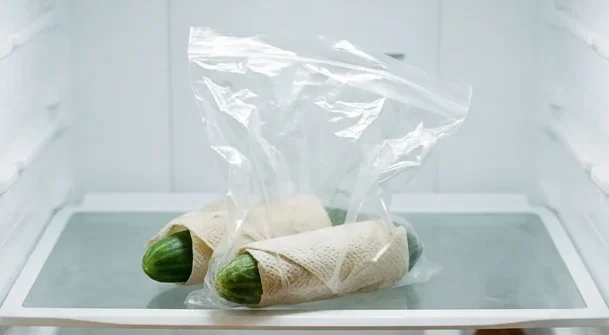
Bagged, on the warmest shelf, with the fruit bowl somewhere else.
How long can you store cucumbers?
About a week. UConn Extension gives up to 1 week in the refrigerator crisper, and University of Minnesota Extension also expects one week. Utah State University Extension gets 7 to 10 days, although that is at 50 to 55°F with 80 to 90% humidity rather than in a fridge. After that they shrivel, yellow or decay, in Utah State's words. So plan on a week, then treat anything beyond it as a bonus.
In other words, a cucumber is a this-week vegetable. Buy two if you will eat two, because there is no version of this where one keeps for a couple of weeks.
Should you store cucumbers in the fridge at all?
Yes, but not on the coldest shelf. Utah State University Extension puts the ideal at 50 to 55°F, and says to keep cucumbers above 45°F to limit chilling injury. That injury takes as little as 2 to 3 days. It shows as water-soaked areas, pitting in the fruit wall, color changes and faster decay afterwards. A home fridge sits well below that line, however, since the FDA asks for perishable fresh produce at 40°F or below. The two rules pull against each other, because one is about quality and the other is about safety. In practice, use the warmest part of the fridge and eat them inside a week.
How to store cucumbers you have cut
Cut cucumber goes straight back in the fridge, covered. UConn Extension says all cut, peeled or cooked vegetables belong in clean, covered containers at 40°F or less. The FDA asks the same for anything bought pre-cut. Scrub the skin before you slice, however, because Colorado State University Extension wants the outside washed under clean running water with a vegetable brush, since bacteria on the exterior can transfer inside during preparation. If a bowl of sliced cucumber sat out all evening instead, the food left out overnight guide covers the call.
What not to store cucumbers next to
Apples and tomatoes, mainly. UConn Extension says not to store cucumbers with either, and Colorado State University Extension asks you to keep them separate from produce that generates ethylene. Penn State explains what that gas does even at fridge temperatures: cucumbers turn yellow, go soft and develop mushy spots. Apples and pears are the heaviest producers, while bananas, peppers and tomatoes release it once they are fully ripe. So give the cucumbers their own bag, then keep the fruit bowl off that shelf.
Can you freeze cucumbers?
Not raw, no. The National Center for Home Food Preservation lists cucumbers among the raw vegetables that do not freeze well. They come out limp and water-logged, and the color, aroma and flavor oxidize quickly. As pickles, though, they freeze perfectly well.
How to store cucumbers in the freezer as pickles
The Center notes that cucumbers can be frozen as marinated products such as freezer slaw or freezer pickles. Penn State Extension explains why that works. Salt pulls the excess moisture out of the slices, then a concentrated sugar syrup firms them. So they absorb the sweet vinegary liquid instead of collapsing. Once thawed, keep them refrigerated and use them within two weeks. There is no botulism risk either, because Clostridium botulinum cannot grow at 0°F and the container is not vacuum sealed.
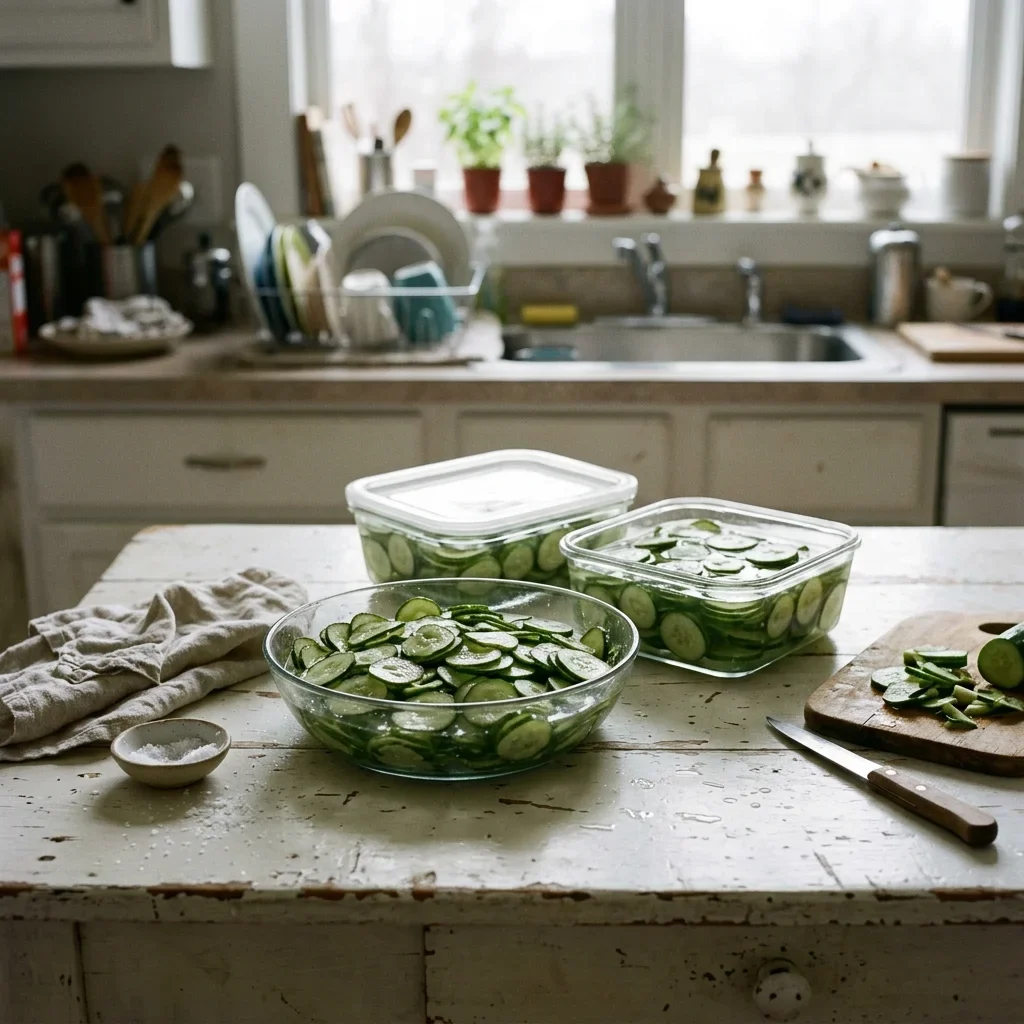
Salt first, then the syrup. Refrigerate after thawing and finish within two weeks.
Can you store cucumbers raw in the freezer?
You can, but you will not enjoy the result. Penn State Extension gives the reason plainly: fresh cucumbers are 90 percent water, and that water forms large ice crystals which pierce the tender cell walls. So the slices collapse as they thaw. When a glut is the real problem, pickling is the better route, and the Center's refrigerator dills ferment in about a week.
What happens when you store cucumbers in the freezer
Raw slices thaw limp and water-logged, in the Center's words, and the color, aroma and flavor go over quickly too. Freezer pickles keep their bite instead. Even so, Penn State Extension is clear that the texture is not the same as a regular pickle. So freeze them as pickles for a sandwich, and skip the freezer altogether for salad.
How to tell if a cucumber has gone bad
Slime is the line. A wrinkled cucumber is still food, and so is a bitter one, whereas a slimy or moldy one is finished. Here is what each stage means.
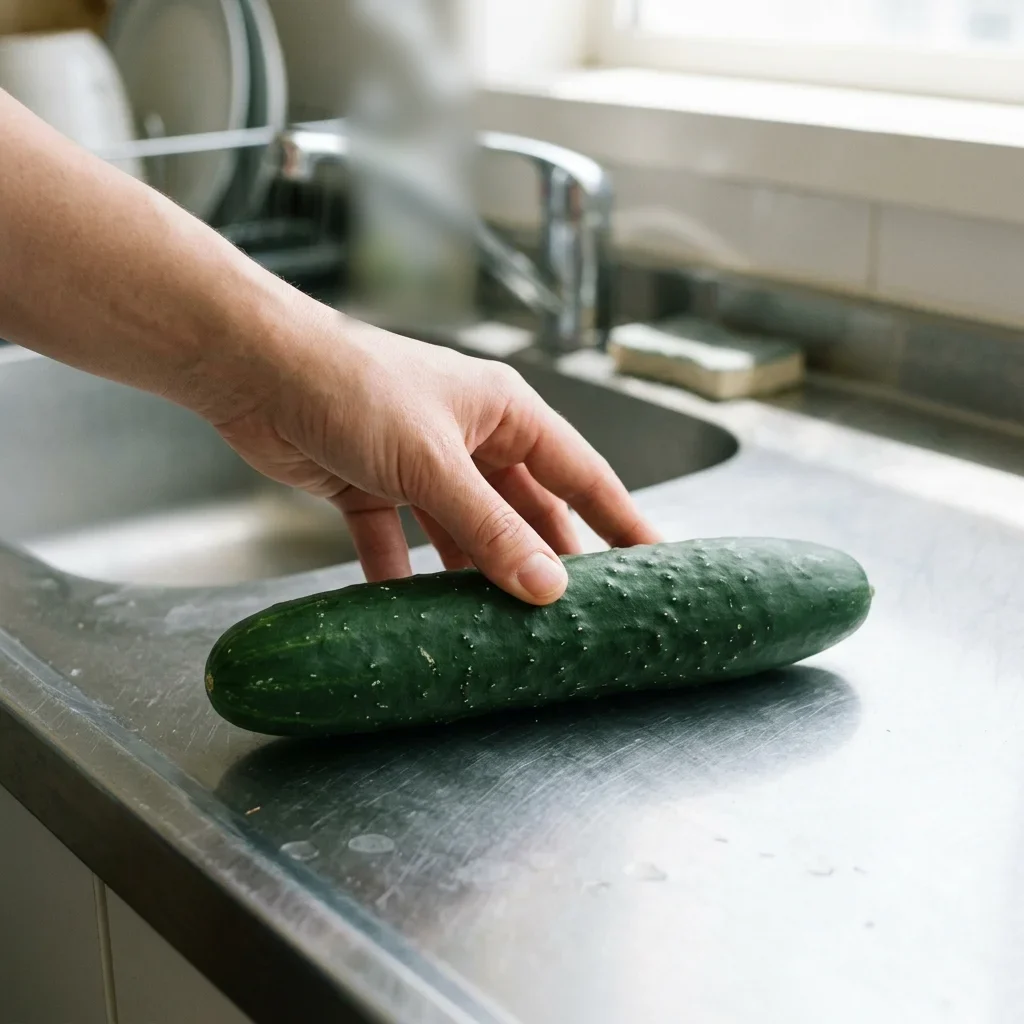
Verdict: use it
Firm cucumbers
Firm all the way along, with an even bright color and dry skin. Colorado State University Extension describes a freshly harvested cucumber in the same words. So one that still feels like that has not turned.
Verdict: trim it and peel it
Bitter cucumbers
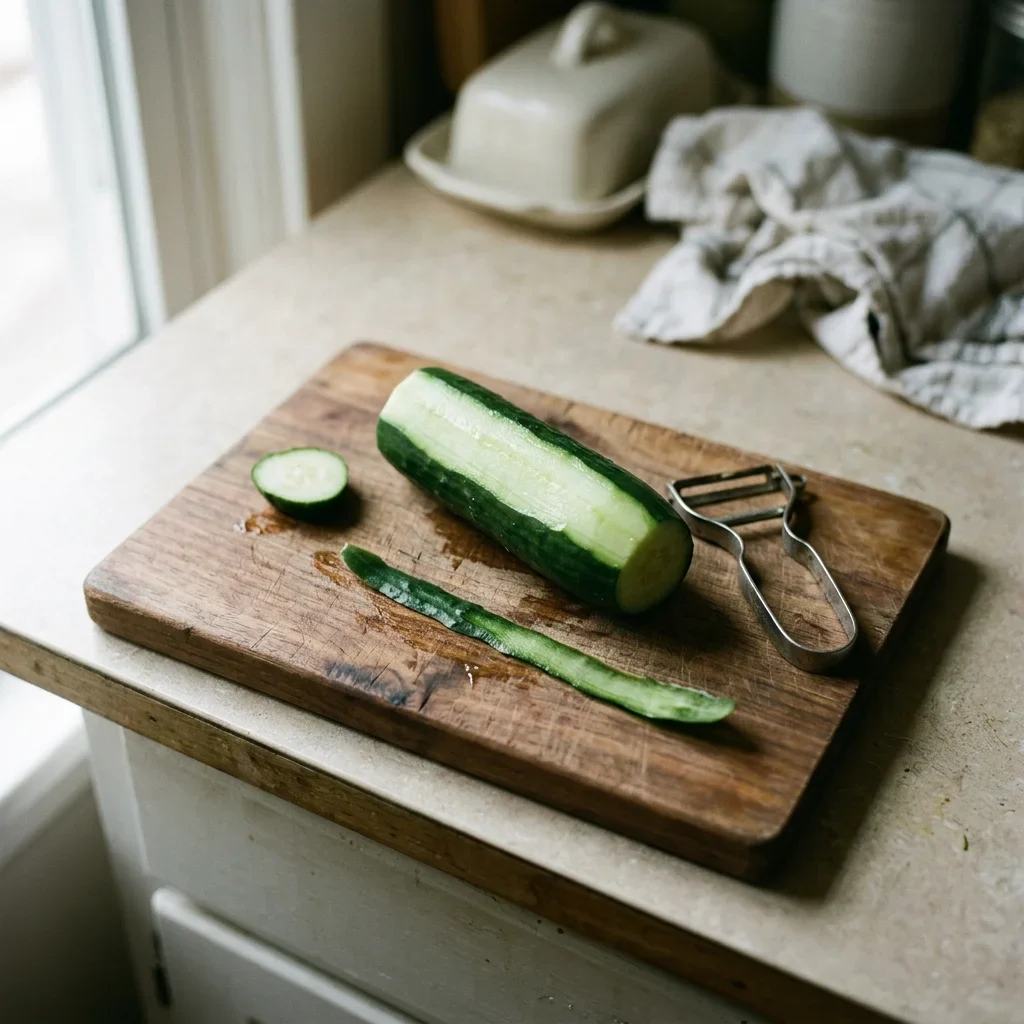
Bitterness is not spoilage. Iowa State University Extension says it comes from cucurbitacin, which concentrates in the stem end and just under the skin. The compound spreads into the fruit when the plant is under stress, and hot, dry weather is the usual cause. So cut the stem end off, then peel the rest.
Verdict: use it today
Pitted or water-soaked cucumbers
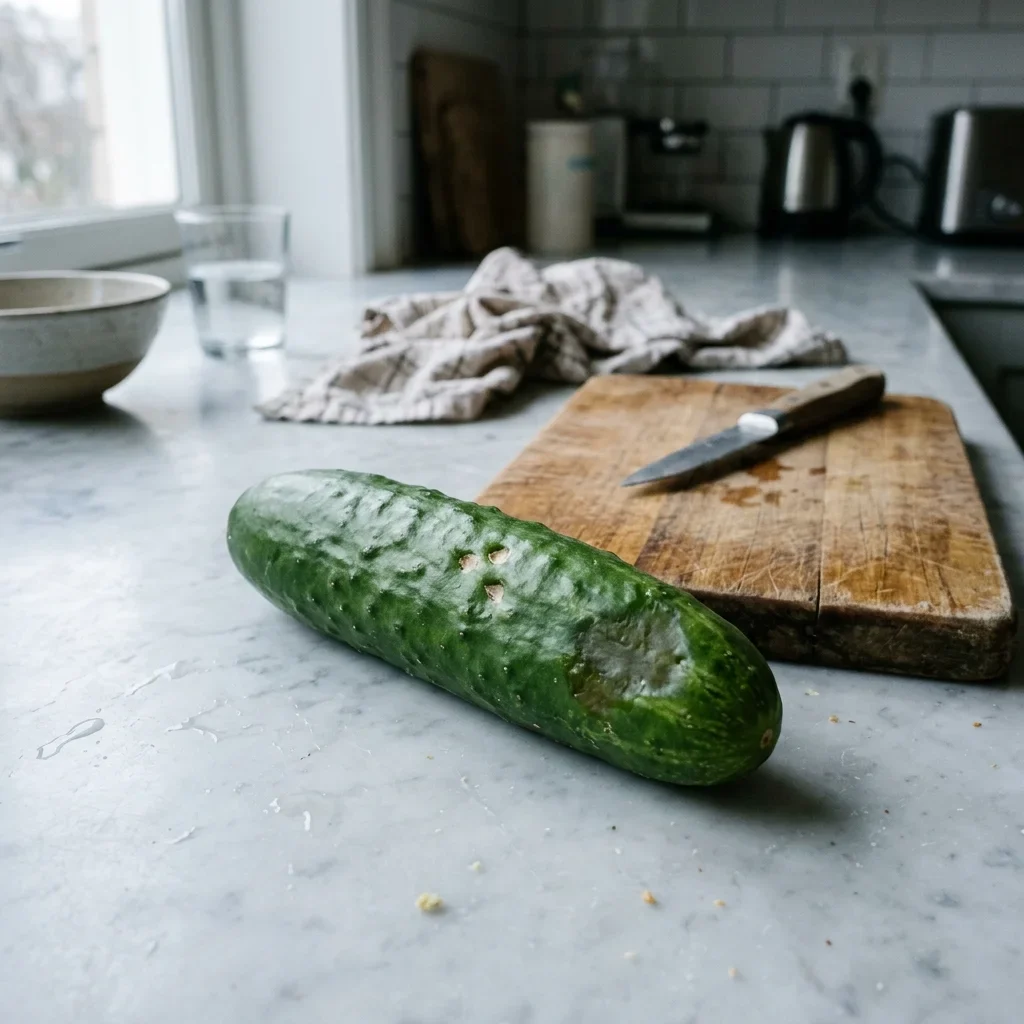
Small sunken pits, or patches that look wet under the skin, mean the cucumber got too cold. Utah State University Extension lists water-soaked areas, fruit wall pitting and color changes as the marks of chilling injury. It also warns that decay comes on faster afterwards. So use that one today, then move the rest to a warmer shelf.
Verdict: pickle it or cook it
Wrinkled or yellowing cucumbers
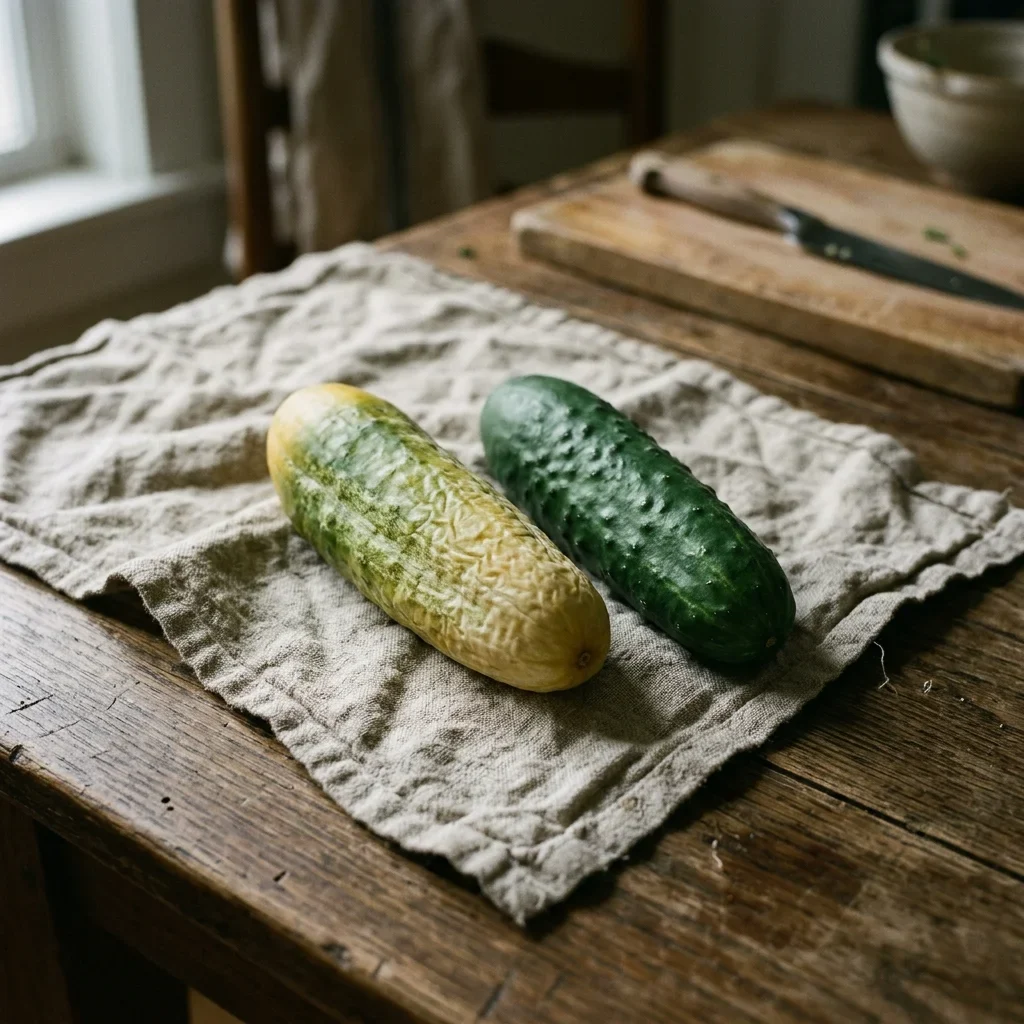
A shriveled skin means water has left, while yellow usually means ethylene has been at work. Utah State University Extension names shriveling, yellowing and decay as what ends a cucumber's storage life. Penn State also adds softening and mushy spots to the ethylene list. Neither one is mold, so pickle it or cook it rather than binning it.
Verdict: throw it out
Slimy or moldy cucumbers
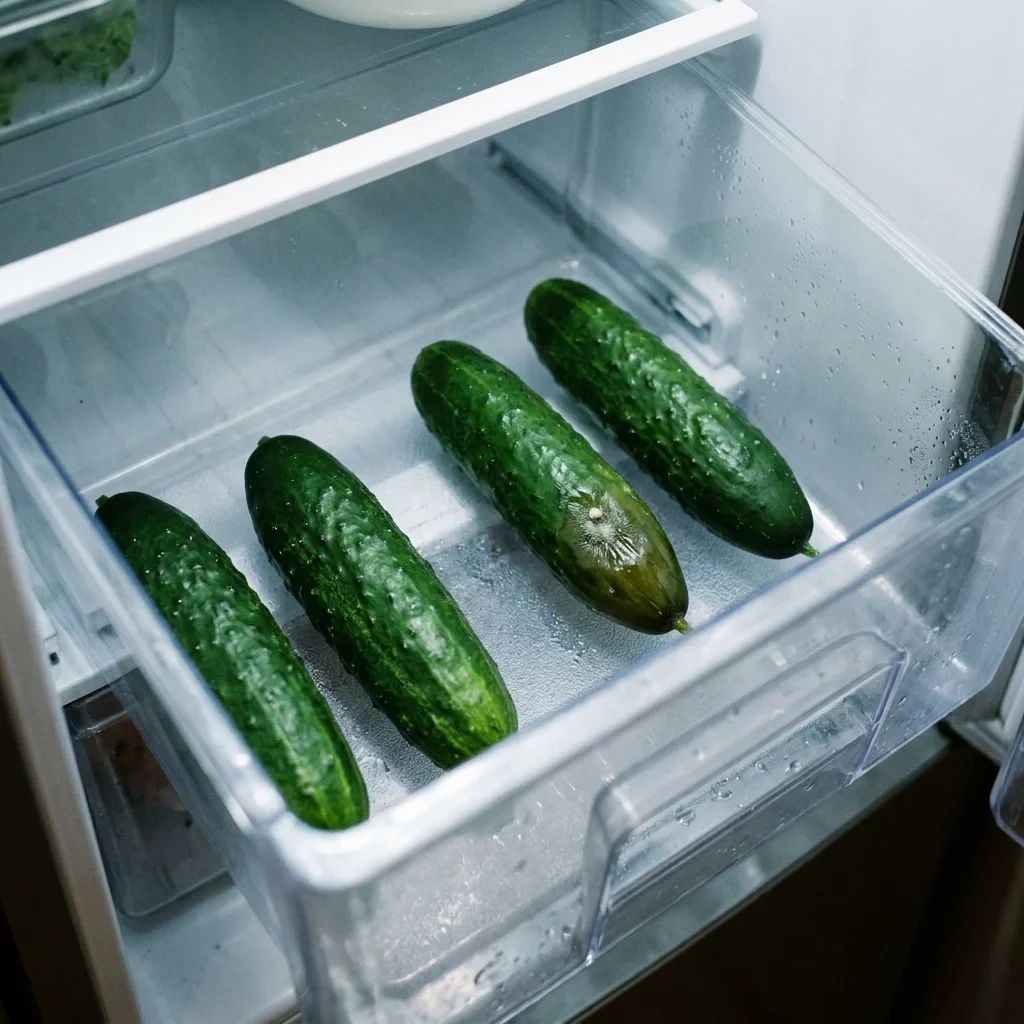
Slime and mold both end it. UConn Extension allows cutting an inch around and below a moldy spot on firm vegetables such as cabbage, peppers or carrots, but it discards soft ones whole. A slimy cucumber is not firm any more. The FDA is blunter still, since it says to throw away any produce that looks rotten. So bin that one, then check the ones it was touching.
Why do cucumbers taste bitter?
Because of cucurbitacin, a compound the plant makes in its own defense. Iowa State University Extension says the cucurbitacins spread from the vegetative parts of the plant into the fruit when plants are under stress, and that hot, dry weather is usually responsible. They concentrate in the stem end and just under the skin. So trimming the stem end and peeling the rest takes most of it away. In other words, a bitter cucumber is a gardening problem rather than a storage one.
Cucumber substitutes
Out of cucumbers, or had to throw a slimy one away? Then these will cover most of what you wanted from it.
Substitute
Works best in
What changes
Zucchini
Salads and ribbons
Similar crunch, milder flavor. Good raw or grilled.
Celery
Salads and dipping
Crunchier and more savory. Slice it thin.
Radishes
Salads and quick pickles
Peppery rather than cooling. Use fewer.
Jicama
Slaws and dipping
Sweeter and much crisper. Peel it first.
Mistakes people make when they store cucumbers
These are the ways people store cucumbers that cost them the most, and each one has an easy fix.
Using the coldest shelf. Below 45°F they pit and soften, so move them to the warmest part of the fridge.
Parking them beside the fruit bowl. Apples and tomatoes give off ethylene, so cucumbers need their own bag.
Washing them before they go in. UConn Extension asks you to wash before using instead, so wipe them clean and store them dry.
Leaving them loose and unwrapped. UConn Extension and University of Minnesota Extension both bag them, so use a plastic or perforated bag.
Freezing raw slices for salad. They thaw limp and water-logged, so freeze them as pickles instead.
Binning a bitter one. Cut the stem end off and peel it, because that is where the cucurbitacin sits.
Keeping a slimy one for cooking. Slime is decay, so that one goes out.
Sources
Harvest and Handling, Cucurbits, Utah State University Extension, on 50 to 55°F with 80 to 90% humidity, 7 to 10 days, and chilling injury above 45°F in as little as 2 to 3 days.
Harvesting and storing home garden vegetables, Cindy Tong, University of Minnesota Extension, on a cool spot near 55°F, perforated plastic bags and a one-week shelf life.
Storing Fresh Garden Produce, Indu Upadhyaya, UConn Food Safety, on up to 1 week in the refrigerator crisper, wiping clean, not storing with apples or tomatoes, and cut vegetables at 40°F or less.
Colorado Cucumbers, Food Smart Colorado, Colorado State University Extension, reviewed October 2025, on choosing firm bright cucumbers, keeping them away from ethylene, and scrubbing under running water.
Your produce may be getting gassed in the refrigerator, Peter Ferretti and Kathleen Brown, Penn State University, April 1998, on ethylene in the fridge turning cucumbers yellow, soft and mushy.
Foods That Do Not Freeze Well, National Center for Home Food Preservation, University of Georgia, from So Easy to Preserve 6th edition 2014, on raw cucumbers turning limp and water-logged and on freezer pickles.
Freezer Pickles, Martha Zepp, Penn State Extension, February 2024, on cucumbers being 90 percent water, ice crystals piercing cell walls, salt and syrup, two weeks after thawing, and no botulism risk at 0°F.
General Information on Pickling, National Center for Home Food Preservation, University of Georgia, on selecting firm fruit, trimming the blossom end and refrigerator dills fermenting for about a week.
Why are some of my cucumbers bitter?, Richard Jauron, Iowa State University Extension and Outreach, December 2024, on cucurbitacin in the stem end and under the skin, plant stress, and trimming and peeling.
Selecting and Serving Produce Safely, U.S. Food and Drug Administration, March 2024, on 40°F or below, refrigerating pre-cut produce, scrubbing firm produce such as cucumbers, and discarding anything rotten.
Handling Food with Mold, Austin Goldberg, Daniela Avelino and Valerie Duffy, UConn Extension, April 2024, on trimming an inch from firm vegetables and discarding the soft ones whole.
Storage times and safety advice on this page come from the sources above. Food safety depends on conditions I cannot see, so read the Disclaimer, and if in doubt, throw it out.
Other ingredient guides
Browse all guides

Share this guide
Never miss a guide
New ingredient guides when they go up, plus one storage tip worth knowing. Anything sponsored is labelled.

Emilly White