
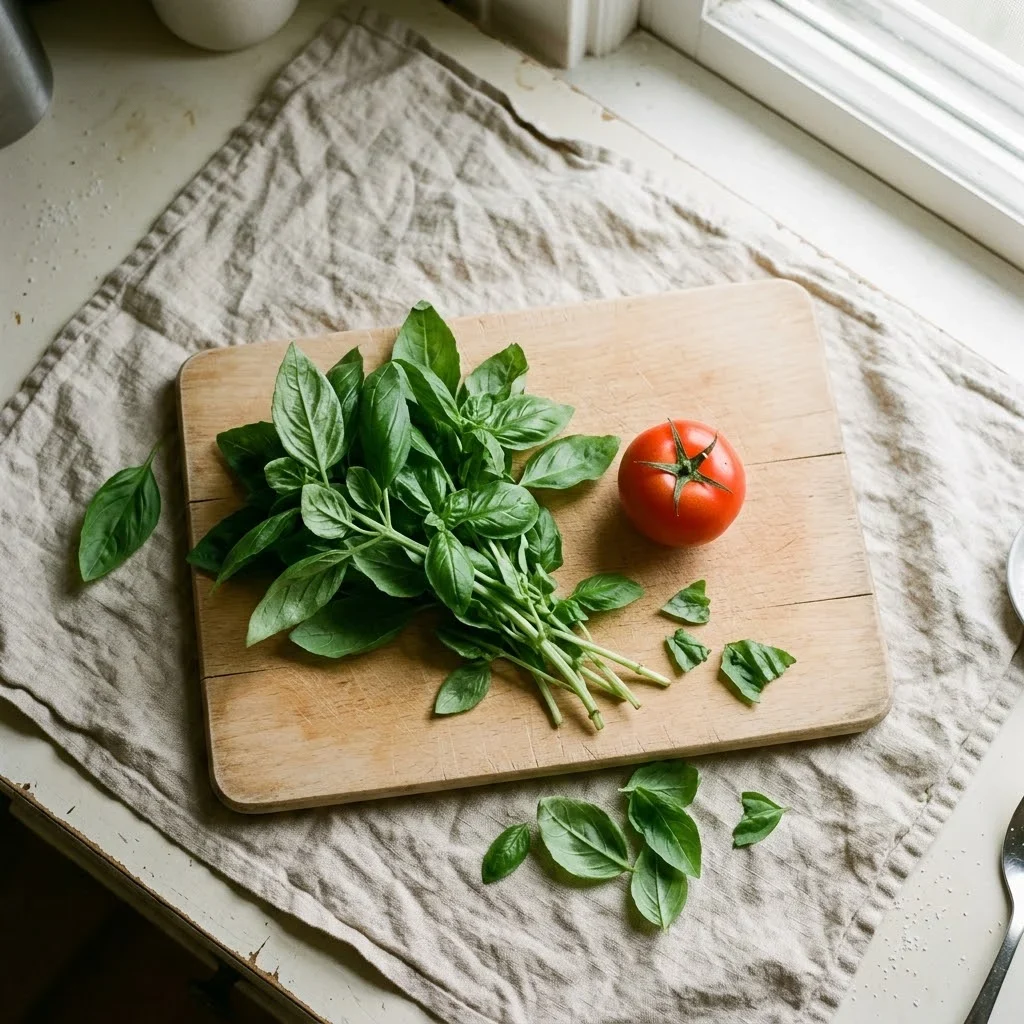
About a week
Stems in water, out of direct sun, above 50°F
Not recommended
Below 40°F discolors the leaves, says Penn State Extension
Yes, for cooking
Up to 6 months. Blanch the leaves 15 seconds first
The short version: to store basil well, stand the stems in water on the counter, out of the sun. Keep it above 50°F, because cold is what blackens the leaves. Freeze whatever you will not use this week, then cook with it later.
Storage guidance from Penn State Extension, SDSU Extension and a 2023 review in Frontiers in Plant Science.
On this page
What to look for before you store basil
Basil is cut long before you buy it, so it will not improve at home. That is why the bunch you pick decides most of the week ahead. Look at the leaves rather than the stems, because the leaves show cold and disease first.
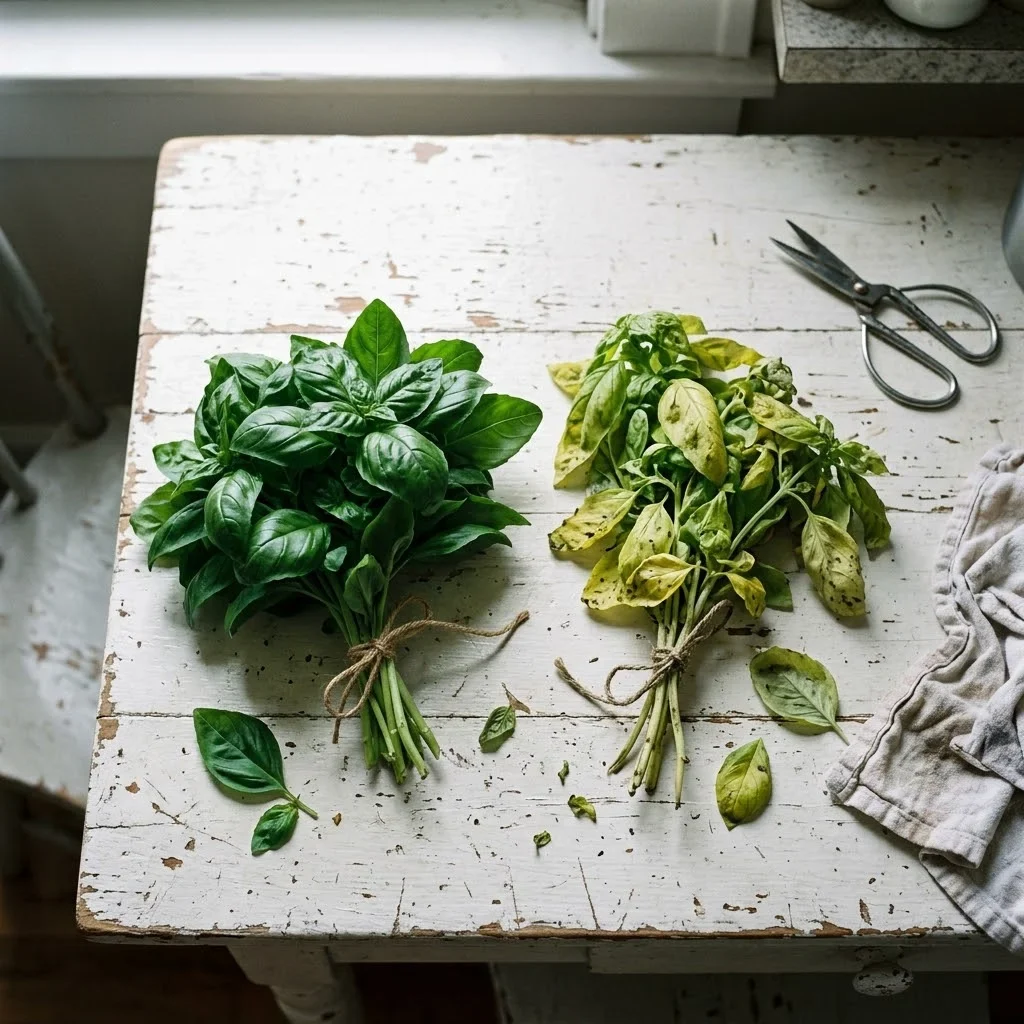
Even green on top and nothing fuzzy underneath. Yellow between the veins means leave it.
Deep, even green. University of Minnesota Extension says downy mildew starts as pale yellow areas on the upper side of a leaf. So an even color is the first good sign.
Nothing fuzzy underneath. Turn a few leaves over, since University of Minnesota Extension looks for velvety gray fuzz on the underside.
No water-soaked spots. PlantVillage at Penn State describes basil bacterial leaf spot as angular or irregular brown to black water-soaked spots. It also streaks the stems.
Stems long enough to stand in water. Penn State Extension holds basil stems in a glass of water at room temperature, so a closely trimmed bunch is harder to keep.
How to store basil so it lasts
To store basil so it lasts, treat it like cut flowers and keep it warm. Penn State Extension says temperatures below 40°F will discolor the leaves. That is why it holds basil stems in a glass of water at room temperature. The fridge, however, is the wrong place for it.
How to store basil on the counter
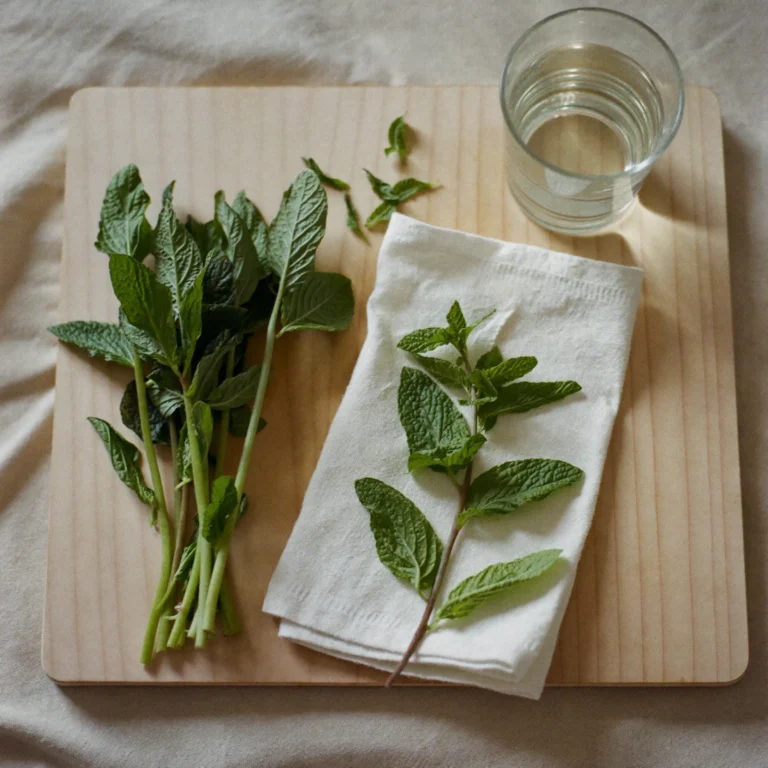
Stand the stems in a jar of water, somewhere out of direct sun. Penn State Extension puts basil in a glass of water at room temperature rather than in the refrigerator. Keep the jar warm, because cold is the whole problem here. Change the water once it clouds. Do not wash the leaves until you need them, since Clemson Cooperative Extension says to wash produce just before eating, cutting or cooking.
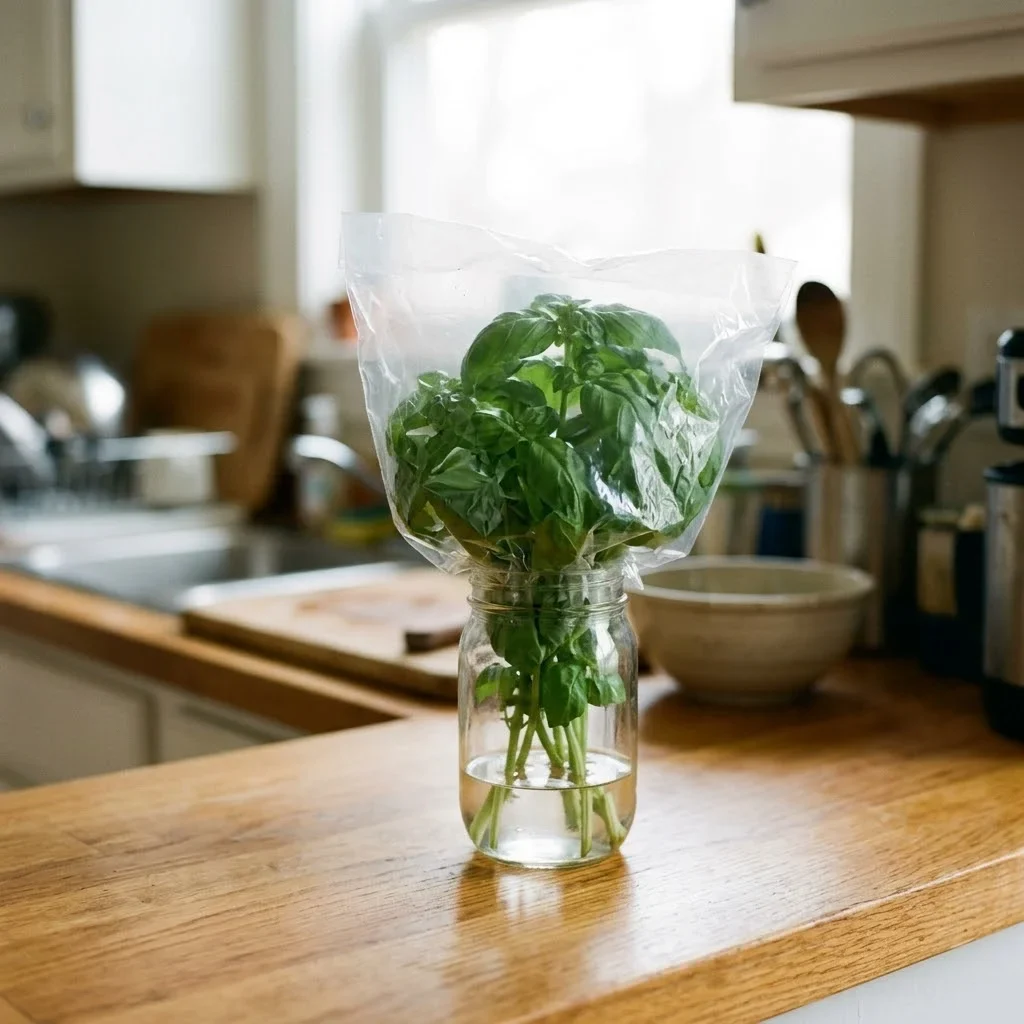
Stems in water, out of direct sun, somewhere above 50F. Change the water when it clouds.
How long can you store basil?
About a week on the counter. In fact, a 2023 review of basil storage in Frontiers in Plant Science puts shelf life at room temperature at 2 to 14 days. The average across the studies it gathered was 6.8 to 7.3 days. At 12 to 15°C, or 54 to 59°F, that stretches to about 12.5 days. So a cool room beats both a warm kitchen and the fridge.
In other words, plan for a week and treat anything longer as luck. Besides, the pages promising two weeks are not citing a number anyone published. When the bunch is bigger than a week of cooking, freeze the rest on day one.
Should you store basil in the fridge?
No, and the reason is specific. Penn State Extension says temperatures below 40°F will discolor the leaves. The Frontiers review is harder still. It reports that basil leaves blacken from necrosis in as little as 1 day at 0°C, or 3 days at 5°C. A home fridge at 40°F or below sits in exactly that range. So a bunch that goes in on Monday can be black by Thursday. If you truly have no choice, the warmest spot in the door is the least bad one, although nothing I opened tests that.
How to store basil you have picked from the garden
Penn State Extension picks herbs in mid-morning, once the dew has gone. Wait until then, but cut before the sun burns off the oils. Rinse the sprigs in clear water, then pat them dry or spin them gently. After that, stand the stems in water like a bunch from the shop.
Why you should not store basil below 50°F
The numbers come from that 2023 review in Frontiers in Plant Science. Storage below 12°C, or about 54°F, already causes injury. Below 10°C, which is 50°F, the review calls the injury severe if not total. The symptoms it lists are leaf spotting or browning, loss of leaf turgidity and decay. Ideal storage, it says, is 12 to 15°C at over 90% humidity. That is a cool pantry rather than a fridge, so the glass of water on the counter is the practical version. The tomatoes guide runs into the same cold-versus-flavor argument, although it lands somewhere different.
Can you freeze basil?
Yes, and the extension services describe it in more detail than any other method. The National Center for Home Food Preservation says frozen herbs can be chopped and used in cooked dishes. However, they are not suitable for garnish, since the frozen product goes limp as it thaws. SDSU Extension puts the freezer life at up to six months in an airtight container.
How to store basil in the freezer
In fact, there are three methods, and all three come from extension services. Penn State Extension blanches the leaves of larger herbs such as basil for 15 seconds, then plunges them in ice water. SDSU Extension does the same, and pats them dry before freezing. For whole leaves, Penn State Extension fills a freezer bag, removes the air and freezes it. For chopped basil, fill an ice cube tray halfway with water, then add about a tablespoon per section and push the leaves under. Freeze it, top the sections off with water, and freeze it again. The National Center for Home Food Preservation is simpler still: wash, drain, pat dry, then wrap a few sprigs in freezer wrap inside a freezer bag.
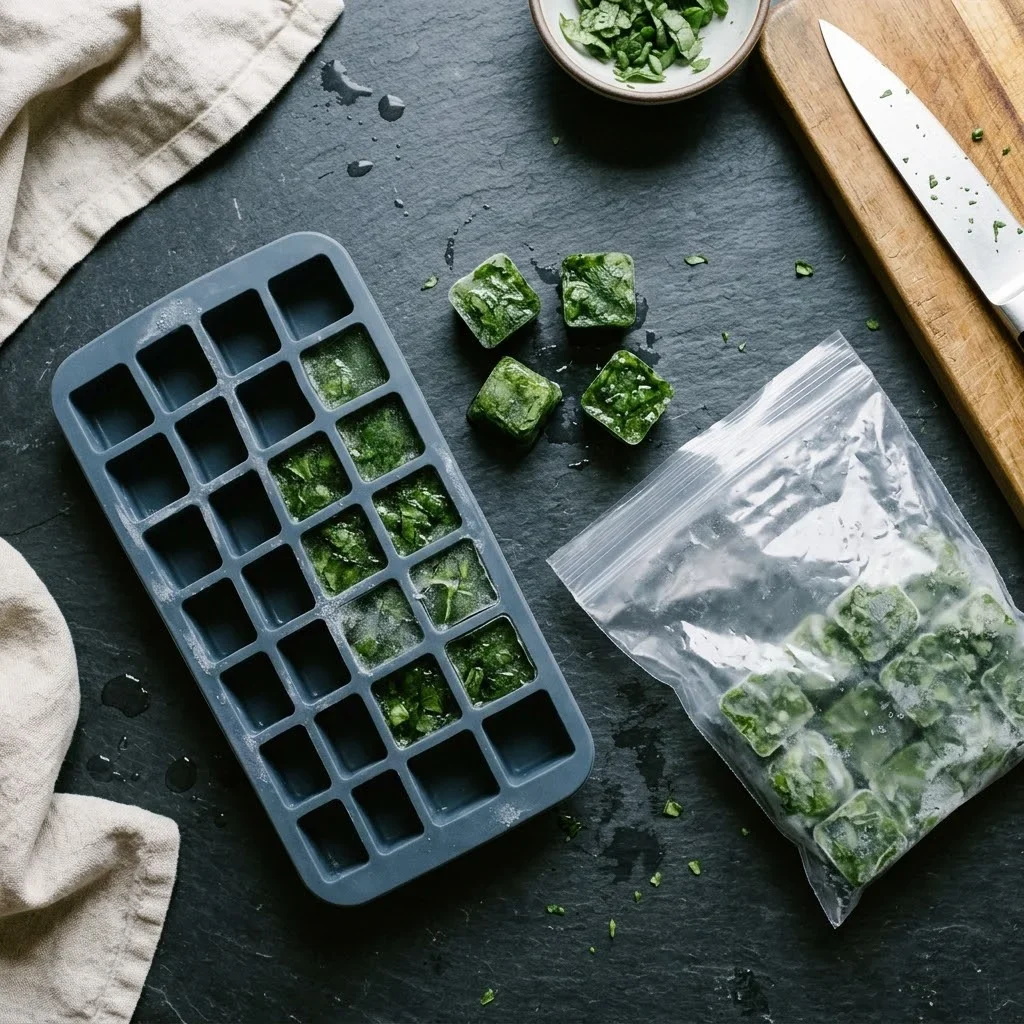
About a tablespoon per section, pushed under the water, then topped off and frozen again.
How to store basil in oil without taking a risk
Oil is where basil storage turns into a safety question. Penn State Extension mixes a third to half a cup of oil with 2 cups of chopped herbs. That may be frozen in ice cube trays or small jars. However, it also says plainly that oil should only be added to herbs if it will be frozen. Oregon State University Extension explains why. Herbs are low-acid, and oil gives Clostridium botulinum the oxygen-free conditions it needs. Its rule is four days in the fridge, then use the mixture, discard it or freeze it. Pesto falls under the same rule, since it is an uncooked mix of basil, garlic, nuts and oil. So never leave basil in oil on the counter, and never leave pesto there either. The food left out overnight page covers what to do when something did sit out.
What happens to basil you store in the freezer
It goes limp. SDSU Extension says frozen herbs tend to be limp once they thaw. That is why the National Center for Home Food Preservation calls them unsuitable for garnish. Use them instead in cooked dishes, bread dough, herb butter or sauces, as SDSU Extension suggests. Blanching is optional in both guides, although SDSU Extension and Penn State Extension both give basil 15 seconds to stop enzyme reactions.
How to tell if basil has gone bad
Basil goes wrong in three different ways, although they do not mean the same thing. Cold damage, for example, is only a quality problem. Disease, however, is a reason to pick leaves off. Slime, on the other hand, is a reason to bin the bunch. Here is what each stage looks like.
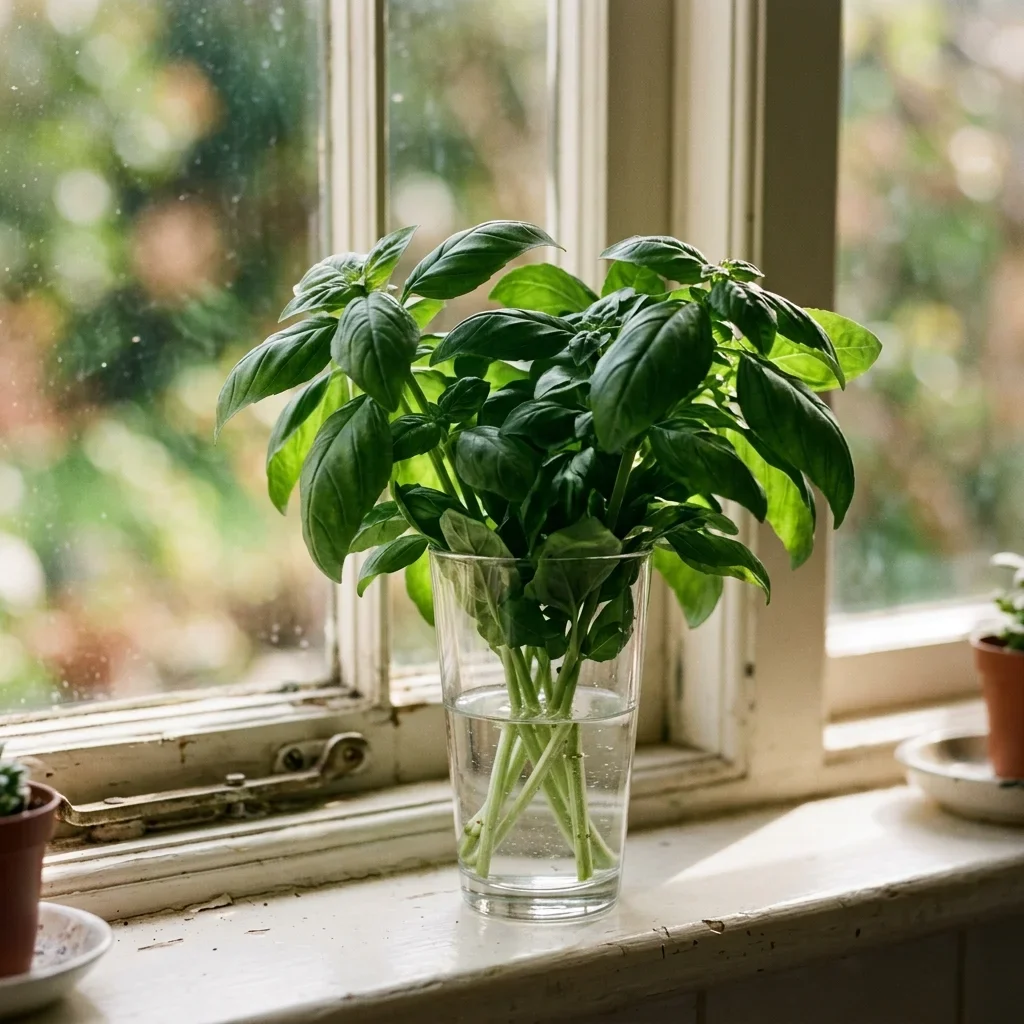
Verdict: use it
Bright green basil
Deep, even green on top, with nothing fuzzy underneath and no spots at all. Keep the stems in water, since that is where Penn State Extension keeps them.
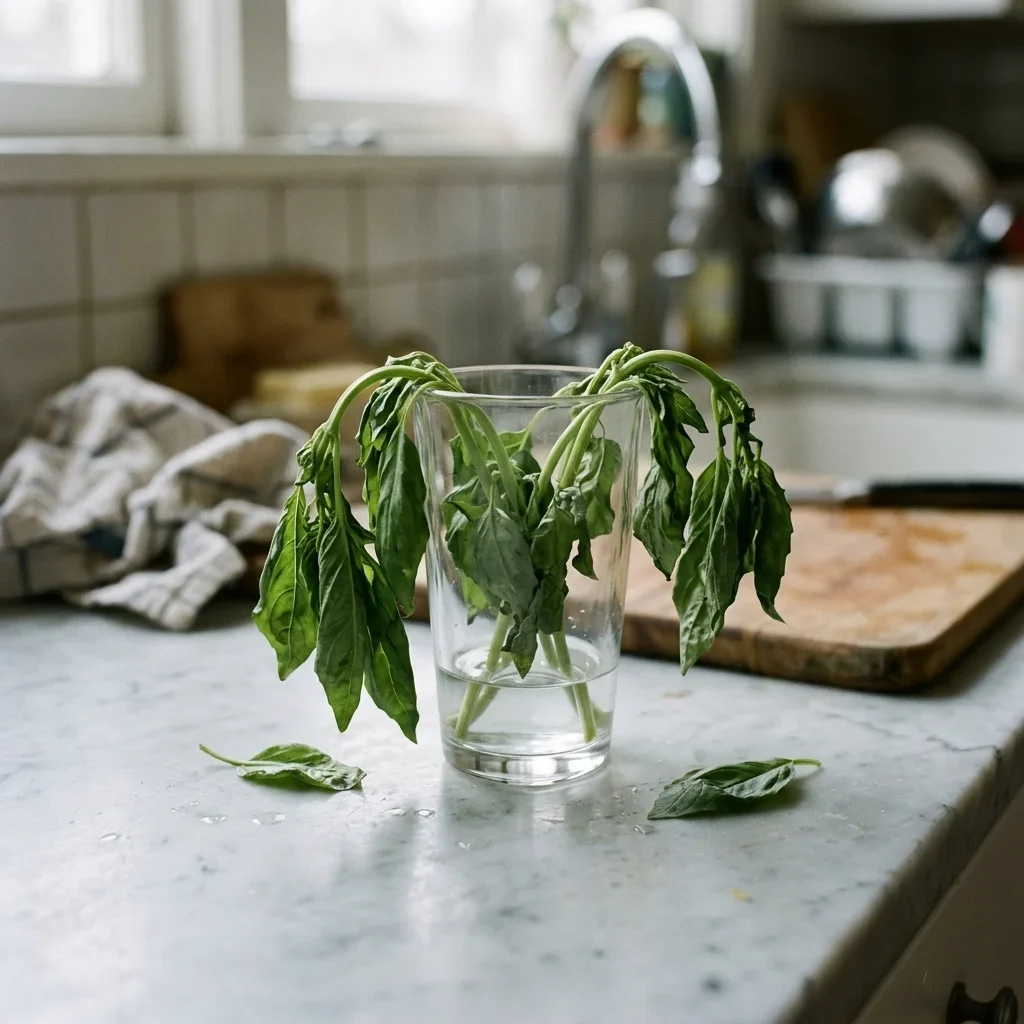
Verdict: stand it in water
Wilted basil
Drooping leaves and a limp stem usually mean the bunch has been out of water. So trim the stem ends and put them back in a glass, which is the method Penn State Extension gives. Wilting also turns up in the chilling injury the Frontiers review lists, so check the color too.
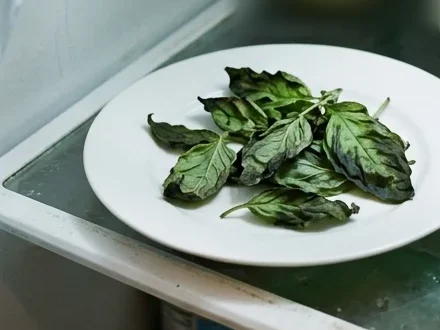
Verdict: pick off the black
Basil that darkened in the fridge
Even blackening, or brown patches after a spell in the cold, is chilling injury. Penn State Extension says below 40°F discolors the leaves, while the Frontiers review clocks blackening at 1 day at 0°C or 3 days at 5°C. Nothing I opened calls chilled basil unsafe. So this is a quality problem rather than a safety one. Pick off the blackened leaves, then use what is still green, and use it soon.
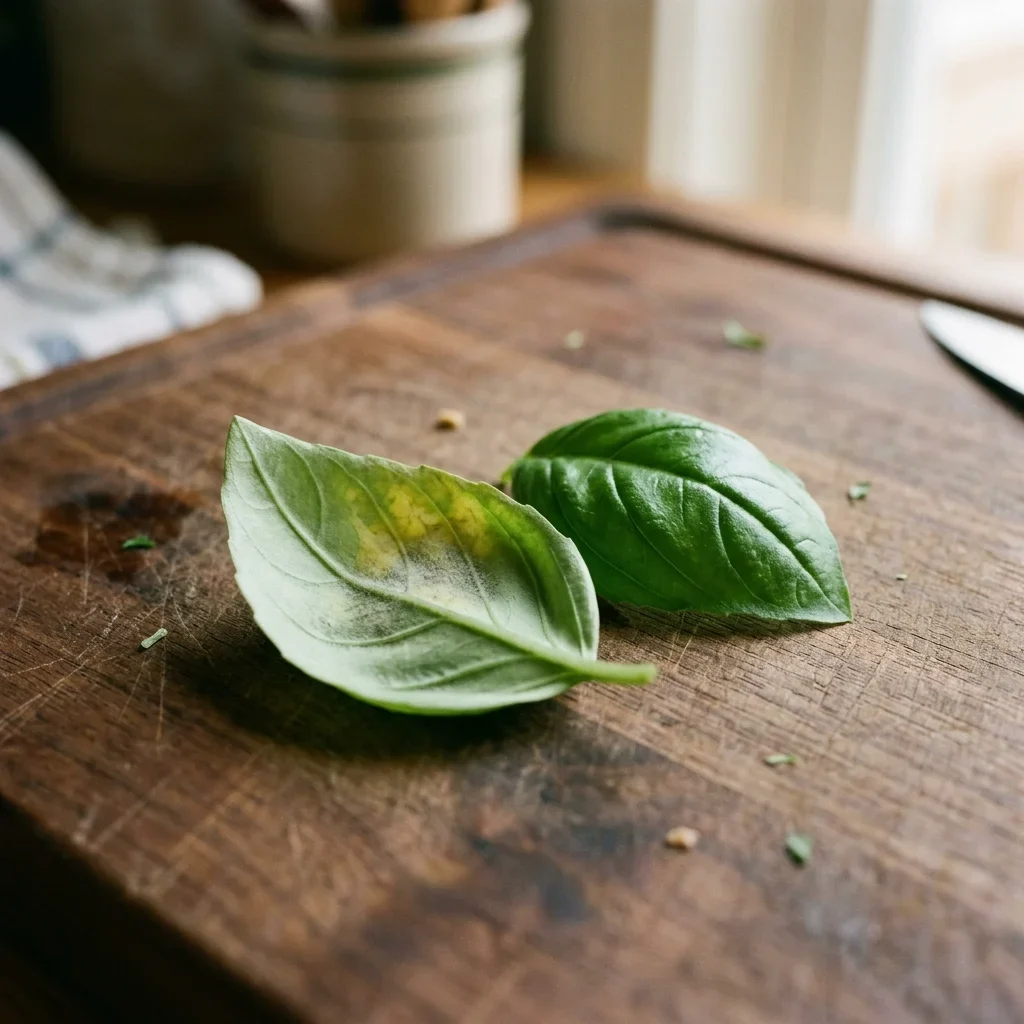
Verdict: throw those leaves out
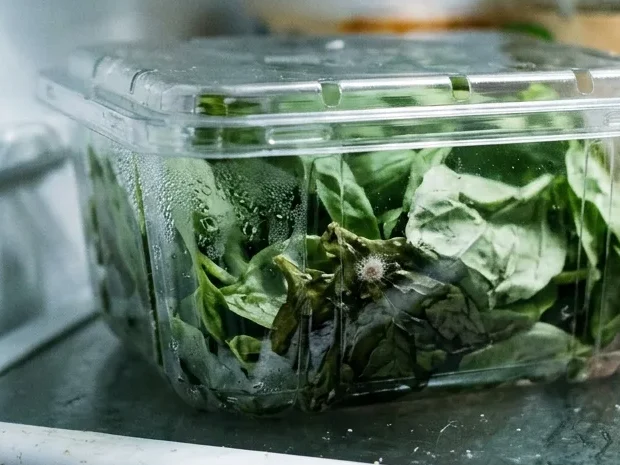
Basil with yellowing and gray fuzz
This one is downy mildew rather than cold. University of Minnesota Extension describes pale yellow areas on the upper leaf, bounded by the major veins, with velvety gray fuzz underneath. It adds that irregular black spots appear as the leaves age. Wisconsin Horticulture says to harvest the leaves with no symptoms for immediate use, but to remove and discard the symptomatic ones. PlantVillage notes that the yellowing is often mistaken for a nutrient problem, so look underneath before you decide.
Verdict: throw it out
Slimy or moldy basil
Leaves stuck together in a dark, slick clump are finished, and so is any fuzzy growth that is not on the underside. UConn Extension says to discard soft produce such as strawberries whole when it is moldy, rather than trimming it. Basil leaves are softer still, so take the whole bunch out. Then wash the jar before the next bunch goes in.
Are black spots on basil safe to eat?
It depends on which kind of spot. Cold damage darkens leaves evenly, or at the edges, and nothing I opened calls it unsafe. Bacterial leaf spot, however, looks different. PlantVillage at Penn State describes angular or irregular brown to black water-soaked spots, with streaks on the stems. Downy mildew brings vein-bounded yellowing and gray fuzz first, then irregular black spots as the leaves age. None of the sources I opened says a diseased leaf will make you ill, although none says to eat one either. So pick the spotted leaves off and use the clean ones. When most of the bunch is spotted, throw the bunch out.
Basil substitutes
Out of basil, or had to throw a bunch out? Then these will cover most of what basil does in a dish.
Substitute
Works best in
What changes
Frozen basil cubes
Sauces, soups and pesto
The closest thing, although limp once thawed.
Flat-leaf parsley
Finishing and dressings
Grassy rather than sweet, with no aniseed note.
Dried basil
Long-cooked sauces
Add it early, and never as a garnish.
Mistakes people make when they store basil
These are the ways people store basil that cost them the most, although each one has an easy fix.
Putting it in the fridge. Penn State Extension says below 40°F discolors the leaves, so the counter is the place for it.
Standing the jar somewhere cold. The Frontiers review puts severe injury below 50°F, so keep it in the warm part of the room.
Washing it on the way home. Clemson says to wash produce just before eating, cutting or cooking, so rinse at the last minute.
Leaving the stems dry. Penn State Extension stands them in a glass of water, so give them one as soon as you get home.
Keeping basil in oil on the counter. Oregon State University Extension says that mixture must be refrigerated for no more than four days, or frozen.
Treating pesto as a pantry item. Oregon State University Extension gives pesto the same four days in the fridge, or the freezer.
Freezing basil for garnish. The National Center for Home Food Preservation says frozen herbs are not suitable for garnish, so freeze it for cooking only.
Sources
Basil, A Summer Favorite, Kathy Martin Kreisher and Susan Marquesen, Penn State Extension, updated June 2026, on why basil belongs in a glass of water at room temperature and what happens below 40°F.
Freezing Herbs, Martha Zepp, Penn State Extension, updated July 2025, on harvesting, washing, the 15-second blanch for basil, the ice cube tray methods and the warning against herbs in oil at room temperature.
Preserving Herbs, Abigail Lambert, Megan Erickson and Hope Kleine, SDSU Extension, updated June 2022, on freezing methods, the 15-second blanch and six months in the freezer.
Freezing Fresh Herbs, National Center for Home Food Preservation, University of Georgia, from So Easy to Preserve, 6th edition, 2014, on wrapping sprigs for the freezer and why frozen herbs are not suitable for garnish.
Food Safety & Preservation: Herbs and Vegetables in Oil, Carolyn Raab and Margy Woodburn, Oregon State University Extension Service, SP 50-701, revised February 2014, on Clostridium botulinum, the four-day refrigerator limit and pesto.
Preharvest and postharvest techniques that optimize the shelf life of fresh basil, Lara J. Brindisi and James E. Simon, Frontiers in Plant Science, 2023, on chilling injury thresholds, blackening times, ideal storage temperature and shelf life.
Basil downy mildew, Marissa Schuh and Michelle Grabowski, University of Minnesota Extension, reviewed 2022, on vein-bounded yellowing, velvety gray fuzz and the black spots that follow.
Safe Handling of Fresh Fruits & Vegetables, Pamela Schmutz, revised by Angela Fraser, Clemson Cooperative Extension Home & Garden Information Center, November 2009, on washing produce under running water just before use.
Basil Downy Mildew, Marian Lund, UW-Madison Plant Pathology, Wisconsin Horticulture, revised February 2024, on symptoms and on harvesting only the leaves with no symptoms.
Handling Food with Mold, Austin Goldberg, Daniela Avelino and Valerie Duffy, UConn Extension, April 2024, on discarding soft produce whole when it is moldy.
Basil, PlantVillage, Penn State University, on bacterial leaf spot symptoms and on downy mildew being mistaken for a nutrient problem.
Storage times and safety advice on this page come from the sources above. Food safety depends on conditions I cannot see, so read the Disclaimer, and if in doubt, throw it out.
Other ingredient guides
Browse all guides
Share this guide
Never miss a guide
New ingredient guides when they go up, plus one storage tip worth knowing. Anything sponsored is labelled.

Emilly White