

Up to 1 week
At about 50°F, which is the top of the published optimum
4 to 7 days
Whole and unwashed, in a bag in the crisper. Colder than 41°F and it pits
Up to 12 months
Blanched first. Grated for baking, sliced for everything else
The short version: to store zucchini well, keep it whole, unwashed and in a bag in the crisper. Then eat it within the week, because the fridge is already working against it.
Storage guidance from NC State Extension, Utah State University Extension and the UC Davis postharvest manual.
On this page
How to choose zucchini that keeps
Small and young keeps better than big and old. A zucchini is picked immature on purpose, after all. So one that spent an extra week on the vine is already past its best.
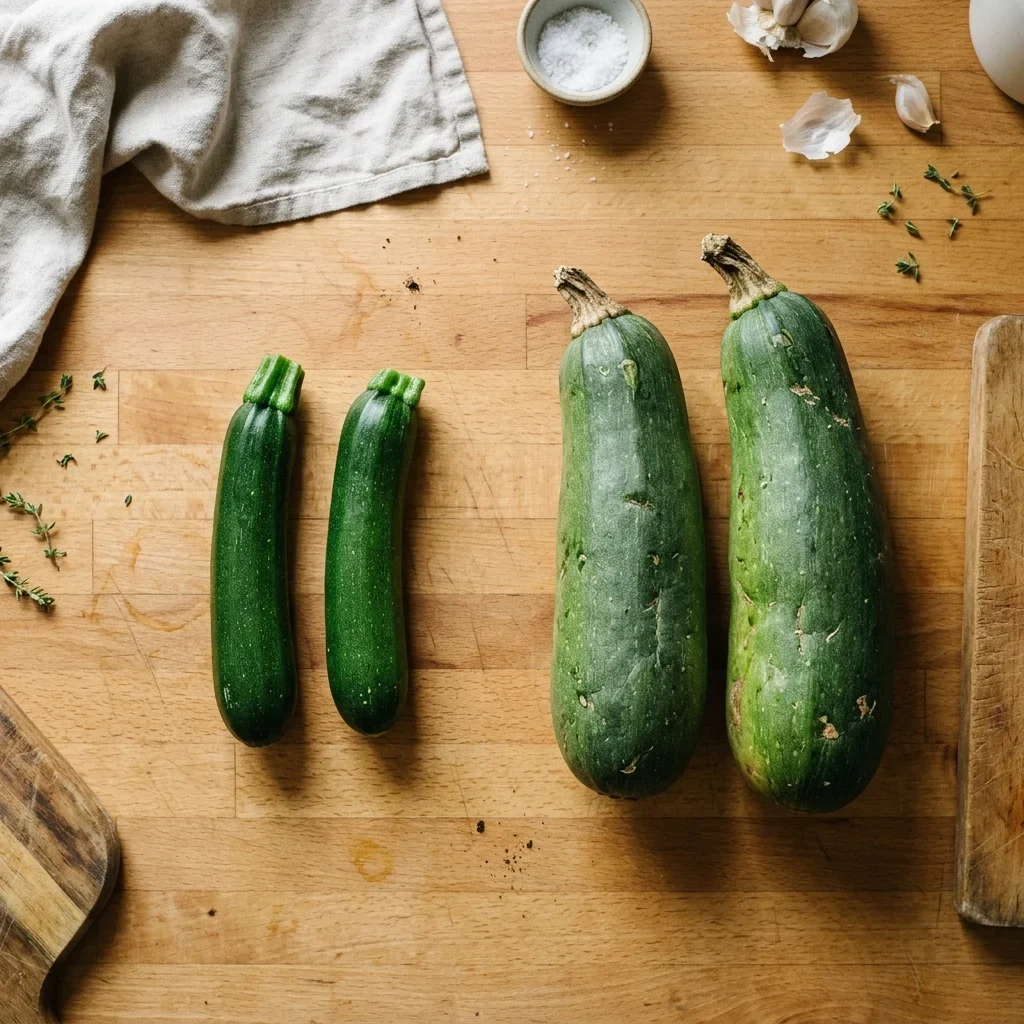
Small, firm and glossy keeps. The big one spent an extra week on the vine.
Firm, with a glossy skin. Utah State University Extension chooses freshly harvested squash that have not been left on the vine too long. Otherwise they become tough.
Small rather than large. Clemson Cooperative Extension wants young squash with tender skins for the freezer. The same test also works at the shop.
An unscratched rind. NC State Extension calls the rind very delicate, and so asks harvesters to wear gloves to avoid scratching it.
Nothing bruised or cut. The FDA asks you to choose produce that is not bruised or damaged. That matters especially on a rind this thin.
How to store zucchini so it lasts
To store zucchini so it lasts, you have to pick between two kinds of damage. Too warm and it dries out and decays, whereas too cold and the skin pits. The published window between those two is narrower than most fridges allow.
How to store zucchini in the fridge
Whole, unwashed and bagged, in the crisper drawer. Utah State University Extension puts fresh squash in the refrigerator crisper in plastic bags or rigid containers to retain moisture. It gives 5 to 7 days that way. The bag is there for humidity. NC State Extension and the UC Davis postharvest manual both ask for 95% relative humidity. Leave it unwashed as well. The UC Davis manual puts summer squash on its short do-not-wash list. Green beans, melons, cabbage, okra, peas and peppers are on it too. The peppers guide keeps to the same rule for the same reason. Free moisture costs green beans twice over, because the WFLO Commodity Storage Manual says it aggravates the russeting they pick up in a cold drawer.
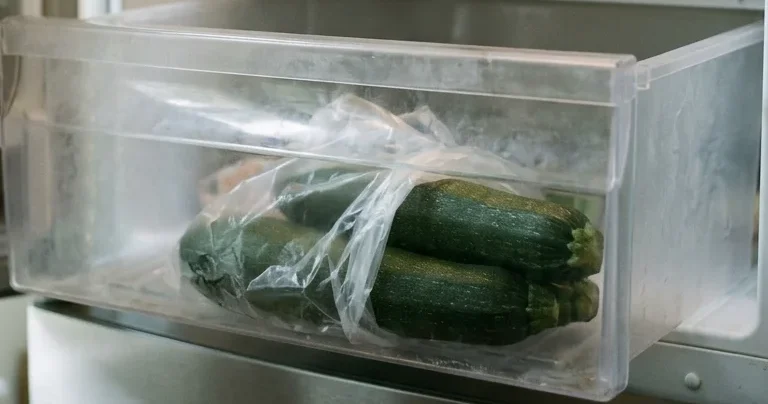
Whole, unwashed and bagged, in the crisper rather than the back of the fridge.
How long can you store zucchini?
Four to seven days at home, and the published figures only loosely agree. Clemson Cooperative Extension gives summer squash 4 to 5 days in the refrigerator. Utah State University Extension gives 5 to 7 days in the crisper. NC State Extension holds it for less than 10 days at 41°F, and perhaps up to 2 weeks. The UC Davis postharvest manual gives 1 to 2 weeks at 41 to 50°F. Notice what the two longer figures have in common, because both of them assume 41°F or warmer. So take 4 to 7 days as the home number.
In other words, the long figures belong to a commercial cold room rather than a kitchen fridge. Also, summer squash is on the UC Davis list of crops that one light freezing can ruin. So the back wall is the worst place for it.
Should you store zucchini in the fridge or on the counter?
The fridge, but not the coldest part of it. This is where home advice and postharvest science pull apart, so it is worth spelling out. The UC Davis postharvest manual puts summer squash at 41 to 50°F. NC State Extension gives 41°F as the figure. Below that threshold, it says, squash may incur chilling injury within a few days. Meanwhile the FDA asks you to hold perishable fresh produce at 40°F or below. Those two numbers do not meet. A home fridge set correctly is already a degree under the floor for zucchini. The honest reading is that chilling injury costs you appearance and texture slowly, whereas warmth brings decay quickly. So use the fridge for anything beyond a couple of days. A cool room at about 50°F beats it, if you have one.
How to store zucchini you have cut
Covered, in the fridge, and eaten within a couple of days. The FDA asks for all pre-cut or packaged produce to be refrigerated. It also holds perishable produce at 40°F or below. No extension source I could open gives a day count for cut zucchini. So the numbers online come from food blogs rather than from an authority. Judge the cut face instead: dry, darkened or weeping means cook it now. Cold matters more here, since a cut surface has no rind on it. If a plate of cut zucchini stood out all evening, the food left out overnight guide covers that.
Should you store zucchini washed or unwashed?
Unwashed, and in fact this one is unusually clear-cut. The UC Davis postharvest manual lists summer squash under do not wash. That is a short list of crops commercial packers leave dry. Clemson Cooperative Extension gives the home version. Brush off as much dirt as possible, then wipe the squash clean with a paper towel. It washes thoroughly only when you are ready to use it. The FDA adds the method for that moment, because firm produce such as cucumbers gets a clean produce brush. Also skip the soap, which it says produce can take up.
Can you freeze zucchini?
Yes, although it has to be blanched first. Clemson Cooperative Extension blanches slices in boiling water and steam-blanches grated zucchini. It also rules out the other option, since it does not recommend canning summer squash at all.
How to store zucchini in the freezer
Grated for baking, sliced for everything else. Clemson Cooperative Extension steam blanches grated zucchini in small quantities for 1 to 2 minutes, until it turns translucent. Then pack it in measured amounts, leaving half an inch of headspace. Cool the containers in ice water, then seal and freeze them. One detail is worth remembering, because if it is watery when thawed you discard the liquid before using it. The two sources differ on grated squash. Utah State University Extension blanches it for 3 minutes, like the slices, whereas Clemson steams it for 1 to 2 minutes. Clemson's is the method written for grated squash, so follow that one and keep the time short.
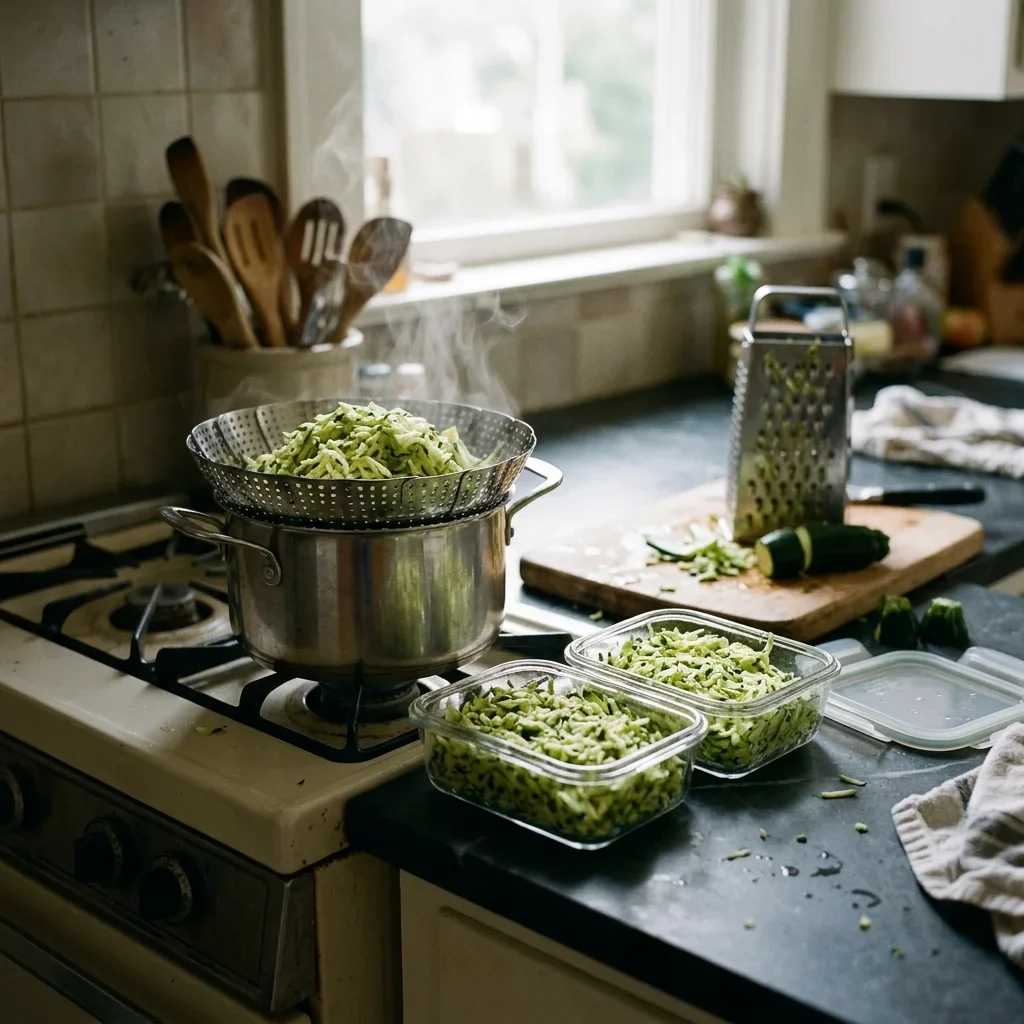
Grated and steamed until translucent, then packed in measured amounts.
Can you store zucchini in the freezer in slices?
Yes, and slices are in fact the simpler job. Clemson Cooperative Extension chooses young squash with tender skins, washes them and cuts half-inch slices. Then it blanches them in boiling water for 3 minutes. After that it cools them in ice water for at least 3 minutes. The slices then go into bags or containers with half an inch of headspace. Utah State University Extension adds a trick worth copying. Freeze the slices in a single layer on a cookie sheet, then bag them once they are solid.
What happens to zucchini you store in the freezer
It comes out soft and wet, so thawed zucchini is a cooking ingredient. Ice breaks the flesh, and zucchini is mostly water to begin with. Clemson Cooperative Extension expects that water. That is why it tells you to discard the liquid when thawed squash is watery. So use it in bread, muffins, soup and fritters, rather than in a salad.
How to tell if zucchini has gone bad
Most of a tired zucchini is still dinner. Pitted skin is a fridge problem, and a soft one still roasts, so only two things empty the bin. Those are a wet patch and a bitter taste. Here is what each stage means.
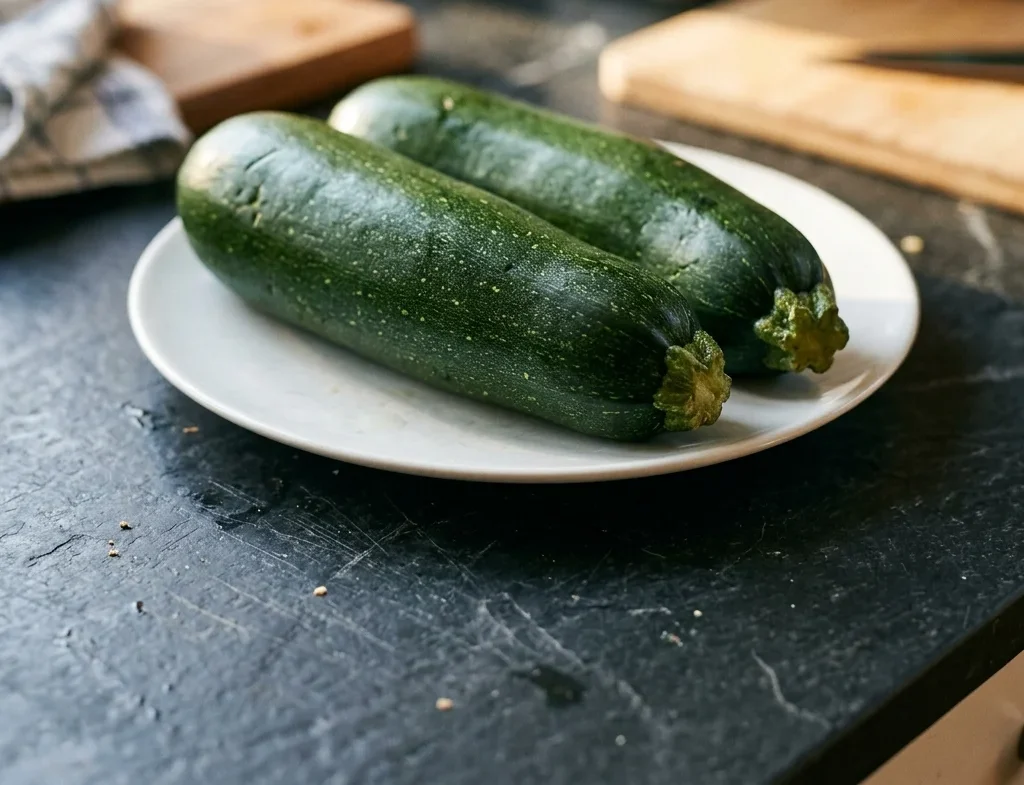
Verdict: use it
Firm, glossy zucchini
Dark green, shiny, and firm from end to end. NC State Extension calls the rind of a good summer squash very delicate. So a glossy, unscratched skin is the thing to look for. Then use it however you like.
Verdict: cook it
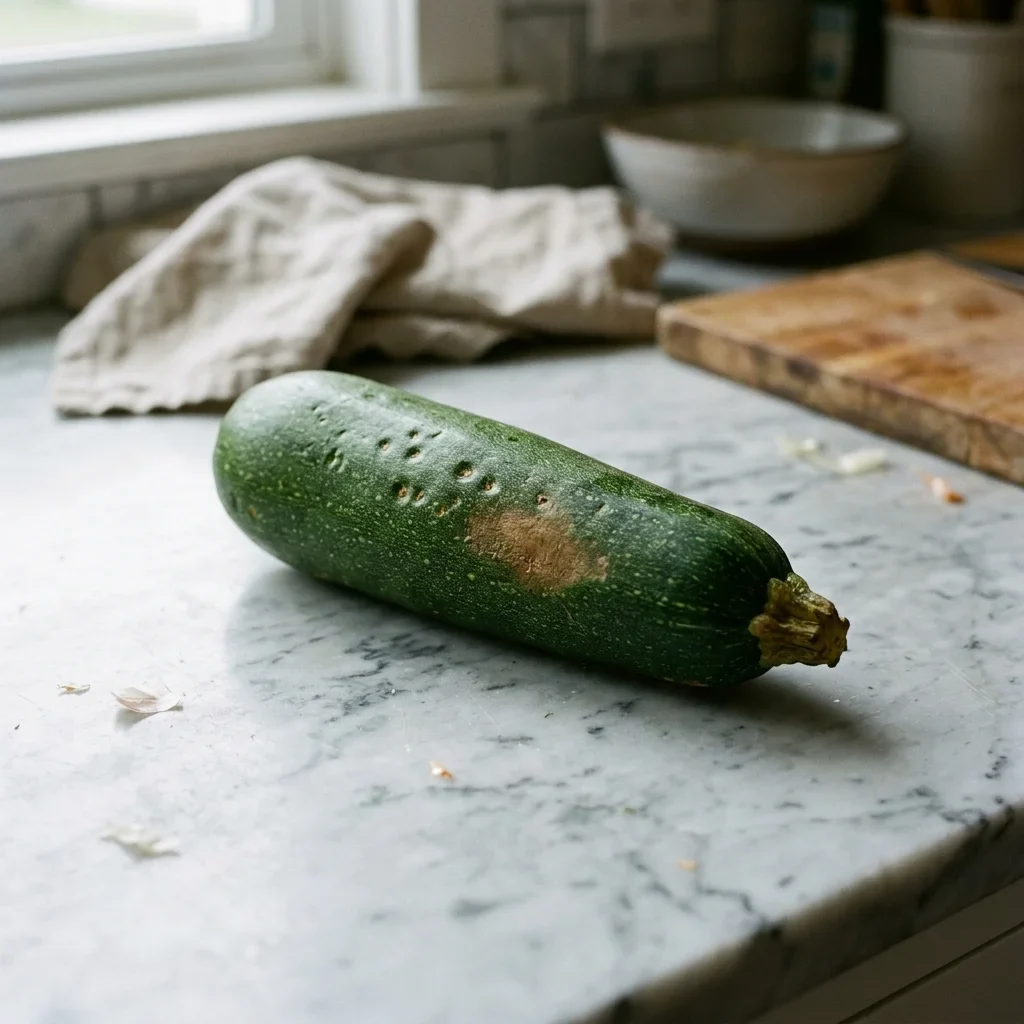
Zucchini with pitted or browned skin
Shallow dimples and dull brown patches usually mean the fridge rather than age. NC State Extension names browning, pitting and shriveling as the signs of chilling injury. It adds that they often show up only once the squash leaves the cold. That is a quality fault rather than a safety one, so cook it and move the bag to a warmer shelf.
Verdict: cook it
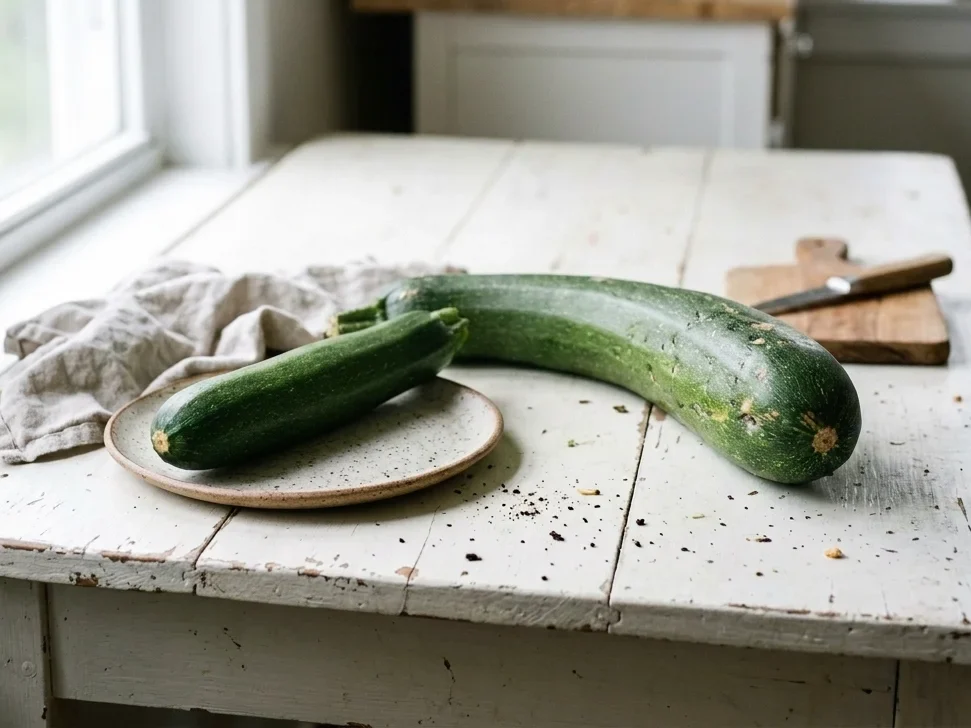
Soft or rubbery zucchini
A zucchini that bends, or that gives all over when you squeeze it, has lost water. Nothing puts that back, although the flavour is mostly still there. So grate it, salt it and squeeze it, then use it in fritters or bread. Check for a wet patch first, because soft all over is different from soft in one spot.
Verdict: throw it out
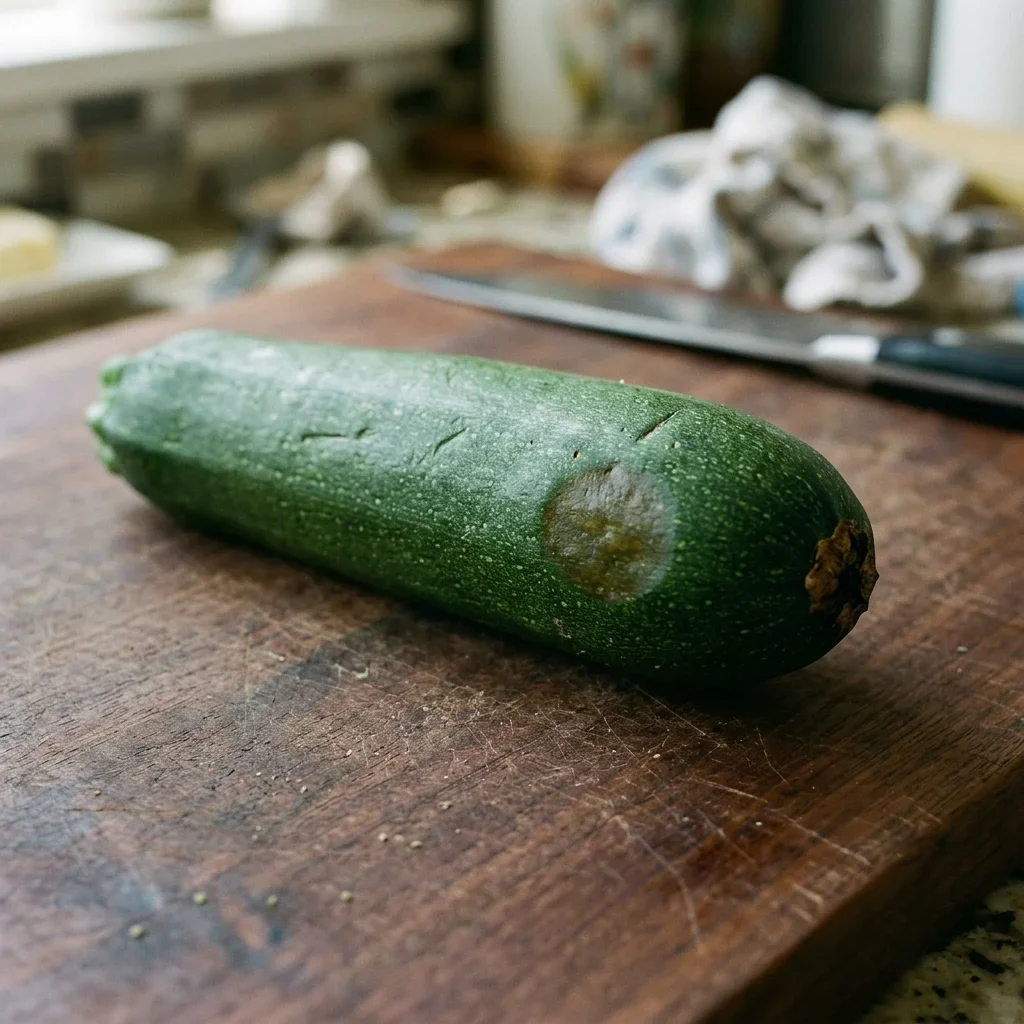
Zucchini with a slimy, water-soaked patch
One soft, wet, water-soaked spot is where rot starts, and it has a name. University of Maryland Extension describes Choanephora rot appearing first at the blossom end. It can start at the stem end too. The fruit turns dark brown to black, then goes fuzzy and mushy. Under a hand lens it carries thousands of tiny black dots, like a pincushion. Warm, humid, rainy weather is when it shows. UConn Extension does not name squash in either of its mold lists. So there is no one-inch trim to fall back on here. A zucchini with a wet, collapsing patch is on the soft side of that rule anyway.

Verdict: spit it out and throw it out
Bitter zucchini
A zucchini that tastes strongly bitter is the one real hazard on this page. The Pacific Northwest Plant Disease Management Handbook is blunt about it. Do not eat squash or other cucurbit fruit if there is a noticeable bitterness. The compounds behind it are cucurbitacins, which cultivated varieties have been bred to keep low. Oregon State University Extension says a couple of grams can cause diarrhea and stomach cramps for up to three days. One documented human case followed about a tenth of an ounce, with illness in 1 to 2 hours. Stress on the plant, including water stress, can raise the levels. So taste a small piece of any garden squash, and spit it out if it is harshly bitter.
Why does cold pit the skin when you store zucchini in the fridge?
Because the fridge is colder than the squash can tolerate. NC State Extension puts the threshold at 41°F and names browning, pitting and shriveling as the result. It also makes a point that explains the confusion. The damage often appears only after the squash comes out of the cold. In other words, you see it on the counter and blame the counter. The UC Davis postharvest manual gives 41 to 50°F for summer squash, which no domestic fridge holds. So the fix is not a different drawer. Buy less at a time, keep it bagged, and use it inside the week. The carrots guide makes the opposite case for a root, which likes the cold just fine.
Zucchini substitutes
Out of zucchini, or did the last one go soft before you got to it? Then these will stand in.
Substitute
Works best in
What changes
Yellow summer squash
Anything you would use zucchini for
The same vegetable in another colour.
Pattypan or crookneck
Roasting and grilling
Firmer, so they hold their shape better.
Cucumber
Salads and cold dishes
Raw only, since it collapses in a pan.
Eggplant
Bakes and stews
Meatier, so give it longer in the oven.
Mistakes people make when they store zucchini
These are the ways people store zucchini that cost them the most, and each one has an easy fix.
Washing it before it goes in the fridge. Commercial packers keep summer squash dry, so wipe it and wash it later.
Pushing it to the back of the fridge. Below 41°F the skin pits, so keep it in the crisper instead.
Buying the biggest one on the shelf. Squash left too long on the vine turns tough, so pick the small ones.
Stacking them loose in a drawer. The rind is delicate and scratches easily, so give each one some room.
Leaving cut zucchini out on the board. Cut produce belongs in the fridge, so cover it and chill it.
Freezing it raw for sauteing. It needs blanching first, so give the slices 3 minutes.
Eating a bitter one anyway. Bitterness is the one real warning here, so spit it out and bin the squash.
Sources
Postharvest Produce Guide: Summer Squash, NC State Extension Fresh Produce Safety, on holding summer squash for less than 10 days and perhaps up to 2 weeks at 41°F and 95% relative humidity, on chilling injury below that threshold, on browning, pitting and shriveling appearing after the squash warms up, and on the rind being very delicate.
Small-Scale Postharvest Handling Practices: A Manual for Horticultural Crops, Lisa Kitinoja and Adel A. Kader, University of California Davis Postharvest Technology Center, 4th edition, July 2002 and revised November 2003, on summer squash at 41 to 50°F with 95% humidity for 1 to 2 weeks, on summer squash appearing on the do-not-wash list, and on summer squash being injured by one light freezing.
How to Preserve Summer Squash, Utah State University Extension, on choosing squash that have not been left on the vine too long, on the refrigerator crisper in plastic bags or rigid containers for 5 to 7 days, on a 3 minute blanch and 4 minutes above 3,500 feet, and on freezing slices on a cookie sheet first.
Preserving Summer Squash, Susan Barefoot, Clemson Cooperative Extension Home and Garden Information Center, April 2018, on young squash with tender skins, on half-inch slices blanched 3 minutes and cooled 3 minutes, on grated zucchini steam blanched 1 to 2 minutes until translucent with half an inch of headspace, on discarding the liquid if it is watery when thawed, and on not recommending canning summer squash.
Selecting and Storing Fruits and Vegetables, HGIC 4038, E.H. Hoyle, revised by Adair Hoover and Gayle Willford, Clemson Cooperative Extension, revised January 2013, on summer squash keeping 4 to 5 days refrigerated and 12 months frozen, and on brushing dirt off and wiping produce clean rather than washing it before storage.
Are volunteer squash toxic?, Debra Lauer, Oregon State University Extension Service, August 2020 and reviewed 2024, on cucurbitacins and bitterness, on environmental stress concentrating them, and on a couple of grams of extremely bitter squash causing diarrhea and stomach cramps for up to three days.
Squash (Cucurbita spp.): Toxic Squash (Toxic Zucchini), Pacific Northwest Plant Disease Management Handbook, Oregon State University, Washington State University and University of Idaho, on cucurbitacins as naturally occurring bitter compounds, on cross-pollination and water stress raising levels, on a documented human case from 0.1 ounce of zucchini with illness in 1 to 2 hours, and on not eating cucurbit fruit with a noticeable bitterness.
Choanephora Rot of Vegetables, University of Maryland Extension, on the rot appearing first at the blossom end and sometimes the stem end, on fruit turning dark brown to black and then fuzzy and mushy with thousands of tiny black dots, on warm, humid, rainy weather favouring it, and on removing infected fruit quickly.
Selecting and Serving Produce Safely, U.S. Food and Drug Administration, March 2024, on choosing produce that is not bruised or damaged, on refrigerating pre-cut and packaged produce, on holding perishable produce at 40°F or below, on scrubbing firm produce with a clean produce brush, and on produce taking up detergents.
Handling Food with Mold, Austin Goldberg, Daniela Avelino and Valerie Duffy, UConn Extension, April 2024, on trimming an inch from firm fruits and vegetables and discarding soft ones whole.
Storage times and safety advice on this page come from the sources above. Food safety depends on conditions I cannot see, so read the Disclaimer, and if in doubt, throw it out.
Other ingredient guides
Browse all guides





Share this guide
Never miss a guide
New ingredient guides when they go up, plus one storage tip worth knowing. Anything sponsored is labelled.

Emilly White