
1 to 2 years
Sealed glass, 50 to 70°F, out of the sun (Clemson, NDSU, Purdue)
Not needed
Purdue suggests below 41°F only for long-term storage, used within 2 years
No figure
None of the extension sources we opened covers freezing honey
The short version: to store honey well, use a tightly sealed glass jar somewhere cool and out of the sun, where it keeps 1 to 2 years at its best and stays safe far longer. Then use a clean, dry spoon every time. Crystals are not spoilage, so stand the jar in warm water and stir them out. Foam and an alcohol smell are a different matter, because that jar has fermented.
Storage temperatures here come from Purdue Extension and Clemson Cooperative Extension, the shelf lives from NDSU Extension and Mississippi State Extension, and the water and fermentation figures from UF's honey judging standards.
On this page
What to check before you store honey
Two things decide it, and neither is the cupboard. Is the lid sealed? And is the jar glass? Water is the only thing that really spoils honey, so the rest follows from keeping it out.
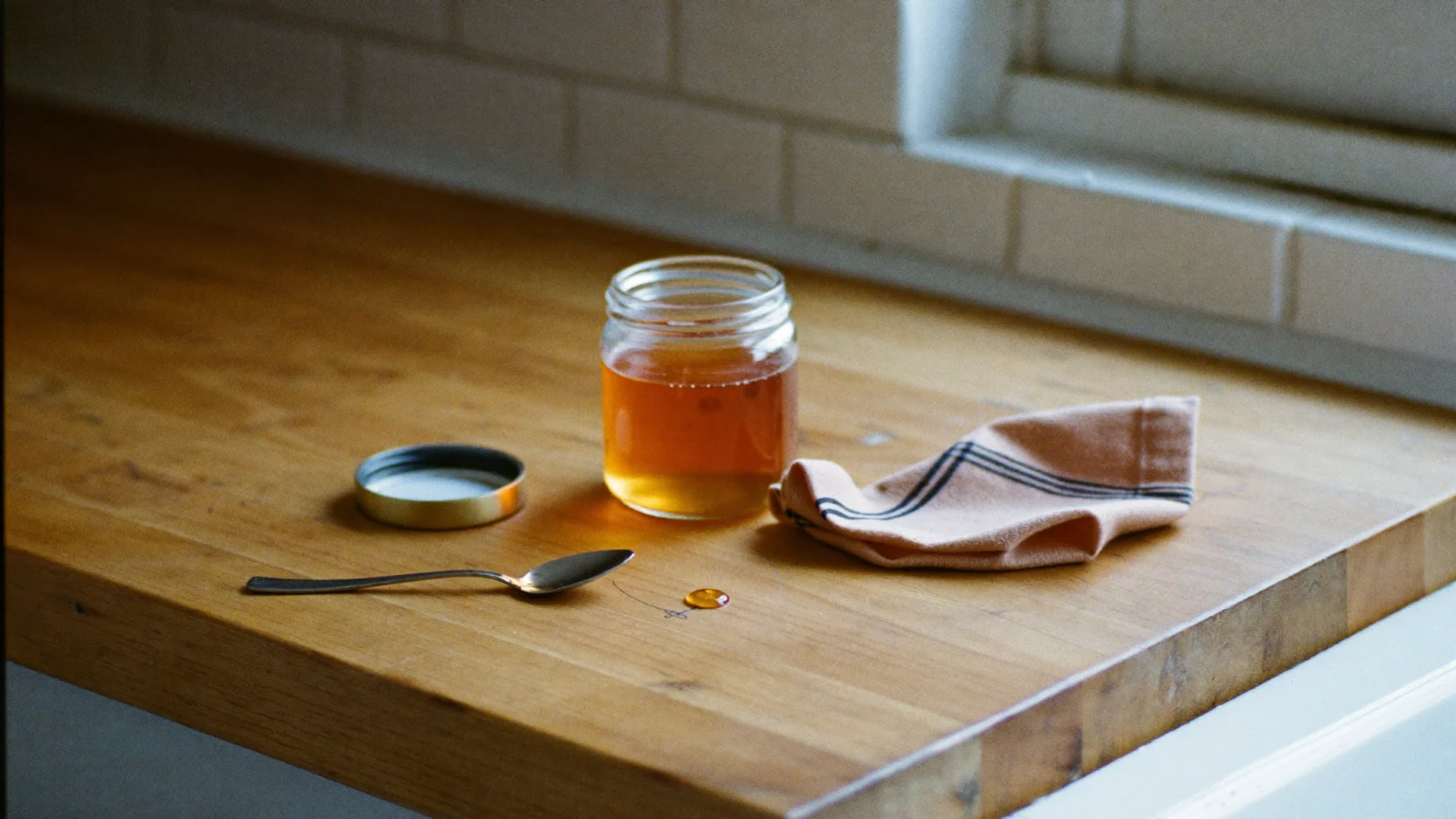
Glass, a lid that seals, and a spoon that is properly dry.
Glass with a tight lid. Purdue Extension asks for a tightly sealed glass jar for short-term storage. For the long term it asks for a glass jar with a sealed lid. Mississippi State Extension agrees on the principle, since it says to store honey in a cool, dry area in an air-tight container.
Water is the enemy here, rather than time. UF's honey judging standards put a number on it, because water content above 18.6% is disqualified in a show jar. The same score card also disqualifies honey for fermentation outright. So a jar that takes on moisture is the one that can genuinely spoil.
The spot matters as well. Clemson Cooperative Extension puts honey and syrups in a cool, dry pantry at 65 to 70°F. Purdue Extension narrows that to between 50°F and 70°F, and it says to keep honey away from sunlight. Mississippi State Extension then names the worst places, since it tells you to avoid direct sunlight or anywhere near heat-producing appliances, like the oven.
Then there is the spoon. Mississippi State Extension asks you to always use clean utensils when dipping into the container. That helps keep bacteria, yeasts, and molds from being introduced into the honey and growing, it explains. So a wet teaspoon is how water gets in, and water is the whole problem.
How to store honey so it lasts
To store honey so it lasts, think sealed, cool, dark and dry. Honey needs no fridge and no preservative. What it needs is a lid that keeps air out, because air carries the moisture that starts fermentation.
Where should you store honey?
Honey keeps best in a sealed glass jar in a cupboard at 50 to 70°F, out of the sun, according to Purdue Extension. Clemson Cooperative Extension puts honey and syrups in a cool, dry pantry at 65 to 70°F, which sits inside that. NDSU Extension adds just one instruction, which is to cover it tightly. So the jar it came in is fine, as long as the lid still seals. Keep it off the shelf above the cooker, too, which is the same thing the nutmeg guide asks for.

Sealed, cool and dark, and nowhere near the cooker.
How long does honey last?
Honey lasts anywhere from 1 year to indefinitely, depending on which extension service you ask, because Clemson, NDSU and Mississippi State each give a different answer. Clemson Cooperative Extension gives honey and syrups 1 year in its pantry chart. NDSU Extension gives honey 2 years instead. Purdue Extension says honey stored its way can last for a long time, although you should use it within two years. Mississippi State Extension goes furthest, since it says honey is safe to eat indefinitely as long as it is stored and handled properly.
So the chart tells you when to look, not when to bin. Mississippi State Extension is blunt about the lid date, because it says the most common myth is that honey eventually expires like most foods. A sell-by date is not an expiration date, it adds, and properly stored honey can be used for decades to come. Treat two years as a quality marker, then. A sealed jar at the back of the cupboard is almost certainly still good.
Should you store honey in glass or plastic?
Honey is best kept in glass when you have the choice, since Purdue Extension names a glass jar for both short-term and long-term storage and offers no alternative. Mississippi State Extension is less specific, since it asks only for an air-tight container. Neither page explains why glass, though, so we are not going to guess at a reason. What both insist on is the seal. In other words, an airtight plastic tub beats a glass jar with a loose lid.
Can you keep honey next to the stove?
Honey should not sit near the oven or in direct sunlight, according to Mississippi State Extension, so a closed cupboard away from the cooker is the place for it. Purdue Extension repeats the sunlight half for both short and long-term storage. Clemson Cooperative Extension sets a temperature rather than a spot, at a cool, dry pantry of 65 to 70°F. Heat is a flavour problem here rather than a safety one, however. UF's honey judging standards downgrade a jar for objectionable flavor or overheating, and their grade tables want honey free from caramelization.
How do you store honey after opening?
Opened honey needs only its lid back on and a clean, dry spoon every time, according to Mississippi State Extension. That keeps bacteria, yeasts and molds out, as it explains. NDSU Extension says the same thing in fewer words, since its instruction is simply to cover it tightly. No source we opened gives a separate shelf life for an opened jar, so we are not going to invent one. The caramel sauce guide asks for the same clean, dry spoon, and for the same reason.
Should you refrigerate honey?
Honey does not need the fridge for everyday use, since Purdue Extension's short-term range is 50 to 70°F, but two extension services disagree about the long term. Purdue Extension recommends below 41°F for long-term storage. Below that temperature honey will not crystalize, and the original flavor and texture will be preserved, it says. Mississippi State Extension says the opposite, because it warns that honey stored in the refrigerator will likely crystallize faster. A home fridge runs at roughly 35 to 40°F, so both pages describe the same shelf. Neither one has been retired.
How do you store honey long term?
For the long term, Purdue Extension says to keep honey in a sealed glass jar below 41°F, where it can last a long time, and to use it within two years all the same. The catch is practical rather than scientific, since cold honey barely pours. So this suits a jar you are putting away, not the one on the breakfast table. Fermentation is the thing cold actually prevents, which is what the apple cider guide spends its fridge section on.
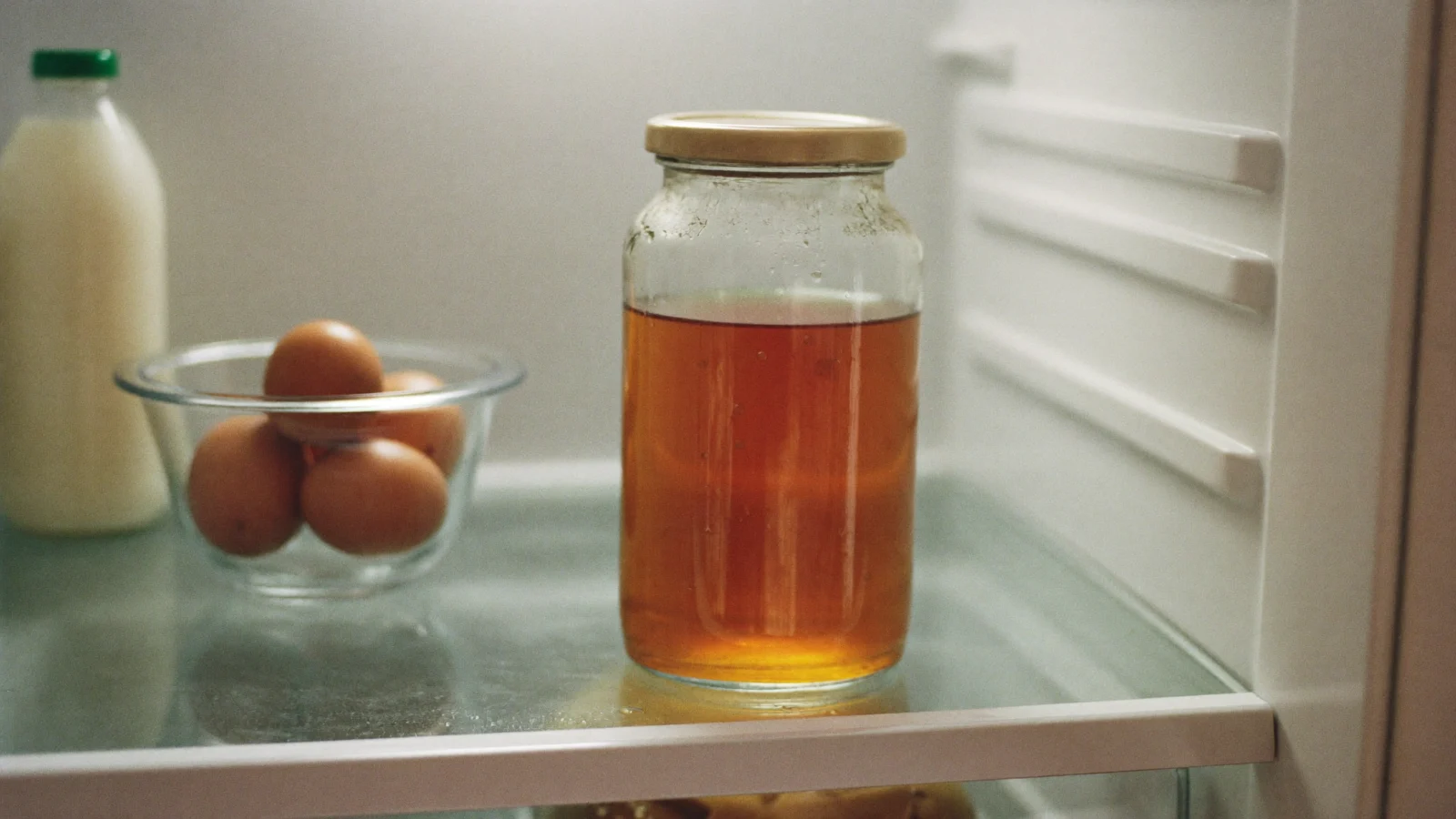
Below 41 degrees it keeps for years, but it barely pours.
Can you freeze honey?
None of the extension sources we opened tells you to freeze honey, and none of them forbids it either. Purdue Extension stops its long-term instruction at below 41°F, which a fridge already meets, so the freezer never comes up. Mississippi State Extension does not mention it at all. NDSU Extension lists honey only in its cupboard chart, at 2 years. So we are leaving this one open rather than filling it in, because the published advice genuinely ends at the fridge.
Does honey crystallize in the fridge?
Whether honey crystallizes in the cold depends on the source: Mississippi State Extension says cold speeds crystals up, while Purdue Extension says honey kept below 41°F will not crystallize at all. Both agree on what crystallizing is, though. It is natural in honey, as Purdue puts it, and it happens when the sugar in honey separates from the water and takes the form of tiny crystals. Either way the jar is still safe, since Purdue calls crystallized honey completely safe.
How to tell if honey has gone bad
Honey mostly does not go bad, and that is the honest headline. Four of the five stages below are about texture and colour rather than safety. Only one is a bin job, because only water lets yeast work. Mississippi State Extension sets the bar, since it says honey is safe to eat indefinitely as long as it is stored and handled properly. Here is what each stage looks like, then.
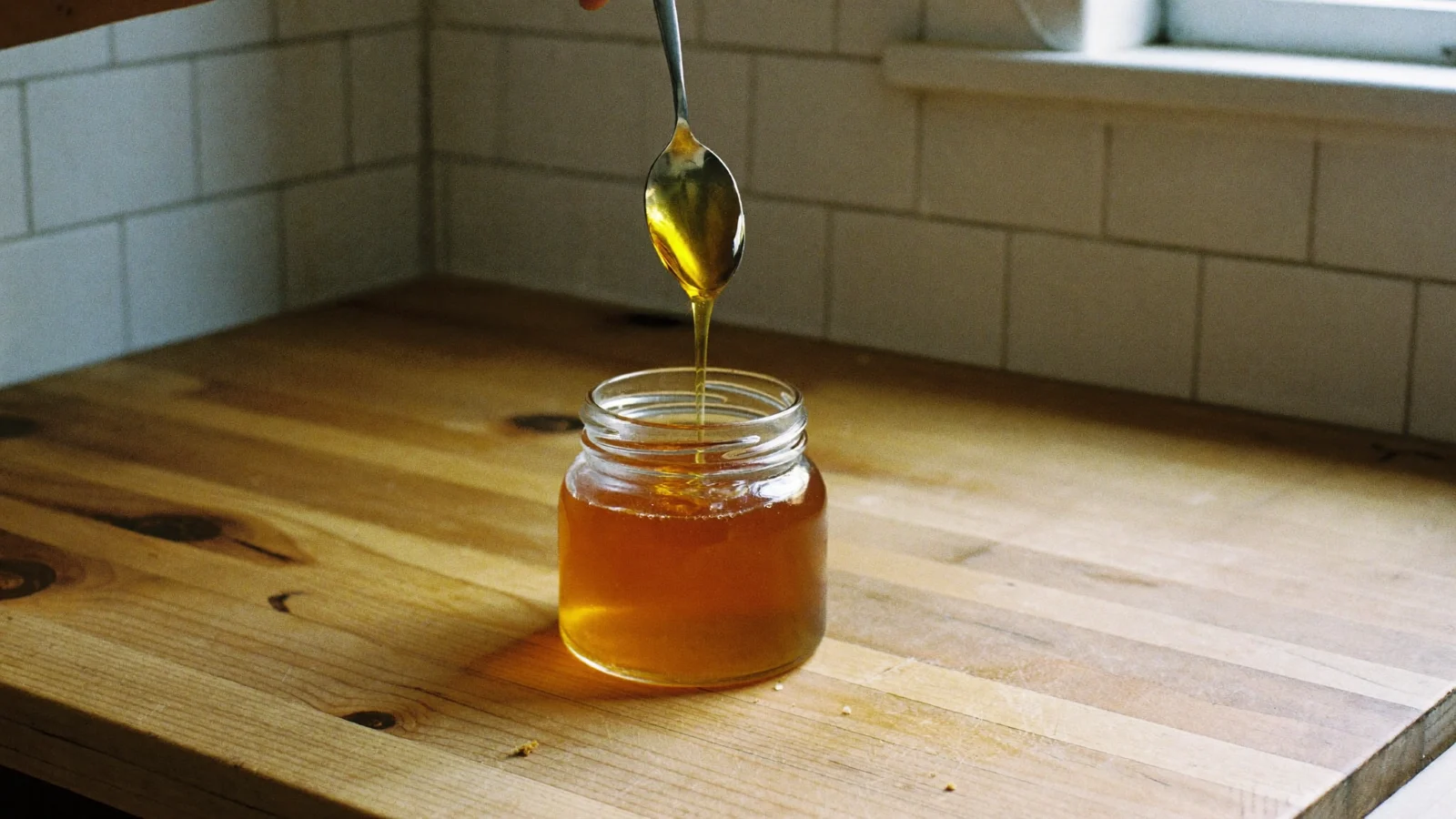
Verdict: use it
Clear liquid honey
Pourable, glossy and free of visible crystals. That is how UF's honey judging standards define liquid honey, which is honey free from visible crystals. Purdue Extension adds that most honey produced in the United States is in liquid form. So use it exactly as the recipe asks.
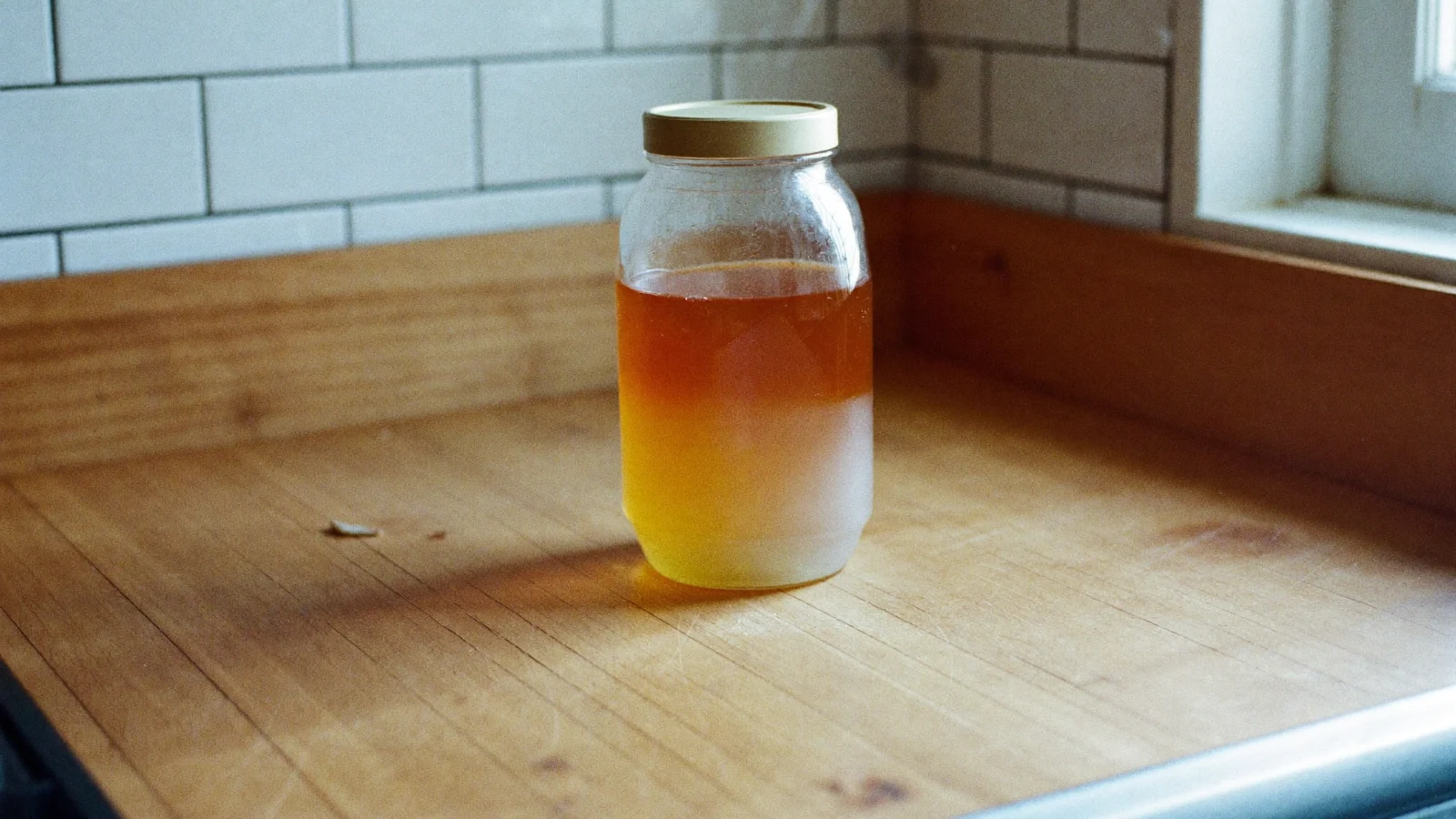
Verdict: still fine
Cloudy honey
A haze through the jar, and perhaps a grainy feel on the spoon. Mississippi State Extension reads that as the start of the process, since it says cloudy honey means it is starting to crystallize. UF's honey judging standards call that stage granulation, which is the initial formation of crystals in the honey. Nothing has gone wrong, then. So carry on, or warm the jar if the texture bothers you.
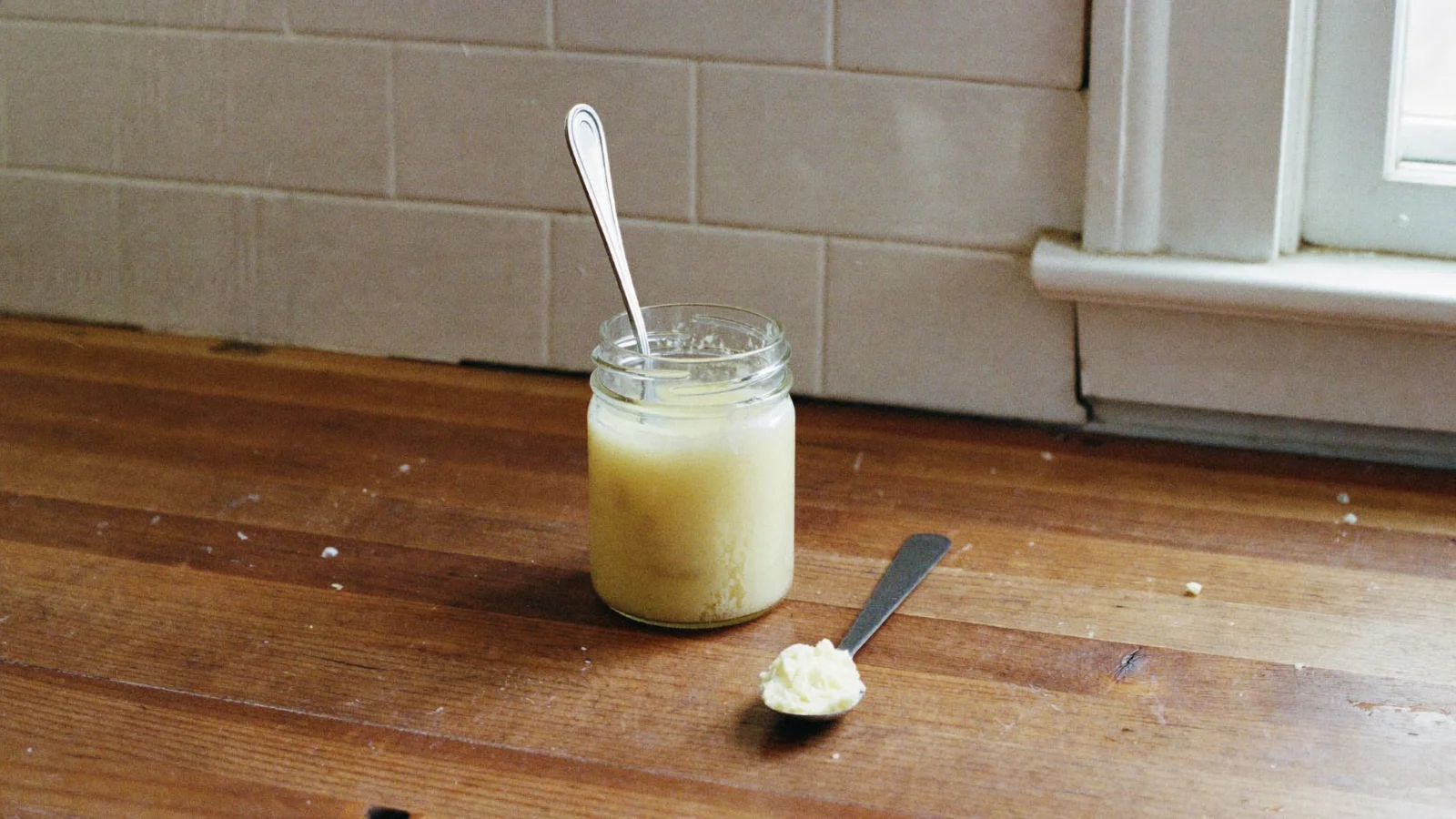
Verdict: warm it and use it
Solid, crystallized honey
Set firm and pale, and the spoon will not go in. Purdue Extension is unambiguous about this one, because it says honey can crystalize and is completely safe. Crystallization is natural in honey, it adds. To undo it, heat a pan of water on low or medium heat, take the pan off the heat, then stand the glass jar in the water and stir until the crystals dissolve. NDSU Extension gives the same method, since it warms the opened jar in a pan of hot water. Purdue's quick alternative is 30 seconds in the microwave, then a stir.
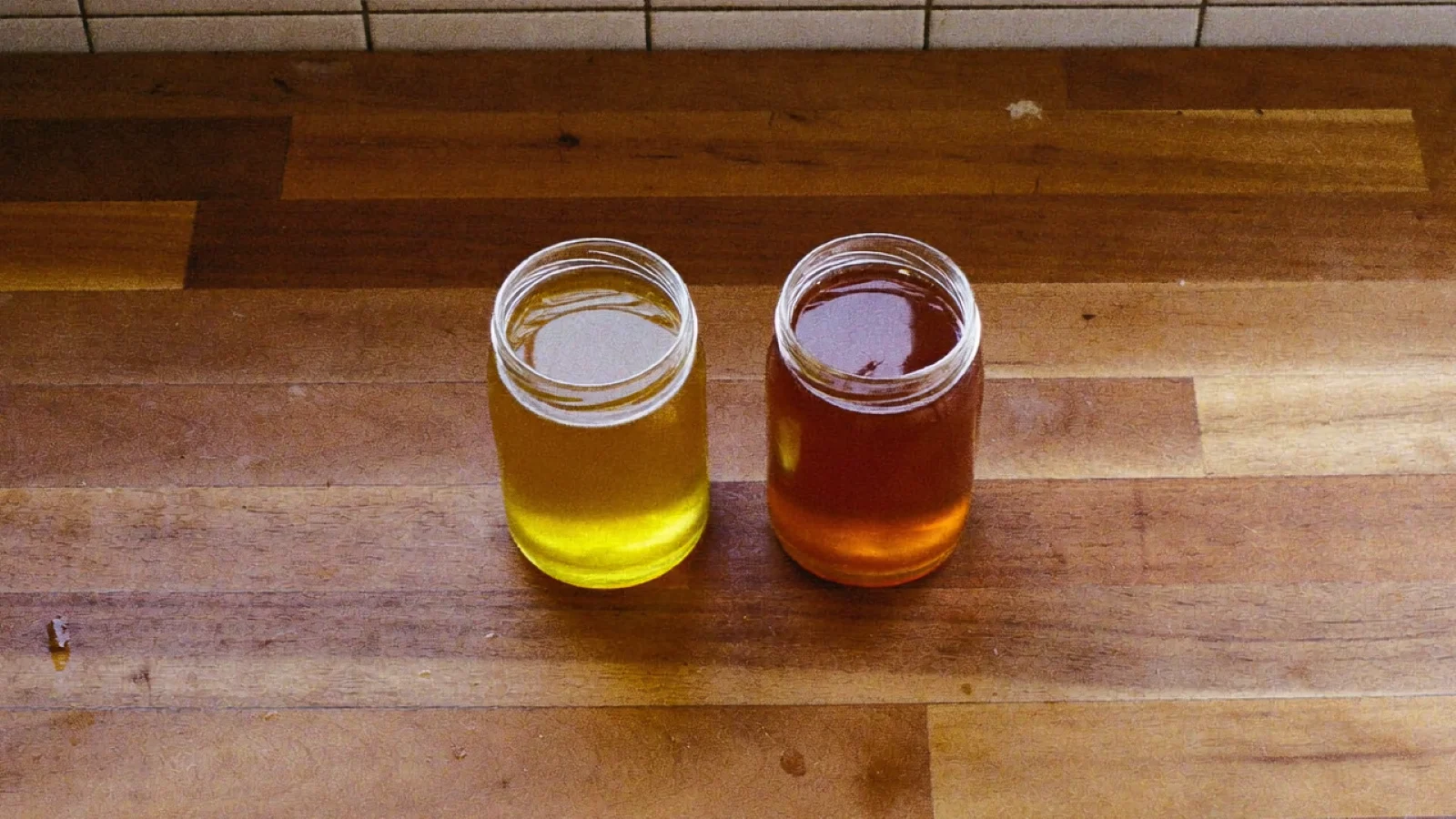
Verdict: use it, or bake with it
Dark honey
Deeper in colour than the day you bought it. Mississippi State Extension treats that as ordinary ageing, since it says honey can eventually darken and crystallize over time. It is a quality change rather than a safety one, and the same page still calls properly stored honey safe indefinitely. UF's honey judging standards do grade honey by colour on the Pfund scale, although that is about show jars rather than cupboards. So use it, and send the darkest jar to something baked where the flavour fits.
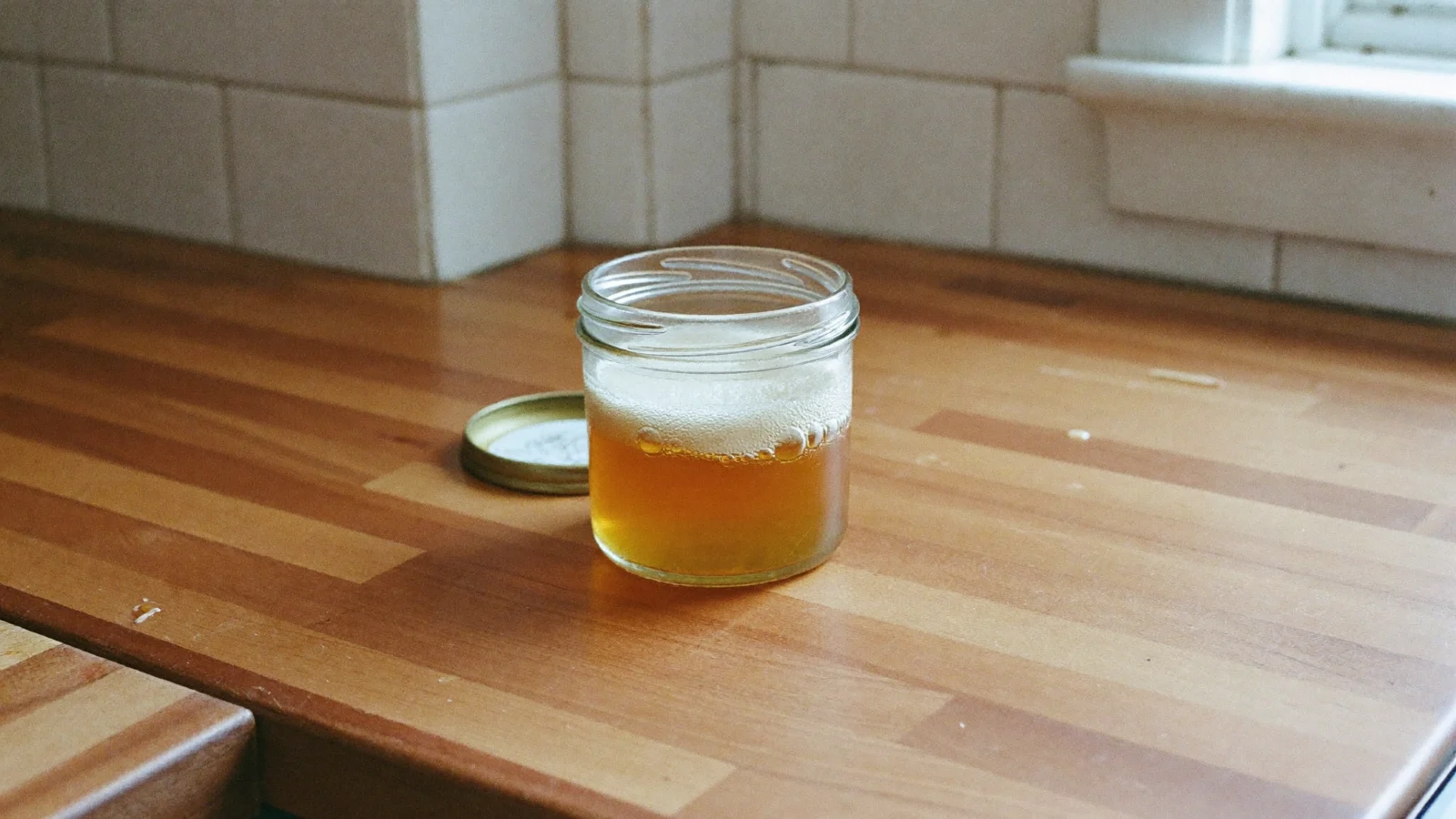
Verdict: throw it out
Foamy or moldy honey
A head of foam, a bulging lid, a smell of alcohol, or anything fuzzy. Mississippi State Extension gives the test in one line, because it says that if honey foams or smells like alcohol it is best to throw it out. This is fermentation, and UF's honey judging standards disqualify a jar for it outright. The cause is water, since the same standards disqualify honey above 18.6% water content. Visible mold goes the same way, as nothing we opened offers a method for rescuing it. So bin that jar, then work out how water got in.
Can babies eat honey?
Babies under 12 months must not eat honey, and this is the one hard safety rule on the page. UF/IFAS Extension states it plainly, since it says honey should not be added to water, food, or formula fed to infants under 12 months of age. The reason is a spore, because infant botulism is a disease caused by the spore-forming bacterium Clostridium botulinum. In a survey of honey in the United States, 10% of honey samples contained botulism spores, it reports. The toxin itself is not the issue, though. Botulinum toxin has not been found in honey, nor would it be expected to be, the same publication adds. Purdue Extension prints the short version on its own recipe card, which is that honey is not recommended for children younger than 1 year.
Honey substitutes
Out of honey, or did the jar set hard at the wrong moment? Then one of these will stand in.
Substitute
Works best in
What changes
Maple syrup
Pancakes and dressings
Thinner, so it still pours when cold.
Granulated sugar
Baking
Dry, so the liquid has to go back in somewhere.
Molasses
Dark baking and glazes
Stronger and less sweet, so use a lighter hand.
Corn syrup
Candy and sauces
NDSU gives it up to 3 years, which beats honey's chart.
Mistakes people make when they store honey
These are the ways people store honey that cost them the most. Each one has a quick fix, though.
Dipping a wet spoon in. Mississippi State Extension asks for clean utensils every time, because that is how yeasts and molds get in.
Keeping the jar above the cooker. The same page says to avoid heat-producing appliances like the oven, so move it into a cupboard.
Throwing out crystallized honey. Purdue Extension calls it completely safe, so stand the jar in warm water and stir instead.
Boiling the jar to clear the crystals. Purdue Extension takes the pan off the heat first, and UF's standards downgrade honey for overheating.
Trusting the date on the lid. Mississippi State Extension says plainly that a sell-by date is not an expiration date.
Loosening the lid to stop crystals forming. Air brings water, and water is what ferments honey, so seal it tightly as NDSU asks.
Giving honey to a baby. UF/IFAS says no honey in water, food or formula under 12 months of age.
Sources
Honey, Purdue Extension FoodLink, on short-term storage in a tightly sealed glass jar between 50°F and 70°F away from sunlight, long-term storage in a sealed glass jar below 41°F where honey will not crystalize, using it within two years, crystallization being natural and completely safe, the sugar separating from the water into tiny crystals, the warm water bath and the 30-second microwave fix, liquid honey being the most common form in the United States, and honey not being recommended for children younger than 1 year.
Does Honey Go Bad?, Extension for Real Life, Mississippi State University Extension Service, on honey being safe to eat indefinitely when stored and handled properly, a sell-by date not being an expiration date, honey darkening and crystallizing over time, cloudy honey meaning crystallization has started, the refrigerator speeding crystallization up, warm water and stirring to dissolve crystals, an air-tight container in a cool dry area away from sunlight and the oven, clean utensils keeping bacteria, yeasts and molds out, and throwing out honey that foams or smells of alcohol.
Food Storage Guide, Julie Garden-Robinson, NDSU Extension publication FN579, on honey at 2 years in the cupboard, covering it tightly, warming an opened jar in a pan of hot water if it crystallizes, and corn syrup keeping up to 3 years.
Food Storage: Pantry, Clemson Cooperative Extension Home and Garden Information Center, on honey and syrups at 1 year in tightly sealed or airtight containers in a cool, dry pantry at 65 to 70°F.
Infant Botulism and Honey, Malcolm T. Sanford, Eddie Atkinson, Jeanette Klopchin and Jamie R. Ellis, UF/IFAS Extension publication ENY-128/AA142, on infant botulism being caused by the spore-forming bacterium Clostridium botulinum, honey not being added to water, food or formula for infants under 12 months of age, 10% of surveyed United States honey samples containing botulism spores, and botulinum toxin not being found in honey.
Honey Judging and Standards, Malcolm T. Sanford, University of Florida publication ENY129, hosted by Texas A&M Extension Entomology, on water content above 18.6% being disqualified and no upgrading below 16%, disqualification for fermentation, downgrading for objectionable flavor or overheating, grades requiring honey free from caramelization, granulation meaning the initial formation of crystals, liquid honey being free from visible crystals, and the Pfund colour scale.
Storage times and safety advice on this page come from the sources above. Food safety depends on conditions I cannot see, so read the Disclaimer, and if in doubt, throw it out.
Other ingredient guides
Browse all guides
Share this guide
Never miss a guide
New ingredient guides when they go up, plus one storage tip worth knowing. Anything sponsored is labelled.

Emilly White