
1 day
Whole, then into the fridge (NDSU)
1 to 2 weeks
Greens off, 2 inches of stem, in a bag (NDSU, Penn State)
6 to 8 months
Cooked and peeled first (NDSU)
The short version: to store beets, cut the greens off and leave about 2 inches of stem, then keep the roots in a plastic bag in the fridge for 1 to 2 weeks. For months of storage, you need 32 to 35°F and very high humidity, like a root cellar. To freeze them, cook and peel them first, and they keep 6 to 8 months.
Storage times here come from NDSU Extension and Penn State Extension, the cold-storage figures from Utah State University Extension, and the freezing steps from SDSU Extension, which credits the National Center for Home Food Preservation.
On this page
What to check before you store beets
Three things decide how long beets keep: how firm they are, whether the greens are still on, and how much stem you leave. So deal with all three before the beets go anywhere near the fridge.
Glass, a lid that seals, and a spoon that is properly dry.
Start with firm, smooth roots. University of Maine Cooperative Extension looks for beets that are firm and smooth with a deep red color, and fresh-looking tops if they still have them. A beet that already gives when you squeeze it has lost water, so it will not last as long as the rest.
Then look at the greens, because they decide the clock. Utah State University Extension gives bunched beets with their leaves only 5 to 7 days, since the leaves cause water loss. Without tops, the same roots can be stored for 3 to 4 months in the right conditions. That is the whole case for cutting them off on day one.
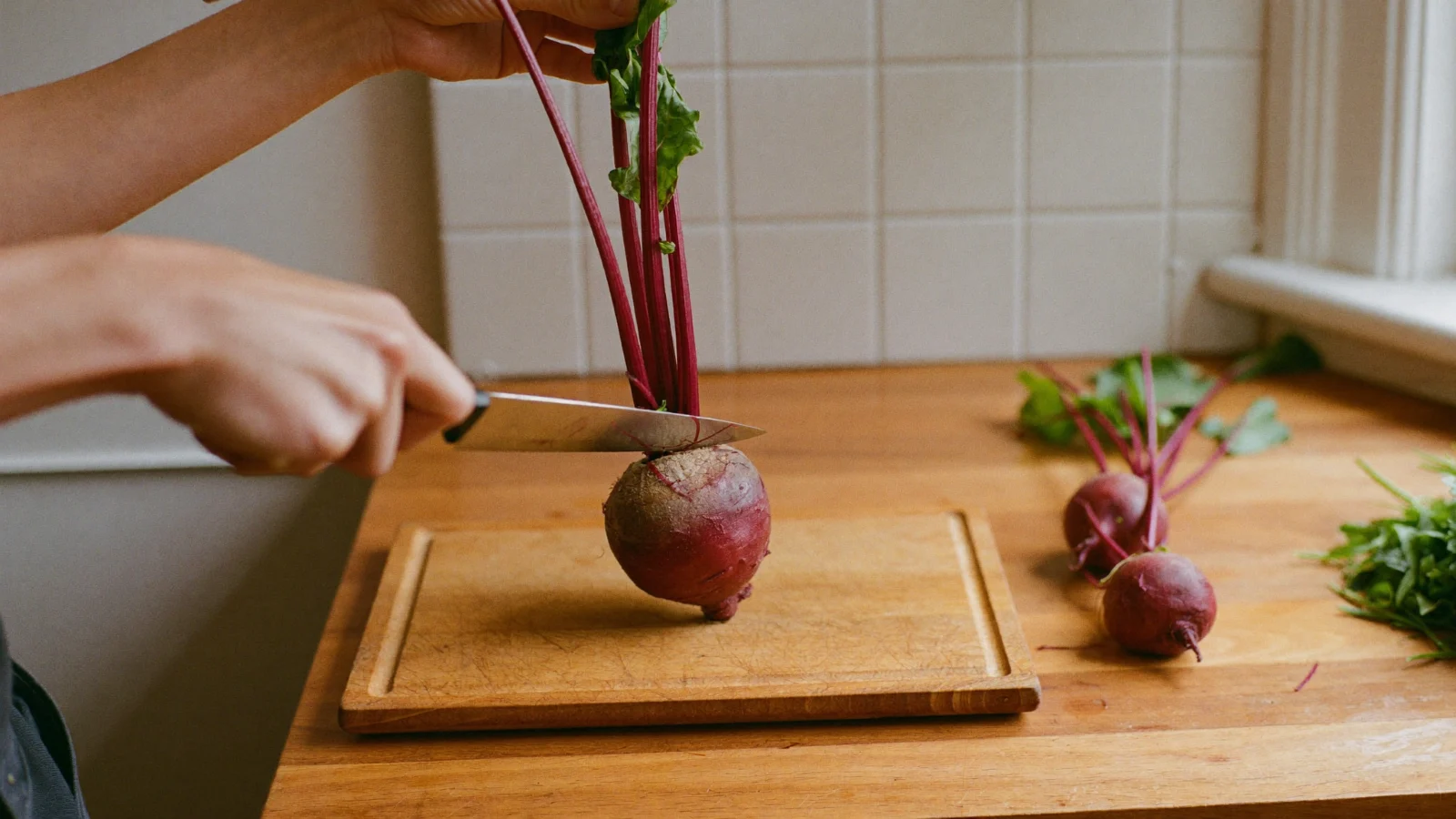
Leave some stem, though. Penn State Extension asks for 2 inches of stem to avoid color bleed, and Maine suggests an inch or two. Cut flush instead, and the root bleeds its color, which matters most once you cook it.
Finally, sort out any damaged roots. A cut, a split or a soft patch is where decay starts, and Utah State's long storage figures assume sound roots. So cook the damaged ones first, and store only the firm ones. The carrots guide follows the same rule for the same reason.
How to store beets so they last
To store beets so they last, give the roots cold and moisture and keep the leaves away from them. A bag in the fridge does that for a couple of weeks, whereas a cold, damp cellar does it for months.
How do you store beets in the fridge?
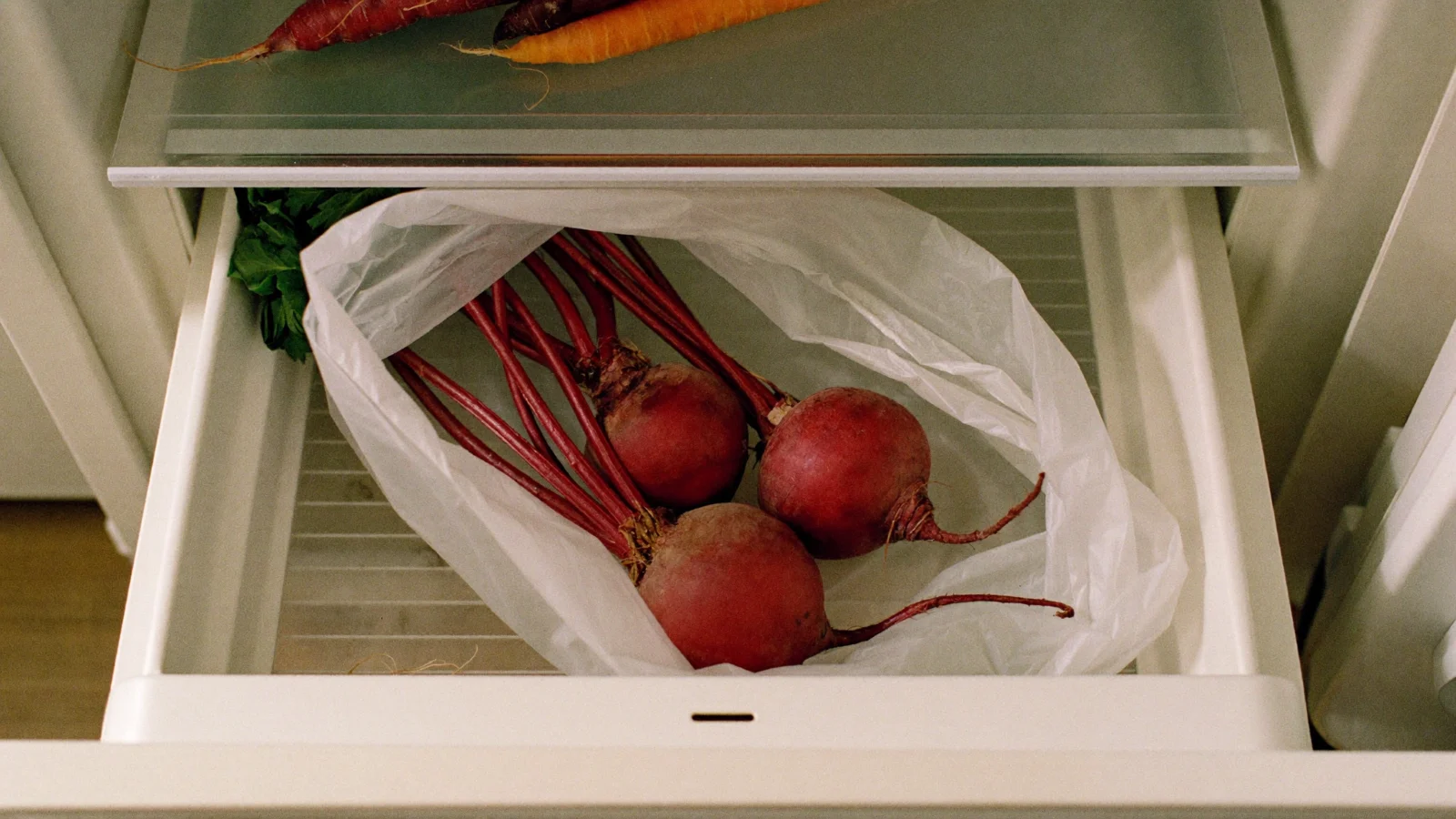
Beets keep in the fridge for up to 2 weeks if you store them unwashed in a plastic bag with 2 inches of stem left on, according to Penn State Extension. Cut the greens off first, then bag the roots and put them in the crisper drawer. The bag keeps the moisture in, which stops the roots going soft. NDSU Extension gives the same 1 to 2 weeks in a fridge at 32 to 40°F.
Sealed, cool and dark, and nowhere near the cooker.
How long do beets last?
Beets last about 1 day on the counter, 1 to 2 weeks in the fridge and 3 to 4 months in cold, humid storage, according to NDSU Extension and Utah State University Extension. NDSU Extension gives the counter and fridge figures, plus 6 to 8 months in the freezer once cooked. Utah State University Extension gives the long figure, although only for topped roots in bags at 32 to 35°F with 98 to 100% humidity.
That last condition is the catch. A home fridge rarely holds that much humidity, which is why the fridge figure is weeks rather than months. University of Maine Cooperative Extension puts it simply: beets are best if used within 2 weeks. So plan on two weeks in the fridge, and treat anything longer as cellar territory.
Should you cut the greens off beets before storing them?
Yes, beet greens should come off before you store the roots, because the leaves pull water out of them, according to Utah State University Extension. Utah State University Extension gives beets with their leaves only 5 to 7 days, against months for topped roots. Leave 2 inches of stem, as Penn State Extension advises, so the root does not bleed. Then cook the greens soon, since none of the sources we opened gives them a storage time of their own.
Should you wash beets before storing them?
The sources split on washing beets, so the safer choice for the fridge is to store them unwashed, as Penn State Extension advises. Penn State Extension says to store beets unwashed with the stem on. University of Maine Cooperative Extension, on the other hand, says to wash beets well, and Utah State University Extension washes them in cold water before bagging for long storage. So brush off loose soil for the fridge, and wash them when you cook.
How do you store beets long term?
Beets store for 3 to 4 months at 32 to 35°F with 98 to 100% humidity, bagged with their tops removed, according to Utah State University Extension. That is root cellar weather, cold enough to stop growth and damp enough to stop shrivelling. Most home fridges cannot hold that humidity, so this suits a cellar more than a crisper. Check them every week or two, then cook any that start to soften.
Can you freeze beets?
Beets freeze well once they are cooked and peeled, and they keep 6 to 8 months in the freezer, according to NDSU Extension. Expect a softer texture than fresh, however. Penn State Extension notes that frozen beets have a different texture from canned ones, so they suit roasting, soups and salads better than slicing raw.
How do you freeze beets?
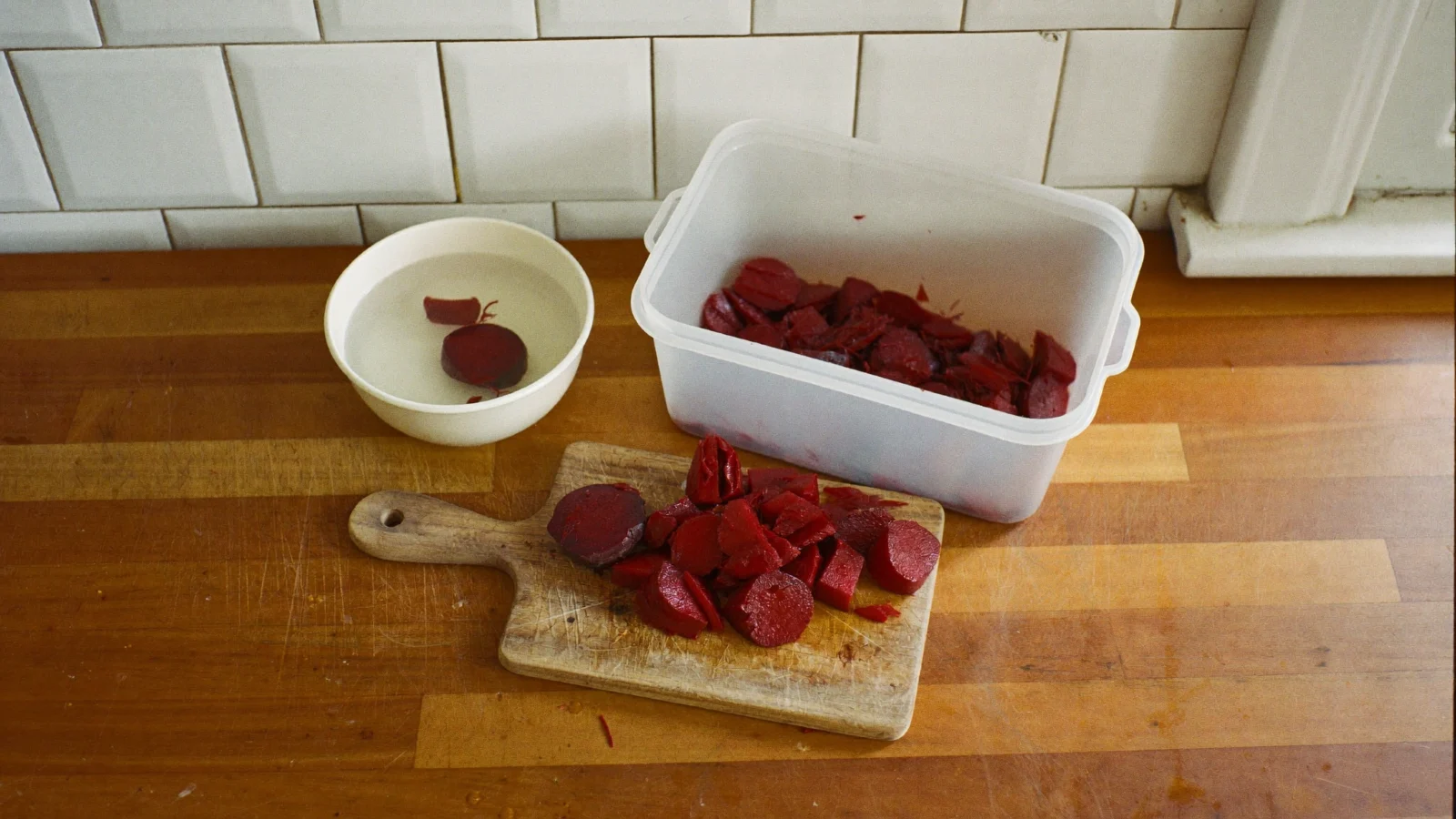
To freeze beets, boil them whole until tender, then peel, slice and pack them with ½ inch of headspace, according to SDSU Extension. Trim the tops first, but leave ½ inch of stem. Small beets take 25 to 30 minutes and medium ones 45 to 50. Then cool them in cold water, and the skins slip off. Penn State Extension adds a tray step: freeze the pieces in a single layer until firm, then pack them with no headspace, so they pour out loose.
Below 41 degrees it keeps for years, but it barely pours.
Can you freeze raw beets?
Every beet freezing method we opened cooks the beets first, so freeze them cooked rather than raw. SDSU Extension boils them until tender, and Penn State Extension does the same before peeling. Cooking also makes peeling easy, since the skins slip off once the beets cool.
Can you can beets at home?
Plain beets can only be canned at home in a pressure canner, because they are a low-acid food, according to Penn State Extension. It gives the reason as safety from Clostridium botulinum, the cause of botulism. Pickled beets are different, since the vinegar makes them acidic enough for a boiling-water canner. Even then, follow a research-tested recipe, which Penn State says uses more than ½ cup of vinegar per pint jar.
How to tell if beets have gone bad
Most tired beets are soft rather than spoiled, and a soft beet still cooks well. The line comes with mold and rot. USDA Food Safety and Inspection Service guidance lets you cut a small mold spot off firm vegetables like carrots, while anything soft and moldy goes. Here is what each stage means, then.
Verdict: use it
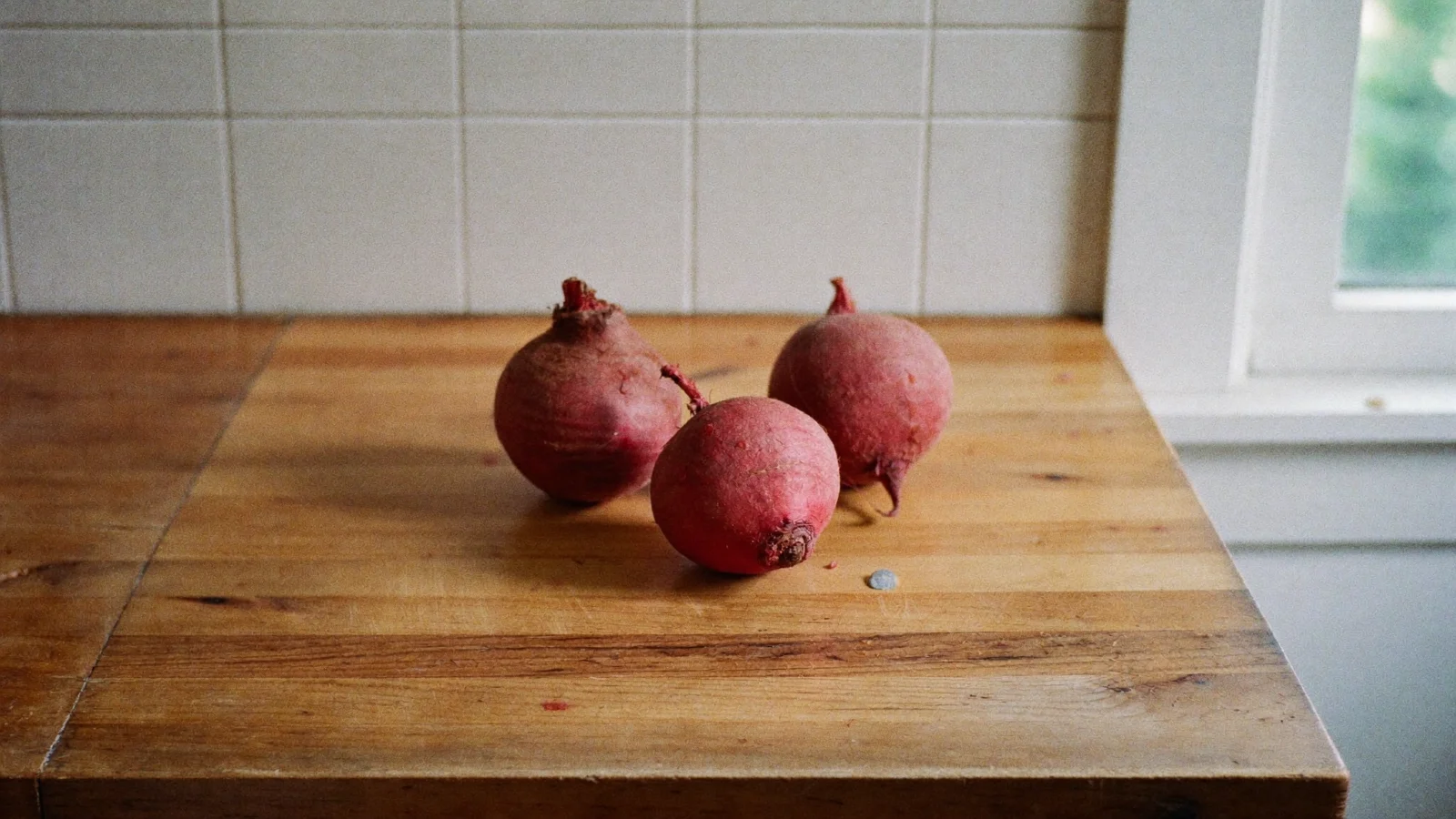
Firm, fresh beets
Hard when you squeeze them, with smooth, deep red skin. That is what University of Maine Cooperative Extension looks for, and it is a beet that will keep. So trim the greens, bag it, and use it within two weeks.
Verdict: cut them off today
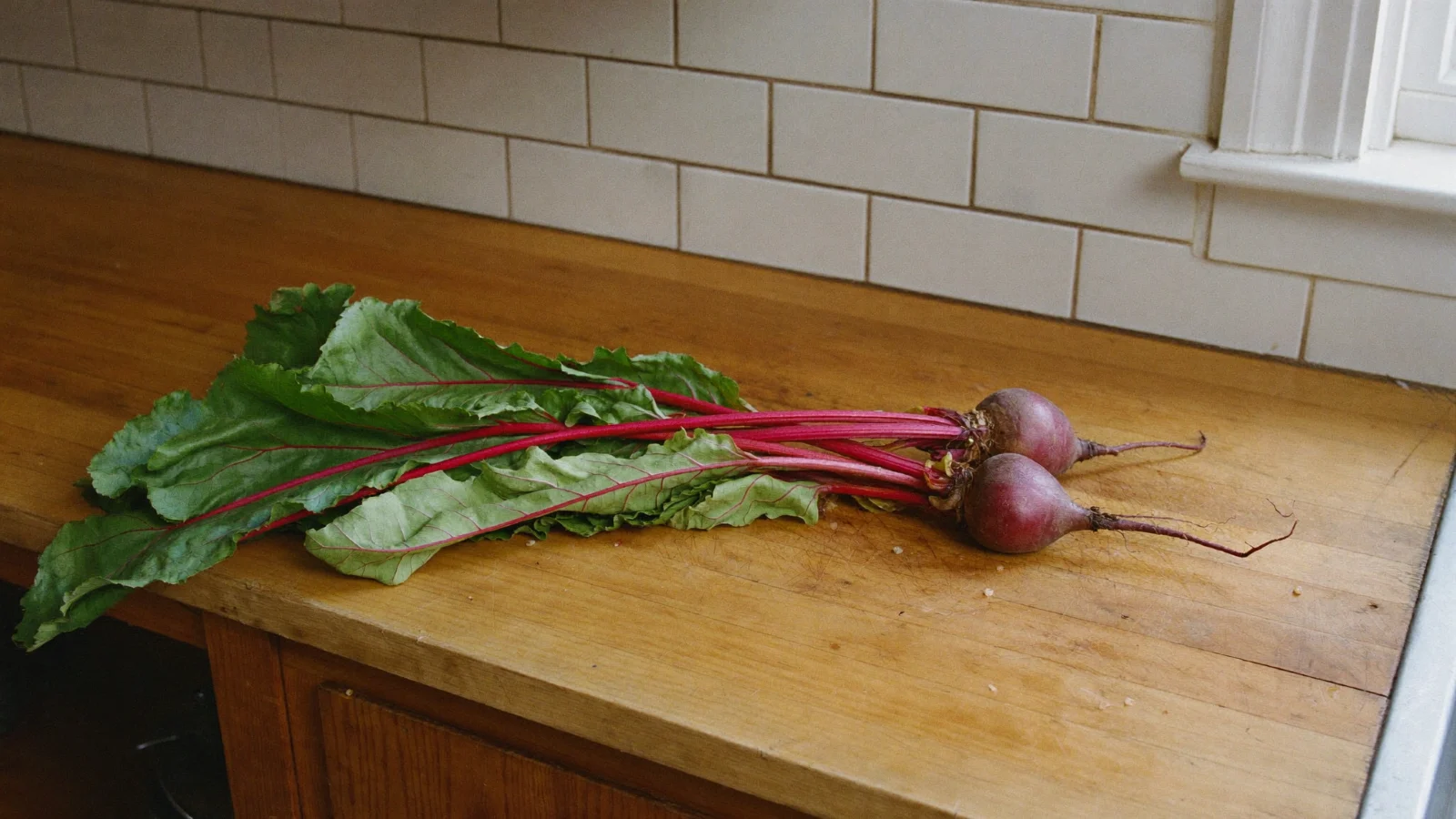
Beets with wilted greens
The roots are firm, but the leaves on top have gone limp. Those leaves are still pulling water from the root, which is why Utah State University Extension gives bunched beets only 5 to 7 days. So cut the greens off now, leaving 2 inches of stem, and cook the greens tonight if they still look good.
Verdict: cook them soon
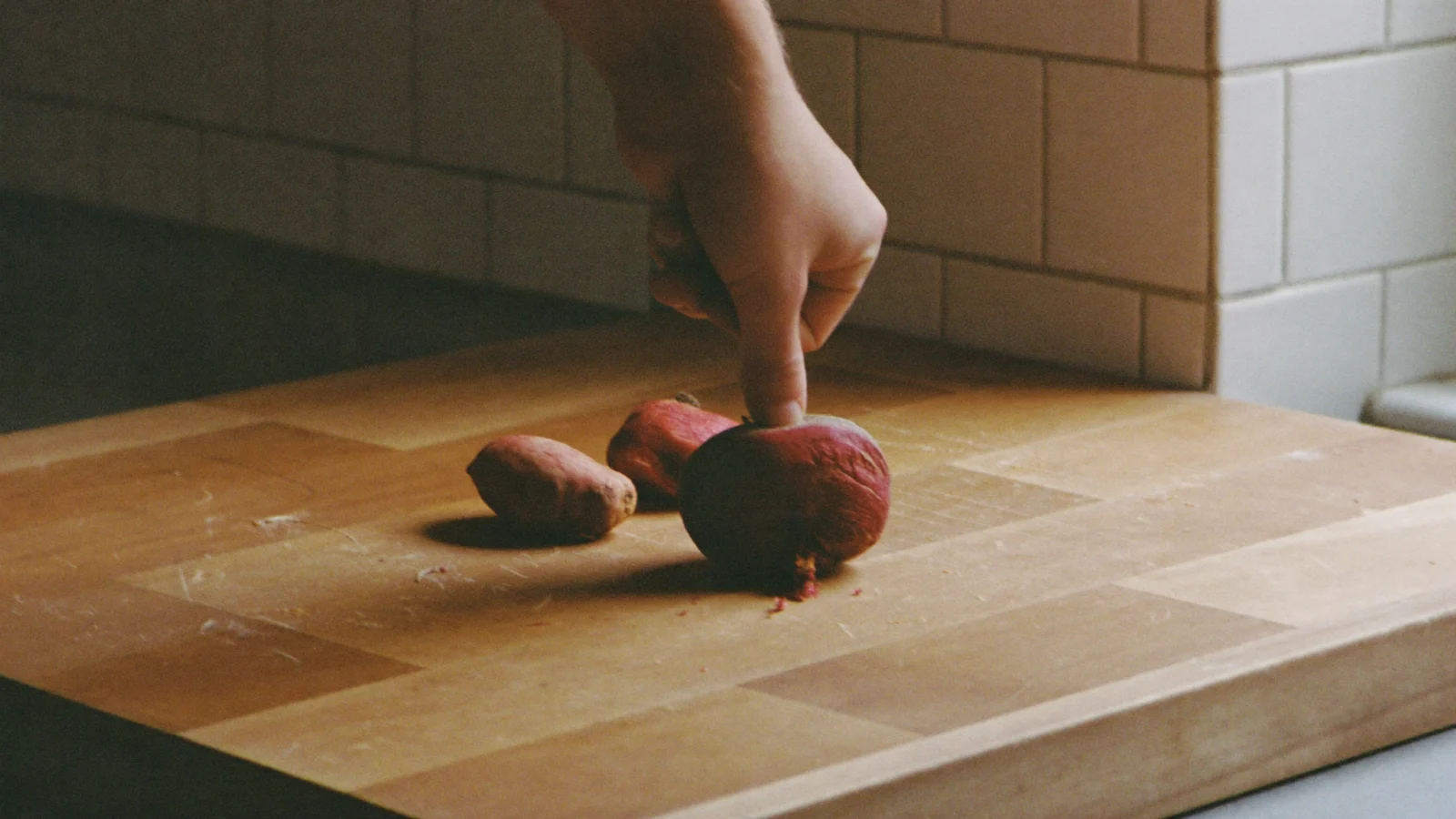
Soft, wrinkled beets
The root bends a little when you squeeze it, and the skin has started to wrinkle. That is water loss, the same thing Utah State blames the leaves for, rather than rot. So the beet is still food. Roast it or boil it this week, since it will not firm up again in the fridge.
Verdict: cut it off
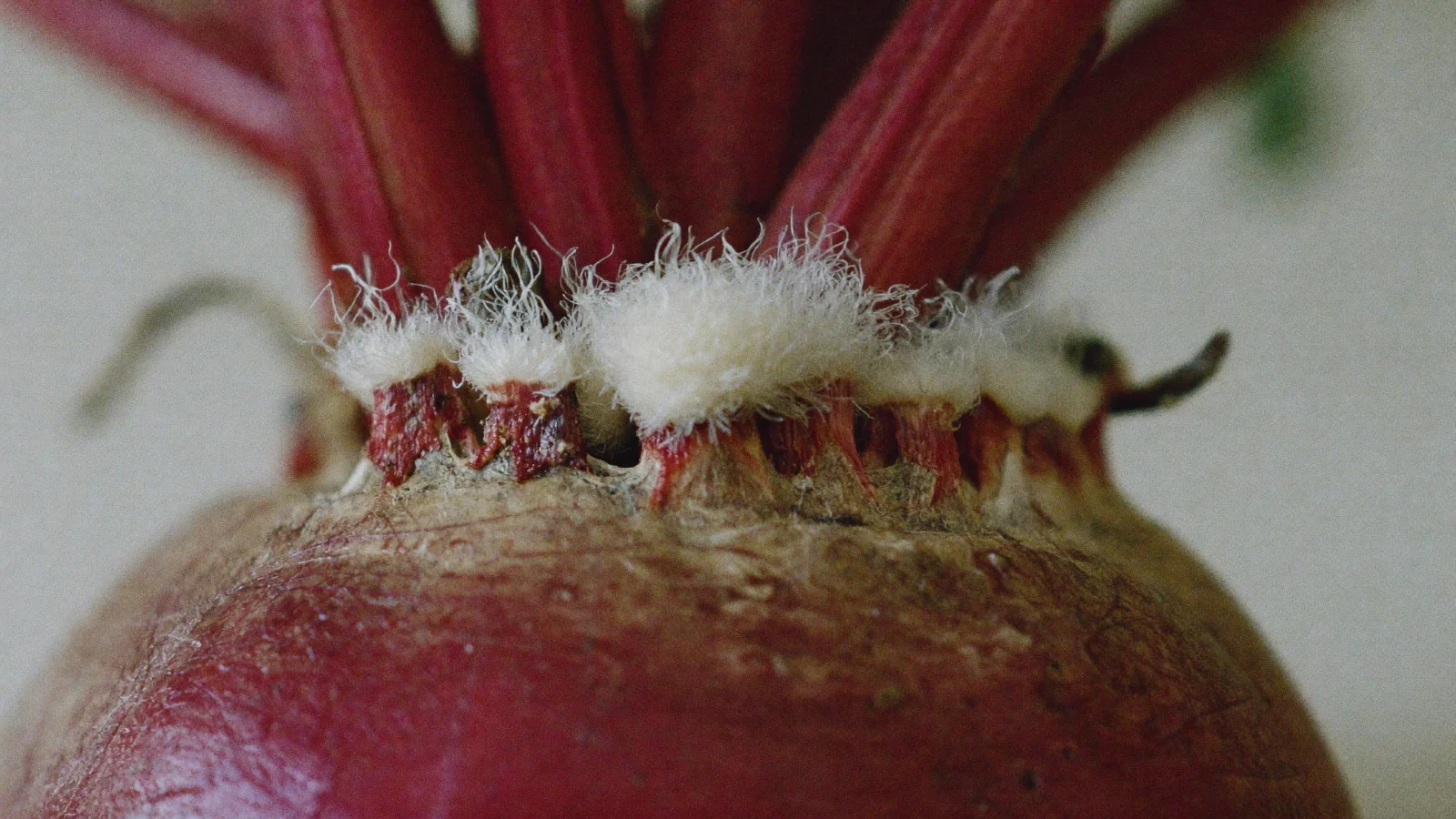
Beets with a small mold spot
One small fuzzy spot on an otherwise firm root. USDA Food Safety and Inspection Service guidance for firm vegetables is to cut off at least 1 inch around and below the mold spot. Keep the knife out of the mold itself so it does not spread. Then use the rest soon, and check the other beets in the bag.
Verdict: throw it out
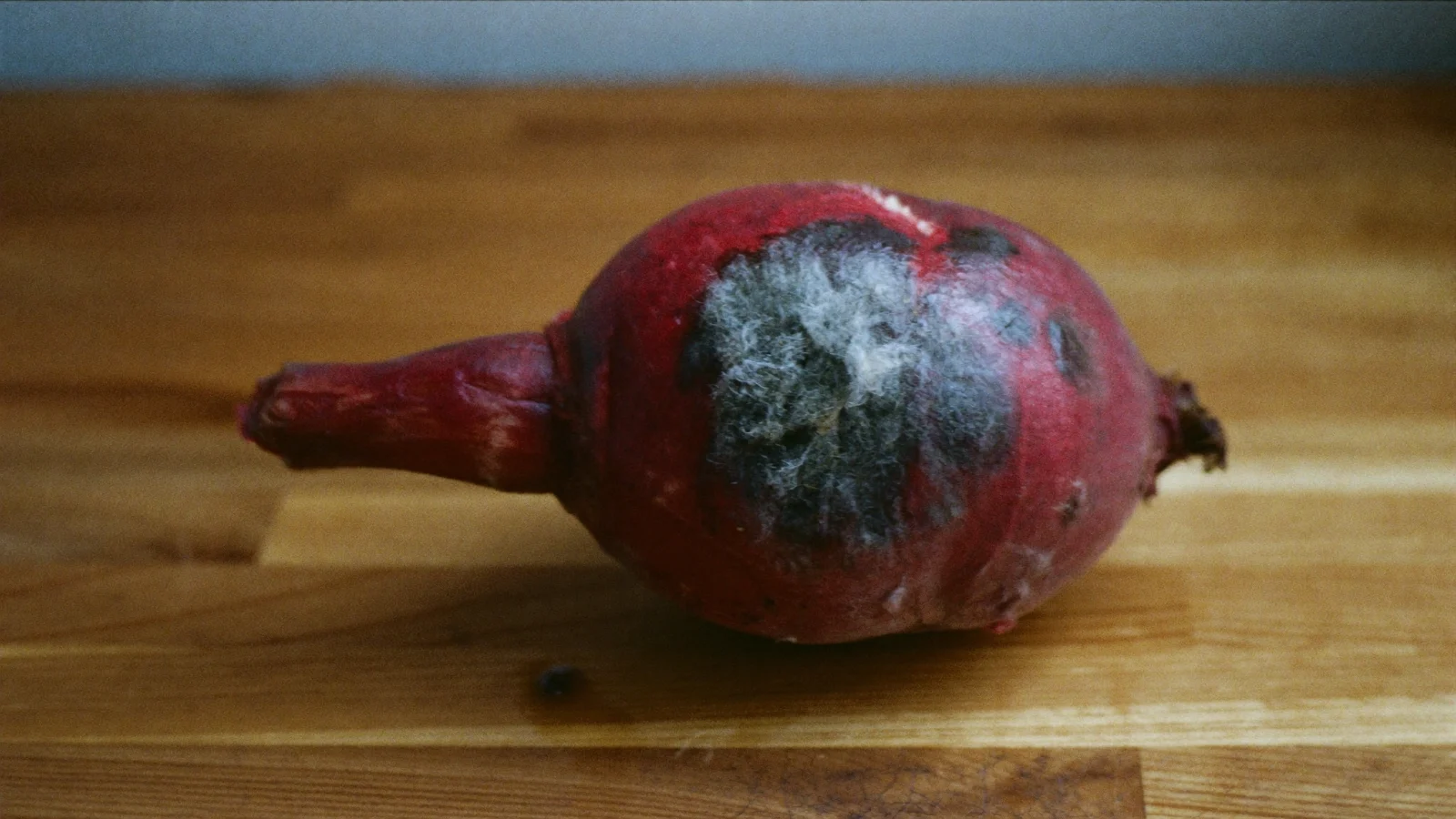
Mushy or moldy beets
Soft, wet patches, a sour smell, or mold spreading across the root. That is decay rather than drying, and a root that has gone soft is no longer a firm vegetable you can trim. NDSU Extension has a rule for the in-between cases: when in doubt, throw it out. So bin it, and do not sniff it closely, which FSIS also warns against with moldy food.
Can you eat beets that have gone soft?
Soft beets are fine to eat as long as there is no mold, slime or sour smell, because softness in a beet is water loss rather than rot. Utah State University Extension puts that water loss down to the leaves. A soft beet will not crisp up again, though. So roast it, boil it or add it to soup, and leave the raw salads for firm ones.
Beet substitutes
Out of beets, or did the last ones turn? Then one of these will stand in.
Substitute
Works best in
What changes
Carrots
Roasting and soups
Sweeter and orange, but a close match in a tray bake.
Red cabbage
Salads and slaws
Brings the color, with crunch instead of earthiness.
Radishes
Raw salads
Peppery rather than sweet, so use fewer.
Mistakes people make when they store beets
These are the ways people store beets that cost them the most, and each one is easy to fix.
Leaving the greens on. Utah State gives bunched beets only 5 to 7 days, because the leaves draw water from the root, so cut them off on day one.
Cutting the stem flush. Penn State asks for 2 inches of stem so the root does not bleed its color.
Storing them loose in the fridge. A plastic bag keeps the moisture in, which is what stops the roots going soft.
Leaving them on the counter. NDSU gives beets only 1 day at room temperature, so get them into the fridge.
Freezing them raw. Every method we found cooks them first, and NDSU's 6 to 8 months is for cooked beets.
Water-bath canning plain beets. Penn State says plain beets need a pressure canner, because they are low-acid.
Cutting around soft rot. The USDA cut-around rule is for a small spot on a firm root, so a mushy beet goes in the bin.
Sources
Preserving Beets, Stacy Reed and Martha Zepp, Penn State Extension, July 2024, on storing beets unwashed with 2 inches of stem in a plastic bag in the refrigerator for up to 2 weeks, cooking before freezing, ½ inch headspace or tray freezing, frozen texture, pressure canning plain beets for safety from Clostridium botulinum, and pickled beets with more than ½ cup of vinegar per pint.
Food Storage Guide, Julie Garden-Robinson, NDSU Extension publication FN579, reviewed January 2023, on beets at 1 day in the pantry, 1 to 2 weeks in the refrigerator at 32 to 40°F and 6 to 8 months frozen, and the rule that when in doubt you throw it out.
Harvest and Storage: Root Crops, Utah State University Extension Vegetable Production Guide, on storing bagged beets at 32 to 35°F and 98 to 100% relative humidity, clipping tops about 1 inch above the root, bunched beets keeping 5 to 7 days because leaves cause water loss, and topped roots keeping 3 to 4 months.
Beet - Preserve it, Claudia Botzet, SDSU Extension publication S-0001-06, 2024, crediting the National Center for Home Food Preservation, on trimming tops to ½ inch for freezing, boiling small beets 25 to 30 minutes and medium beets 45 to 50, cooling, peeling and packing with ½ inch headspace.
Beets, University of Maine Cooperative Extension Harvest for Hunger, on choosing firm, smooth, deep red beets, removing the greens but leaving an inch or two of stem, washing beets well, and using them within 2 weeks.
Molds on Food: Are They Dangerous?, Food Safety and Inspection Service, U.S. Department of Agriculture, on cutting at least 1 inch around and below a small mold spot on firm vegetables, keeping the knife out of the mold, and not sniffing moldy food.
Storage times and safety advice on this page come from the sources above. Food safety depends on conditions I cannot see, so read the Disclaimer, and if in doubt, throw it out.
Other ingredient guides
Browse all guides
Share this guide
Never miss a guide
New ingredient guides when they go up, plus one storage tip worth knowing. Anything sponsored is labelled.

Emilly White