
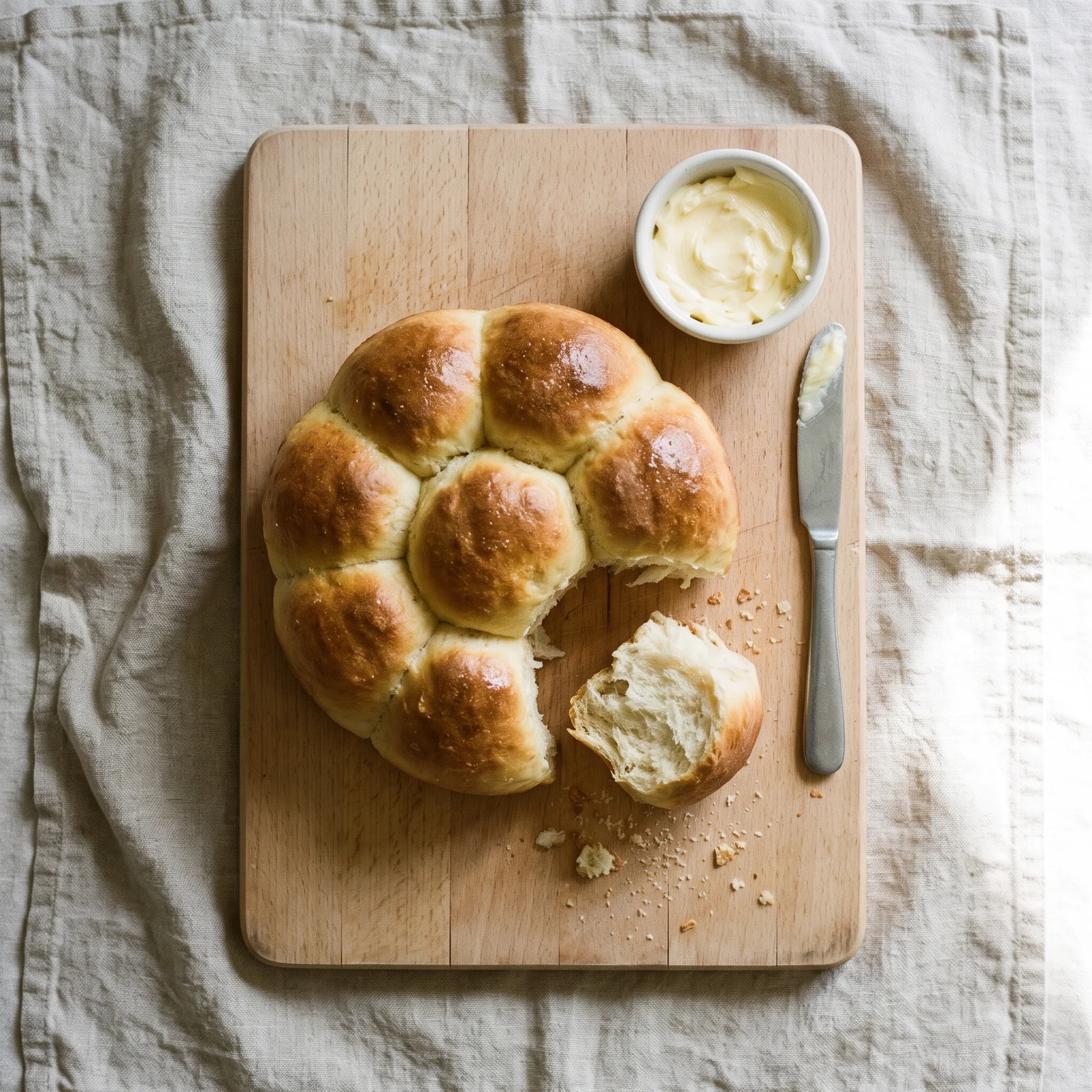
3 to 18 days
Shop rolls 14 to 18 days, homemade 3 to 5 (USDA FoodKeeper)
2 to 3 weeks
Opened shop rolls; slows mold but stales them (FoodKeeper, NDSU)
3 to 5 months
Baked rolls; brown and serve only 2 to 3 weeks (FoodKeeper, Freihofer's)
The short version: keep dinner rolls sealed in their bag at room temperature, where shop rolls last about two weeks and homemade rolls a few days. For longer, freeze baked rolls for 3 to 5 months. Brown and serve rolls freeze for only two to three weeks, so thaw them before the final bake. Throw out any bag with mold.
Storage times here come from the USDA's FoodKeeper data and the NDSU Extension food storage guide. The brown and serve figures come from Freihofer's and Fleischmann's Yeast.
On this page
Which dinner rolls are you storing?
Dinner rolls come in three kinds, and each keeps for a different length of time. Shop-bought rolls last longest, because the USDA's FoodKeeper data gives commercial rolls 14 to 18 days in the pantry. Homemade rolls, by contrast, get only 3 to 5 days. Then brown and serve rolls are only partly baked, so they follow their own rules.
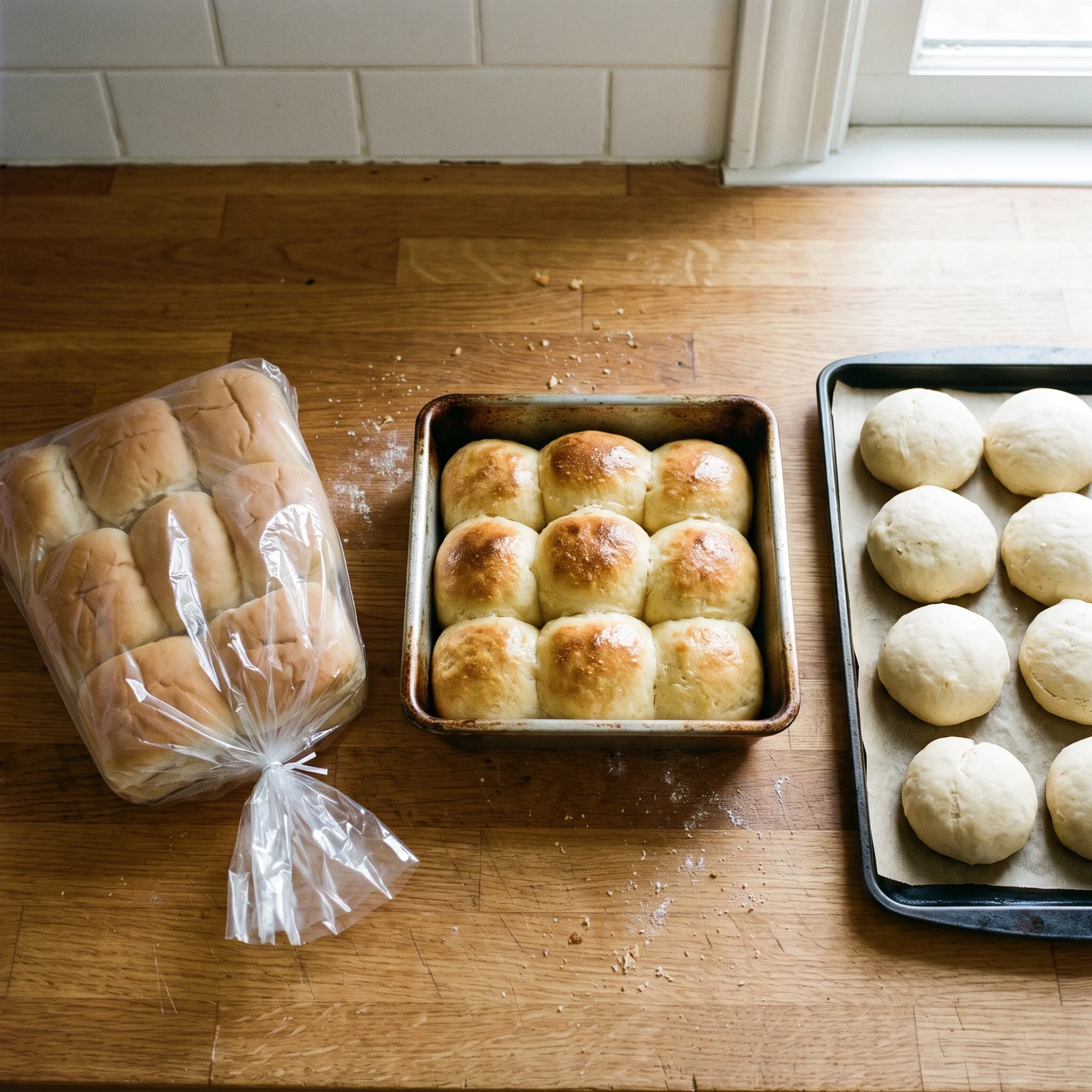
Shop, homemade or brown and serve decides the clock.
Shop, homemade or brown and serve decides the clock.
Shop-bought rolls. The USDA's FoodKeeper data gives commercial bread products, rolls and buns included, 14 to 18 days in the pantry.
Homemade rolls. FoodKeeper gives homemade bread 3 to 5 days, and it notes they may keep less because they have no preservatives.
Brown and serve rolls. These are partly baked, then browned at home. Freihofer's says its own keep their best quality at room temperature.
Unbaked dough. The NDSU Extension food storage guide treats unbaked rolls as their own item, since the yeast weakens with time.
How to store dinner rolls so they last
To store dinner rolls so they last, keep them sealed at room temperature for the short term, then freeze what you will not eat. Air dries them out, while damp warmth grows mold, so the bag does most of the work.
How do you store dinner rolls on the counter?
Store dinner rolls on the counter in their original bag, or in a sealed bag, at room temperature. Freihofer's says its rolls keep their best quality at room temperature. The USDA's FoodKeeper data then gives shop rolls 14 to 18 days and homemade rolls 3 to 5. So close the bag tightly after each use, and keep it away from the stove and the sun.
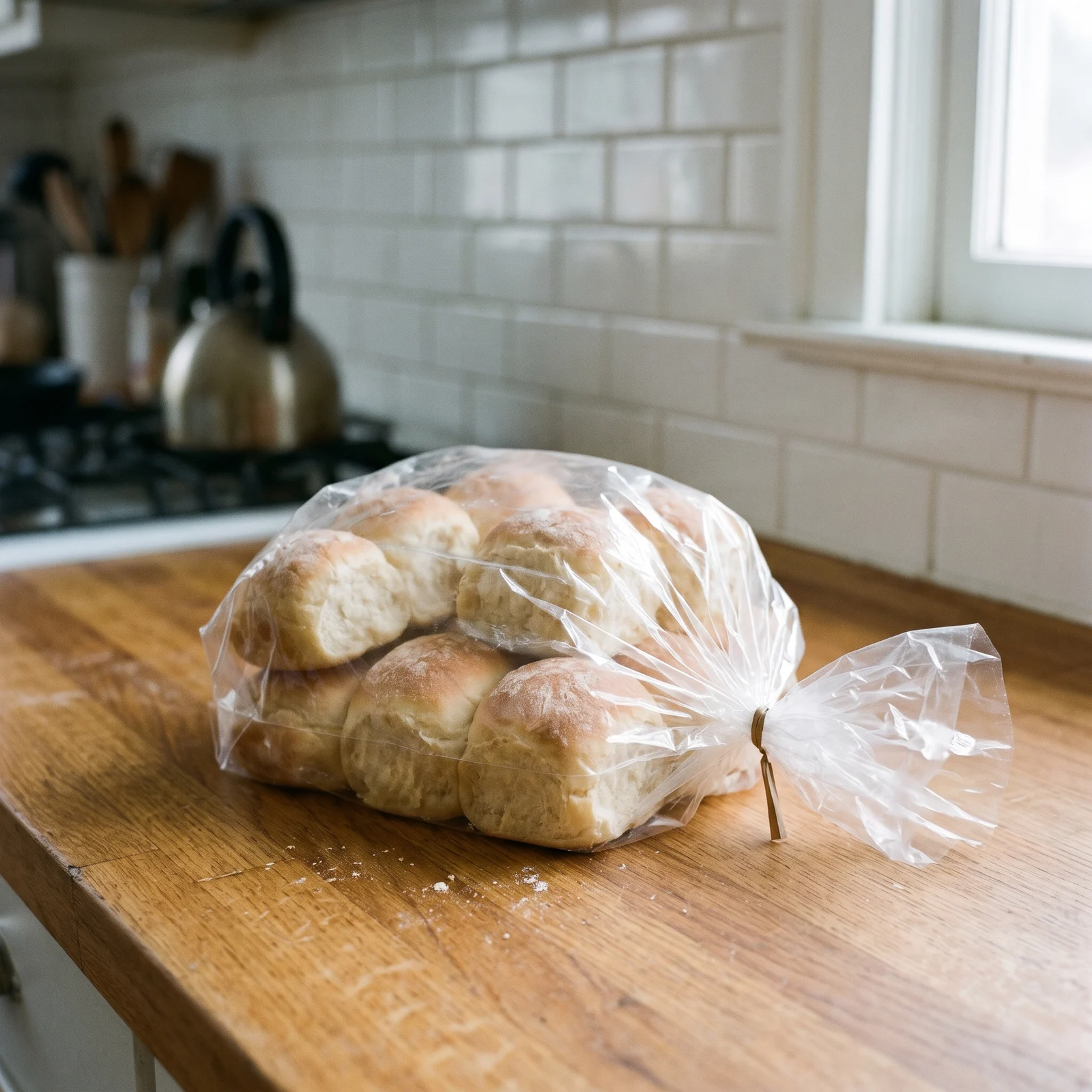
Sealed in the bag, at room temperature.
Sealed in the bag, at room temperature.
How long do dinner rolls last?
Shop-bought dinner rolls last 14 to 18 days on the counter, according to the USDA's FoodKeeper data, and homemade rolls last 3 to 5 days. Once a shop bag is opened, FoodKeeper also gives it 2 to 3 weeks in the fridge. In the freezer, both FoodKeeper and the NDSU Extension guide give baked bread 3 to 5 months. So the counter suits the week of a holiday meal, and the freezer suits anything longer.
So count from the day you baked or bought them. The stuffing guide covers the rolls that end up in the dressing.
Should you refrigerate dinner rolls?
Only if mold is the bigger worry, because the sources split on the fridge. The NDSU Extension guide recommends refrigerating bread with no preservatives to inhibit mold, giving it 2 to 3 weeks. On the other hand, the USDA's FoodKeeper data warns that refrigerated bread quickly dries out and becomes stale. So in a cool kitchen keep rolls on the counter, and in a warm, humid one move them to the fridge or the freezer.
How do you store brown and serve rolls?
Store brown and serve rolls at room temperature until you brown them, as Freihofer's advises for its own. Partly baked rolls behave differently, though. The NDSU Extension guide gives partially baked cinnamon rolls 2 months in the fridge, while it does not recommend freezing them. Homemade ones differ again, since Fleischmann's refrigerates its partly baked rolls for up to 1 week. So follow the package for shop rolls, and the recipe for your own.
Can dinner rolls sit out overnight?
Yes, plain dinner rolls can sit out overnight, because bread is meant to be stored at room temperature and FoodKeeper gives shop rolls 14 to 18 days in the pantry. Just seal them, since uncovered rolls dry out. Filled or buttered rolls with meat or cheese are a different matter, however. The food left out overnight guide covers those.
Can you freeze dinner rolls?
Yes, baked dinner rolls freeze for 3 to 5 months, according to the USDA's FoodKeeper data. The NDSU Extension food storage guide gives baked bread with no preservatives the same 3 to 5 months. Freezing is also the answer for homemade rolls, because those get only 3 to 5 days on the counter.
How do you freeze dinner rolls?
Let the rolls cool completely, then seal them airtight in a freezer bag with the air pressed out. The USDA Food Safety and Inspection Service says store packaging lets air through over time, so overwrap a shop bag for long storage. Air touching the surface is also what causes freezer burn, according to FSIS. Then date the bag, so the 3 to 5 months are easy to track.
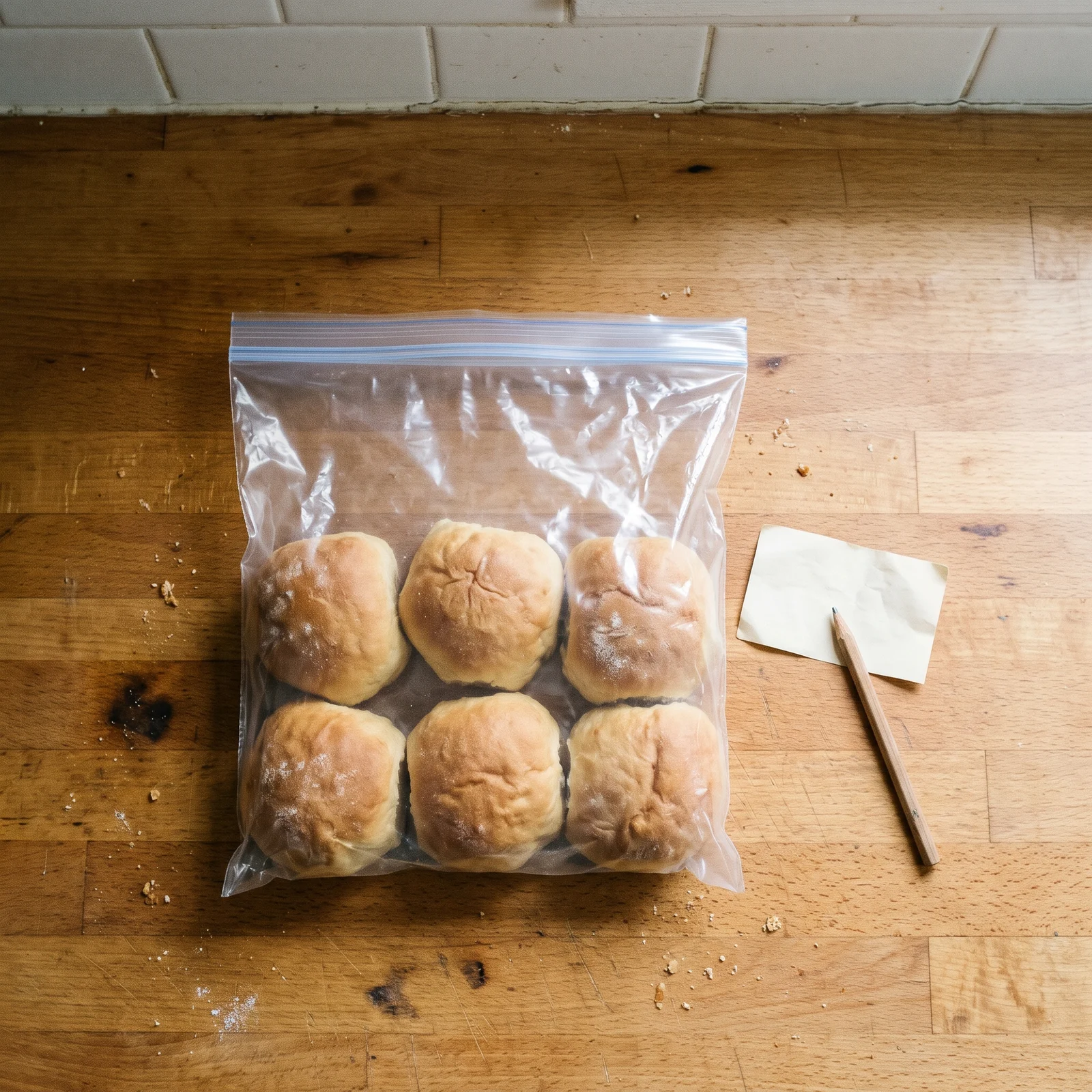
Cooled, sealed, overwrapped and dated.
Cooled, sealed, overwrapped and dated.
Can you freeze brown and serve rolls?
Yes, but only for a few weeks, and the sources disagree on whether to do it at all. Freihofer's freezes its Brown 'N Serve rolls in their original wrappers for two or three weeks. Fleischmann's Yeast freezes its homemade version for up to 1 month. The NDSU Extension guide, however, does not recommend freezing partially baked rolls. So freeze them only for the weeks before a holiday meal, and thaw them fully before the final bake, as both makers say.
How do you bake frozen brown and serve rolls?
Thaw them first, then brown them in a hot oven. Freihofer's says to defrost them thoroughly and bring them to room temperature. Then it bakes them at 425°F for 6 to 8 minutes, until golden brown. Fleischmann's browns its homemade rolls at 400°F for 10 to 12 minutes instead. So follow the package, and watch the color rather than the clock.
How to tell if dinner rolls have gone bad
Dinner rolls fail in two ways: they dry out, or they grow mold. Drying is a quality problem, so stale rolls can still be used. Mold is different, because the USDA says to throw out moldy bread. Here is what each stage means.
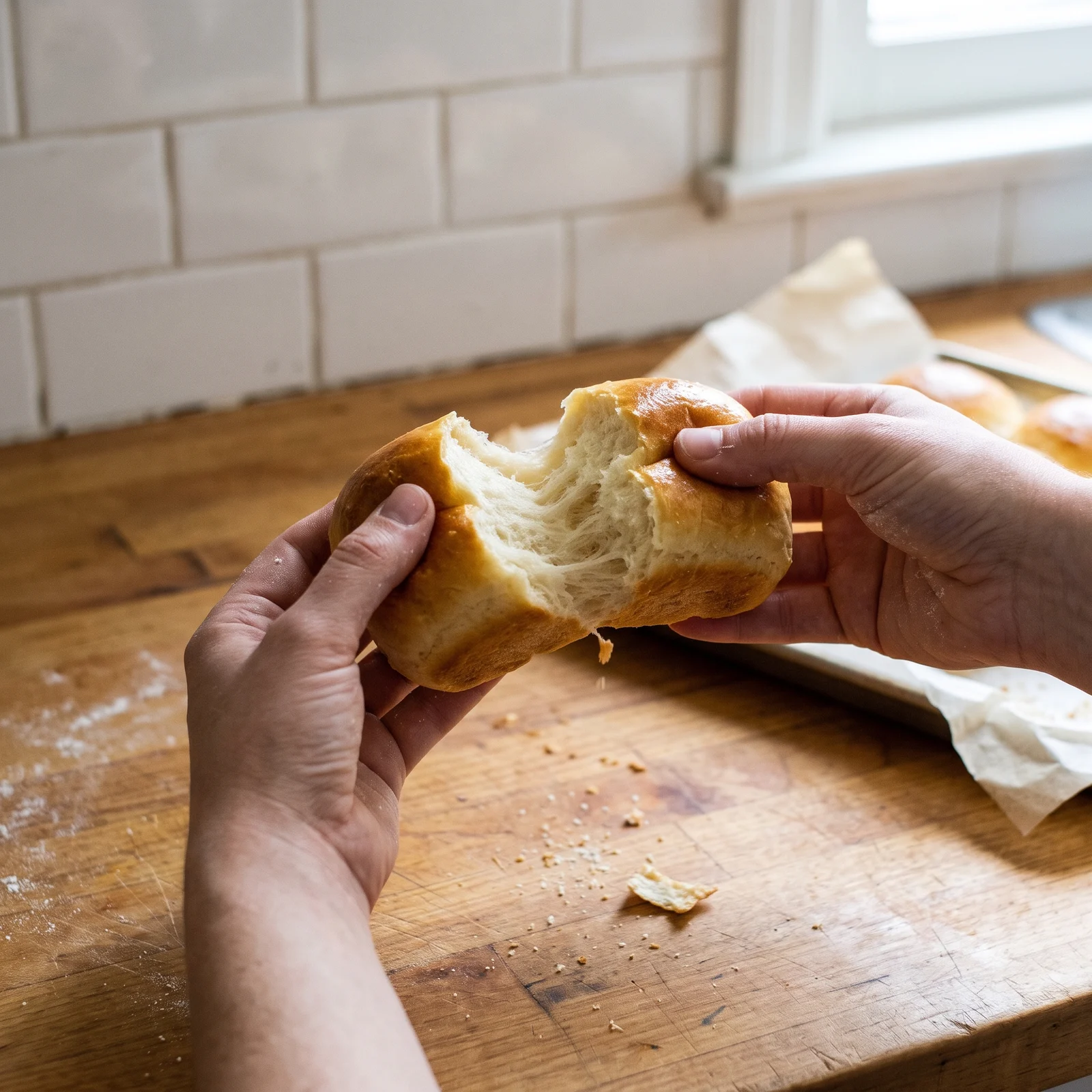
Verdict: eat them
Soft, fresh dinner rolls
Soft, springy rolls inside their counter window: 14 to 18 days for shop rolls and 3 to 5 days for homemade ones, according to the USDA's FoodKeeper data. These dinner rolls are at their best, so serve them as they are.
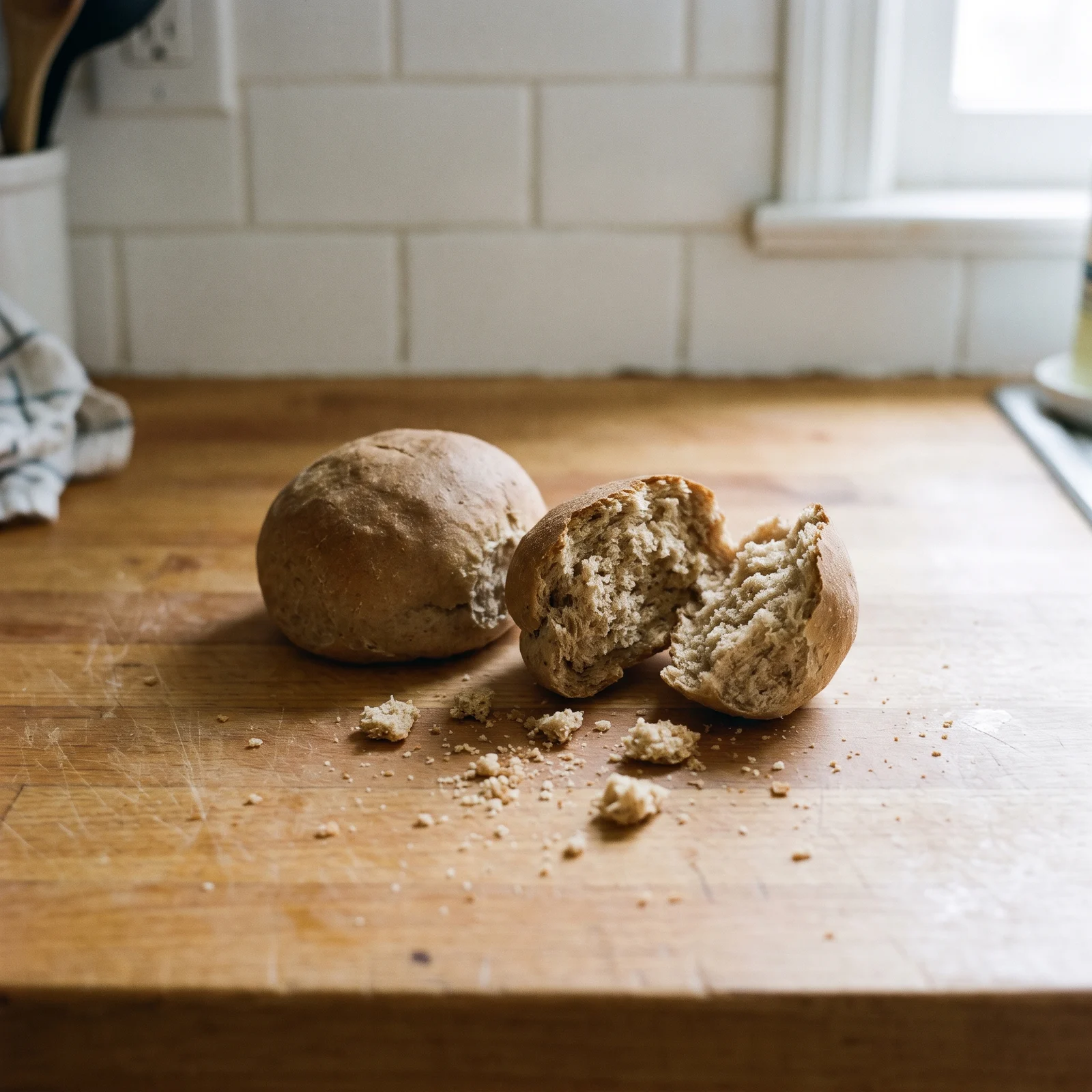
Verdict: warm them or use them in stuffing
Dry, stale dinner rolls
Firm, dry rolls that have lost their spring, often after a spell in the fridge. FoodKeeper says refrigerated bread quickly dries out and becomes stale. Staling is about quality rather than safety, since USDA FSIS says food kept too long cold loses quality but most likely would not make anyone sick. So stale dinner rolls suit stuffing or breadcrumbs.

Verdict: trim them and eat them
Freezer-burned dinner rolls
Dry, pale or leathery patches on rolls from the freezer. FSIS says freezer burn does not make food unsafe, merely dry in spots. So cut those patches away, and eat the rest of the dinner rolls.

Verdict: check them, then eat them
Dinner rolls past the date on the bag
The rolls look and smell fine, but the date has passed. The USDA Food Safety and Inspection Service says a Best if Used By date marks best flavor or quality, and it is not a safety date. So check dinner rolls like these for mold, then eat them or freeze them.
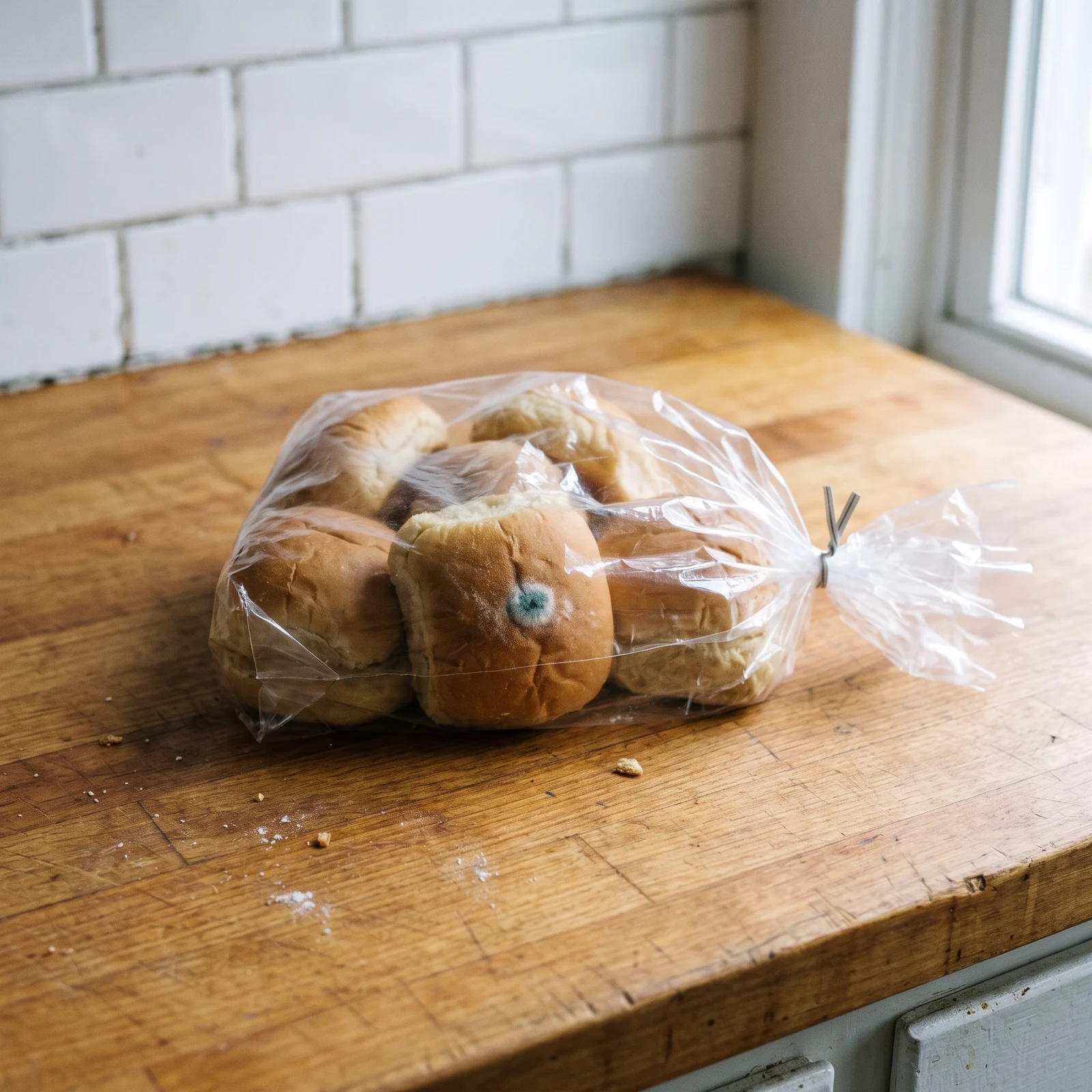
Verdict: throw them out
Moldy dinner rolls
A fuzzy spot of white, green or blue on any roll in the bag. The USDA Food Safety and Inspection Service says to discard moldy bread and baked goods. Porous foods can be contaminated below the surface, so throw out the whole bag of dinner rolls, not just the spotted one.
Can you freeze unbaked dinner roll dough?
Yes, but only for about a month, according to the NDSU Extension food storage guide. NDSU gives unbaked rolls and bread 1 month in the freezer. Longer storage, it says, inactivates the yeast and weakens the gluten. So freeze the dough close to the meal, or bake the rolls first and freeze them for months instead. The yeast guide covers keeping the yeast itself alive.
Dinner roll substitutes
Out of dinner rolls, or did the last bag grow mold? Then one of these will fill the bread basket.
Substitute
Works best in
What changes
Biscuits
A Southern-style table
Quick to bake, with no yeast needed.
Mistakes people make when they store dinner rolls
These are the ways people store dinner rolls that cost them the most, so each one has an easy fix.
Leaving the bag open. Air dries the rolls, so close the bag tightly after each use.
Refrigerating rolls in a cool kitchen. FoodKeeper says refrigerated bread quickly dries out and becomes stale.
Freezing them warm. Cool the rolls completely before they go into the freezer bag.
Freezing shop rolls in the store bag for months. FSIS says that wrap lets air through, so overwrap it.
Keeping brown and serve rolls frozen for months. Freihofer's gives them only two or three weeks in the freezer.
Baking brown and serve rolls straight from frozen. Freihofer's and Fleischmann's both thaw them first.
Pulling off the moldy roll and keeping the rest. FSIS says to discard moldy bread, because porous food can be contaminated below the surface.
Sources
FoodKeeper App, USDA Food Safety and Inspection Service, on commercial rolls keeping 14 to 18 days in the pantry, 2 to 3 weeks refrigerated after opening and 3 to 5 months frozen, homemade bread keeping 3 to 5 days, and refrigerated bread going stale.
Food Storage Guide FN579, Julie Garden-Robinson, NDSU Extension, reviewed January 2023, on baked bread with no preservatives keeping 2 to 3 weeks refrigerated and 3 to 5 months frozen, unbaked rolls 1 month frozen, and partially baked rolls not being recommended for the freezer.
Brown 'N Serve Dinner Rolls instructions, Freihofer's, Bimbo Bakeries USA, on room-temperature storage, freezing in the original wrappers for two or three weeks, thawing and baking at 425°F.
Brown and Serve Rolls, Fleischmann's Yeast, on partly baking rolls, refrigerating them up to 1 week or freezing them up to 1 month, and thawing before browning.
Freezing and Food Safety, USDA Food Safety and Inspection Service, last updated August 9, 2024, on overwrapping store packaging and freezer burn being safe.
Molds on Food: Are They Dangerous?, USDA Food Safety and Inspection Service, on discarding moldy bread and baked goods.
Food Product Dating, USDA Food Safety and Inspection Service, last updated April 23, 2025, on Best if Used By dates marking quality rather than safety.
Refrigeration and Food Safety, USDA Food Safety and Inspection Service, on food stored too long losing quality rather than becoming unsafe.
Storage times and safety advice on this page come from the sources above. Food safety depends on conditions I cannot see, so read the Disclaimer, and if in doubt, throw it out.
Other ingredient guides
Browse all guides



Share this guide
Never miss a guide
New ingredient guides when they go up, plus one storage tip worth knowing. Anything sponsored is labelled.

Emilly White