
Until the date
Mission Foods gives unopened flour tortillas 16 to 45 days and corn 45 days
Weeks longer
La Tortilla Factory says up to 30 days past the sell-by date, open or not
Months
La Tortilla Factory says up to 90 days past the date. Parchment between them
The short version: to store tortillas well, decide how fast you will eat them. The pack goes in the pantry until the date if that is this week. It goes in the fridge if that is this month, and in the freezer for longer. Freezing is also the only one of the three that costs you nothing in texture.
Storage times from Mission Foods, La Tortilla Factory and Siete Foods.
On this page
How to choose tortillas that store well
The aisle you buy them from sets the rules for the rest of their life. So notice it before you notice the price. In fact, two packs with the same date can need completely different handling at home.

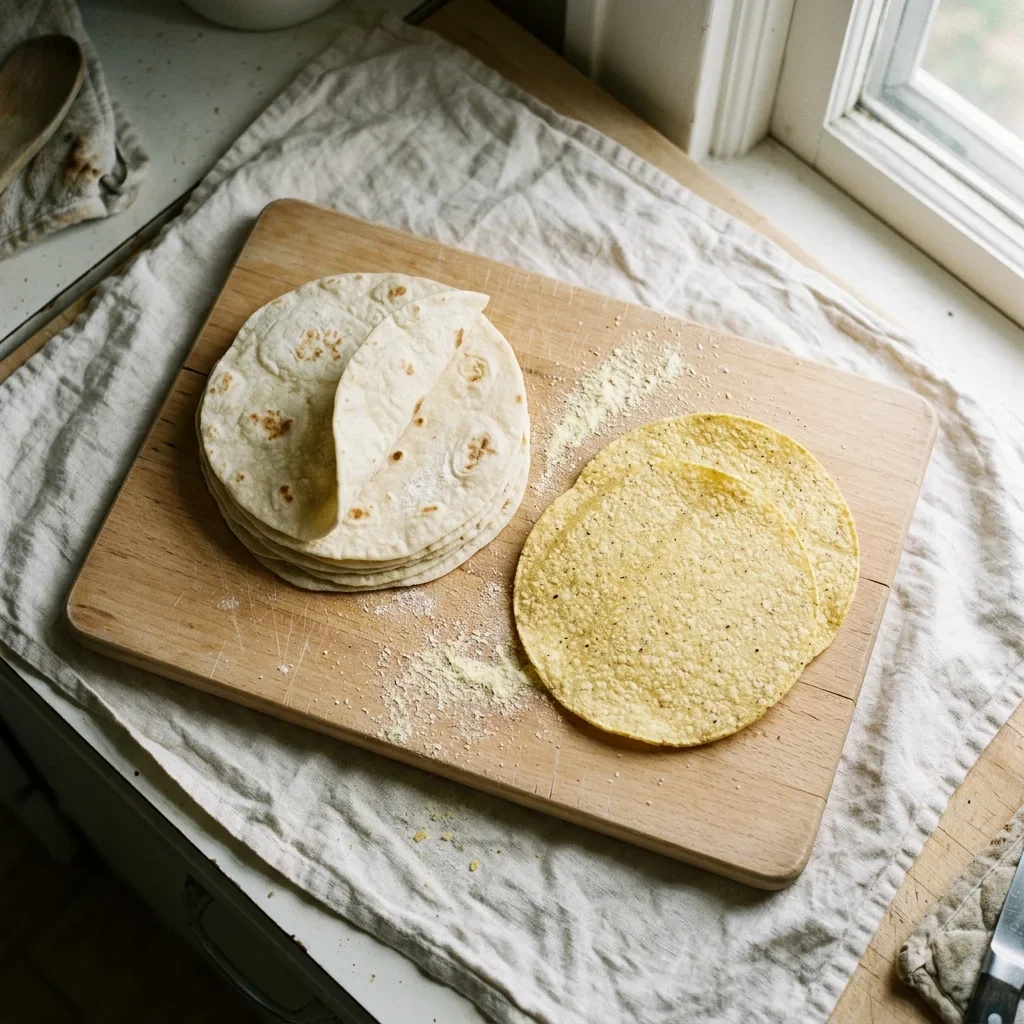
A fresh tortilla folds without cracking. One that splits along the fold is already staling.
Shelf or chiller cabinet, and remember which. Mission Foods is also explicit about this. If the product was in the refrigerated section at the store, it has a refrigerated code date. So if you then leave it out, it may grow mold before its expiration date.
Corn or flour, because the dates differ. Mission gives unopened flour tortillas 16 to 45 days at ambient temperature, and corn tortillas 45 days. Wraps also get 60 days and tostadas 90.
A pack with no tears. The bag is the humidity control, and a hole in it undoes the date on the front.
Soft and flexible in the hand. Rebecca Weber's Kansas State University review notes that a fresh tortilla rolls and folds without cracking. A staling one cracks instead. So a pack that feels stiff in the shop is already old.
How to store tortillas so they last
To store tortillas so they last, pick the place that matches your timetable. Then seal the pack properly. In fact tortillas can fail in two unrelated ways, mold and staling. The storage choice that fixes one of them often makes the other worse.
How to store tortillas in the pantry
Leave an unopened shelf-stable pack in a cool, dry cupboard and go by the printed date. Mission Foods says tortillas can be left at ambient temperature and should be good until that date. Seal the bag tightly again every time you open it. The Kansas State review also points out that tortillas are flat and have a large amount of surface area. So they lose water through evaporation quickly. Keep the pack away from the stove and any sunny window too. The USDA says warm and humid conditions encourage mold growth. That is the same reason the bread guide keeps loaves off the counter beside the hob.
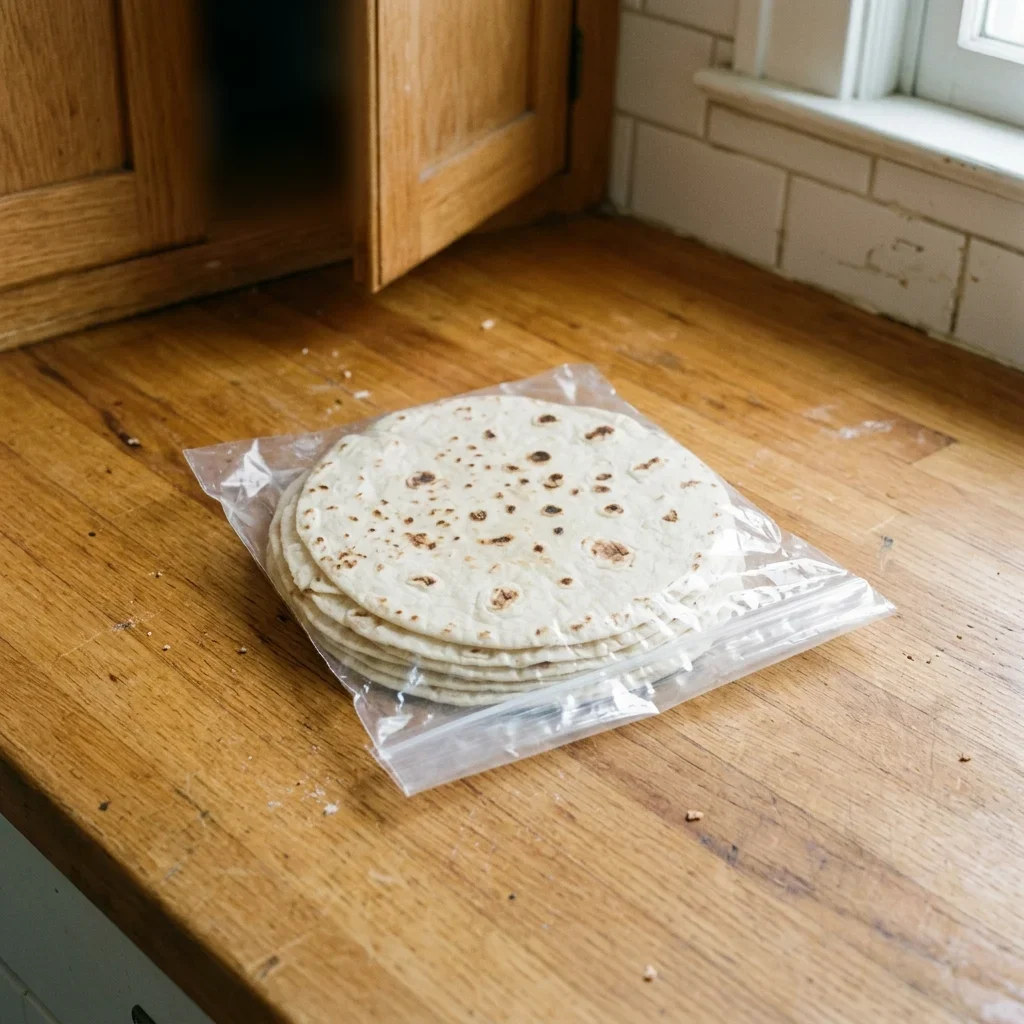
Cool, dry cupboard, air pressed out and the bag sealed again every time you open it.
How long can you store tortillas?
It depends on the pack, and the makers are the only people publishing real numbers. Mission Foods gives unopened packs at room temperature 16 to 45 days for flour tortillas. Corn also gets 45 days, and the Carb Balance line 35. La Tortilla Factory adds what happens after that. Refrigerated, open or unopened, its products may stay fresh up to 30 days beyond the sell-by date. Frozen, however, they can be used up to 90 days past it. Siete Foods is stricter still about its grain-free tortillas. It says they should be stored frozen and eaten within 7 days of opening.
So the spread between brands is wider than the spread between methods. The preservative load and the water activity are set in the factory rather than in your kitchen. So the number on your bag beats any number in an article, including this one.
Should you store tortillas in the fridge?
Only if you need the weeks, because the fridge costs you texture. Mission Foods says refrigerating is not strictly necessary for a shelf-stable pack. Although tortillas kept there until you need them will last longer. The catch is in the food science. The Kansas State review reports that refrigerated storage promoted starch retrogradation, the process that stiffens them. A tortilla with no additives stored at 3°C came out more brittle and hard. That was worse than one kept at either room or freezing temperature. Worse still, it puts the maximum rate of stiffening at 10 to 13°C, or about 50 to 55°F. That is roughly what a fridge door runs at. So use the fridge when mold is the risk you are managing. Then expect to warm the tortillas before you use them.
How to store tortillas after you open the pack
Close the bag tightly, squeeze the air out and decide where the rest is going. La Tortilla Factory also treats opened and unopened packs the same at every temperature. So that puts the weight on the seal rather than on the seal date. Siete Foods is the exception and gives 7 days from opening for its grain-free tortillas. It then says refreezing them is perfectly fine. If the fridge is instead where the pack is headed, keep it at 40°F or below. That is the temperature University of Maine Cooperative Extension gives for refrigerated food. If the power has been off, food after a power outage covers that case.
How to store tortillas you made yourself
Homemade tortillas are on a much shorter clock, for two reasons. They have none of the preservatives that give a factory pack weeks. Also, the Kansas State review notes that retrogradation starts the moment tortillas leave the oven and cool. So corn tortillas can already crack when rolled only a few hours after baking. Let them cool completely before they go into anything sealed, as the bagels guide also insists. Trapped steam turns into the moisture that mold wants. Then freeze whatever you will not eat today.
Can you store tortillas in the freezer?
Yes, and for texture the freezer is the only place that costs you nothing. In fact the Kansas State review is blunt about it. Freezing the tortilla is the only way to extend the shelf life without adding other ingredients. Both Mission Foods and La Tortilla Factory also confirm corn and flour tortillas freeze fine. Siete, similarly, recommends the freezer as the default home for its grain-free ones.
How to store tortillas in the freezer
Slide a sheet of parchment or wax paper between the tortillas before they go in. That is what Siete Foods recommends to keep them from sticking together. Then press the air out of the bag and seal it. Freeze them in the portions you will actually heat at once, rather than as one solid block, since you only get to thaw them once. La Tortilla Factory gives frozen tortillas up to 90 days past the sell-by date. The bread guide also uses the same double-wrap logic for loaves.

Parchment between each one, split into meal-sized stacks, because you only thaw them once.
How to thaw tortillas you store frozen
In the fridge, slowly, and never in the microwave. Mission Foods says flour and corn tortillas should never be defrosted in the microwave. It asks for a day or two in the refrigerator instead. Siete Foods also thaws in the fridge. It allows about 25 to 30 seconds in the microwave, but only to loosen them from the package. La Tortilla Factory adds the part people forget. Once thawed, keep them in the fridge and eat them within 30 days.
What happens to tortillas you store in the freezer
Less than you would think, as long as they are wrapped well. Freezing is cold enough to park the staling process rather than speed it up. That is why the Kansas State review treats it as the one storage temperature that does not cost texture. Poorly wrapped tortillas, on the other hand, dry out at the edges. A dry tortilla then cracks when you roll it. So the wrap matters more than the time.
How to tell if tortillas have gone bad
Stiff is not spoiled, and that distinction saves most packs. Staling, for example, is a texture problem you can reverse with heat. Mold, however, is a safety problem you cannot fix at all. Here is what each stage means.
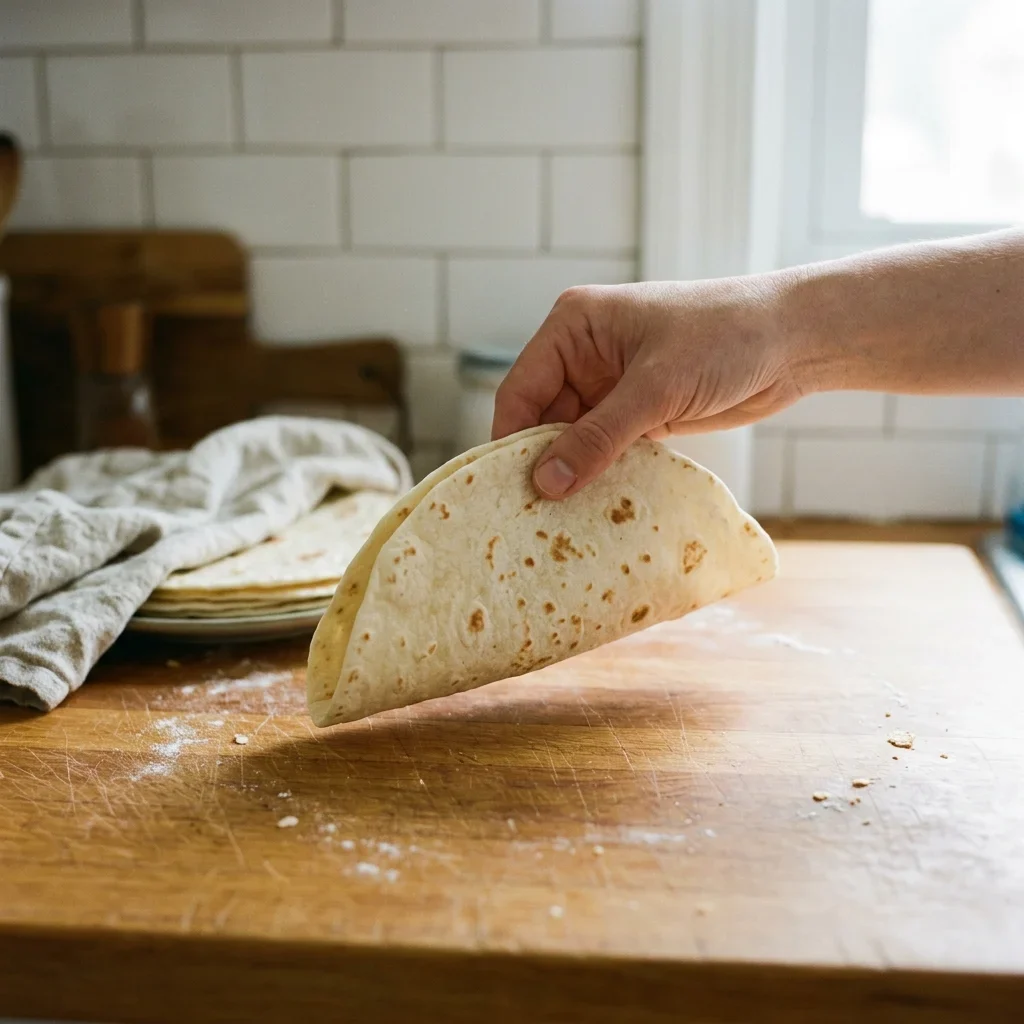
Verdict: use it
Soft, pliable tortillas
A fresh tortilla rolls or folds without cracking, which is the test the Kansas State review uses. If yours does that, nothing else matters: use it cold in a wrap or warm it for a taco.

Verdict: warm it
Stiff tortillas
Stiffness is starch, not spoilage, and heat undoes a good part of it. The Kansas State review explains that the amylopectin half of retrogradation is thermo-reversible. Heating also removes the crystalline structure it forms. In practice that means the griddle. Mission Foods heats tortillas on an ungreased skillet over medium-high for 10 to 15 seconds. Then it flips them and gives them another 5 to 10. After that, wrap them in a cloth to hold the softness.
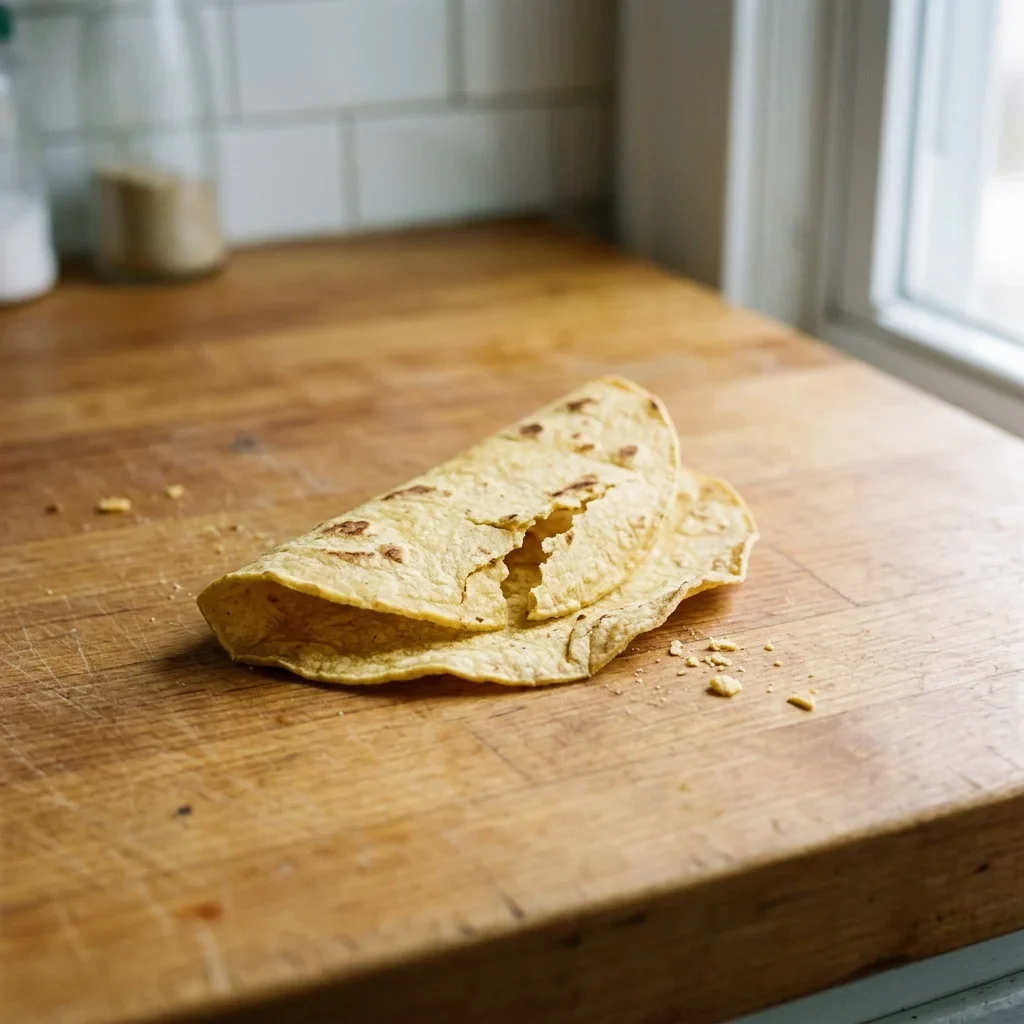
Verdict: cook it hard
Cracking or leathery tortillas
Once a tortilla cracks as you roll it, warming will only get you so far. That is because the Kansas State review notes that the amylose part of retrogradation is not reversible. The tortilla is still perfectly good food, though. Cut it up for chips, bake it flat for a tostada or tear it into chilaquiles. All three want a dry tortilla anyway.

Verdict: throw it out
Sour or off-smelling tortillas
An off smell, flavor or texture is the one signal that beats the date, in either direction. University of New Hampshire Extension puts it plainly. If a food has developed an off odor, flavor or texture, it should not be eaten. That holds, however, no matter what the date code says. The University of Maine also gives the same advice. It tells you to check the packaging for holes and openings while you are there.

Verdict: throw the pack out
Moldy tortillas
One fuzzy spot condemns more than one tortilla. The USDA FSIS mold factsheet puts bread and baked goods in the discard column. That is because porous foods can be contaminated below the surface. It also tells you to check nearby items the moldy food might have touched. In a pack of tortillas every one of them is a nearby item, pressed flat against its neighbor. So we would bin the pack rather than sort through it. The factsheet also says not to sniff it, and to bag it before it goes in the bin. Then clean the spot where it was stored. Mold grows at fridge temperatures as well. That is why the cheese guide splits hard cheese from soft on exactly this rule.
Can you store tortillas past the best-by date?
Usually yes, because that date is about quality rather than safety. University of Maine Cooperative Extension says most date labels refer to quality. That means the food's best flavor and texture. A sell-by date is instead for the shop, telling retailers how long to keep a product on display. It also lists bread and baked goods among the foods that carry one. La Tortilla Factory's own guidance backs that up from the other side. It expects refrigerated tortillas to stay fresh for up to 30 days beyond the sell-by date. Mission Foods describes what eventually does go wrong after the shelf life. They may grow mold and become dry. So judge the pack, not the print.
Tortilla substitutes
Out of tortillas, or did the pack go moldy before you got to it? Then these will do the same jobs.
Substitute
Works best in
What changes
Pita or flatbread
Wraps and scooping
Thicker and chewier, and it freezes just as well.
Tostadas
Anything piled rather than rolled
Already crisp, so the staling clock does not apply.
Masa harina
Making your own
Keeps for months dry, and you press them to order.
Lettuce leaves
Tacos and low-carb wraps
Cold and crunchy instead of soft and warm.
Mistakes people make when they store tortillas
These are the ways people store tortillas that cost them the most, and each has a quick fix.
Leaving a chilled pack on the shelf. Mission Foods warns that a pack sold refrigerated may grow mold before its date. So refrigerate it at home too.
Keeping the pack open. The bag is the humidity control, so press the air out and seal it every time.
Using the fridge by default. In fact it stiffens tortillas fastest at around 50 to 55°F. So use it when mold is the real risk, and freeze the rest.
Defrosting them in the microwave. Mission Foods says never to do that, and asks for a day or two in the fridge instead.
Freezing the whole pack as one block. You only thaw them once, so split them into meal-sized stacks with parchment between.
Binning a stiff tortilla. Warming reverses much of the stiffening, so put it on a dry pan first.
Picking the mold off one tortilla. The USDA puts baked goods in the discard column, because the mold runs below the surface.
Sources
Frequently Asked Questions, Mission Foods, on shelf life by product at ambient temperature, refrigerated code dates, heating on a skillet or in a microwave and never defrosting in the microwave.
Frequently Asked Questions, La Tortilla Factory, on the sell-by date at room temperature, 30 days beyond it refrigerated, 90 days frozen and 30 days after thawing.
How should I Store my Tortillas?, Siete Foods FAQ, on storing grain-free tortillas frozen, thawing in the refrigerator, 7 days after opening, refreezing and parchment separators.
Shelf Life Extension of Corn Tortillas, Rebecca J. Weber, MS report, Kansas State University, 2008, on staling versus mold, retrogradation beginning as tortillas cool, maximum retrogradation at 10 to 13°C, brittleness at 3°C and freezing as the only additive-free fix.
Molds on Food: Are They Dangerous?, USDA Food Safety and Inspection Service, revised September 2005, hosted by UC Davis Food Safety, on discarding moldy bread and baked goods, checking nearby items and cleaning the storage spot.
Don't Toss That Food Yet! Understanding Food Product Dating Labels, University of Maine Cooperative Extension, February 2025, on sell-by dates being for stores, best-if-used-by meaning quality and keeping the fridge at 40°F or lower.
Food Dating on Packages: Are They for Food Safety or Quality?, University of New Hampshire Extension, January 2018, on dates indicating quality rather than safety and on trusting an off odor, flavor or texture over the date.
Storage times and safety advice on this page come from the sources above. Food safety depends on conditions I cannot see, so read the Disclaimer, and if in doubt, throw it out.
Other ingredient guides
Browse all guides
Share this guide
Never miss a guide
New ingredient guides when they go up, plus one storage tip worth knowing. Anything sponsored is labelled.

Emilly White