
2 to 3 days
Plain or glazed only, wrapped once cool. Not under cream cheese frosting
7 to 10 days
Where cream cheese frosting belongs. Cold also stales them faster
About 3 months
Baked and cooled, wrapped tight. Never an unbaked can
The short version: to store cinnamon rolls well, wrap them once they are cool. Plain or glazed rolls then keep 2 to 3 days on the counter, while cream cheese frosting sends them to the fridge. So the freezer takes whatever you will not eat this week.
Storage times here come from NDSU Extension, while the frosting safety comes from Kansas State University Extension and Iowa State University Extension.
On this page
What to check before you store cinnamon rolls
Two things decide where the pan goes: what is on top, and whether the rolls are baked yet. So check the frosting first, because that is the part that can actually make someone ill. Baking for Halloween? How to store Halloween leftovers covers the rest of the party table.
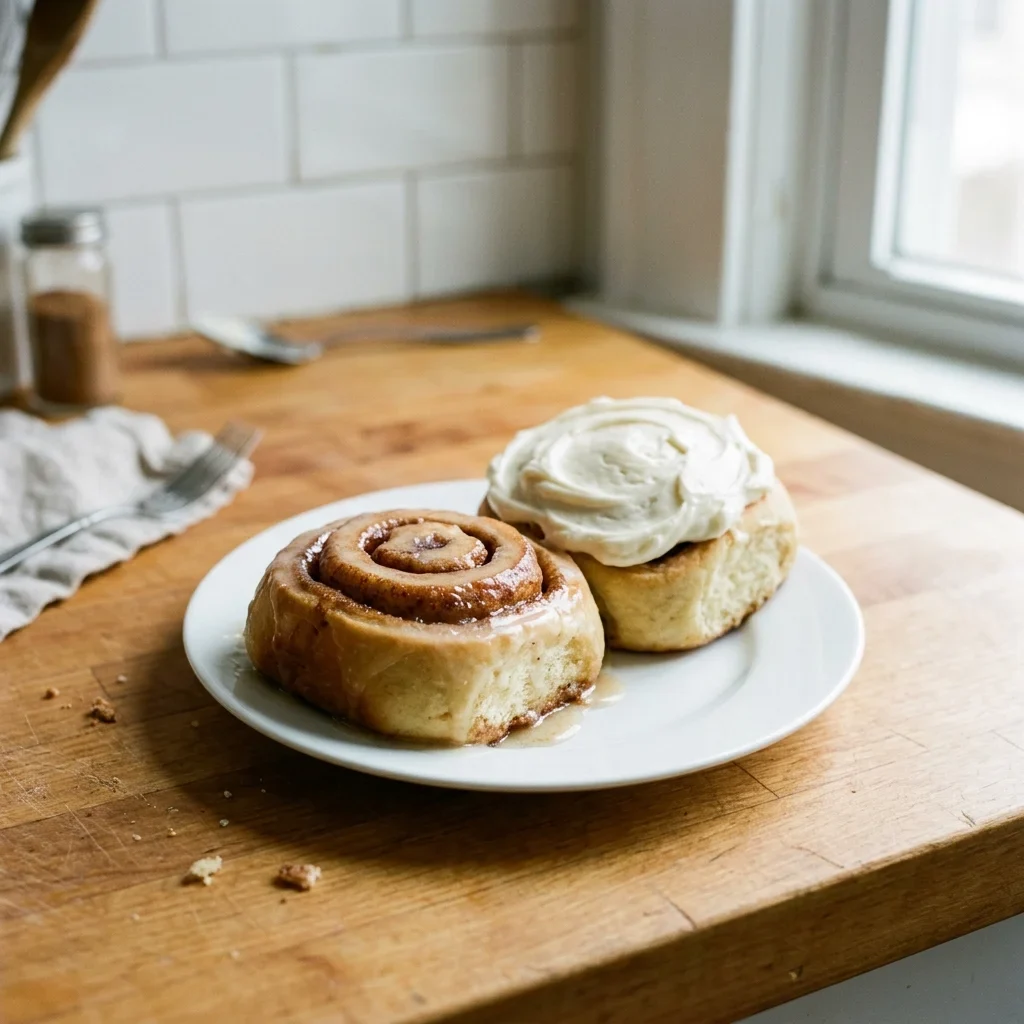
The thin glaze can sit out. The thick white one cannot.
Cream cheese frosting means the fridge, so start there. Iowa State University Extension says frosting made with cream cheese, whipped cream or eggs needs refrigeration. The reason is pH, since dairy and eggs push it up. So sugar is not enough on its own, even though frostings are laden with it.
A plain sugar glaze, however, is a different matter. Kansas State University Extension measured a basic glaze of powdered sugar, milk and vanilla. Its pH came out at 5.9, while its water activity was 0.85. So that one falls outside the group needing temperature control.
Baked or still dough changes everything. Unbaked rolls keep 2 to 3 weeks in the fridge, according to NDSU Extension. A can of refrigerated dough, meanwhile, goes by the date on its label.
Cool, and dry on the surface. Warm rolls give off steam, so wrapping them early traps that condensation. That is also what mold needs. So let the pan cool fully before you wrap it.
How to store cinnamon rolls so they last
To store cinnamon rolls so they last, wrap them well and match the place to the topping. The roll itself is bread with sugar in it. So it stales on the counter, and it molds in a warm kitchen. The frosting is what adds a safety question on top.
How to store cinnamon rolls on the counter
Let them cool, wrap them tightly, and keep the pan out of the sun. This only works for plain or glazed rolls, though. NDSU Extension gives bread and rolls 3 days in the cupboard. It gives purchased cakes 1 to 2 days. So 2 to 3 days is a fair window for a sweet roll. Also keep them whole if you can, since every cut face dries out faster.
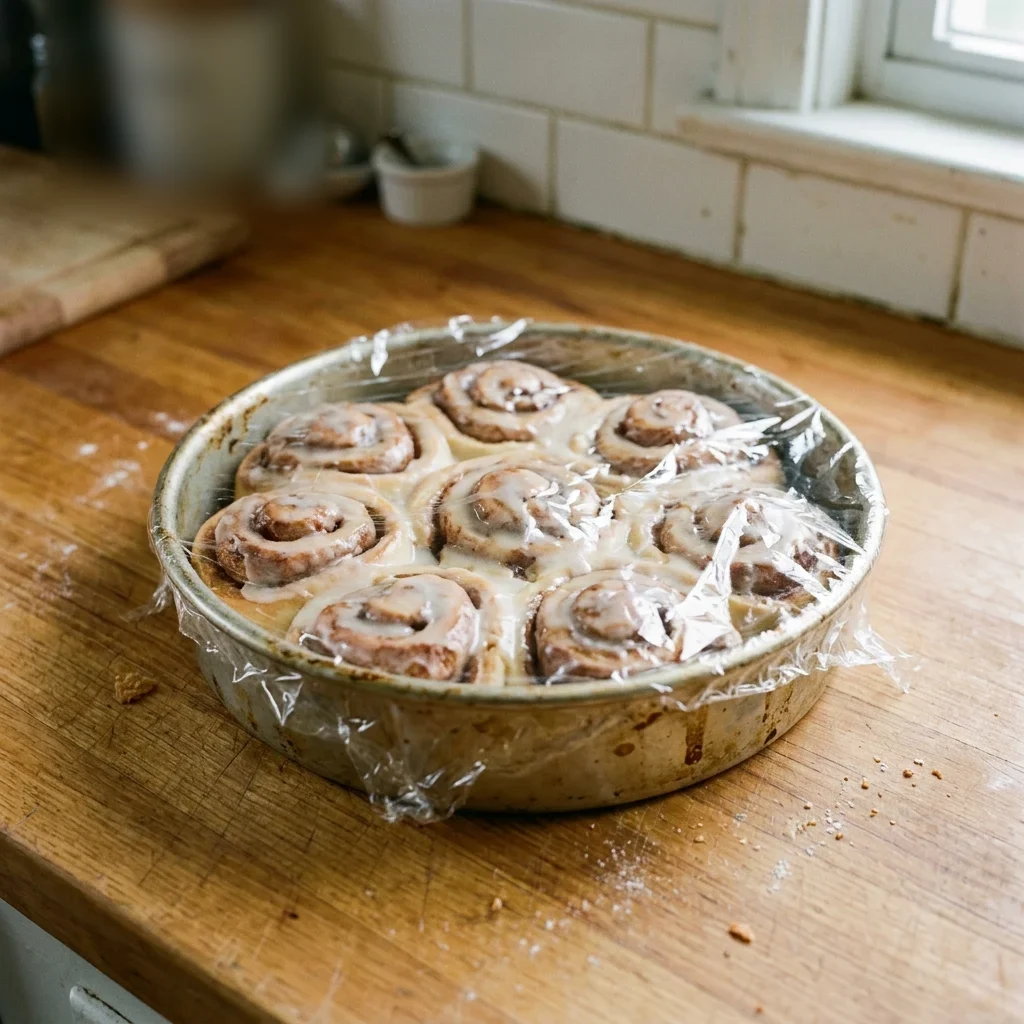
Cool first, then wrap, and keep the pan out of the sun.
How long can you store cinnamon rolls?
Two to three days on the counter, about a week in the fridge, and roughly three months frozen. NDSU Extension has one line that names the thing directly, for partially baked cinnamon rolls, at 2 months refrigerated. That is the brown-and-serve kind, though, rather than a frosted pan. For a frosted roll its closest figure is baked cakes, at 7 to 10 days refrigerated. For the freezer it gives baked breads with no preservatives 3 to 5 months. Red Star Yeast, however, caps baked goods at three months, because the freeze-thaw cycle degrades the structure. So take the three months.
Those windows describe quality more than safety, except where dairy is involved. In other words, a dry roll is still a roll. A cream cheese frosting left warm, though, is a different question. So read the next two sections before you decide.
Should you store cinnamon rolls with cream cheese frosting in the fridge?
Yes, because the measurements say so. Kansas State University Extension tested a frosting of cream cheese, butter, vanilla and powdered sugar. It came out at 54.8% sugar, so it sits below the 65% the study treats as stable at room temperature. A low-fat version then measured pH 5.2 and a water activity of 0.91. So that one lands in the group needing temperature control. The study also warns that such foods held between 41 and 135°F may let pathogens grow and produce toxins. University of Minnesota Extension sets the same bar, although it puts it as a recipe rule. Specifically, an uncooked dairy frosting needs more than 65% soluble solids and a water activity of 0.85 or lower. In other words, that is roughly 2 ounces of powdered sugar for every ounce of cream cheese.
How to store cinnamon rolls after a Halloween party
Get them into the fridge, and do not leave the tray out till morning. The USDA rule is plain. Do not leave any perishables out of the refrigerator more than 2 hours. A plain glazed roll is not perishable in that sense, so it can stay on the platter. Cream cheese frosting is, though, so a frosted tray at a Halloween party needs a plan before the guests arrive. Put out a few at a time, then keep the rest cold. A whole pan left out overnight is the version to avoid.
Can you store cinnamon rolls from a can after opening it?
No. The label on Pillsbury's refrigerated cinnamon rolls says the entire product must be baked once opened. It also says to keep the dough refrigerated and not to eat raw cinnamon roll dough. Freezing or microwaving the unbaked dough is out too. NDSU Extension gives refrigerated biscuits, rolls and pastries the expiration date on the label and nothing past it. One more detail from the same chart: keep the can out of the fridge door, because the temperature swings and the jarring there lower quality.
Can you freeze cinnamon rolls?
Yes, baked ones freeze well, and unbaked homemade dough freezes too. NDSU Extension gives baked breads with no preservatives 3 to 5 months in the freezer. Unbaked rolls and bread get one month. The short unbaked window has a reason: longer storage inactivates the yeast and weakens the gluten. A can of dough, on the other hand, never goes in.
How to store cinnamon rolls in the freezer
Cool them completely, then wrap each roll and press the air out of the bag. Red Star Yeast explains why the freezer works so well. It slows the molecular movement and moisture loss behind staling, and it rules out mold. Leave the frosting off if you can, then add it after reheating. Frost them first and you are freezing dairy, which thaws softer than it went in.
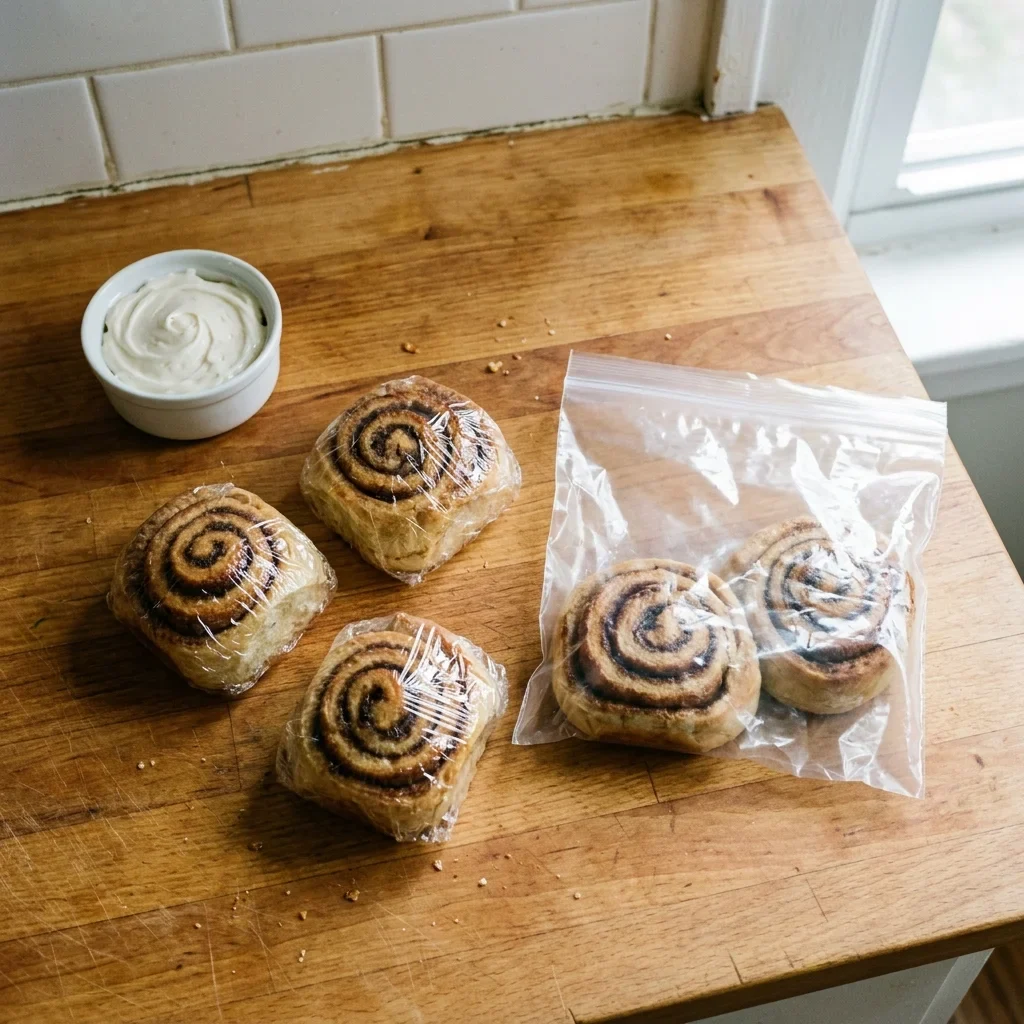
Wrapped singly, frosting left off, air pressed out of the bag.
Can you freeze unbaked cinnamon rolls?
Homemade dough, yes, for about a month. NDSU Extension gives unbaked rolls and bread one month in the freezer, because longer storage inactivates the yeast. Also, an overnight rise in the fridge is the gentler version of the same idea. King Arthur Baking shaped rolls and then chilled them at 39°F overnight. In most trials they did not rise at all until morning. On one hot, humid day, though, the rolls peaked and deflated before the fridge caught up. So chill them earlier when the kitchen is warm.
What happens when you store cinnamon rolls in the freezer
Very little, as long as the wrapping holds. Red Star Yeast says freezing dramatically slows staling and eliminates the risk of mold. That is more than the fridge manages. Even so, it caps freezer storage at three months, since freeze-thaw cycles degrade the structure. Thaw them covered, then warm them through, because heat is what brings the crumb back.
How to tell if cinnamon rolls have gone bad
However you store cinnamon rolls, they go stale long before they go bad. Staling is only a texture problem, so a warm oven fixes it. Mold, though, or a frosted roll left warm all night, is a reason to throw the pan out. Here is what each stage means, then.

Verdict: use them
Soft, fresh cinnamon rolls
Soft all the way through, with the frosting still glossy and the smell of cinnamon and butter. So they are ready to eat, and nothing needs fixing. Wrapped and cool, plain or glazed rolls hold 2 to 3 days on the counter. Frosted ones, meanwhile, hold about a week in the fridge.

Verdict: warm them, then use them
Dry or firm cinnamon rolls
Firm edges and a crumb that tears instead of pulling mean staling has started. Red Star Yeast puts that down to starch retrogradation. The starch slowly returns to a crystalline structure, and the crumb stiffens with it. Warming them in the oven turns the crystals back to water and revives the crumb. So this is a reheating job, not a bin job.

Verdict: bake with them
Hard, stale cinnamon rolls
Hard, dry rolls with no mold and no odd smell are still food. Turn them into a bread pudding or a French toast bake. Stale rolls soak up custard better than fresh ones do. Red Star Yeast even suggests keeping bread at room temperature unless you want it stale for French toast. In other words, staling is a use rather than a loss.

Verdict: throw the tray out
Cinnamon rolls left out overnight under cream cheese frosting
This is the one that is genuinely unsafe. Kansas State University Extension puts cream cheese frostings in the group needing temperature control. It also warns that 41 to 135°F lets pathogens grow and produce toxins. Meanwhile the USDA gives perishables two hours out of the fridge. A party plus a night, then, is far past that. Reheating does not help either, because the toxins the study names are heat-stable. So the tray goes, however good it looks.
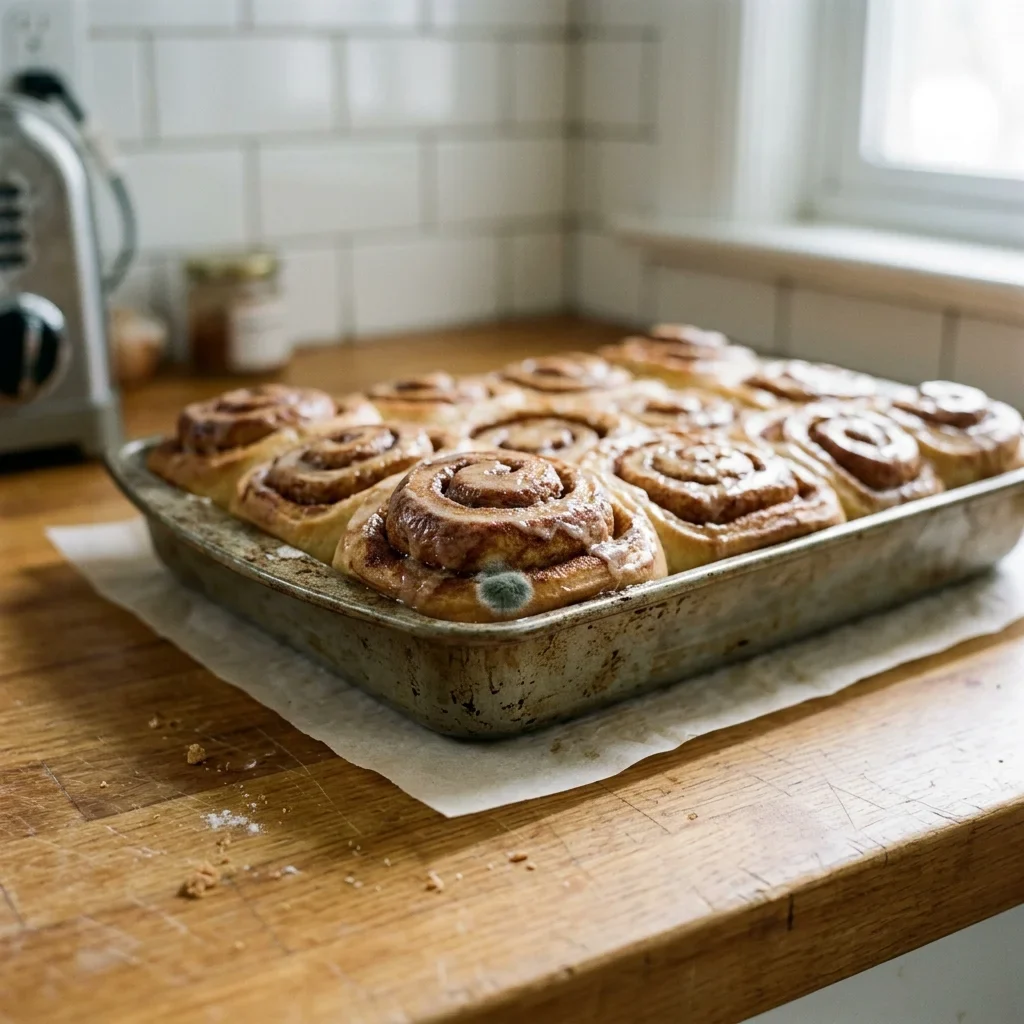
Verdict: throw them out
Moldy cinnamon rolls
Fuzzy spots of any color, and the pan goes, however small the patch. The USDA puts bread and baked goods in its discard column. Porous foods, it explains, can be contaminated below the surface. Unlike hard cheese, a roll cannot be trimmed and saved. Do not sniff it to check, either, which the same factsheet warns can cause respiratory trouble. Then check the rolls that were touching it.
Is it safe to store cinnamon rolls left out overnight?
It depends entirely on the topping, so answer that first. A plain glazed roll is fine. Kansas State University Extension measured a basic glaze at 0.85 water activity, so it sits outside the control group. A cream cheese frosted roll is not fine, however, and the sources are consistent about it. Iowa State University Extension, Colorado State University Extension and University of Minnesota Extension all treat cream cheese icings as needing refrigeration. Colorado State goes further, since it bars them from cottage food sales. It allows buttercream only when the recipe does not need refrigeration. Meanwhile, the pages ranking for this question argue that powdered sugar acts as a preservative. None of them names a source, though, and the measured sugar content says otherwise. So a Halloween tray under cream cheese frosting is the one to put away before bed.
Cinnamon roll substitutes
Out of cinnamon rolls, or had to throw the pan out? Then one of these will cover the same craving.
Substitute
Works best in
What changes
Sticky buns
A warm breakfast tray
Nuttier and stickier. The same dough underneath.
Cinnamon-sugar toast
One person, five minutes
No yeast and no waiting. Make it fresh each time.
Monkey bread
Sharing at a party
Pull-apart rather than sliced. Store it the same way.
Coffee cake
Keeping for days
Drier crumb, and usually no dairy frosting.
Mistakes people make when they store cinnamon rolls
These are the ways people store cinnamon rolls that cost them the most, although each one has an easy fix.
Leaving a cream cheese frosted tray out overnight. The USDA gives perishables two hours, so refrigerate what you are not serving.
Wrapping them while they are still warm. Steam turns into condensation, so let the pan cool fully first.
Throwing out stale rolls. Warm them in the oven instead, since heat brings the crumb back.
Freezing a can of dough. Pillsbury's label says not to freeze unbaked dough, so bake it and freeze the rolls.
Keeping half an opened can for tomorrow. The label says the entire product must be baked once opened, so bake the lot.
Cutting mold off a roll. The USDA puts baked goods on its discard list, so the whole roll goes.
Using the fridge by default. Cold stales rolls faster, so it is the right choice only when dairy is on top.
Sources
Food Storage Guide Answers the Question..., Julie Garden-Robinson, NDSU Extension publication FN579, reviewed January 2023, on cupboard, fridge and freezer times for bread, rolls, cakes, unbaked dough and refrigerated canned dough.
Food Safety of Frostings and Fillings, Karen Blakeslee and others, K-State Research and Extension MF3544, December 2020, on measured pH, water activity and sugar content of cream cheese frosting, buttercream and sugar glaze.
Frosting safety for fair exhibits, Marlene Geiger, AnswerLine, Iowa State University Extension and Outreach, February 2023, on frostings made with cream cheese, whipped cream or eggs needing refrigeration.
Frosting and dessert fillings, Autumn Stoll, University of Minnesota Extension, October 2025, on the 65% soluble solids and 0.85 water activity thresholds and the powdered sugar to cream cheese ratio.
Baked Goods, Food Smart Colorado, Colorado State University Extension, updated 2022, on cream cheese icings and buttercream that does not require refrigeration.
Molds on Food: Are They Dangerous?, USDA Food Safety and Inspection Service, revised September 2005, on discarding moldy bread and baked goods, the two-hour rule and not sniffing moldy food.
Why Bread Goes Stale (and How to Slow It), Red Star Yeast, October 2026, on starch retrogradation, the fridge speeding staling, the three-month freezer cap and reviving the crumb with heat.
Overnight breakfast, PJ Hamel, King Arthur Baking, July 2018, on chilling shaped sweet rolls at 39°F overnight and what happened on a hot, humid day.
Pillsbury Cinnamon Rolls with Original Icing, product label text as listed by Hannaford, on keeping the dough refrigerated, baking the whole can once opened and not freezing or microwaving unbaked dough.
Storage times and safety advice on this page come from the sources above. Food safety depends on conditions I cannot see, so read the Disclaimer, and if in doubt, throw it out.
Other ingredient guides
Browse all guides


Share this guide
Never miss a guide
New ingredient guides when they go up, plus one storage tip worth knowing. Anything sponsored is labelled.

Emilly White